
Flying Saucer Pilgrimage
Core Thesis
Flying Saucer Pilgrimage documents a genuinely unusual undertaking for its era: engineer Bryant Reeve, a graduate of Yale and the Massachusetts Institute of Technology, and his wife Helen spent two years and more than 23,000 miles personally traveling to meet and interview the leading flying-saucer contactees of the early-to-mid 1950s, rather than relying on secondhand press accounts or the contactees' own published books alone. Having grown interested in the saucer phenomenon in 1953 and grown frustrated with conflicting reports and official denials, the Reeves resolved to conduct their own firsthand investigation — visiting and directly assessing George Adamski, Truman Bethurum, Daniel Fry, and George Hunt Williamson among others. The book's most consequential and most-cited legacy, documented directly on this site's own Truman Bethurum case file, is a single, still-quoted phrase: the Reeves' assessment of Bethurum's "unimaginative sincerity" — a personal-manner judgment this article, following that same case file's own careful treatment, reads as an honest account of the Reeves' subjective impression of Bethurum during interview, not as independent verification of any of his underlying factual claims.
About the Author
Bryant Reeve's engineering training at Yale and MIT distinguishes him from most of the era's contactee-adjacent authors, who were typically journalists, publishers, or the contactees themselves. That background gave the Reeves' investigation a self-consciously methodical framing — a stated two-year timeline, a specific mileage figure (over 23,000 miles), and a comparative structure visiting multiple contactees rather than championing a single figure's claims exclusively.
Helen Reeve's co-authorship reflects a genuine partnership investigation rather than a solo project with an added byline; period bibliographic records consistently credit both Reeves as full co-authors of the resulting book, published by the small Wisconsin house Amherst Press in 1957.
Unlike more famous contemporary observers of the contactee scene — James W. Moseley, whose Saucer News investigations grew considerably more skeptical of the same circuit, or Edward J. Ruppelt, whose official Air Force role gave him a different kind of institutional vantage point — the Reeves approached their subjects as sympathetic, engaged private investigators rather than either committed believers promoting the contactees' claims or professional skeptics working to debunk them, a middle position this article's Critical Reception section treats as both the book's distinguishing value and its central limitation.
Historical Context & Origins
The book's 1957 publication places it near the end of the first great wave of American contactee publishing that began with Adamski and Desmond Leslie's 1953 Flying Saucers Have Landed and continued through Bethurum's own 1954 Aboard a Flying Saucer and Fry's 1954 The White Sands Incident — giving the Reeves a genuinely comparative vantage point, since by the time of their travels most of the era's major contactee narratives were already in print and could be checked against the men who had authored them in person.
This site's own Truman Bethurum case file (Case File #367, July 27, 1952, Debunked) documents in detail exactly how this book's central assessment functions within the wider evidentiary record: Bethurum himself embraced the annual Giant Rock, California convention circuit that became the contactee movement's central gathering point, and the Reeves' impression of his "unimaginative sincerity" sits alongside Adamski's own reported endorsement of Bethurum following a 1953 meeting on one side, and James W. Moseley's considerably more skeptical, more rigorously fact-checked conclusion that Bethurum was not a reliable source on the other — a genuine three-way split among contemporaries who each spent real time directly assessing the same man.
This site's own Daniel Fry / White Sands Contact case file also cites this book directly, situating Fry's claims "alongside Adamski's, Bethurum's, and George Hunt Williamson's within the same firsthand-researched survey" — reflecting the book's real comparative value as a single source touching multiple cases this site investigates independently and in far greater individual depth.
Core Arguments & Key Concepts
The book's implicit central argument is that direct, in-person field investigation of contactee claims — assessing the claimants' demeanor, consistency, and apparent sincerity firsthand — is a legitimate and valuable method for evaluating extraordinary testimony, distinct from either accepting a contactee's published account at face value or dismissing it without ever meeting the person making it.
A second, more implicit argument running through the book's comparative structure is that the contactees, whatever the ultimate truth of their individual claims, shared enough in common (their claimed experiences, their public reception, their subsequent career trajectories as lecturers and authors) to be usefully studied as a single social and cultural phenomenon rather than as unrelated, isolated individual cases — an early version of the same comparative framing later, more academically grounded work like Gregory Reece's UFO Religion would apply with more formal religious-studies methodology five decades later.
The book's specific, quotable assessment of Bethurum's "unimaginative sincerity" carries an implicit argument this site's own case-file research treats with appropriate care: that a consistent, sincere-seeming personal manner during interview is itself meaningful evidence bearing on a witness's reliability. This site's independent research explicitly rejects that inference as sufficient on its own — noting that sincerity of manner and accuracy of claim are not the same thing, and that Bethurum's own documented behavior (declining a polygraph test and independent document analysis when both were offered, and revising Clarion's claimed location in response to scientific criticism) provides more concrete, if less flattering, evidence than an interviewer's subjective impression alone.
Key Cases & Evidence Discussed
This site's own Truman Bethurum & the "Captain Aura Rhanes" Contacts (Case File #367, July 27, 1952, Debunked) is the case most closely tied to this book: the Reeves' "unimaginative sincerity" assessment is directly quoted in that case file's own evidentiary analysis, weighed explicitly against James Moseley's considerably more skeptical, more rigorously fact-checked contrary conclusion, and against Bethurum's own documented refusal of offered independent verification — a genuine three-way evidentiary tension this site's case file resolves in Moseley's favor while still reporting the Reeves' contrary impression honestly.
This site's own Daniel Fry / White Sands Contact case file cites this book as comparative context situating Fry's claims within the same firsthand-researched survey covering Adamski, Bethurum, and Williamson, reflecting the book's genuine, if secondary, usefulness as a single-source comparative reference across multiple contactee cases this site investigates independently in far greater depth.
The book's coverage of George Hunt Williamson, a contactee and self-styled ethnologist who claimed telepathic contact with extraterrestrials and later contributed to Ancient Aliens-adjacent speculation, connects it to the broader network of 1950s contactee figures this site's own key-figures research documents independently.
Critical Reception & Controversies
This book has left a modest footprint in modern secondary ufological literature, consistent with a small-press 1957 title from authors who did not go on to sustained careers as UFO researchers or authors; it survives today primarily as a primary-source reference cited by later, more rigorously investigative work rather than as a widely discussed book in its own right — exactly the role it plays on this site, cited on two case files for specific, narrow, well-defined comparative and testimonial purposes rather than as a broad interpretive authority.
Reader response on its current Amazon listing (a modern print-on-demand reprint) is positive but drawn from a very small sample (4.6 out of 5 stars across 5 ratings at time of research), reflecting the same genuinely niche, historically-interesting-rather-than-widely-read status as several other vintage contactee-era titles this site has reviewed.
The book's central limitation, this article's own research finds, is precisely the one this site's Bethurum case file identifies directly: an assessment of personal sincerity, however honestly and carefully arrived at through genuine two-year field effort, is not the same evidentiary category as independent verification of a specific factual claim. The Reeves' engineering backgrounds gave their investigation methodical framing (mileage, timeline, comparative structure) but did not extend, on the available record, to the kind of harder verification — document analysis, polygraph testing, physical evidence examination — that contemporaries like James Moseley pursued on the same circuit and that this site's own case-file research treats as carrying substantially more evidentiary weight than an interviewer's subjective impression of sincerity alone.
Influence & Legacy
This book's most durable, specific legacy is linguistic and evidentiary: its "unimaginative sincerity" phrase describing Truman Bethurum has become the era's most-quoted single assessment of his personal credibility, still cited directly in this site's own 2026 case-file research on the case — a genuinely long afterlife for one phrase from a comparatively obscure 1957 field-investigation book.
On this site specifically, the book functions exactly as its own real strength allows: a comparative, multi-contactee primary source cited on both the Truman Bethurum and Daniel Fry case files for specific, well-defined purposes (a quoted personal-manner assessment; comparative contactee-circuit context) rather than as a broad interpretive authority this site otherwise relies on.
Within the wider history of contactee-era literature, this book represents an early, methodologically self-conscious attempt at comparative field investigation of multiple contactees by the same investigators — a structural approach later, more skeptically rigorous investigators like James Moseley and, decades later, more academically grounded scholars like Gregory Reece would each apply with progressively more rigorous verification standards to the same underlying population of claims.
The Book
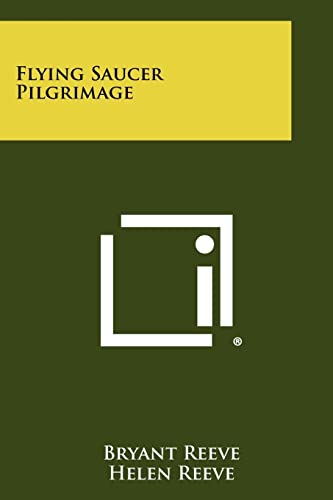
Flying Saucer Pilgrimage
Find on Amazon →As an Amazon Associate, OverClassified may earn from qualifying purchases made through this link, at no extra cost to you.
Why This Is Essential Reading
Flying Saucer Pilgrimage earns its place on this list not for any independent verification of the contactee claims it surveys — it offers essentially none beyond the Reeves' own subjective impressions — but for the same reason this site's own case-file research already relies on it: a genuine, methodically framed, two-year, 23,000-mile firsthand investigation of the era's leading contactees produced at least one still-quotable, still-relevant data point (Bethurum's "unimaginative sincerity") that later, more skeptical research has had to weigh and, on the balance of evidence, set aside in favor of harder verification standards. Read this book, as this site's own Truman Bethurum case file does, as evidence of how sincere a claimant can seem to a good-faith investigator without that sincerity settling anything about whether the underlying claim is true.
Related Cases & Theories
Sources Cited
- Reeve, Bryant & Helen. Flying Saucer Pilgrimage. Amherst Press, 1957. amazon.com
- "Flying Saucer Pilgrimage. 1957 by Bryant & Helen Reeve." AbeBooks (first-edition bibliographic listing and dust-jacket photograph). abebooks.com
- "Flying Saucer Pilgrimage: The Story of an Amazing Private Research." Google Books (bibliographic record, 304 pp.). books.google.com
- "Bethurum, Truman (1898-1969)." Encyclopedia.com (contactee movement context, contemporary reception). encyclopedia.com
- This site's own resources library: Full Reading List, where this book is cited across two case-file pages.
- This site's own case file: Truman Bethurum & the "Captain Aura Rhanes" Contacts, for this book's own quoted "unimaginative sincerity" assessment and its full evidentiary weighing.
- This site's own case file: Daniel Fry / White Sands Contact, for this book's comparative contactee-circuit context.
- This site's own key-figures entry: George Hunt Williamson, for another contactee this book investigates directly.
- This site's own key-figures entry: James W. Moseley, for the more skeptical contemporary investigation this book's sincerity assessment is weighed against.
- This site's own essential reading entry: UFO Religion, for a later, more academically rigorous comparative study of the same contactee movement.
- This site's own case file: George Adamski's Desert Center Contact, for another contactee this book's field investigation covers directly.
- "George Hunt Williamson." Wikipedia (biography: contactee claims, ethnological writing, Giant Rock circuit involvement). en.wikipedia.org
Have corrections, additional research, or peer-reviewed sources? Help improve this entry.
Suggest an Edit