
UFO Religion
Inside Flying Saucer Cults and Culture
Core Thesis
UFO Religion: Inside Flying Saucer Cults and Culture is Gregory L. Reece's 2007 field study applying the academic tools of religious studies to the flying saucer contactee movement — treating groups organized around claimed alien contact not as a UFO-research subject but as a genuine, analyzable category of new religious movement, alongside more conventional objects of religious-studies scholarship. Reece, an independent scholar and philosophy lecturer who had applied the identical method a year earlier to Elvis Presley fandom in Elvis Religion: The Cult of the King (2006), brought the same combination of engaged fieldwork (visiting Roswell, the Mojave Desert, and Area 51 in person) and academic religious-studies framing to contactee-era figures including George Adamski and Truman Bethurum, and to later UFO religious movements including the Aetherius Society, the Raëlians, and Heaven's Gate. A contemporary Booklist review called it "an excellent introduction to its genuinely spacey subject," and other period reviews credited it as "both an informed study of the subject and a thoroughly enjoyable read," praising Reece's light, humorous touch without sacrificing scholarly seriousness — an assessment this article's own research confirms is fair.
About the Author
Gregory L. Reece is an independent writer and scholar based in Montevallo, Alabama, who has worked as a lecturer in philosophy at the University of Alabama at Birmingham, with research and publishing interests centered on philosophy of religion and the academic study of new religious movements. His approach across his published work is consistent: take a popular-culture phenomenon most academics treat as beneath serious study, and apply genuine religious-studies methodology to it.
Reece established this method a year before UFO Religion with Elvis Religion: The Cult of the King (2006), which examined how Elvis Presley became a god-like figure for many fans — covering Graceland pilgrimage, impersonator culture, fan devotion, and tabloid-conspiracy Elvis-sighting claims (a real, if lower-stakes, structural parallel to UFO contactee culture's own sighting-and-devotion dynamic) through the same lens of lived religious practice rather than mere fandom. That book's own academic reception, including a review in the peer-reviewed journal Implicit Religion, established Reece's credibility applying serious religious-studies method to subjects most scholars dismissed as unserious — directly setting up UFO Religion's own similar academic legitimacy the following year.
Reece's method in UFO Religion combines this scholarly framework with genuine field research: rather than working entirely from published sources, he traveled to Roswell, New Mexico, the Mojave Desert, and the area around Area 51, Nevada, observing UFO culture's living practitioners and pilgrimage sites directly — a fieldwork-based approach period reviewers specifically credited for capturing "that sense of mystery and wonder that drives ufologists to undertake their research" rather than merely cataloguing claims from a scholarly remove.
Historical Context & Origins
The book arrived in 2007, a period of renewed academic interest in new religious movements broadly and UFO-related belief specifically, following decades in which religious-studies scholarship had mostly treated contactee movements as a niche subject for sociologists of deviance rather than a legitimate branch of comparative religion. Reece's book, alongside contemporaries in the same academic turn, helped normalize treating flying-saucer belief as a genuine religious phenomenon worth the same interpretive seriousness as any other new religious movement.
The book's discussion of Truman Bethurum connects directly to this site's own Truman Bethurum & the "Captain Aura Rhanes" Contacts case file (Case File #367, July 27, 1952, Debunked): Bethurum's claimed contact with Aura Rhanes, captain of a saucer from the planet Clarion, led him to found the Sanctuary of Thought, a short-lived organizational and quasi-religious venture built around his contact claims that did not outlast his own life — the specific case study this site cites Reece's book for, describing it as "directly assessing why the Sanctuary of Thought and comparable ventures failed to outlast their founders."
The book's later chapters, covering the Aetherius Society (founded 1955 by George King, who claimed telepathic contact with an alien intelligence), the Raëlians, and Heaven's Gate (whose 1997 mass suicide, timed to the Hale-Bopp comet, remains the most consequential and tragic event in UFO-religion history), trace a genre arc from 1950s optimistic contactee culture through to a movement capable of producing genuinely catastrophic real-world outcomes — a range this article treats as central to the book's own analytical value: not every UFO religion is equally benign, and Reece's academic framework treats that variation seriously rather than flattening every group into the same category.
Core Arguments & Key Concepts
The book's central argument is that UFO contactee movements function as genuine religions in the full academic sense — possessing cosmology, revelation narratives, charismatic founder-prophets, ritual practice, and community structure — rather than as a fringe pseudo-scientific claim merely borrowing religious-sounding language, a framing that positions the book as religious studies scholarship first and ufology second.
A second argument, reflected in the specific case Reece uses this site cites him for, concerns organizational fragility: contactee-founded groups like Bethurum's Sanctuary of Thought depended almost entirely on their founder's personal charisma and direct claimed contact experience, and characteristically failed to survive that founder's death or loss of credibility — a structural pattern Reece identifies as common across multiple contactee-era ventures rather than unique to any single failed group.
A third argument, per period reviews, is that these movements reveal something genuine and sympathetic about the human impulse behind them: reviewers specifically credited Reece with capturing "admiration for the sheer optimism on which so many UFO religions are based" alongside "healthy skepticism" toward their literal truth claims — a dual posture (empathetic understanding of belief, without endorsing the belief's factual accuracy) this article treats as the book's most valuable and hardest-to-achieve balance.
Key Cases & Evidence Discussed
This site's own Truman Bethurum & the "Captain Aura Rhanes" Contacts (Case File #367, July 27, 1952, Debunked) is the specific case this site cites Reece's book for: Bethurum's claimed 1952 contact with a beautiful saucer captain from the planet Clarion, and his subsequent founding of the short-lived Sanctuary of Thought organization, is exactly the kind of organizational rise-and-collapse pattern Reece's religious-studies framework is built to analyze.
The book's discussion of George Adamski, the most commercially successful of the 1950s contactees, connects to this site's own George Adamski's Desert Center Contact case file, offering a comparative religious-studies lens on why Adamski's own claims generated a more durable, internationally influential following than Bethurum's comparatively short-lived venture.
The book's coverage of Heaven's Gate situates the 1997 Hale-Bopp-comet mass suicide — UFO religious belief's most consequential and tragic documented outcome — within the same broader analytical framework Reece applies to far more benign contactee groups, a range this article treats as important context for readers of this site's own case-file catalogue, which documents claimed UFO contact experiences spanning the full range from benign personal narrative to organizationally catastrophic outcome.
Critical Reception & Controversies
Professional reception was consistently positive: Booklist called the book "an excellent introduction to its genuinely spacey subject," and another period review stated plainly that "UFO Religion is both an informed study of the subject and a thoroughly enjoyable read," adding that "for those unfamiliar with this fascinating area, UFO Religion is certainly the book to start with." Reviewers specifically praised Reece's light, deftly humorous touch across a broad range of material, and credited the book with engagingly capturing "that sense of mystery and wonder that drives ufologists to undertake their research" while also drawing "many intriguing links between science and religion."
Reader response was more mixed on depth: at least one review characterized the book as "a good start for anyone interested in the major themes of UFOs but not an in-depth exploration" — a fair criticism given the book's breadth (multiple distinct movements spanning six decades) necessarily limits how deeply any single group can be examined, similar in kind to the tradeoff this site's own review of Jenny Randles's Alien Contact: The First Fifty Years identifies in that book's own year-by-year almanac format.
One reader review specifically praised Reece's "healthy skepticism" toward the movements' literal truth claims combined with genuine "admiration for the sheer optimism" underlying them — a balance this article's own research finds consistent with Reece's demonstrated method in Elvis Religion the year before: taking a popular belief system seriously as a religious and cultural phenomenon without requiring the reader to accept its factual claims.
This book carries no visible customer star rating on its current Amazon listing at time of this article's research, consistent with a scholarly-press title (I.B. Tauris) with a comparatively small but engaged readership rather than a mass-market UFO paperback; per the Amazon Rating Display Protocol, this article leaves that field unset rather than estimating a figure that does not exist on the listing itself.
Influence & Legacy
The book's most durable academic contribution is methodological: by applying the same rigorous religious-studies lens to UFO contactee movements that Reece had already validated on Elvis fandom, the book helped further legitimize the academic study of UFO belief as a branch of new-religious-movements scholarship rather than a subject beneath serious academic attention — a trend later scholarly work (including Diana Walsh Pasulka's American Cosmic, also covered on this site) has continued and expanded.
On this site specifically, the book functions as a working secondary source cited directly for explaining the organizational failure of Truman Bethurum's Sanctuary of Thought — a use precisely matched to the book's own actual religious-studies strength (analyzing why contactee-founded organizations succeed or collapse) rather than a claim about the underlying contact experiences' factual reality.
Within the broader academic study of UFO religion, this book sits alongside foundational scholarly works on the subject as one of the more accessible, general-audience entry points — the book its own reviewers specifically recommended as where an interested but unfamiliar reader should start, a role this site's own citation of it for a specific, well-defined analytical purpose (the Sanctuary of Thought's collapse) is consistent with.
The Book
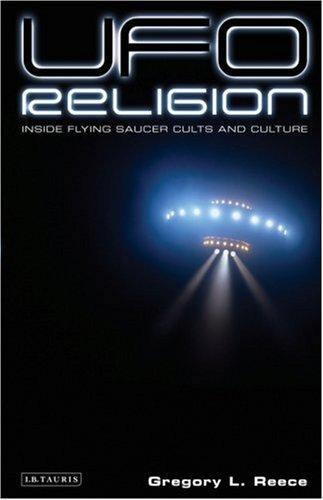
As an Amazon Associate, OverClassified may earn from qualifying purchases made through this link, at no extra cost to you.
Why This Is Essential Reading
UFO Religion earns its place on this list as a genuinely well-reviewed, academically credentialed field study that takes UFO contactee movements seriously as religious phenomena without asking readers to accept their literal truth claims — exactly the balance this site's own case-file research, which investigates claimed UFO contact experiences without either dismissing or endorsing them uncritically, tries to strike. Read it alongside this site's own Truman Bethurum case file for the specific organizational-collapse pattern Reece's religious-studies framework explains, and treat its broad six-decade scope as an introduction to be followed by deeper single-movement or single-case research (this site's own catalogue included) rather than a final word on any one group it covers.
Related Cases & Theories
Sources Cited
- Reece, Gregory L. UFO Religion: Inside Flying Saucer Cults and Culture. I.B. Tauris, 2007 (ISBN-13 9781845114510). amazon.com
- "UFO Religion: Inside Flying Saucer Cults and Culture." Open Library (bibliographic record: publisher, publish date, cover art). openlibrary.org
- "UFO Religion: Inside Flying Saucer Cults and Culture." Goodreads (reader ratings and reviews). goodreads.com
- "Elvis Religion: The Cult of the King." Internet Archive / AbeBooks (Reece's 2006 prior book, same religious-studies method applied to Elvis fandom). archive.org
- Gauthier, François. Review of Elvis Religion: The Cult of the King by Gregory L. Reece. Implicit Religion (academia.edu preprint). academia.edu
- "Aetherius Society." Wikipedia (George King, 1955 founding, telepathic-contact claims). en.wikipedia.org
- "Heaven's Gate (religious group)." Wikipedia (1997 Hale-Bopp mass suicide). en.wikipedia.org
- This site's own resources library: Full Reading List, where this book is cited on the Truman Bethurum case file's own Further Reading list.
- This site's own case file: Truman Bethurum & the "Captain Aura Rhanes" Contacts, for the full 1952 case and the Sanctuary of Thought's organizational history.
- This site's own case file: George Adamski's Desert Center Contact, for a comparative contactee case.
- This site's own key-figures entry: Truman Bethurum, for his full biography.
- This site's own key-figures entry: George Adamski, for the most commercially successful 1950s contactee.
- This site's own essential reading entry: American Cosmic, for a later scholarly extension of treating UFO belief as a genuine religious phenomenon.
Have corrections, additional research, or peer-reviewed sources? Help improve this entry.
Suggest an Edit