
Extraterrestrial Visitations
True Accounts of Contact — Ten Californian Encounters Recalled Without Hypnosis
Core Thesis
Extraterrestrial Visitations collects ten first-hand contact accounts investigated by Preston E. Dennett, a MUFON field investigator working principally in southern California, and it makes one editorial decision that distinguishes it sharply from the abduction literature it sits among. The majority of the cases are presented as fully conscious recall rather than memories retrieved through hypnotic regression. Published by Llewellyn in June 2001, at the point when the recovered-memory controversy had already gutted the credibility of regression-based testimony, that choice is not incidental. It is the book's implicit argument: that if you remove the technique which sceptics have identified as the principal generator of abduction narratives, something is left. What is left, and how much of it looks like the material regression produces, is the genuinely interesting question this book poses — and the answer is more complicated than either Dennett or his critics would like.
About the Author
Preston E. Dennett, born 1965, began investigating UFO and paranormal reports in 1986 after discovering that family members, friends and co-workers had experiences of their own. He became a field investigator for the Mutual UFO Network and has since published more than thirty books and over a hundred articles, in Fate, Atlantis Rising, the MUFON UFO Journal, Nexus, UFO Magazine and elsewhere, with translations into German, French, Italian, Portuguese, Russian and Icelandic.
His most substantial contribution to the field remains UFO Healings (1996), winner of the Karla Turner Ph.D. Award and the first book-length survey of contactee healing claims, documenting more than a hundred cases. That book supplies the useful comparative context for this one: Dennett's interest has consistently run toward the benevolent, therapeutic and reciprocal end of the contact spectrum rather than the traumatic abduction paradigm that dominated the 1990s.
Dennett's method is interview-driven and regionally concentrated. He works largely in southern California — the Los Angeles basin, the Santa Monica mountains, the desert corridors out toward Nevada — and he returns to witnesses repeatedly over long periods. The result is a body of casework with unusual longitudinal depth and unusually narrow geographical spread, and both facts matter for how the material should be weighted.
It is important to be clear about what Dennett is and is not. He is not a scientist, a clinician, or a sceptical investigator, and he does not present himself as any of those. He is a diligent, patient and evidently well-liked interviewer who takes his witnesses seriously, records what they say carefully, and offers very little critical filtering. Readers who want the raw testimony will find him valuable. Readers who want the testimony assessed will have to do that work themselves, because this book does not do it.
The publisher matters too. Llewellyn Worldwide is the long-established Minnesota house specialising in New Age, occult and metaphysical titles. That is the shelf this book was published onto and the audience it was written for, and its framing reflects that: the encounters are presented as broadly positive, transformative and meaningful, which is a genuine editorial position and not a neutral one.
Historical Context & Origins
The year of publication is the key to the book. By June 2001 the abduction field was in serious trouble. The recovered-memory movement had collapsed under sustained attack from experimental psychology; Elizabeth Loftus's work on memory malleability had moved from contested to mainstream; and the specific criticism that hypnotic regression manufactures the very narratives it purports to recover had become the standard sceptical position rather than a fringe one.
That criticism had been aimed directly at ufology's most prominent abduction researchers. Budd Hopkins and David Jacobs had built their case bodies substantially through regression, and John Mack's Harvard position had made the methodological question front-page news. The field needed an answer to the question of what remained if you took hypnosis away.
Dennett's answer, structurally, is this book. Presenting a majority-conscious-recall collection in 2001 was a deliberate response to the state of the argument, whether or not he framed it that way. The book is best read as an attempt to demonstrate that the phenomenon is not an artefact of a technique.
The competing explanation had also matured by 2001. Sleep paralysis with hypnagogic hallucination had become the leading naturalistic account of bedroom-visitation experiences, and it does not require hypnosis at all — which means that conscious recall, by itself, does not defeat it. Susan Clancy's Harvard research on the same population, published a few years later as Abducted, would make exactly this point.
The regional context is also worth stating. Southern California has been the densest concentration of contact reporting in the world since the 1950s, and it carries a specific cultural inheritance: the Giant Rock contactee conventions, the Space Brothers tradition, and a continuous seventy-year New Age subculture. Dennett's witnesses are drawn from a population with more prior exposure to contact narratives than almost any other on earth.
The book also arrives after the tone of the abduction literature had already begun to shift. Mack's Passport to the Cosmos (1999) had reframed the experience as spiritually transformative rather than traumatic, and Dennett's collection belongs to that turn. The 'benevolent encounter' framing his publisher advertises is a real move within the field, not merely a marketing decision.
Finally, the format itself has a history. The single-investigator case anthology — ten narratives, minimal analysis, the investigator as sympathetic conduit — runs from the 1950s contactee literature through Hopkins' Intruders and into the present. It is the field's default publishing form, and its recurring weakness is that the selection criteria are never stated.
Core Arguments & Key Concepts
Conscious recall is methodologically preferable to hypnotic regression, and the field should have moved to it decades earlier. This is Dennett's strongest and most defensible position. Whatever one concludes about the phenomenon, testimony that was never passed through a suggestible altered state is better evidence than testimony that was. Every serious criticism of the abduction literature's evidential base — investigator leading, narrative convergence, confabulation under suggestion — applies with less force to a witness describing something they remember having remembered all along.
The phenomenon survives the removal of hypnosis, therefore hypnosis did not create it. This is the book's implied central inference and it is only partly sound. It does establish that people report close-encounter experiences without any regression involved, which is a real and often-overlooked point. It does not establish that the reports are veridical, because the leading naturalistic explanations — sleep paralysis, hypnagogia, misidentification with subsequent narrative elaboration, and straightforward cultural expectation — predict conscious recall just as readily as they predict regressed recall.
The contact experience is more often benign than the abduction paradigm allows. Dennett has argued this consistently since UFO Healings, and the cases here support it: rescues, healings, invited boardings, communicative rather than procedural encounters. The strongest version of the argument is sociological rather than evidential — the 1990s abduction literature selected hard for trauma because trauma was what its investigators were equipped to look for, and a different investigator with a different orientation finds a different distribution.
Entity morphology is more varied than the Grey-dominated literature suggests. The book includes mantis-type beings, an entity a witness called the 'Bony Crab Monster,' and slender iridescent figures alongside conventional Greys. This matters because morphological uniformity has been one of the strongest arguments for a real external stimulus, and it is substantially weakened if the uniformity turns out to be an artefact of which investigators published which cases.
Long-term witness relationships produce better data than single interviews. Dennett's practice of returning to witnesses over years is genuinely good field method and is rarer in this literature than it should be. It permits consistency checking across time, which is one of the few validity tests available when there is no physical evidence.
The book's weakest claim is that its cases are new and uncontaminated. The publisher advertises 'new and original' accounts, and they are new to print. But nine of ten witnesses are drawn from a southern Californian population saturated in contact imagery for half a century, and several describe experiences that began after contact with channelling or New Age practice — one chapter turns explicitly on a witness who visits a person channelling extraterrestrials and then asks to be taken aboard. Dennett does not treat that sequence as a problem. It is one.
Absence of critical apparatus is presented as neutrality and is not. The book supplies bibliographical references and an index, which is more than most of its shelf-mates, but it offers essentially no discussion of alternative explanations for any individual case. Presenting ten narratives without assessment is itself an evaluative act, because it implies that assessment would not change anything.
Key Cases & Evidence Discussed
Four teenagers and shared missing time. The opening case: four adolescents confronted with a UFO, each recalling a different portion of the event. Multiple-witness partial recall is one of the more evidentially interesting configurations in the literature because it permits cross-checking, and it is also the configuration most vulnerable to collaborative memory construction among people who discussed the event afterwards.
The 'Bony Crab Monster' and intergenerational contact. A woman who reported a close encounter as a girl, and whose son years later described a visitation by the same entity. Family-line continuity is a recurrent claim in the abduction literature; Dennett reports it without engaging the obvious alternative that a household narrative was transmitted rather than an experience repeated.
The farm sightings and the pursuit home. A farmer reporting repeated UFO activity over his property, two friends going to investigate, and the report of being followed home. A classic structure in the nocturnal-light literature and the case in the book most amenable to conventional explanation.
The channelling-to-boarding sequence. A young woman who, after visiting someone who channelled extraterrestrials, asked to be taken aboard their craft and reported that she was. This is the most methodologically revealing chapter in the collection, and the one a critical reader should study most closely: expectation, request and fulfilment appear in explicit sequence.
The Sedona landing. A married couple with a prior encounter history who reported finding a landed craft while visiting Sedona, Arizona, and being taken aboard. Sedona's status as a New Age pilgrimage destination is directly relevant to how this account should be weighted and goes unmentioned.
The motorcycle rescue. A psychologist who crashed on a remote highway and reported being rescued by extraterrestrials. This is the purest example of Dennett's benevolent-contact thesis and the case whose narrative shape most closely matches the healing accounts in UFO Healings.
The Catalina Island missing time. Two boys reporting missing time on Catalina Island — a location with its own long history of anomalous reports off the southern Californian coast, which Dennett notes only in passing.
The Area 51 trip. An office worker and friends who travelled to Area 51 in Nevada, reported sightings, and subsequently reported being taken aboard. The most obviously expectation-laden case in the book: a group who travelled to the world's most famous UFO destination specifically to look for UFOs, and found them.
Critical Reception & Controversies
The book has never been reviewed in a scientific or mainstream literary venue, and it was not written for one. Its reception has been confined to the specialist and New Age press and to reader ratings, where it sits at a modest average across a small number of ratings — roughly what one would expect for a competent entry in a crowded genre from a well-regarded specialist publisher.
Within ufology, Dennett's standing is better than the book's obscurity suggests. He is respected as a careful, non-sensationalising interviewer who does not embellish and does not push witnesses, and the Karla Turner Award for UFO Healings reflected genuine regard from within the abduction-research community. That reputation is deserved and it is the main reason this collection is worth reading rather than one of the dozens of similar volumes.
The substantive criticism from the sceptical side is that conscious recall solves a smaller portion of the problem than Dennett implies. Susan Clancy's research programme, conducted at Harvard on the same population and published as Abducted in 2005, found that self-identified abductees showed measurably elevated rates of false recognition in standard laboratory paradigms — a finding that applies regardless of how the memory was originally accessed. Removing hypnosis removes one contaminant. It does not remove the others.
The sleep-paralysis objection is the specific one this book does not answer. Several of the collection's bedroom-visitation accounts have the standard hypnagogic profile — nocturnal onset, perceived immobility, sensed presence, intruding figures — and by definition these are experiences of conscious recall. Dennett does not raise the possibility in any of them, which is a serious omission in a book published in 2001 by an investigator who plainly knew the literature.
There is also the selection problem common to every anthology of this kind. Ten cases from an unstated number investigated, chosen by unstated criteria, is not a sample and cannot support any claim about distribution. When Dennett suggests that benevolent encounters are more common than the abduction literature reports, he may well be right, but this book cannot demonstrate it.
The most sympathetic reading, and one worth stating, is that Dennett is doing preservation rather than analysis. Testimony that is not recorded is lost, and the field's history is full of cases that survive only because someone bothered to write them down. Judged as an archive of ten carefully taken statements it is a real contribution; judged as an argument it is thin, and the book's own framing invites the harsher judgement by presenting itself as the cutting edge of research.
Against the abduction literature's heavyweights the comparison is instructive. The Abduction Enigma takes the same body of claims apart methodically; Intruders makes the strongest possible affirmative case and does so on regressed testimony. Dennett occupies neither position: he presents affirmative material on better-sourced testimony and then declines to argue for it.
Influence & Legacy
The book's durable contribution is the methodological one, and it has aged better than the rest of the volume. The move away from hypnotic regression toward conscious recall as the preferred evidentiary basis has since become close to standard in serious contact research, and Dennett was ahead of most of the field in adopting it as an explicit editorial principle rather than a case-by-case preference.
It also belongs to the shift in tone that reoriented the contact literature after the abduction paradigm's peak. Between Mack's later work, Dennett's healing and benevolent-encounter material, and the experiencer-community literature that followed, the traumatic-abduction frame lost its monopoly. Whether that shift reflects a change in the phenomenon, a change in who was investigating it, or a change in what witnesses expected to find, is one of the more useful open questions in the field.
Its entity material has been quietly influential in a way single books rarely are. The mantis-type beings, in particular, moved from marginal to commonplace in contact reporting over the following two decades, and collections like this one are part of how that happened — which is itself an argument for the cultural-transmission account of morphological consistency that Dennett's own book inadvertently supports.
For a reader of this site, its practical value is as a control group. Nearly everything in this library's abduction section rests to some degree on regression. This is one of the few collections where it largely does not, and reading it against the regression-based literature is the cleanest available way to see how much of the standard narrative is technique-dependent and how much is not. The honest answer, on this evidence, is: most of the structure survives, most of the specific detail does not.
The Book
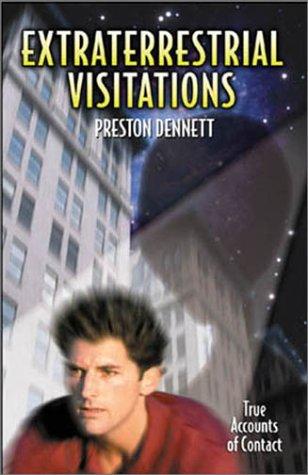
Extraterrestrial Visitations
True Accounts of Contact — Ten Californian Encounters Recalled Without Hypnosis
Find on Amazon →As an Amazon Associate, OverClassified may earn from qualifying purchases made through this link, at no extra cost to you.
Why This Is Essential Reading
Read it as a methodological exhibit rather than as evidence. Extraterrestrial Visitations is a competent, decently sourced, entirely uncritical collection of ten contact accounts by an investigator whose care with witnesses is genuine and whose reluctance to assess what they tell him is total. Its single real value — and it is a real one — is that most of these cases were never near a hypnotist, which makes them the right comparison set for the regression-derived material that dominates this field. Read it directly against Abducted, which studies the same population with laboratory controls and reaches the opposite conclusion, and against Dennett's own better book UFO Healings. If you read it on its own and take it at face value, it will mislead you; read in company, it earns its place.
Related Cases & Theories
Sources Cited
- Dennett, Preston E. Extraterrestrial Visitations: True Accounts of Contact. Llewellyn Publications, 2001. xvii + 270 pp. ISBN-10 1567182208 / ISBN-13 9781567182200. amazon.com
- Internet Archive catalogue record, Extraterrestrial visitations: true accounts of contact — full bibliographic record: Llewellyn Publications, St. Paul, Minnesota, 2001; xvii + 270 pages; LCCN 2001029249; OCLC 1244738826; bibliographical references pp. 259–266 and index. archive.org
- Open Library edition record, ISBN 1567182208 — bibliographic verification and cover-art source. openlibrary.org
- Goodreads edition record, Extraterrestrial Visitations: True Accounts of Contact — publisher description confirming ten firsthand accounts drawn principally from fully conscious recall rather than hypnosis, the healing and benevolent-encounter material, the mantis-type entities, and reader rating data. goodreads.com
- Llewellyn Worldwide author page for Preston Dennett — publisher biography, MUFON field-investigator role, and the full list of his Llewellyn titles. llewellyn.com
- Preston Dennett's own website — chapter-level descriptions of the ten cases, his investigation history from 1986, and his complete bibliography. prestondennett.weebly.com
- Audible author page for Preston E. Dennett — the audiobook editions and publisher summaries of the individual chapters. audible.com
- Wikidata entity for Preston E. Dennett — authority record, birth year and bibliographic identifiers. wikidata.org
- Coast to Coast AM guest profile for Preston Dennett — biography, media appearances and research history. coasttocoastam.com
- Wikipedia, "Llewellyn Worldwide" — the publisher's history and the metaphysical list this book was issued onto. en.wikipedia.org
- Wikipedia, "Mutual UFO Network" — the organisation for which Dennett has served as a field investigator since the late 1980s. en.wikipedia.org
- Wikipedia, "Alien abduction" — the paradigm this book positions itself partly against, and the standard account of hypnotic regression's role in generating its case literature. en.wikipedia.org
- Wikipedia, "Sleep paralysis" — the leading naturalistic account of bedroom-visitation experiences, which conscious recall does not exclude. en.wikipedia.org
- Wikipedia, "False memory" — the experimental literature on memory construction that bears on all self-reported recollection, hypnotic or otherwise. en.wikipedia.org
- Wikipedia, "Elizabeth Loftus" — the memory researcher whose work established the malleability findings underlying the critique of regression-based testimony. en.wikipedia.org
- Wikipedia, "Hypnosis" — the technique whose evidential standing this book's editorial choice was designed to sidestep. en.wikipedia.org
Have corrections, additional research, or peer-reviewed sources? Help improve this entry.
Suggest an Edit