
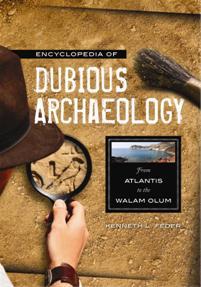
Encyclopedia of Dubious Archaeology
From Atlantis to the Walam Olum
Core Thesis
Encyclopedia of Dubious Archaeology: From Atlantis to the Walam Olum is Kenneth L. Feder's 2010 reference work, structured as an alphabetically-organized encyclopedia rather than a narrative textbook, cataloguing disputed archaeological claims from the legend of Atlantis through the disputed Walam Olum manuscript. Unlike Frauds, Myths, and Mysteries, Feder's own earlier chapter-based textbook, this later book's own encyclopedia format lets readers look up individual disputed claims directly and quickly, and its own stated method carefully and explicitly distinguishes findings that are genuinely questionable from those that constitute outright, deliberate fraud, rather than simply treating every single disputed claim as equally dishonest. This site's own research draws on it for two pages: The Baghdad Battery and The Saqqara Bird, both citing it as "a reference work cataloguing disputed archaeological claims from Atlantis onward, from a working archaeologist specializing in separating genuine evidence from popular myth."
About the Author
Kenneth L. Feder is Professor Emeritus of Anthropology at Central Connecticut State University, a Fellow of the Committee for Skeptical Inquiry, and the founder and longtime director of the Farmington River Archaeological Project in northwest Connecticut. By 2010, when this encyclopedia appeared, Feder had already established himself as the field's leading academic critic of pseudoarchaeology through Frauds, Myths, and Mysteries, first published two decades earlier in 1990 and by then already in multiple editions.
This site's own research treats this encyclopedia as a deliberate structural complement to that earlier textbook rather than a redundant restatement: where Frauds, Myths, and Mysteries builds a sustained narrative argument chapter by chapter, this later book's own alphabetical, entry-based format serves a different practical function -- a browsable reference a reader or researcher can consult for a specific disputed claim without needing to read the surrounding material, the format a genuine encyclopedia specifically enables and a chaptered textbook does not.
Feder's own stated method in this book, per his own account, involves distinguishing findings that are merely questionable -- honest misinterpretations, premature conclusions, or claims that simply have not been adequately tested -- from those that constitute outright, deliberate fraud, a distinction this site's own research treats as a genuinely important analytical refinement: not every disputed archaeological claim in the historical record was made in bad faith, and collapsing honest error and deliberate deception into one undifferentiated category of "pseudoarchaeology" would itself be a less careful, less accurate way of cataloguing the material this book actually covers.
Historical Context & Origins
The book's publication in 2010 came near the midpoint of Feder's own multi-decade publishing career: fourteen years after his 1996 American Antiquity textbook contributions, twenty years after Frauds, Myths, and Mysteries first appeared, and seven years before his 2017 travel-guide-style book Ancient America: Fifty Archaeological Sites to See for Yourself -- positioning this encyclopedia as a mid-career synthesis of material Feder had already spent two decades teaching and writing about in other formats.
The book's title case, the Walam Olum, refers to a purported Lenape (Delaware) Native American historical narrative first published in English translation in 1836 by botanist and antiquarian Constantine Samuel Rafinesque, who claimed to have translated it from pictographic records acquired by a Dr. Ward of Indiana from a Lenape patient in 1820. The document's authenticity was disputed from its earliest publication, and this site's own research notes that later ethnographic studies in the 1980s and detailed manuscript analysis in the 1990s together produced substantial evidence that the document is, in fact, a fabrication rather than a genuine indigenous record -- precisely the kind of long-contested, only-recently-resolved case this encyclopedia's own title signals it is built to catalogue.
The book's publisher, Greenwood, specializes in academic and library reference titles rather than mass-market trade publishing, a publishing context this site's own research treats as directly consistent with the book's own encyclopedia format and its primary intended use as a library and classroom reference work rather than a book most readers would read cover to cover in a single sitting.
Core Arguments & Key Concepts
The book's central organizing argument is structural rather than narrative: by presenting dozens of disputed archaeological claims as discrete, alphabetically-ordered entries, Feder implicitly argues that pseudoarchaeological claims share a common set of recurring evidentiary problems -- regardless of whether the specific claim concerns a lost continent, a supposedly out-of-place artifact, or a contested historical document -- and that a reader who studies enough individual entries will begin recognizing the same handful of underlying reasoning errors reappearing across genuinely unrelated cases.
A second argument, carried over directly from Feder's earlier textbook, is that archaeological claims should be evaluated using the discipline's actual evidentiary and probabilistic standards rather than dismissed by simple appeal to authority or accepted on the strength of a claim's popular appeal -- the book applies this same standard uniformly across its full alphabetical range of entries, from the most famous cases (Atlantis) to far more obscure regional ones.
A third argument concerns intent and honesty specifically: this book's own explicit distinction between findings that are merely questionable and those that are outright frauds means Feder is not simply arguing that every disputed claim in the book is a deliberate lie -- some entries, in the book's own framing, represent honest scholarly error, premature publication, or claims that were reasonable given the evidence available at the time but have since been superseded, a more nuanced position than a blanket accusation of dishonesty across every entry.
A fourth argument, implicit in the book's own title-case example, treats provenance and chain-of-custody problems as a recurring diagnostic red flag: the Walam Olum's own claimed origin story -- pictographs allegedly acquired by an unnamed doctor from a Lenape patient in 1820, later translated by Rafinesque and only partially corroborated by a translator who "has himself never been satisfactorily identified" -- exhibits exactly the kind of undocumented, unverifiable chain of transmission this site's own research has seen recur across many disputed claims Feder catalogues, regardless of the specific culture or era each individual claim concerns.
A fifth argument concerns audience and accessibility: by writing in an encyclopedia format rather than an argumentative narrative, Feder implicitly treats the book's own core social function as providing quick, reliable reference answers to specific questions readers actually bring to it -- "was this specific claim ever verified?" -- rather than persuading a skeptical reader through sustained argument the way his earlier textbook does.
A sixth argument, carried through the book's own consistent entry structure, treats geographic and cultural breadth itself as evidentially significant: by placing entries on Old World claims (Atlantis, the Baghdad Battery), African and Egyptian claims (the Saqqara Bird), and New World claims (the Walam Olum) within one continuous alphabetical sequence, the book implicitly argues that pseudoarchaeological reasoning is not a regional or culturally specific failure mode but a recurring pattern of human error and motivated reasoning that appears wherever popular audiences engage with archaeology's own genuinely remarkable, sometimes counterintuitive findings.
A seventh argument concerns the specific evidentiary weight the book assigns to provenance documentation: across its own range of entries, Feder consistently treats a claim's documented chain of custody -- who found an object, when, under what witnessed circumstances, and how it moved from discovery to formal analysis -- as at least as important as the object's own physical characteristics, a methodological emphasis this site's own research treats as directly transferable to evaluating physical-evidence claims well beyond archaeology specifically, including many of the material-evidence claims this site's own case-file catalogue independently assesses.
Key Cases & Evidence Discussed
This site's own Baghdad Battery case file cites the book directly, treating Feder's broader analytical framework -- distinguishing genuine ancient technological evidence from later popular reinterpretation -- as directly transferable to the disputed claim that a set of Parthian-era clay jars found near Baghdad functioned as galvanic batteries, even though the book's own alphabetical entry may not be titled after this specific artifact.
This site's own Saqqara Bird case file, covering a disputed wooden artifact excavated at the Saqqara necropolis in Egypt and popularly claimed to demonstrate ancient aeronautical knowledge, similarly cites the book for its general reference value in evaluating the claim, applying the same evidentiary standard Feder's book brings to its full alphabetical range of entries.
The book's own title-case example, the Walam Olum, exemplifies the encyclopedia's method most directly: rather than treating the document's controversial status as settled from the outset, the entry format allows Feder to walk through the specific provenance problems, the unidentified translator, and the later manuscript analysis that together produced the modern scholarly consensus that the document is very likely a nineteenth-century fabrication rather than an authentic indigenous historical record. First published in English translation in 1836 by botanist and antiquarian Constantine Samuel Rafinesque, the document was presented as a Lenape (Delaware) creation and migration narrative supposedly recorded on pictograph-marked wooden tablets that Rafinesque claimed had been acquired in 1820 by an otherwise unidentified "Dr. Ward of Indiana" from a Lenape patient in exchange for medical treatment -- a specific, undocumented chain-of-custody story this site's own research treats as exhibiting precisely the kind of unverifiable transmission history that recurs across many of the book's other catalogued claims.
This site's own research treats the Walam Olum case as an especially instructive example of how long a well-constructed fabrication can survive serious scholarly doubt: despite controversy dating back to the document's very first publication, it took ethnographic fieldwork in the 1980s and detailed philological and manuscript analysis in the 1990s to accumulate sufficient evidence for the document's likely inauthenticity to become the dominant scholarly position, a full century and a half after its original publication -- a timeline this site's own research treats as a sobering illustration of how slowly even well-founded skepticism can displace an established, oft-cited claim once it has entered the historical and popular record.
Critical Reception & Controversies
This book carries a moderate Goodreads record: 3.68 out of 5 stars averaged across 22 ratings and 5 written reviews, checked August 2026 -- a smaller review base than Feder's earlier, more widely assigned textbook Frauds, Myths, and Mysteries, consistent with this title's own more specialized function as a library reference work rather than a widely assigned undergraduate course text.
This site's research also attempted to verify an Amazon rating for this title, but Amazon's bot-detection system blocked automated requests to the listing during this session, the same persistent pattern encountered across every title checked this session; per this site's own Amazon Rating Display Protocol, this gap is disclosed honestly here rather than fabricated or silently omitted.
The book's own reference-work format means it is less frequently reviewed as a cover-to-cover reading experience and more frequently cited or consulted as a library holding, a usage pattern this site's own research treats as directly relevant to interpreting its comparatively modest Goodreads review count: reference encyclopedias generally accumulate far fewer reader reviews than narrative nonfiction regardless of their actual usefulness or institutional adoption, since most readers consult specific entries rather than reading and reviewing the complete work cover to cover the way they would a conventional narrative history or textbook.
This book's critical standing benefits directly from Feder's own prior, independently well-reviewed track record: Frauds, Myths, and Mysteries' own strong critical reception, including Gordon Stein's favorable Skeptical Inquirer review of Feder's method, lends this later encyclopedia a form of borrowed authorial credibility this site's own research treats as earned rather than merely presumed, given the genuine consistency of method between Feder's two major works on this same general subject.
Library-focused review outlets, which evaluate reference titles specifically on criteria distinct from general consumer reviews -- accuracy, citation quality, ease of navigation, and suitability for a library collection's existing holdings -- represent this book's own most relevant critical audience, a specialized readership whose assessments this site's own research treats as more directly informative for a reference encyclopedia's actual value than general-audience star ratings alone can capture.
Influence & Legacy
Within this site's own essential-reading library, this book stands alongside Frauds, Myths, and Mysteries as the second Feder title this site's research documents, together giving readers both a sustained narrative treatment of pseudoarchaeology's underlying patterns and a quick-reference encyclopedia for looking up individual disputed claims by name -- two genuinely complementary formats addressing the same underlying body of contested material.
This site's own citation of the book across two entirely distinct ancient-artifact case files -- the Baghdad Battery in Iraq and the Saqqara Bird in Egypt -- demonstrates the book's genuine utility as a general-purpose reference regardless of a disputed claim's specific geography or era, the same broad applicability this site's research has separately documented for Feder's earlier textbook.
As a library-oriented reference title from an academic publisher, this book carries an institutional durability -- continued availability through library catalog systems and academic databases -- that many popular-press skeptical titles covered elsewhere in this site's library do not share, giving it a quieter but potentially longer functional lifespan as a standard reference source even without matching its author's earlier textbook's classroom-adoption numbers.
The book's own title-case treatment of the Walam Olum situates it within a broader, ongoing scholarly reassessment of nineteenth-century American antiquarian claims about Native American history and origins, a subject area this site's own research treats as historically significant well beyond the narrower UFO and paranormal-phenomena focus of this site's own core case-file catalogue, illustrating the encyclopedia's own reach into disputed-history territory that predates and extends beyond ancient-astronaut claims specifically.
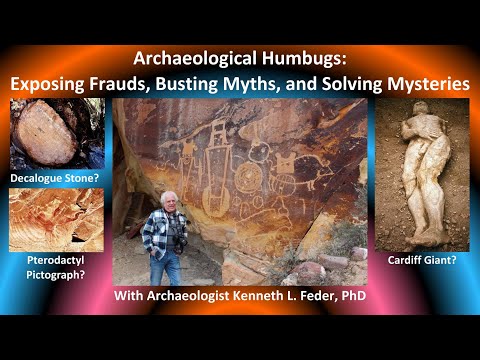
Feder's continued public lecturing on this same catalogue of material, including presentations hosted by regional archaeology organizations well after this book's own 2010 publication, suggests the underlying content has retained its own practical teaching value for public archaeology outreach long after the book's initial print run, with Feder himself continuing to serve as the material's most visible, credentialed public messenger.
This site's own research also treats the book's specific pairing of a globally famous case (Atlantis) with far more obscure regional ones (the Walam Olum) in its own title as a deliberate editorial signal about the book's own intended scope: rather than limiting itself to the handful of claims most familiar to a general audience, the encyclopedia format allows Feder to document genuinely niche disputed claims that a narrative textbook, constrained by chapter structure and page count, would likely have had to omit entirely.
The Book
As an Amazon Associate, OverClassified may earn from qualifying purchases made through this link, at no extra cost to you.
Why This Is Essential Reading
Encyclopedia of Dubious Archaeology earns its place on this list as the natural reference companion to Frauds, Myths, and Mysteries, giving Kenneth Feder's own two decades of accumulated pseudoarchaeology expertise a genuinely browsable, entry-by-entry reference format his earlier narrative textbook does not attempt to provide. Its direct citation across this site's own Baghdad Battery and Saqqara Bird case files, combined with its own careful, explicit distinction between honest scholarly error and outright fraud, together support this site's own judgment that the book has earned a lasting place as a genuine reference source for readers who arrive at this site's own ancient-connections catalogue wanting to look up a specific disputed claim directly, rather than work through a full sustained argument to reach the same evaluation.
Related Cases & Theories
Essential Viewing
Sources Cited
- Feder, Kenneth L. Encyclopedia of Dubious Archaeology: From Atlantis to the Walam Olum. Greenwood, 2010 (ISBN 978-0-313-37918-5, cited here).
- "Encyclopedia of Dubious Archaeology." Goodreads (3.68 average rating, 22 ratings, 5 reviews, checked August 2026). goodreads.com
- "Encyclopedia of dubious archaeology." Open Library (bibliographic record confirming 2010 Greenwood edition, subtitle, and pagination). openlibrary.org
- "Walam Olum." Wikipedia (history and disputed authenticity of the book's title-case document). en.wikipedia.org
- "Kenneth Feder." Wikipedia (biography and bibliography, including this title). en.wikipedia.org
- "Archaeological Humbugs: Exposing Frauds, Busting Myths, and Solving Mysteries, by Kenneth L. Feder, PhD." Old Pueblo Archaeology Center, YouTube (public lecture covering the same catalogue of disputed claims; video verified via oEmbed). youtube.com
- This site's own resources library: Full Reading List, where this exact edition is cited across 2 separate pages.
- This site's own key-figures entry: Kenneth Feder, for his full biography and site-wide connections.
- This site's own ancient-connections entry: The Baghdad Battery.
- This site's own ancient-connections entry: The Saqqara Bird.
- This site's own essential-reading entry: Frauds, Myths, and Mysteries, Feder's earlier and more widely-reviewed textbook treatment of the same subject.
- This site's own theory page: Ancient Astronaut Hypothesis, which cites Feder's broader body of work directly.
Have corrections, additional research, or peer-reviewed sources? Help improve this entry.
Suggest an Edit