
El ovni de Gáldar
Ricardo Campo Pérez's Book-Length Reconstruction of Spain's Most Famous Sighting — by One of the Two Researchers Who Solved It
Core Thesis
This is what a solved case looks like when someone takes it seriously anyway. On the night of 22 June 1976 an ascending light expanded into an enormous luminous dome over the Atlantic, seen from Gáldar and across five Canary Islands and from a Spanish Navy corvette at sea; near Gáldar a physician and a taxi driver described something else entirely, a transparent sphere some thirty metres across containing two tall reddish figures. The Spanish Air Force opened a file the same week. Twenty-five years later Ricardo Campo Pérez and Vicente-Juan Ballester Olmos matched the event, nearly to the minute, against declassified U.S. Navy launch logs: a submarine-fired Poseidon C-3 missile detonating its upper stage several hundred kilometres out in the Atlantic. El ovni de Gáldar is Campo's 351-page account of the whole thing — the testimonies, the press frenzy, the declassified file, the single disputed photograph, and the ufological literature that grew up around a misidentified missile. Its argument is that the interesting question was never what the object was.
About the Author
Ricardo Campo Pérez is a Doctor of Philosophy from the Universidad de La Laguna in Tenerife, and a researcher associated with the Fundación Anomalía — the Spanish organisation that has been the institutional home of evidence-led ufology in that country since 1997.
His standing in this particular case is not that of a commentator. In March 2001 he and Vicente-Juan Ballester Olmos published in the Spanish Air Force's own journal, the Revista de Aeronáutica y Astronáutica, the article that formally identified both the June and the November 1976 Canary Islands sightings as U.S. Navy Poseidon C-3 missile tests. Publishing the solution to a country's most famous UFO case in that country's own service journal is an unusual place to land, and it says something about how the work was regarded.
The identification was not armchair work. Campo Pérez personally interviewed surviving witnesses decades after the events, including, in 1995, retired Colonel Alfonso Ruiz Crespo — the aide-de-camp to General Carlos Dolz Espejo, who commanded the Canaries Air Zone and personally witnessed the November 1976 recurrence from the cockpit of his own aircraft. That is the kind of source who does not appear in the popular literature because nobody asked him.
His other books show the same preoccupation. El OVNI de Canarias: historia y análisis de una creación periodística treats the Canary Islands UFO story explicitly as a journalistic construction; El fenómeno ovni en Canarias desde 1981 a 2015 extends the regional survey forward; and Los ovnis ¡vaya timo! was published by Laetoli in its long-running skeptical series. He is, in short, a professional philosopher who has spent his career on one archipelago's UFO record and has concluded that most of it is a media artefact.
That conclusion is worth weighing honestly rather than discounting. A committed skeptic writing about a case he helped solve is not a neutral narrator, and a reader should expect the book to be an argument. What distinguishes it from a debunking pamphlet is that the argument was earned: Campo did the archival work, obtained the launch records with Ballester Olmos, found and interviewed the surviving officers, and published the result where the institution involved would see it.
This site's own case file on the sighting, Gando Air Base / Canary Islands UFO, is classified Debunked and rests substantially on that 2001 identification.
Historical Context & Origins
Spain in June 1976 was seven months past Franco's death and in the most unstable stretch of its transition. The Canaries, 1,300 kilometres off the African coast, were simultaneously a Spanish province, a NATO-adjacent Atlantic staging area and the subject of an active Saharan decolonisation crisis. Anything unexplained in that sky in that summer arrived pre-loaded with political meaning.
The military and naval traffic was real. The mid-Atlantic west of the islands was a U.S. Navy ballistic-missile test corridor, and submarine-launched Poseidon C-3 firings terminated with upper-stage events several hundred kilometres out — producing, at the right hour, an expanding exhaust cloud still catching sunlight after the ground below had gone dark. That is the physical stimulus, and nobody on the islands had any way of knowing it.
The reporting environment was equally particular. Spain's press had just been unmuzzled, the country's best-selling paranormal journalism was in its ascendancy, and J.J. Benítez had, four months later, received twelve Air Force UFO report summaries directly from a general — publishing them as Ovnis: Documentos Oficiales del Gobierno Español in 1977 and giving the Gáldar case its first mass exposure. The case entered the international literature through that book rather than through any investigation.
The Air Force did open a formal file — 107 pages, eventually declassified in the 1990s programme Ballester Olmos had proposed. It is an unusually substantial military record for a sighting of this kind, and its release is what made the later work possible.
Then the case sat. For twenty-five years it was Spain's flagship close encounter: a physician witness with professional credibility, occupants, a national military file, and press coverage that had reached the rest of the world. The 2001 identification landed into a literature that had spent a quarter of a century building on it.
This book arrives twenty-two years after that identification and forty-seven years after the event, which is its own kind of statement. Campo is not writing to announce a solution. He is writing about what happened to a case after it was solved, and about why the solved version has never displaced the famous one.
Core Arguments & Key Concepts
The phenomenon occurred at sea, hundreds of kilometres away. Campo's central geometric claim and the one that dissolves the case. An object visible simultaneously from five islands, across a span of roughly 700 kilometres, cannot have been where the closest witnesses placed it. The distance is not a detail; it is the whole argument.
The famous witnesses were therefore wrong about scale and proximity. The uncomfortable corollary, stated directly. A transparent sphere thirty metres across at close range and a luminous event several hundred kilometres out to sea are not compatible descriptions of the same thing.
Previous investigators did not establish the phenomenon's real distance. Campo's methodological criticism of the ufological literature: despite claims of rigorous field investigation, the basic geometric question — how far away was it, given who else saw it — went unasked for decades.
The case is a journalistic construction as much as an observational one. The theme running through all of Campo's Canary Islands work. Media impact, radio and television treatment, and the circulation of the occupant account did more to determine what the case became than any evidence did.
The occupant account is a single sub-report inside a mass sighting. Hundreds of people saw an expanding dome of light. One account — and, within it, one of the three people present — produced the humanoid figures. A passenger in the back of the taxi reported only a glow.
The declassified Air Force file is a real primary source and should be read. Campo works from the released military documentation rather than from the secondary literature, which is precisely the shift the Spanish declassification was supposed to make possible.
The imagery has a cultural genealogy. Campo notes the resemblances between the described craft and occupants and the space-science-fiction iconography of the period — not as proof of anything, but as a fact about the vocabulary available to witnesses in 1976.
Only one photograph is claimed, and it settles nothing. The sole photographic image associated with the night is examined; its provenance and status have never been independently established.
Key Cases & Evidence Discussed
The Gáldar sighting, 22 June 1976, around 22:15. The book's entire subject. An ascending point of light expanding into a vast luminous dome over the Atlantic, seen from Gáldar, Tenerife, La Palma and La Gomera and from a Spanish Navy corvette at sea.
Dr. Francisco Julio Padrón León's account. The physician's report of a transparent sphere roughly thirty metres in diameter containing two tall reddish figures with apparent instrumentation — the single detail that turned a mass light sighting into an international close-encounter case.
The taxi and its third occupant. Padrón León was travelling by taxi to a patient; the driver reported the sphere, and a passenger in the rear seat reported only a glow. The internal disagreement inside a three-person vehicle is one of the case's most under-discussed features.
The recurrence of 19 November 1976. A near-identical phenomenon five months later, witnessed by General Carlos Dolz Espejo, commanding the Canaries Air Zone, from the cockpit of his own aircraft. Campo interviewed the general's aide-de-camp, retired Colonel Alfonso Ruiz Crespo, in 1995.
The 107-page Ejército del Aire file. The formal Spanish Air Force investigation opened the same week and released under the 1992–1999 declassification programme — the primary documentary base for any modern treatment. See Expedientes insólitos.
The Poseidon C-3 identification. Campo and Ballester Olmos's 2001 article in the Revista de Aeronáutica y Astronáutica, matching both 1976 events against declassified U.S. Navy Eastern Test Range launch records for submarine-fired missiles detonating their upper stages roughly 700 to 760 kilometres out in the Atlantic.
The disputed photograph. One image is reported to have been taken that night by a foreign tourist and is referenced in period press coverage and in the case file; its authenticity, ownership and copyright status have never been independently established.
The Benítez transmission. The route by which the case reached a mass and then an international audience — a journalist's 1977 book built on Air Force summaries handed over by a general, rather than an investigation. Campo's reconstruction is explicitly a challenge to that version.
Gando Air Base. The Gran Canaria military installation whose command opened the file and whose name the case carries in most of the international literature.
Critical Reception & Controversies
The book has been reviewed in the Spanish-language skeptical and ufological press. The most substantive notice appeared on Marcianitos Verdes, the long-running Spanish-language blog on the critical side of the subject, which set out the book's structure — testimonies, media reaction at home and abroad, the declassified Air Force documentation, the sole photograph, comparisons with similar events and the science-fiction resemblances — and made one sharp objection: for consistency, the book should have been called the missile of Gáldar. That is a fair jab and it identifies the real tension in the project.
The regional press covered it too. Diario de Avisos, a Canary Islands daily, ran a feature framing the case — and the book — against the Cold War background of the archipelago's Atlantic position, which is the right context and one the popular UFO literature almost never supplies.
The substantive criticism a reader should weigh is the one the title invites. Campo does not think there was a UFO at Gáldar, and has not thought so for over two decades. A 351-page reconstruction of a case by someone who considers it closed is a work of argument, and the argument's structure — establish the real distance, show the near witnesses' descriptions cannot survive it, trace how the discrepancy went unexamined — is designed to reach a conclusion already held. Readers who want the case put at its strongest will not find that here, and should read the file's own defenders alongside it.
There is a real evidentiary point the skeptical account has to carry, and it is worth being explicit that Campo carries it. The distance argument is not an assertion of implausibility; it is a geometric constraint derived from the fact that people on four separate islands, and a naval crew at sea, reported the same event at the same time. That constraint is independent of anyone's opinion about UFOs, and it is what makes the case's most famous testimony untenable as given.
What the identification cannot do, and what Campo does not claim it does, is explain the specific content of Padrón León's account. Establishing that the stimulus was a missile plume hundreds of kilometres away establishes what he was looking at; it does not by itself explain a detailed report of a transparent sphere with occupants from a professional observer of evident sincerity. That gap is the honest residue of the case, and it belongs to psychology rather than to aerospace.
A note on this site's own standing rule about official conclusions. The Poseidon identification did not come from a government body clearing itself; it came from two independent researchers working American launch records against Spanish military documentation, published in a service journal that had no institutional interest in the result. That is a materially different evidentiary situation from an agency declaring its own case closed, and it is why this site treats the identification as strong rather than merely official.
The practical limitation is the familiar one: a 351-page Spanish-language monograph, self-published through a small imprint, on a case most English-language readers know only in its 1977 form. That the Biblioteca Nacional de España catalogues it is a genuine mark of standing, and it does not make it easier to find.
Influence & Legacy
The case's international reputation still rests on the version Benítez published in 1977, and this book is the most complete attempt anyone has made to replace it.
Its more general value is as a study of persistence. A solved case does not stop circulating; it circulates in its unsolved form, because the unsolved form is the one that got printed, translated, broadcast and repeated for twenty-five years before the solution appeared in a service journal in Spanish. The gap between resolution and reception is one of the most consistent features of this subject, and Gáldar is an unusually clean example of it.
For Spanish ufology specifically, the book completes an arc that runs through this site's essential-reading shelf: Los OVNIS y la ciencia sets out the method, the Enciclopedia applies it to the case record, Expedientes insólitos documents the opening of the military archive, and this book shows what the archive plus the method produce when turned on the country's most famous case.
It also stands as a demonstration of what declassification is actually for. Spain released 84 files covering 122 sightings; this is what one of them yields when a qualified researcher works it against foreign primary records. The value of an open archive is not that it confirms anything. It is that it makes cases decidable.
The residue is where the future work is. Campo's reconstruction settles the stimulus and leaves the testimony. Why a credible professional witness produced a detailed occupant account of a distant missile plume is a genuinely open question about perception, expectation and the imagery available in 1976 — and it is a more interesting one than the question the case was famous for.
The Book
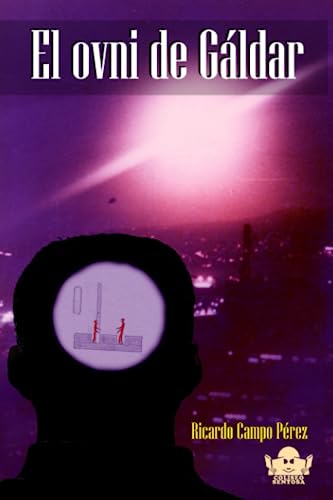
El ovni de Gáldar
Ricardo Campo Pérez's Book-Length Reconstruction of Spain's Most Famous Sighting — by One of the Two Researchers Who Solved It
Find on Amazon →As an Amazon Associate, OverClassified may earn from qualifying purchases made through this link, at no extra cost to you.
Why This Is Essential Reading
Read it as the definitive treatment of a case most people still know in its 1977 form. El ovni de Gáldar is 351 pages on one night — 22 June 1976, when an expanding dome of light over the Atlantic was seen from five Canary Islands and a Spanish Navy corvette, and when a physician and a taxi driver near Gáldar described a transparent sphere with two occupants inside it. Ricardo Campo Pérez is a philosopher from the Universidad de La Laguna who, with Vicente-Juan Ballester Olmos, identified the stimulus in 2001 as a submarine-launched Poseidon C-3 missile, published the identification in the Spanish Air Force's own journal, and interviewed the surviving officers himself. The distance argument he builds the book on is geometric rather than rhetorical: an object seen simultaneously across roughly 700 kilometres was not thirty metres from a taxi. What the book cannot explain — and does not claim to — is why a credible professional witness produced the account he did, which is the honest residue and the more interesting question. Read it with this site's Gando case file and with Benítez's 1977 book, which is the version it is arguing with.
Related Cases & Theories
Sources Cited
- Campo Pérez, Ricardo. El ovni de Gáldar. Coliseo Sentosa (ed. Diego Zúñiga), 16 June 2023. 351 pp. ISBN-13 9798397300902. amazon.com
- Biblioteca Nacional de España, catalogue record XX2919959, El ovni de Gáldar — the Spanish national library's own bibliographic entry. datos.bne.es
- Marcianitos Verdes, review of El ovni de Gáldar (July 2023) — the source used here for the book's structure and contents, for the editorial credit to Diego Zúñiga and Coliseo Sentosa, for Campo's argument that the phenomenon occurred at sea and was visible across roughly 700 kilometres, for his basis in interviews with neighbours, for the challenge to the narrative popularised by J.J. Benítez, and for the reviewer's remark that the book might more consistently have been titled “the missile of Gáldar.” marcianitosverdes.haaan.com
- Diario de Avisos, “El ovni de Gáldar: bajo la sombra de la Guerra Fría en Canarias” (June 2023) — Canary Islands regional press coverage of the book and of the case's Cold War context. diariodeavisos.elespanol.com
- Librería Lemus catalogue record, ISBN 9798397300902 — independent Canary Islands bookseller listing. librerialemus.com
- Amazon Spain listing for the same edition — independent confirmation of author, extent and publication date. amazon.es
- Campo Pérez, Ricardo. El OVNI de Canarias: historia y análisis de una creación periodística, ISBN 9788417764630 — the author's companion treatment of the Canary Islands UFO story as a journalistic construction. agapea.com
- Campo Pérez, Ricardo. Los ovnis ¡vaya timo! (Laetoli) — the author's earlier volume in a mainstream Spanish skeptical series. goodreads.com
- Review of Ricardo Campo, El fenómeno ovni en Canarias desde 1981 a 2015 — independent assessment of the author's wider regional survey work. academia.edu
- “Los gigantes de Gáldar y los avistamientos canarios” — scholarly-format treatment of the Gáldar sighting within the wider Canary Islands record. academia.edu
- Naukas, “Dos gigantes rojos cabalgando un misil” — Spanish science-communication treatment of the Gáldar case and the missile identification. naukas.com
- Wikipedia, “UFO sightings in the Canary Islands” — background orientation on the 1976 events and their later identification. en.wikipedia.org
- Internet Archive, Spanish UFO Files (Ministerio de Defensa) — the declassified Spanish Air Force archive containing the 107-page Gando file. archive.org
- Wikipedia, “UGM-73 Poseidon” — the submarine-launched ballistic missile whose C-3 test firings produced the stimulus. en.wikipedia.org
- OverClassified, Gando Air Base / Canary Islands UFO — this site's own case file (#103, Debunked), the source for the 107-page Ejército del Aire file, the 19 November 1976 recurrence witnessed by General Carlos Dolz Espejo, the 700–760 km launch distances, and the status of the single claimed photograph.
- OverClassified, Ricardo Campo Pérez — this site's key-figures card, the source for his doctorate from the Universidad de La Laguna, his Fundación Anomalía affiliation, the March 2001 Revista de Aeronáutica y Astronáutica article with Ballester Olmos, and his 1995 interview with retired Colonel Alfonso Ruiz Crespo.
Have corrections, additional research, or peer-reviewed sources? Help improve this entry.
Suggest an Edit