
The Chulucanas Incident
On the evening of October 13, 2001, more than a hundred people attending Chulucanas, Peru's procession honoring the Señor Cautivo de Ayabaca watched eight red-orange spheres, each estimated at 150–200 meters across, move in shifting formation over the town for roughly two and a half hours — joining, splitting apart, and finally merging into a single point of light before vanishing. Municipal cameraman Iván Iza Nanfaro, filming the religious procession itself, turned his camera skyward and captured roughly 23 minutes of the display on tape, footage that became the seed of the first case ever formally opened by the Peruvian Air Force's new Oficina de Investigación de Fenómenos Aéreos Anómalos (OIFAA). Two further sightings near the same valley on October 25 and November 15, 2001 would follow within weeks, but this file's core claim rests on the October 13 event: a large, simultaneous, video-documented civilian sighting that a uniformed Air Force colonel would, eighteen months later, publicly confirm his own office was investigating — a rare instance of on-record Latin American military acknowledgment that a UFO case existed at all, even though no formal written OIFAA report on it was ever released.
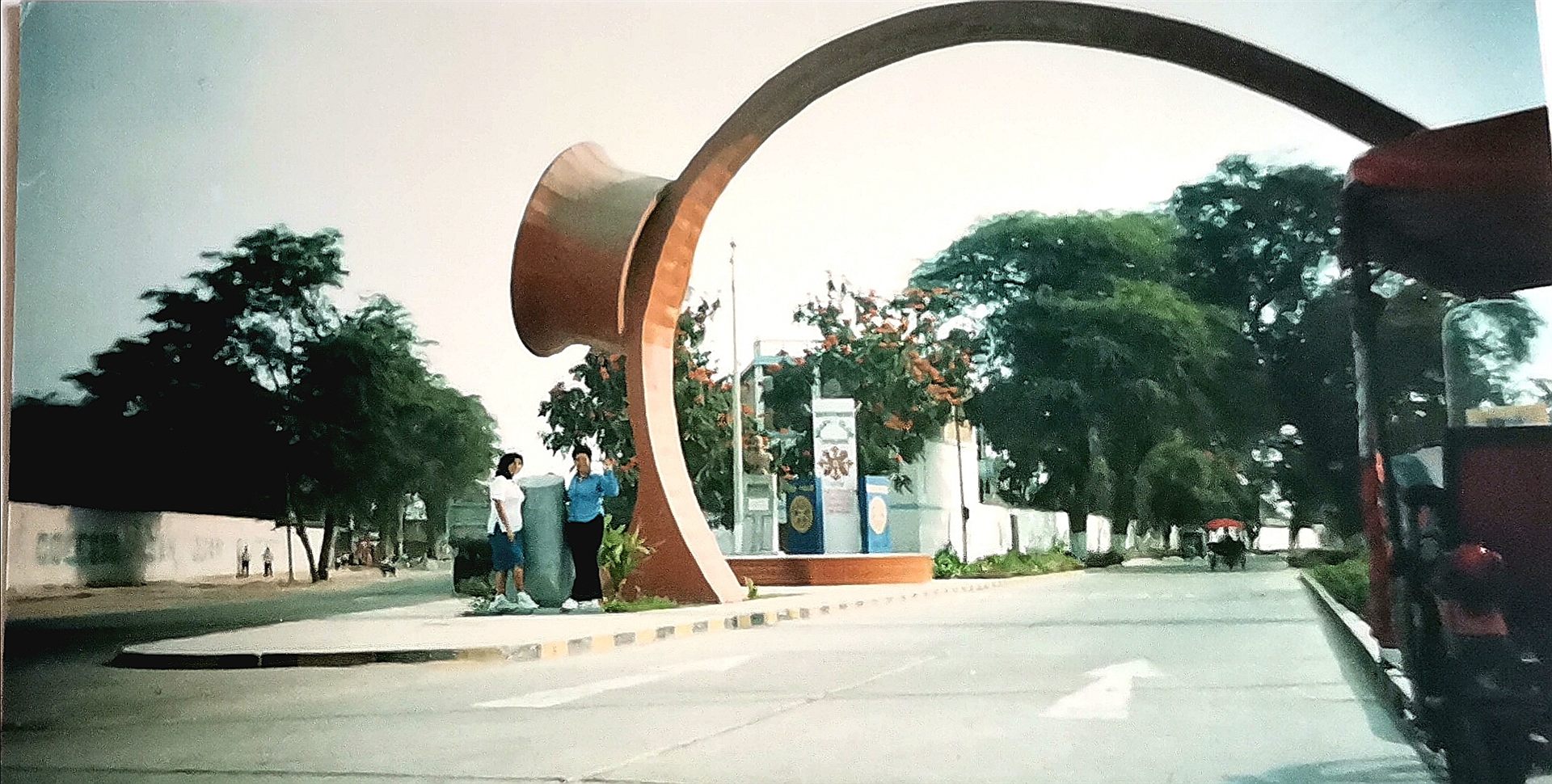
Pictured: the entrance to Chulucanas, Piura Region, Peru — the town where the October 13, 2001 sighting occurred. This is not a frame from Iván Iza Nanfaro's original video or a photograph of the object itself; that footage has circulated only in low-resolution copies via Peruvian television broadcasts and OIFAA-affiliated researchers, and no rights-clear, publishable master copy is known to exist in the public record. This image is included solely to show the town named throughout this file.
Theoretical Alignment
Chulucanas scores moderately on the Extraterrestrial Hypothesis: the reported behavior — eight discrete lights holding independent positions in a shifting formation for roughly 150 minutes, then converging into a single sphere before disappearing — is not easily reduced to a single natural or celestial object, and a genuine, if imperfect, video record exists to check the testimony against. The Psycho-Social score is kept meaningfully higher than in most files in this catalogue for an honest, case-specific reason: this sighting began in the middle of a large, emotionally charged religious procession, a setting well studied in the social-psychology literature for collective attention effects and shared suggestibility, and the object's own alleged behavior — repeatedly forming and dissolving shapes "as if trying to write something in the sky," in several witnesses' own words — is exactly the kind of pattern-seeking narrative a large, primed crowd can co-construct around an ambiguous stimulus. The Interdimensional Hypothesis finds little support; nothing in the core October 13 testimony describes portal-like or trans-dimensional behavior, only physically present lights that moved, combined, and departed.
Background
Chulucanas is a market and pottery town of roughly 80,000 people in Peru's Piura Region, seat of Morropón Province, sitting in the dry Piura Valley near the confluence of the Charanal and Piura rivers. It is internationally known for ceramics made using techniques descended from the pre-Incan Vicús and Tallán cultures, granted an official appellation of origin by the Peruvian government in 2006, with the first regulatory authorizations to use it issued in 2008. Every October 12–14, Chulucanas joins dozens of towns across the Piura region in observing the feast of the Señor Cautivo de Ayabaca, a devotion centered on a wooden image of the crucified Christ carved, according to local tradition, in 1751 in the highland town of Ayabaca itself. The devotion is one of the largest annual pilgrimage events in northern Peru — tens of thousands travel to Ayabaca each October, many walking the final approach on their knees — and its date, October 13, is observed with parallel local processions in surrounding towns, including Chulucanas, using their own parish images and routes rather than requiring travel to Ayabaca itself. In 2013, Peru's Ministry of Culture formally declared the pilgrimage and its associated festivities part of the nation's official Cultural Heritage.
Peru's Air Force (Fuerza Aérea del Perú, FAP) had, before October 2001, no standing, publicly acknowledged office for investigating unidentified aerial phenomena reports, despite a documented history of earlier incidents — most notably the April 1980 La Joya Air Base Incident, in which a Peruvian fighter pilot fired cannon rounds at a hovering object over an air base in Arequipa, a case the FAP kept internally suppressed for roughly two decades. In December 2001 — within weeks of the Chulucanas sighting, though the two events do not appear to be causally connected in any source this file has located — the FAP established the Oficina de Investigación de Fenómenos Aéreos Anómalos (OIFAA), later reorganized and renamed DIFAA, housed within the FAP's Directorate of Aerospace Interests (DINAE). Peruvian lawyer and independent UFO researcher Anthony Choy, who had studied the UFO phenomenon in Peru privately since 1999, joined OIFAA as an advisory investigator in January 2002. The Chulucanas footage, already circulating locally, became his first assigned case — and, by his own later account and that of independent Peruvian press coverage, the first UFO case the Peruvian government ever formally opened a file on.
Complete Timeline
| Date | Event |
|---|---|
| 1999 | Anthony Choy, then a private researcher, begins independently studying UFO reports in Peru. |
| ~2000 | An unnamed FAP pilot reportedly observes a large ring-shaped heat source, estimated at 15–25 km across, near Cerro Pilán while flying at roughly 12,000 feet — cited afterward by Choy as regional precedent, though it was not investigated as a formal case at the time. |
| October 13, 2001, ~7:00 PM | During Chulucanas's procession honoring the Señor Cautivo de Ayabaca, more than a hundred attendees notice eight red-orange spherical lights over the town. |
| October 13, 2001, evening | Municipal cameraman Iván Iza Nanfaro, filming the procession itself, turns his camera skyward and records roughly 23 minutes of the spheres moving in shifting formation, joining and separating, before they converge into a single point of light. |
| October 13, 2001, ~10:00 PM | The display ends after a continuous observation period witnesses and later investigators place at roughly two and a half hours; the light departs from view. |
| October 25, 2001 | A separate, teardrop-shaped red-orange object is filmed in the countryside near Cerro Pilán; investigators later associate the footage with three apparent ground markings in the same area, though no metallurgical or forensic soil analysis of these markings has been published. |
| November 15, 2001 | A luminous object is reported descending toward Chulucanas itself, causing brief public alarm in the town before it withdraws from view. |
| December 2001 | The Peruvian Air Force formally establishes the Oficina de Investigación de Fenómenos Aéreos Anómalos (OIFAA) within its Directorate of Aerospace Interests (DINAE). |
| January 2002 | Anthony Choy joins OIFAA as an advisory investigator; the Chulucanas footage becomes his first assigned case. |
| 2002–2005 | Choy conducts a field investigation of the case totaling roughly 17 site visits to the Chulucanas/Morropón valley and an estimated 80 hours of recorded material, collecting further local witness testimony centered on Cerro Pilán. |
| February–March 2003 | Choy and OIFAA's overseeing officer, Colonel José Raffo Moloche of DINAE, appear together across Peruvian and international outlets — Canal N, América Televisión, Univisión, Reuters Television, and Radio Programas del Perú among them — publicly confirming the FAP was formally investigating the Chulucanas case, though no separate written OIFAA report accompanied the disclosure. |
| Mid-2004 | Univisión's Colorado affiliate contacts Choy to document the region for U.S. Spanish-language television, dispatching correspondent María Rozman and cameraman José Jesús Medellín. |
| August 6–7, 2004 | The Univisión crew, with Choy, records a separate 55-minute luminous-object display near Cerro Pilán in the early hours of August 7 — a distinct, later event from the original October 2001 sighting, but one Choy treats as continuous evidence of the same regional pattern. |
| 2008 | Peru's original OIFAA office lapses into inactivity following institutional changes within the FAP. |
| 2013 | Following renewed public attention after retired La Joya pilot Óscar Santa María Huertas's 2007 and 2009-era press disclosures, the FAP reopens its anomalous-phenomena investigation function. |
| March 8, 2014 | A British National Geographic production crew films a documentary on the case, titled El Incidente Chulucanas, during which the crew reports recording an additional unexplained light near Cerro Pilán; the documentary airs in Latin America. |
| 2010s–2020s | Choy organizes his wider multi-site Peruvian UFO research, including Chulucanas, under the banner "Proyecto 33," identifying dozens of recurring sighting zones across the country. |
A Procession Interrupted
Every account of October 13, 2001 begins in the same place: the streets of Chulucanas, filled with the town's annual procession honoring the Señor Cautivo de Ayabaca, one of northern Peru's most significant religious observances. Unlike a routine sky-watching session or an isolated late-night sighting, the setting itself supplied more than a hundred simultaneous, independently positioned observers before anything unusual had even happened — a crowd already gathered, already looking skyward at candles and procession banners, when attention shifted from the image of the crucified Christ being carried through the streets to eight distinct points of red-orange light appearing in the darkening evening sky above the town. Witnesses described the lights as neither the steady white of aircraft navigation beacons nor the flicker of fireworks or festival flares, but as smooth, sustained, and colored somewhere between deep orange and red — a description that has remained consistent across the testimonies collected by researchers in the years since.
What distinguished the event from an ordinary transient light in the sky was duration and behavior. The eight spheres did not simply cross the sky and vanish, as a meteor, satellite, or aircraft would; they held position relative to one another and to the town below for an extended period — consistently reported as roughly two and a half hours, from shortly after sunset until around ten o'clock that night — while apparently repositioning among themselves. Multiple secondary accounts describe the lights performing "zigzag" movements and forming shapes that some witnesses characterized as deliberate or writing-like, language that should be read cautiously (crowds under ambiguous, sustained visual stimuli are a documented source of pattern over-attribution) but that nonetheless represents the honest, repeated characterization given independently by numerous observers that night.
Iván Iza Nanfaro's Camera
The event's single most consequential witness was not, initially, watching the sky at all. Iván Iza Nanfaro, a cameraman employed by the Chulucanas municipal government, had been assigned to film the Señor Cautivo procession itself — routine municipal documentation of a well-established annual civic and religious event, not an anomalous-phenomena assignment of any kind. When the crowd's attention shifted skyward, Iza redirected his camera from the procession to the lights, capturing what has since become the case's central piece of documentary evidence: approximately 23 minutes of continuous footage showing the spheres in their shifting formation, filmed by a person with no prior UFO-research interest, no advance expectation of anything unusual happening that evening, and an institutional employer (the town government) rather than any UFO-advocacy organization behind the recording.
This detail matters more than it might first appear. A significant share of ambiguous UFO video evidence collected globally comes from individuals who were already watching for something unusual, already primed by community discussion of prior sightings, or already affiliated with ufology research at the moment of filming — each a legitimate basis for a skeptical discount on independence. Iza's footage does not carry that specific weakness: he was doing an unrelated job when the event began. What the footage does still lack, and what this file is obligated to state plainly, is any known independent forensic video analysis by a party outside OIFAA and Choy's own research circle — no published frame-by-frame optical analysis, no chain-of-custody documentation for the original tape, and no publicly available full, high-resolution master copy; what has circulated publicly consists of lower-resolution broadcast and re-broadcast copies. Iza went on to record more than a dozen further sightings in the Chulucanas/Piura region in subsequent years, a body of work researchers have since described as among the most extensively documented UFO footage collected anywhere in Peru.
Formation, Fusion, Departure
Across the roughly 150 minutes witnesses describe watching the display, the eight spheres are consistently reported moving relative to one another rather than remaining in a single static cluster: separating to wider spacing, drawing back together, and at points arranging into patterns some witnesses likened to geometric shapes. Investigator Anthony Choy's own published estimate, based on subsequent measurement and comparison against known landmarks in the frame, placed each individual sphere's apparent size at roughly 150 to 200 meters across — an estimate this file treats as Choy's own investigative conclusion rather than an independently peer-reviewed photogrammetric result, since no separate published methodology paper detailing the calculation has been located. In the display's final phase, the eight lights are described converging into a single, brighter point of light before that point itself faded from view or moved off beyond the horizon, at which point the procession's attention gradually returned to the religious observance already in progress. No debris, sound, air-pressure disturbance, or physical aftereffect of any kind was reported by any witness at the conclusion of the display.
Enter OIFAA: A Government Investigation Opens
The Chulucanas footage circulated locally and within Peru's small ufology research community for several months before it reached formal institutional attention. That attention arrived by way of a coincidence of timing rather than any direct causal link this file's research has been able to establish: in December 2001, roughly two months after the sighting, the Peruvian Air Force formally created the Oficina de Investigación de Fenómenos Aéreos Anómalos (OIFAA) within its Directorate of Aerospace Interests (DINAE), Peru's first standing institutional body for evaluating anomalous aerial phenomena reports. The following month, January 2002, Lima lawyer and independent UFO researcher Anthony Choy, who had been studying the phenomenon privately since 1999, joined the new office as an advisory investigator. Chulucanas became his first assignment.
What followed was, by Choy's own account, an unusually sustained field investigation for a Latin American UFO case: roughly seventeen separate visits to the Chulucanas and Morropón valley area across three and a half years, an estimated eighty hours of recorded interviews and follow-up observation, and a deliberate effort to trace the October 2001 sightings to a specific geographic focus point, which Choy identified as Cerro Pilán, a modest hill between the hamlets of Franco and Solumbre already carrying decades of unrelated local folklore about disappearances and strange lights before 2001. This sustained, multi-year field commitment is a genuine point in the case's favor when weighed against the many single-visit, drive-by UFO investigations this catalogue more commonly documents — but it is also, this file notes honestly, an investigation conducted entirely by one advisory researcher operating under OIFAA's institutional umbrella rather than a broader multi-disciplinary or peer-reviewed scientific panel. Choy has said he collected hundreds of additional local witness accounts during this period, describing objects witnesses characterized as "enormous, close-up, and solid," glowing orange-red and reportedly radiating perceptible heat — testimony this file records as part of the honest historical account of what Choy's fieldwork gathered, while noting plainly that none of it carries the same evidentiary weight as the October 13 event's own video and hundred-plus simultaneous witness pool, since it was collected individually, years afterward, and without comparable contemporaneous documentation. Chulucanas ultimately became the founding case of what Choy later organized as "Proyecto 33," a wider multi-year survey work that would go on to identify roughly thirty-three recurring zones of reported anomalous aerial activity spread across an estimated three-quarters of Peru's national territory — making Chulucanas, in Choy's own retrospective framing, not an isolated 2001 event but the opening case study in a much larger, still-ongoing body of regional research.
Going Public: The 2003 Press Disclosure
The Chulucanas case moved from internal FAP file to public record in February and March 2003, when Choy and OIFAA's overseeing officer, Colonel José Raffo Moloche of the Directorate of Aerospace Interests, appeared together across a run of Peruvian and international broadcast outlets — Canal N, América Televisión, and Radio Programas del Perú within Peru, and Univisión and Reuters Television internationally — discussing the case on the record. Colonel Raffo Moloche's participation is the single most significant institutional fact in this file: a uniformed Peruvian Air Force officer, in his official capacity overseeing the FAP's anomalous-phenomena office, publicly confirmed that the Chulucanas footage was under formal government investigation, making it, so far as this catalogue's research has found, the first UFO case the Peruvian state ever acknowledged studying through an on-record military spokesperson. This file is equally obligated to note the disclosure's real limits: no separate written OIFAA report, findings summary, or technical analysis accompanied the colonel's remarks, and Choy himself has since stated plainly, in a later interview reflecting on the episode, that "no hubo un comunicado oficial de la OIFA" — there was never a formal official OIFAA statement on the case, only the spoken television and radio confirmations from 2003.
The Aftermath Sightings and Cerro Pilán
The October 13 sighting was not, per Choy's later investigation, an isolated event. On October 25, 2001, a separate, teardrop-shaped red-orange object was filmed in the countryside near Cerro Pilán, which investigators subsequently associated with what they described as landing traces at three points in the surrounding fields — a claim this file treats with appropriate caution, since no published soil, metallurgical, or radiological analysis of any purported ground marking has been located in the available record, leaving the "landing" characterization resting on visual inference from the video and site visits rather than physical testing. On November 15, 2001, a further luminous object was reported descending toward Chulucanas itself, generating brief public alarm in the town before departing from view; this event, too, rests on witness description and, per some accounts, additional video, without independent forensic corroboration.
Choy's subsequent multi-year field research concentrated heavily on Cerro Pilán itself, which he came to describe publicly as the "epicenter" of the region's anomalous activity, citing pre-existing local folklore about the hill (disappearances, an association with supernatural or "encantado" power predating 2001 by decades) alongside the October and November 2001 sightings and the unnamed FAP pilot's roughly-2000 report of a large ring-shaped thermal anomaly near the same hill. Some local testimonies collected during this research describe humanoid figures, roughly two meters tall and wearing luminous suits, reportedly observed near the hill. This file records these humanoid and "encantado" claims as part of the honest historical record of what has been said about Cerro Pilán, while being explicit that they carry markedly weaker evidentiary weight than the video-documented October 13 sighting itself: they rest on individual testimony collected years after the fact, are not corroborated by Iza's or any other contemporaneous video, and blend an established local supernatural folklore tradition with the specific 2001 UFO reports in ways that are difficult to disentangle at this remove.
A Second Recording: The 2004 Univisión Expedition
The case's documentary record extended again in August 2004, when Univisión's Colorado affiliate, seeking to document UFO research in Peru for a U.S. Spanish-language audience, dispatched correspondent María Rozman and cameraman José Jesús Medellín to accompany Choy to Piura La Vieja, a hamlet near Cerro Pilán. Over the night of August 6–7, 2004, the crew reported several early, brief sightings of a small light moving toward the hill and vanishing, before recording a more sustained, roughly 55-minute display beginning around 1:33 AM: Choy has described a bright object appearing near the moon and executing erratic vertical and lateral movements he likened to "an impossible electrocardiogram." The crew's approximately $60,000 broadcast-grade camera reportedly failed to register the object during several of the earlier, brief sightings despite clear naked-eye visibility, then recorded the main 1:33 AM event clearly; Choy has also described an unexplained rapid battery drain coinciding with the object's departure from frame. This file treats the 2004 expedition as a separate, later investigative episode connected to the broader Chulucanas/Cerro Pilán research program rather than part of the original October 13, 2001 event itself — its technical claims (equipment malfunction timed to the sighting, footage recorded across more tape than the cassette length should have allowed) come exclusively from Choy's own account and have not been independently verified by outside technical examination.
The pattern repeated a decade later in a rather different form: a British National Geographic production crew traveled to the Chulucanas/Cerro Pilán area to film a documentary on the case, released as El Incidente Chulucanas and broadcast in Latin America on March 8, 2014. Per subsequent Peruvian press coverage of the production, the crew itself reported capturing footage of an additional unexplained light near Cerro Pilán during filming — a claim this file records as reported by secondary Peruvian sources discussing the broadcast, since the documentary's original production notes or an independent technical statement from National Geographic's crew were not independently located during this file's research. Taken together, the 2004 Univisión expedition and the 2014 National Geographic production represent two separate, professionally staffed international television crews who traveled to the same rural hillside specifically because of the original 2001 sighting's reputation, and who each came away reporting their own anomalous observations — a recurrence this file notes as a genuinely interesting data point about the site's ongoing local reporting pattern, without treating it as independent proof of any specific explanation for the original October 13 event itself.
Circumstantial Evidence
- More than a hundred people, already gathered for a religious procession, independently observed eight red-orange spheres holding formation over Chulucanas for roughly two and a half hours on October 13, 2001.
- A municipal cameraman with no prior UFO-research interest or advance expectation captured roughly 23 minutes of the display on video while filming an unrelated civic event.
- A uniformed FAP colonel publicly confirmed, on the record, that the Peruvian Air Force's own investigative office was formally studying the case — a rare institutional acknowledgment in Latin American UFO history.
- No independent forensic video analysis, chain-of-custody documentation, or publicly released full-resolution master copy of Iza's footage has ever been produced.
- No formal written OIFAA report or findings summary was ever released; the only institutional confirmation on record is spoken, via 2003 press interviews.
- Follow-on October 25 and November 15, 2001 sightings, and a separate August 2004 filmed event, extend the case's documentary record but rest on testimony and video without independent physical or forensic corroboration.
- No radar, satellite, seismic, or other instrumented data corroborating the object's presence has been located in the public record.
Key Witnesses
Iván Iza Nanfaro
The case's central documentary witness. Employed by the Chulucanas municipal government to film the October 13, 2001 Señor Cautivo de Ayabaca procession, he redirected his camera skyward when the crowd's attention shifted and recorded roughly 23 minutes of the eight red-orange spheres — footage that became the primary evidence base for OIFAA's investigation. He went on to record more than a dozen further regional sightings in the years afterward and has been credited by researchers with producing some of the best-documented UFO footage collected in Peru.
Anthony Choy
A Lima lawyer and independent UFO researcher since 1999 who joined OIFAA as an advisory investigator in January 2002, with Chulucanas as his first assigned case. Conducted roughly seventeen field visits to the region across three and a half years, publicly identified Cerro Pilán as the sighting wave's geographic focus point, and later organized his wider Peruvian research as "Proyecto 33." Remains Peru's principal on-record commentator on the case.
Colonel José Raffo Moloche
The FAP officer who, alongside Choy in February–March 2003 press appearances, became the first uniformed Peruvian military spokesperson to publicly confirm a UFO case was under formal Air Force investigation. No separate written OIFAA statement accompanied his remarks, and he is not known to have given further extended public comment on the case afterward.
Procession Attendees (Unnamed Collective, Oct. 13, 2001)
More than a hundred people already gathered for the Señor Cautivo de Ayabaca procession independently observed the eight spheres over the roughly two-and-a-half-hour display. No individual attendee beyond Iza is known to have given an extended, named, on-record account of the sighting in the sources reviewed for this file, a genuine limitation given how large the initial witness pool is reported to have been.
The Five Observables Assessment
The Five Observables framework, developed by former AATIP director Luis Elizondo, is used across this catalogue to classify UAP encounters by performance characteristics exceeding known technology of their era. Applied to Chulucanas, the framework is constrained throughout by the case's total absence of any instrumented data beyond one video recording and collective eyewitness testimony:
Assessment: Anti-Gravity Lift is rated speculative: the spheres reportedly held sustained aerial positions with no visible means of support for an extended period, a genuinely unusual capability if accurately described, but the claim rests entirely on visual impression rather than any instrumented measurement. Instant Acceleration is rated speculative on the same basis: the described repositioning among the eight lights suggests controlled movement, but no measurement of velocity or acceleration exists beyond witness impression and the video's own uncalibrated frame timing. Hypersonic Velocity is rated absent; nothing in any account describes the objects moving at extreme speed — if anything, the display's defining characteristic is a slow, sustained, almost deliberate pace sharply unlike a hypersonic transit. Low Observability is rated N/A rather than present or absent, because Chulucanas is not a military installation and had no ground radar of any kind operating in its vicinity that night to test the objects against — a fundamentally different evidentiary situation from a base case like La Joya, where a real radar system's failure to acquire a visually obvious object is itself meaningful data. Trans-Medium travel is rated absent; no account describes any transition between air, water, or space.
Evidence Assessment
Supporting Anomalous Origin
- More than a hundred simultaneous, independently positioned witnesses observed the same display for an unusually long, continuous period (roughly 2.5 hours), a considerably larger and longer-duration witness pool than most single-observer UFO sightings in this catalogue.
- A genuine, contemporaneous video recording exists, made by a witness with no prior UFO interest and no advance expectation of anything unusual happening that evening.
- A uniformed FAP colonel publicly confirmed, on the record, that Peru's own Air Force investigative office had formally opened and was actively studying the case — institutional acknowledgment this catalogue rarely finds in Latin American cases.
- No conventional explanation proposed to date (see the Conventional Explanation Candidate analysis below) accounts cleanly for eight independently maneuvering, apparently coordinated lights sustaining formation for roughly 150 minutes before converging into one.
Supporting Conventional Explanation or Testimonial Limits
- The case rests on a single primary video source; no second, independently filmed recording of the October 13 event by a different camera or vantage point has been located.
- No independent forensic or optical analysis of Iza's footage by a party outside OIFAA and Choy's own research circle has ever been published, and no full-resolution master copy is publicly available for outside re-examination.
- Despite roughly three and a half years of field investigation, OIFAA never issued a formal written report or technical findings document on the case — the only institutional record consists of spoken 2003 press remarks.
- The sighting began inside a large, emotionally charged religious procession, a documented setting for collective-attention and pattern-over-attribution effects, which the Psycho-Social Hypothesis score above weighs honestly.
- No radar, satellite imagery, seismic instrument, or other independent sensor data corroborating the objects' presence has been located.
Why "Disputed"
This file rates the Chulucanas Incident DISPUTED because its two defining features pull in genuinely opposite directions with roughly equal force. In its favor: this is one of the larger simultaneous witness pools in this catalogue (more than a hundred independently positioned observers, already gathered and attentive before the sighting began), it produced a real contemporaneous video recorded by someone with no prior interest in the subject, and — uniquely among the cases this catalogue has so far documented from Latin America outside the declassified-cable-corroborated La Joya file — it prompted a sitting military officer to publicly confirm, by name and rank, that his own government's Air Force was formally investigating a UFO case. That is a genuinely unusual institutional data point, not easily dismissed. Working against a stronger rating: the entire documentary record beyond eyewitness testimony reduces to a single video source that has never undergone independent forensic examination, no chain-of-custody record exists for the original tape, and OIFAA's three-and-a-half-year investigation — for all its field effort — never produced a formal written report, leaving the case's only institutional validation as spoken television remarks rather than a citable government document. The sighting's origin inside a large religious procession is also a real, honest complicating factor this file will not paper over: a primed, emotionally engaged crowd is a documented source of shared misperception, even when (as here) a camera happened to be rolling. Chulucanas earns its place in this catalogue not as a resolved case in either direction, but as an instructive example of how far institutional acknowledgment alone — without an accompanying published technical report — can carry a UFO case, and how far it still falls short of settling one.
Sensor & Instrumentation Detection Profile
This is, in instrumentation terms, an almost entirely visual and video-only case. Chulucanas in 2001 had no military installation, no civil aviation radar, and no scientific monitoring equipment of any kind operating in its immediate vicinity capable of independently tracking an aerial object; unlike La Joya Air Base's own ground radar, which is itself a meaningful (if negative) data point in that case, Chulucanas offers no comparable instrument record to check witness testimony against, positive or negative. The one piece of contemporaneous instrumented documentation is Iván Iza Nanfaro's roughly 23-minute video, recorded on standard broadcast-grade municipal video equipment of the era rather than any specialized low-light or long-range imaging system. No gun-camera-style telemetry, no timestamp metadata verification, and no independent optical or digital forensic analysis of the tape by a party outside Choy's own research circle has been published. The August 2004 follow-up expedition used substantially more sophisticated broadcast camera equipment (reportedly a roughly $60,000 system), and Choy has described technical anomalies during that filming (a battery draining unexpectedly, footage recorded across more tape than the cassette length should allow) — claims that, absent independent technical examination of the actual equipment and footage, this file records as reported rather than verified.
Environmental & Geospatial Context
Chulucanas sits at roughly 92 meters elevation in Peru's Piura Valley, part of the country's dry equatorial coastal-forest belt in the far north, a markedly different climate zone from the high Andean desert of La Joya or Arequipa further south. October falls within the region's dry season, and no witness account or subsequent research report describes cloud cover, precipitation, or any other obscuring weather condition affecting visibility on the evening of October 13, 2001 — conditions consistent with the sustained, uninterrupted 2.5-hour observation period reported. Geologically, Piura lies within Peru's broader seismically active Pacific coastal zone, part of the Nazca Plate's subduction beneath South America, a tectonic setting later researchers have cited (though not specifically in connection with this case in any source this file located) as a possible source of natural luminous atmospheric phenomena in seismically active regions generally — a candidate explored further in this file's Conventional Explanation Candidate analysis below. Cerro Pilán itself, the focal point of the follow-on 2001 sightings and Choy's later research, is a modest 158-to-350-meter (accounts vary) hill roughly 6 km from the nearest vehicle access point, situated in agricultural countryside between the hamlets of Franco and Solumbre.
Observer Credibility & Occupational Profile
The case's witness pool divides into two evidentiary tiers of quite different strength. The first tier is the large, unnamed collective of more than a hundred procession attendees — a genuinely substantial simultaneous witness pool by the standards of this catalogue, but one in which, per the sources reviewed for this file, no single individual beyond Iza gave an extended, named, on-record personal account, leaving this file unable to individually assess any specific attendee's occupation, vantage point, or credibility in the way a named-witness case like La Joya allows for its sole pilot witness. The second, more individually documented tier consists of Iván Iza Nanfaro, a municipal government employee whose occupational role (filming civic events) placed him in position to record the sighting purely by professional coincidence rather than any prior UFO interest — a credibility asset this file weighs seriously, since a witness with no stake in the subject and no advance expectation of anything unusual is less susceptible to certain forms of confirmation bias than a dedicated sky-watcher would be. Investigator Anthony Choy, a practicing lawyer by training, brought a genuinely sustained, multi-year field research commitment to the case (seventeen site visits over three and a half years), a real methodological asset relative to the single-visit norm for many cases in this catalogue, offset by the fact that his investigation, however extensive, was never subjected to outside peer review or a second independent research team's parallel examination. Colonel José Raffo Moloche's on-record 2003 institutional confirmation carries real weight precisely because of his official military position, though it remains a spoken, not written, form of institutional validation.
Physical & Material Assays
No physical trace, fragment, or recoverable material connected to the October 13, 2001 sighting itself has ever been documented, tested, or published — the spheres reportedly departed the area without any object descending to ground level during the core sighting. The case's closest approach to physical trace evidence comes from the separate October 25, 2001 follow-on sighting, in which investigators associated a filmed teardrop-shaped object with what they described as apparent landing traces at three points in the surrounding countryside near Cerro Pilán. This file is obligated to note plainly that no published soil sampling, metallurgical assay, radiological survey, or other forensic physical analysis of these purported traces has been located in the available research record; the "landing" characterization rests on visual site inspection and witness description rather than any laboratory-tested physical evidence, a genuinely significant evidentiary gap given how central physical trace analysis has become to this catalogue's strongest cases elsewhere. No biological, electromagnetic, or radiological anomaly of any kind was reported in connection with either the October 13 sighting or its immediate aftermath.
Historical Precedents & Archive Matches
Within this catalogue, Chulucanas's closest institutional parallel is Peru's own La Joya Air Base Incident of April 1980, in which a Peruvian fighter pilot fired cannon rounds at a hovering object over an Arequipa air base — a case that, unlike Chulucanas, produced a genuinely independent declassified U.S. government cable but that the FAP itself suppressed internally for roughly two decades rather than acknowledging at the time, a striking contrast with Chulucanas's comparatively rapid (eighteen-month) path to on-record government confirmation. Investigator Anthony Choy's involvement in both cases situates Chulucanas within a small, connected thread of Peruvian military-adjacent UFO investigation running from 1980 through the early 2000s and into OIFAA/DIFAA's ongoing, if intermittent, institutional life. More broadly, the case belongs to a documented pattern researcher Scott Corrales and the Journal of Hispanic Ufology have cataloged extensively: Latin American religious-festival UFO sightings, in which large, already-gathered crowds at patronal feast days, pilgrimages, or other mass religious observances report anomalous aerial phenomena at a substantially higher apparent rate than randomly distributed nights would predict — a pattern this file notes as a genuine avenue for future comparative research (do these events correlate with festival pyrotechnics, increased outdoor observation time, or a real independent phenomenon selectively drawn to gathered crowds?) rather than treating any single explanation as settled. Locally, the case also sits atop decades of pre-2001 folklore specific to Cerro Pilán itself — local traditions describing the hill as "encantado" (enchanted or haunted) and associated with unexplained disappearances long before 2001 — a genuine historical antecedent, though one whose supernatural framing predates and is analytically distinct from the specific UFO phenomenology Choy's investigation later documented there.
Material Analysis
Chulucanas is, in strict material-evidence terms, an almost complete evidentiary null set: despite an estimated two hundred or more collective witness-hours across the October 13 sighting alone, and a genuine video recording, nothing physical connected to the display — no debris, no fragment, no ground disturbance, no residue — was ever recovered, tested, or published in connection with the core sighting itself. The only physical-evidence claim in the broader case file comes from the separate October 25, 2001 event, where investigators described apparent ground traces near three points outside Chulucanas, but as this file's Physical & Material Assays section above details, no laboratory testing of any kind has ever been published regarding these traces, leaving their nature — genuine anomalous mark, ordinary agricultural disturbance, or something else entirely — formally unresolved. The video itself, while a real and significant piece of documentary evidence, is not a physical trace in the forensic sense; without an independently examined master tape or file, it cannot currently support conclusions about the objects' true distance, size, or nature beyond what the original OIFAA-affiliated researchers themselves calculated.
Supporting Non-Terrestrial Origin
- Eight independently repositioning light sources sustaining a coordinated formation for roughly 150 minutes before converging into one is difficult to reconcile with any single known natural sky phenomenon (a planet, meteor, or satellite) or with typical festival pyrotechnics, which do not sustain multi-hour coordinated display.
- A large, simultaneous, multi-hour witness pool that included at least one video recording by a disinterested professional witness strengthens the sighting's core reality (something was genuinely seen and filmed) independent of what that something ultimately was.
Supporting Terrestrial Origin or Testimonial Limits
- The absence of any independent forensic analysis of the video, combined with the total absence of a second independently filmed recording, means the case's strongest evidence has never been tested against alternative technical explanations by a party outside the original investigative circle.
- The event's origin within a large religious festival, where fireworks, sky lanterns, or other pyrotechnic displays are common at Latin American patronal feasts generally (though this file could not confirm the specific presence of such displays at Chulucanas's 2001 observance), leaves a mundane festival-related origin formally unruled-out rather than actively disproven.
The Conventional Explanation Candidate: Sky Lanterns & Festival Pyrotechnics
The most contextually obvious conventional candidate is also the one this file could least conclusively verify or rule out: some form of festival pyrotechnic display, whether traditional sky lanterns (hot-air paper lanterns lit and released to drift skyward), fireworks, or flares, released as part of the Señor Cautivo de Ayabaca observance itself. Patronal feast-day pyrotechnics are a well-documented feature of Latin American Catholic festivals generally, and the timing overlap — the sighting beginning during, not before or after, the procession — is exactly what this candidate would predict. This file's research was, however, unable to locate any specific, dated source confirming that sky lanterns or comparable pyrotechnics were part of Chulucanas's 2001 Señor Cautivo observance specifically, and the candidate strains against several reported details: witnesses describe the lights as smooth and continuous rather than flickering as an open flame inside paper would, describe them sustaining formation and coordinated movement for roughly 150 minutes (well beyond a typical sky lantern's burn time of perhaps 15–20 minutes before the flame extinguishes and the lantern falls), and describe them converging into a single point rather than simply drifting apart and extinguishing independently, as a released batch of lanterns would.
Astronomical Misidentification (Venus, Planets, or Stars)
A second standard candidate for sustained, silent, colored lights is straightforward misidentification of a bright planet or star low on the horizon — Venus, in particular, is a recurring conventional explanation for reported Peruvian sky lights, per multiple contemporary Peruvian news reports on unrelated modern sightings this file's research encountered. This candidate accounts reasonably well for the case's basic descriptive elements (a bright, sustained, colored point of light with no sound) but fails badly against the reported count and behavior: a fixed celestial object does not present as eight independently repositioning lights, does not shift its apparent formation over 150 minutes relative to the horizon in the manner described, and does not converge from eight points into one. This candidate might plausibly explain a small fraction of a large crowd's individual reports (some attendees may genuinely have glanced at Venus or another bright object independent of the main sighting) but cannot account for the core, video-documented multi-object display itself.
Atmospheric-Electrical or Tectonic-Strain Luminescence
Piura sits within Peru's broader seismically active Pacific coastal belt, part of the Nazca Plate's ongoing subduction beneath South America, and a scientifically documented (if still debated in its precise mechanism) natural phenomenon known as earthquake lights — luminous atmospheric displays associated with tectonic strain in quartz-bearing rock, most prominently studied by physicist Friedemann Freund and collaborators — has been observed in seismically active regions worldwide, including other parts of Peru during and preceding significant earthquakes. This file's research did not locate a documented seismic event specifically coincident with October 13, 2001 in the immediate Piura area, a real evidentiary gap for this candidate. Earthquake-light phenomena, as scientifically described, also typically present as diffuse glows, flashes, or streamers along fault-line features rather than as eight discrete, independently maneuvering, formation-holding spheres sustaining a coordinated display for 150 minutes — a significant behavioral mismatch that keeps this candidate from being a clean fit even where the region's tectonic setting makes it worth naming.
Sky Lanterns / Festival Pyrotechnics
InconclusiveTiming overlap with the procession is suggestive, but no source confirms lanterns were used at this specific 2001 event, and the reported duration and merging behavior fit poorly with how lanterns actually burn out.
Astronomical Misidentification
ImplausibleExplains a static bright light but not eight independently repositioning, merging objects sustaining a 150-minute coordinated display.
Tectonic-Strain / Earthquake Lights
InconclusiveA scientifically real phenomenon in this seismic region, but no matching seismic event was found for the date, and the typical diffuse/streamer appearance doesn't match eight discrete formation-holding spheres.
Related Cases
Institutional Record
Colonel José Raffo Moloche of the FAP's Directorate of Aerospace Interests (DINAE) publicly confirmed on Peruvian and international broadcast media that the Chulucanas case was under formal OIFAA investigation. No separate written government report, findings summary, or technical analysis document has been located in the public record; this file's research found only spoken broadcast confirmation, not a citable primary document.
UNCLASSIFIED (no written document located)Search Government Archives Directly
Further Reading — Recommended Literature
The UFO Encyclopedia, 4th Edition
The definitive UFO reference work, useful for cross-referencing Chulucanas against the broader catalogue of Latin American military and civilian UFO cases.
Confrontations: A Scientist's Search for Alien Contact
Vallée's field investigations of Latin American UFO cases from a comparable era, offering methodological context for evaluating a mass-witnessed sighting investigated years after the fact.
Wonders in the Sky
A global historical catalogue of unexplained aerial phenomena, useful for situating Chulucanas's "multiple spheres converging into one" morphology against similar historical reports elsewhere.
Chupacabras: And Other Mysteries
By the founder of Inexplicata — The Journal of Hispanic Ufology, whose ongoing coverage of Latin American anomalous-phenomena cases, including Peru's, provides useful regional research context for this file.
Above Top Secret: The Worldwide UFO Cover-Up
A landmark survey of international UFO cases and government secrecy patterns, useful comparative context for evaluating how OIFAA's on-record-but-unwritten 2003 disclosure fits a broader global pattern of partial institutional acknowledgment.
DISCLOSURE: Some links above are affiliate links. If you purchase through them, OverClassified receives a small commission at no additional cost to you. This helps support independent research.
Essential Viewing
Anthony Choy Oficial: El Incidente Chulucanas — El Video del Aterrizaje OVNI
Investigator Anthony Choy's own official channel presents footage and analysis connected to the case's follow-on landing reports near Cerro Pilán.
Perú21TV: Anthony Choy Recounts a Chulucanas UFO Anecdote
A Peruvian news outlet's interview segment with Choy discussing his personal recollections of the Chulucanas investigation.
Curiosum Break: The First UFO Case Officially Studied in Peru — The Chulucanas Incident
A dedicated documentary-style overview of the case's history, the OIFAA investigation, and its place in Peruvian UFO research.
Sources
- "Perú: El Incidente Chulucanas (Parte 1)," MysteryPlanet.com.ar. mysteryplanet.com.ar
- "Perú: El Incidente Chulucanas (Parte 2)," MysteryPlanet.com.ar (2004 Univisión follow-up expedition). mysteryplanet.com.ar
- "Project 33, The Chulucanas Incident, And Peru's Official UFO Office," UFO Insight. ufoinsight.com
- "EL INCIDENTE CHULUCANAS," Expediente Oculto, February 2008. expedienteoculto.blogspot.com
- "LOS OVNIS DE CHULUCANAS," Expediente Oculto, September 2010. expedienteoculto.blogspot.com
- "El Incidente Chulucanas – Caso OVNI en Piura, Perú," Espacio Blogs. blogs.deperu.com
- "Ovnis en Chulucanas, Piura," Espacio Blogs. blogs.deperu.com
- Choy Montes, Anthony. "Crónica de un encuentro ovni en Chulucanas," RPP Noticias (Choy's own first-hand account of the August 2004 Univisión follow-up expedition). rpp.pe
- "ENTREVISTA AL DOCTOR ANTHONY CHOY MONTES PARA EL PROGRAMA 'RUTA DE OVNIS,'" Investigación Ovni en Perú, September 2008 (Choy interview discussing the Chulucanas case and OIFAA's institutional history, including the "no hubo un comunicado oficial" disclosure). ovniperu.blogspot.com
- "¿Sabías que la FAP tiene un departamento que investiga ovnis? Extrabajador revela detalles," La República, June 2, 2023 (OIFAA/DIFAA institutional history and Iván Iza Nanfaro's role). larepublica.pe
- "Cerro Pilán: cómo llegar al centro de avistamiento ovni en Piura y epicentro de misterios en Chulucanas," La República, July 7, 2023. larepublica.pe
- "Anthony Choy: El abogado que no podía dejar de mirar el cielo," Diario Correo. diariocorreo.pe
- "Anthony Choy, el ufólogo y abogado que buscaba historias y terminó fascinado por el tema OVNI," Infobae Perú, February 12, 2023. infobae.com
- "Anthony Choy," Wikipedia (Spanish). es.wikipedia.org
- "El enigmático cerro Pilán: misterio, desaparecidos, encantamientos y ovnis," Expreso, Peru. expreso.com.pe
- "Conoce los túneles y construcciones que 'desaparecen' en el cerro Pilán en Morropón," Walac Noticias. walac.pe
- "Conoce más de la historia del Señor Cautivo de Ayabaca," Walac Noticias. walac.pe
- "Señor Cautivo de Ayabaca," Wikipedia (Spanish). es.wikipedia.org
- "Señor Cautivo de Ayabaca, un camino lleno de fe," Infobae Perú, October 13, 2023. infobae.com
- "Chulucanas," Wikipedia. en.wikipedia.org
- "Chulucanas District," Wikipedia. en.wikipedia.org
- Corrales, Scott. "Peru: La Joya AFB, The Perfect UFO Case (1980)," Inexplicata — The Journal of Hispanic Ufology. inexplicata.blogspot.com
- YouTube oEmbed API verification records for video IDs f1sCZQKttpE, kJBGav7efTA, and INyVB69PQyo (Essential Viewing section sourcing).
- Wikimedia Commons. "Ciudad de Chulucanas, Piura PERÚ.jpg," photograph by Dmnltics Isabel Requena, CC BY-SA 4.0. commons.wikimedia.org
- National Archives (NARA). "UAP Textual and Microfilm Records Research Guide." archives.gov
See something inaccurate? Have additional information or sources?
Suggest an Edit →Last Updated: August 2026