
Ripperston Farm & the Broad Haven Triangle Wave
Beginning in early 1977 and continuing for the better part of a year, dairy farmers Pauline and Billy Coombs and their children, working Ripperston Farm near St Ishmaels on the Pembrokeshire coast, reported a hovering light that pursued Pauline's car, a repeated seven-foot silver-suited figure at their farmhouse window, failing car and television electronics, and a herd of cattle repeatedly found relocated between securely fastened fields with no sign of disturbance. The Coombs family's reports began just weeks after, and only four miles from, the far more famous Broad Haven school sighting, and quickly drew in neighboring witnesses, above all hotelier Rosa Granville, to form the richer, stranger, and considerably less scrutinized core of what tabloid press dubbed the "Broad Haven Triangle." A police officer who attended later called them "the most frightened family I have ever been to see." Researcher Hilary Evans reported in 1982 that two members of a local Round Table club, wearing silver-lined refinery suits borrowed for a fancy-dress evening, were responsible for the "spacemen" seen at the Haven Fort Hotel and Ripperston Farm, and in 1996 one Round Table member, Glyn Edwards, admitted walking the area in such a suit "for a bit of fun" — a concrete explanation for at least the silver-suited figure.
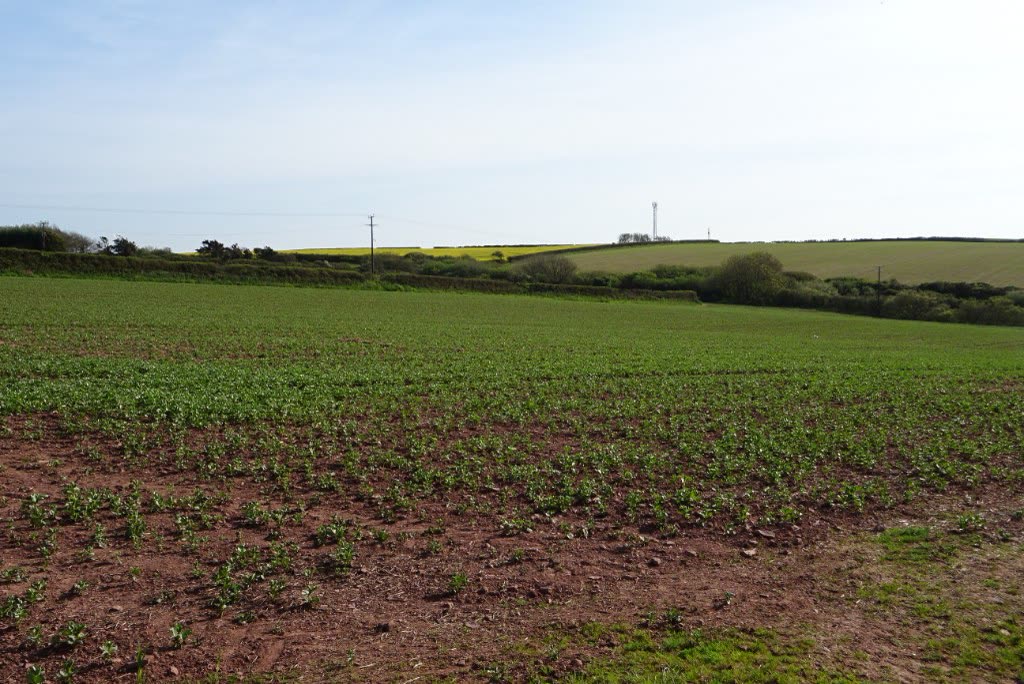
Pictured: farmland near St Ishmaels, Pembrokeshire, Wales — the parish where Ripperston Farm is located, not the Coombs family's own farmhouse, fields, or the figure and lights they described. No public-domain or rights-clear photograph of Ripperston Farm itself, the Coombs family, or the events of 1977 is known to exist; the case's own visual record survives only within Clive Harold's copyrighted 1979 book The Uninvited and contemporary press archives, not as freely licensed images. Photo by Philip Halling, CC BY-SA 2.0, via Wikimedia Commons (Geograph).
Theoretical Alignment
Ripperston Farm aligns most strongly with the Psycho-Social Hypothesis: a genuinely frightened family, in the specific media and cultural pressure-cooker of the "Broad Haven Triangle" story exploding around them just miles away, reporting an escalating series of claims over many months in a pattern consistent with sustained anxiety and cultural contamination as much as with a single, discrete external stimulus. The Interdimensional allocation, modest but non-trivial, reflects Pauline Coombs's own most extraordinary claim — a close encounter she believed took place aboard a craft — a category of claim this site treats as touching experiencer/abduction-adjacent territory distinct from a simple visual sighting. The Extraterrestrial allocation reflects the case's residual, unresolved core: no single explanation accounts for every element of the family's reports, and the repeated, multi-witness nature of the silver-suited-figure sightings specifically keeps a genuinely unexplained reading alive, even as this file's own Conventional Explanation Candidate section below finds a specific, documented hoax explanation for at least that element. Taken as a whole, this file's percentage allocations sit deliberately close to, but not identical with, the companion Broad Haven school sighting's own Theoretical Alignment figures (20/5/70 there versus 20/10/65 here): the underlying case type and evidentiary posture are genuinely similar, and this file's small adjustments reflect specifically Ripperston's broader claim set (electronic interference, livestock displacement, and an experiencer-adjacent craft-encounter claim) rather than any fundamental difference in how strong the case is overall.
Background
Ripperston Farm — more precisely Lower Ripperston Farm in several period sources — is an isolated dairy smallholding on the cliffs above St Bride's Bay near the village of St Ishmaels, Pembrokeshire, roughly four miles from Broad Haven. In 1977 it was worked by dairyman Billy Coombs, his wife Pauline, and their five children, rearing a herd that Cambria Stories puts at between 120 and 150 animals. The family's reports began within weeks of, and geographically close to, the February 4, 1977 Broad Haven school sighting already published in full on this site — the case in which some fifteen schoolchildren reported a silver, domed object, and several a suited figure, in a field beside their playground, and whose own Disputed rating this file uses as a point of comparison throughout.
This file's scope is deliberately narrower than, and distinct from, the school sighting: it covers the Coombs family's own experiences at Ripperston Farm specifically, which unfolded over many months rather than a single afternoon, involved a small, closely related family group rather than some fifteen schoolchildren, and generated a considerably more extraordinary set of claims — repeated humanoid encounters, sustained electronic interference, and livestock displacement — than anything reported at the school itself. As the Broad Haven school sighting file itself notes, the two cases are related but evidentially distinct, resting on different witnesses, different investigators, and, in Ripperston's case specifically, considerably more extraordinary claimed physical and mechanical effects. Tabloid and then national press coverage, drawing the "Bermuda Triangle" comparison already familiar to readers, branded the wider phenomenon the "Broad Haven Triangle" or "Dyfed Triangle," and it is Ripperston Farm — not the school — that supplied the bulk of the wave's most dramatic and most frequently retold specific claims.
The area's genuine defense and industrial infrastructure supplied a recurring, mundane undercurrent to the wave throughout 1977: RAF Brawdy, a real NATO-linked airfield and signals intelligence facility roughly ten miles north, and the large Milford Haven oil-refining complex across St Bride's Bay, both fed speculation at the time, including in an RAF Brawdy officer's own report on one sighting, that ordinary military activity or people in refinery protective suits, rather than anything anomalous, explained at least some of what residents were seeing — a line of explanation this file's Conventional Explanation Candidate section examines directly.
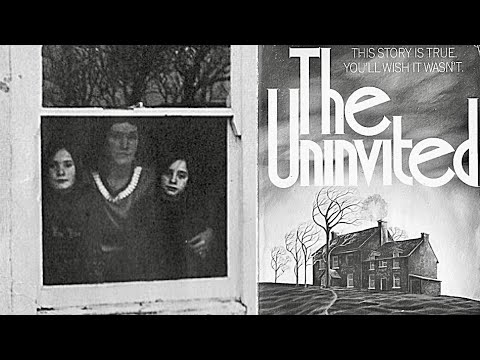
Clive Harold's own choice of title for his 1979 book, The Uninvited, captures the framing that has dominated most subsequent retellings of the case: an ordinary rural family visited, against their will and without invitation, by something from outside their normal experience, whatever that something ultimately turns out to have been. That framing is a legitimate and, on the evidence, largely sincere reflection of how the family themselves appear to have experienced the events of 1977 — but it is also, this file's research notes, a narrative structure with obvious dramatic appeal independent of its underlying truth value, one that later popular treatments (Paget's more sensationalized Welsh Triangle chief among them) leaned into further rather than tempered with additional independent verification.
Complete Timeline
| Date | Event |
|---|---|
| Feb. 4, 1977 | The Broad Haven school sighting occurs four miles from Ripperston Farm, setting off the wider Pembrokeshire wave this case belongs to. |
| Early 1977 | Pauline Coombs reports being pursued while driving by a hovering, fiery, football-sized object; she separately reports a bright hovering light observed from the farm. |
| Apr. 23–24, 1977 | Late at night (the early hours of 23 April per David Clarke; 24 April per Cambria Stories), Pauline and Billy Coombs, watching television, notice a silvery glow outside as the TV picture breaks up; both see a seven-foot humanoid figure in a silver suit and helmet standing at their sitting-room window. A police officer who attended said in 1996 that it was "the most frightened family I have ever been to see." |
| Apr. 19, 1977 | Hotelier Rosa Granville, of the Haven Fort Hotel at Little Haven, reports an oval, brightly lit object and two figures six and a half to seven feet tall in whitish, boiler-suit-like clothing near her hotel; her MP raises it with the MoD, and Flt Lt Cowan of RAF Brawdy visits and reports that the suits "fitted exactly" the protective suits issued for a refinery fire. |
| Spring–Summer 1977 | The Coombs family reports a pattern of unexplained mechanical and electrical failures — car engines dying, headlights dimming, television and radio interference — alongside further sightings of lights and figures. |
| 1977 (date variously reported) | On what Cambria Stories calls "at least half a dozen occasions," the family finds cattle moved from a bolted stockyard to a field at Lower Broadmoor, half a mile away, with fastenings undisturbed and the farm dog silent; accounts differ on the number of animals involved. |
| Oct. 30, 1977 | The Coombs family report watching a UFO near Stack Rock, in St Bride's Bay, where the rock "appeared to open" and the object dived inside (Cambria Stories); journalist Hugh Turnbull attributes the Stack Rock sightings to "something military." |
| Late 1977 | The most active phase of reported activity at Ripperston Farm ends; some retellings give a final sighting in December 1977 and sporadic reports into 1978 (no primary date was found). |
| 1979 | Journalist Clive Harold publishes The Uninvited (Star, July 1979; later reissued as The Uninvited: The True Story of Ripperston Farm), the definitive book-length account, drawing on direct interviews with the Coombs family. |
| 1979 | Randall Jones Pugh and F.W. Holiday publish The Dyfed Enigma, and Peter Paget separately publishes The Welsh Triangle (Panther), both covering Ripperston Farm within the wider wave. |
| 1982 | Researcher Hilary Evans reports that two members of a local Round Table club were responsible for the "spacemen" sightings at the Haven Fort Hotel and Ripperston Farm, having borrowed silver-lined asbestos suits worn by oil-refinery workers for a fancy-dress evening in Broad Haven. |
| 2018 | Peter Paget publishes an updated edition, The Welsh Triangle Revisited, incorporating decades of subsequent research and correspondence. |
| 2023 | Netflix's Encounters (Amblin Television) devotes the third episode of its debut season to the Broad Haven Triangle, including the Ripperston Farm reports, for a global streaming audience. |
| 2024 | BBC Three's Paranormal, presented by Sian Eleri, revisits the Pembrokeshire wave, including Ripperston Farm, in a four-part series. |
| 2026 | The Astonishing Legends podcast devotes a dedicated episode, "The Uninvited — The Ripperston Farm Invasion," to the case. |
The Coombs Family's Escalating Reports
By the most consistent published reconstructions — principally Clive Harold's 1979 book The Uninvited, based on direct interviews with the family, and later secondary treatments drawing on it — the Coombs family's experiences began with comparatively modest claims and escalated over the course of 1977. Pauline Coombs reported being pursued one night while driving home by what she described as a fiery, football-sized object; on a separate occasion she and Billy were watching television when Pauline noticed a silvery glow outside, and the television itself began suffering unexplained interference at the same moment. As the couple stood at the window, both reported seeing a huge figure — described consistently as over seven feet tall, entirely encased in a one-piece, aluminum-colored silver suit, topped by a square, solid-looking helmet with an opaque black visor — standing just beyond the glass. David Clarke describes "a 7ft tall figure in a spacesuit, whose blank face was framed in the window of their sitting room"; some retellings add a square helmet with a dark visor and a pipe running back over one shoulder.
The family's reports over the following months broadened well beyond repeat sightings of the figure itself. They described a persistent pattern of mechanical and electrical failures they attributed to the same presence: car engines that died without explanation during what felt like pursuit, headlights that dimmed on their own, window panes that rattled violently despite being securely fastened with no wind to explain it, and recurring radio and television interference. Pauline additionally reported physical aftereffects on at least one occasion — her arm swelling noticeably after she described a hand or limb passing through the window glazing, and her eyes becoming irritated in a manner she compared to an allergic reaction. In her most extraordinary single claim, as retold in later accounts of the case, Pauline described a close encounter she believed took place aboard a craft, a claim this file's research could not corroborate through any second witness and treats as resting entirely on her own uncorroborated account.
The children were reported to have their own separate encounters with the phenomenon, including sightings of hovering lights and, in one specific claim, an object described as lowering a metal ladder from which a silver-clad figure descended, and dropping a bright red fluorescent "box" into the long grass (Cambria Stories); some retellings add blotchy red marks on the children's skin. This file's research treats the children's reports with the same caution warranted by their young age and by the fact that the family's own retellings of specific incidents vary in detail across different published sources — a normal feature of oral testimony recorded and re-recorded across nearly five decades, but one that genuinely limits how much independent evidentiary weight any single detail can bear. Even at the Broad Haven school, where some fifteen children gave accounts, the drawings were made together and are not fully independent; the Ripperston children's reports come from within a single family unit already primed by their parents' own escalating experiences, a meaningfully different corroborative structure that this file's research weighs as a genuine limitation rather than a strength.
The Cattle Relocation Claim
The single most extraordinary and most frequently repeated claim associated with Ripperston Farm concerns the family's cattle. Multiple secondary accounts describe an incident in which a portion of the herd — Cambria Stories specifies sixteen in-calf heifers on one occasion, and reports the moves happening on "at least half a dozen occasions" — vanished from a securely fastened yard or field within a span of only a few minutes while Billy and one of the children were working nearby in the milking parlor, hearing and seeing nothing unusual. The animals were subsequently found in a field at Lower Broadmoor, roughly half a mile away, restless and giving poor milk yields, with the family's own gates and fastenings apparently undisturbed and the family's dog failing to raise any alarm during the episode. The numbers vary across secondary sources (sixteen heifers in one account, a larger part of the herd in others), and David Clarke's summary says only that "a herd of cows were inexplicably teleported from a locked field." No official agricultural, veterinary, or police record of the incident's precise scale has been located, and the claim rests entirely on the family's own account as relayed through Clive Harold's book and subsequent retellings, none of which this file's research could trace back to an independent, contemporaneous written source predating Harold's own 1979 interviews. Cambria Stories adds that the family's dog, Blackie, "seemingly heard nothing" — a detail the family themselves apparently found as unsettling as the disappearance itself, since a working farm dog failing to react to any real intruder or disturbance would be genuinely unusual. The poor milk yields reported afterwards were, like the headcount itself, never measured or verified by any outside dairy or veterinary authority at the time.
Stack Rock and the "Underwater Base" Speculation
Stack Rock is a small, fortified tidal islet in St Bride's Bay, roughly midway between Broad Haven and Dale, home to a disused nineteenth-century coastal defense fort. On October 30, 1977 the Coombs family reported watching a UFO approach the rock, which "appeared to open" before the object dived inside (Cambria Stories), a further, much-discussed episode, and became the specific anchor for the period's most sensationalized theory: author Peter Paget's claim, developed at length in his 1979 book The Welsh Triangle, that an extraterrestrial base existed beneath St Bride's Bay in the vicinity of the rock, with Stack Rock itself serving as a kind of access point. This file's research treats the underwater-base theory as a considerably weaker and more speculative claim than anything reported directly by the Coombs family at Ripperston Farm itself; it rests on inference and atmosphere rather than any specific named witness account of an entrance, structure, or vehicle observed at the rock, and no structure, entrance or vehicle was ever documented there. This file treats the Stack Rock/underwater-base strand as background context for the wider wave rather than as part of the Ripperston Farm case proper, because the base theory itself rests on inference rather than on anything the witnesses described. Journalist Hugh Turnbull's assessment — that the Stack Rock activity most likely reflected "something military" — is, in this file's own view, the more evidentially grounded of the two competing explanations, given the genuine, documented military and naval presence in and around St Bride's Bay throughout the period.
Media Legacy: From Tabloid Curiosity to Streaming Documentary
Ripperston Farm's journey from a local Pembrokeshire curiosity to an internationally retold piece of paranormal folklore closely tracks the broader arc of British UFO media coverage across five decades. The story reached a national audience quickly in 1977 through tabloid coverage that leaned heavily on the "Bermuda Triangle" branding already familiar to readers, and gained its first serious book-length treatment two years later through Clive Harold's The Uninvited, a work based on direct, extended interviews with the Coombs family rather than secondhand press cuttings. The case then largely receded from mainstream attention for decades, surfacing mainly within specialist ufological literature and the more sensationalized "Welsh Triangle" paperback tradition Peter Paget's books represent, until a fresh wave of interest arrived via streaming and podcast media in the 2020s: Netflix's Encounters, produced by Steven Spielberg's Amblin Television, devoted the third episode of its 2023 debut season to the Broad Haven Triangle as a whole, reintroducing both the school sighting and the Ripperston Farm reports to a global audience many of whom would never otherwise have encountered a five-decade-old Welsh farming case. BBC Three's Paranormal, presented by Sian Eleri, followed in 2024 with its own four-part investigative revisit of the Pembrokeshire wave, and the long-running American podcast Astonishing Legends — the same show that had earlier interviewed Broad Haven child witness David Davies directly for its own dedicated episode on the school sighting — devoted a full episode specifically to Ripperston Farm in 2026, titled "The Uninvited: The Ripperston Farm Invasion" after Harold's own book. This file's research treats the recurring pattern of each new generation of media rediscovering and re-dramatizing the case as itself a modest, indirect piece of evidence for the Psycho-Social reading: a story whose staying power owes at least as much to its genuinely compelling narrative structure — an isolated farming family, a menacing silver-suited visitor, vanishing livestock — as to any specific piece of evidence that has emerged since 1979 to strengthen or weaken the underlying claims.
Rosa Granville and the Wider Wave
The Coombs family's reports did not occur in isolation. Rosa Granville (often given as "Rose"), who ran the Haven Fort Hotel at Little Haven, reported that on April 19, 1977 she saw an oval, brightly lit object and two figures six and a half to seven feet tall, dressed head to toe in whitish clothing like a boiler suit, and afterwards found crescent-shaped marks in the grass (David Clarke; Cambria Stories). She wrote to her MP, who asked the Ministry of Defence to investigate. Flt Lt Cowan of nearby RAF Brawdy visited, found no evidence of a landing, and wrote that the figures' clothing "fitted exactly the type of protection suit" issued for a fire at a local oil refinery, raising the possibility that a "local prankster was at work" (Herald.Wales). Granville recalled that a squadron leader from Brawdy told her nothing at the base could explain it and asked her not to say anything about the incident, as it was "best not to alarm the general public." Further reports accumulated from residents across Milford Haven, Herbrandston and the surrounding parishes during 1977. Lights near Stack Rock on October 30, 1977 prompted journalist Hugh Turnbull to suggest "something military" lay behind them — one of several period voices proposing a mundane, security-related explanation for at least part of the wave.
Key Witnesses
Pauline Coombs
The family's central and most frequently interviewed witness, Pauline reported the pursuing fiery object, the repeated silver-suited figure at the farmhouse window, physical aftereffects including arm swelling and eye irritation, and, in her most extraordinary claim, a close encounter she believed took place aboard a craft — an account resting entirely on her own uncorroborated testimony.
Billy Coombs
Pauline's husband and the farm's working dairyman, Billy corroborated the window sighting of the silver-suited figure and was directly involved in discovering the case's cattle-relocation claim, finding the family's own fastenings undisturbed despite the animals' unexplained displacement.
Rosa Granville
A separate witness whose April 19, 1977 report of two suited figures near her hotel parallels the humanoid sightings at Ripperston — and whose figures an RAF officer matched to refinery protective suits — though her account rests on a different specific location and set of circumstances than the Coombs family's own experiences at Ripperston Farm itself.
The Five Observables Assessment
The Five Observables framework is applied to the performance characteristics reported across the Ripperston Farm claims:
Assessment: As with the companion Broad Haven school sighting, Ripperston Farm registers no confirmed anomalous performance characteristic under this framework. Every observable here rests entirely on the Coombs family's own unaided recollection, gathered and re-told across nearly five decades with no instrumented corroboration of any kind — if anything a weaker evidentiary basis than the school sighting, whose child witnesses at least gave their initial accounts within days of the event, rather than Ripperston's pattern of claims recalled and elaborated over many months by a single family unit.
Evidence Assessment
Supporting Anomalous Origin
- Both parents described the core window sighting of the silver-suited figure, and a police officer who attended recalled in 1996 that they were "the most frightened family I have ever been to see."
- A separate witness (Rosa Granville) reported a broadly similar humanoid-figure sighting the same month, suggesting more than one household saw something unusual that spring.
- The family sustained their core claims across decades of subsequent interviews, books, and documentaries without a full recantation.
- No individual has ever confessed specifically to the cattle-relocation claim, as distinct from the humanoid-figure sightings.
Supporting Conventional Explanation
- Researcher Hilary Evans reported in 1982 that two members of a local "round table" social club privately admitted responsibility for at least some of the "spacemen" sightings at both the Haven Fort Hotel and Ripperston Farm, using borrowed oil-refinery protective suits — a specific hoax explanation matching the seven-foot silver-suited figure closely, which Round Table member Glyn Edwards partly confirmed in 1996.
- Flt Lt Cowan of RAF Brawdy wrote at the time that the figures in Rosa Granville's sighting matched refinery protective suits exactly and raised the possibility of a local prankster, lending contemporary official support to the hoax reading.
- The specific numbers involved in the cattle-relocation claim vary considerably across secondary retellings, a pattern more consistent with a story that grew through years of non-primary repetition than with a single, stable, well-documented event.
- No photograph, film, radar contact, or laboratory-tested physical trace evidence exists for any Ripperston Farm incident; the entire record is testimonial, filtered through one family's own account as relayed by a single popular book.
- Pauline Coombs's most extraordinary individual claim — a close encounter aboard a craft — rests entirely on her own uncorroborated testimony, with no second witness of any kind.
- The case's primary documentary source, Clive Harold's The Uninvited, is a popular narrative book built on extended family interviews rather than a contemporaneous, independently cross-checked investigative file of the kind the Ministry of Defence's own DEFE 24 series provides for the companion school sighting.
Why "Disputed"
This case is stamped Disputed and scored 24 out of 100 — a lower score than this site's companion Broad Haven School Sighting file (also Disputed, at 28/100), and that gap is deliberate rather than incidental. Both cases share the same basic profile — a real, sincerely reported set of experiences by ordinary Pembrokeshire residents in 1977, entirely unsupported by any instrumented, photographic, or laboratory-tested physical evidence, with a specific, at least partially corroborated hoax explanation available for the most visually striking single element (a suited humanoid figure). Where they differ is in the breadth and quality of corroboration weighed against the extraordinariness of the claims. Broad Haven's core claim rests on some fifteen child witnesses to a single, comparatively modest event (an object at rest in a field), though their drawings were not made independently, plus a later adult sighting from the same school grounds that the canteen staff themselves took for a council sewage tanker. Ripperston Farm's claims are considerably more extraordinary — a repeated humanoid figure, sustained electronic and mechanical interference, physical aftereffects on a witness's body, cattle relocated through what would have to be either an elaborate real-world deception or something genuinely inexplicable, and an uncorroborated claim of a close encounter aboard a craft — yet rest on a much narrower base of essentially one family, corroborated only partially and only for specific elements (the humanoid figure, via Rosa Granville's separate but distinct sighting) by any outside witness. Extraordinary claims resting on a narrower evidentiary base than a comparison case's more modest claims is, in this site's own calibration approach, a case for scoring lower within the same Disputed tier, not higher. The 1982 Round Table hoax account reported by Hilary Evans names the Haven Fort Hotel and Ripperston Farm specifically, and Glyn Edwards's 1996 admission that he walked the area in a borrowed 7ft refinery suit "for a bit of fun" partly confirms it — oil-refinery protective suits, worn as a prank, producing exactly the seven-foot silver-suited appearance the witnesses described. (The same prank does not explain the earlier school sighting, which Evans's account dates before the fancy-dress evening.) It is also worth stating plainly what a Disputed classification at this score does not mean: it is not a finding that the Coombs family lied, and it is not an endorsement of the more sensationalized "underwater base" or full poltergeist-style readings some 1970s and 1980s popular accounts leaned toward. It is a statement that the available public record, as it stands nearly fifty years later, supports neither a confident anomalous verdict nor a confident, fully-documented mundane one for every element of what the family reported — a genuinely open case, weighted toward the mundane end of this site's Disputed range specifically because of the extraordinary-claims-thin-evidence imbalance described above, but not resolved.
Sensor & Instrumentation Detection Profile
No radar, camera, magnetometer, or any other instrument recorded any Ripperston Farm incident. RAF Brawdy, the nearest military radar and signals facility of note, roughly ten miles north, has no declassified record of a contact correlated with any of the family's reported dates or times, mirroring the same absence documented in this site's companion Broad Haven school sighting file. The entire evidentiary record for Ripperston Farm consists of human testimony — the family's own verbal and later written accounts, relayed principally through Clive Harold's 1979 book and subsequent secondary retellings — with no instrumented corroboration of any kind.
Environmental & Geospatial Context
Ripperston Farm sits on the coastal cliffs above St Bride's Bay near St Ishmaels, Pembrokeshire, roughly four miles from Broad Haven and within the same broad concentration of defense and industrial infrastructure discussed in this site's companion school sighting file: RAF Brawdy's NATO-linked airfield and signals facility to the north, and the large Milford Haven oil-refining and tanker terminal complex across the bay to the south. A further genuine military facility, the Aberporth rocket and guided-weapons testing range further up the Cardiganshire coast, added another layer of real, if geographically somewhat more distant, defense-related activity to the region across 1977. No specific military exercise, aircraft movement, or airspace closure has ever been documented as coinciding with any Ripperston Farm incident. The farm itself is an isolated, exposed coastal smallholding, a setting that plausibly increases both the family's exposure to any genuinely anomalous activity and their vulnerability to misidentifying ordinary rural nighttime phenomena (livestock movement, wildlife, distant vehicle lights, weather) under conditions of sustained anxiety once the wider wave's reputation had already taken hold locally.
Observer Credibility & Occupational Profile
The primary witnesses, Pauline and Billy Coombs, were working dairy farmers with no known ufological background or prior interest in the subject before 1977, a credibility factor this site weighs the same way it does for other first-time, non-professional witnesses elsewhere in its catalog. A police officer who attended, recalling the case in 1996 after 26 years' service, called the Coombses "the most frightened family I have ever been to see," a meaningful professional judgment about their emotional state, though it speaks only to the sincerity of their reaction, not to the objective cause of it. Separate witness Rosa Granville brought her own independent professional standing as a hotel proprietor with a public reputation to protect, a modest factor in her own favor. Against this, the case's credibility is limited by the fact that its most extraordinary specific claims — the cattle relocation, the craft encounter, several of the reported electronic failures — rest on the family's own account alone, filtered through journalist Clive Harold's book rather than a contemporaneous, independently verified investigative record of the kind the Ministry of Defence's own case files provide for the school sighting. Harold's own methodology, per the book's own account, involved extended, repeated, direct interviews with the family over a period of time rather than a single sitting, and he presents the material largely without the kind of skeptical cross-examination or independent-source verification a modern investigative journalist would be expected to apply to a story of this scale — a limitation of the source material itself, not necessarily of the family's own sincerity, but one that meaningfully affects how much independent evidentiary weight this file's research can place on details that exist only within his book. No professionally trained observer — pilot, radar operator, or military witness — reported any Ripperston Farm incident directly, and unlike the companion school sighting, no professional educator or other credentialed local figure comparable to headmaster Ralph Llewellyn left a contemporaneous, independently discoverable written record of their own assessment of the family's credibility.
Physical & Material Assays
No physical or trace evidence from any Ripperston Farm incident was ever collected and subjected to laboratory analysis by any qualified institution. Some secondary accounts of the wider 1977 Pembrokeshire wave describe scorched ground and disturbed vegetation at various points, and this site's own Broad Haven School Sighting file notes this specific detail as belonging to the Ripperston-area reports rather than the school itself — but no such trace evidence at Ripperston Farm specifically is known to have been photographed, sampled, or tested by any agricultural, veterinary, or forensic authority at the time. The cattle-relocation claim, similarly, produced no independently verified physical record: no veterinary examination of the animals' condition beyond the family's own description of their agitation and reduced milk yield, and no forensic examination of the fastenings the family described as undisturbed. This absence of any tested physical evidence, across every element of the case, is itself the single most consistent feature of the entire Ripperston Farm record, and it is a feature the case shares directly with the companion Broad Haven school sighting, whose own Physical & Material Assays section reaches the identical conclusion for a differently shaped set of claims. Where the two cases diverge is in the number and variety of distinct claim types that went untested: the school sighting produced one basic, untested claim (an object in a field); Ripperston Farm produced several, spanning mechanical, biological, and agricultural categories, none of which received so much as a single documented outside examination at the time.
Historical Precedents & Archive Matches
Ripperston Farm's most direct and important comparison within this site's own catalog is the Broad Haven School Sighting (Disputed, 28/100), the companion case this file has compared against throughout — the two together form the two best-documented chapters of the single 1977 Pembrokeshire "Broad Haven Triangle" wave, sharing the same regional context, the same defense-infrastructure backdrop, and a broadly similar hoax-adjacent conventional explanation for their respective humanoid-figure claims, while differing sharply in witness breadth and claim extremity. A second useful, if more distant, comparison within this site's catalog is The Mutilation of Snippy the Horse (Debunked, 18/100), a 1967 Colorado case in which a livestock-and-UFO claim was fully resolved once a veterinarian found bullet wounds and two individuals confessed to shooting the animal. Ripperston Farm's cattle-relocation claim has never received an equivalent conclusive resolution in either direction — no confession, no veterinary finding of mundane cause, and no independent verification of the family's own account — which is precisely why this file scores it meaningfully higher than Snippy's fully debunked 18/100 despite the underlying claim (livestock affected in connection with a UFO sighting) being structurally similar. A third, broader comparison is The Berwyn Mountains UFO Crash (Disputed, 23/100), another North Wales case from the same decade in which a real, documented natural event (an earthquake and coincident meteor) fed a much larger crashed-UFO legend — part of the same wider pattern this file's research finds across 1970s Welsh ufology, in which real local events and genuine, sincere witness fear combine with rapid media amplification to produce cases that remain difficult to either fully confirm or fully explain away decades later.
Beyond this site's own catalog, Ripperston Farm sits within a recognizable international pattern of "high strangeness" farm cases — reports combining humanoid sightings, livestock effects, and electronic or mechanical interference at a single rural property over an extended period, rather than a single discrete sighting. The American "cattle mutilation" wave of the 1970s, concentrated especially in the American Southwest and Midwest, is the most extensively documented parallel body of livestock-and-UFO claims internationally, though that wave centers on animal death and mutilation rather than the non-lethal relocation Ripperston's witnesses describe, a meaningful distinction this file's research treats as limiting rather than eliminating the comparison's usefulness. Within specifically British and Irish ufology, Ripperston Farm is frequently grouped with a handful of other extended, multi-incident "haunting-adjacent" farm cases reported across the same general period, though none of these has ever been resolved definitively enough to serve as a clean evidentiary template for how Ripperston's own claims should ultimately be read.
Material Analysis
As with the companion school sighting, no physical or trace evidence of any kind connected to a Ripperston Farm incident has ever been independently collected, preserved, or laboratory-tested. The family's own reported physical effects — Pauline's arm swelling and eye irritation after the described hand-through-window incident, and the children's reported "blotchy red patches" after an encounter with a glowing object — were never medically examined and documented by any doctor at the time in a way that survives in the public record; they exist today only as the family's own retrospective description, relayed through Clive Harold's book. The cattle themselves were, by the family's own account, examined only informally (noting agitation and reduced milk yield), not by any veterinary authority whose findings survive independently. This near-total absence of testable physical evidence, spanning every category of claim the family made, is consistent equally with a set of genuinely non-material, misperceived, or exaggerated-in-retelling experiences, or, on the anomalous-origin reading, with a phenomenon whose claimed effects (brief mechanical interference, momentary animal displacement, transient skin marks) would not obviously be expected to leave the kind of durable trace evidence a longer-duration landing event might.
Supporting Non-Terrestrial Origin
- No mundane cause has been definitively matched to the cattle-relocation claim specifically, as distinct from the humanoid-figure sightings.
- The claimed physical effects on Pauline Coombs and the children, if accurately described, are not obviously explained by any single proposed mundane mechanism.
Supporting Terrestrial Origin
- The complete absence of any independently tested physical evidence, across nearly a year of claimed incidents, is precisely what would be expected if no external anomalous agent had ever actually been present.
- No forensic, medical, or veterinary test of any kind was ever performed at the time on any of the family's claimed physical effects or on the cattle, because no sample or examination by a qualified outside professional was ever documented.
The Conventional Explanation Candidate: The "Round Table Club" Prank
The most specific and best-corroborated conventional explanation available for the Ripperston Farm case's most visually striking single claim — the repeated seven-foot silver-suited figure — comes from researcher Hilary Evans, who reported in 1982 that two members of a local Round Table club (a common civic and social organization in British towns) were responsible for the "spacemen" sightings at both the Haven Fort Hotel and Ripperston Farm, wearing silver-lined asbestos suits used by local oil-refinery workers that they had borrowed for a fancy-dress evening in Broad Haven — suits that, worn by an ordinary adult, would plausibly create the seven-foot-tall, featureless, silver-suited appearance both the Coombs family and Rosa Granville described. Evans's account is known here through David Clarke's later coverage of the wave, which notes that "later investigators were sceptical of some of the more sensational claims" while others were impressed by "the genuine terror displayed by the couple at the time." In 1996, after Ray Gosling's BBC Radio 4 documentary, Milford Haven Round Table member Glyn Edwards told the Western Mail that "alien sightings were all the rage, so I took a stroll around for a bit of fun" in such a suit — a named, on-record admission that partly confirms Evans's account. An RAF officer's 1977 report on Rosa Granville's sighting had already matched her figures to refinery protective suits and raised the possibility of a "local prankster." The hoax explanation covers the suited figure; it does not by itself explain the lights, the reported interference or the cattle.
Sustained Anxiety and Media Contamination
A second, complementary candidate holds that the Coombs family's escalating pattern of claims over many months reflects the compounding effect of genuine anxiety, sustained press attention, and the family's own awareness of the nearby school sighting's already-exploding national coverage, rather than requiring every individual reported incident to have a distinct external cause. This candidate does not require that the family fabricated their experiences; it requires only that an initial, perhaps genuinely startling event (an unusual light, a real prowler in an unfamiliar suit) was subsequently interpreted, elaborated, and connected to a growing set of further, more ambiguous rural occurrences (mechanical faults, missing livestock, unexplained noises) through the specific interpretive lens the "Broad Haven Triangle" story had already made available to them. Sustained, shared anxiety within a small family unit isolated on a remote coastal smallholding, compounded by national press attention arriving at their own front door, is a well-documented amplifier of exactly this kind of escalating, mutually reinforcing pattern of interpretation across a household, distinct from any single family member fabricating claims independently. This file's research also notes, without asserting it as a specific diagnosis for this case, that repeated reports of a silent, still, humanoid figure observed specifically at a window at night are a recognized general feature of hypnagogic and sleep-paralysis-related perceptual experiences in the broader psychological literature on anomalous perception — though the Coombs family's own account of being awake and actively watching television during the central April window sighting is a meaningful point of difference from the more classic bedroom/sleep-onset version of that phenomenon, and this file does not treat sleep-paralysis as a strong fit for this specific incident as described.
Misidentified Rural Phenomena
A third, weaker candidate holds that specific individual elements — the pursuing "fiery football," the various car and television faults, the rattling windows — are independently explicable as ordinary rural nighttime misidentifications (distant vehicle headlights, ball lightning or other rare but mundane atmospheric electrical phenomena, routine electrical faults in aging farm wiring, and normal livestock movement) rather than requiring any single unifying cause, anomalous or otherwise. No specific mundane match has been documented for any individual incident under this candidate, and it remains, on the available record, considerably more speculative than the hoax explanation for the humanoid figure specifically, since it requires a separate ad hoc mundane cause for each distinct claim rather than one explanation covering several claims at once.
A Genuinely Unexplained Phenomenon
The reading that some genuinely anomalous phenomenon, distinct from any hoax or misidentification, affected the Coombs family directly remains available specifically because no single conventional candidate accounts for every element of their reports — the hoax explanation, even taken at full strength, resolves only the humanoid-figure sightings, leaving the electronic interference, the cattle-relocation claim, and Pauline's own uncorroborated craft-encounter claim without any equally specific mundane match.
"Round Table Club" Prank (Suited Figure)
PlausibleReported by researcher Hilary Evans in 1982 for the Haven Fort Hotel and Ripperston Farm, partly confirmed by Glyn Edwards in 1996, and anticipated by Flt Lt Cowan's 1977 report; explains only the humanoid-figure element.
Sustained Anxiety & Media Contamination
InconclusiveA plausible compounding factor across a year of escalating claims, but not independently verifiable against any single specific incident.
Misidentified Rural Phenomena
InconclusiveNo specific mundane match has been documented for any individual mechanical, electrical, or livestock claim.
Genuinely Unexplained Phenomenon
InconclusiveRemains available specifically because no candidate above accounts for the full breadth of the family's claims, particularly the cattle relocation and Pauline's uncorroborated craft encounter.
Related Cases
Confirmed Documents & Official Records
The core Ministry of Defence Secretariat (Air Staff) file covering the height of the wider Pembrokeshire wave, including the period of the Ripperston Farm reports; now open in the public catalogue at Kew. No document in this series is known to name Ripperston Farm or the Coombs family specifically.
The continuation file covering the closing months of the 1977 Pembrokeshire wave's official correspondence, the same period in which the most active phase of Ripperston Farm reporting is said to have ended.
Further Reading — Recommended Literature
The Uninvited: The True Story of Ripperston Farm
The definitive book-length account of the Coombs family's experiences, based on direct interviews and the source this file's narrative draws on most heavily.
The Dyfed Enigma: Unidentified Objects in West Wales
The first book-length account of the wider 1977 Pembrokeshire wave, including the Ripperston Farm reports, by the local BUFORA investigator who worked the case directly.
The Welsh Triangle Revisited
An updated edition of the original 1979 account, incorporating decades of subsequent correspondence and research on the Ripperston Farm and Haven Fort Hotel reports specifically.
DISCLOSURE: Some links above are affiliate links. If you purchase through them, OverClassified receives a small commission at no additional cost to you. This helps support independent research.
Essential Viewing
Sources
- David Clarke, "Did the village see aliens?," Dr David Clarke (Substack). drclarke.substack.com
- Cambria Stories, "The Pembrokeshire UFO wave." cambriastories.net
- Pembrokeshire.Online, "The Dyfed Enigma." pembrokeshire.online
- Babylon Wales, "The Welsh Triangle." babylonwales.blogspot.com
- Dave Partridge, "The Welsh UFO Flap of 1977," Medium. shadowsofyourmind.medium.com
- Astonishing Legends, "Ep 332: The Uninvited — The Ripperston Farm Invasion" (2026). astonishinglegends.com
- The National Archives, Kew, "DEFE 24/1206: UFO reports and correspondence, April–October 1977." nationalarchives.gov.uk
- The National Archives, Kew, "DEFE 24/1205: UFO reports and correspondence, October–December 1977." nationalarchives.gov.uk
- Wikipedia, "Broad Haven, Pembrokeshire" (used for geography/population orientation only; underlying claims traced to primary sources above where possible). en.wikipedia.org
- This site, case-files/broad-haven-school-sighting.html — the companion case this file compares against throughout.
- This site, case-files/berwyn-mountains-1974.html — a comparable Welsh case, for calibration.
- This site, case-files/the-mutilation-of-snippy-the-horse.html — a fully resolved livestock/UFO case, for contrast.
- This site, locations/index.html, entries on Ripperston Farm, Broad Haven, and RAF Brawdy.
- Clive Harold, The Uninvited, Star, London, July 1979 (reissued as The Uninvited: The True Story of Ripperston Farm).
- Randall Jones Pugh & F.W. Holiday, The Dyfed Enigma: Unidentified Objects in West Wales, Faber & Faber, 1979.
- Peter Paget, The Welsh Triangle, Panther, London, 1979.
- Peter Paget, The Welsh Triangle Revisited, self-published, 2018.
- David Clarke & Andy Roberts, Out of the Shadows: UFOs, the Establishment and Official Cover Up, Piatkus, 2002.
- David Clarke, How UFOs Conquered the World: The History of a Modern Myth, Aurum Press, 2015.
- Hilary Evans, 1982 Round Table hoax report, as cited by David Clarke ("Did the village see aliens?") and in a Fortean Times note (Sept. 2017) as appearing in The Unexplained (1982); not read directly.
- YouTube (Eyes On Cinema), "Pauline Coombs talks about the Ripperston farm UFO encounters, Pembrokeshire, Wales, 1977." youtube.com
- Netflix, Encounters, Season 1, Episode 3, "The Broad Haven Triangle," Amblin Television, 2023.
- Herald.Wales, report on the 1977 Broad Haven sightings and the MoD file (Flt Lt Cowan's report on the Haven Fort Hotel sighting). herald.wales
- NASA JPL Horizons. Observer ephemeris for the Moon (QUANTITIES 4 and 10), 51.735° N, 5.146° W, 22–23 April 1977. ssd.jpl.nasa.gov
- BBC Three, Paranormal, presented by Sian Eleri, 2024 (Pembrokeshire/Broad Haven Triangle investigation).
- Wikimedia Commons, File: Farmland near St Ishmael's - geograph.org.uk - 6161094.jpg, photograph by Philip Halling, CC BY-SA 2.0 (hero image source and license). commons.wikimedia.org
Corrections (October 2026)
A fact-check against David Clarke's account of the wave, Cambria Stories, Herald.Wales's report on the MoD file, and this site's corrected Broad Haven school file found that the earlier version of this page misreported the RAF's dealings with Rosa Granville and understated the hoax evidence. It was Flt Lt Cowan of RAF Brawdy who, in his report on Granville's April 19, 1977 sighting, matched her figures to refinery protective suits; there is no source for Granville "rejecting" that explanation or for a request "to avoid public alarm" (she recalled being asked to say nothing because it was "best not to alarm the general public"). Hilary Evans's 1982 Round Table account names Ripperston Farm, and Glyn Edwards's 1996 admission partly confirms it; it was not, as the page said, a confession "for the school sighting."
Following this review, the rating was changed from Disputed 24 to Disputed 20 (October 28, 2026), because the higher rating had rested partly on claims corrected or removed above.
Other corrections: the police officer's "most frightened family" remark was made in 1996, not as a contemporaneous assessment; Granville's figures were in whitish, boiler-suit-like clothing, and "plasticated," "long-limbed" and "gathering samples" were not found; the Stack Rock episode of October 30, 1977 was reported by the Coombs family themselves; the "December 19, 1977" end date, a "15 percent" milk-yield drop, an "approximately 85" Welsh Triangle entity count, the children's names and a "no eyes, nose or nothing" quotation were removed for lack of a source; the cattle details now follow Cambria Stories; Clive Harold's publisher is Star (1979), Paget's is Panther, and the Encounters episode is number 3; Broad Haven's current score is 28; and the Moon data now comes from JPL Horizons (about 17%, set before the window sighting).
See something inaccurate? Have additional information or sources?
Suggest an Edit →Last Updated: October 2026