
The Uninvited
The True Story of Ripperston Farm — The 1977 Coombs Case Told at Book Length by a Fleet Street Journalist
Core Thesis
The Uninvited is the book-length account of the strangest and least examined case of the 1977 Welsh wave. Clive Harold, an English author and journalist, built it from interviews with Pauline and Billy Coombs, dairy farmers working Ripperston Farm near St Ishmaels on the Pembrokeshire coast, whose reports ran through most of that year: a hovering light that pursued Pauline's car, a repeated seven-foot silver-suited figure at the farmhouse window, television sets and vehicle electrics failing, and cattle repeatedly found moved between securely fastened fields. Published by Star Books in 1979 and reprinted since, it is the fullest record of what the family said happened. It is also a narrative constructed almost entirely from their testimony, and this site's case file is classified Disputed.
About the Author
Clive Harold was an English author and journalist, and this is the book he is known for. He came to the story as a writer rather than as a UFO investigator, and the difference is visible on every page: the book is structured as narrative non-fiction, driven by scene and character, and it makes no attempt at the evidential apparatus a field investigator would have supplied.
That is the correct thing to say about the book's method and it cuts both ways. Harold spent time with the family, got them to talk at length, and produced a sustained account of what it was like to live inside a year of this — which no investigator's report does. He also had no means of checking anything they told him and does not appear to have tried.
The contrast with the two other 1979 books on the same wave is the useful comparison. Randall Jones Pugh, a veterinary surgeon, and F. W. Holiday produced The Dyfed Enigma as an investigation; Peter Paget produced The Welsh Triangle as sensational speculation, complete with an alien base under the Stack Rocks. Harold's is the third register: neither investigation nor theory, but the family's own experience written up as a story.
The book has been reissued repeatedly — there are editions from 2015, 2018, 2019 and later — and the modern packaging leans hard on the marketing phrases 'the British Roswell' and 'the Welsh Triangle'. Neither phrase is Harold's and neither describes the Coombs case accurately, but they are what the reprints sell on.
The most important thing a reader should understand about the authorship is what it excludes. There is no independent investigation in this book, no physical analysis, no attempt to test the electronic-interference or livestock claims, and no engagement with alternative explanations. It is testimony, shaped by a professional writer, and it should be used as testimony.
Historical Context & Origins
The Welsh wave began with children. On February 4, 1977 pupils at the school in Broad Haven, Pembrokeshire, reported seeing a landed object near the playing field; the school sighting became national news, and this site covers it in its own case file. It is the event that made the area famous and that framed everything reported afterwards.
The Coombs family's reports began weeks later and four miles away. That proximity in time and space is the single most important contextual fact about the case: whatever the family experienced, they experienced it inside a national media story that was already running about their own immediate neighbourhood.
What they reported escalated over the year and moved well outside the standard UFO categories. A light pursuing a car and a figure at a window are conventional close-encounter material; failing television and vehicle electronics is a recognised if contested associated claim; cattle found in the wrong securely fastened field, repeatedly, is closer to poltergeist reporting than to anything in the sighting literature.
The corroborating witness matters and the book uses her. Rose Granville, a local hotelier, reported her own encounters and gave the family's account external support at the time — the only substantial independent testimony in the case and the reason it was taken as seriously as it was.
The police response is the closest thing to official documentation. A responding officer's contemporaneous assessment was that the family's terror was genuine, which is a real and non-trivial datum: it establishes that they were not calmly manufacturing a story, whatever the cause of the fear.
The strongest conventional explanation surfaced later and is second-hand. The researcher Hilary Evans reported in 1982 a rumour that two members of a local social club had borrowed protective suits from an oil refinery for a prank — which would account for the seven-foot silver figure. It is unconfirmed, and it closely parallels the confirmed 1996 prank admission that partly resolved the companion school sighting.
The Pembrokeshire coast in 1977 also had a specific industrial landscape that the case's explanations keep returning to: the Milford Haven oil refineries and their associated flare stacks, tankers and protective equipment sat within a few miles of every location in the story, and both the lights and the silver suit have candidate origins there.
Core Arguments & Key Concepts
The family's fear was real and that is established independently. The book's foundational claim and the only element of it with outside support. A responding police officer recorded a contemporaneous assessment that the Coombses were genuinely terrified, and nothing in the subsequent record suggests calculation on their part. Whatever caused it, the distress was not performed.
Sustained experience over a year is different in kind from a single sighting. Harold's implicit argument for the book's existence, and it is a fair one. Almost all UFO literature deals with events lasting minutes; this is an account of a family living inside an escalating anomalous situation for most of a year, and the psychological and domestic texture of that has no equivalent anywhere else in the case literature.
The livestock displacement is the case's most distinctive claim. Cattle repeatedly found moved between securely fastened fields, with no disturbance to gates or fencing, is not a UFO claim at all in the ordinary sense; it belongs to the poltergeist tradition. Its presence alongside the lights and the figure is what makes Ripperston a high-strangeness case rather than a sighting case.
Independent corroboration existed. Rose Granville's separate reports gave the family external support at the time, and Harold uses this to argue that the events were not confined to one household. It is the strongest structural argument available for the case and it rests on one additional witness.
The weakest feature is total dependence on the witnesses. There is no physical evidence in this book, no photograph, no radar, no laboratory-tested trace, no measurement of any kind. Everything in it comes from the Coombs family and, in one strand, from Rose Granville, and Harold neither sought nor supplied any means of checking any of it.
The book does not engage the prank explanation, and could not have. The oil-refinery protective suit rumour surfaced in 1982, three years after publication. That is not a criticism of Harold, but it does mean the book's most dramatic recurring element — the seven-foot silver figure — has a plausible conventional candidate that the narrative never addresses.
Its framing invites more than the evidence supports. The modern reprints' 'British Roswell' packaging and the whole Welsh Triangle apparatus place the Coombs case inside a claim structure it does not fit. Nothing about Ripperston involves crashed material, recovered hardware or official concealment; it is a family reporting frightening experiences in a media environment already primed for them.
Key Cases & Evidence Discussed
The pursuing light. Pauline Coombs' account of a hovering, fiery, football-sized object following her car — the case's opening event and the one closest to conventional close-encounter reporting.
The seven-foot silver-suited figure. The repeated appearance of a tall figure in reflective clothing at the farmhouse window, best documented over the nights of April 23–24, 1977. The case's most striking element and the one with the strongest conventional candidate in the unconfirmed oil-refinery prank rumour.
The electronic failures. Television sets and vehicle wiring reported failing during the episodes — the associated-effects claim that recurs throughout the close-encounter literature and that is, here as almost everywhere, undocumented by any technical examination.
The relocated cattle. Herds repeatedly found in different securely fastened fields with gates and fencing undisturbed. The case's most unusual claim and the one that pushes it out of the sighting category entirely.
Rose Granville's corroborating reports. The local hotelier's own encounters, which supplied the case's only substantial independent testimony and did much to keep it in the press.
The police attendance. The responding officer's contemporaneous judgement that the family's terror was genuine — the only element of the case with any form of official record.
The Broad Haven school sighting, February 4, 1977. The children's report that started the wave four miles away and weeks earlier, covered in this site's case file and partly resolved by a 1996 prank admission.
What the book could not include: the 1982 prank rumour. Hilary Evans' report that two members of a local social club had borrowed oil-refinery protective suits — unconfirmed, published three years after this book, and the most plausible single explanation for the figure.
Critical Reception & Controversies
The book sold as a mass-market paperback in 1979 and was received as popular anomalies writing rather than as investigation. It has never had a critical assessment of record, and its continued availability is the result of repeated modern reprints rather than of sustained standing.
Within the field its reputation has always been that of the readable account rather than the reliable one. Researchers working on the Welsh wave use Pugh and Holiday's The Dyfed Enigma for the investigation and Harold for the texture, and that division of labour has been stable for forty-five years.
The substantive criticism is straightforward and unanswerable: the book contains no independent verification of anything. There is no physical evidence in the Ripperston case, no photograph, no instrumented record and no laboratory-examined trace, and Harold neither obtained nor sought any. A book built entirely on witness testimony can be a valuable record of testimony and cannot be more than that.
The second criticism concerns the media environment. The Coombs family began reporting weeks after, and four miles from, a national news story about a landed object in their own locality, and the reports escalated across a year of intense press attention. Harold does not treat that context as bearing on the material, and it plainly does.
There is also a criticism about genre that applies to the modern reprints more than to the 1979 original. Packaging the Coombs case as 'the British Roswell' places a family's frightening year inside a crashed-saucer and cover-up frame that has nothing to do with anything they described, and it does the case no favours.
The countervailing point is the one this article keeps returning to. The police assessment of genuine terror is real, Rose Granville's independent reports are real, and the family gained nothing and were subjected to a great deal. Whatever the cause, this was not a hoax by the Coombses, and the sceptical reading has to account for a frightened family rather than a lying one — which the prank hypothesis does, and does well.
The fair placement is as the primary testimony document for a Disputed case. Use it for what the family said and how they said it; use this site's case file and the sceptical literature for what can be established.
One further observation, because it bears on how the whole 1977 Welsh wave should be read. Three books appeared about it in the same year, from three completely different registers — a veterinary surgeon's investigation, a journalist's narrative, and a speculative volume proposing an alien base under the Stack Rocks — and the two least rigorous are the two that remain in print. That is not an accident of quality; it is what the market rewards, and it is the mechanism by which a case's popular version reliably outlives its investigated one.
Influence & Legacy
The book is why the Ripperston case survives at all. The Broad Haven school sighting had national press, a documented investigation and eventually a partial resolution; the Coombs material had one journalist who spent time with the family and wrote it down, and without him the case would exist only as newspaper fragments.
It also established the Welsh wave's popular shape. Between Harold's narrative and Paget's The Welsh Triangle, both published in 1979, the Pembrokeshire events acquired a public identity that the more careful Dyfed Enigma never displaced — and the reprint industry has kept both in circulation while the investigation has gone out of print.
For the study of high-strangeness cases specifically, Ripperston remains one of the best examples of an episode that will not stay inside a single category. Lights, a humanoid figure, electronic interference and displaced livestock over a sustained period is the profile that later writers would call high strangeness, and this book is the fullest account of one.
Its cautionary legacy is about what a good narrative writer does to a case. Harold made the Coombs family's year vivid, coherent and readable, and coherence is exactly what a year of frightening intermittent events does not naturally possess. The shaping is invisible and it is the reason a reader finishes the book more convinced than the evidence warrants.
The Book
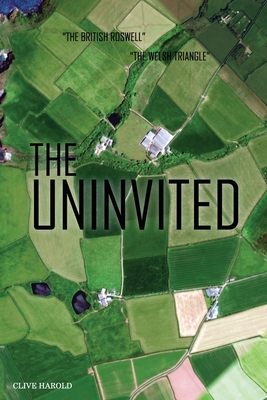
The Uninvited
The True Story of Ripperston Farm — The 1977 Coombs Case Told at Book Length by a Fleet Street Journalist
Find on Amazon →As an Amazon Associate, OverClassified may earn from qualifying purchases made through this link, at no extra cost to you.
Why This Is Essential Reading
Read it as testimony, and read the case file for the assessment. The Uninvited is the fullest surviving account of what the Coombs family said happened at Ripperston Farm through 1977, written by a professional journalist who spent time with them and shaped their year into a sustained narrative — and that shaping is both its value and its hazard. There is no physical evidence in this case, no photograph, no instrumented record and no independent examination of the electronic or livestock claims, and Harold sought none. What is independently established is narrower and more interesting: a responding officer judged the family's terror genuine, and a neighbouring hotelier reported her own encounters. The most plausible explanation for the case's most striking element surfaced three years after publication, in Hilary Evans' unconfirmed report of borrowed oil-refinery protective suits. Read it with this site's Ripperston case file, alongside Paget's contemporaneous volume, and knowing that the investigation of this wave was done by someone else.
Related Cases & Theories
Sources Cited
- Harold, Clive. The Uninvited: A True Story. Star Books, London, 1979, ISBN 0352303506. Reprinted as The Uninvited: The True Story of Ripperston Farm, 2019, ISBN-10 1071008358 / ISBN-13 9781071008355. amazon.com
- Open Library edition record, ISBN 1071008358 — bibliographic verification. openlibrary.org
- Goodreads edition record, The Uninvited: The True Story of Ripperston Farm — the reprint's edition data, the cover-art source, and the publisher description of the Coombs family's 1977 encounters: the UFO sightings, the burnt patches in the fields, the failing television and vehicle wiring, the weird lights, the huge white figures and the glowing disembodied hand. goodreads.com
- Goodreads record for the 1979 Star Books first edition — the original publication data. goodreads.com
- ThriftBooks catalogue record — independent bibliographic listing and edition history, and the description of Harold as an English author and journalist known for this 1979 account of the Coombs family at Ripperston Farm. thriftbooks.com
- Barnes & Noble catalogue record — edition and format verification. barnesandnoble.com
- Google Play Books edition record — the current ebook edition and publisher description, including the 'British Roswell' and 'Welsh Triangle' framing used by the modern reprints. play.google.com
- Amazon record for the original Star Books edition, ISBN 0352303506 — confirming the 1979 first publication. amazon.com
- Wikipedia, "Broad Haven" — the Pembrokeshire village whose February 1977 school sighting began the wave four miles from Ripperston Farm. en.wikipedia.org
- Wikipedia, "Pembrokeshire" — the county, its coast and the Milford Haven industrial landscape that supplies the conventional candidates for both the lights and the silver-suited figure. en.wikipedia.org
- Wikipedia, "Dyfed" — the Welsh county in existence at the time of the events and the name attached to Pugh and Holiday's investigation of them. en.wikipedia.org
- Wikipedia, "Poltergeist" — the reporting tradition to which the displaced-livestock and household-disturbance elements of the Coombs case belong. en.wikipedia.org
- Wikipedia, "Men in black" — the visitation motif that shadows the silver-suited figure reports in the popular retellings of the case. en.wikipedia.org
Have corrections, additional research, or peer-reviewed sources? Help improve this entry.
Suggest an Edit