
The Welsh Triangle
Core Thesis
The Welsh Triangle is Peter Paget's 1979 account of the 1977 UFO wave centered on Broad Haven in Pembrokeshire, Wales — a more sensationalized contemporary treatment than Randall Jones Pugh and F.W. Holiday's The Dyfed Enigma, published the same year, that popularized speculation about a submerged alien base beneath the Stack Rocks of St Bride's Bay. On this site, it stands as a useful record of how quickly the Broad Haven story escalated in the popular press, and of the more speculative theories the wave generated almost immediately, covered in this site's own Broad Haven School Sighting and Ripperston Farm & the Broad Haven Triangle Wave case files.
About the Author
Peter Paget presented himself, in this book and in his later writing, as a former intelligence officer who came to investigate the Broad Haven wave partly through that background, interviewing witnesses including the Coombs and Granville families and residents across the wider Pembrokeshire area alongside his wife Jane. This site's own case files describe him more cautiously, as a "self-described former intelligence officer" — an important qualifier, since no independent verification of that specific claimed background was located during research for either this article or the underlying case files.
Unlike Randall Jones Pugh and F.W. Holiday, whose 1979 book The Dyfed Enigma: UFOs in West Wales drew on direct field interviews conducted as part of a more measured, methodical local investigation, Paget's book leaned more heavily into speculative theorizing, most notably his central claim that an alien base existed beneath the Stack Rocks in St Bride's Bay, roughly six miles south of Broad Haven — a claim this site's own case files characterize as part of "the more speculative theories" the wave generated, rather than as an established finding.
Paget returned to the subject nearly four decades later with The Welsh Triangle Revisited (2018), an updated edition incorporating additional correspondence and research gathered in the intervening years, suggesting a sustained personal investment in the case that outlasted the original 1970s wave of media attention by decades.
The absence of independent verification for Paget's claimed intelligence background is itself worth stating plainly rather than passing over: no official record, contemporaneous news account, or independent biographical source confirming a specific intelligence-service career was located during research for this article, despite that claimed background forming a central part of how the book presents its own authority to readers. This site treats that gap the same way it treats any other unverified biographical claim woven into a source's investigative credibility — naming the gap rather than either repeating the claim uncritically or assuming it is false.
Historical Context & Origins
The book was published in 1979, roughly two years after the main wave of Pembrokeshire sightings, placing it among the earliest book-length treatments of the case alongside Pugh and Holiday's more measured The Dyfed Enigma, published the same year. The two books' differing tones — one methodical and interview-driven, the other more speculative and theory-driven — together illustrate how quickly a single regional UFO wave could generate genuinely divergent published interpretations within the same twelve-month period.
The wave's sightings occurred in the immediate vicinity of RAF Brawdy, a Royal Air Force station that also hosted United States Naval Facility Brawdy, home to sensitive underwater surveillance technology used for tracking Soviet submarine activity in the Atlantic during the Cold War — a genuine, verifiable military installation whose real, classified activities gave a book like this one's cover-up and submerged-base speculation a specific, geographically plausible-sounding hook that a wave occurring somewhere without any nearby military installation would have lacked.
The book's central theory also arrived during a decade when submerged and underwater UFO-base speculation had some currency in broader ufology — part of a wider pattern in which unexplained aerial phenomena near coastlines or bodies of water were sometimes linked to hypothesized undersea installations, a genre convention this book applies specifically to the Pembrokeshire coastline's own real geography and its adjacent, genuinely classified naval activity.
1977 itself was an unusually active year for UFO reports across the United Kingdom more broadly, with the Broad Haven/Pembrokeshire wave occurring alongside other well-publicized British sightings of the same general period. That broader national context of heightened UFO interest likely contributed to how quickly national newspapers picked up the Pembrokeshire story and to the receptive climate this book's own more dramatic framing found on publication two years later, in 1979.
Core Arguments & Key Concepts
The book's central and most distinctive claim is that an alien base exists beneath the Stack Rocks in St Bride's Bay, a theory this site's own case files treat as speculative rather than established, and as representative of how the Broad Haven story escalated once it reached a wider popular readership beyond the immediate local witnesses and investigators.
Paget frames his investigation as informed by an intelligence background, presenting himself as uniquely positioned to interpret both the witness testimony and the broader military context of RAF Brawdy's presence nearby — a framing this site's own research treats cautiously given the absence of independent verification for that specific claimed credential.
Compared to Pugh and Holiday's contemporaneous, more restrained account, this book leans further toward dramatic interpretation of ambiguous testimony, a difference in tone this site's case files use as a specific, documented example of how the same underlying set of 1977 witness reports could be shaped into meaningfully different published narratives depending on an author's own interpretive approach and, in this case, self-presented background.
General secondary assessment of the book located during this article's research has been notably unfavorable on craft grounds specifically: one review describes it as written "so haphazardly and poorly that it probably is not worth your time," while a separate retrospective characterizes its central conspiracy-theory framing as something that "hasn't stood the test of time" — criticism this site presents plainly rather than omitting, consistent with treating the book as a useful historical artifact of the wave's early popular reception rather than as a reliable investigative account in its own right.
Whatever its evidentiary shortcomings, the book's underlying witness testimony still overlaps substantially with the same core set of Pembrokeshire accounts documented by Pugh and Holiday and by this site's own case files — meaning the book's value for a careful reader lies less in Paget's own interpretive framework than in the raw testimony and period detail it preserves from an investigation conducted while the wave was still an unfolding, current local story rather than four-decades-old history.
Key Cases & Evidence Discussed
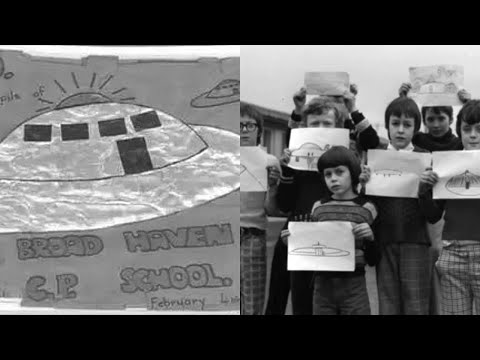
This site's own Broad Haven School Sighting (Case File #95, February 4, 1977) is directly covered by this book: fifteen children at a small Pembrokeshire primary school reported a silver, dome-topped object and a tall figure in a metallic suit beside their playground, producing strikingly similar drawings once separated and asked to sketch what they had seen — a detail later complicated when an academic historian working from the school's own contemporary diary established the drawings were made three days after the sighting, following a weekend during which the children had every opportunity to compare notes, rather than independently as originally reported.
This site's own Ripperston Farm & the Broad Haven Triangle Wave (Case File #245, beginning April 1, 1977) covers the wider wave this book addresses most directly: the Coombs family's reports at Ripperston Farm and dozens of further witness accounts collected across a roughly ten-mile radius of the Pembrokeshire coast by investigators including Randall Jones Pugh and F.W. Holiday — the same broader wave whose escalation into national and international press coverage this book's own more sensationalized approach both reflected and accelerated.
Critical Reception & Controversies
Independent critical assessment of the book located during this article's research has been consistently unfavorable on both factual and craft grounds: one review found it "written so haphazardly and poorly that it probably is not worth your time," while a separate retrospective source concluded its central conspiracy-theory framing simply "hasn't stood the test of time" against subsequent research and the additional context that has emerged about the case since 1979.
The book's reputation stands in specific, documented contrast to Pugh and Holiday's contemporaneous The Dyfed Enigma, which this site's own case files describe as drawing on the authors' own direct field interviews — a more methodologically grounded contemporary account that this book's own more speculative, theory-forward approach did not match.
The Ministry of Defence's own contemporaneous handling of the wider Pembrokeshire reports offers a useful independent counterpoint to this book's cover-up framing: the MoD's S4(Air) branch requested a "discreet enquiry" from RAF Police in June 1977, and the resulting assessment treated a local prankster as a plausible explanation for at least the humanoid-figure element of the wave — a specific, documented instance of official investigation reaching a far more mundane conclusion than this book's submerged-base theory.
Despite its critical reception, the book's continued availability through a 2016 reprint edition and its author's 2018 follow-up volume indicate a sustained popular readership interested in the Broad Haven case's more speculative interpretive tradition, distinct from, but running alongside, the more skeptical academic and journalistic treatments the case has attracted in subsequent decades.
The most consequential piece of independent reassessment to emerge since the book's original publication concerns the Broad Haven School Sighting specifically, and postdates this book by decades: academic historian David Clarke's direct examination of the school's own contemporary diary established that the celebrated near-identical children's drawings, long treated as powerful corroborating evidence of a shared genuine sighting, were in fact produced three days after the event rather than independently on the same day — a finding this book's original 1979 account, written without access to that specific school record, could not have addressed.
Influence & Legacy
This exact title is cited in this site's own Broad Haven School Sighting and Ripperston Farm & the Broad Haven Triangle Wave case files as the second contemporary 1979 book on the case, explicitly noted as "more sensationalized" than Pugh and Holiday's account and valuable specifically "as a record of how quickly the story escalated in the popular press."
The book's submerged-base theory has persisted in popular retellings of the Broad Haven case for more than four decades, frequently mentioned alongside more measured accounts even in coverage, including the 2023 Netflix documentary series Encounters and BBC Three's 2024 Paranormal series, that ultimately favor more grounded explanations — a durability that says as much about the theory's narrative appeal as about any evidentiary support it has accumulated in the years since.
Paget's own decision to revisit the case in 2018 with The Welsh Triangle Revisited, incorporating decades of subsequent correspondence, demonstrates the same kind of long-arc personal investment in a single regional case this site has documented in other researchers' careers — even as this book's specific central claim has not gained independent corroboration in the intervening years.
The Broad Haven case's continued life in mainstream streaming and broadcast media — the 2023 Netflix series Encounters devoting its entire first episode to the wave, and BBC Three's 2024 Paranormal series revisiting it as part of a four-part investigation — ensures this book's original speculative framing remains in circulation for new audiences discovering the case for the first time, even as more rigorous archival work by researchers like David Clarke has substantially reshaped the case's evidentiary picture in the decades since Paget wrote it.
The Book
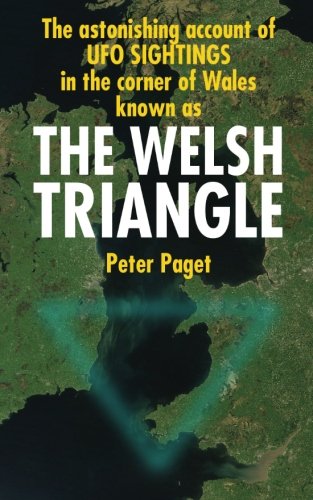
The Welsh Triangle
Find on Amazon →As an Amazon Associate, OverClassified may earn from qualifying purchases made through this link, at no extra cost to you.
Why This Is Essential Reading
The Welsh Triangle earns its place on this list not as a reliable investigative account but as a genuine historical artifact of how fast the 1977 Broad Haven wave escalated into speculative, cover-up-framed popular narrative — a useful contrast to the more measured contemporary treatment in Pugh and Holiday's The Dyfed Enigma, and essential context for readers of this site's own Broad Haven School Sighting and Ripperston Farm case files who want to see firsthand how the case's more sensational interpretive tradition took shape.
Related Cases & Theories
Essential Viewing
Sources Cited
- Paget, Peter. The Welsh Triangle. Sphere Books, 1979 (2016 reprint, ISBN-13 9781533511188). amazon.com
- "Welsh Triangle." Amazon.co.uk (original 1979 Sphere Books edition, bibliographic listing). amazon.co.uk
- "The Welsh Triangle." AbeBooks (bibliographic listing, cover art source). abebooks.com
- "The Welsh Triangle." Goodreads (reader ratings and reviews, including craft criticism referenced in this article). goodreads.com
- Babylon Wales. "The Welsh Triangle," June 2007 (background on Paget's central Stack Rock base theory). babylonwales.blogspot.com
- David Clarke. "Did the village see aliens?" Dr David Clarke (Substack), academic reexamination of the Broad Haven School Sighting drawings and timeline. drclarke.substack.com
- "RAF Brawdy." Wikipedia (military installation adjacent to the Broad Haven wave, including U.S. Naval Facility Brawdy underwater surveillance history). en.wikipedia.org
- This site's own case file: Broad Haven School Sighting, for the full 1977 school incident this book covers.
- This site's own case file: Ripperston Farm & the Broad Haven Triangle Wave, for the full wider 1977 Pembrokeshire wave.
- This site's own key-figures entry: Peter Paget, for his full biography and further case connections.
- This site's own key-figures entry: Randall Jones Pugh, co-author of the more methodical contemporaneous account of the same wave.
- This site's own key-figures entry: David Clarke, the academic historian whose later archival research substantially reassessed the Broad Haven School Sighting specifically.
Have corrections, additional research, or peer-reviewed sources? Help improve this entry.
Suggest an Edit