
The Mount Kilimanjaro Cigar-Shaped UFO Sighting
On the morning of February 19, 1951, Capt. Jack Bicknell and Radio Officer Dennis W. Merrifield of East African Airways, together with nine passengers aboard a Lockheed 18 Lodestar, watched a large, bullet- or cigar-shaped metallic object hang motionless roughly 10,000 feet above Mount Kilimanjaro, Tanganyika Territory (present-day Tanzania), for about seventeen minutes before it rose and moved off eastward, disappearing at an estimated 40,000 feet. Bicknell judged its speed at "well over 1,000 m.p.h."; passenger Capt. H.B. Fussell put it at "probably 400 mph." Merrifield radioed Eastleigh airfield in Nairobi while the object was in view, and after landing Bicknell had a statement drawn up and signed by Merrifield and the passengers; London's Sunday Dispatch called it "the most authentic Flying Saucer report so far." Passengers took still photographs and Ray Overstreet shot about thirty feet of color cine film. Overstreet's film was never recovered, but a frame from it, showing only a tiny dot, was printed in the Durban Natal Mercury on March 14, 1951, and was located again by researcher Barry Greenwood in 2015. Some later accounts say the U.S. Air Force examined the film; no Air Force record of that has been found, and the Project Blue Book card notes only that "photos were taken but are not in file."
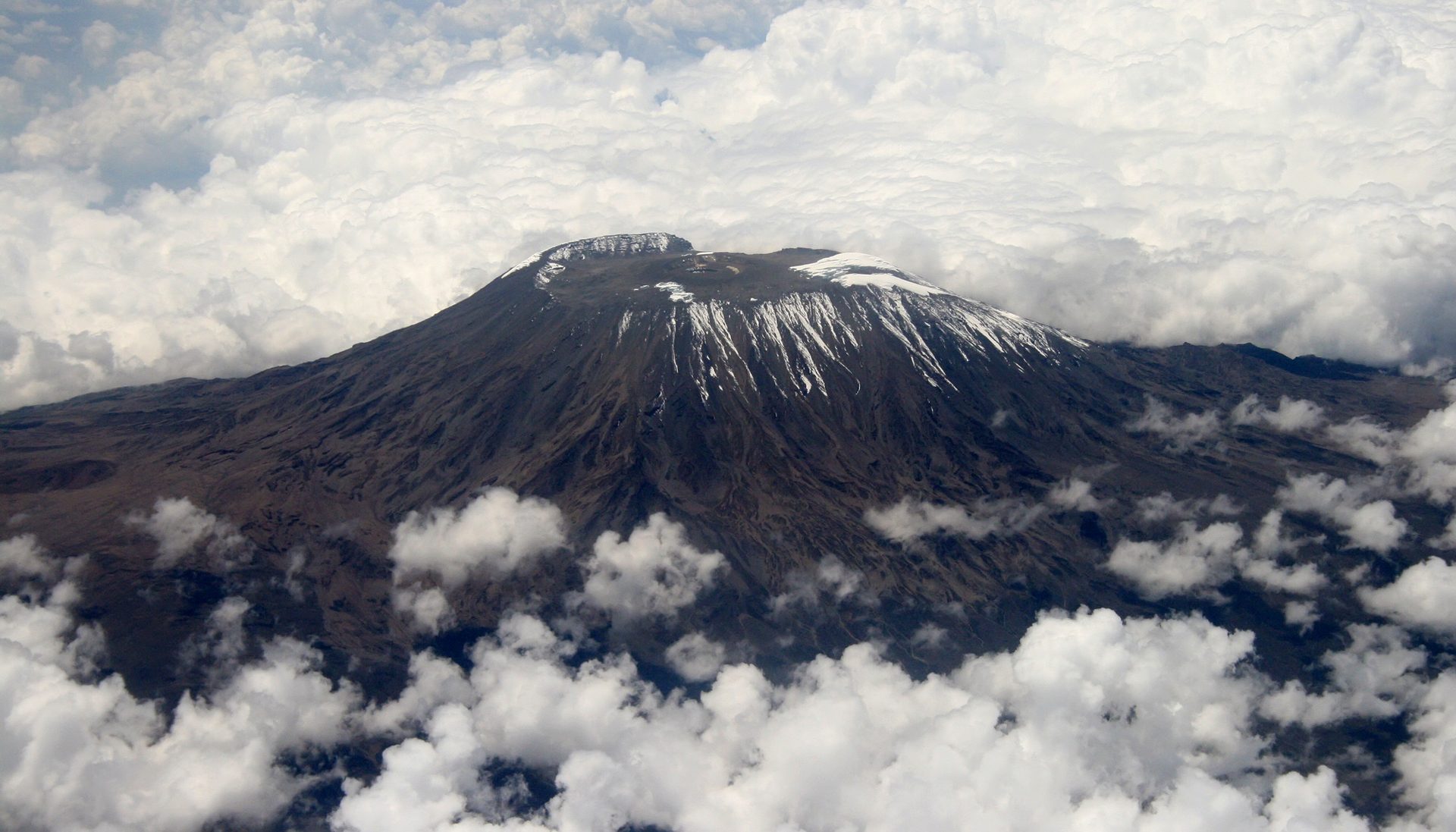
Pictured: Mount Kilimanjaro, Tanzania, the mountain over which the object was reported — not a photograph of the object itself. This is not a period 1951 photograph and does not depict the actual sighting. The one surviving image connected to this case — a single, extremely faint frame from Ray Overstreet's cine film, reproduced in the Natal Mercury of Durban, South Africa on March 14, 1951 and rediscovered by researcher Barry Greenwood in 2015 after decades of failed searches — is discussed and described in detail in this case file's Material Analysis section below; this site could not confirm reusable public-domain or fair-use licensing for that low-resolution newspaper scan and has therefore used a real, honestly captioned modern photograph of the mountain itself instead, consistent with this catalogue's sourcing standards.
Theoretical Alignment
The Extraterrestrial Hypothesis draws its strength here from an unusual evidentiary combination for a 1951 case: eleven witnesses, a signed statement drawn up immediately after landing, a radio report made while the object was in view, and a described object with consistent structural detail (a fin, dark bands, no wings or visible propulsion) seen through binoculars, holding position for many minutes before rising away. It is weakened by the near-total absence of usable physical evidence: the still photographs were never published, Overstreet's thirty feet of film vanished, and the one frame that survived in print shows only a tiny dot. The Interdimensional Hypothesis finds essentially no support. The Psycho-Social/Mundane reading carries real weight because two conventional candidates were raised at the time and never resolved: Eastleigh's own suggestion that it might be a meteorological balloon, and the U.S. consulate's report that an Air France Constellation was flying from Nairobi toward Madagascar at about 17,000 feet.
Background
East African Airways began operations on January 1, 1946, from Eastleigh Aerodrome outside Nairobi, as a carrier jointly owned by the Kenya Colony (67.7 percent), Uganda (22.6 percent), Tanganyika Territory (9 percent) and Zanzibar (0.7 percent), initially with de Havilland Dragon Rapides operated with BOAC's help. In 1948 it bought Lockheed 18 Lodestars from BOAC, five of which entered service on February 22, 1948; three more came from Sabena in the Belgian Congo in 1949, and seven ex-South African Airways Lodestars followed in the early 1950s. The Lodestar was a twin-engine, twin-tailed piston airliner. Mount Kilimanjaro, at 5,895 meters (19,341 feet) the highest peak in Africa, is a dormant volcanic massif just inside Tanganyika near the Kenyan border, visible for well over a hundred kilometers across the surrounding plains and a familiar landmark to pilots flying out of Nairobi toward the coast.
Capt. Jack Bicknell, 30, was born in Exeter, had lived in London and flown for BOAC, and joined East African Airways in 1948, according to the London Sunday Dispatch. His radio officer, Dennis W. Merrifield, was 54 and a former Royal Air Force man. Nine passengers were aboard (one press account says nine men and two women; a Mombasa wire story gives seven passengers). They included Capt. H.B. Fussell, described in the press as a retired American captain and a Newport, Monmouthshire, sports dealer, who carried binoculars; Ray Overstreet (named Roy in some accounts), the radio officer of the freighter Robin Mowbray, who had a cine camera with a telephoto lens; and Charles J. Vernon, the same ship's purser. The flight's destination is reported two ways. The press accounts, including the Mombasa-datelined report of the signed statement, give the route as Nairobi West to Mombasa, with take-off at 7:00 a.m.; the U.S. consulate at Dar es Salaam reported the flight as "from Nairobi to Dar es Salaam." Either route runs southeast from Nairobi within sight of Kilimanjaro, so neither can be ruled out on geography; this case file treats the Mombasa routing as the better attested by the contemporary press, while noting the consular version.
Complete Timeline
| Date | Event |
|---|---|
| February 19, 1951, 7:00 a.m. | The East African Airways Lodestar takes off from Nairobi with two crew and nine passengers. |
| February 19, 1951, approx. 7:20 a.m. | The crew sees a bright object hanging motionless about 10,000 feet above Kilimanjaro, watches it for about three minutes, then alerts the passengers. |
| February 19, 1951, in flight | Radio Officer Merrifield radios Eastleigh (Nairobi), which asks the crew to check whether it is a meteorological balloon. |
| February 19, 1951, ~7:20–7:40 a.m. | The object remains stationary for about 17 minutes, then rises and moves off eastward, disappearing at an estimated 40,000 feet with no vapor trail. |
| February 19, 1951, after landing | Bicknell prepares a statement, signed by Merrifield and the passengers; the Nairobi Sunday Post later reports it from Mombasa as a "sworn affidavit." |
| February 25, 1951 | The Nairobi Sunday Post publishes "The Flying Saucer: Captain Bicknell's Own Story"; the London Sunday Dispatch runs "The Most Authentic Flying Saucer Story of Them All" the same day, calling it "the most authentic Flying Saucer report so far." |
| February 28, 1951 | The American consulate at Dar es Salaam sends the State Department a dispatch on the sighting, later filed with Project Blue Book. |
| March 4, 1951 | The Sunday Dispatch prints Bicknell's sketch ("Pilot Made Sketch of 'Flying Saucer'"). |
| March 14, 1951 | The Natal Mercury of Durban runs "'Saucer' Flies on Ciné Film: Or Does It?" with a still reportedly from Overstreet's film. |
| October 25, 1952 | East African Airways (letter signed H.C.K. Downes) tells Australian inquirers that the photographs "are non existent." |
| Early 1952 | Life magazine prints a sketch of the object, which the Australian Flying Saucers Bureau later likens to a lipstick tube. |
| May 1953 | The case is published in Australian Flying Saucer Magazine by the Australian Flying Saucers Bureau (reprinted in Flying Saucer Review, May–June 1963). |
| 1953 | Civilian Saucer Investigation's CSI Bulletin No. 2 covers the case; the July 1953 issue carries a Nairobi witness citing it. |
| 1956 | Waveney Girvan's Flying Saucers and Common Sense discusses the sighting in book form. |
| 1964 | Richard Hall's NICAP compilation The UFO Evidence includes the case (p. 124). |
| 1966–1971 | The case appears in Thomas M. Olsen's Reference for Outstanding UFO Sighting Reports and Paris Flammonde's The Age of Flying Saucers. |
| January 1990 | Zimbabwean ufologist Cynthia Hind reports in UFO Afri-News on her unsuccessful attempt to trace Bicknell or the other witnesses. |
| 1997 | Hind includes the case and her failed search in UFOs Over Africa. |
| July 2015 | Researcher Barry Greenwood publishes the Natal Mercury photograph in UFO Historical Revue No. 16, "Mt. Kilimanjaro, Tanganyika, February 19, 1951: Photo Located." |
The Sighting: Seventeen Minutes Over the Mountain
According to Bicknell's account in the Nairobi Sunday Post of February 25, 1951, about twenty minutes after the 7:00 a.m. take-off the crew saw a bright object hanging motionless roughly 10,000 feet above the mountain. They watched it for about three minutes before telling the passengers. While it was in view, Merrifield radioed Eastleigh, which asked the crew to check whether it was a meteorological balloon. Bicknell rejected that: through binoculars he saw "a metallic, bullet shaped object which must have been over 200 feet long," with a "square-cut vertical fin" at one end. Fussell, looking through his own binoculars, said the object "appeared bullet-shaped" and described "three vertical black bands down the side."
The object held its position, by Bicknell's count, for about seventeen minutes, then (in the Sunday Dispatch version) climbed twice and moved off eastward, disappearing at an estimated 40,000 feet without leaving a vapor trail; by one account, its movement was visible for about three minutes. Bicknell judged its speed at "well over 1,000 m.p.h."; Fussell's estimate was "probably 400 mph." No sound was reported. This case file treats the size, height and speed figures as impressions: estimates for a distant, unfamiliar object with no scale reference are among the least reliable kinds of eyewitness measurement, and the two speed estimates differ by more than a factor of two. Two features of the setting are worth noting. Kilimanjaro gave the witnesses an unusually good fixed reference for judging whether the object moved; and, computed for the summit with JPL Horizons, the Sun at about 7:20 a.m. was only some 9–13° above the eastern horizon (depending on the local time standard), and the object's eastward departure was toward the low morning Sun.
The Signed Statement
Bicknell's decision to collect signed statements is, on this case file's assessment, the strongest evidentiary feature of the sighting. According to the contemporary accounts collected by Patrick Gross, Bicknell drew up the statement immediately after landing, and it was signed by Merrifield and all nine passengers; the Nairobi Sunday Post's Mombasa-datelined report called it a "sworn affidavit," though it put the signatories at seven passengers and two crew. The U.S. consular dispatch likewise says Bicknell "obtained the signature of all the nine passengers." Gathering signatures the same morning, before the press became involved, is a stronger procedure than the informal after-the-fact accounts typical of the period, although the witnesses had already spent the rest of the flight together. Contemporary press coverage recognized its weight: the London Sunday Dispatch's February 25 report called it "the most authentic Flying Saucer report so far," and the Sunday Post observed that "if this report had come from a few isolated individuals it would soon be discounted."
The Photographs, the Film, and Sixty-Four Years of Searching
This is the area where secondary UFO literature has most diverged from the documented record. Fussell is reported to have taken a picture (the consular dispatch says so), Vernon also carried a camera, and Overstreet shot about thirty feet of color cine film through a telephoto lens. None of the still photographs is known to have been published. The Natal Mercury of March 14, 1951, headlined "'Saucer' Flies on Ciné Film: Or Does It?", said a passenger's film, when developed, "did show a clear and sizeable image of the object" and printed a still reportedly taken from it; the image itself, as later located, shows only a tiny dot of light.
What happened to the film afterward is the case's central unresolved gap. Bicknell later said he had learned that Overstreet was on his way to the United States to show the film to the authorities, and that he never heard any news of it. The American UFO writer and publisher James Moseley later claimed that "the film exists; it was examined by the US Air Force," and a newspaper clipping reproduced by later researchers says the Air Force found it "little more than a bouncing bit of light" and returned it. No Air Force document supports either claim: the Blue Book record card says only "Photos were taken but are not in file." In an October 1952 letter, East African Airways told Australian inquirers that the photographs "are non existent." This case file treats the film's fate as unknown, and the confiscation story as unsupported.
The Natal Mercury still dropped out of sight for decades. Barry Greenwood located a copy of the March 14, 1951 issue and published the photograph in UFO Historical Revue No. 16 (July 2015), the first time it had been available for study since 1951. As summarized in this file's earlier research, Greenwood's account describes a long search that stalled at the National Library of South Africa before the British Library supplied the issue, and he describes the image as very tiny and barely perceptible in the newsprint; this case file could not re-read Greenwood's article in October 2026. A rediscovered dot in a 1951 newspaper is a genuine piece of the historical record, but it cannot settle what the object was.
The U.S. Consular Dispatch and Project Blue Book
The United States government's only documented engagement with this case came through ordinary diplomatic channels. On February 28, 1951, the American consulate at Dar es Salaam sent the State Department a dispatch summarizing the sighting. (This file previously named the consul as H. Gordon Minnigerode; that name could not be confirmed.) The dispatch reports that one passenger, "Mr. H.B.K. Fussel, an American, is reported to have taken a picture," and that Bicknell "obtained the signature of all the nine passengers." It also records a conventional candidate checked at the time: an Air France Constellation "bound from Eastleigh to Tananarive" in Madagascar, whose cruising altitude was "about 17,000 feet." Nothing in the record shows that anyone established where that airliner actually was at 7:20 a.m.
The dispatch became part of Project Blue Book's files, where the record card has "Insufficient Data for Evaluation" checked, with the summary "Insufficient data for evaluation. Photos were taken but are not in file." (Brad Sparks's catalogue of Blue Book unknowns nonetheless lists the case, as no. 442.) No Blue Book investigator traveled to East Africa, interviewed Bicknell or any other witness, or obtained the film or photographs; the American file appears to consist of the consulate's secondhand summary. That thin record says more about how little attention a foreign sighting with no U.S. military involvement received in 1951 than about the sighting itself, and it should not be read as evidence that the case was scrutinized and found wanting.
How the Story Was Told in 1951
The sighting reached print in several versions within a week, and the differences between them explain most of the discrepancies in later literature. The earliest were wire stories datelined Mombasa. One, headed "Flying Saucer Snapped," reported that seven passengers and two crew had signed an affidavit, quoted Fussell describing the object as "sausage-shaped," gave its height as about 25,000 feet when first seen, then 30,000 and finally 40,000, and said two American passengers had taken cine and telephoto pictures while another used a miniature camera. A second Mombasa report, "Cine Film May Show 'Saucer,'" said eleven people had signed, described the object as "twice the size of an airliner," mentioned a mirage suggestion from British aviation circles, and quoted an Air France official as saying a Constellation had left Nairobi that morning.
The two Sunday papers of February 25 carried the fullest accounts. In the Nairobi Sunday Post, Bicknell said that at first he took the bright, motionless object for "a white star" and his instinct was to say nothing; after three minutes the crew told the passengers, a passenger with powerful binoculars studied it, and the radio message went to Eastleigh, which asked whether it might be a meteorological balloon. Bicknell then watched it through binoculars for several minutes and concluded it was not: it had a sharp outline with no haze, a dull silver color, regular dark bands and a square-cut fin, and was "definitely a flying machine of some kind." The paper observed that a report from a few isolated individuals would soon be discounted, but that this one came from airline officers and nine ordinary travelers, and it rejected the balloon and mirage theories.
London's Sunday Dispatch named Merrifield as the first to see it, quoting him: "Have a look at a flying saucer." It said Bicknell timed the object for seventeen minutes, then saw it climb twice, to about 40,000 feet, and move east at high speed with no vapor trail or visible means of propulsion. Fussell's account in the same paper differs in its numbers: he described three black bands, a hover of about ten minutes, a vertical rise of some 5,000 feet, and a speed of "probably 400 mph." Vernon put the object at two or three times the size of an airliner. The paper also aired the view of Dr. Urner Liddel, then promoting the idea that saucer reports were mostly Skyhook research balloons, and reported two unexplained flashes over Mombasa that night. Later retellings give the basis of Bicknell's speed figure as about sixty miles covered in three minutes, and credit Merrifield with remarking that the machine was some 500 years ahead of anything known. On March 4 the Dispatch printed Bicknell's sketch; Waveney Girvan's 1956 retelling says he drew it on landing.
The account most later books follow is therefore a blend: the seventeen minutes and "over 1,000 m.p.h." from Bicknell, the bands from Fussell, the double climb from the Dispatch, and the altitude from whichever version an author happened to use. The 1953 Australian article that carried the case to a wider ufological readership even has the object leaving "westwards." This file uses the Sunday Post and Sunday Dispatch accounts as its base, and notes where others differ.
The Airline's Answer on the Photographs
In 1952 the Australian Flying Saucers Bureau wrote to East African Airways asking about the photographs. The reply, dated October 25, 1952 and signed by the airline's publicity officer, H.C.K. Downes, was printed in Australian Flying Saucer Magazine in May 1953. As summarized by Patrick Gross, Downes said the Corporation had no photographs; that a passenger had taken them but could not now be identified; that the report had been doubtful from the start; that the photograph was never published by the airline and the developed print showed no trace of anything; and that, by one rumor, a chemist had retouched out the spots, thinking them flaws in the negative. His conclusion was that the photographs "are non existent." The letter sits awkwardly with the Natal Mercury's claim of "a clear and sizeable image," and with Bicknell's own belief that the film had gone to the United States; it may refer to a passenger's still photograph rather than to Overstreet's film, but it does not say. Gross's own judgment is that, given the distance, the limits of a 1951 cine camera and a handheld telephoto lens, the film probably showed little more than a speck, which is what the printed still shows.
Forty Years Later: Cynthia Hind's Search
Around 1990 the Zimbabwe-based investigator Cynthia Hind tried to find Bicknell or anyone who had known him, through personal contacts and through letters to Durban newspapers, without success. She reasoned that he would by then be near eighty, and might not wish to emerge from his anonymity; she regretted that no thorough investigation had been done at the time. She also noted that she had written an article on the shapes reported in African sightings for the MUFON UFO Journal that was never published. Her account of the case appeared in her bulletin UFO Afri-News (January 1990) and in UFOs Over Africa (1997). Her failure to trace any witness closed the last practical route to new first-hand testimony. Hind's own conclusion, after decades of collecting African reports, was that UFOs "are the same the world over": the Kilimanjaro object, a finned cigar seen by an airline crew, would not look out of place among the European and American reports of the same years.
A Later Assessment
The most detailed modern review of the case, Patrick Gross's, rejects mirage, lenticular cloud, reflection and balloon explanations as making no sense against the witnesses' descriptions, and notes that Liddel's Skyhook claim was a blanket theory about all saucer reports rather than an analysis of this one. Gross regards the Air France Constellation as the only serious conventional candidate, and points out that the crew apparently considered it themselves. But he finds it a poor fit: a Constellation would not hang in one place for ten minutes or more, the dark bands and the absence of engines do not match, and the reported departure speed is too high. He notes that a Constellation seen from directly behind shows its three tail fins, which might be read as bands, but that this leaves the single fin unexplained. His conclusion is that either the Constellation was misidentified or a good case went uninvestigated, and that it is now too late to tell. This file's own weighing, in the Conventional Explanation Candidate section below, reaches a similar result.
Key Witnesses
Capt. Jack Bicknell
Bicknell gave the primary, most detailed account of the sighting, published in the Nairobi Sunday Post six days later, and drew up the statement that Merrifield and the passengers signed after landing. He described a metallic, bullet-shaped object "over 200 feet long" with a square-cut fin, and estimated its departure speed at "well over 1,000 m.p.h." Forty years later Cynthia Hind could not trace him.
Radio Officer Dennis W. Merrifield
Merrifield radioed Eastleigh while the object was in view, and Eastleigh asked the crew to check whether it was a meteorological balloon. He signed the statement with the passengers. His older service background gives the case a second, independently trained aviation observer.
Capt. H.B. Fussell
Fussell watched the object through his binoculars and described it as bullet-shaped with "three vertical black bands down the side"; he estimated its departure speed at "probably 400 mph." The U.S. consular dispatch, which spells his name "H.B.K. Fussel," says he was reported to have taken a picture; no photograph of his is known to have been published.
Ray Overstreet
Overstreet shot roughly thirty feet of color cine film through a telephoto lens. Bicknell later heard that he was taking the film to the United States to show the authorities. A still reportedly from the film appeared in the Durban Natal Mercury on March 14, 1951, showing only a tiny dot; Barry Greenwood located that issue in 2015. The film itself has never been recovered.
The Five Observables Assessment
The Five Observables framework, drawn from the Pentagon's Advanced Aerospace Threat Identification Program, is applied here to the performance characteristics Bicknell, Merrifield, and the passengers reported:
Assessment: The earlier version of this file rated Anti-Gravity Lift and Instant Acceleration Present on the basis of a motionless hover and "two rapid vertical climbs." The Sunday Dispatch does report that the object climbed twice, but the contemporary accounts disagree on the details (Fussell described a single rise of about 5,000 feet after a ten-minute hover), and the departure was watched over about three minutes. A distant object that appears stationary for many minutes is not by itself evidence of lift without support, because the observers' distance from it is unknown, and a departure watched over about three minutes, with speed estimates ranging from 400 to over 1,000 mph, is not instant acceleration. Both are therefore rated Speculative. Hypersonic performance is Speculative because Bicknell's figure is his own uninstrumented estimate and, taken at face value, describes supersonic rather than hypersonic speed. Low Observability is Absent because the object was continuously visible to eleven people, and no radar existed over Tanganyika in 1951 to test against.
Evidence Assessment
Supporting Anomalous Origin
- Eleven witnesses — two aviation professionals and nine passengers — described the same large, structured, stationary object, with consistent details (a fin, dark bands, no wings or engines) seen through binoculars.
- Radio Officer Merrifield radioed Eastleigh while the object was in view, creating a contemporaneous record independent of post-flight recollection.
- Bicknell had a statement drawn up and signed by Merrifield and the passengers immediately after landing, before any press involvement.
- The crew rejected Eastleigh's balloon suggestion after examining the object through binoculars, and a balloon would not normally move off eastward and climb out of sight within minutes.
- A photographic record did once exist: the Natal Mercury printed a still reportedly from Overstreet's film in March 1951.
Supporting Conventional Explanation
- Two conventional candidates were raised at the time and never resolved: Eastleigh's meteorological-balloon suggestion and the Air France Constellation flying toward Madagascar at about 17,000 feet.
- No government body investigated on site, interviewed the witnesses, or examined the film; Blue Book's file consists of a secondhand consular summary and a card noting "photos were taken but are not in file."
- The only surviving image is a still in a 1951 newspaper showing a tiny dot; the paper's description of a "clear and sizeable image" cannot be checked, and the airline later said the photographs were "non existent."
- The witnesses' estimates diverge: speed "well over 1,000 m.p.h." (Bicknell) against "probably 400 mph" (Fussell), and the number of signatories is reported differently in different accounts.
- Cynthia Hind's attempt to trace Bicknell and the other witnesses around 1990 failed, so the case rests entirely on the 1951 record.
Why "Disputed"
This case earns a DISPUTED classification with a credibility score of 52/100. That places it above cases resting on a single line of witness testimony with no independent corroboration procedure, such as this catalogue's own Chicago & Southern DC-3 Sighting (Disputed, 44), reflecting the evidentiary strength of the statement signed by Merrifield and the passengers immediately after landing and the number of witnesses — but it remains below cases that combine comparable or larger witness counts with either active instrumented search or sustained modern scientific reexamination, such as the BOAC Stratocruiser "Centaurus" Sighting (Disputed, 61), which benefited from a same-night fighter scramble and two independent scientific analyses conducted decades apart.
What lifts this case above the bulk of this catalogue's lightly corroborated 1950s sightings is the process around it: a radio report made while the object was in view, then signatures from the radio officer and the passengers collected immediately after landing, is rare and strong for a case this old. What holds the score in the middle of the Disputed range is that this strength was never followed up by any investigation of comparable rigor: Eastleigh's balloon suggestion and the consulate's Air France Constellation were raised and then left unresolved; no government body ever interviewed a witness directly or examined the film; the one image that survived is a tiny dot in a 1951 newspaper; and Cynthia Hind's attempt to trace the witnesses forty years later found no one. This is, in this case file's own assessment, a genuinely well-corroborated single-flight sighting that nevertheless was investigated by no one with the authority or resources to resolve it, then and now — a combination that argues for real, disclosed uncertainty rather than either confident vindication or confident dismissal.
Sensor & Instrumentation Detection Profile
No radar or other electronic sensor coverage of the object is known; the case rests on unaided and binocular-assisted observation, supplemented by still photographs (unpublished) and Overstreet's cine film (lost), of which one still survives in newsprint. The only instrumented element in the record is the aircraft's radio, used to report the sighting to Eastleigh while it was in progress. This case file found no evidence that any radar station in Kenya or Tanganyika tracked the object, and treats the absence of instrumented data as a limitation on what can be verified, not as evidence for or against the object's reality.
The same gap explains why American involvement was limited to a consular dispatch: the U.S. had no military presence in Tanganyika capable of examining the case, and the consulate's routine reporting was the only channel by which it reached Washington. Project Blue Book's closing statistics, per the National Archives, list 701 cases as "Unidentified" out of 12,618 sightings reported to the Air Force between 1947 and 1969; this case's "Insufficient Data for Evaluation" classification places it outside that residual "Unidentified" group, as a case Blue Book never examined on its merits.
Environmental & Geospatial Context
Mount Kilimanjaro's summit, at 5,895 meters (19,341 feet), stands far above the Lodestar's likely cruising height, so the witnesses were looking up at an object they placed some 10,000 feet above the summit — in the region of 29,000 feet, if that estimate is taken literally — from an aircraft well below it. That geometry matters: without any knowledge of the object's distance, its size and height could not be judged reliably, and Bicknell's "over 200 feet" depends entirely on an assumed range. On the other hand, the snow-capped massif, visible from very great distances, gave the witnesses an unusually good fixed reference for judging that the object was not moving during the seventeen minutes it hung in view.
No meteorological record for the morning of February 19, 1951 over the Kilimanjaro region was located for this case file. Computed with JPL Horizons for the summit, the Sun rose there at about 03:45 UT and at 7:20 a.m. local time (04:20–04:35 UT, depending on whether East African clocks were then set to UTC+3 or UTC+2:45) stood about 9–13° above the eastern horizon at an azimuth of roughly 101°; the 92%-lit waning Moon had already set. Politically, Tanganyika in February 1951 was a British-administered United Nations Trust Territory rather than a Crown colony like neighboring Kenya; this case file found no evidence that this had any bearing on how the sighting was reported or received.
Observer Credibility & Occupational Profile
The witness pool combines two aviation professionals with a varied group of passengers. Capt. Bicknell, at 30, was a former BOAC pilot who had flown for East African Airways since 1948; Radio Officer Merrifield, at 54, had an RAF background, giving the case two trained aviation observers of different generations. Neither man's flight hours or service record could be confirmed from any source consulted, a limitation disclosed here rather than inflated by comparison with better documented pilots elsewhere in this catalogue, such as Capt. James Howard in the BOAC Stratocruiser Centaurus sighting.
The passengers add breadth: a retired American captain carrying binoculars, and two officers of a merchant freighter. Their signatures on the statement, collected immediately after landing, are the strongest credibility-enhancing feature of the case. Two cautions apply. The witnesses spent the remainder of the flight together before signing, so their statements are not independent in the strict sense, and the accounts of who signed differ in detail. And the two estimates of the object's speed differ by a factor of more than two, a reminder that agreement on what was seen does not extend to agreement on how far away it was or how fast it went.
The same spread runs through every quantitative estimate in the record. Bicknell put the object at over 200 feet long; Vernon at two or three times the size of an airliner; a Mombasa report at twice an airliner. Its height is given as about 10,000 feet above the mountain by Bicknell, as 25,000 feet rising to 30,000 and then 40,000 in the first wire story, and simply as 40,000 feet at its disappearance in most later books. Fussell timed the hover at about ten minutes, Bicknell at seventeen. None of these discrepancies is surprising for observers looking up at an unfamiliar object at an unknown distance from a moving aircraft, and none undermines the agreement on its shape and markings; but they mean that any argument resting on a particular size, height or speed rests on one witness's impression rather than on the group's.
Physical & Material Assays
No physical trace evidence of any kind exists in connection with this case; the object was never reported approaching close enough to the aircraft, the mountain, or the ground for any debris, residue, or material sample to be recovered, and none is claimed to exist in any source consulted for this case file. See Material Analysis below for a full discussion of the case's photographic record in place of any physical evidence.
Historical Precedents & Archive Matches
This case belongs to the small cluster of early-1950s multi-witness airline sightings this catalogue has documented in its Chicago & Southern DC-3 Sighting (March 1950), Nash-Fortenberry Sighting (July 1952), BOAC Stratocruiser "Centaurus" Sighting (June 1954) and Hawker Sea Fury Sighting (August 1954), but it stands apart as the only one set in Africa, and the only one whose primary evidentiary strength is a signed multi-witness statement rather than radio or radar corroboration. Within the literature on African sightings, Cynthia Hind treated it as one of the continent's earliest well-documented reports, and her unsuccessful attempt around 1990 to trace any of the witnesses is now part of the case's history.
The case's reach within the UFO-research community of its own era is documented. The Civilian Saucer Investigation's CSI Bulletin covered it in its second 1953 issue, and the July 1953 issue printed an account by Mrs. A. M. King of Nairobi of a large object she had seen from the S.S. Llandovery Castle in 1947, in which she wrote: "To my surprise, I read later of Capt. Bicknell's experience over Mt. Kilimanjaro in 1951." The case was also reprinted in Australian Flying Saucer Magazine in 1953 and in Flying Saucer Review in 1963, catalogued by Richard Hall in NICAP's The UFO Evidence (1964) and by J. Bernard Delair in UFO Register (1975), and the Center for UFO Studies, founded by astronomer J. Allen Hynek, holds case documents on it. Its persistence in these catalogues reflects the strength of its 1951 documentation rather than any later investigation.
Material Analysis
This case's material record consists of a photographic and documentary trail rather than any recovered physical object.
The Surviving Record
What survives is the contemporary press coverage (the Nairobi Sunday Post, the London Sunday Dispatch, the Natal Mercury), the U.S. consular dispatch and Blue Book record card, the 1952 airline letter and 1953 Australian article, later compilations (NICAP's The UFO Evidence, Olsen, Flammonde, Delair), Patrick Gross's collation of these sources, and Barry Greenwood's 2015 republication of the Natal Mercury photograph. Across these sources the core account is consistent — a stationary, bullet-shaped object with a fin, watched for about seventeen minutes, then climbing away eastward — while details such as the route, the number of signatories and the object's speed vary.
What Does Not Survive
Overstreet's thirty feet of color cine film has never been located, and no record shows it was ever examined by any government body; James Moseley's later claim that the Air Force examined it, and a clipping saying the Air Force found "little more than a bouncing bit of light," are unsupported by any Air Force document, and this site's own earlier "Coming Soon" description of the film as "confiscated and reviewed by the U.S. Air Force" was likewise unsupported. No still photograph from Fussell or Vernon is known to survive, and in 1952 the airline itself said the photographs were "non existent." Hind's search for Bicknell or other living witnesses around 1990 found nothing.
The fragility of this record is itself a finding. Provincial and colonial-era newspapers of the early 1950s were often never microfilmed in full, and surviving runs are scattered and hard to search without an exact date. That a once-published photograph could become functionally unrecoverable for six decades, and then be found again in a library run, shows how evidence can disappear through ordinary neglect rather than concealment. This case file treats that distinction as important to how readers should weigh the absence of Overstreet's film today.
Supporting Non-Terrestrial or Unexplained Origin
- Eleven witnesses, with signatures collected immediately after landing, described a structured object with consistent physical detail that the crew judged was not a balloon.
- A still reportedly from the cine film was published in 1951, rather than the film's existence resting on witness claims alone.
- No contemporary investigation resolved the case with a documented conventional explanation.
Supporting Terrestrial or Mundane Origin
- The surviving photographic evidence is a single newspaper still showing a tiny dot, insufficient to confirm the object's described structure.
- Two conventional candidates raised at the time — a meteorological balloon and an Air France Constellation — were never checked to a conclusion.
- No modern re-investigation has been possible; the case depends permanently on the 1951 record.
The Conventional Explanation Candidate: A Balloon or a French Constellation
Two conventional candidates were raised at the time, by people with access to air-traffic information, rather than invented decades later. While the object was still in view, Eastleigh asked the crew whether it might be a meteorological balloon. And the U.S. consular dispatch records that an Air France Lockheed Constellation was flying from Eastleigh toward Tananarive, Madagascar, at a cruising altitude of about 17,000 feet.
A Meteorological or Research Balloon
The balloon idea was in the air in February 1951 for a reason unrelated to this sighting. Only days earlier, Dr. Urner Liddel, a physicist with the U.S. Office of Naval Research, had been widely quoted as saying that the Navy's high-altitude Skyhook research balloons accounted for the flying-saucer reports in general, and the Sunday Dispatch put his theory to its readers alongside Bicknell's account. Liddel's claim was a blanket explanation, not an analysis of this case, and no Skyhook flight is known to have been launched in East Africa. But Eastleigh's question shows that the crew's own controllers considered a balloon the obvious first check. A balloon is the candidate the witnesses were asked about first, and it explains the most distinctive part of the report: an object that appeared to hang motionless for many minutes. A balloon high above the mountain, lit by the low morning Sun, would appear bright and nearly stationary from a distance. Bicknell rejected the idea after looking through binoculars, describing a metallic, finned, banded body over 200 feet long. A small sounding balloon would not look like that, and its slow ascent does not obviously match an object that rose and moved off eastward out of sight within a few minutes. No check of balloon launches that morning is recorded.
The Air France Constellation
The Constellation was a large airliner with a long, slender, slightly curved fuselage and a distinctive triple tail, and seen from a distance at an angle it could look like a finned cigar. A Mombasa report quoted an Air France official as confirming that a Constellation had left Nairobi that morning, and the crew themselves apparently considered and rejected it when the object climbed away. Seen from directly behind, as Patrick Gross notes, its three tail fins might even be read as dark bands. Its reported cruising altitude, about 17,000 feet, is in the general region where a witness might place an object high over the mountain. Against it, the witnesses described the object as absolutely stationary for about seventeen minutes, which an airliner in cruise is not, unless it was flying almost directly toward or away from the observers; and the record shows no one confirming where the French aircraft actually was at 7:20 a.m.
An Atmospheric or Optical Phenomenon
A lenticular or other stationary cloud near the summit, lit by the low Sun, is a further candidate for a long-lasting, motionless shape over a high mountain. It is weakened by the structural detail — a fin and dark bands — that two observers reported independently through binoculars, and by the object's reported departure.
Weighing these against the record: none is excluded, and none is confirmed. The balloon fits the long hover but not the described structure or departure; the Constellation fits the shape and the general altitude but not the hover; a cloud fits the hover and the setting but not the detail. Because no one checked balloon launches, the French flight's position, or the film, the case remains Disputed rather than explained.
Meteorological or Research Balloon
InconclusiveRaised by Eastleigh at the time; fits the long stationary phase, but the crew rejected it after binocular observation, and no launch check is recorded.
Misidentified Air France Constellation
InconclusiveRaised in the consular dispatch, with a compatible course and an altitude of about 17,000 feet, but never confirmed or ruled out, and hard to reconcile with a seventeen-minute hover.
Atmospheric or Optical Phenomenon
ImplausibleWeakened by the fin and banding reported independently through two sets of binoculars, and by the object's departure.
Related Cases
Confirmed Documents & Official Records
Project Blue Book's case files, including the U.S. consular dispatch on this sighting, are held within NARA's Record Group 341; this catalog search surfaces the finding aids for those holdings.
Declassified; case classified "Insufficient Data for Evaluation"Greenwood's own detailed research account, including direct quotation from the Project Blue Book consular dispatch and the first modern reproduction of the Natal Mercury's 1951 photograph.
Independent research publication, drawing on declassified Blue Book materialSearch Government Archives Directly
Further Reading — Recommended Literature
UFOs Over Africa
The essential reference on African UFO cases from the continent's leading investigator, including her own firsthand account of trying and failing to relocate this case's witnesses forty years on.
The UFO Evidence
An early scholarly compilation of catalogued UFO reports that includes this case among its documented sightings, cross-checked for this case file's timeline.
The Age of Flying Saucers: Notes on the History of Unidentified Flying Objects
A detailed narrative history of the first 25 years of the UFO era that situates this sighting within the broader early-1950s international wave.
DISCLOSURE: Some links above are affiliate links. If you purchase through them, OverClassified receives a small commission at no additional cost to you. This helps support independent research.
Essential Viewing
No Videos Available
A genuine search across established documentary channels and independent research creators found no video dedicated primarily to this specific 1951 sighting — a thinly covered case even within specialist ufological media, consistent with how obscure it remained for decades before Barry Greenwood's 2015 archival rediscovery. This case file discloses that gap honestly rather than substituting an off-topic compilation or a video about a different, unrelated sighting.
Sources
- Barry Greenwood, "Mt. Kilimanjaro, Tanganyika, February 19, 1951: Photo Located", UFO Historical Revue No. 16 (July 2015).
- Patrick Gross, "UFOs at Close Sight: February 19, 1951, Mount Kilimanjaro, Africa".
- The Nairobi Sunday Post, February 25, 1951, Capt. Jack Bicknell's account.
- The Sunday Dispatch, London, February 25, 1951, "the most authentic Flying Saucer report so far."
- Natal Mercury, Durban, South Africa, March 14, 1951 (photograph and account, rediscovered 2015).
- Cynthia Hind, UFOs Over Africa (Horus House Press, 1997).
- Cynthia Hind, UFO Afri-News, January 1990.
- Richard H. Hall / NICAP, The UFO Evidence (1964).
- Thomas M. Olsen, The Reference for Outstanding UFO Sighting Reports (UFO Information Retrieval Center, 1966).
- Paris Flammonde, The Age of Flying Saucers: Notes on the History of Unidentified Flying Objects (1971).
- Waveney Girvan, Flying Saucers and Common Sense (Citadel Press, 1956).
- J. Bernard Delair, UFO Register (1975).
- U.S. Department of State, Foreign Service Dispatch from the American consulate, Dar es Salaam, February 28, 1951, incorporated into Project Blue Book case files (quoted in Gross; the consul's name is not confirmed).
- Project Blue Book record card, Mt. Kilimanjaro, 19 February 1951 ("Insufficient data for evaluation. Photos were taken but are not in file"), as quoted in Gross and reproduced by Knox.
- East African Airways Corporation, letter signed H.C.K. Downes, 25 October 1952, printed in Australian Flying Saucer Magazine, May 1953 (reprinted in Flying Saucer Review 9(3), May–June 1963, pp. 11–12).
- "Pilot Made Sketch of 'Flying Saucer,'" Sunday Dispatch (London), March 4, 1951, p. 1.
- Jeff Knox, "February 19, 1951 — Nr. Mt. Kilimanjaro, Tanzania — Lodestar Crew Sees Stationary Silver Elongated Object," UAP Discovery (case compilation with reference list, including Sparks, Blue Book Unknowns Catalogue, case 442). uapdiscovery.discourse.group
- Civilian Saucer Investigation, Quarterly Bulletin I(3), July 1953, "The Largest Saucer Ever Observed" (Mrs. A. M. King's reference to Bicknell). project1947.com
- NASA JPL Horizons, observer ephemerides for the Sun and Moon at 3.0674°S, 37.3556°E (3,000 m), 1951-02-19 03:30–05:00 UT. ssd.jpl.nasa.gov
- Wikipedia, "East African Airways" — used as a pointer for the airline's founding, ownership and Lodestar fleet. en.wikipedia.org
- National Archives and Records Administration, Project Blue Book Records, Record Group 341.
- Wikipedia, "Mount Kilimanjaro" — used lightly for geographic orientation and elevation figures.
- Wikimedia Commons, "Mount Kilimanjaro Dec 2009" (photograph by Muhammad Mahdi Karim, GFDL 1.2) — source of this case file's hero image.
- Case File, OverClassified, BOAC Stratocruiser "Centaurus" Sighting — a comparable multi-witness 1950s airline sighting used for direct scoring comparison.
- Case File, OverClassified, Chicago & Southern DC-3 Sighting — a lower-scored comparison case cited in this file's Why "Disputed" section.
Corrections (October 2026)
A fact-check against the contemporary press and consular quotations collected by Patrick Gross, Jeff Knox's case compilation and the 1953 CSI Bulletin found that the earlier version of this page relied on a witness, "Theo Pezarro," and quotations attributed to him (including a 20,000-foot altitude and a 20-minute duration) that could not be found in any source; they have been removed. The page also said the passengers signed "before landing"; the accounts say the statement was drawn up and signed immediately after landing, by Merrifield and the passengers. It misread Bicknell's altitude as 10,000 feet rather than about 10,000 feet above the mountain. Because the double climb comes from one press account and the witnesses' own estimates of the departure differ widely, Anti-Gravity Lift and Instant Acceleration are now rated Speculative rather than Present.
Following this review, the rating was changed from Disputed 52 to Disputed 48 (October 27, 2026), because the higher rating had rested partly on claims corrected or removed above.
Other corrections: Merrifield, not Bicknell, radioed Eastleigh (Merrifield first spotted the object, as the Sunday Dispatch reported), which suggested a meteorological balloon (now discussed as a candidate); the press gives the route as Nairobi West to Mombasa, and the consular dispatch's Dar es Salaam is noted as the alternative rather than the Mombasa route being called "geographically implausible"; the French airliner's altitude was about 17,000 feet, not 17,500; the consul's name (H. Gordon Minnigerode) could not be confirmed; Fussell was described in the press as an American living in Newport, Monmouthshire (his "sausage-shaped" description comes from a Mombasa wire story, now cited), and the count of his blank exposures was unsourced; the "best authenticated" press quotation was not found and has been replaced by the Sunday Dispatch's words; the Natal Mercury described the film as showing "a clear and sizeable image," while the printed still shows only a tiny dot; Bicknell's own statement that Overstreet was taking the film to the United States, Moseley's claim that the Air Force examined it, and the airline's 1952 statement that the photographs were "non existent" have been added; the claim that CUFOS uses the case as an example of its "Daylight Disc" category was not confirmed and was removed; Hind's book dates from 1997; computed weather for the summit and a computed waxing-gibbous Moon were replaced with JPL Horizons positions (the Moon had set).
See something inaccurate? Have additional information or sources?
Suggest an Edit →Last Updated: October 2026