
The Mexican Congress UAP Hearing
On September 12, 2023, Mexican journalist and longtime ufologist Jaime Maussan presented two small, purportedly non-human corpses to Mexico's Congress in Mexico City, in Latin America's first congressional hearing on unidentified anomalous phenomena. Testifying under oath, Maussan described the specimens, allegedly recovered from Peru's Nazca region in 2017, as beings that are "not part of our terrestrial evolution." Retired U.S. Navy pilot Ryan Graves, who attended and testified about his own military UAP sightings, publicly called the presentation "a huge step backwards" and "an unsubstantiated stunt." Mexico's National Autonomous University (UNAM), which Maussan credited with carbon-dating the specimens, publicly clarified it had only assessed their age and drawn no conclusions about their origin. A Peruvian prosecutor's office investigation into related 2017 specimens found they were manufactured from human and animal remains, including altered llama and human bones coated in a synthetic adhesive to simulate skin.
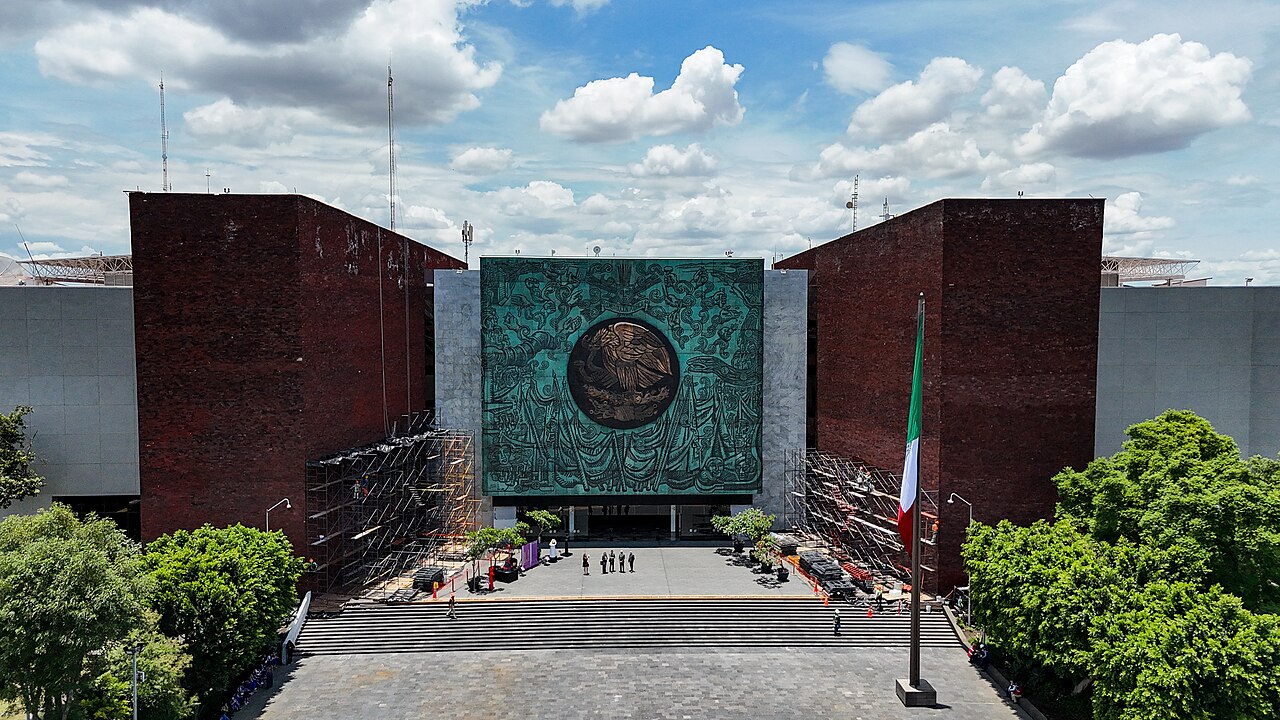
Pictured: the Palacio Legislativo de San Lázaro in Mexico City, seat of Mexico's Chamber of Deputies and site of the September 2023 hearing. This is not a photograph of the presented specimens. ProtoplasmaKid, CC BY-SA 4.0.
Theoretical Alignment
This file substitutes "Fabrication / Hoax" for the Psycho-Social/Mundane category because the leading and, in this file's assessment, established explanation is not misperception of a genuine phenomenon but deliberate physical alteration of real human and animal remains to simulate a non-human appearance, a materially different category from the vast majority of cases in this archive, which typically turn on how an observer interpreted something they actually saw rather than on whether a physical object was manufactured to deceive. It retains a token Extraterrestrial weighting only in recognition that this file, like any, cannot claim absolute certainty about a claim's origin without having personally examined the specimens, though that weighting should not be read as reflecting genuine evidentiary ambiguity; it reflects this archive's general epistemic humility rather than any specific unresolved question in this particular case. The Interdimensional weighting is retained for the same archive-wide consistency reason and carries no case-specific evidentiary basis whatsoever.
Background
The hearing was convened by Mexican Congressman Sergio Gutiérrez Luna, then coordinator of the ruling Morena party's bloc in the Chamber of Deputies, as the first session of its kind in Latin America, styled as a public forum on "Fenómenos Aéreos Anómalos No Identificados en México" (Unidentified Anomalous Aerial Phenomena in Mexico). Gutiérrez Luna opened the more than three-hour session by administering an oath to each presenter, asking them to swear to tell the truth, and he was careful in public remarks afterward to note that Congress had not taken any institutional position on the claims made during the forum; he nonetheless said he hoped it would be the first of similar hearings in Mexico. The event followed months of anticipation after Maussan publicly previewed the specimens in Mexican and international media, and it drew significant international attention as a rare instance of a national legislature formally engaging with UAP testimony, coming less than two months after the U.S. House Oversight Committee's National Security, the Border, and Foreign Affairs Subcommittee held its own July 26, 2023 hearing in the U.S. Capitol hearing rooms in Washington, featuring David Grusch, Ryan Graves, and David Fravor.
Maussan is a fixture of Mexican broadcast journalism with a public career stretching back more than five decades, and by 2023 he hosted a YouTube channel with an audience approaching a million subscribers and produced material for Gaia.com, a subscription streaming service that has been widely characterized by media critics as a hub for conspiracy-theory and pseudoscience programming. Well before the September 2023 hearing, Maussan had already built a specific, repeated public track record of presenting purported physical evidence of non-human beings that was subsequently examined and rejected by independent experts, most notably the 2015 "Roswell Slides" affair, in which he promoted 1947-vintage photographs he suggested depicted an alien body recovered near Roswell, New Mexico, only for researchers to obtain high-resolution scans within days revealing the accompanying museum placard read "MUMMIFIED BODY OF TWO YEAR OLD," identifying the subject as a preserved human child, and the 2015 "Metepec creature," a small, large-headed specimen Maussan presented as extraterrestrial that advanced scanning and DNA testing at Imperial College London subsequently identified as a common marmoset, with a taxidermist later separately claiming responsibility for constructing an earlier, similar hoax figure from a skinned squirrel monkey. Both prior episodes gave scientists, journalists, and skeptics a specific evidentiary basis, rather than mere general suspicion, for approaching Maussan's 2023 Congressional claims with caution.
The hearing also arrived amid a broader, genuinely serious wave of UAP transparency activity in U.S. government and policy circles, including the Pentagon's All-domain Anomaly Resolution Office, established in 2022 to centralize and standardize UAP reporting across the U.S. military, and the ongoing congressional attention that produced the July 2023 House Oversight hearing. That parallel, more institutionally rigorous track record is part of why Maussan's presentation drew the specific criticism it did from serious UAP researchers and advocates such as Ryan Graves: it was seen by many in that community not merely as an unpersuasive claim on its own terms, but as a reputational liability for a broader transparency effort that was, at the same moment, trying to establish its own credibility through exactly the kind of rigorous, institutional process this hearing conspicuously lacked.
Complete Timeline
| Date | Event |
|---|---|
| 2015 | Maussan promotes an earlier "alien mummy" from Peru, later identified as a mummified human child; the same year he also promotes the "Roswell Slides" (a 1947 photograph of a museum placard reading "mummified body of two year old") and the "Metepec creature" (later identified via DNA testing as a marmoset). |
| Jan. 2017 | Frenchman Thierry Jamin, who had crowdfunded excavation work near Nazca, writes to Peru's Ministry of Culture alerting officials to purported "non-human" mummified specimens and seeking their formal involvement. |
| 2017 | The two specimens later presented to Congress are reportedly recovered amid looting activity in Peru's Nazca region, part of a larger cache of similar figures. |
| June 28, 2017 | Paleontologist Rodolfo Salas-Gismondi of Peru's Natural History Museum publicly denounces the "Nazca mummy" claims as a probable assemblage of animal skeletal remains. |
| July 8, 2017 | Twelve Peruvian and international bio-anthropologists, convened through the World Congress on Mummy Studies, issue a joint statement identifying the Nazca specimens as recently manufactured dolls covered in synthetic adhesive to simulate skin. |
| 2017 (later) | Peru's Attorney General's Office (Fiscalía) opens a forensic investigation into the related specimens circulating from the same find. |
| 2022 | Peruvian grave robber Leandro Rivera, who claimed to have removed roughly 200 sets of remains from a Nazca-area burial cave feeding the "alien mummy" trade, receives a four-year suspended sentence and a fine for offenses against archaeological monuments. |
| Sept. 12, 2023 | Jaime Maussan presents two specimens to Mexico's Congress under oath, alongside testimony from José de Jesús Zalce Benítez and invited testimony from Ryan Graves. |
| Sept. 13, 2023 | UNAM issues a public statement clarifying its involvement was limited to radiocarbon dating and that it assessed only the specimens' age, not their origin or authenticity; UNAM astrobiologist Antígona Segura and astronomer Julieta Fierro separately tell reporters the conclusions are unsupported by evidence. |
| Sept. 13, 2023 | Ryan Graves publicly criticizes the presentation as "a huge step backwards" and "an unsubstantiated stunt." |
| Sept. 14, 2023 | NASA publicly releases its independent UAP study team's final report and names Mark McInerney as the agency's first director of UAP research, two days after the Mexican hearing. |
| Sept. 2023 (following days) | Journalists and researchers, including skeptic investigators, publish anatomical analyses concluding the specimens show clear signs of tampering, including altered skulls and missing fingers. |
| Oct. 2023 | Peruvian customs agents seize additional related specimens intended for transport out of the country. |
| Nov. 7, 2023 | Maussan returns to Mexico's Congress with a panel of Peruvian physicians, including Dr. Daniel Mendoza, for a second, three-hour hearing; anthropologist Roger Zúñiga of San Luis Gonzaga National University testifies the remains are unmodified human bone. |
| Jan. 12, 2024 | Peru's Institute of Legal Medicine publicly presents its forensic conclusion, delivered by forensic archaeologist Flavio Estrada, that the figures are dolls assembled from earthly animal and human bone using modern synthetic glue. |
| 2023–2024 | Peru's Ministry of Culture pursues legal action against individuals who allegedly helped remove the specimens from the country, while institutions including the Inkarri Cusco Institute demand repatriation of related mummies held for study. |
The Presentation
Maussan displayed the two specimens in sealed glass cases before the Mexican Congress, describing them as roughly 1,000 years old — though press accounts of his own remarks elsewhere in the same testimony cited differing ages closer to 700 and 1,800 years for the two figures, an inconsistency this file treats as a minor but telling indicator of how loosely the specimens' claimed provenance was handled — and possessing elongated heads, three fingers per hand, no teeth, retractable necks, enlarged brains, and "wide stereoscopic vision." One specimen was described as containing eggs, and Maussan variously described the recovery site as mining or looting activity in the Nazca area of Peru. José de Jesús Zalce Benítez, director of the Scientific Institute for Health of the Mexican Navy, stated that X-rays, 3-D reconstruction, and DNA analysis had been performed, and told the committee, "I can affirm that these bodies have no relation to human beings." Maussan testified under oath, "These are not mummies," insisted the specimens were "non-human beings that are not part of our terrestrial evolution," and stated they had been carbon-dated by UNAM, at another point telling the committee "the DNA is showing us that they are non-human beings." Congressman Gutiérrez Luna, presiding, administered the oath to each presenter but repeatedly made clear that the committee itself was not endorsing any conclusion, a distinction that was widely reported afterward as having been lost on much of the hearing's international audience, for whom the spectacle of a national legislature formally receiving sworn testimony about non-human beings registered as significant regardless of that disclaimer.
Maussan and his co-presenters proposed that the Mexican Chamber of Deputies formally recognize UAP as a matter of airspace security warranting further study, positioning the specimens as physical corroboration for a broader legislative agenda rather than as an isolated curiosity. No vote or resolution followed from the hearing itself, and Gutiérrez Luna was explicit afterward that Congress had adopted no official position on the claims presented.
The Retraction: What UNAM Actually Said
UNAM's public clarification, issued the day after the hearing, is one of the case's most important pieces of evidence: the university's National Laboratory of Mass Spectrometry, which had performed the radiocarbon work, stated plainly, "In no case do we make conclusions about the origin of these samples," and the university stressed its involvement was limited to dating the age of the organic material submitted to it, not to authenticating the specimens' composition, species, or origin. The gap between what UNAM actually did (date a sample of organic material) and what the hearing's framing implied it had done (scientifically validate a non-human origin) is, in this file's assessment, a textbook example of an authoritative institutional citation being used to imply far more endorsement than was actually given.
UNAM researchers went further than a narrow procedural clarification. Antígona Segura, an astrobiologist at UNAM's Institute of Nuclear Sciences and one of Mexico's most prominent researchers in the search for life beyond Earth, told reporters bluntly, "These conclusions are simply not backed up by evidence," adding that "the whole thing is very shameful." Julieta Fierro, a researcher at UNAM's Institute of Astronomy and one of Mexico's best-known science communicators, was equally direct, telling a reporter, "Of course it was all made up." That two senior scientists from the very institution Maussan had cited as validating his claim publicly and specifically rejected it, within a day of the hearing, is treated in this file as independent corroborating evidence, separate from and additional to UNAM's own institutional statement.
The Peru Forensic Finding
The most consequential evidence in this case comes not from Mexico but from Peru, and its roots predate the 2023 hearing by more than six years. The specimens' documented history traces to a 2017 crowdfunded excavation effort in the Nazca region led by French antiquarian Thierry Jamin, who partnered with Peruvian artist and YouTube personality Luis Quispe. According to the subsequent scientific and forensic record, Jamin and Quispe's operation produced figures assembled from genuine, but altered, human and animal skeletal material — including looted human bones and modified llama bone in place of some original components — physically reworked to remove fingers and substitute skulls, then coated in an unidentified white synthetic adhesive to disguise the tampering and simulate skin. Jamin himself wrote to Peru's Ministry of Culture in January 2017 to report the "discovery," a step that placed the specimens on the radar of Peruvian heritage and scientific authorities from very early on.
The scientific rejection of the figures as genuine or extraterrestrial was likewise immediate and came years before Maussan's Congressional appearance, not after it. On June 28, 2017, paleontologist Rodolfo Salas-Gismondi, then affiliated with Peru's Natural History Museum and later with the American Museum of Natural History in New York, publicly denounced the "Nazca mummy" claim as a probable assemblage of animal skeletal remains. Ten days later, on July 8, 2017, a panel of twelve Peruvian and international bio-anthropologists and human-remains conservation specialists, convened through the World Congress on Mummy Studies, issued a joint statement identifying the figures as "recently manufactured dolls, which have been covered with a mixture of paper and synthetic glue to simulate the presence of skin." In other words, by the time Maussan stood before Mexico's Congress in September 2023, the specific class of object he was presenting had already been examined and formally rejected by a body of specialized experts on human remains six years earlier.
The Peruvian state's own forensic process reached the same conclusion through an entirely independent channel. Following the September 2023 hearing, Peru's Ministry of Culture and its Institute of Legal Medicine intensified an existing investigation, and in October 2023 customs agents seized additional related figures that they determined were being prepared for delivery to a Mexican recipient, underscoring that the flow of specimens out of Peru toward Mexico's UAP media and legislative circles continued even after the September hearing had already drawn international scrutiny to the underlying trade. On January 12, 2024, forensic archaeologist Flavio Estrada of Peru's prosecutorial forensic service publicly presented the resulting analysis.
"The conclusion is simple: they are dolls assembled with bones of animals from this planet, with modern synthetic glues, therefore they were not assembled during pre-Hispanic times... They are not extraterrestrials, they are not intraterrestrials, they are not a new species, they are not hybrids." — Flavio Estrada, forensic archaeologist, Peru's Institute of Legal Medicine, January 2024
Independent DNA testing conducted through Peru's Institute of Legal Medicine directly contradicted José de Jesús Zalce Benítez's testimony that genetic analysis showed the remains had "no relation to human beings": that testing instead confirmed the skeletal material was, in the specialists' own characterization, effectively 100 percent human in origin, consistent with the broader forensic finding that genuine but altered human bone had been used to construct the figures. Physical anthropologists who examined photographs and scans of the specimens separately noted that their proportions and joint structure — including the claimed retractable neck and stereoscopic-vision eye sockets Maussan described — would have made normal biological movement effectively impossible for a living organism built that way, a structural implausibility consistent with an assembled composite object rather than an evolved living being of any kind, terrestrial or otherwise.
Leslie Urteaga, then head of Peru's Ministry of Culture, separately stated that the figures were composed of pre-Hispanic bone remains that had been artificially assembled, underscoring that genuine archaeological material had been looted, cut apart, and reassembled to manufacture the appearance of a novel non-human organism, rather than either an outright modern fabrication from non-human material or an authentic discovery. This file regards that specific finding — the deliberate repurposing of real human and animal remains into a deceptive composite — as considerably more disturbing, and more evidentially damning, than a simple prop or costume would be, since it points to active looting and desecration of human burial sites as the mechanism behind the hoax, not merely artistic fabrication from inert materials.
The Looting Economy Behind the Specimens
Thierry Jamin himself is a French-born explorer and self-published author, long resident in Cusco, Peru, who had spent more than a decade searching the Amazon for the legendary lost Inca city of Paititi before turning his attention to the Nazca specimens beginning in late 2016; he has appeared as a guest on the History Channel's Ancient Aliens series and authored a self-published book promoting an extraterrestrial interpretation of the Nazca finds, placing him squarely within the same ancient-astronaut media ecosystem, including Gaia.com, that also produced much of Maussan's platform. Peruvian investigative reporting has since tied the supply of "alien mummy" material to a broader and longstanding grave-robbing economy in the Nazca and Ica regions, where centuries-old cemeteries containing genuinely ancient mummified remains, some bearing pre-Columbian cranial modification (a real, well-documented Andean practice of binding infants' skulls to elongate them for cultural and status reasons), have long been targeted by looters. Convicted grave robber Leandro Rivera told journalists he alone had removed roughly 200 sets of remains from a single burial cave near Nazca, some of which he said were subsequently smuggled abroad to buyers in France, Spain, and Russia; Rivera received a four-year suspended sentence and a fine equivalent to roughly $5,190 in 2022 for offenses against archaeological monuments. Peruvian cultural-heritage officials have acknowledged the practical limits of enforcement: Evelyn Centurion, who heads cultural-heritage recovery efforts for Peru's Ministry of Culture, said "the looting has not stopped. We need greater collaboration from local governments and local authorities," noting that monthly airport seizures of trafficked antiquities had fallen from roughly 200 in 2008 to as few as four to ten a year by the 2020s even as the underlying looting continued, a decline officials attribute to smuggling shifting toward Peru's 27 border crossings across five neighboring countries rather than airports. This file treats the existence of a real, documented looting economy — one in which authentic cranially-modified human remains are actively marketed to buyers primed by "ancient alien" media to want unique-looking specimens — as important context for why fabricated "non-human" figures of exactly this kind could plausibly reach a Mexican congressional hearing in the first place.
The legal and diplomatic fallout continued well past the 2023 hearing. Peru's Ministry of Culture pursued action against individuals it said had facilitated moving the specimens out of the country, and Peruvian institutions including the Inkarri Cusco Institute publicly demanded that additional related mummies, including specimens held for continued study at San Luis Gonzaga National University in Ica, be repatriated and returned to Peruvian custody, citing the illegality of removing archaeological human remains from the country. A subsequent press event promoting an additional purported "pregnant" specimen was reportedly disrupted when Peruvian Ministry of Culture officials arrived and attempted to seize the object, underscoring that Peruvian authorities by that point regarded the entire category of specimens as illegally trafficked cultural and human-remains material rather than a legitimate scientific question.
This file treats the cumulative Peruvian forensic and legal record — a documented fabrication process with named participants, a formal 2017 scientific repudiation predating the hearing by six years, an independent 2024 state forensic conclusion, and an ongoing criminal and heritage-trafficking investigation — as the single strongest category of evidence in the entire case, directly explaining both the specimens' uncanny appearance and the physical tampering an independent anatomical review would be expected to detect.
International Reaction and the Scientific Community's Response
Beyond UNAM's own researchers, the hearing drew swift and pointed criticism from scientists, science communicators, and space-policy observers well outside Mexico. Jordan Bimm, a historian of science and space at the University of Chicago, told reporters that Maussan's background as a self-described ufologist, his history of "reframing human remains as if they are extraterrestrials" as recently as 2017, and his pattern of partnering with entertainment platforms rather than peer-reviewed scientific institutions amounted to "massive red flags," and characterized the hearing itself as "pseudoscience theater" that eclipsed genuine, ongoing scientific work on the search for life beyond Earth. American astrophysicist Neil deGrasse Tyson publicly weighed in as well, voicing sharp skepticism about the specimens themselves — questioning why a non-human organism would share so many humanoid features — while saying he welcomed the fact that they had been shown publicly rather than kept from independent testing, urging other scientists to verify or falsify the claim; his comments circulated widely in international coverage of the hearing.
The timing of NASA's own, far more methodical UAP effort threw the Mexican hearing's approach into particularly stark relief: two days after Maussan's testimony, on September 14, 2023, NASA publicly released the final report of its independent UAP study team and simultaneously named Mark McInerney — previously the agency's liaison to the U.S. Department of Defense on UAP-related matters — as its first director of UAP research, explicitly framing the effort around transparency, standardized data collection, and application of the scientific method to unexplained aerial phenomena. Commentators repeatedly drew the contrast between that process, built on institutional review and instrumented data, and a congressional hearing built around sealed glass display cases and testimonial assurances. This file treats the near-simultaneous timing of the two events, though coincidental, as a useful illustration of the gap between credible institutional UAP research and the presentation this case documents.
Media reception outside the scientific community was, if anything, even less charitable. Fact-checking outlets including Snopes moved within a day to catalogue exactly what had and had not been established, and outlets from Newsweek to Forbes ran pieces framing the presentation primarily through the lens of Maussan's prior debunked claims rather than as an open question. Photographs of the two specimens also spread rapidly on social media as an object of open mockery and became something of an internet meme, with commentators noting their close visual resemblance to inexpensive costume props, a reaction this file notes not because online ridicule is itself evidence of anything, but because it illustrates how quickly and broadly the specimens' authenticity was doubted well outside any formal scientific or forensic channel, even before UNAM's clarification or Peru's forensic conclusion had been issued.
Ryan Graves' repudiation carried particular weight because of his own recent, credentialed testimony on UAP matters: having appeared before the U.S. House Oversight Committee's National Security Subcommittee on July 26, 2023 — alongside David Grusch and David Fravor, in a hearing focused on military UAP encounters and alleged government secrecy rather than physical specimens — Graves was positioned as one of the most visible and credible faces of the broader UAP-transparency movement at the time. His presence at the Mexican hearing and his immediate, public rejection of it the following day, calling it "a huge step backwards for this issue" and "an unsubstantiated stunt," was widely read by journalists and other UAP researchers as an unusually direct instance of one prominent advocate publicly working to distance the broader push for UAP transparency from a specific claim he viewed as damaging to it.
The November 2023 Hearing and Continuing Fallout
Rather than the matter concluding with UNAM's retraction and the initial wave of criticism, Maussan returned to Mexico's Chamber of Deputies on November 7, 2023, for a second hearing that again ran more than three hours, this time accompanied by a panel of Peruvian physicians. Dr. Daniel Mendoza presented photographs and X-rays of one specimen, describing it as a "non-human being" and asserting, alongside Maussan, that it represented a "new species" because it appeared to lack lungs and ribs. Notably, several of the medical presenters at the second hearing confined their claims to asserting the remains were not modified human bone, without endorsing Maussan's extraterrestrial framing outright; Maussan himself acknowledged this gap in his own closing remarks, saying, "None of the scientists say [that the study results] prove that they are extraterrestrials, but I go further," an admission this file reads as Maussan conceding that his own presenters would not go as far as he did.
The second hearing did not go unchallenged from within Peru's own scientific establishment. Anthropologist Roger Zúñiga of San Luis Gonzaga National University in Ica, whose institution held several of the related specimens, testified that the remains were unmodified human bone and stopped well short of endorsing any non-human interpretation, placing him in direct opposition to Maussan's own physicians on the substance of what the remains actually were, even before Peru's formal forensic conclusion was announced two months later.
The case's fallout extended into Peruvian cultural-heritage law enforcement and diplomacy through 2024. Peru's Ministry of Culture pursued legal proceedings against individuals it alleged had facilitated the specimens' export, and the Inkarri Cusco Institute and other Peruvian cultural institutions pressed for the return of related mummified figures still held outside government custody, citing Peru's laws restricting the removal of archaeological human remains. A further press event intended to showcase an additional, purportedly pregnant specimen was reportedly interrupted when Peruvian Ministry of Culture officials arrived and moved to seize the object, an episode widely covered as illustrating how thoroughly Peruvian authorities had, by that point, come to treat the entire "alien mummy" phenomenon as a heritage-trafficking and looting problem rather than an open scientific question.
Peru's Own Congressional Hearing, 2024
The Mexican hearing's influence circled back to Peru itself the following year. Peruvian Congressman Germán Tacuri, of the Bloque Magisterial party and a member of Congress's Culture Commission, together with fellow congressman Paul Gutiérrez, traveled to Mexico City to attend the Mexican Chamber of Deputies' second UAP hearing in person; on returning to Peru, Tacuri convened his own November 2024 session in Peru's Congress, titled "Three-Digit Beings of Nazca," at which Maussan again appeared. Tacuri publicly insisted "the extraterrestrial mummies of Nazca are real," placing an elected Peruvian legislator on record endorsing the same claim Peru's own state forensic service had already rejected. The hearing produced no new scientific conclusions and again exposed the same divide seen in Mexico: forensic and academic specialists in attendance continued to describe the specimens as fabrications built from bird bone, mammal skull fragments, and modern synthetic adhesive, and Peruvian mummy specialist Dr. Guido Lombardi went further, characterizing Maussan's broader body of work on the subject as "part of an elaborate disinformation project." This file treats the 2024 Peruvian hearing as evidence that the claim's persistence was never really about unresolved scientific uncertainty — by then settled, on the Peruvian government's own forensic record — but about the claim's continued ability to attract sympathetic political sponsors independent of the evidence.
Key Figures
The individuals below span the full range of this case's credibility spectrum, from the presenter whose professional reputation rests on this and similar claims, through co-presenters of varying independence, to the scientists and forensic specialists whose work ultimately determined the case's outcome. Reading their occupational backgrounds side by side is, in this file's assessment, nearly as informative as reading the forensic findings themselves.
Jaime Maussan
Presented the specimens under oath and testified to their non-human origin. A veteran Mexican broadcast journalist with a public career of more than five decades and a YouTube following approaching a million subscribers, Maussan has produced material for the paranormal-focused streaming platform Gaia.com and has a documented, repeated history of promoting claims later independently debunked, including the 2015 "Roswell Slides" (a mislabeled museum photograph of a mummified human child) and the 2015 "Metepec creature" (identified via DNA testing as a marmoset), as well as an earlier, closely related 2015 Peru "alien mummy" presentation.
José de Jesús Zalce Benítez
Testified that X-ray, 3-D reconstruction, and DNA analysis had been performed on the specimens, telling the committee, "I can affirm that these bodies have no relation to human beings"; had also participated in Maussan's earlier, similarly debunked 2015 Peru mummy presentation and, by his own account, had been involved in studying the remains for roughly six years before the 2023 hearing.
Ryan Graves
Testified separately about his own military UAP sightings, having appeared before the U.S. House Oversight Committee's National Security Subcommittee weeks earlier, then publicly and immediately disavowed the Maussan presentation as damaging to the broader UAP transparency effort.
Antígona Segura and Julieta Fierro
Senior UNAM researchers who publicly rejected the hearing's central claims within a day of the presentation, calling the conclusions unsupported by evidence and, in Fierro's words, simply "made up."
Flavio Estrada
Led and publicly presented the January 2024 Peruvian forensic conclusion identifying the specimens as dolls assembled from altered human and animal bone bound with modern synthetic glue.
The Five Observables Assessment
This case does not describe an observed craft or aerial phenomenon, and the Five Observables framework — anti-gravity lift, sudden and instantaneous acceleration, hypersonic velocity without a discernible propulsion signature, low observability, and trans-medium travel — does not meaningfully apply to a claimed physical specimen sitting in a display case. This file notes its absence here as itself diagnostic: unlike genuinely disputed sightings in this archive, where the central evidentiary question is typically what a sensor, camera, or set of trained eyewitnesses actually recorded, this case presents no anomalous flight behavior, radar return, gun-camera footage, or performance characteristic of any kind to evaluate. The entire evidentiary weight instead falls on a single, narrower, and in principle far more answerable question: what are these two objects physically made of, and how did they come to look the way they do? That question, unlike a fleeting aerial encounter, is directly and repeatedly testable by forensic examination — which is precisely what happened, and precisely why this case was capable of being conclusively resolved in a way most sighting-based cases in this archive are not.
Evidence Assessment
Supporting the Presentation's Sincerity (Not Its Conclusions)
- Maussan testified under legal oath before an official body, a step with genuine, if limited, formal weight regardless of the claim's ultimate accuracy.
- The hearing itself is a confirmed, well-documented institutional event, officially recorded and livestreamed by Mexico's Congress, and it was followed by a second, similarly public hearing in November 2023 rather than the claim quietly disappearing.
- The specimens do incorporate genuine ancient human and animal skeletal material, per Peru's own forensic finding, rather than being a wholly synthetic prop with no connection to any real archaeological find.
Supporting a Deliberate Hoax
- Peru's Attorney General's Office and Institute of Legal Medicine, through forensic archaeologist Flavio Estrada, concluded in January 2024 that the specimens were manufactured from altered human and animal remains bound with modern synthetic glue.
- A panel of twelve bio-anthropologists convened by the World Congress on Mummy Studies had already identified the same class of specimen as manufactured dolls in July 2017, six years before the hearing, independently of the later state forensic process.
- UNAM publicly and explicitly denied that its work validated any non-human origin, and two of its senior researchers, Antígona Segura and Julieta Fierro, separately and independently called the claim unsupported and fabricated.
- Jaime Maussan has a documented, repeated history of promoting materials later independently identified as hoaxes, including a near-identical 2015 Peru "alien mummy" claim, the 2015 "Roswell Slides," and the 2015 "Metepec creature."
- José de Jesús Zalce Benítez, the presentation's principal scientific validator, had also participated in the 2015 case.
- A prominent, credentialed UAP witness (Ryan Graves) who testified at the same hearing publicly and immediately repudiated the presentation as "an unsubstantiated stunt."
- Peruvian authorities have separately documented a specific, named grave-robbing and trafficking economy (including convicted looter Leandro Rivera) supplying the raw archaeological material used to construct this and related specimens.
- Independent commentators, including University of Chicago science historian Jordan Bimm, characterized the hearing's presentation style itself — sealed cases, testimonial assurance, and an entertainment-industry presenter — as inconsistent with how a genuine scientific discovery of this magnitude would normally be introduced.
Why "Debunked"
This case is rated Debunked because an independent forensic authority (Peru's Attorney General's Office, acting through its Institute of Legal Medicine) directly examined specimens connected to the same find and concluded they were physically manufactured from altered human and animal remains, and because the scientific institution cited as validating the claim (UNAM) publicly and explicitly denied doing so, with two of its own senior researchers independently calling the claim fabricated. This combination — direct forensic contradiction plus a repudiated citation — is a stronger and more specific basis for a Debunked rating than this archive typically requires, exceeding the bar of mere unresolved skepticism that keeps most cases at Disputed.
The rating is further reinforced by the fact that the underlying forensic conclusion was not a single, isolated finding produced under pressure after the hearing, but the second independent confirmation of fabrication for this exact category of specimen: a panel of twelve bio-anthropologists convened by the World Congress on Mummy Studies had already reached essentially the same conclusion in July 2017, more than six years before Maussan's Congressional testimony. A claim that has already been examined and rejected once by a dedicated body of relevant specialists, then presented again years later to a legislature as though newly validated, and then independently re-examined and rejected a second time by a different forensic authority, represents about as complete an evidentiary record as this archive is likely to have for any Debunked rating.
This file also weighs Jaime Maussan's extensive prior track record of promoting since-debunked claims, the fact that a credible, independently credentialed UAP advocate present at the same hearing immediately and publicly disavowed the presentation, and the subsequent Peruvian legal and cultural-heritage proceedings against individuals connected to the specimens' export, as corroborating rather than merely circumstantial evidence.
It is worth being precise about what "Debunked" does and does not mean in this specific case, since the underlying facts have several distinct layers that are easy to conflate. It does not mean the hearing did not happen, that Maussan did not sincerely believe or was not sincerely representing what he presented, or that the specimens contained no genuine archaeological material at all — all three of those things are true. It means specifically that the central claim actually advanced at the hearing, that the specimens constituted physical evidence of a non-human biological organism, has been directly and repeatedly contradicted by every independent forensic and scientific body that has examined the underlying material, across two separate countries and two separate years, with no comparably credentialed body reaching the opposite conclusion. Those are different questions, and this file's rating addresses only the second one.
Observer Credibility & Occupational Profile
This case presents an unusually clear credibility split: Jaime Maussan, the central witness, has a decades-long media career but also a specific, repeated pattern of promoting claims later independently debunked, including a near-identical prior hoax; his co-presenter, José de Jesús Zalce Benítez, had participated in that same prior hoax and, in the November 2023 hearing, presented alongside physicians whose own claims fell notably short of Maussan's extraterrestrial framing. By contrast, Ryan Graves, a credentialed former Navy pilot with an established record of sober UAP advocacy who had recently testified before the U.S. House Oversight Committee, was present at the same hearing and immediately rejected the presentation's credibility, a rare instance in this archive of one witness's testimony being directly and publicly contradicted by another witness at the very same event.
The occupational profile of the case's scientific critics is similarly relevant to weighing this claim: Antígona Segura and Julieta Fierro are both career research scientists at UNAM working in astrobiology and astronomy respectively, not commentators with a general skeptical brand; Jordan Bimm is a credentialed historian of science specializing in space exploration; and Flavio Estrada's forensic conclusion was produced through Peru's formal state legal-medicine apparatus rather than as an independent or freelance opinion. Weighed against a presenter whose professional identity is built around promoting exactly this category of sensational claim, and a co-presenter with a specific personal history in the same prior hoax, this file finds the balance of occupational credibility runs heavily against the hearing's central claim.
Historical Precedents & Archive Matches
This case fits a recurring pattern in Jaime Maussan's career, matching prior incidents in this archive including his role in the 1991 Mexico City Eclipse UFO Wave and reflecting the same promotional pattern behind the 2015 "Roswell Slides" and "Metepec creature" hoaxes described in his key-figures profile. The specific mechanism at work here — taking genuine archaeological or biological material, physically altering it, and re-presenting it through a credentialed-seeming intermediary as evidence of the non-human — also echoes a broader historical pattern of "alien body" hoaxes reaching back decades, in which a claim's persuasive power tends to rest less on the physical evidence itself than on the perceived authority of whoever is standing next to it. This case is unusual within that broader pattern chiefly for how quickly and how completely that borrowed authority (UNAM's carbon-dating work) was publicly and specifically withdrawn by the institution itself.
The case also sits within this archive's broader coverage of the "ancient astronaut" tradition, which has for decades sought physical or archaeological corroboration for extraterrestrial contact in the human past, from claimed anomalous artifacts to reinterpreted ancient iconography. What distinguishes this case from most entries in that tradition is that it did not rest on reinterpreting an already-known archaeological object or historical account; it involved the physical creation of a new one, assembled specifically to be presented as evidence, which is why this file classifies it as Fabrication/Hoax rather than as a Psycho-Social or interpretive-disagreement case.
Material Analysis
The two specimens presented to Congress were physical objects, unlike most testimonial cases in this archive, making this one of the rare cases where the central evidence was directly forensically examinable rather than dependent on memory, radar logs, or photographic interpretation. Peru's Institute of Legal Medicine's investigation of related specimens from the same find represents genuine physical and material forensic analysis — skeletal identification, adhesive/binding-agent analysis, and comparison against known human and animal anatomy — not secondhand testimony or eyewitness reconstruction, and it was conducted by a state forensic body with legal authority and chain-of-custody obligations distinct from either Maussan's own team or UNAM's radiocarbon lab.
Supporting Continued Documentation (Not Belief)
- This case remains historically significant as the first Latin American congressional UAP hearing and as a documented example of how testimonial and institutional framing can outpace the underlying physical evidence.
- The case also documents a genuine, ongoing archaeological looting and heritage-trafficking problem in Peru's Nazca and Ica regions, independent of the UAP framing, that merits continued attention on its own terms.
Supporting a Conventional (Fraudulent) Explanation
- Direct forensic examination of related specimens found deliberate physical manufacture and alteration of human and animal remains, the strongest category of evidence available to this archive.
- The manufacturing technique identified — modern synthetic adhesive binding altered bone components — is inconsistent with any known pre-Hispanic burial or mummification practice and consistent instead with recent, deliberate assembly.
The Conventional Explanation Candidates (CEC)
This section evaluates each candidate conventional explanation for the specimens against the available evidence, in descending order of evidentiary support.
Candidate 1: Manufactured Composite Specimens from Altered Human and Animal Remains
The leading, and this file's assessed, conventional explanation is that the presented specimens were deliberately manufactured objects: genuine ancient and more recent human and animal skeletal material, looted from burial sites in the Nazca region, physically altered (fingers removed, skulls substituted with modified llama bone in at least some cases) and bound together with an unidentified modern synthetic adhesive to simulate an unfamiliar, non-human appearance. This is not a single-source claim; it is the independent conclusion of two separate expert bodies working six years apart and through entirely different institutional channels — the July 2017 World Congress on Mummy Studies panel of twelve bio-anthropologists, and the January 2024 Peruvian Institute of Legal Medicine forensic team led by Flavio Estrada. Where this archive's Conventional Explanation Candidate sections most often have to weigh a single plausible account against genuine uncertainty, this candidate is unusual for having already cleared the evidentiary bar of formal, credentialed forensic confirmation, not merely informed speculation.
Candidate 2: Genuine, Unmodified Pre-Hispanic Human Remains Bearing Cranial Modification
A secondary, more limited explanation raised by some of Maussan's own physician co-presenters at the November 2023 hearing, including anthropologist Roger Zúñiga, was that at least some of the related specimens are simply unmodified ancient human remains, potentially bearing authentic pre-Columbian artificial cranial deformation, a well-documented Andean cultural practice unrelated to any extraterrestrial explanation. This candidate is credible as a partial account for some specimens in the broader Nazca cache — genuine cranially-modified mummies are a known category of authentic Peruvian archaeological material, and this practice likely explains why some looted material struck buyers and even some examiners as anomalous-looking in the first place — but it does not account for the specific specimens Maussan presented to Congress, which Peru's own forensic examination found had been physically altered and reassembled with modern adhesive, features inconsistent with an untouched, naturally cranially-modified mummy.
Candidate 3: Extraterrestrial or Otherwise Non-Human Biological Origin
This candidate is the one Maussan himself advanced, and it is directly and specifically contradicted by the forensic record: Peru's Institute of Legal Medicine explicitly concluded the specimens were "not extraterrestrials," "not intraterrestrials," "not a new species," and "not hybrids," identifying them instead as assembled from earthly, terrestrial animal and human bone. No independent, credentialed laboratory has published DNA or isotopic data supporting a non-human or unknown-species origin; the only DNA claims offered publicly came from José de Jesús Zalce Benítez, a presenter with a direct personal history in the 2015 hoax and no independently published, peer-reviewed methodology or dataset. This file assigns this candidate no meaningful evidentiary support.
A Documented Pattern, Not an Isolated Incident
The leading candidate explanation is strengthened, not weakened, by Jaime Maussan's prior 2015 presentation of a nearly identical claim, later identified as a mummified human child, and by the participation of the same co-presenter, José de Jesús Zalce Benítez, in both incidents. It is strengthened further by the existence of a specific, named, and partially prosecuted looting and trafficking pipeline (Thierry Jamin's 2017 excavation, Luis Quispe's fabrication role, and convicted looter Leandro Rivera's admitted removal of roughly 200 sets of remains from a single Nazca burial cave) that supplies exactly the kind of raw material this candidate requires, closing the gap between "plausible mechanism" and "demonstrated mechanism" that many Conventional Explanation Candidate sections in this archive are unable to close.
What Would Change This Assessment
Consistent with this archive's general practice of stating what evidence would be capable of overturning a rating, this file notes specifically what would be required to revisit the Debunked classification: independent, peer-reviewed genomic sequencing of the actual specimens presented to Congress (not related but distinct material), conducted by a laboratory with no financial or promotional relationship to Maussan, Zalce Benítez, Jamin, or Quispe, published with full methodology and raw data available for outside replication, and directly reconciled with the Peruvian Institute of Legal Medicine's contrary forensic finding on physically related specimens from the same find. Absent that, the existing forensic record stands as this file's basis for classification.
Applying the Extraordinary-Evidence Standard
Carl Sagan's often-cited formulation that extraordinary claims require extraordinary evidence is a useful, if informal, standard against which to weigh this specific case. A genuine discovery of a non-human biological organism would be, by any measure, one of the most significant scientific findings in human history, and the ordinary path for validating such a finding runs through peer-reviewed publication, independent replication by multiple unaffiliated laboratories, open access to samples for outside researchers, and transparent, reproducible methodology — not a single legislative hearing built around sealed display cases, a presenter with a direct financial and professional interest in the outcome, and a scientific validator who had personally participated in an earlier, materially identical hoax. No such peer-reviewed publication, independent replication, or open sample access has occurred in connection with this case. Judged against that standard, the presentation did not fail to meet an unreasonably high bar; it did not attempt to meet the ordinary bar science applies to any claimed discovery of comparable magnitude.
Manufactured Composite Specimens from Altered Human/Animal Remains — Plausibility Rating: CONFIRMED BY INDEPENDENT FORENSIC INVESTIGATION
Related Cases
Confirmed Documents & Official Records
Coverage and archival reference to the official hearing, originally livestreamed on the Mexican Congress's own YouTube channel.
PUBLIC RECORD (freely accessible)Search Government Records Directly
Further Reading — Recommended Literature
The Demon-Haunted World: Science as a Candle in the Dark
A foundational text on scientific skepticism and distinguishing genuine evidence from pseudoscience, directly applicable to evaluating this case.
Watch the Skies! A Chronicle of the Flying Saucer Myth
A skeptical history of the flying saucer phenomenon and its recurring pattern of hoaxes, directly relevant to this case.
UFOs: Generals, Pilots, and Government Officials Go on the Record
A compilation of credentialed testimony, useful contrast for weighing Ryan Graves' credibility against this case's central claim.
UFO: The Inside Story of the US Government's Search for Alien Life Here—and Out There
An extensively researched history of government UAP investigation, providing context for how this hearing compares to more rigorous institutional efforts.
The UFO Experience: A Scientific Inquiry
The foundational text on scientifically rigorous UFO classification and evidence evaluation.
DISCLOSURE: Some links above are affiliate links. If you purchase through them, OverClassified receives a small commission at no additional cost to you. This helps support independent research.
Essential Viewing
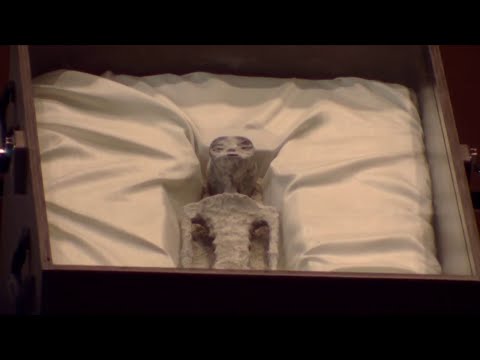
'Ancient Alien Corpses' Presented to Mexico's Congress
KSAT 12 — contemporaneous coverage of the hearing.
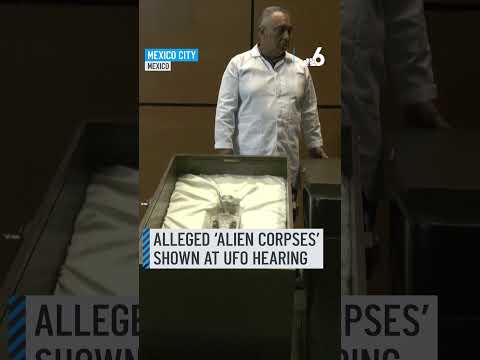
So-Called 'Alien Corpses' Shown at Mexico's First UFO Hearing
NBC 6 South Florida — coverage including reaction and skepticism.
Sources
- "'Alien Corpses' Revealed in Hearing Before Mexican Congress," Snopes. Read online →
- "Alleged Alien Corpses Displayed to Mexican Congress Did Not Convince Scientists," Smithsonian Magazine. Read online →
- "Aliens In Mexico? Not So Fast—Presenters Have History Of Being Debunked," Forbes. Read online →
- "The Alien Mummies Presented to Mexico's Congress," Brian Dunning, Substack. Read online →
- "UFO Whistleblower Balks at Claim: 'Alien Corpses' Revealed in Mexico Called 'Unsubstantiated Stunt,'" Fox News. Read online →
- "'Alien Bodies' Presented in Mexican Congress Panned as 'Stunt,'" KSL.com. Read online →
- "Have 'Alien' Bodies Shown in Mexico Already Been Debunked? What to Know," Newsweek. Read online →
- "Mexico Legislators Hold Hearing on Existence of UFOs, Shown 'Alien' Bodies," Al Jazeera. Read online →
- "Mexico 'Alien Bodies': Those Viral Artefacts Get Lab Tests," BBC News. Read online →
- "UFO Expert Presents 'Alien Corpses' in Mexican Congress," Mexico News Daily. Read online →
- "Alien Bodies Mexican Congress Jaime Maussan," Global News. Read online →
- "Controversial Alien Bodies Return to Mexico's Congress as Expert Testifies Again on Discovery," Euronews. Read online →
- Sagan, Carl. The Demon-Haunted World: Science as a Candle in the Dark. Ballantine Books, 1997.
- Peebles, Curtis. Watch the Skies! A Chronicle of the Flying Saucer Myth. Smithsonian Institution Press, 1994.
- Kean, Leslie. UFOs: Generals, Pilots, and Government Officials Go on the Record. Harmony Books, 2010.
- Graff, Garrett M. UFO: The Inside Story of the US Government's Search for Alien Life Here—and Out There. Avid Reader Press, 2023.
- Hynek, J. Allen. The UFO Experience: A Scientific Inquiry. Da Capo Press, 1998 (orig. 1972).
- "File: Palacio Legislativo de San Lázaro obtenido con dron 02.jpg," ProtoplasmaKid, CC BY-SA 4.0. View file →
See something inaccurate? Have additional information or sources?
Suggest an Edit →Last Updated: August 2026