
The Demon-Haunted World
Carl Sagan's Baloney Detection Kit, Written With Ann Druyan, Turns a General Defense of Science Into Ufology's Most Cited Skeptical Text
Core Thesis
The Demon-Haunted World: Science as a Candle in the Dark is not a book about UFOs. It is Carl Sagan's broader, valedictory defense of the scientific method itself — twenty-five essays, four of them co-written with his wife and longtime collaborator Ann Druyan — arguing that critical thinking is a learnable, teachable skill under active siege from astrology, faith healing, alien-abduction claims, recovered-memory therapy, and a general erosion of scientific literacy Sagan saw as a genuine civic danger. Its most durable contribution is the "baloney detection kit" laid out in Chapter 12, a compact toolkit of nine evidentiary habits and twenty named logical fallacies for telling a well-supported claim from a merely confident one. UFO and alien-abduction claims are one recurring case study among many the book examines this way, not its subject — but because Sagan devotes real, sustained attention to them specifically, including a formal rebuttal of the Zeta Reticuli star-map thesis in the Betty and Barney Hill case and a pointed critique of psychiatrist John Mack's abduction patients, the book became, almost as a byproduct, one of the single most frequently cited skeptical texts in the UFO literature this site catalogues.
About the Author
Carl Sagan (1934–1996) was, by the time this book appeared, one of the most recognizable scientists of the twentieth century, not a marginal or fringe figure lending his name to a skeptical cause. Born in Brooklyn, he earned his Ph.D. in astronomy and astrophysics from the University of Chicago in 1960, joined Cornell University's faculty in 1968, and served as the David Duncan Professor of Astronomy and Space Sciences there until his death. He published more than 600 scientific papers and was author, co-author, or editor of more than twenty books; his 1977 book The Dragons of Eden, on the evolution of human intelligence, won the 1978 Pulitzer Prize for General Nonfiction — a credential this book's own jacket copy leaned on heavily, and one that separates Sagan from the great majority of writers, skeptical or otherwise, who have published book-length treatments of UFO claims.
Sagan's public reputation rested on two pillars beyond his own research: his role assembling the Pioneer plaque and the 1977 Voyager Golden Record, the physical messages NASA sent beyond the solar system on the chance some extraterrestrial intelligence might eventually recover them, and his 1980 television series Cosmos: A Personal Voyage, watched by an estimated 500 million people in over 60 countries and still one of the most-watched series in the history of American public television. Sagan co-founded the Planetary Society in 1980 and was a working member of the scientific team on multiple NASA missions, including Mariner, Viking, Voyager, and Galileo. In 1976 he became a founding fellow of the Committee for the Scientific Investigation of Claims of the Paranormal (CSICOP), alongside Isaac Asimov, Paul Kurtz, Ray Hyman, James Randi, and, notably for this site's own catalogue, Philip J. Klass — making Sagan and Klass fellow architects of the same organized-skepticism movement this book's own "baloney detection kit" chapter is now most often cited as having crystallized for a mass audience.
Ann Druyan, Sagan's third wife and this book's uncredited-on-the-cover but heavily involved co-author, wrote four of its 25 chapters outright and shaped its argument throughout; she had already co-written the Cosmos television series and book with Sagan and helped select the Voyager Golden Record's contents, and went on after his death to complete and publish several of his unfinished projects. Sagan wrote most of this book, his last, while undergoing treatment for myelodysplasia, a bone-marrow disease, including a bone-marrow transplant in April 1995; he died of pneumonia, a complication of that treatment, on December 20, 1996, roughly a year after the book's publication — a fact that has shaped how many reviewers and readers since have read its closing chapters, on the responsibilities of scientists to the public and the fragility of an informed citizenry, as something closer to a deliberate final statement than an ordinary book's closing argument.
Historical Context & Origins
Sagan's engagement with UFO claims specifically predated this book by nearly three decades and was never that of an outsider parachuting into the subject. He participated in the U.S. Air Force's 1966 National Academy of Sciences review of the Condon Committee's approach to the University of Colorado UFO study, and on July 29, 1968, testified before Congress alongside J. Allen Hynek and James E. McDonald at Rep. J. Edward Roush's House Committee on Science and Astronautics "Symposium on Unidentified Flying Objects" at the University of Colorado, Boulder's own study still underway — a hearing this site's own Condon Report case file documents in detail. The following year, Sagan organized and, with astronomer Thornton Page, co-edited the proceedings of a 1969 American Association for the Advancement of Science symposium on UFOs into the 1972 volume UFO's: A Scientific Debate — a book this site's own Michigan Swamp Gas UFO Wave case file already cites directly, and evidence that Sagan spent decades pushing for the UFO question to be treated as a legitimate, if almost always disappointing, subject for scientific debate rather than dismissed outright.
By 1995, the cultural landscape The Demon-Haunted World was responding to had shifted considerably from that late-1960s moment of Congressional hearings and AAAS panels. The X-Files had begun its run on Fox in 1993 and become a genuine cultural phenomenon; Budd Hopkins's and Whitley Strieber's abduction-memoir books had built a substantial popular audience across the 1980s and into the 1990s; and Harvard psychiatrist John Mack's 1994 book Abduction: Human Encounters with Aliens had, for the first time, given the abduction phenomenon a sympathetic hearing from a tenured faculty member at one of the country's most prestigious universities, triggering a formal (ultimately inconclusive) Harvard Medical School inquiry into his clinical practices. Sagan, writing his own book in the same years, treated Mack's turn specifically as a case study in how institutional credentials do not, by themselves, guarantee methodological rigor — a recurring theme of the book's "Therapy" chapter, discussed below.
The book was also, unavoidably, a personal document written under a terminal diagnosis. Sagan drafted and revised most of it while undergoing treatment for myelodysplasia, including a bone-marrow transplant in April 1995, publishing it that October through Random House roughly fourteen months before his December 1996 death. Reviewers at the time and since have consistently read this circumstance into the book's closing chapters on science education and civic responsibility, whether or not Sagan intended the framing himself; it remains the context in which the book's status as something close to a deathbed manifesto for scientific literacy is most often discussed.
Structurally, the book also arrived as the most mainstream-credentialed entry yet into a skeptical-nonfiction shelf that had, by 1995, already been building for two decades: Philip J. Klass's case-by-case UFO skepticism dated to 1968, and CSICOP itself, which Sagan helped found in 1976, had spent nearly twenty years developing the organized-skepticism infrastructure this book's "baloney detection kit" chapter would go on to popularize for a mass audience far beyond CSICOP's own Skeptical Inquirer readership.
Core Arguments & Key Concepts
The book's most influential single contribution is Chapter 12, "The Fine Art of Baloney Detection," which lays out what Sagan calls a baloney detection kit: nine proactive tools for evaluating a claim (seek independent confirmation of the facts, encourage genuine debate from knowledgeable proponents of all viewpoints, treat arguments from authority as weak evidence, develop and test multiple competing hypotheses rather than falling in love with the first one, try to quantify wherever possible, ensure every link in a chain of argument actually holds, prefer Occam's razor among equally good explanations, and ask whether a hypothesis can in principle be falsified) paired with a catalogue of roughly twenty common fallacies of logic and rhetoric, from ad hominem attacks to statistics of small numbers to the excluded middle. The kit is deliberately general-purpose: Sagan built it to apply equally to astrology, faith healing, Holocaust denial, and UFO claims, not as a UFO-specific debunking checklist, and its continued citation across science-education and media-literacy contexts decades later reflects that generality.
Framed against that general toolkit, the book's UFO-specific content is concentrated but substantial rather than incidental. Chapter 4, "Aliens," and the later chapter "Therapy" apply the baloney detection kit directly to alien abduction claims, arguing that abduction accounts are almost entirely anecdotal, frequently produced or elaborated under hypnotic regression (a technique Sagan and the broader psychological literature he cites treat as prone to generating false memories rather than recovering accurate ones), and structurally similar to earlier waves of culturally patterned testimony — Sagan draws an explicit, extended parallel between UFO abduction narratives and the confessions extracted during the early modern European witch trials, arguing both phenomena show how a culture's shared expectations can shape strikingly consistent testimony about events that did not occur as described.
A third, more technical argument runs through the book's direct engagement with the Betty and Barney Hill case specifically: Sagan, in this book and in earlier work, and later formally with Cornell colleague Steven Soter, challenged amateur astronomer Marjorie Fish's widely cited claim to have matched the star pattern Betty Hill described under hypnosis to an actual stellar configuration centered on Zeta Reticuli. Sagan and Soter's rebuttal argued that with roughly a dozen candidate stars and complete freedom to choose viewing angle and which points to connect, a persuasive-looking "match" to almost any claimed pattern was close to statistically guaranteed rather than a genuine confirmation — an argument about the ease of retrospectively pattern-matching ambiguous data that recurs, in different forms, throughout the book's treatment of anomalous claims generally.
A fourth argument, more explicitly aimed at Sagan's own scientific colleagues than at UFO believers, holds that credentialed experts are not immune to these same failures, and that professional standing can in fact make an unsupported claim travel further rather than less far. Sagan's treatment of psychiatrist John Mack's acceptance of his patients' abduction accounts at face value — discussed at length in Critical Reception below — makes this case pointedly: the problem, in Sagan's framing, was never that Mack lacked credentials, but that credentials are not evidence, a distinction Sagan argues the baloney detection kit exists specifically to enforce regardless of who is making the claim.
Key Cases & Evidence Discussed
The Betty and Barney Hill Abduction (Case File #006, 1961) receives the book's most sustained single-case treatment: Sagan discusses the couple's hypnotic-regression sessions with psychiatrist Benjamin Simon directly, and his and Steven Soter's formal rebuttal of Marjorie Fish's Zeta Reticuli star-map thesis — already documented on this site's own case file and key-figures entry for Sagan — is one of the book's most concrete, checkable pieces of argument, resting on a specific statistical claim about how easily an arbitrary pattern can be made to look like a meaningful match.
Psychiatrist John Mack's abduction patients, drawn from his 1994 book Abduction: Human Encounters with Aliens, anchor the book's "Therapy" chapter: Sagan discusses cases in which purported physical evidence of abduction, including body scars patients attributed to alien medical procedures, did not hold up under independent examination, using Mack's Harvard credentials specifically to argue that institutional prestige does not substitute for evidentiary rigor.
This site's own Kolkata UFO Sighting (Case File #077) already cites this exact edition of the book directly, applying Sagan's extraordinary-claims framework to a case resolved largely on the basis of expert first-impressions of broadcast television footage rather than direct physical examination — a modern instance, on this site's own ground, of the same evidentiary caution Sagan argued for across dozens of Cold War and 1990s-era cases in the book itself.
Sagan's own July 1968 Congressional testimony alongside Hynek and McDonald, documented in detail on this site's Condon Report (Case File #227) and James E. McDonald Congressional UFO Testimony (Case File #285) entries, is not discussed in this book itself but supplies its author's own decades-long institutional history with the UFO question — the same history that gave his later, more polemical treatment of abduction claims in 1995 the weight of someone who had already spent nearly thirty years inside the actual scientific debate, not a newcomer's first opinion.
Critical Reception & Controversies
Trade and mainstream reception at publication was strongly positive and came with real institutional weight. Kirkus Reviews called it "a valuable document on the side of scientific civilization and enlightened progress," opening its review with an anecdote about a New York cab driver quizzing Sagan on "UFOs, Atlantis, the shroud of Turin, and similar topics from the fringes of rational discourse" that Sagan uses to frame the book's entire project. The book won the Los Angeles Times Book Prize, with the paper calling it "a spirited defense of science... a manifesto for clear thought," while The Washington Post Book World praised it as "a stirring defense of informed rationality... rich in surprising information and beautiful writing"; it went on to become a New York Times bestseller.
The most substantive skeptical-movement critique of the book came, notably, from within organized skepticism itself rather than from UFO believers. Robert Todd Carroll, creator of the Skeptic's Dictionary, praised the book's "rational calmness" and its "skilful and recurring emphasis" on the baloney detection kit, but explicitly disagreed with what he read as Sagan's overly compassionate posture toward believers, arguing that "aggressive, blunt" methods are sometimes necessary and specifically warranted against therapists who, in Carroll's view, actively implant false memories in patients rather than merely fail to detect them — a direct critique of the same "Therapy" chapter's treatment of John Mack, arguing Sagan's diagnosis of the problem was right but his prescribed tone too gentle for the harm being described.
A sharper, more adversarial critique came from law professor and intelligent-design proponent Phillip E. Johnson, writing in National Review, who argued Sagan "mainly picks on easy targets like UFO abductions, faith healers, and New Age spirit guides" while avoiding harder scientific and philosophical debates closer to his own field, and that the book itself relies in places on "off-hand opinions supported mainly by anecdotal evidence" — the same evidentiary standard Sagan's own baloney detection kit explicitly rules out. Johnson's critique, whatever its motivation, points at a real structural feature later general readers have independently noticed: the book's first half is heavily weighted toward UFO and abduction material specifically, with several reader reviews since observing that its case-by-case debunking of alien-contact claims, while thorough, can read as narrower than the book's stated general-skepticism mission promises before its argument broadens in the second half.
No systematic rebuttal from within organized ufology specifically challenging Sagan's Zeta Reticuli or Betty-and-Barney-Hill analysis on its own technical merits has achieved anything like the currency Marjorie Fish's original star-map claim did in the 1970s; the debate has instead remained largely where Sagan and Soter left it, a disputed but rarely re-litigated statistical argument about the ease of pattern-matching ambiguous hypnotic testimony against a large field of candidate stars.
Influence & Legacy
The "baloney detection kit" is this book's single most widely propagated legacy, cited and re-adapted across science education, media-literacy curricula, and general-audience science writing for three decades after publication, frequently packaged on its own, disconnected from the book's UFO-specific chapters entirely — a citation pattern that itself illustrates how thoroughly the general-skepticism framework outgrew the specific case studies, UFOs included, that originally illustrated it.
Within organized skepticism specifically, this book cemented Sagan's standing alongside Philip J. Klass, his fellow 1976 CSICOP founding fellow, as one of the two most institutionally credentialed skeptical voices UFO researchers of the following generation had to answer to — Klass from three decades of case-by-case aviation-trade-press investigation, Sagan from the mainstream authority of a Pulitzer Prize, Voyager Golden Record, and Cosmos, applied here to a single, unusually influential general-audience argument for skeptical method rather than case-by-case debunking.
Sagan and Soter's Zeta Reticuli rebuttal remains the standard skeptical citation against the star-map argument specifically, still referenced on this site's own Betty and Barney Hill case file and key-figures entry for Sagan more than three decades after its original publication, and continuing to shape how the case is presented in secondary UFO literature generally.
Within this site's own catalogue, this exact Ballantine Books paperback edition (ISBN 0345409469) is already cited directly on the Kolkata UFO Sighting case file, and Sagan's own broader body of UFO-adjacent work — his 1968 Congressional testimony, his 1969 AAAS symposium proceedings, and this book's baloney detection kit specifically — recurs across this site's Condon Report, James E. McDonald Congressional UFO Testimony, and Michigan Swamp Gas UFO Wave case files, making Sagan, alongside Klass, one of this site's most cross-referenced skeptical figures independent of this specific book.
The Book
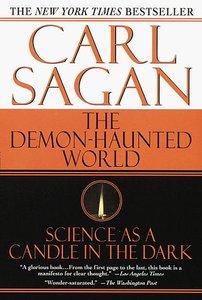
The Demon-Haunted World
Carl Sagan's Baloney Detection Kit, Written With Ann Druyan, Turns a General Defense of Science Into Ufology's Most Cited Skeptical Text
Find on Amazon →As an Amazon Associate, OverClassified may earn from qualifying purchases made through this link, at no extra cost to you.
Why This Is Essential Reading
The Demon-Haunted World earns its place on this list precisely because it is not a UFO book: Carl Sagan, one of the most credentialed and widely trusted scientific communicators of the twentieth century, spent his last published work building a general-purpose toolkit for evaluating extraordinary claims of every kind, and then, in Chapter 4's "Aliens," the "Therapy" chapter's treatment of John Mack, and his own decades-old rebuttal of the Betty and Barney Hill Zeta Reticuli star map, applied that same toolkit to UFO and abduction claims specifically, with real evidentiary care rather than reflexive dismissal. Read the "baloney detection kit" chapter for the general method that has outlived every specific case study in the book; read the UFO-specific chapters against the real, named pushback in this entry's Critical Reception section — Robert Todd Carroll's argument that Sagan's tone was too gentle, and Phillip E. Johnson's argument that his targets were too easy — and treat the book's own defining tension, a nuanced advocate for taking the search for extraterrestrial life seriously precisely because he demanded rigorous evidence for UFO claims specifically, as the most instructive thing about it: Sagan was never a blanket UFO debunker, and this book is the clearest single published record of exactly why not.
Related Cases & Theories
Essential Viewing
Carl Sagan on The Demon-Haunted World and Science | Charlie Rose Rewind
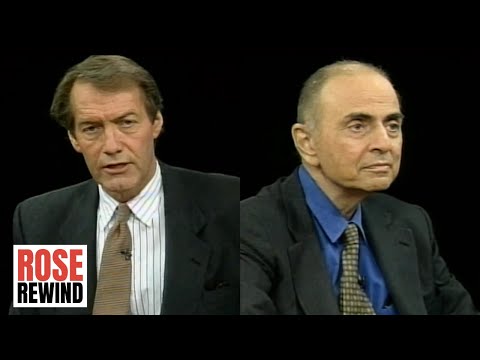
Charlie Rose — Sagan's own May 27, 1996 Charlie Rose interview discussing this book directly, one of his last major television appearances before his death that December. Verified via YouTube oEmbed before inclusion.

Carl Sagan's Brutal Reality Check on UFO Abductions
Out of this World — Archival footage of Sagan applying his skeptical method directly to the Betty and Barney Hill abduction case this book discusses. Verified via YouTube oEmbed before inclusion.
Sources Cited
- Sagan, Carl. The Demon-Haunted World: Science as a Candle in the Dark. Ballantine Books, 1997 paperback ed. (ISBN 9780345409461 / 0345409469, cited here, matching the edition already cited across this site's own resources library). amazon.com
- "Carl Sagan." Wikipedia (biography: Cornell career, Pulitzer Prize, Voyager Golden Record, Cosmos, CSICOP founding, death). en.wikipedia.org
- "The Demon-Haunted World." Wikipedia (publication details, Ann Druyan's co-authorship of four chapters, baloney detection kit summary). en.wikipedia.org
- "Baloney detection kit." Wikipedia (the nine tools and twenty fallacies as formalized in Chapter 12). en.wikipedia.org
- "THE DEMON-HAUNTED WORLD." Kirkus Reviews, December 1, 1995 (contemporary trade review). kirkusreviews.com
- "The Demon-Haunted World by Carl Sagan, Ann Druyan." PenguinRandomHouse.com (publisher page; Los Angeles Times, Washington Post Book World, USA Today, and other jacket-blurb quotes; Los Angeles Times Book Prize). penguinrandomhouse.com
- Carroll, Robert Todd. "Book Review: The Demon-Haunted World." The Skeptic's Dictionary (skepticism-movement review specifically critiquing Sagan's tone toward false-memory therapists as too gentle). skepdic.com
- Johnson, Phillip E. Review of The Demon-Haunted World, National Review ("easy targets" critique, quoted and discussed in the secondary source below). crossroad.to
- "The Demon-Haunted World." Open Library (Ballantine Books, 1997 paperback edition record, ISBN 0345409469 / 9780345409461). openlibrary.org
- "Carl Sagan, Cornell astronomer, dies today (Dec. 20) in Seattle." Cornell Chronicle, December 20, 1996 (death, myelodysplasia, bone-marrow transplant). news.cornell.edu
- This site's own case file: Betty & Barney Hill Abduction, which documents Sagan and Steven Soter's Zeta Reticuli star-map rebuttal in detail.
- This site's own case file: The Condon Report, which documents Sagan's July 1968 Congressional testimony alongside Hynek and McDonald.
- This site's own case file: The James E. McDonald Congressional UFO Testimony, for the same 1968 Roush symposium from McDonald's side.
- This site's own case file: Kolkata UFO Sighting, which cites this exact edition of the book directly.
- This site's own case file: Michigan Swamp Gas UFO Wave, which cites Sagan and Thornton Page's edited 1972 volume UFO's: A Scientific Debate.
- This site's own essential-reading entry: UFOs Explained, Philip J. Klass's 1974 skeptical casebook and Sagan's fellow 1976 CSICOP founding-fellow project.
- This site's own key-figures entry: Carl Sagan, for his broader site-wide case connections beyond this book.
- This site's own resources library: Full Reading List, where this exact 1997 paperback edition (ISBN 0345409469) is cited directly.
Have corrections, additional research, or peer-reviewed sources? Help improve this entry.
Suggest an Edit