
The 2025 House Oversight UAP Hearing
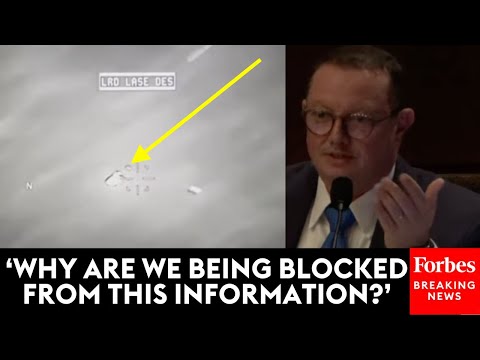
On September 9, 2025, the House Oversight Committee's Task Force on the Declassification of Federal Secrets held its first UAP-focused hearing, titled "Restoring Public Trust Through UAP Transparency and Whistleblower Protection," in Washington, D.C. USAF veterans Jeffrey Nuccetelli and Dylan Borland, active-duty Navy Senior Chief Alexandro Wiggins, journalist George Knapp, and policy counsel Joe Spielberger testified under oath about military UAP encounters, alleged retaliation against whistleblowers, and gaps in AARO's reporting system. During the hearing, Rep. Eric Burlison unveiled previously unseen footage, said to be from October 30, 2024, showing a U.S. MQ-9 Reaper drone firing an AGM-114 Hellfire missile at a fast-moving object off the coast of Yemen; the missile appears to strike the object without destroying it, and the object continues moving until the clip ends. Astrophysicist Avi Loeb subsequently published a technical analysis arguing the object's estimated size and speed were more consistent with a Houthi Samad-series drone, launched amid an active regional conflict, than with an unconventional craft.
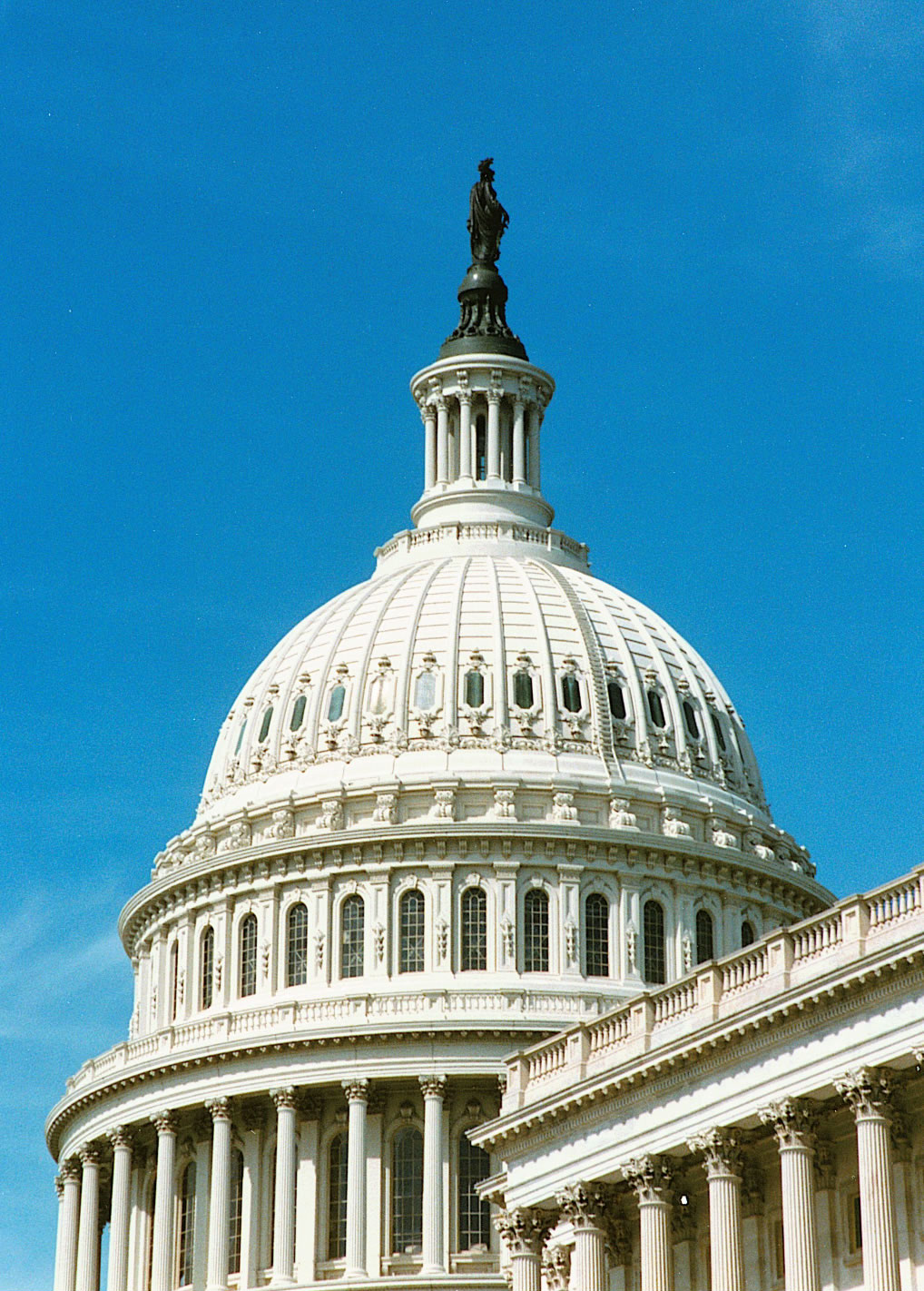
Pictured: the dome of the United States Capitol, Washington, D.C., where the House Oversight Committee held its September 9, 2025 UAP hearing. This is not a photograph from the hearing itself. Public domain, U.S. federal government work.
Theoretical Alignment
This file substitutes "Institutional / Testimonial" for the Psycho-Social/Mundane category because the hearing itself is a confirmed, well-documented institutional event with multiple independent witnesses testifying under oath, several of whom (Nuccetelli, Wiggins) described corroborated multi-person sensor and radar detections rather than lone perceptual accounts. It assigns meaningful weight to Extraterrestrial because the testimony includes specific, detailed claims of unconventional performance (no propulsion signature, silent emergence from the ocean) from a currently serving military witness. It withholds a higher ETH weighting because the hearing's single strongest piece of physical evidence — the Yemen missile-strike video — has a specific, technically argued rival explanation (a Houthi drone) that has not been rebutted or resolved.
The Institutional / Testimonial weighting also reflects a structural feature of this case that distinguishes it from most files in this archive: the primary evidentiary record is not a sighting report, a physical artifact, or a sensor log filed after the fact, but a sworn Congressional proceeding with its own chain of institutional accountability — a published witness list, archived video, an official transcript entered into the Congressional record via the Government Publishing Office, and a committee record that can, in principle, be subpoenaed and cross-examined in ways a private sighting report cannot. That institutional weight cuts in two directions at once. It raises the floor of credibility on the claim that the hearing happened as described and that the named witnesses said what the record shows they said; it does not, by itself, raise the floor on whether the underlying phenomena those witnesses described were genuinely anomalous, since sworn testimony establishes that a person believes and is willing to legally attest to an account, not that the account is correct. This file treats those as two separate credibility questions and scores them separately throughout: the hearing's occurrence and content are effectively certain, while the anomalous nature of the events described within it remains genuinely disputed.
Background
The hearing was the first UAP-focused session convened by the House Oversight and Government Reform Committee's Task Force on the Declassification of Federal Secrets, chaired by Rep. Anna Paulina Luna. It followed the Committee's earlier 2023 UAP hearing featuring David Grusch, Ryan Graves, and David Fravor, and was framed explicitly around whistleblower protection: examining whether military personnel who report UAP encounters face retaliation, and whether AARO's reporting channels adequately capture and act on those reports.
The Task Force itself was announced on February 11, 2025, by Oversight Committee Chairman James Comer (R-KY), who tapped Rep. Luna to lead it in the wake of a Trump administration order directing federal agencies to declassify records related to the assassinations of President John F. Kennedy, his brother Robert F. Kennedy, and the Rev. Martin Luther King Jr. The Task Force's mandate, as announced, extended well beyond those assassination files to a cluster of other long-classified or under-scrutinized subjects: unidentified anomalous phenomena and unidentified submerged objects, the Jeffrey Epstein case files, the September 11, 2001 attacks, and the origins of the COVID-19 pandemic. Its Republican membership included Reps. Nancy Mace (SC), Tim Burchett (TN), Lauren Boebert (CO), Eric Burlison (MO), Eli Crane (AZ), and Brandon Gill (TX); Democratic members included Reps. Raja Krishnamoorthi (IL), Summer Lee (PA), Jasmine Crockett (TX), and Dave Min (CA). The Task Force convened its first hearing on the JFK files before turning, on September 9, 2025, to its first hearing focused specifically on UAP.
By the time of this hearing, the Pentagon's All-domain Anomaly Resolution Office (AARO) had been the government's designated UAP clearinghouse for roughly three years. Congress created AARO's predecessor structures in the Fiscal Year 2022 National Defense Authorization Act, consolidating earlier, narrower efforts — including the Navy-led Unidentified Aerial Phenomena Task Force and the subsequent Airborne Object Identification and Management Synchronization Group — into a single office housed within the Office of the Under Secretary of Defense for Intelligence and Security. AARO was formally stood up in 2022 under its first director, physicist Sean Kirkpatrick, and was declared to have reached full operational capacity in 2024. Kirkpatrick left the post in December 2024 and was succeeded by Dr. Jon Kosloski, a National Security Agency physicist, who was serving as AARO's director at the time of this hearing. AARO's stated mission is to synchronize UAP-related reporting and investigative efforts across the military services and intelligence community and to serve as the government's central intake point for service-member reports — the very function several of this hearing's witnesses testified had failed them personally.
AARO's public record going into the hearing was itself contested. Its 2024 historical record report, compiled under Kirkpatrick, concluded it had found no verifiable evidence that the U.S. government or private industry possessed extraterrestrial technology or was reverse-engineering non-human craft — a conclusion the office has continued to stand behind under Kosloski. Critics, including former Senate and Pentagon intelligence official Christopher Mellon, have separately argued that AARO's methodology and public reporting have been inconsistent and, at times, dismissive of credible witness accounts — a criticism Chairwoman Luna echoed sharply from the dais at this hearing. Separately, Rep. Burlison had by this point brought on former Air Force intelligence officer and 2023 hearing witness David Grusch as a paid special adviser on UAP matters, a four-month appointment approved by the House Ethics Committee that also restored Grusch's security clearance; Rep. Burchett, for his part, had reintroduced legislation aimed at strengthening whistleblower protections specifically for personnel reporting UAP-program information, a bill this hearing was in part convened to build support for.
That legislative push sits on top of an existing but, according to this hearing's witnesses, imperfectly functioning framework. Successive annual defense authorization acts since 2022 have layered additional UAP-reporting requirements onto the Department of Defense and intelligence community, including confidential channels intended to let current and former government personnel, contractors, and their attorneys report historical UAP-related programs to Congress and to AARO without first securing agency pre-clearance. In principle, that framework was designed to make exactly the kind of testimony offered at this hearing routine and low-risk; in practice, witnesses including Nuccetelli, Borland, and Wiggins each testified to some version of the same complaint — that reporting a UAP encounter through official channels had produced silence, dismissal, or worse rather than the protection the legislation was meant to guarantee. Spielberger's testimony, addressed to whistleblower protection as a general principle rather than to UAP specifically, was in that sense directly responsive to the gap between the framework's stated intent and these witnesses' lived experience of it.
Complete Timeline
| Date | Event |
|---|---|
| 2003–2005 | Jeffrey Nuccetelli, then an Air Force Security Forces officer, reports multiple incidents at Vandenberg AFB during National Reconnaissance Office launches, including a red glowing disc that allegedly disabled electronics. |
| 2012 | Dylan Borland reports a silent, 100-foot equilateral triangular object at Langley Air Force Base — the subject of this site's Langley AFB UAP Incursions file. |
| 2023 | Alexandro Wiggins reports a self-luminous, Tic Tac-shaped object emerging from the ocean near the USS Jackson before linking up with three similar objects. |
| Oct. 30, 2024 | An MQ-9 Reaper drone reportedly fires an AGM-114 Hellfire missile at a fast-moving object off the coast of Yemen; the missile appears to strike without destroying the object. |
| Sept. 9, 2025 | The House Oversight Task Force on the Declassification of Federal Secrets holds "Restoring Public Trust Through UAP Transparency and Whistleblower Protection"; all five witnesses testify under oath, and Rep. Burlison plays the Yemen video publicly for the first time. |
| Sept. 10, 2025 | Multiple national outlets (ABC News, CBS News, NBC News) report on the hearing and the missile-strike video. |
| Late 2025 | Astrophysicist Avi Loeb publishes a technical analysis of the Yemen video arguing the object's size and speed profile is consistent with a Houthi Samad-series drone. |
The Testimony
Opening Statements
Chairwoman Anna Paulina Luna opened the hearing by framing it in explicitly institutional terms: "This is not science fiction or creating speculation. This is about national security, government accountability and the American people's right to the truth." She was pointedly critical of AARO's outgoing leadership, telling the room that former director Sean Kirkpatrick was, in her words, "a documented liar," and questioning what his tenure had actually accomplished if it had not produced follow-through on witness reports or disclosure to Congress. Ranking Member Jasmine Crockett struck a more measured tone in her own opening remarks, acknowledging the need for transparency while noting that most UAP reports likely have mundane explanations and that NASA's own independent study had found no evidence of extraterrestrial origin; she nonetheless joined Luna in stressing that whistleblowers who come forward in good faith deserve protection regardless of whether their underlying claims are ultimately validated.
Jeffrey Nuccetelli — Vandenberg, 2003–2005
Jeffrey Nuccetelli, a 16-year Air Force veteran who served in base security forces, testified about five separate UAP incidents at Vandenberg Air Force Base between 2003 and 2005, a period during which the base was conducting National Reconnaissance Office satellite launches and National Missile Defense Project tests — among the highest-priority national security operations conducted there. He described what he called "flying buildings" that moved erratically and were witnessed by multiple personnel, and testified that "each incident was witnessed by multiple personnel, documented, investigated and reported" up the chain of command. In more specific testimony, he described an October 14, 2003 incident in which Boeing contractors working at the base reported a massive, glowing red square silently hovering over two missile defense sites; later that same night, security personnel responding to the area reported a bright, fast-moving object over the ocean and then a massive triangular craft, larger than a football field, that hovered silently for roughly 45 seconds before departing. Nuccetelli testified that he personally witnessed a separate incident in 2005: a roughly 30-foot-diameter sphere of light that departed the area and then reappeared approximately 200 feet above his own house. He told the committee that the witnesses to these events were, in his words, later threatened and intimidated, and that he received no institutional guidance on how to process or report what he and his colleagues had seen. His central recommendation to the committee was for independent UAP research funding and a reduction in default over-classification, framed around the line "transparency is the foundation of truth" — without it, he argued, witnesses like himself are simply dismissed.
Dylan Borland — Langley AFB, 2012, and a Decade of Retaliation
Dylan Borland, an Air Force veteran and geospatial intelligence specialist who worked at Langley Air Force Base from 2011 to 2013, testified publicly for the first time about a 2012 sighting: an approximately 100-foot equilateral triangle that he watched take off from near a NASA hangar on the base. He described the object as producing no sound and testified that "the craft interfered with my telephone, did not have any sound, and the material it was made of appeared fluid or dynamic," elsewhere describing the surface as resembling a kind of shifting, molten or plasma-like covering. Borland testified that his subsequent knowledge of what he called a "legacy UAP program" led to more than a decade of professional consequences, describing sustained workplace harassment, phishing attacks directed at him, and what he characterized as blacklisting that left him unemployed with, in his words, no job prospects; he told the committee he now felt "discarded and separated" from the institutions he had served. Under later questioning from Rep. Nancy Mace about whether the craft he saw could have been American technology, Borland answered carefully: "I did once upon a time, but knowing what I know now, I will have to answer that question in a sensitive compartmented information facility (SCIF) probably" — a response that itself became one of the hearing's more widely quoted exchanges, since it implied classified constraints on what he could say in open session rather than a simple yes or no.
Alexandro Wiggins — USS Jackson, February 15, 2023
Alexandro Wiggins, a career U.S. Navy Senior Chief Petty Officer, made history as the first active-duty Navy official to testify publicly before Congress about a personal UAP encounter. Describing an incident on the evening of February 15, 2023, in the Whiskey-291 warning area off the coast of Southern California while serving aboard the USS Jackson, he testified: "A self-luminous Tic Tac-shaped object emerged from the ocean before linking up with three other similar objects. The orb then disappeared simultaneously with a high, synchronized, near-instantaneous acceleration." He told the committee he observed no sonic boom and no conventional propulsion signatures, no exhaust plume, despite the objects registering across multiple onboard sensor and radar systems. Wiggins described convincing skeptical colleagues aboard ship by comparing the radar return of an actual passing commercial aircraft — which displayed a clear wing, tail, and nose signature — against the objects in question, which displayed none of those features; he summarized the moment as "like 'Checkmate,'" after which the doubts in the room went quiet. Under questioning from Rep. Jared Moskowitz about whether anyone in government had offered him an explanation, Wiggins answered simply: "No one." Rep. Lauren Boebert asked directly whether the behavior he observed could be explained by any known technology; he answered, "It cannot, no," and confirmed, when asked whether AARO had ever debriefed him about the incident, "No one has, no, ma'am." His policy recommendations centered on standardized sensor protocols across the fleet and confidential reporting channels for service members, framed around his stated concern that "sailors need to know that reporting UAP encounters will not harm their careers."
George Knapp — Four Decades of Reporting
George Knapp, the longtime KLAS-TV Las Vegas investigative reporter whose UAP coverage stretches back to 1987, testified that witnesses and whistleblowers who step forward are, in his description, routinely insulted, belittled, or worse, risking their reputations, careers, clearances, and livelihoods in the process. He told the committee that what convinced him the subject deserved serious journalistic treatment, rather than dismissal, was "the paper trail" — documents from military and intelligence personnel that, in closed settings, treated the phenomena as real even while public statements denied it. Knapp described obtaining classified Soviet-era documents during the Glasnost period of the early 1990s, and testified to meetings with Russian defense officials who told him that "Russia had been doing the same thing that the United States had been doing, that is, secretly studying UFOs while publicly saying something completely different." He recounted, in some detail, a Soviet account of an October 1982 incident at a Russian ICBM base, in which he said UFOs performed unusual maneuvers — including appearing to split apart and rejoin — while missile launch control codes activated on their own for roughly four hours and could not be shut down by base personnel, a period he summarized to the committee as one in which "we were a couple of seconds away from World War III starting." Asked by Rep. Tim Burchett how he had obtained the underlying Russian documents, Knapp said simply, "I just removed them," adding that had he been caught doing so, "I would be in a gulag still." Knapp also referenced a claim that Robert Bigelow's aerospace research firm had, at an earlier point, negotiated with Lockheed Martin over unusual material described as having been "stashed away and protected at a facility in California" and "not made here"; pressed by Burchett on contractor involvement more broadly, Knapp named Lockheed specifically and said flatly that defense contractors "have lied about this because that is what they are supposed to do." When Rep. Burlison played the Yemen video later in the hearing, it was Knapp who supplied the on-the-record characterization that circulated most widely afterward: "that is a hellfire missile smacking into that UFO and just bounced right off, and it kept going."
Joe Spielberger — The Minority Witness
Joe Spielberger, senior policy counsel at the Project On Government Oversight (POGO), testified as the hearing's minority witness and was the one participant not offering a personal UAP sighting account. His focus was institutional: he told the committee that "whistleblowers are the first line of defense to root out waste, fraud, abuse of power, and corruption" in government generally, and that retaliation against them does more than harm individuals — it "instill[s] a chilling effect across an agency, fostering a climate of fear and distrust, quieting dissent and free speech," with consequences for Congress's own ability to conduct oversight. Rather than endorsing or disputing any specific UAP claim, Spielberger recommended that Congress push agencies toward a general policy favoring disclosure over default classification, that classification be reserved for genuine national-security or privacy concerns rather than reputational convenience, and that lawmakers weigh the public's right to know against those narrower interests when evaluating UAP-related secrecy specifically. He had said ahead of the hearing that he hoped it would help "restart serious bipartisan conversations" about strengthening disclosure channels and protections for national security whistleblowers as a category, independent of the UAP question itself.
Reading the Testimony as a Whole
Taken together, the five witnesses offered three distinct kinds of evidence that this file deliberately does not collapse into a single narrative: first-person historical sighting accounts from retired personnel (Nuccetelli, Borland) describing events ten to twenty years old; a first-person recent account from an active-duty witness (Wiggins) describing an event roughly two and a half years old at the time of testimony; and institutional, sourcing-based testimony from a journalist (Knapp) and a policy specialist (Spielberger) neither of whom claimed a personal sighting. None of the five accounts directly corroborates any of the others in the sense of describing the same event from a second vantage point; what unifies them is a shared narrative about institutional failure to adequately receive, investigate, or protect people who report these encounters, a theme every committee member across party lines returned to regardless of their individual position on whether the underlying phenomena were extraterrestrial, foreign, or conventional in origin.
The Yemen Missile-Strike Video
The hearing's most widely covered moment came when Rep. Eric Burlison played previously unreleased footage he said came from a whistleblower and was recorded by an MQ-9 Reaper drone on October 30, 2024, off the coast of Yemen. Introducing the clip, Burlison told the room, "I'm not going to explain it to you, you'll see exactly what it does," before the video played. It shows a bright, fast-moving object traveling steadily above open water; an AGM-114 Hellfire missile, fired from a second Reaper using laser designation from the first — a technique commonly called "buddy lasing," with the sensor overlay in the released clip visibly reading "LRD LASE DES" to indicate which aircraft was lasing the target and which was firing — appears to strike the object, which sheds small pieces of debris and appears to tumble but continues on its trajectory rather than being destroyed, moving on-screen until the clip ends. Burlison summarized the outcome for the committee as, "It kept going, and it looked like the debris was taken with it," and pressed the Pentagon publicly on why the footage and any related analysis remained restricted: "why are we being blocked from this information?"
Independent technical review complicated the footage in a few respects even before Avi Loeb's later published analysis. The War Zone's own examination of the clip described the object as appearing cylindrical in the sensor feed, rather than a smooth orb, though it cautioned that compressed thermal or infrared video of a small, fast-moving target is a poor medium for confident shape determination. It further assessed that the missile appeared to strike the object with a glancing or "peripheral" blow rather than scoring a solid hit — deflecting off rather than detonating — consistent with a warhead that lacked the proximity-fuzing modifications typically fitted to Hellfire variants intended for use against aerial targets, since the missile and its HEAT-optimized shaped-charge warhead were designed principally to defeat armor and ground targets, not fast movers in open air. That technical detail, independent of what the object turns out to have been, raised a second and distinct question the outlet flagged: whether the underlying engagement was a deliberately tasked air-to-air intercept at all, or a more improvised shot taken against what one Reaper crew judged, in the moment, to be a target of opportunity.
If authentic and correctly described, the engagement itself represents what The War Zone identified as possibly the first known instance of an MQ-9 Reaper engaging an aerial target in an operational combat setting, a milestone that would itself be independently significant to military aviation history apart from the object's identity — MQ-9s had by that point been flying missions in the broader Middle East theater for roughly two decades, but their combat role had centered overwhelmingly on strikes against ground targets and, in the specific context of the Red Sea campaign against Houthi forces, on surveillance and limited strike missions rather than air-to-air engagements. That same Red Sea campaign supplies the immediate operational backdrop for the October 30, 2024 incident: by late 2024, Houthi forces had been contesting U.S. and allied naval and drone operations in the region for roughly a year, and Houthi officials had publicly claimed to have shot down close to twenty American MQ-9 Reapers over the course of the campaign before a ceasefire was announced in May 2025. Asked for comment after the hearing, the Pentagon offered no substantive response beyond a terse "we do not have anything to provide," and AARO's public position, both before and after the hearing, has remained that the office has found no verifiable evidence of extraterrestrial technology in any case it has examined, without commenting on this incident specifically.
Key Figures
Jeffrey Nuccetelli
Testified about five separate 2003–2005 encounters at Vandenberg AFB during NRO satellite launches and National Missile Defense Project operations, including a red glowing disc allegedly disabling electronics, a football-field-sized silent triangle, and a 30-foot sphere of light he personally witnessed, all witnessed by multiple security personnel; testified that witnesses were later threatened and intimidated.
Dylan Borland
Testified publicly for the first time about alleged decade-long professional retaliation — including workplace harassment, phishing attacks, and blacklisting — following his 2012 Langley AFB triangular UAP report, describing a 100-foot craft with a fluid, plasma-like exterior that interfered with his telephone.
Alexandro Wiggins
The first active-duty Navy official to testify publicly about UAP, describing a February 15, 2023 multi-sensor detection of self-luminous Tic Tac-shaped objects near the USS Jackson off Southern California; testified no one in government had ever offered him an explanation or debriefed him about the incident.
George Knapp
Testified in support of continued congressional investigation and government transparency on UAP, describing classified Soviet-era documents obtained during Glasnost and an alleged 1982 incident at a Russian ICBM base; confirmed for the committee that the Yemen video appeared to show a missile deflecting off the object rather than destroying it.
Rep. Anna Paulina Luna
Chaired the hearing, emphasized the need for stronger whistleblower protections specifically tailored to UAP-related disclosures, and was sharply critical of AARO's outgoing leadership under former director Sean Kirkpatrick.
Rep. Eric Burlison
Publicly unveiled the previously unseen Yemen coast missile-strike video during the hearing, stating it came from a whistleblower; separately serves as the employer of former 2023 hearing witness David Grusch, hired earlier in 2025 as his paid special adviser on UAP matters.
The Five Observables Assessment
Applying the Five Observables framework to the testimony and video evidence:
Assessment: This case's observables come from two distinct sources with different evidentiary weight: sworn but unverified testimonial claims (Wiggins' trans-medium emergence and multi-sensor detection), and one piece of actual video evidence (the Yemen strike) whose most notable feature — surviving a direct missile hit — is also the element with the most credible mundane counter-explanation. It is worth noting explicitly that the two evidentiary tracks in this case do not actually overlap: none of the sworn testimony describes a missile engagement, and the Yemen video's object was never claimed by any witness to be trans-medium or to have exhibited anti-gravity lift. Nuccetelli's Vandenberg accounts and Borland's Langley account likewise stand independently of both Wiggins' testimony and the Yemen footage, sharing only a general morphology (luminous or metallic craft, largely silent, high apparent performance) rather than any specific corroborating detail. This file treats the case as a bundle of separately evaluated claims joined by a single hearing rather than as one continuous body of evidence, and scores the observables accordingly — weighting the testimonial claims on witness credibility and internal consistency, and the video on its own physical parameters, without allowing strength in one track to inflate confidence in the other.
Evidence Assessment
Supporting Genuine Anomalous Activity
- Five witnesses, including a currently serving Navy Senior Chief Petty Officer, testified under oath before Congress, carrying legal and professional consequences for false statements.
- Multiple witnesses described multi-person, multi-sensor corroborated encounters rather than lone perceptual accounts, including Nuccetelli's account of Boeing contractors and security personnel independently reporting the same Vandenberg objects on October 14, 2003.
- The Yemen video, if authentic, documents an object that survived a direct or near-direct Hellfire missile engagement without being destroyed — a genuinely unusual outcome regardless of the object's ultimate identity.
- Multiple witnesses independently described specific, granular retaliation mechanics (phishing attacks, security-clearance interference, blacklisting) rather than vague grievances, which this file treats as a modest credibility signal for the retaliation claims specifically, separate from the underlying sighting claims.
- Chairwoman Luna's public characterization of former AARO director Sean Kirkpatrick as unreliable, and her committee's broader accusation that the Defense Department and intelligence community have withheld video and files from the Task Force, suggests institutional friction independent of any individual witness's credibility.
Supporting a Conventional Explanation
- Astrophysicist Avi Loeb's published technical analysis argues the Yemen object's estimated size (a few meters) and speed (roughly one-sixth that of the Hellfire missile) are consistent with a Houthi Samad-series drone, and notes the incident's date coincides with an active period of Houthi drone attacks in the region.
- The War Zone's technical review found the missile strike appeared to be a "peripheral hit" without fuze detonation, consistent with a grazing strike on a conventional drone's tail or wing rather than an object "absorbing" an impact.
- None of the sworn testimony includes independently verifiable physical evidence (recovered material, corroborating radar data released publicly) beyond the witnesses' own accounts.
- Retaliation and career-obstruction claims, while serious, are inherently difficult to verify from testimony alone without independent personnel-record review.
- AARO's own public position, maintained under both Kirkpatrick and his successor Jon Kosloski, is that the office has found no verifiable evidence of extraterrestrial technology in any case examined to date, including presumably the incidents described by this hearing's witnesses. This file weighs that position as a genuine input, not a dispositive one: AARO's own outgoing-leadership dispute, aired at this very hearing, demonstrates that even its own institutional actors distrust the office's follow-through, and a categorical "no verifiable evidence" finding carries the same structural limits — incomplete access, incentive toward the least alarming conclusion, and no outside audit of classified casework — that this archive applies to every official UAP resolution it cites.
- Ranking Member Crockett's opening remarks explicitly noted that most UAP reports likely have mundane explanations and that NASA's independent review found no evidence of extraterrestrial origin, a position offered from within the same hearing rather than as external criticism.
Why "Disputed"
This case is rated Disputed because it combines a confirmed, high-credibility institutional event — a formal Congressional hearing with sworn testimony from a currently serving military official — with a central piece of physical evidence, the Yemen video, that carries a specific, technically reasoned rival explanation that has not been resolved either way. The hearing itself is not in dispute; what remains disputed is whether the claims and footage presented within it depict genuinely anomalous phenomena or conventional military and drone activity.
This file does not rate the case higher because Avi Loeb's Houthi-drone analysis directly and specifically engages the video's physical parameters (size, relative speed, contextual timing with known Houthi attacks) rather than dismissing the case outright, and because several of the hearing's most striking claims (Nuccetelli's electronics-disabling disc, Wiggins' ocean emergence) rest entirely on unverified testimony with no independently released corroborating sensor data.
The rating is also complicated by the hearing's dual character as both an evidentiary event and a political one. The Task Force that convened it was formed with an explicit institutional interest in demonstrating that federal secrecy has gone too far across several unrelated subject areas, and its Republican leadership was openly and publicly adversarial toward AARO's prior director before a single witness had spoken. That does not mean the testimony was coached or the video staged — this file has found no evidence of either, and a hearing convened partly for institutional or political reasons can still surface genuine facts — but it does mean the hearing's framing cannot be treated as a neutral evidentiary filter in the way a scientific instrument or an unbiased sensor log could be. Conversely, the presence of a minority witness (Spielberger) whose testimony pointedly declined to endorse any specific UAP claim, and a Ranking Member who used her own opening statement to caution against extraterrestrial interpretations, suggests the hearing was not simply a one-sided showcase; genuine, if muted, skepticism was represented in the official record alongside the more dramatic claims.
Finally, this file notes that "Disputed" is doing somewhat different work across the case's two evidentiary tracks. For the personal-encounter testimony (Nuccetelli, Borland, Wiggins), the dispute is fundamentally about whether to credit detailed, consistent, first-person sworn accounts from credentialed military witnesses in the total absence of independent corroborating data — a genuinely difficult epistemic question this archive does not claim to resolve. For the Yemen video specifically, the dispute is narrower and more tractable: a real piece of footage exists, its physical parameters are measurable in principle, and Avi Loeb's Houthi-drone analysis represents exactly the kind of falsifiable, parameter-based counter-explanation this archive rates most highly when it appears — the fact that it has not yet been publicly rebutted, by AARO, by Rep. Burlison's office, or by Loeb's critics, keeps this specific sub-claim in a resolvable but currently unresolved state rather than a permanently ambiguous one.
Observer Credibility & Occupational Profile
This case features an unusually strong observer credibility profile for this archive: five witnesses testifying under oath before a Congressional committee, including a currently serving Navy Senior Chief Petty Officer risking career and legal consequences for false statements, two retired Air Force officers with documented service records, a veteran investigative journalist with decades of UAP reporting, and a national security policy specialist. This file finds the sworn, on-the-record nature of the testimony to be the case's strongest credibility element, tempered by the fact that testimony alone, however credible the witness, does not constitute independently verifiable physical evidence.
Breaking the occupational profile down further sharpens this assessment. Nuccetelli and Borland are both retired-but-documented Air Force veterans describing decades-old events from memory, which introduces the ordinary limitations of long-term recall even where the witnesses' sincerity is not in question; both nonetheless describe multi-witness incidents rather than solitary observations, which somewhat offsets that limitation. Wiggins is, by a wide margin, the strongest single witness in this file's assessment: an active-duty senior noncommissioned officer describing a recent (2023), multi-sensor-corroborated incident under his own name and while still serving, a combination of immediacy, institutional exposure, and personal risk this archive rates highly wherever it appears. Knapp's credibility rests on a different axis entirely — not personal sighting experience, but four decades of sourcing, document acquisition, and cross-referencing across the UAP beat, which this file treats as relevant to evaluating the broader informational ecosystem around the case rather than to any single physical claim. Spielberger, as POGO's institutional witness, carries the credibility of a nonpartisan government-accountability watchdog organization, but his testimony deliberately stayed agnostic on the UAP questions themselves, so it should not be read as independent corroboration of any specific sighting.
The credibility of the hearing's institutional counterpart — AARO — is comparatively harder to assess, and this file treats that as a separate and unresolved question rather than folding it into the witnesses' own scores. Chairwoman Luna's public statement that former director Sean Kirkpatrick was "a documented liar" is a serious allegation from a sitting committee chair with subpoena power, but it is also a one-sided political statement made without an opportunity for Kirkpatrick to respond within the same hearing record, and this file has not located an independent, adjudicated finding resolving the dispute either way. Kirkpatrick's own historical-record conclusions, and his successor Jon Kosloski's continued adherence to them, remain part of the public record and are not automatically discredited by Luna's characterization alone.
It is also worth stating plainly what this hearing's occupational profile does not include: no currently serving AARO analyst, no Pentagon spokesperson beyond a brief declined-comment statement, and no independent aerospace or missile engineer testified to evaluate the Yemen footage directly for the committee. The technical analysis that exists — Avi Loeb's published measurements and The War Zone's editorial review — was produced entirely outside the hearing itself, after the fact, by parties with no institutional stake in either the Task Force's or AARO's conclusions. This file regards that as a genuine gap in the hearing's own process: the single most concrete, measurable piece of evidence presented (the video) received no contemporaneous expert technical testimony within the hearing record itself, leaving that analysis to arrive later and from outside sources, however credible those sources individually are.
Historical Precedents & Archive Matches
This hearing follows the House Oversight Committee's 2023 UAP hearing featuring David Grusch, Ryan Graves, and David Fravor, and directly incorporates and expands on this site's existing Langley AFB UAP Incursions file through Dylan Borland's testimony. It belongs to a growing pattern of Congressional UAP hearings functioning as a primary public disclosure mechanism distinct from AARO's own reporting. That 2023 hearing is itself where David Grusch, now Rep. Burlison's paid special adviser, first testified publicly to claims of a decades-long "legacy" crash-retrieval and reverse-engineering program, a claim that Borland's own testimony about a "legacy UAP program" echoes without directly overlapping with Grusch's specific assertions; this file treats the two men's accounts as parallel rather than mutually corroborating, since Borland's public testimony did not claim direct knowledge of Grusch's program or vice versa.
Nuccetelli's Vandenberg testimony also sits inside a striking, if coincidental, geographic echo already present in this archive: this site's separate Vandenberg AFB Missile Disabling Incident file documents an earlier, unrelated 1964 incident at the same installation involving disabled missile-tracking equipment, decades before the 2003–2005 events Nuccetelli described. The two cases share no witnesses, no direct evidentiary connection, and are separated by nearly forty years, but both describe anomalous activity concentrated at a single high-security missile installation, a pattern this archive also documents at a second facility in its Malmstrom AFB Missile Shutdowns file, where nuclear missile systems were reported to have gone offline during a 1967 UAP sighting. This file treats the recurrence of missile-adjacent installations across three separate, decades-spanning cases as a pattern worth flagging for researchers, without asserting any causal or coordinated connection between them; it may simply reflect that missile bases were more heavily staffed, more closely observed, and more likely to generate documented, multi-witness incident reports than comparable civilian locations.
More broadly, this hearing also fits a recognizable institutional pattern already visible elsewhere in Congress's post-2017 UAP engagement: a public hearing generates dramatic testimony and media coverage, the responsible executive-branch office (here, AARO) declines to substantively confirm or deny the specific claims raised, and the file remains open pending further disclosure rather than reaching a clean resolution in either direction. The 2023 Grusch hearing followed the same arc, as did earlier Senate-side UAP hearings; this file notes that pattern as a structural feature of Congressional UAP oversight to date, rather than as evidence for or against any individual claim within this specific hearing.
Knapp's reference to Robert Bigelow's aerospace research firm negotiating with Lockheed Martin over unusual recovered material also connects this hearing back to an older and independently documented thread in U.S. government UAP research. Bigelow's company, working under a Defense Intelligence Agency contract publicly disclosed in 2017, ran the Advanced Aerospace Weapon System Applications Program in the mid-2000s, a since-declassified effort that funded UAP-adjacent research and produced technical papers on hypothetical exotic propulsion concepts; that program is separately documented on this site through its connection to Skinwalker Ranch-related research also associated with Bigelow. This file treats Knapp's testimony as consistent with, though not independently proving, the broader public record of Bigelow's involvement in government-funded UAP research, while noting that the specific claim about negotiations with Lockheed Martin over a particular recovered sample was not, in this file's research, independently corroborated beyond Knapp's own account.
Material Analysis
The case's physical evidence consists of the MQ-9 sensor video shown during the hearing and the official Congressional hearing record itself. No recovered material, radar data release, or independent chain-of-custody documentation for the Yemen video has been made public. This is a meaningfully thinner material record than several other files in this archive that involve alleged debris recovery or laboratory-tested samples: what exists here is documentary and testimonial evidence of high formal weight (a government-published transcript, sworn statements, an unclassified sensor recording released into the public domain) rather than physical evidence in the traditional sense of recovered artifacts.
The written record itself is nonetheless unusually substantial for a case in this archive. Each witness submitted formal written testimony in advance of the hearing, in addition to oral statements and responses to committee questioning, and the full proceeding was transcribed and published by the Government Publishing Office as part of the official Congressional record (Serial No. 119-44) — a level of documentary permanence and public accessibility that most sighting reports, even well-investigated ones, never receive. That documentary strength cuts against treating this case the way this archive treats an isolated, undocumented sighting report; it also does not, on its own, resolve whether the underlying phenomena described were genuinely anomalous, since a transcript faithfully records what a witness said, not whether what they saw was correctly interpreted.
Supporting Continued Legitimate Interest
- A currently serving Navy Senior Chief Petty Officer testified under oath to Congress, a step with genuine professional and legal risk that this file treats as a meaningful credibility signal.
- The full hearing record, including written testimony and video, was formally published through official government channels (oversight.house.gov and the Government Publishing Office), giving this case an unusually durable and independently verifiable documentary foundation compared to most sighting-report-based files in this archive.
Supporting a Conventional Explanation
- A published, technically detailed rival analysis (Avi Loeb) directly addresses the video's central claim and proposes a specific, contextually plausible conventional identity (a Houthi drone) that has not been publicly rebutted.
- No independent forensic, radar, or physical sample data corroborating any of the five witnesses' personal encounter claims has been released publicly, leaving the strength of those specific claims resting entirely on the witnesses' own sworn statements.
The Conventional Explanation Candidate: A Houthi Samad-Series Drone
The leading, and this file's assessed, conventional explanation candidate for the Yemen video specifically is that the object was a Houthi-operated Samad-series drone, a class of unmanned aerial vehicle roughly 200 kilograms in mass with a maximum speed of approximately 70 meters per second, used extensively by Houthi forces in the Red Sea region during the period surrounding the video's October 30, 2024 date, which coincided with reported Houthi drone attacks toward Israel the day before.
Avi Loeb's Technical Analysis
Using the Hellfire missile's known 1.6-meter length as a scale reference, astrophysicist Avi Loeb estimated the object at "a few meters" in size, consistent with Samad drone dimensions, and calculated the missile's roughly 440 meters-per-second speed — close to Mach 1.3, or about 30 percent faster than the speed of sound — as approximately six times faster than the object's apparent motion, consistent with Samad's much lower top speed. He characterized the missile's effect as a "peripheral hit," breaking off small pieces without detonating — consistent with grazing a drone's tail or wing rather than a direct strike on a fundamentally different kind of object. Loeb's broader methodological point, developed at length in his own writing on UAP cases generally, is that publicly available reference objects — here, a well-documented U.S. munition of known dimensions passing directly alongside the unidentified object in the same frame — provide a rare opportunity to convert a vague visual impression into an actual measurement, and that this kind of quantitative approach should be the default first step in evaluating any UAP video before more exotic explanations are considered.
Matching Against the Samad Airframe
The Samad family of one-way attack and reconnaissance drones, developed and fielded by Houthi forces with widely reported Iranian design lineage, had by October 2024 become one of the most frequently launched airframes in Houthi operations against shipping and, at times, against Israeli territory. Its published mass (roughly 200 kilograms, about 4.4 times the Hellfire missile's own approximately 45-kilogram mass) and top speed (roughly 70 meters per second, well below both the speed of sound and the Hellfire's supersonic terminal velocity) both fall within the range Loeb's frame-by-frame measurements imply for the Yemen object. This file finds that combination of independently sourced airframe data and independently derived video measurements arriving at compatible numbers to be the single strongest piece of analytical work bearing on this case, though it stops short of certainty: neither Loeb's measurements nor the published Samad specifications were derived from this specific engagement, and no wreckage or transponder data has been recovered to confirm the identification directly.
The Countervailing Military Novelty
This file notes a genuine tension in the case: The War Zone's independent technical review treated the footage as potentially significant precisely because MQ-9s do not typically engage aerial targets operationally, meaning the video's newsworthiness does not depend on the object being anomalous — it would represent a notable military first even if the target were an ordinary hostile drone, which somewhat reduces (without eliminating) the incentive to view the object itself as unconventional. Put differently: a straightforward reading in which an MQ-9 successfully laser-designated and unsuccessfully struck a Houthi drone is, on its own, still a newsworthy and previously undisclosed piece of military history, which weakens (without eliminating) any argument that the footage was withheld specifically because the object was unconventional rather than because the underlying tactic, target, or intelligence source was sensitive for conventional operational-security reasons.
What Remains Unresolved
Neither the Pentagon nor AARO has published an official identification of the Yemen object, and Rep. Burlison's own framing of the footage during the hearing treated its origin and identity as an open question rather than asserting a specific interpretation himself — he presented it as evidence the public was being denied access to, not as proof of anomalous technology. This file's own plausibility rating below reflects that state of the public record: a specific, technically argued, and internally consistent conventional explanation exists and has not been rebutted, but it also has not been officially confirmed, and the underlying video, sensor logs, and any classified engagement report remain outside public view.
A Houthi Samad-Series Drone — Plausibility Rating: PLAUSIBLE BUT UNCONFIRMED
Related Cases
Confirmed Documents & Official Records
The official hearing page, including archived video and prepared written testimony from all witnesses.
PUBLIC RECORD (freely accessible)Search Government Archives Directly
Further Reading — Recommended Literature
UFO: The Inside Story of the US Government's Search for Alien Life Here—and Out There
An extensively researched history of U.S. government UAP records, including the Congressional hearing pattern this case belongs to.
UFOs: Generals, Pilots, and Government Officials Go on the Record
A compilation of credentialed military and official UFO testimony, directly relevant to weighing this hearing's sworn witness accounts.
Inside The Black Vault: The Government's UFO Secrets Revealed
A guide to obtaining and interpreting declassified UFO-related government documents and Congressional hearing records.
The UFO Experience: A Scientific Inquiry
The foundational text on scientifically rigorous UFO classification and witness evaluation.
Watch the Skies! A Chronicle of the Flying Saucer Myth
A skeptical history of the flying saucer phenomenon, useful comparative context for the Houthi drone explanation candidate.
DISCLOSURE: Some links above are affiliate links. If you purchase through them, OverClassified receives a small commission at no additional cost to you. This helps support independent research.
Essential Viewing

Witnesses Recount UFO Sightings in Opening Statements
CBS News — opening statements from the hearing's sworn witnesses.
Burlison Plays the Yemen Missile-Strike Video
Forbes Breaking News — the moment Rep. Burlison unveils the footage during the hearing.
Sources
- "Restoring Public Trust Through UAP Transparency and Whistleblower Protection," U.S. House Committee on Oversight and Government Reform. Read online →
- "Restoring Public Trust Through UAP Transparency and Whistleblower Protection" (Official Hearing Transcript, Serial No. 119-44), U.S. Government Publishing Office / govinfo.gov. Read online →
- "Up Next on Congress' Transparency List: UFOs," Roll Call. Read online →
- "Lawmakers Accuse Pentagon Officials of 'Lack of Transparency' Over UFO Sightings by Military Personnel," Stars and Stripes. Read online →
- "House Witness Testifies UFOs Nearly Activated Russian Nuclear Missiles During 1982 Incident," Fox News. Read online →
- "UFO Whistleblower David Grusch Hired to Advise Rep. Burlison," NewsNation. Read online →
- "Military Whistleblowers Share New Evidence of Alleged UAP at Transparency Hearing," DefenseScoop. Read online →
- "Congressman Shows Never-Before-Seen Video at Military UFO Hearing," ABC News. Read online →
- "Video Shown at House UAP Hearing Appears to Show Missile Fired at Object Off Yemen," NBC News. Read online →
- "Revelation That MQ-9 Reapers Are Now Engaging Aerial Targets Comes From UAP Hearing," The War Zone. Read online →
- "Did a Hellfire Missile Hit a Samad Drone Launched by the Houthis on October 30, 2024?" Avi Loeb, Medium. Read online →
- "D-day (Disclosure Day)? Hearing on Unidentified Aerial Phenomenon (UAP)," LeonardDavid.com. Read online →
- "Video Shows UFO-Like Object Absorb US Hellfire Missile and Vanish," Interesting Engineering. Read online →
- "Video Shows UFO Get Hit by Hellfire Missile, Continues Flying Unobstructed," TMZ. Read online →
- "Task Force Hears Veterans' Testimony About Unexplained Flying Objects," Spectrum Local News. Read online →
- "Witness List for the UAP September 9, 2025 House Oversight Committee Hearing," Unidentified Phenomena. Read online →
- Graff, Garrett M. UFO: The Inside Story of the US Government's Search for Alien Life Here—and Out There. Avid Reader Press, 2023.
- Kean, Leslie. UFOs: Generals, Pilots, and Government Officials Go on the Record. Harmony Books, 2010.
- Greenewald, John, Jr. Inside The Black Vault: The Government's UFO Secrets Revealed. Rowman & Littlefield, 2019.
- Hynek, J. Allen. The UFO Experience: A Scientific Inquiry. Da Capo Press, 1998 (orig. 1972).
- Peebles, Curtis. Watch the Skies! A Chronicle of the Flying Saucer Myth. Smithsonian Institution Press, 1994.
- "File: United States Capitol dome daylight.jpg," public domain, U.S. federal government work. View file →
See something inaccurate? Have additional information or sources?
Suggest an Edit →Last Updated: August 2026