
The Three Suns of Mortimer's Cross
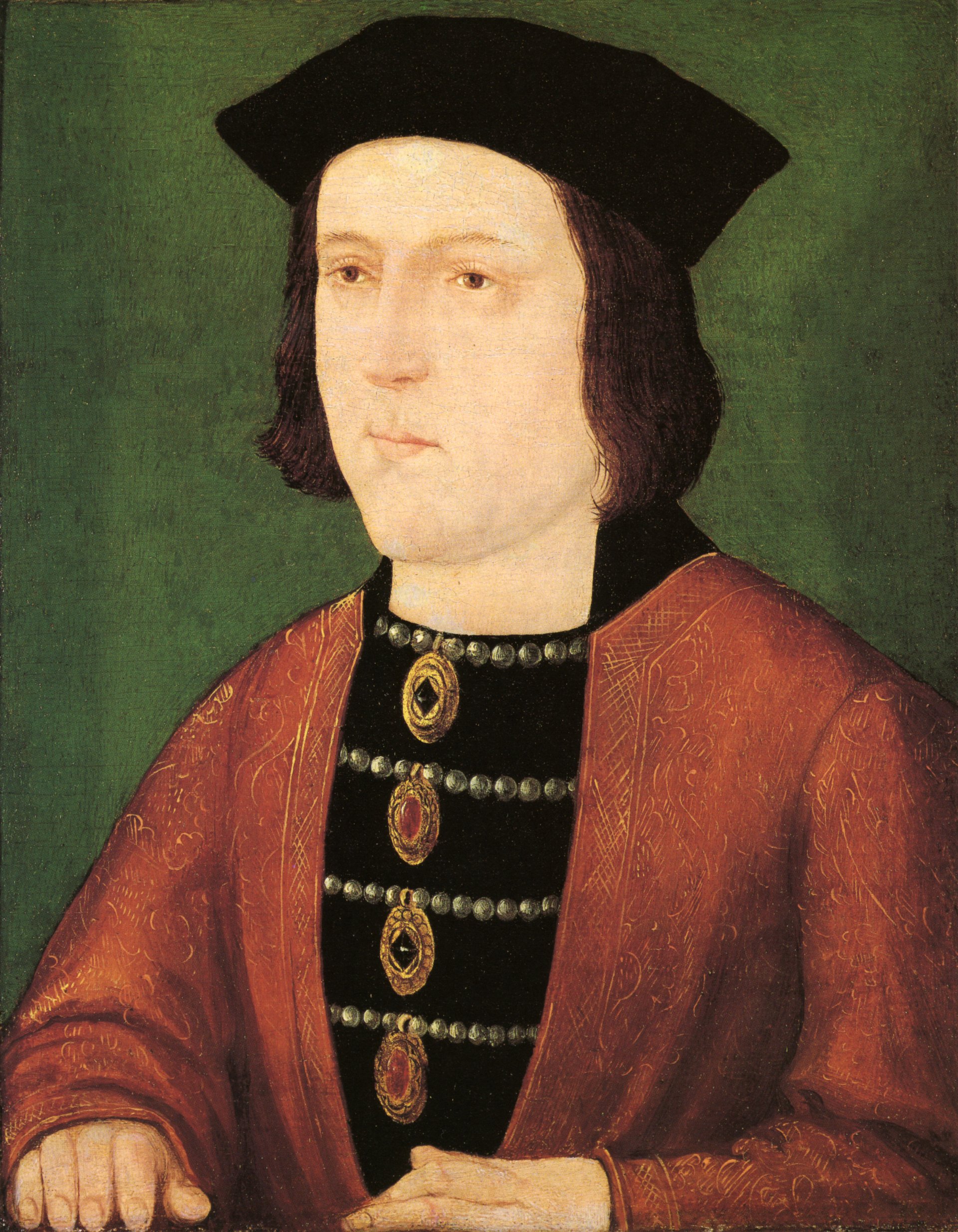
On the morning of 2 February 1461, as an eighteen-year-old Edward, Earl of March mustered his army outside the walls of Hereford for a march to intercept a Lancastrian force advancing from Wales, the sky did something that stopped his soldiers cold: it showed three suns. The near-contemporary London chronicler William Gregory recorded it in four words — "men say iij sonnys schynyng" — and a pictorial propaganda roll made within months of the event depicted it outright. What the army was looking at was a parhelion, a real and still commonly observed ice-crystal halo phenomenon that produces two bright false suns flanking the true one. Edward's men, unaware of the optics, read it as a terrifying omen. Edward reframed it on the spot as the Holy Trinity's blessing on his cause, marched to victory the next day at Mortimer's Cross, and within two months was proclaimed King Edward IV. He never stopped wearing the sun. For the following twenty-two years, the "sun in splendour" was his single most prominent personal badge — stamped into stonework, glass, and livery collars across England — making this one of the best-documented cases anywhere in the historical record of a real atmospheric phenomenon being consciously, successfully, and permanently converted into political and religious meaning.
Theoretical Alignment
This file is unusual within this site's Ancient Records archive in that there is essentially no live scholarly dispute about what physically happened in the sky above Hereford on 2 February 1461. A parhelion — two bright false suns flanking the true sun, produced by sunlight refracting through hexagonal ice crystals in high cirrus cloud — is a well-understood, still commonly photographed atmospheric-optical phenomenon, and the reported geometry (three lights, low in the sky, appearing to draw together) matches it closely. What makes this case worth a full file is not the phenomenon itself but its aftermath: a specific, named historical actor consciously reframed a real, ordinary sky event as a providential sign in real time, in front of thousands of witnesses, won the battle that followed, and then spent the rest of his life and reign broadcasting that reframing through heraldry, architecture, and manuscript illumination. Few entries in this archive offer as clean a documented case study in exactly how a natural phenomenon becomes a culturally load-bearing omen.
Sensor & Instrumentation Detection Profile
As with every entry in this site's Ancient Records series, there is no instrumentation record; 15th-century England had no means of recording the sky beyond eyewitness description. What this case has instead, unusually for this archive, is mass eyewitness testimony — an entire assembled army, numbering somewhere between about 5,000 (Edward's own Mortimer's Cross muster) and considerably more if the wider Marcher levy gathered at Hereford is counted, watching the same event simultaneously in daylight, rather than a single named individual reporting a nighttime vision. That scale of shared observation is itself a form of corroboration this site's other pre-modern entries rarely have, even though no individual soldier's account survives in his own words; what survives is the chronicler's summary of the army's collective reaction and Edward's own recorded response to it. No individual soldier's own diary or letter describing the sighting has ever surfaced, which is unsurprising for a 15th-century levy army drawn heavily from rural gentry and common tenantry rather than a literate professional class; what survives instead is institutional memory, filtered through the two very different kinds of record-keeping — municipal chronicle-writing in London and dynastic propaganda commissioned by the winning side — that a late medieval English political event of this significance would be expected to generate.
Environmental & Geospatial Context
The muster and the reported sighting are placed by Gregory's Chronicle at Widemarsh, a marshy common on the northern edge of Hereford, just outside the city's medieval walls — not at the battlefield itself, which lay roughly eight miles northwest near the hamlet now called Mortimer's Cross, close to Kingsland in Herefordshire, on the Welsh border. Early February is exactly the kind of cold, high-pressure winter window in which the thin cirrus and cirrostratus cloud needed to seed a parhelion display is common over lowland England, and a low winter sun (the display is strongest when the sun sits within roughly 20–30 degrees of the horizon) makes the two flanking false suns easiest to see and most dramatic in appearance. Nothing about the reported conditions is unusual for a parhelion; what is unusual is that thousands of people were gathered outdoors, already anxious ahead of a battle, at the exact moment one appeared. Herefordshire itself sat on the volatile Welsh Marches, a border region long organized around semi-autonomous lordships raised for exactly this kind of rapid military mobilization; Richard, Duke of York's own family estates centered on nearby Ludlow, which is why his son had troops to muster in the area at all barely a month after Wakefield. The battlefield at Mortimer's Cross itself lies in a river valley bounded by the Lugg on one side and wooded high ground on the other — terrain that shaped the battle's tactics as directly as the weather shaped the parhelion above it.
Observer Credibility & Occupational Profile
The event is attested by at least two independent near-contemporary sources rather than a single witness. William Gregory, a London skinner, alderman, and sometime Lord Mayor of London (1451–52), is the traditional name attached to the chronicle that records the terse eyewitness-adjacent line "And ovyr hym men say iij sonnys schynyng" ("and over him men saw three suns shining"); the chronicle's coverage of 1461 falls within Gregory's own lifetime (he died in 1467), though the work as a whole runs to 1469 — two years past his death — so modern scholarship treats full authorship of the finished text as uncertain even while accepting the 1461 entries as a genuinely close-to-contemporary London record. Independently, Harley MS 7353, a large illustrated genealogical and propaganda roll produced within months of Edward's coronation in June 1461 to justify his claim to the throne, includes a panel explicitly depicting the three suns over a walled town identified as Hereford — a second, visual, independently produced record created for a political audience that had every reason to get the basic facts right, since the whole point of the roll was persuasion, not entertainment. A third, much later account survives in Edward Hall's Chronicle (1548), which supplies the fuller, more theatrical version of Edward's rallying speech that Shakespeare would later dramatize — a useful reminder that the story visibly grew more elaborate with each retelling across nearly a century, even as its core claim (three suns, over Edward's army, before this specific battle) never changed.
Historical Precedents & Archive Matches
This file joins a cluster of entries elsewhere in this site's Ancient Records archive that identify a solar or lunar halo display as the leading natural explanation for a historical sky-omen: Gregory of Tours' Convergent Lights (585 CE), the Sigiburg Castle Apparition (776 CE), and the Miracle of the Cross over Jerusalem (351 CE) all propose broadly the same family of ice-crystal atmospheric optics. Mortimer's Cross is the latest, best-documented, and most politically consequential member of that cluster — the only one of the four with an identifiable named beneficiary who built a durable, traceable heraldic and architectural program directly out of the sighting.
Historical Background
By early 1461, England had been sliding in and out of open civil war for six years over rival claims to a crown worn by the pious, intermittently incapacitated Henry VI. The conflict, later named the Wars of the Roses, pitted the royal house of Lancaster against the rival house of York, headed by Richard, Duke of York — a great-grandson of Edward III with, by many contemporaries' reckoning, a stronger hereditary claim to the throne than Henry himself. In October 1460, York had pressed that claim directly in Parliament; the resulting Act of Accord disinherited Henry's own son in York's favor and named York heir to the throne, a settlement Henry's fiercely protective queen, Margaret of Anjou, refused to accept on her son's behalf.
Margaret's Lancastrian loyalists struck first. On 30 December 1460, at the Battle of Wakefield in Yorkshire, a Lancastrian army routed York's forces in what several modern historians characterize less as a set-piece battle than a rout followed by a massacre. Richard, Duke of York, was killed in the fighting. His seventeen-year-old second son, Edmund, Earl of Rutland, was caught fleeing across Wakefield Bridge and killed, according to tradition, on the orders of Lord Clifford in direct revenge for Clifford's own father's death at the First Battle of St Albans five years earlier. Richard Neville, Earl of Salisbury — York's brother-in-law, a senior Yorkist commander, and father of the far more famous Richard Neville, Earl of Warwick, "the Kingmaker" — was captured and, according to the most-cited account, dragged from Pontefract Castle by a hostile local mob and summarily beheaded the following day rather than being ransomed as his Lancastrian captors initially intended. All three heads were set on spikes above Micklegate Bar in York; York's own head, by the near-universally repeated tradition, was crowned first with a paper or reed crown in mockery of his royal pretensions.
The eldest surviving son of the slain duke, nineteen-year-old (by most reckonings not yet nineteen; some historians round him to eighteen, since his birthday fell on 28 April) Edward, Earl of March, was not at Wakefield. He was in the Welsh Marches, raising troops on his own family's estates around Ludlow and Shrewsbury, when news reached him of his father's and brother's deaths. He inherited the dukedom of York and the Yorkist claim in the same stroke that made him an orphan, and almost immediately faced a second, converging threat: a Lancastrian army under Jasper Tudor, Earl of Pembroke — Henry VI's own half-brother — together with Jasper's father Owen Tudor and James Butler, Earl of Wiltshire, was marching out of Wales, apparently intending to link up with Margaret of Anjou's victorious northern army and converge on London. Rather than wait to be caught between the two forces, Edward moved to intercept the Welsh army before it could join the larger one.
It was while mustering his own army outside Hereford for the march to meet them — grieving, newly the head of his house, and leading an army that included large numbers of untested local levies — that Edward's men reportedly looked up and saw three suns. Among Edward's own commanders was the Welsh nobleman William Herbert, whose defection from any Lancastrian sympathies to open, active support for the Yorkist cause is credited by several historians as a major factor in the victory that followed; Edward rewarded him richly after his accession, eventually granting him Jasper Tudor's own forfeited earldom of Pembroke.
The battle itself, whichever exact day it fell on relative to the parhelion, was swift and lopsided. Yorkist archers, some concealed along the wooded banks of the River Lugg, broke the Lancastrian advance before it could properly close; the rout that followed pushed survivors toward the river, where a number drowned attempting to cross under the weight of their own armor while under continued attack. Owen Tudor was run down in the pursuit and captured; Jasper Tudor and James Butler, Earl of Wiltshire, escaped into Wales. Yet Edward's victory did not immediately secure the kingdom. On 17 February 1461, a separate Lancastrian army under Margaret of Anjou defeated the Earl of Warwick at the Second Battle of St Albans and recovered custody of the captive Henry VI — but declined to press on into London, whose citizens, wary of the northern army's reputation for looting, shut their gates against it rather than admit it. That hesitation gave Edward and Warwick the opening to converge on the capital themselves. On 1 March 1461, a Yorkist bishop addressed a large crowd at St John's Field outside London with the case for Edward's kingship; the crowd's acclamation was treated as sufficient popular consent, and on 4 March Edward took the royal oath and began his reign as King Edward IV, even though Henry VI himself was still alive, at liberty among the Lancastrians, and had never formally abdicated.
Edward's claim still had to be made good by force. On 29 March 1461, Palm Sunday, two of the largest armies ever assembled on English soil — combined estimates range from roughly 50,000 to well over 65,000 men — met in a blinding snowstorm near the Yorkshire village of Towton. Ten hours of fighting, followed by a rout in which fleeing Lancastrians were cut down along a nearby stream, left a toll that heralds of the time themselves counted at roughly 28,000 dead — still frequently described as the largest and bloodiest single day of battle ever fought on English soil. Towton, not Mortimer's Cross, was what actually secured Edward's crown by force of arms; Mortimer's Cross was what had given him, at his lowest personal moment seven weeks earlier, the story that let him lead an army of frightened, largely untested men into that fight at all. Edward was formally crowned at Westminster Abbey on 28 June 1461, by which point the sun in splendour was already established as his personal badge, a visual shorthand for the entire sequence — grief, omen, victory, crown — that had carried him there.
Complete Timeline
| Date | Event |
|---|---|
| 28 Apr 1442 | Edward, Earl of March is born at Rouen, Normandy, eldest surviving son of Richard, Duke of York. |
| Oct 1460 | The Act of Accord names Richard, Duke of York heir to Henry VI, disinheriting Henry's son and enraging Margaret of Anjou. |
| 30 Dec 1460 | At the Battle of Wakefield, Lancastrian forces kill Richard, Duke of York, his son Edmund, Earl of Rutland, and Richard Neville, Earl of Salisbury; their heads are displayed above Micklegate Bar, York. |
| Jan 1461 | Edward, Earl of March, now Duke of York, musters Yorkist and Marcher forces around Ludlow and Shrewsbury on learning of his father's and brother's deaths. |
| Late Jan 1461 | Jasper Tudor, Earl of Pembroke, his father Owen Tudor, and James Butler, Earl of Wiltshire, lead a Lancastrian force out of Wales toward the Marches. |
| 2 Feb 1461, dawn | Edward's army, mustered at Widemarsh outside Hereford, reportedly watches a parhelion — three suns merging into one — which Edward publicly interprets as a sign of the Holy Trinity's favor. |
| 2–3 Feb 1461 | The Yorkist army defeats the Lancastrian force at the Battle of Mortimer's Cross near Kingsland, Herefordshire; sources disagree on whether the parhelion and the battle fell on the same day or consecutive days (see "The Dating Puzzle," below). |
| 2 Feb 1461 | Owen Tudor is captured in the rout and beheaded in Hereford's market square; Jasper Tudor and the Earl of Wiltshire escape. |
| 17 Feb 1461 | A Lancastrian army defeats Warwick at the Second Battle of St Albans and recovers custody of Henry VI, but fails to press on and take London. |
| 4 Mar 1461 | Edward is proclaimed King Edward IV in London. |
| 29 Mar 1461 | Edward wins the immense, bloody Battle of Towton, effectively securing the throne by force of arms. |
| 1 May 1461 | James Butler, Earl of Wiltshire, captured after Towton, is executed at Newcastle. |
| 28 Jun 1461 | Edward IV is formally crowned at Westminster Abbey; the "sun in splendour," derived from the Mortimer's Cross parhelion, is already in use as his personal badge. |
| 1471 | After his final victory over the Lancastrians at the Battle of Tewkesbury, Edward IV commissions gilded "sun in splendour" roof bosses for the choir of Tewkesbury Abbey. |
| 9 Apr 1483 | Edward IV dies at Westminster, having reigned (with one brief Lancastrian restoration in 1470–71) under the sun badge for essentially his entire kingship. |
| 1548 | Edward Hall's Chronicle is published, supplying the fuller, more rhetorical version of Edward's speech that later shapes Shakespeare's dramatization. |
| c. 1591 | Shakespeare's Henry VI, Part 3 dramatizes the parhelion in Act 2, Scene 1, cementing the episode in popular memory. |
| 2018 | Historian A. W. Boardman publishes a reassessment arguing the parhelion was seen at Hereford on 2 February, a day before the battle itself, which he redates to 3 February. |
The Primary Source Document
Gregory's Chronicle (Historical Collections of a Citizen of London), entry for 1461
"Edwarde Erle of Marche... hadde a gre jornaye at Mortymer ys Crosse in Walys the secunde day of Februar nexte soo folowynge, and there he put to flyght the Erle of Penbroke, the Erle of Wylteschyre... And ovyr hym men say iij sonnys schynyng."
William Gregory (attrib.), Historical Collections of a Citizen of London in the Fifteenth Century, ed. James Gairdner, Camden Society, 1876 (British History Online transcription) — rendered in modern English: "Edward, Earl of March... had a great victory at Mortimer's Cross in Wales on the second day of February next following, and there he put to flight the Earl of Pembroke [and] the Earl of Wiltshire... And over him men say three suns shining."
This is the earliest surviving textual reference to the phenomenon, written within a few years of the event by a chronicler working and dying in London during Edward IV's own reign. It is terse to the point of dryness — four words describing what would become one of the most famous omens in English royal history — which is itself informative: to a mid-15th-century Londoner, an unusual sky sign attached to a royal victory did not require extensive commentary to be understood as meaningful.
Harley MS 7353 (British Library), c. 1461
A large illustrated roll, roughly five feet nine inches by one foot nine inches, produced as political propaganda within months of Edward's coronation to visually justify his claim to the throne through genealogy and a sequence of battle scenes rising from Ludford Bridge through Northampton, Mortimer's Cross, and Towton. Its Mortimer's Cross panel shows Edward's army beneath his banner outside a walled town identified as Hereford, with three suns rendered directly overhead — an independent, contemporaneously commissioned visual record created explicitly to promote the Trinity reading of the parhelion as evidence of God's favor toward the new king.
Edward Hall, The Union of the Two Noble and Illustre Families of Lancaster and York (1548)
Writing nearly a century after the event, the Tudor-era lawyer and chronicler Edward Hall supplies the fuller narrative version familiar today: frightened soldiers, a calming royal speech invoking the Holy Trinity, and the suns converging into one before the army's eyes. Hall's account is the direct literary ancestor of Shakespeare's dramatization and of most popular retellings since, but it postdates the event by roughly 87 years and should be read as an embellished narrative reconstruction built on the two-century-old kernel already present in Gregory's Chronicle and Harley MS 7353, not as an independent eyewitness source.
William Shakespeare, Henry VI, Part 3, Act 2, Scene 1 (c. 1591)
EDWARD: "Dazzle mine eyes, or do I see three suns?"
William Shakespeare, Henry VI, Part 3, Act 2, Scene 1, Folger Shakespeare Library edition
RICHARD: "Three glorious suns, each one a perfect sun; Not separated with the racking clouds, But sever'd in a pale clear-shining sky. See, see! they join, embrace, and seem to kiss, As if they vow'd some league inviolable: Now are they but one lamp, one light, one sun."
EDWARD: "...Whate'er it bodes, henceforward will I bear Upon my target three fair-shining suns."
Shakespeare places the vision on the battlefield itself rather than at the Hereford muster the day before, compresses the timeline for dramatic effect, and has Edward vow on the spot to bear the three suns on his shield — a dramatist's shorthand for what actually took over a year to formalize as a badge, but a broadly faithful compression of the real sequence: omen, reinterpretation, victory, adoption of the sun as a personal emblem.
The Dating Puzzle: One Day or Two?
Most popular accounts, and a number of otherwise careful modern sources, place the parhelion and the battle itself on the very same morning: 2 February 1461. Gregory's Chronicle's own wording, quoted above, arguably supports this compressed reading, since it moves directly from "great victory at Mortimer's Cross... the secunde day of Februar" to "and over him men say iij sonnys schynyng" without a clear break. But historian A. W. Boardman's closer reassessment of the campaign's timeline argues the two events were a day apart: the parhelion, he contends, was witnessed at the Hereford muster on Monday, 2 February (Candlemas), while the battle itself was fought the following day, Tuesday, 3 February (the Feast of St Blaise), roughly eight miles away at Mortimer's Cross. Boardman further argues, drawing on the Burgundian chronicler Jean de Wavrin's more detailed account of troop movements, that the engagement was less a formal set-piece battle than a dawn raid catching Jasper Tudor's Lancastrian force still in camp near the River Lugg. Owen Tudor's own execution is separately dated 2 February by most sources describing it as happening "the same day as the battle" — a detail that sits awkwardly with a 3 February battle date and illustrates how thoroughly the vision, the fight, and the immediate aftermath have been compressed into a single symbolic date across five centuries of retelling. This file follows the convention used by the majority of sources, including Wikipedia, Britannica-adjacent reference works, and the Battlefields Trust, in dating the parhelion to 2 February 1461, while flagging Boardman's two-day reassessment as the more rigorously argued modern scholarly position and a genuine, unresolved point of historical debate rather than settled fact.
How the Battle Was Actually Fought
Whatever the exact relationship between the sighting and the fighting, the battle itself is reasonably well reconstructed from the chronicle tradition and from modern battlefield analysis. Edward deployed his forces on a narrow plain, perhaps a quarter-mile wide, running along an east-west road between the Mortimer's Cross hamlet and the River Lugg, with wooded banks on his flanks. He positioned archers along one of those wooded banks, forward of his main line, in a position to loose arrows into the Lancastrian formation at close range as it advanced — a tactic that inflicted heavy casualties before the two main bodies of men-at-arms ever closed. A separate, concealed mounted force reportedly occupied a valley on Edward's flank, held in reserve to strike the Lancastrian line once it was already engaged and disordered. When that reserve committed, the Lancastrian left wing collapsed toward its own center, and the whole force was driven back toward the River Lugg, which had no ford or bridge nearby; a number of fleeing soldiers drowned attempting to cross it while still wearing armor built for fighting, not swimming. Survivors who escaped the river attempted to rally around their baggage train at a site remembered locally as "Battle Acre," roughly half a mile further on, but were overtaken and scattered a second time. What began as an approach to a formal, pre-arranged field battle ended, in the accounts historian A. W. Boardman finds most convincing, closer to a rout inflicted on a force that never fully deployed — consistent with his broader argument that Jasper Tudor's Lancastrian army was still making camp near the river, unprepared for a dawn attack, when Edward's force reached it.
The Witness Record
Edward, Earl of March (later King Edward IV)
The figure at the center of the account, both as a witness among his own troops and as the person whose public, on-the-spot reinterpretation of the parhelion is what makes this case historically significant. No first-person account in Edward's own words survives; his reaction is known only through the chroniclers who recorded its effect on his army.
The Assembled Yorkist Army
Described by the chroniclers only in aggregate — "his men," "the army" — rather than by any individually named soldier's testimony, this remains the largest single body of simultaneous witnesses to a sky-phenomenon anywhere in this site's Ancient Records archive, even though not one soldier's personal account survives independently of the chronicle tradition.
William Gregory (traditional attribution)
A London skinner and former Lord Mayor who died in 1467, traditionally credited as the compiler of the chronicle bearing his name, though modern scholarship regards full authorship as uncertain since the text as it survives continues two years past his death. He was not present at Hereford or Mortimer's Cross; his value is as an independent, near-contemporary written record produced within the same generation as the event, working from information reaching London rather than court propaganda.
Confirmed Textual & Archival Holdings
The full transcribed text of James Gairdner's 1876 Camden Society edition, including the entry describing Mortimer's Cross and the three suns.
PUBLICLY ACCESSIBLE ACADEMIC ARCHIVEThe Harley MS 7353 propaganda roll, produced c. 1461, illustrating the Mortimer's Cross parhelion alongside Edward IV's other battles.
INSTITUTIONAL ARCHIVE (BRITISH LIBRARY)A full digitized scan of the 1876 Camden Society edition of Gregory's Chronicle and related London chronicle material.
PUBLIC DOMAIN (freely accessible)The UK battlefields charity's own analysis of the parhelion account and the registered battlefield site.
PUBLICLY ACCESSIBLE HERITAGE ARCHIVESearch Primary & Institutional Archives Directly
Evidence Assessment
Supporting the Account as a Genuine, Accurately Recorded Sky Event
- Two independent near-contemporary sources of different formats — a prose London chronicle and an illustrated royal propaganda roll — agree on the core claim within months to a few years of the event, a stronger corroboration pattern than most entries in this archive
- The event was witnessed by an entire assembled army rather than a single individual, and its immediate real-world consequences (a documented battle, a documented royal accession, a documented heraldic badge in continuous recorded use for over two decades) are independently verifiable through non-chronicle evidence, including surviving architecture and manuscript art
- A parhelion is a real, extremely well-understood atmospheric-optical phenomenon, entirely capable of producing the reported "three suns merging" appearance under the described winter dawn conditions
Complicating the Simple Version of the Story
- No individually named soldier's first-person account of the sighting survives; the army's reaction is known only through chroniclers summarizing it in aggregate
- The most detailed, dramatic version of Edward's speech — the one most people know today — comes from Edward Hall's chronicle, written 87 years after the event, and should be read as embellished narrative reconstruction rather than reportage
- Modern historians genuinely disagree on whether the sighting and the battle fell on the same day or on consecutive days, and on the battle's exact tactical character (formal pitched battle versus dawn raid on an unprepared camp) — the popular version compresses a more complicated two-day sequence into one dramatic morning
Comparative Analysis
Gregory of Tours' Convergent Lights
This site's Gregory of Tours' Convergent Lights file documents a single credentialed eyewitness's account of a solar or lunar halo display roughly 875 years earlier, with no independent corroboration and no lasting political consequence. Mortimer's Cross is the inverse case: multiple independent sources, a named political actor, and a documented, centuries-long material legacy.
The Sigiburg Castle Apparition & the Miracle of the Cross over Jerusalem
Both of these earlier entries propose the same underlying atmospheric-optical family (solar halo, light pillar, or parhelion) as the leading explanation for a structured, geometric sky display read as a religious sign by contemporaries. Mortimer's Cross belongs to the same explanatory cluster but stands apart in the strength of its documentation and in how explicitly and durably its central witness converted the natural phenomenon into a personal political brand.
A Different Kind of Ancient Record
Mortimer's Cross is also, within this site's own archive, a departure in setting rather than mechanism: most of this site's Ancient Records entries reach back into classical antiquity or the early medieval period, and describe phenomena witnessed by isolated individuals, small groups, or religious communities. This file instead sits at the threshold of the late medieval period, inside a well-documented, tightly dated national political crisis with a large surviving documentary record on nearly every other front — parliamentary rolls, financial accounts, multiple competing chronicle traditions, and eventually printed histories. That richer surrounding evidentiary context is precisely what makes it possible to trace the parhelion's aftermath in such unusual, multi-generational detail, from a four-word chronicle notice through a propaganda roll, a livery collar, a cathedral ceiling, a century-old embellished chronicle, and finally a stage play still performed today.
Material Analysis: The Badge, the Stone, and the Glass
Unlike most entries in this archive, this case did not end with the sky event and a chronicle entry. Edward IV formalized the "sun in splendour" — heraldically, a round disc bearing a human face, surrounded by twelve or sixteen alternating straight and wavy rays, the straight rays conventionally read as light and the wavy rays as heat — as one of his principal personal badges, and later combined it with the Yorkist white rose into the "rose en soleil" (rose-en-soleil) badge, a sun in splendour charged with a white rose. The design itself was not wholly new; a plain sun in splendour had already been used a century earlier as a badge of Edward II, and Richard II had used sunburst imagery on his royal standard. What Edward IV did was attach a specific, personal, and immediately recognizable origin story to a pre-existing heraldic form, and then use it constantly and visibly for the rest of his reign.
The badge survives today in real, datable physical contexts rather than only in text. A livery badge of the "Sun of York" type — the kind of small metal pin worn by Edward's own retainers and supporters to display allegiance during the Wars of the Roses — is held in the London Museum's collections. After his final, decisive victory over the Lancastrians at the Battle of Tewkesbury in 1471 — a battle in which the Lancastrian Prince of Wales, Edward of Westminster, was killed — Edward IV commissioned gilded "sun in splendour" roof bosses for the scarlet-and-gold vaulted ceiling above the choir of Tewkesbury Abbey, where the slain prince was buried directly beneath them; the golden suns specifically above the crossing and tower are later, respectful Victorian-era copies added during Sir George Gilbert Scott's 19th-century restoration, but the choir vault's own bosses date from Edward's own commission. Depictions of the badge also survive in period stained glass and manuscript illumination associated with Edward's court, and the "rose en soleil" remained recognizable enough as shorthand for Edward IV's reign that Sharon Kay Penman later borrowed the phrase directly as the title of her 1982 novel about the period, The Sunne in Splendour. The badge's most literal embodiment of the "three suns as three sons" reading survives in the Yorkist collar of suns and roses, a chain of alternating gold sun-and-rose links that Edward IV and his most senior followers wore, and that great magnates distributed to their own retainers as a visible mark of allegiance — a practical instrument of political mobilization in an age when personal loyalty to a lord regularly mattered more than loyalty to the crown itself, not merely a decorative accessory. Heraldic tradition holds that each of the three suns on the collar stood for one of the three surviving sons of Richard, Duke of York — Edward himself, George (later Duke of Clarence), and Richard (later Richard III) — mapping the Trinity reading of the Mortimer's Cross parhelion directly onto Edward's own immediate family in a form his retainers wore around their necks for decades after the battle itself had been forgotten by anyone who had not fought in it.
Together, this body of surviving material evidence — livery badges and collars, church architecture, manuscript art, and the two near-contemporary textual sources already discussed — makes Mortimer's Cross one of the most thoroughly documented sky-omen-to-symbol transformations in pre-modern European history, verifiable through channels entirely independent of the original chronicle account.
The Paleocontact / Ancient-UFO Interpretation
Mortimer's Cross is only rarely invoked in fringe ancient-astronaut or paleocontact literature, and when it is mentioned at all, it is almost always cited as an example of a real historical atmospheric phenomenon rather than as a candidate genuine anomaly — there is no serious claimed tradition treating the three suns as evidence of extraterrestrial or non-natural craft. Its value to this site's Ancient Records archive lies not in any live paleocontact controversy but in what it demonstrates with unusual clarity: a real, ordinary, well-understood atmospheric-optical event, witnessed simultaneously by thousands of people already primed by grief, fear, and political stakes to look for meaning in the sky, becoming a durable, centuries-spanning symbol through nothing more exotic than one leader's quick reframing and a sustained propaganda and heraldic program that followed it. Where this site's other archive entries generally ask "what did people actually see, and can a natural mechanism account for it," Mortimer's Cross adds a second, equally answerable question this site's other entries are rarely positioned to ask with the same confidence: given that the mechanism is settled, what specifically happened next, and how far can that consequence be traced through independent, non-textual evidence? Here, the answer runs for more than two decades and survives in stone.
The Mainstream Historical & Scientific Interpretation
The Parhelion Case
A parhelion, popularly called a sun dog, is one of the most common and best-understood members of the halo family of atmospheric-optical phenomena. It forms when sunlight passes through flat, hexagonal ice crystals — typically larger than about 30 micrometres — suspended in high cirrus or cirrostratus cloud. As these plate-shaped crystals fall through calm air, aerodynamic drag orients most of them with their broad hexagonal faces nearly horizontal, like tiny falling leaves. Sunlight entering one vertical side face of such a crystal and exiting through another, non-adjacent vertical side face is refracted — bent — by a minimum of 22 degrees, the same geometry that produces the more familiar 22-degree halo ring around the sun. Because the crystals are horizontally oriented rather than randomly tumbling, this refraction concentrates preferentially into two bright patches roughly 22 degrees to the left and right of the true sun, at the same height above the horizon — the "two false suns" of the parhelion. The effect is strongest and most visually dramatic when the sun itself is low, roughly within 20 to 30 degrees of the horizon, exactly the condition of a February morning in England; parhelia become fainter and eventually disappear as the sun climbs higher above roughly 60 degrees elevation. They frequently show a faint reddish tinge on the edge nearest the true sun, fading outward through orange toward a pale white or bluish tail, and when the seeding cloud is extensive enough, the two parhelia can appear connected to the true sun and to each other by a faint horizontal parhelic circle or a 22-degree halo arc — which produces exactly the visual impression Gregory's Chronicle, Harley MS 7353, and Hall's chronicle all independently describe: three lights that appear, at a glance, to be joining or merging into one.
None of this required 15th-century observers to have any scientific vocabulary for it; a parhelion simply looks, to the naked eye, like an impossible triplication of the sun, sometimes accompanied by faint rainbow-like coloring and connecting arcs that make the display look deliberately patterned rather than random — precisely the quality that makes halo phenomena, across many of this site's other Ancient Records entries, disproportionately likely to be read as intentional signs rather than as ordinary weather. Sun dogs remain a routinely observed and photographed phenomenon today, reported by meteorologists and hobbyist sky-watchers worldwide especially in winter; there is no meaningful scientific controversy about the underlying physics, only about the specific historical details of who saw what, exactly when, at Hereford in February 1461.
The Political Reframing Case
Independent of the phenomenon's cause, the more historically interesting mechanism this file documents is deliberate, successful crisis leadership: an eighteen-or-nineteen-year-old commander, newly orphaned and newly responsible for an army of frightened, inexperienced men on the eve of battle, converted a moment of collective fear into a unifying religious and dynastic narrative in real time, in a form his soldiers could immediately understand (three lights becoming one, mapped onto the Holy Trinity, and, in later retellings, onto Edward and his two surviving brothers, George and Richard, "the sons of York"). That the interpretation was religiously and politically convenient does not require it to have been cynical; 15th-century England's shared framework for understanding unusual natural events was providential almost by default, and Edward's read of the sky was well within the interpretive norms of his own age. What sets this case apart is simply that it worked, that it is unusually well documented from multiple angles, and that its author had both the political power and the multi-decade reign needed to keep reinforcing the symbol long after the original crisis had passed.
Five Observables Assessment
The Five Observables framework, developed decades later by former AATIP director Luis Elizondo to classify modern UAP performance characteristics that exceed known technology, is included here for structural consistency with the rest of OverClassified's case files, but does not meaningfully apply to a 15th-century atmospheric-optical display with no flight characteristics of any kind.
Assessment: As with this site's other pre-modern files, the Five Observables framework is the wrong instrument here. Its inclusion should not be read as suggesting genuine exotic-performance evidence exists for this case.
Conventional Explanation Candidates
Two candidates are assessed below.
Parhelion (Sun Dog / Ice-Crystal Halo)
Highly PlausibleThe leading and, among meteorologists and historians alike, essentially uncontested explanation: a real, extremely well-documented atmospheric-optical phenomenon that reliably produces exactly the reported "three suns merging" appearance under winter dawn conditions, closely matched by two independent near-contemporary sources of different types.
Genuine Anomalous / Paleocontact Phenomenon
ImplausibleIncluded for completeness, per this site's standard framework. No serious historical or scientific literature treats this event as a candidate genuine anomaly; the account's specific visual details are fully and independently explained by known atmospheric optics rather than requiring any non-natural mechanism.
Why "Verified"
This case receives a VERIFIED classification — meaning the underlying historical account and its natural explanation are both on exceptionally solid ground, not that a genuine paranormal event has been confirmed. Two independent near-contemporary sources of different formats (a prose London chronicle and an illustrated royal propaganda roll, each produced within a few years of the event for very different audiences and purposes) agree on the core claim; the event was witnessed by an entire assembled army rather than a single individual; its immediate consequences (a documented battle, a documented royal accession weeks later, and a documented heraldic badge in continuous, traceable use for the following two decades) are independently verifiable through non-chronicle evidence including surviving architecture and manuscript art; and the phenomenon itself, a parhelion, has no genuine scientific ambiguity whatsoever. The only real open questions are matters of fine historical detail — whether the sighting and the battle fell on the same day or consecutive days, and how much of the familiar, dramatic "rallying speech" belongs to 1461 versus to Edward Hall's embellishment 87 years later — not whether the core event happened or what caused it. That combination is genuinely rare in this archive: most Ancient Records entries have to choose between strong documentation of the sighting itself and clear evidence of what, if anything, happened afterward as a result of it. Mortimer's Cross offers both in unusual depth, which is precisely why it earns a rating this site otherwise reserves for accounts like Pliny's Burning Shields or Agobard's Ships from Magonia, where the primary textual record itself is beyond serious dispute even though the era's providential interpretation of it is not shared by modern readers.
Related Entries
Further Reading — Recommended Literature
Edward IV
The classic scholarly biography of Edward IV, situating his reign, rise to power, and use of royal image within late medieval power politics.
Edward IV and the Wars of the Roses
A focused study of Edward's generalship, including the Mortimer's Cross campaign, from contemporary sources and recent scholarship.
The Hollow Crown
A vivid narrative history of the Wars of the Roses and the fall of the Plantagenets, covering Wakefield, Mortimer's Cross, and Edward's rise.
The Wars of the Roses
A concise scholarly reassessment of the conflict's causes, course, and modern historiography.
Wonders in the Sky
A scholarly survey of historical aerial-phenomenon reports across many cultures and eras, for comparative context on how sky displays were recorded and read.
DISCLOSURE: Some links above are affiliate links. If you purchase through them, OverClassified receives a small commission at no additional cost to you. This helps support independent research.
Essential Viewing
Sources
- William Gregory (attrib.). "Gregory's Chronicle: 1461–1469," in The Historical Collections of a Citizen of London in the Fifteenth Century, ed. James Gairdner, Camden Society, 1876. British History Online. british-history.ac.uk
- "The Historical Collections of a Citizen of London in the Fifteenth Century." Internet Archive (full digitized 1876 edition). archive.org
- "Gregory's Chronicle." Wikipedia. en.wikipedia.org
- "The Battle - The Parhelion." The Battlefields Trust. battlefieldstrust.com
- Boardman, A. W. "When is a battle not a battle?" History Mondays (Substack). historymondays.substack.com
- "Harley MS 7353 — Every picture tells a story." History Mondays (Substack). historymondays.substack.com
- "Investigations at Mortimer's Cross." Murrey and Blue (Wars of the Roses research blog). murreyandblue.wordpress.com
- "Battle of Mortimer's Cross." Wikipedia. en.wikipedia.org
- "Battle of Mortimer's Cross." British Battles. britishbattles.com
- "Battle of Wakefield." Wikipedia. en.wikipedia.org
- "Edmund, Earl of Rutland." Wikipedia. en.wikipedia.org
- "Richard Neville, 5th Earl of Salisbury." Wikipedia. en.wikipedia.org
- "Edward IV of England." Wikipedia. en.wikipedia.org
- "Jasper Tudor." Wikipedia. en.wikipedia.org
- "Owen Tudor." Wikipedia. en.wikipedia.org
- "William Herbert, 1st Earl of Pembroke (died 1469)." Wikipedia. en.wikipedia.org
- "James Butler, 5th Earl of Ormond." Wikipedia. en.wikipedia.org
- "Gregory, William (d. 1467)." Dictionary of National Biography, 1885–1900. Wikisource. en.wikisource.org
- "Sun dog." Wikipedia. en.wikipedia.org
- "Sun (heraldry)." Wikipedia. en.wikipedia.org
- Young, Jennifer. "The Mortimer's Cross Parhelion: How a Meteorological Phenomenon Changed English History." Decoded Science, 2 Oct. 2011. decodedscience.org
- "A New Dawn? The accession of Edward IV on 4 March 1461." The History of Parliament. historyofparliament.com
- Shakespeare, William. Henry VI, Part 3, Act 2, Scene 1. Folger Shakespeare Library. folger.edu
- "Sun of York." London Museum, Collections. londonmuseum.org.uk
- Ross, Charles. Edward IV. Yale University Press (English Monarchs series), 1974/1997.
- Santiuste, David. Edward IV and the Wars of the Roses. Pen & Sword Military, 2010.
- Jones, Dan. The Hollow Crown: The Wars of the Roses and the Rise of the Tudors. Faber & Faber, 2014.
- Pollard, A. J. The Wars of the Roses. British History in Perspective, Palgrave Macmillan.
- Vallée, Jacques & Aubeck, Chris. Wonders in the Sky: Unexplained Aerial Objects from Antiquity to Modern Times. Tarcher/Penguin, 2010.
- "King Edward IV." File description, Wikimedia Commons (Public Domain). commons.wikimedia.org
- "Battle of Mortimer's Cross 1461, Wars of the Roses, EPISODE 6." Swipin Thru History, YouTube. youtube.com
See something inaccurate? Have additional information or sources?
Suggest an Edit →Last Updated: August 2026