
The Miracle of the Cross over Jerusalem
On the morning of May 7, 351 CE, the bishop of Jerusalem wrote directly to the Roman emperor to report something extraordinary: an enormous cross of light had appeared in the sky above Golgotha, stretching to the Mount of Olives, visible to the entire city for hours. Unlike most cases in this archive, this account did not come to us secondhand, decades later, or filtered through a chronicler retelling an old story — it is a first-person letter, written the same year, by a named eyewitness holding one of the most prominent religious offices in the empire, sent to the one person he most needed to convince. A century later, the church historian Sozomen independently confirms that Cyril's letter existed and reached the emperor, and adds new detail about the crowds who reportedly saw it. This file traces the account to Cyril's own words and weighs it against the best-documented natural candidate: a solar halo display.
Theoretical Alignment
This file's evidentiary profile is unusual among this site's Ancient Records: the primary source is not a secondhand report, a chronicle entry written years or decades after the fact, or an oral tradition eventually written down. It is a letter from the man who says he saw the event, writing to a specific, named recipient, in the same year the event reportedly occurred. That directness raises the account's credibility as a genuine 4th-century report of something seen in the sky — while doing nothing to resolve what that something actually was. This site's treatment leans toward a real atmospheric-optical display (most likely a solar halo or sun-pillar formation), interpreted by Cyril, in the specific political and religious context of 351 CE, as a sign confirming his church's theological position.
Sensor & Instrumentation Detection Profile
As with every case in this site's Ancient Records series, there is no instrumentation record. The entire evidentiary basis is two textual accounts: Cyril's own letter, and Sozomen's later history, which explicitly cites "a letter from Cyril the bishop" as one of its two sources for the event (the other being unspecified oral "numerous reports"). No independent Roman civil or military record of the phenomenon survives, though Sozomen states that foreign pilgrims present in Jerusalem for religious observance "were spectators of the sign, and divulged the facts to their friends at home" — a claim of wide, geographically dispersed secondary witness that cannot now be independently verified.
Environmental & Geospatial Context
The described path of the cross — from Golgotha (traditionally located at the site of the Church of the Holy Sepulchre) to the Mount of Olives, a distance ancient sources give as roughly fifteen stadia (just over 2.5 km, or about 1.6 miles) — describes an arc across the eastern sky above Jerusalem. Cyril places the event "about the third hour of the day," i.e., mid-morning, in early May. These are exactly the conditions under which a solar halo display — a 22-degree ring around the sun, sometimes combined with a vertical sun pillar and horizontal parhelic arc to form a genuine cross-like shape — is most commonly observed, produced by sunlight refracting through hexagonal ice crystals in high cirrus or cirrostratus cloud. Multiple modern researchers studying other ancient and medieval "cross in the sky" reports (including the case examined in this site's Sigiburg Castle Apparition file) have proposed exactly this mechanism for structurally similar accounts.
Observer Credibility & Occupational Profile
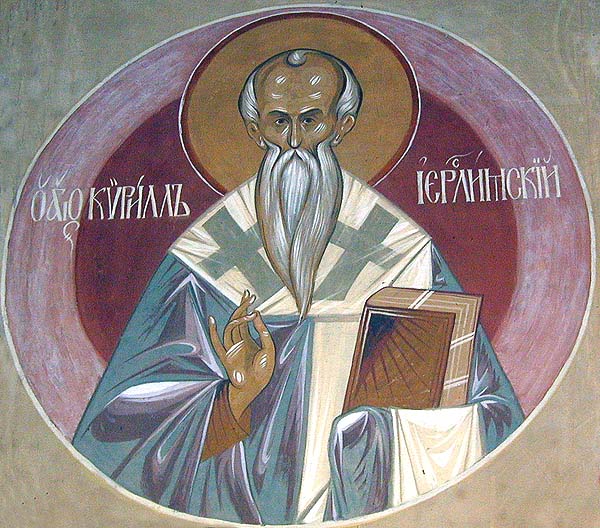
Cyril of Jerusalem (c. 313 – 386 CE) had become bishop of Jerusalem only shortly before this event, succeeding Maximus around 350 or early 351 CE. He would go on to be recognized as a Doctor of the Church, celebrated chiefly for his Catechetical Lectures, a foundational text of early Christian instruction, and would later be exiled three times amid the empire's ongoing doctrinal conflicts. At the time of this letter, however, he was a newly installed bishop writing to affirm his loyalty to a reigning emperor. Sozomen (c. 400 – c. 450 CE), a lawyer and church historian working in Constantinople roughly a century later, wrote one of the two major surviving 5th-century ecclesiastical histories (alongside Socrates Scholasticus) and explicitly names his source for this event as Cyril's own letter — a specific, checkable citation rather than an anonymous inherited legend.
Historical Precedents & Archive Matches
This case sits alongside a cluster of ancient and medieval "sky-cross" reports across this site's Ancient Records archive. The Sigiburg Castle Apparition file documents a structurally similar 776 CE report weighed against a peer-reviewed solar-halo explanation. The Constantine's Vision at the Milvian Bridge file documents an earlier, 312 CE cross-sign account with a comparable political and religious framing, though with a much weaker sourcing chain (a private dream reported by one author, elaborated decades later by a second). What distinguishes the Jerusalem case is the strength of its primary source: a named, first-person, same-year letter is a materially stronger form of evidence than any of this archive's other cross-in-the-sky files can claim.
Historical Background
By 351 CE, the Roman Empire was gripped by two overlapping crises: a renewed civil war, and a decades-long theological dispute over the nature of Christ that had split the church since the Council of Nicaea in 325 CE. Constantius II, one of Constantine the Great's three surviving sons, had become sole ruler of the empire's eastern half and, after his brother Constans's death in 350, found himself contesting the west against the usurper Magnentius — a conflict that would culminate in the enormously bloody Battle of Mursa Major that September. Constantius was also a committed supporter of a moderate Arian theological position, opposed by many bishops who held to the Nicene formula affirming Christ's full divinity. Cyril, newly appointed to lead the church in Jerusalem, wrote to Constantius in the midst of this fraught political and religious moment, reporting the cross apparition as, in his own framing, a divine sign of favor toward the emperor and an affirmation of orthodox Christian belief.
Cyril's letter does double duty: it is simultaneously a report of an extraordinary observed phenomenon and a carefully calibrated piece of political communication from a new bishop to a powerful, theologically opinionated emperor, arriving at a moment when Constantius's own military and political position was genuinely uncertain. Sozomen, writing roughly a century later with the benefit of hindsight and access to Cyril's letter, presents the event more simply as a moment of citywide religious fervor: crowds abandoning "the market-place, or their respective employments" to gather in the church, and "the means of the conversion of many pagans and Jews to Christianity." The Eastern Orthodox and Byzantine Catholic churches commemorate the event annually on May 7 to this day.
Complete Timeline
| Date | Event |
|---|---|
| 325 CE | The First Council of Nicaea condemns Arianism and affirms the Nicene Creed, without ending the underlying theological dispute. |
| 337 CE | Constantine the Great dies; the empire is divided among his three surviving sons, including Constantius II. |
| 350 CE | Cyril becomes bishop of Jerusalem, succeeding Maximus. |
| 350 CE | Constantius's brother Constans is killed by the usurper Magnentius, drawing Constantius into a new civil war for control of the western empire. |
| May 7, 351 CE | Per Cyril's letter, a cross of light appears over Jerusalem "about the third hour of the day," visible for several hours to the whole city. |
| 351 CE | Cyril writes his Epistle to Constantius, reporting the event and affirming his loyalty to the emperor. |
| Sept. 28, 351 CE | Constantius decisively defeats Magnentius at the Battle of Mursa Major, one of the bloodiest battles of the later Roman Empire. |
| 357–378 CE | Cyril is exiled from Jerusalem three times amid continuing doctrinal conflict with pro-Arian bishops. |
| c. 443–450 CE | Sozomen writes his Ecclesiastical History, independently citing Cyril's letter and adding detail about the crowds and pilgrim witnesses. |
| 1890 CE | Chester D. Hartranft's standard English translation of Sozomen's Ecclesiastical History is published in the Nicene and Post-Nicene Fathers series. |
| 1970 CE | Leo P. McCauley and Anthony A. Stephenson publish the standard modern English translation of Cyril's collected works, including the Epistle to Constantius, in the Fathers of the Church series. |
| Present day | The Eastern Orthodox and Byzantine Catholic churches continue to commemorate the apparition annually on May 7. |
The Primary Source Documents
Cyril of Jerusalem, Epistle to Constantius (351 CE)
"On the nones [the 7th] of May, about the third hour, a vast luminous body, in the form of a Cross, appeared in the heavens, just over the holy Golgotha, reaching as far as the holy Mount of Olives, seen not by one or two persons, but clearly and evidently by the whole city. This was not, as may be thought, a momentary transient phenomenon: for it continued several hours visible to our eyes, and brighter than the sun, the light of which would have eclipsed it, had not this been stronger."
Cyril of Jerusalem, Epistle to the Emperor Constantius (Patrologia Graeca 33:1165–1167), English translation as widely reproduced in Eastern Orthodox liturgical commemorations of the event
This is the earliest surviving account: a first-person letter, from the man who says he witnessed the event, describing its precise date, duration, and extent — details a secondhand or invented account would have little reason to specify so exactly.
Sozomen, Ecclesiastical History, Book 4, Chapter 5 (c. 443–450 CE)
"At the time that Cyril administered the church of Jerusalem after Maximus, the sign of the cross appeared in the heavens. It shone brilliantly, not with divergent rays like a comet, but with the concentration of a great deal of light, apparently dense and yet transparent... The emperor was made acquainted with the occurrence, partly by numerous reports concerning it which were then current, and partly by a letter from Cyril the bishop."
Sozomen, Ecclesiastical History 4.5, trans. Chester D. Hartranft, Nicene and Post-Nicene Fathers, Second Series, Vol. 2, as hosted at New Advent
Sozomen's account, written roughly a century after the event, explicitly identifies Cyril's own letter as one of his two sources, alongside general reports "then current" — a rare case in this archive of a later historian naming and apparently having access to the actual near-contemporary primary document.
The Witness Record
Cyril of Jerusalem (as Primary Eyewitness)
Writing in his own voice, in the same year as the event, directly to the emperor. The strongest single witness credential in this site's Ancient Records archive: a named, dated, first-person account rather than an inherited tradition.
Sozomen (as Later Historian, Citing Cyril's Letter Directly)
Writing roughly a century later, Sozomen explicitly names Cyril's letter as a source, and adds independent detail (crowds, pilgrim witnesses, conversions) not present in the surviving text of Cyril's own account.
"The Whole Multitude of the City" and Foreign Pilgrims
Both Cyril and Sozomen claim a broad witness base, including foreign pilgrims who Sozomen says carried word of the event back to their home communities. No individual witness beyond Cyril himself is named in either surviving source.
Confirmed Textual & Archival Holdings
Hosts the widely reproduced English translation of Cyril's letter, citing Patrologia Graeca vol. 33.
PUBLICLY ACCESSIBLE, WITH SOURCE CITATIONThe full text of Sozomen's account, including chapter 5's description of the cross and its aftermath.
PUBLIC DOMAIN (freely accessible)The continuing liturgical record of the event, observed annually across the Eastern Orthodox and Byzantine Catholic churches.
PUBLICLY ACCESSIBLE INSTITUTIONAL SOURCESearch Primary & Institutional Archives Directly
Evidence Assessment
Supporting a Genuine, Precisely Observed Sky Event
- The primary source is a first-person, same-year, named-author letter — the strongest form of eyewitness testimony available for any case in this site's ancient archive
- A later, independent historian (Sozomen) explicitly cites Cyril's own letter as a direct source, rather than relying solely on inherited oral tradition
- Both sources specify precise, checkable details (date, time of day, duration, extent) consistent with a real, sustained sky phenomenon rather than an invented or garbled story
Supporting a Natural Atmospheric-Optical Explanation
- The described conditions — mid-morning, multi-hour duration, extreme brightness "eclipsing" the sun — closely match a solar halo or sun-pillar display, a well-documented, still-observed atmospheric phenomenon
- Cyril's letter has an explicit, acknowledged political and theological purpose: affirming loyalty to Constantius and interpreting the sign as vindication of Nicene orthodoxy, during a period of civil war and doctrinal conflict
- No accompanying inscription, sound, or interactive behavior is claimed by either source — consistent with a passive, stationary optical phenomenon rather than any controlled or directed object
Comparative Analysis
The Sigiburg Castle Apparition (776 CE)
This site's Sigiburg Castle Apparition file documents a peer-reviewed astronomical argument that a similarly described "shields... red in colour and flaming" report is best explained as a solar halo display — directly comparable to the solar-halo candidate proposed here for the much larger, longer-duration Jerusalem cross.
Constantine's Vision at the Milvian Bridge (312 CE)
This site's Constantine's Vision at the Milvian Bridge file documents an earlier cross-in-the-sky account with a similar political and religious framing, but a much weaker sourcing chain: a private dream reported by one author (Lactantius), elaborated into a public daylight vision only decades later by a second (Eusebius), with the elaboration entirely absent from that same author's own earlier work. The Jerusalem case inverts this pattern — its strongest, most detailed account is also its earliest.
Material Analysis: The Manuscript Evidence
There is no physical trace evidence of any kind associated with the reported phenomenon itself. What exists is the manuscript and editorial history of two texts. Cyril's Epistle to Constantius survives through the Greek manuscript tradition collected in Migne's Patrologia Graeca (volume 33, columns 1165–1178); the standard modern critical English translation appears in Leo P. McCauley and Anthony A. Stephenson's 1970 Fathers of the Church edition of Cyril's collected works. Sozomen's Ecclesiastical History survives through a broader Byzantine manuscript tradition; the standard English translation is Chester D. Hartranft's 1890 version for the Nicene and Post-Nicene Fathers series, still freely available online. This file confirmed the wording of the widely circulated English translation of Cyril's letter against its stated Patrologia Graeca citation and cross-referenced Sozomen's corroborating account directly at its NPNF source.
The Paleocontact / Ancient-UFO Interpretation
The Jerusalem cross appears occasionally in ancient-astronaut and fringe UFO literature grouped alongside other "cross" or "sign in the sky" reports as evidence of a recurring cross-cultural sky phenomenon, though like the Constantine and Sigiburg cases, it is far more commonly discussed in Christian devotional and liturgical literature than in dedicated ufological catalogs. What even Cyril's own account describes is narrower than popular retellings sometimes suggest: a stationary, luminous, cross-shaped feature in the sky, with no claimed structure, occupants, sound, or directed movement. Reading this as evidence of a physical craft requires discarding both ancient sources' explicit religious framing and their detailed, naturalistic-sounding description of a static light phenomenon.
The Mainstream Historical Interpretation
The Atmospheric-Optical Case
The leading scientific candidate is a solar halo or sun-pillar display: sunlight refracting and reflecting through hexagonal ice crystals in high cirrus cloud can produce a 22-degree ring around the sun, a vertical light pillar, and a horizontal parhelic arc, which together can combine into a genuine cross-shaped feature of exactly the kind described — bright, stationary, and visible for hours. Researchers studying comparable historical "cross in the sky" reports elsewhere in the late antique and medieval record have repeatedly proposed this mechanism, and the specific details Cyril records (mid-morning timing, multi-hour duration, brightness exceeding the sun) fit the profile closely.
The Political-Theological Case
Independent of the phenomenon's physical cause, historians studying Cyril's letter have long noted its clear political function: a newly appointed bishop, writing during a civil war and a live theological controversy, framing a genuinely observed sky event as divine vindication of both the emperor's cause and his own church's doctrinal position. This reading does not require that Cyril invented the observation — only that he, like observers across many other cases in this archive, interpreted a real and striking natural phenomenon through the specific religious and political lens available to him.
Five Observables Assessment
The Five Observables framework, developed decades later by former AATIP director Luis Elizondo to classify modern UAP performance characteristics that exceed known technology, is included here for structural consistency with the rest of OverClassified's case files, but does not meaningfully apply to a text-only ancient source with no measured flight data.
Assessment: As with this site's other pre-modern files, the Five Observables framework is the wrong instrument here. Its inclusion should not be read as suggesting genuine exotic-performance evidence exists for this case.
Conventional Explanation Candidates
Two candidates are assessed below.
1. Solar Halo / Sun-Pillar Display (Atmospheric-Optical)
The leading explanation: a combination of a 22-degree solar halo, vertical sun pillar, and horizontal parhelic arc, produced by ice-crystal refraction in high cloud, can genuinely form a large, bright, stationary, cross-shaped feature in the sky, visible for hours — matching the core physical details in both surviving accounts closely. This is the same mechanism independently proposed for the structurally similar Sigiburg case elsewhere in this archive.
Plausibility Rating: HIGHLY PLAUSIBLE (best fits the specific physical description in both sources)
2. Genuine Anomalous / Paleocontact Phenomenon
Included for completeness, per this site's standard framework. No positive evidence, and no serious mainstream scholarship, supports a literal non-natural aerial phenomenon over the atmospheric-optical candidate; both ancient sources describe a static, silent, non-interactive light display consistent with known optical effects.
Plausibility Rating: SPECULATIVE / UNVERIFIABLE
Why "Disputed"
This case receives a DISPUTED classification rather than VERIFIED because, despite having this archive's strongest single primary source — a named, first-person, same-year eyewitness letter, independently corroborated by a later historian who cites that letter directly — the account's interpretation is inseparable from an explicit theological and political agenda, and no independent, non-religious record of the event survives to corroborate its scale or duration on strictly naturalistic terms. The underlying observation (something bright and cross-shaped, seen over Jerusalem for hours on a specific May morning) is well-attested and plausible on its own physical merits; the framing of that observation as a divine sign confirming Nicene orthodoxy and imperial favor is a interpretive layer this file does not treat as established fact. DISPUTED reflects that combination: unusually strong witness testimony to an event, alongside an unresolved question about what, precisely, that testimony is evidence of.
Related Entries
Further Reading — Recommended Literature
Cyril of Jerusalem: Bishop and City
A scholarly study of Cyril's episcopate, including his use of Jerusalem's holy sites and the Cross as religious and political symbols.
The Works of Saint Cyril of Jerusalem, Volume 2
The standard modern scholarly translation of Cyril's collected works, including the Epistle to Constantius examined in this file.
Ecclesiastical History
The standard English translation of Sozomen's history, including Book 4's independent account of the Jerusalem cross apparition.
The Sons of Constantine, AD 337–361
A modern scholarly collection on the reign of Constantius II and his brothers, covering the political context of 351 CE in detail.
Athanasius and Constantius
A study of the Arian theological controversy and its politics under Constantius II, the direct backdrop to Cyril's letter.
DISCLOSURE: Some links above are affiliate links. If you purchase through them, OverClassified receives a small commission at no additional cost to you. This helps support independent research.
Essential Viewing
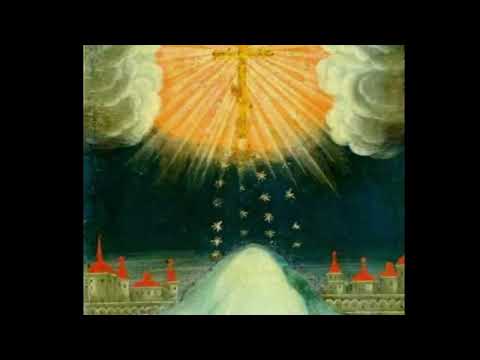
Cross Seen Over Jerusalem in 351 AD
Pilgrim — a reading and discussion of Sozomen's account of the event and its aftermath.
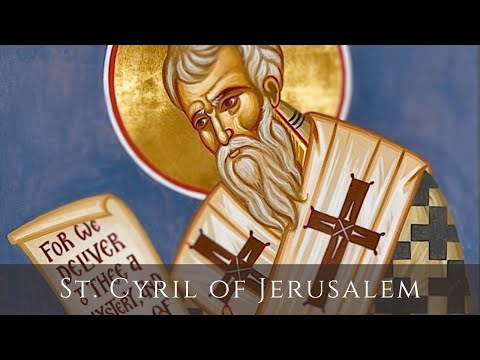
Who Was Saint Cyril of Jerusalem?
Christian Channel — a biographical overview of Cyril's life, episcopate, and legacy.
Sources
- Cyril of Jerusalem. "Epistle to the Emperor Constantius" (Patrologia Graeca 33:1165–1178). English translation as reproduced at John Sanidopoulos, "Orthodox Christianity Then and Now." johnsanidopoulos.com
- Sozomen. "Ecclesiastical History," Book 4, Chapter 5 (NPNF translation, trans. Chester D. Hartranft). New Advent. newadvent.org
- "Commemoration of the Apparition of the Sign of the Precious Cross Over Jerusalem, in 351 AD." Orthodox Church in America. oca.org
- "Commemoration of the Precious Cross that appeared in the sky over Jerusalem in 351 A.D." Greek Orthodox Archdiocese of America. goarch.org
- "Cyril of Jerusalem." Wikipedia. en.wikipedia.org
- "Feast of the Cross." Wikipedia. en.wikipedia.org
- "22° halo." Wikipedia. en.wikipedia.org
- "Constantius II." Wikipedia. en.wikipedia.org
- "Battle of Mursa Major." Wikipedia. en.wikipedia.org
- Drijvers, Jan Willem. Cyril of Jerusalem: Bishop and City. Brill, Supplements to Vigiliae Christianae, 2004.
- McCauley, Leo P. & Stephenson, Anthony A. (trans.). The Works of Saint Cyril of Jerusalem, Volume 2. Catholic University of America Press, 1970.
- Baker-Brian, Nicholas & Tougher, Shaun (eds.). The Sons of Constantine, AD 337–361. Palgrave Macmillan, 2020.
- Barnes, Timothy D. Athanasius and Constantius: Theology and Politics in the Constantinian Empire. Harvard University Press, 1993.
- "File: Saint Cyril of Jerusalem.jpg." Wikimedia Commons (public domain, 14th-century fresco). commons.wikimedia.org
- "Cross seen over Jerusalem in 351 AD. Jews convert to Christianity - Sozomen, History of the Church." Pilgrim, YouTube. youtube.com
- "Who Was Saint Cyril of Jerusalem? Story of St. Cyril of Jerusalem." Stories of Saints, Christian Channel, YouTube. youtube.com
See something inaccurate? Have additional information or sources?
Suggest an Edit →Last Updated: August 2026