
Constantine's Vision at the Milvian Bridge
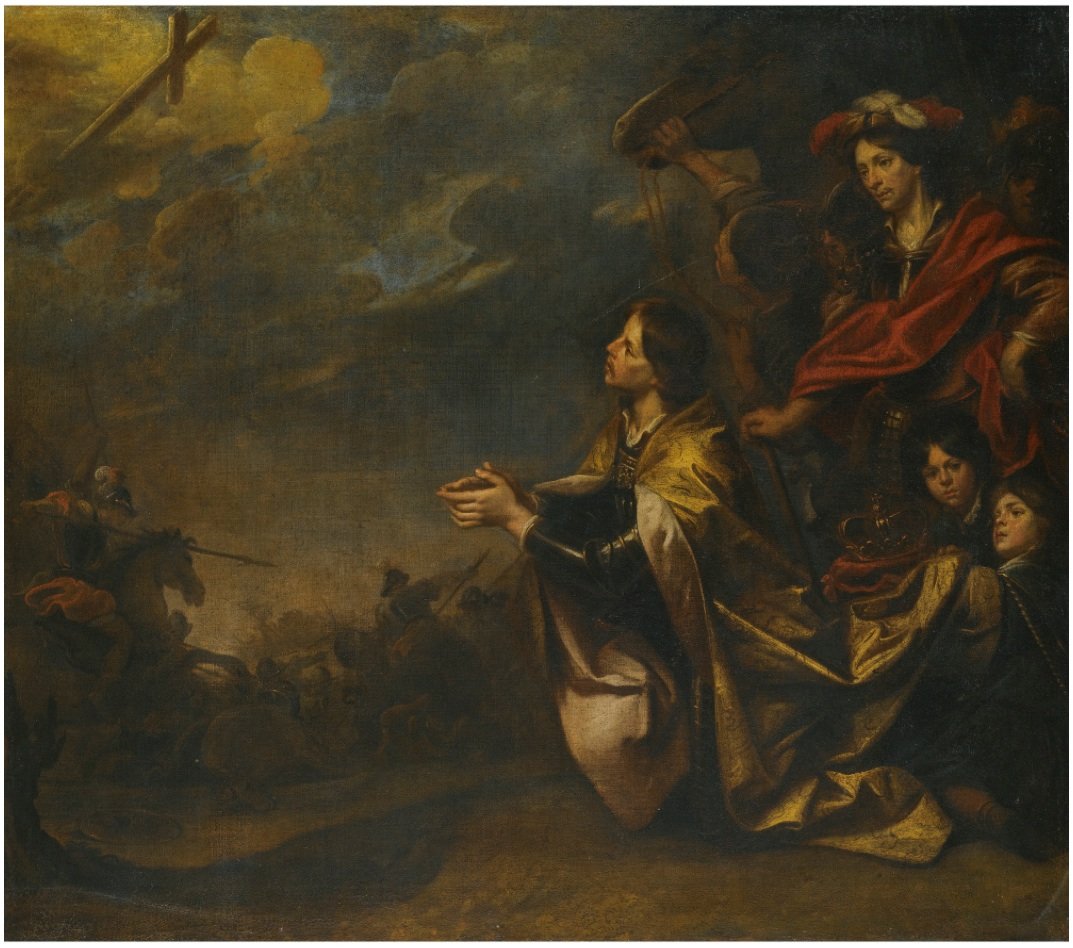
On the eve of his decisive battle for control of Rome in October 312 CE, Constantine reportedly received a sign from the Christian God promising him victory. But the two surviving ancient sources for what actually happened do not agree with each other. Lactantius, writing within a year or two of the battle, describes only a private dream, in which Constantine was told to mark his soldiers' shields with a Christian symbol. Eusebius of Caesarea, writing decades later in a biography published only after Constantine's death, adds a far more dramatic detail: a cross of light seen in the daytime sky by the entire army, followed that night by the same dream Lactantius describes. Eusebius's own earlier history of the church, written while Constantine was still alive, mentions no sky-vision at all. This file traces both accounts to their actual Latin and Greek text and lays out exactly what the discrepancy between them does and does not prove.
Theoretical Alignment
This file's central fact is not a claim about the sky; it is a claim about two ancient authors. The earlier and closer-to-the-event source, Lactantius, describes a private dream with no public sky-sign at all. The later source, Eusebius, adds a spectacular daylight vision witnessed by an entire army — and does so in a work explicitly designed to present Constantine as a Christian hero to a Christian audience after his death, decades after the events it describes. Eusebius's own earlier, more historically cautious Ecclesiastical History, written while Constantine still reigned, describes the same battle without any sky-vision whatsoever. This site's treatment follows the dominant view among modern historians of late antiquity: that the discrepancy is best explained by the genre and purpose of Eusebius's later biography, not by two independent eyewitness traditions describing the same real event.
Sensor & Instrumentation Detection Profile
As with every case in this site's Ancient Records series, there is no instrumentation record. Lactantius's account rests entirely on a claimed private dream, which by definition has no external witness beyond Constantine himself. Eusebius's later account claims a much broader witness base — "the whole company of soldiers" who were marching with the emperor "and witnessed the miracle" — but names no individual soldier, cites no independent corroborating source, and was written, by Eusebius's own account, based on what Constantine told him personally, "confirmed his statement with an oath," many years after the fact.
Environmental & Geospatial Context
The Milvian Bridge (Pons Milvius) crosses the Tiber River on the ancient Via Flaminia, roughly 3 km north of central Rome. Eusebius specifically states the vision occurred "about noon, when the day was already beginning to decline" — a detail some historians have connected to a known atmospheric-optical phenomenon: a solar halo, in which sunlight refracting through high cirrus-cloud ice crystals can produce a bright ring or cross-like pattern around the sun, an effect that has been independently proposed to explain several other "cross" and "shield" sky-sign reports in this site's Ancient Records archive (see the Sigiburg Castle Apparition file for a peer-reviewed astronomical treatment of a structurally similar case). No specific weather record survives for October 27–28, 312 CE.
Observer Credibility & Occupational Profile
Lucius Caecilius Firmianus Lactantius (c. 250 – c. 325 CE) was a Christian rhetorician who had served at the imperial court of Diocletian before the Great Persecution, later became tutor to Constantine's own son Crispus, and wrote De Mortibus Persecutorum ("On the Deaths of the Persecutors") within a year or two of the battle — making him the closer and, on pure chronological grounds, more reliable of the two sources. Eusebius of Caesarea (c. 260/265 – 339 CE), bishop of Caesarea Maritima and the era's leading Christian historian, wrote two separate accounts of Constantine that scholars have long compared directly: his Ecclesiastical History, composed and revised across Constantine's own lifetime, and his Life of Constantine (Vita Constantini), written after the emperor's death in 337 CE and never fully completed or formally published in Eusebius's own lifetime. Modern historians, including Timothy D. Barnes in his landmark study Constantine and Eusebius, have extensively documented the Vita's departures from strict historical method, treating it as closer to a panegyric (a formal work of praise) than to neutral history — a genre in which selective, embellished, and theologically purposeful storytelling was an accepted and expected convention, not a breach of ancient standards.
Historical Precedents & Archive Matches
Sky-crosses and related luminous portents recur across this site's Ancient Records archive under a range of religious and cultural framings. This site's Sigiburg Castle Apparition file documents "two shields, red in colour and flaming" over a besieged Carolingian church in 776 CE, weighed against a real peer-reviewed solar-halo explanation. This site's Josephus file documents chariots and armies seen among the clouds before Jerusalem's fall in 66 CE. What distinguishes the Constantine case from both is the unusually well-documented internal contradiction between its own two primary sources — a rarer and more directly falsifiable kind of evidence than a single ambiguous chronicle entry.
Historical Background
By 312 CE, the Roman Empire's Tetrarchic power-sharing system, established by Diocletian a generation earlier, had collapsed into open civil war among rival claimants to the imperial throne. Constantine, who had been proclaimed emperor by his troops in Britain in 306 CE following his father's death, marched into Italy in 312 CE against Maxentius, who controlled Rome and the surrounding region. After a series of victories in northern Italy, Constantine advanced on the capital itself. Maxentius, despite holding a strongly fortified city, chose to meet Constantine's smaller army in open battle north of Rome, near the Milvian Bridge, on October 28, 312 CE — a decision ancient and modern historians alike have generally judged a serious tactical error. Maxentius's forces were routed, and Maxentius himself drowned in the Tiber while retreating across a hastily improvised pontoon bridge that collapsed under the weight of fleeing soldiers. Constantine entered Rome the following day as its unchallenged master, beginning a reign that would, within little more than a decade, transform Christianity from a persecuted minority faith into the empire's favored religion.
The religious meaning Constantine and his court attached to that victory developed, on the surviving evidence, in stages. Lactantius's account, written closest to the event, is comparatively restrained: Constantine is "directed in a dream" to mark a Christian symbol — most likely the Chi-Rho monogram, the superimposed first two Greek letters of "Christ" — on his soldiers' shields before the battle. There is no public sky-vision in this version, no army-wide witness, and no claim that Constantine personally saw anything in the heavens; the sign comes to him privately, in sleep. Eusebius's later, far more elaborate account, composed for a biography that frames Constantine's entire life as a providential, God-guided ascent to Christian rulership, adds the now-famous public daylight vision — witnessed, per Eusebius, "by the whole army" as they marched — followed that same night by essentially the same dream Lactantius describes, now explicitly identified with the appearance of "the Christ of God" himself. Eusebius states plainly that this fuller account came directly from Constantine, who "swore" to its truth in Eusebius's own presence, years after the fact.
Complete Timeline
| Date | Event |
|---|---|
| c. 272 CE | Constantine is born at Naissus, in the Roman province of Moesia. |
| 306 CE | Constantine is proclaimed emperor by his troops in Britain following his father Constantius Chlorus's death, beginning years of civil war among rival Tetrarchic claimants. |
| 312 CE (spring) | Constantine invades Italy, winning a series of victories against forces loyal to Maxentius. |
| Oct. 27, 312 CE | Per Lactantius, Constantine is directed in a dream, the night before the battle, to mark the "heavenly sign of God" on his soldiers' shields. |
| Oct. 28, 312 CE | Maxentius leads his forces out of Rome to meet Constantine near the Milvian Bridge; his army is routed and Maxentius drowns in the Tiber while retreating. |
| Oct. 29, 312 CE | Constantine enters Rome as its unchallenged master. |
| c. 313–315 CE | Lactantius writes De Mortibus Persecutorum, including the earliest surviving account of Constantine's pre-battle dream — with no public sky-vision. |
| By 325 CE | Eusebius of Caesarea's Ecclesiastical History, composed and revised across Constantine's reign, describes the Milvian Bridge campaign without mentioning any sky-vision at all. |
| 337 CE | Constantine dies near Nicomedia. |
| c. 337–339 CE | Eusebius writes the Vita Constantini (Life of Constantine), left incomplete at his own death in 339 CE and likely published posthumously by others; it adds the daylight cross witnessed by "the whole army," which Eusebius attributes directly to Constantine's own sworn personal testimony. |
| 1889 | The Ante-Nicene Fathers (ANF) series publishes its standard English translation of Lactantius's De Mortibus Persecutorum. |
| 1890 | The Nicene and Post-Nicene Fathers (NPNF) series publishes its standard English translation of Eusebius's Vita Constantini, translated by Ernest Cushing Richardson. |
| 1984 | J.L. Creed publishes the standard modern critical Latin edition and English translation of De Mortibus Persecutorum for Oxford's Oxford Early Christian Texts series. |
| 1999 | Averil Cameron and Stuart Hall publish the standard modern critical English translation of the Vita Constantini for Oxford's Clarendon Ancient History Series. |
| Present day | The discrepancy between Lactantius's and Eusebius's accounts remains a standard, actively discussed case study in courses and scholarship on early Christian historiography and hagiography. |
The Primary Source Documents
Lactantius, De Mortibus Persecutorum, Chapter 44 (c. 313–315 CE)
"Commonitus est in quiete Constantinus, ut caeleste signum dei notaret in scutis atque ita proelium committeret." (Latin, per J.L. Creed's Oxford critical edition)
"Constantine was directed in a dream to cause the heavenly sign of God to be delineated on the shields of his soldiers, and so to proceed to battle. He did as he had been commanded, and he marked on their shields the letter X, with a perpendicular line drawn through it and turned round thus at the top, being the cipher of Christ."
Lactantius, De Mortibus Persecutorum, ch. 44 (ANF translation), as hosted at EarlyChurchTexts.com; Latin per J.L. Creed (ed. & trans.), Oxford Early Christian Texts, 1984
This is the entire surviving account in the earlier source: a private dream-instruction, a symbol marked on shields, and no claim of any public or daytime sky phenomenon at all.
Eusebius, Vita Constantini, Book 1, Chapters 28–29 (c. 337–339 CE)
"He said that about noon, when the day was already beginning to decline, he saw with his own eyes the trophy of a cross of light in the heavens, above the sun, and bearing the inscription, CONQUER BY THIS. At this sight he himself was struck with amazement, and his whole army also, which followed him on this expedition, and witnessed the miracle."
Eusebius, Vita Constantini, Book 1, ch. 28 (NPNF translation by Ernest Cushing Richardson), as hosted at New Advent
"While he continued to ponder and reason on its meaning, night suddenly came on; then in his sleep the Christ of God appeared to him with the same sign which he had seen in the heavens, and commanded him to make a likeness of that sign which he had seen in the heavens, and to use it as a safeguard in all engagements with his enemies."
Eusebius, Vita Constantini, Book 1, ch. 29 (NPNF translation), as hosted at New Advent
Eusebius explicitly frames this account as coming from Constantine's own mouth, stating in the surrounding text that he "should hardly have ventured to relate" the story "had it been related by any other person," but that "the victorious emperor himself" told it to Eusebius "long after," and "confirmed his statement with an oath" — an unusually direct claim of sourcing for an ancient text, and one this file treats as a genuine, checkable feature of the source rather than dismissing it outright.
The Witness Record
Lactantius (as Near-Contemporary Compiler)
Writing within a year or two of the battle, Lactantius reports the private dream without claiming personal presence at the event; his source is not stated, though his position at court gave him plausible access to Constantine's own circle.
Eusebius of Caesarea (as Later Biographer, Citing Constantine Directly)
Writing decades after the event, in an incomplete, posthumously circulated biography, Eusebius explicitly attributes the fuller, more dramatic account to Constantine's own sworn personal testimony, given to Eusebius directly, "long after" the battle itself.
"The Whole Army" (Eusebius Only)
Eusebius's account claims a broad witness base for the daylight vision, but names no individual soldier, and no independent corroborating source for this collective claim survives from any other 4th-century writer.
Confirmed Textual & Archival Holdings
The earlier, closer-to-the-event source, describing only a private dream with no public sky-vision.
PUBLIC DOMAIN (freely accessible)The full text of Eusebius's biography, including chapters 28–29's daylight cross-vision and follow-up dream.
PUBLIC DOMAIN (freely accessible)A New Testament scholar's accessible discussion of the discrepancy between the Lactantius and Eusebius accounts.
PUBLICLY ACCESSIBLE SCHOLARLY SOURCESearch Primary & Institutional Archives Directly
Evidence Assessment
Supporting a Genuine Sky-Sign Event
- Eusebius explicitly and unusually claims a direct, sworn source (Constantine himself) for his fuller account, rather than an anonymous or secondhand report
- Both surviving sources, despite their differences, agree that Constantine adopted a Christian military symbol before this specific battle, a fact independently supported by later coinage and monuments
- A midday solar-halo display is a real, physically documented phenomenon capable of producing a bright, cross-like feature near the sun, giving a genuine underlying stimulus a real possibility
Supporting a Later Hagiographic Elaboration
- The earlier, closer-to-the-event source (Lactantius) describes no public sky-vision at all — only a private dream
- Eusebius's own earlier work, the Ecclesiastical History, written and revised across Constantine's lifetime, describes the same campaign with no mention of any sky-sign
- The daylight vision appears only in a work modern historians (notably Timothy D. Barnes) classify as closer to panegyric than neutral history, written and likely finished by others after Constantine's death
- No independent 4th-century source outside the Eusebian tradition corroborates a public, army-wide sky-vision
Comparative Analysis
The Sigiburg Castle Apparition (776 CE)
This site's Sigiburg Castle Apparition file documents a peer-reviewed astronomical argument that a structurally similar "shields... red in colour and flaming" report is best explained as a solar halo display — the same class of atmospheric-optical phenomenon proposed here as a candidate underlying stimulus for Eusebius's "cross of light... above the sun."
Two-Source Discrepancies Elsewhere in This Archive
This site's Josephus's Sky-Armies before the Fall of Jerusalem file documents a comparable case of two independent ancient authors (Josephus and Tacitus) describing a similar sky-sign, but reaches a different conclusion about the relationship between the two texts: there, the concern is whether Tacitus drew directly on Josephus's already-published account; here, the concern is the opposite problem — that the LATER of two accounts by the SAME author (Eusebius) adds dramatic detail absent from both his own earlier work and from an independent contemporary source (Lactantius), a pattern more directly diagnostic of literary embellishment over time than of independent corroboration.
Material Analysis: The Manuscript Evidence
There is no physical trace evidence of any kind associated with the reported sky phenomenon itself. What exists is the manuscript and editorial history of both texts. Lactantius's De Mortibus Persecutorum survives through a single medieval manuscript (Codex Colbertinus, now in Paris), making its textual transmission narrower than most classical texts this site examines; the standard modern critical edition is J.L. Creed's 1984 Oxford Early Christian Texts volume. Eusebius's Vita Constantini survives through a broader Byzantine manuscript tradition; the standard modern critical translation is Averil Cameron and Stuart Hall's 1999 Oxford Clarendon Ancient History Series edition. This file confirmed the wording of both key passages against their standard English translations (ANF for Lactantius; NPNF, trans. Richardson, for Eusebius), both freely hosted online, and cross-referenced the scholarly consensus on their relationship via Timothy D. Barnes's Constantine and Eusebius, the standard modern academic treatment of exactly this discrepancy.
The Paleocontact / Ancient-UFO Interpretation
Constantine's vision appears occasionally in ancient-astronaut and fringe UFO literature, typically grouped with other "cross" or "sign in the sky" reports as evidence of a recurring cross-cultural phenomenon, though it is more commonly discussed in Christian devotional and mainstream historical literature than in dedicated ufological catalogs, since its overwhelming reception has been as a religious conversion narrative rather than an anomaly report. It is worth being precise about what even Eusebius's fuller account does and does not claim: no controlled flight, no landing, no occupants, and no device-like structure — only a stationary cross-shaped light near the sun, followed by a dream in which "the Christ of God" appears and speaks. Reading this as evidence of a physical craft requires discarding the passage's own explicit religious framing entirely, in favor of a modern reinterpretation neither ancient source supports.
The Mainstream Historical Interpretation
The Historiographical Case: A Story That Grew Over Time
The dominant scholarly view, represented at length in Timothy D. Barnes's Constantine and Eusebius and echoed by numerous other historians of late antiquity, treats the discrepancy between Lactantius and Eusebius as the file's central, most diagnostic fact. A story that begins as a private dream in the earliest source, is absent entirely from the same later author's own earlier historical work, and then appears in its most dramatic form only in a posthumously assembled biography explicitly designed to present its subject as a divinely favored Christian hero, is a textbook pattern of hagiographic elaboration — not proof that nothing happened, but strong evidence that whatever did happen grew considerably in the retelling across roughly a quarter-century.
The Atmospheric-Optical Candidate
Independent of the historiographical question, some historians and science writers have proposed that a real solar halo display — the same class of phenomenon discussed in this site's Sigiburg file — could underlie even Eusebius's later, more elaborate account, given his specific detail that the cross appeared "above the sun" near midday, conditions consistent with (though not proof of) a halo or sun-dog display. This candidate is speculative but physically plausible, and is not mutually exclusive with the hagiographic-elaboration reading: a genuine ambiguous atmospheric event could easily have supplied the raw material a later, theologically motivated retelling then shaped into its most famous form.
Five Observables Assessment
The Five Observables framework, developed decades later by former AATIP director Luis Elizondo to classify modern UAP performance characteristics that exceed known technology, is included here for structural consistency with the rest of OverClassified's case files, but does not meaningfully apply to a text-only ancient source with no measured flight data.
Assessment: As with this site's other pre-modern files, the Five Observables framework is the wrong instrument here. Its inclusion should not be read as suggesting genuine exotic-performance evidence exists for this case.
Conventional Explanation Candidates
Three candidates are assessed below.
1. Hagiographic Elaboration Over Time
The leading explanation, and the one best supported by direct comparison of the surviving texts: a private dream, reported by the closest contemporary source, was progressively elaborated into a dramatic public daylight vision across roughly twenty-five years, culminating in a posthumous biography written in an explicitly praise-oriented genre. This candidate does not require that Constantine invented the story from nothing, only that its most famous, most dramatic element is the latest addition, not the earliest.
Plausibility Rating: HIGHLY PLAUSIBLE (best explains the direct discrepancy between the two named sources)
2. Solar Halo Display (Atmospheric-Optical)
A real, still-documented phenomenon in which sunlight refracting through high cirrus-cloud ice crystals produces a bright ring, arc, or cross-like pattern around the sun — a strong candidate for the specific "above the sun" detail in Eusebius's account, and one independently proposed for structurally similar cases elsewhere in this site's archive. This candidate is not mutually exclusive with the hagiographic-elaboration reading.
Plausibility Rating: PLAUSIBLE (as a possible genuine stimulus underlying the later account)
3. Genuine Anomalous / Paleocontact Phenomenon
Included for completeness, per this site's standard framework. No positive evidence, and no serious mainstream scholarship, supports a literal non-natural aerial phenomenon over the candidates above; the earlier and more reliable source describes no public sky-event at all.
Plausibility Rating: SPECULATIVE / UNVERIFIABLE
Why "Disputed"
This case receives a DISPUTED classification because both of its primary sources are unquestionably genuine, securely attributed ancient texts — this is not a fabricated case or a modern misattribution — and yet they directly disagree on the single most important fact: whether anything was seen in the sky at all, or only in a dream. Lactantius, writing closest to the event, describes only a private dream. Eusebius, writing decades later in an incomplete, posthumously circulated biography explicitly designed to present Constantine as a providentially favored Christian ruler, adds the dramatic public daylight vision that has become the story's most famous element — and his own earlier, more historically cautious work, written while Constantine was alive, mentions no sky-vision whatsoever. The weight of modern scholarly opinion, represented by Timothy D. Barnes's standard academic study of exactly this question, favors reading the discrepancy as evidence of hagiographic growth over time rather than independent corroboration. DISPUTED reflects that both texts are real and the underlying historical event (Constantine's victory and his adoption of a Christian military symbol) is not in question, while the specific, much-repeated "cross in the sky" detail rests on the weaker, later, and more genre-compromised of the two sources.
Related Entries
Further Reading — Recommended Literature
Constantine and Eusebius
The standard academic study of Eusebius's reliability and the discrepancies between his works, including the vision accounts examined in this file.
Constantine the Emperor
A comprehensive modern biography situating the Milvian Bridge campaign and its aftermath within Constantine's full career.
Life of Constantine
The standard modern scholarly translation of the primary text containing the daylight-vision account, with extensive critical commentary.
De Mortibus Persecutorum
The standard modern critical Latin/English edition of the earlier, closer-to-the-event source examined in this file.
Essays in Ancient and Modern Historiography
A landmark collection on ancient historiographical method, directly relevant to evaluating Eusebius's practice as a Christian historian.
DISCLOSURE: Some links above are affiliate links. If you purchase through them, OverClassified receives a small commission at no additional cost to you. This helps support independent research.
Essential Viewing
Why Constantine REALLY Converted to Christianity
Tribunate — an overview of the historical and political context surrounding Constantine's reported vision and conversion.
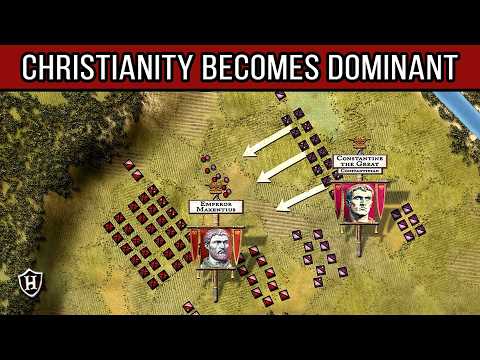
Battle of the Milvian Bridge, 312: Constantine's Triumph
HistoryMarche — a narrative account of the campaign and battle this file's vision accounts are set against.
Sources
- Lactantius. "De Mortibus Persecutorum," ch. 44 (ANF translation). EarlyChurchTexts.com. earlychurchtexts.com
- Eusebius of Caesarea. "Vita Constantini," Book 1, ch. 26–29 (NPNF translation, trans. Ernest Cushing Richardson). New Advent. newadvent.org
- Ehrman, Bart. "Constantine's Vision(s): What Did He Really See and When?" The Bart Ehrman Blog. ehrmanblog.org
- "The Vision of the Cross." Wikipedia. en.wikipedia.org
- "Battle of the Milvian Bridge." Wikipedia. en.wikipedia.org
- "De mortibus persecutorum." Wikipedia. en.wikipedia.org
- "Constantine the Great." Wikipedia. en.wikipedia.org
- "Lactantius." Wikipedia. en.wikipedia.org
- Barnes, Timothy D. Constantine and Eusebius. Harvard University Press.
- Potter, David. Constantine the Emperor. Oxford University Press.
- Cameron, Averil & Hall, Stuart (trans.). Eusebius: Life of Constantine. Clarendon Ancient History Series, Oxford University Press, 1999.
- Creed, J.L. (ed. & trans.). Lactantius: De Mortibus Persecutorum. Oxford Early Christian Texts, 1984.
- Momigliano, Arnaldo. Essays in Ancient and Modern Historiography. University of Chicago Press.
- "File: Theodor Boeyermans - The Emperor Constantine's vision of the Cross before the battle of the Milvian Bridge.jpg." Wikimedia Commons (public domain). commons.wikimedia.org
- "Why Constantine REALLY Converted to Christianity." Tribunate, YouTube. youtube.com
- "When Christianity became dominant - Battle of the Milvian Bridge, 312 - Constantine's Triumph." HistoryMarche, YouTube. youtube.com
See something inaccurate? Have additional information or sources?
Suggest an Edit →Last Updated: August 2026