
You Can't Tell the People
The Definitive Account of the Rendlesham Forest UFO Mystery
Core Thesis
You Can't Tell the People: The Definitive Account of the Rendlesham Forest UFO Mystery is the earlier and, in investigative-journalism terms, more solitary of this site's two Rendlesham Forest book breakdowns. Where this site's other title, Encounter in Rendlesham Forest (2014), pairs a former Ministry of Defence UFO-desk officer with two of the case's own USAF witnesses writing from a substantially declassified documentary record, Georgina Bruni worked the case alone, as an outside investigative journalist, publishing fourteen years earlier in 2000 — before the Ministry of Defence's 2008–2013 mass release of some 60,000 pages of UFO files gave later researchers, including Nick Pope himself, far easier access to the same material Bruni had to obtain case by case. Over several years she built her own network of Ministry of Defence, Suffolk Constabulary and U.S. military sources, reportedly interviewing more than 100 people connected to the case, and secured the practical help of Admiral of the Fleet Lord Hill-Norton, a former UK Chief of the Defence Staff who both supplied her with documents and later used material from her book to press the government directly in the House of Lords. The book's title comes not from a threat made to a witness but from an anecdote Bruni herself recounts: Margaret Thatcher's reported reply, at a 1997 charity function, when asked directly about UFOs and alien technology — "You must get your facts right" and "you can't tell the people."
About the Author
Unlike this site's other Rendlesham author, a government UFO-desk veteran, or the two USAF security policemen who co-wrote Left at East Gate, Georgina Bruni came to the case as neither a witness nor an official — she was a working investigative journalist with an unusually varied earlier career, and You Can't Tell the People remains the only book she published.
Bruni was born Linda Naylor on January 12, 1947, in Sheffield, Yorkshire, and by the time she began investigating Rendlesham had already worked as a dancer, a fashion designer and a nightclub manager, before training as a private investigator and moving into investigative journalism during the 1980s, where she specialized in reporting on cults and the paranormal. Her career outside journalism was equally varied: she ran a celebrity events business, founded and edited the online magazine Hot Gossip, worked later as a public relations consultant, and for a time operated a private London club. She lived at various points in Jersey, Italy, Hong Kong and the United States before settling permanently in London in 1992 — a biography this site presents plainly rather than smoothing into a more conventional researcher's résumé, in keeping with editorial policy to state an author's background honestly.
What made Bruni's Rendlesham investigation distinctive was less any formal credential than the access she built over roughly a decade of independent work: Ministry of Defence contacts, Suffolk Constabulary sources — a letter to Bruni from Inspector Mike Topliss of Suffolk Constabulary is reproduced directly in the book — and current and former U.S. military personnel connected to RAF Bentwaters/Woodbridge. She has been credited with interviewing well over 100 people in the course of the research, and this site's own Rendlesham Forest Incident case file cites her original interviews with former RAF Watton radar personnel, conducted independently alongside Pope's own, as part of what corroborates the case's disputed Eastern Radar tracking claim.
The book's hardback launch was held at the Ministry of Defence itself, with Nick Pope — then still a serving MoD civil servant, four years before he left the department in 2006, and the author who fourteen years later would co-write this site's other Rendlesham title — contributing the book's foreword. Bruni continued working the case after publication, collaborating with Lord Hill-Norton on further parliamentary questions pressing the Ministry of Defence on Rendlesham. She died of ovarian cancer on January 19, 2008, in London, at age 61; her obituary was written by Pope, who noted she had earned praise not only within the UFO research community but specifically from Hill-Norton and from Gordon Williams, the Bentwaters/Woodbridge base commander at the time of the incident.
Historical Context & Origins
By 2000, the Rendlesham Forest Incident had been public for seventeen years, since the Halt Memo's 1983 FOIA release and its publication that October in News of the World. The case's book-length literature to that point consisted mainly of Brenda Butler, Dot Street and Jenny Randles's early Sky Crash (1984) and, more recently, Larry Warren and Peter Robbins's Left at East Gate (1997), built around Warren's own disputed first-person account of a claimed third-night entity encounter. Bruni's book arrived as a very different kind of project: rather than a participant's memoir, it was an outside journalist's attempt to independently corroborate or challenge the case's existing claims using new MoD, police and military sources she had spent years assembling on her own, well before the department's own mass UFO-file declassification made comparable material broadly available to other researchers.
Bruni was also, by her own account and later summary, directly critical of specific details in Warren's book. Warren has said he raised several hundred separate objections to You Can't Tell the People; Bruni's response, when he was pressed to specify, was that his substantive complaints narrowed to a much smaller number concerning terminology and her description of base commander Gordon Williams's role — an exchange this site's own breakdown of Left at East Gate also covers from Warren and Robbins's side. The two books, published three years apart from almost entirely separate source relationships, reached broadly compatible conclusions about official secrecy surrounding the case while disagreeing on points of detail that neither side has ever fully resolved.
The book's title traces to a specific anecdote in Bruni's own introduction: she recounts asking Margaret Thatcher directly about UFOs and alien technology at a 1997 charity dinner, and being told, in essence, "you must get your facts right" and "you can't tell the people." Academic and MoD-files researcher David Clarke has since offered a more skeptical reading of the same anecdote, suggesting the "facts" Thatcher meant may simply have been the department's own standing conclusion that UFOs were not alien craft, and reporting that Thatcher's own personal assistant said the phrase was one she used generally rather than as any specific admission. Bruni's account and Clarke's skepticism about it sit unresolved side by side in the case's literature, much like the book's own treatment of Rendlesham's central physical-evidence disputes.
The book was published in hardback by Sidgwick & Jackson in November 2000, with a Pan Macmillan paperback following in November 2001 under a slightly extended subtitle, The Cover-up of Britain's Roswell, on some editions — the same tabloid-friendly comparison this site's own Rendlesham Forest Incident case file notes considerably overstates the parallel between a multi-night British forest sighting and the American crash-retrieval mythology of Roswell.
Core Arguments & Key Concepts
Structurally, the book is organized less around a single argued thesis than around the accumulated weight of witness statements and documents Bruni assembled: dedicated sections work through the accounts of Jim Penniston, John Burroughs, Sergeant Adrian Bustinza and Airman Edward Cabansag, alongside Lt. Col. Charles Halt's Night Two investigation of the Rendlesham Forest site, before turning to the book's documentary appendices — transcripts, official letters, and Suffolk Constabulary correspondence — that let readers weigh primary material rather than only Bruni's own summary of it.
The book's most concrete evidentiary contribution, and the one this site's own case file cites directly, is Bruni's independent corroboration of the disputed Eastern Radar tracking claim: alongside Nick Pope's own parallel inquiries, her interviews with former RAF Watton radar personnel are cited on this site's Rendlesham Forest Incident case file as part of what confirms an object was tracked on radar during the encounter — original field reporting rather than a restatement of documents already in circulation.
A second major thread follows Ministry of Defence process rather than the forest encounter itself: how the Halt Memo moved (or, in the book's telling, largely failed to move) through the department, and what Lord Hill-Norton's outside pressure, informed by material Bruni had gathered, achieved in forcing further parliamentary questions on the case's handling. This institutional thread anticipates, at a much earlier and less document-rich stage, the same MoD-insider material Encounter in Rendlesham Forest would present in far greater documentary depth fourteen years later, once the department's own archives had been substantially opened.
Reader accounts of the book's later chapters describe a shift in register consistent with the mixed critical reception below: after roughly two-thirds of the book stays close to interview transcripts, official correspondence and radar and radiation evidence, the closing chapters range more widely into speculative territory, including psychic and remote-viewing material offered without the same evidentiary grounding as the book's earlier, more document-based sections — a criticism specific readers have raised directly and one this breakdown does not attempt to soften.
Key Cases & Evidence Discussed
The book's entire subject is this site's own Rendlesham Forest Incident (Case File #004, December 1980); its interviews with former RAF Watton radar staff are cited directly on that case file as part of the evidentiary basis for the disputed Eastern Radar tracking claim, making this one of the few Essential Reading titles this site draws on as a primary source rather than only a secondary account.
Capel Green, where Larry Warren has separately claimed a disputed third-night entity encounter, and the Orford Ness lighthouse, the mundane explanation astronomer Ian Ridpath has championed for at least part of the Night One lights, are both places this site's own Locations database also documents independently.
The book's account of Warren's own claims, and Bruni's specific disagreements with points in his and Robbins's Left at East Gate, connects directly to this site's own breakdown of that book, Left at East Gate, which covers the same cross-book dispute from the other side.
This site's own UFOs & Nuclear Weapons theory file connects to the book's own repeated emphasis on RAF Bentwaters/Woodbridge's standing as one of the most strategically sensitive, nuclear-capable NATO installations in Cold War Europe — the same proximity Encounter in Rendlesham Forest treats as central to why the case escalated as far up the chain of command as it did.
Critical Reception & Controversies
The book's strongest endorsements came from within the case's own institutional periphery rather than from the mainstream press: Bruni's obituary, written by Nick Pope, records that her Rendlesham research earned praise "not just from the UFO community but from former Chief of the Defence Staff Lord Hill-Norton and from Gordon Williams," the Bentwaters/Woodbridge base commander at the time of the incident — an unusually direct form of validation from two people positioned to know whether her account of the case's official handling was accurate.
Lord Hill-Norton did more than praise the book privately: he used material Bruni had gathered to press the Ministry of Defence directly in the House of Lords, and separately went on record stating that if the underlying USAF report on the incident was accurate, "there is evidence that British airspace and territory are vulnerable to unwarranted intrusion to a disturbing degree" — a former Chief of the Defence Staff's institutional weight lent to a case the department itself had never formally investigated.
Reader reception, aggregated on sites like Goodreads, has been generally positive but specific about where the book's evidentiary standard drops: one detailed reader review describes the first two-thirds as "very intriguing and carefully done," crediting Bruni's systematic use of interviews and documents, but criticizes the closing chapters for leaning on speculative "could it be that…?" framing and psychic testimony offered without comparable support — a criticism consistent with this book's own internal shift in register described above.
The book's reliability has also been challenged directly. David Clarke, the MoD-files researcher and academic who personally secured the 2001 release of original Rendlesham documents from the National Archives, has stated that Bruni misattributed credit for that release to Lord Hill-Norton rather than to himself, and has offered a more skeptical, deflationary reading of the Thatcher anecdote that gives the book its title — a specific, named critique this breakdown presents directly rather than omitting.
No mainstream book-trade review from a venue comparable to Publishers Weekly or Kirkus Reviews has been located for this title; its critical record, unlike this site's other Rendlesham title, rests almost entirely on specialist UFO-research commentary, reader reviews and the on-record reactions of figures directly connected to the case rather than trade-press coverage.
Influence & Legacy
The book's most concrete, verifiable influence is its direct citation on this site's own Rendlesham Forest Incident case file, where Bruni's own interviews with former RAF Watton personnel are credited, alongside Pope's, as part of what corroborates the case's Eastern Radar tracking claim — a citation this article's companion title, Encounter in Rendlesham Forest, does not carry in the same evidentiary role.
Its more concrete political legacy runs through Lord Hill-Norton: material Bruni gathered fed directly into his own parliamentary questions to the Ministry of Defence on Rendlesham's handling, giving the book a documented afterlife inside the very institutional process it was investigating, distinct from the book's separate reception among UFO researchers.
As one of the earliest full-length investigations of the case, the book helped establish the "Britain's Roswell" framing this site's own case file and its other Rendlesham title both continue to use, even though, as noted above, both this article and the case file treat that comparison as considerably overstated.
For Nick Pope, this book represents an earlier and more peripheral connection to Rendlesham than the one he would form fourteen years later: he contributed its foreword while still a serving Ministry of Defence official, wrote Bruni's obituary in 2008, and only later, after leaving the department, became a co-author on the case himself with Encounter in Rendlesham Forest — making Bruni's book, in effect, the earlier bookend to Pope's own much longer involvement with the case.
The Book
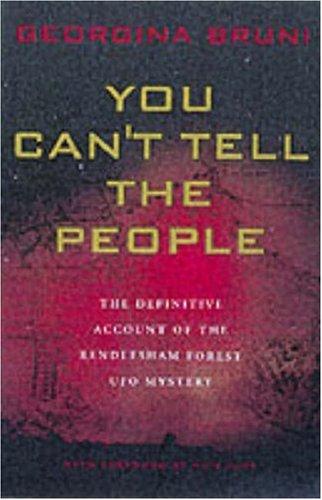
You Can't Tell the People
The Definitive Account of the Rendlesham Forest UFO Mystery
Find on Amazon →As an Amazon Associate, OverClassified may earn from qualifying purchases made through this link, at no extra cost to you.
Why This Is Essential Reading
You Can't Tell the People earns its place on this list less for tidy argument than for original legwork: it is the only book on this site's Rendlesham shelf built by a single outside journalist working the case alone, years before the Ministry of Defence's own mass file release made comparable research meaningfully easier, and its interviews with former RAF Watton radar staff are cited directly — not merely referenced — on this site's own Rendlesham Forest Incident case file. Its limits are real and specifically documented rather than glossed over here: reader and specialist criticism converges on the same point, that its rigorous first two-thirds gives way to speculative material in its final chapters, and researcher David Clarke has directly disputed at least one of its factual claims. Read against this site's other Rendlesham title, Encounter in Rendlesham Forest, it is less a competing account than an earlier, differently sourced one — the lone investigator's version of a case later authors would revisit with a government insider's access and two of its own witnesses at the table.
Related Cases & Theories
Essential Viewing
You Can't Tell the People - Georgina Bruni Rendlesham Forest UFO Mystery
GS R — An archival audio interview with author Georgina Bruni discussing the Rendlesham Forest case and her book directly, re-uploaded by a fan channel and verified via YouTube oEmbed before inclusion.
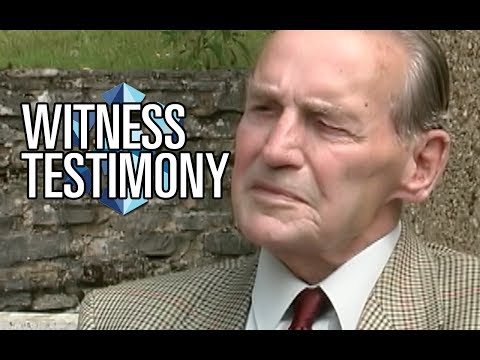
Lord Admiral Hill-Norton EXPOSES UFO Secrecy at Bentwaters
Dr. Steven Greer — Archival footage of Lord Hill-Norton discussing UFO secrecy around the Bentwaters/Rendlesham case, the case central to Bruni's book and the subject of the parliamentary questions her research fed into, verified via YouTube oEmbed before inclusion.
Sources Cited
- Bruni, Georgina. You Can't Tell the People: The Definitive Account of the Rendlesham Forest UFO Mystery. Sidgwick & Jackson, 2000, foreword by Nick Pope (ISBN 9780283063589 / 0283063580, hardcover first edition cited here). amazon.com
- "You Can't Tell the People: The Definitive Account of the Rendlesham Forest UFO Mystery: The Cover-up of Britain's Roswell." Pan Macmillan paperback edition, November 2001 (ISBN 9780330390217 / 033039021X). amazon.com
- "Georgina Bruni." HandWiki (biographical archive mirroring earlier Wikipedia content: birth name Linda Naylor, birth/death dates, career history, 2000 MoD hardback launch, later Hill-Norton parliamentary collaboration). handwiki.org
- "UFO Researcher Georgina Bruni, 1947 – 2008." Obituary by Nick Pope, republished at rense.com (career summary, praise from Lord Hill-Norton and Gordon Williams, cause and circumstances of death). rense.com
- Bruni, Georgina "You Can't Tell the People." Isaac Koi UFO Books Archive (publication details, Nick Pope foreword pagination, Sidgwick & Jackson hardback record). isaackoi.com
- Clarke, David. "You Can't Tell the People? Margaret Thatcher and UFO secrets." drdavidclarke.co.uk, April 15, 2013 (skeptical analysis of the book's title anecdote and disputed credit for the 2001 MoD file release). drdavidclarke.co.uk
- Clarke, David. "Rendlesham Forest UFOs." drdavidclarke.co.uk (MoD file release history, Lord Hill-Norton's parliamentary role and 1985 Trefgarne briefing, his public cover-up allegation). drdavidclarke.co.uk
- "You Can't Tell the People." Goodreads (aggregated reader rating and reviews, including a detailed reader critique of the book's speculative closing chapters). goodreads.com
- "Peter Hill-Norton, Baron Hill-Norton." Wikipedia (naval career, Chief of the Defence Staff 1971–1973, NATO Military Committee chairmanship, later UFO advocacy in the House of Lords). en.wikipedia.org
- "Rendlesham Forest incident." Wikipedia (case background, witness accounts, and citation of Bruni's book and its published landing-site photograph). en.wikipedia.org
- "Nick Pope (journalist)." Wikipedia (MoD career 1985–2006, UFO desk 1991–1994, bibliography including this book's foreword, death April 6, 2026). en.wikipedia.org
- "Encounter in Rendlesham Forest." Open Library edition record, cited for comparison against this book's own Sidgwick & Jackson first edition. openlibrary.org
- This site's own resources library: Full Reading List, where this exact edition (ISBN 0283063580) is cited on the Rendlesham Forest Incident case file.
- This site's own case file: The Rendlesham Forest Incident, which cites Bruni's own interviews directly as part of its Eastern Radar evidence discussion.
- This site's own Essential Reading title: Encounter in Rendlesham Forest, this site's other, later Rendlesham book breakdown.
- This site's own Essential Reading title: Left at East Gate, the Warren/Robbins account Bruni's own book directly disputed on several points.
- This site's own key-figures entry: Nick Pope, for his full biography, foreword role in this book, and later authorship of Encounter in Rendlesham Forest.
Have corrections, additional research, or peer-reviewed sources? Help improve this entry.
Suggest an Edit