
Left at East Gate
A First-Hand Account of the Bentwaters-Woodbridge UFO Incident, Its Cover-Up, and Investigation
Core Thesis
Left at East Gate: A First-Hand Account of the Bentwaters-Woodbridge UFO Incident, Its Cover-Up, and Investigation is Larry Warren's telling of the December 1980 Rendlesham Forest Incident, written with investigative writer Peter Robbins after roughly a decade of joint interviews and research. First published in 1997, three years before Georgina Bruni's own Rendlesham book and seventeen years before this site's other Rendlesham essential-reading title, Encounter in Rendlesham Forest, it was the first book-length account built around a named USAF security policeman's own memory of the case rather than around the Halt Memo and Ministry of Defence files alone. It is also, without close competition, the single most disputed witness account in the entire Rendlesham literature: the case's other principal military witnesses have stated on the record that Warren was not present for the events he describes in his book's most dramatic chapters, and in 2017 Robbins — the book's own co-author — publicly renounced Warren's account after concluding, in his own words, that he had been deceived. Where Encounter in Rendlesham Forest pairs a former government UFO investigator with two witnesses whose core testimony is broadly corroborated by the case's documentary record, this earlier and more extreme book rests almost entirely on one man's memory of a landing and entity encounter no other airman on the base has ever confirmed.
About the Author
Larry Warren, born in 1961, enlisted in the U.S. Air Force and was assigned as a security policeman to the twinned RAF Bentwaters/RAF Woodbridge complex in Suffolk, England, arriving in the summer of 1980 at around nineteen years old. He was unquestionably stationed at the base during the period of the Rendlesham Forest events; what remains sharply disputed, and is addressed in full in this entry's Critical Reception section below, is whether he was present for the specific incidents at Capel Green that form the emotional and evidentiary center of his book. Warren has said he was the first person connected to the case to speak publicly at all, giving an anonymous 1983 account to the British tabloid News of the World under the pseudonym "Art Wallace" before surfacing under his own name later in the decade. He left the Air Force in the early 1980s and has described a difficult aftermath — surveillance, threats, and years spent trying to get investigators and journalists to take his account seriously — that this book recounts in detail as evidence of an official cover-up rather than, as his critics argue, evidence that his story changed and grew increasingly elaborate the longer he told it.
Peter Robbins holds a B.F.A. in painting and film history from New York's School of Visual Arts, where he later taught for fifteen years, and had already spent roughly two decades in organized UFO research before this book was published. His credentials include serving from 1980 to 1985 as art director and investigator for the Scientific Bureau of Investigation, a New York civilian-police UFO research group; acting as research assistant on material submitted to the United Nations Secretary-General's 1978 report on a proposed UN UFO office; and, later, working as executive assistant to Budd Hopkins at the Intruders Foundation, the prominent abduction-research organization Hopkins founded. Robbins began interviewing Warren in 1987 and continued, by his own later account, "sometimes to the point of distraction" through 1996, before the two published Left at East Gate together in 1997.
Robbins's professional standing is central to why this book carries the authority it does — and central to why the credibility problem this entry documents in detail below is so consequential. In the years after publication, Robbins continued working the Rendlesham case independently, going on to serve as a consultant to the City of Roswell, New Mexico from 2007 to 2010 and to testify at the 2013 UFO disclosure hearings held at Washington's National Press Club. Then, in the second half of the 2010s, Robbins conducted what he has since called the most introspective and self-critical re-investigation of his forty-year career: a systematic review of Warren's supporting documents that, he says, turned up evidence of forgery and alteration. That review ended with Robbins publicly disassociating himself from Warren, professionally and personally, in January 2017, and issuing a detailed public statement that June laying out his specific findings.
The result is a credibility structure closer to this site's own Witness to Roswell entry than to anything in the Rendlesham literature specifically: a book whose two named authors no longer agree about whether the central account it tells is true. Unlike that Roswell case, however, where the credibility dispute concerns a researcher's own misrepresented resume, this dispute concerns the book's actual subject — whether the witness at its center was where he says he was, on the nights he says he was there.
Historical Context & Origins
By the time Left at East Gate appeared in 1997, the Rendlesham Forest case had already been public for fourteen years, since the Halt Memo was released under the U.S. Freedom of Information Act in 1983 and printed in News of the World that October. Warren's own account had entered the record earlier still and more obliquely than most: he has said he was the anonymous "Art Wallace" source for that same 1983 tabloid story, making him, by his own telling, the case's first whistleblower even before Brenda Butler, Dot Street and Jenny Randles's early Sky Crash (1984) became the first Rendlesham book to reach print. What none of that earlier literature had was a full-length account built around one named military witness's own first-person memory, told across roughly 400 pages of narrative and largely unedited interview transcript — a structure this book pioneered for the case and that later books, including this site's own Encounter in Rendlesham Forest (2014), would use in more restrained and more corroborated form.
Warren and Robbins's decade-long collaboration, running from their first interviews in 1987 through 1996, unfolded almost entirely outside the more institutional Rendlesham research being conducted in parallel by figures like Georgina Bruni, who was independently working British Ministry of Defence contacts toward what would become her own 2000 book, You Can't Tell the People. The two projects arrived at broadly compatible conclusions about the case's official secrecy while drawing on almost entirely separate source relationships — Warren's own memory and network of former airmen on Robbins and Warren's side, and MoD and Whitehall contacts on Bruni's.
The book was first published in 1997 by Marlowe & Company, with cover blurbs from Whitley Strieber ("riveting, fascinating, and important") and Budd Hopkins, the abduction researcher Robbins already worked alongside at the Intruders Foundation. A Revised and Expanded Edition followed in 2005 from Cosimo Books, running to roughly 560 pages. One bibliographic note is worth flagging directly: this site's own resources library and its UFOs & Nuclear Weapons theory page both cite this book under ISBN 9781569247594 / 1569247595 while labeling it "rev. 2005" — but that specific ISBN in fact identifies the original 1997 Marlowe & Company first edition, which is the exact printing cited and reviewed throughout this entry. The true 2005 Cosimo Books revised edition carries a different ISBN, 9781596057531 / 159605753X.
The book's 1997 publication also predates by two decades the credibility crisis that would come to define how much of the field now reads it: at the time it appeared, Warren's account stood or fell on the word of the case's other airmen and on Robbins's own decade of vetting, and it would be another twenty years before Robbins himself concluded that vetting had failed.
Core Arguments & Key Concepts
The book's narrative core is Warren's description of a third night of activity at Capel Green, a clearing near the twinned bases where he says he was taken by a superior and witnessed a landed craft along with small, non-human entities, an encounter he describes as involving something like direct, wordless communication. This is the single most extraordinary claim in the entire Rendlesham case — considerably beyond what Charles Halt's Night Two investigation or Jim Penniston's and John Burroughs's Night One testimony describe, and, as this entry's Critical Reception section documents, an event none of those three witnesses has ever corroborated.
Around that central claim, the book builds an argument about scale and stakes: it repeatedly stresses the bases' status among the most strategically important NATO installations in Europe, sitting beside a nuclear weapons storage area, and frames the alleged cover-up as proportional to that sensitivity — senior officers, the authors argue, moved quickly and forcefully to suppress the story precisely because of what was at risk if a security breach near live nuclear ordnance became public, UFO or not.
The book's second major thread is Warren's own account of the years following his discharge: surveillance he says followed him, threats he says were made against him and people close to him, and a long, frustrating campaign to get journalists, investigators, and eventually publishers to take his story seriously before Robbins agreed to help him tell it. Presented as evidence of an active, sustained cover-up, this material is also, as later events would show, the part of the book's account most vulnerable to revision over time, since it rests almost entirely on Warren's own uncorroborated recollection of private conversations and incidents.
Structurally, much of the book consists of lightly edited interview transcript — conversations Robbins conducted with Warren and with other Bentwaters and Woodbridge personnel over the preceding decade — a format multiple reviewers have described as authentic-feeling but often repetitive and difficult to follow, in contrast to the more conventionally narrated, appendix-driven structure this site's Encounter in Rendlesham Forest entry describes for Pope, Burroughs and Penniston's later book.
Key Cases & Evidence Discussed
The book's entire subject is this site's own Rendlesham Forest Incident (Case File #004, December 1980), and its account of the case's broad chronology — the Night One lights, Halt's Night Two investigation, the base's proximity to NATO nuclear storage — tracks the same events this site's own case file documents, though Warren's central Capel Green entity-contact claim goes well beyond anything in that case file's corroborated record.
This site's own Encounter in Rendlesham Forest entry (ER-036), covering Nick Pope, John Burroughs and Jim Penniston's 2014 book, is this title's most important point of comparison anywhere in this library and covers the same underlying case from a deliberately different angle: it is important to be clear that these are two separate books about two different witnesses' accounts of the same December 1980 incident, published seventeen years apart, not two editions of the same story. Burroughs and Penniston's own book does not corroborate Warren's Capel Green account, and neither Burroughs nor Penniston has confirmed Warren was present for the events he describes — a distinction any reader moving between this site's two Rendlesham essential-reading entries should keep in view.
Capel Green, the specific clearing where Warren places his disputed third-night encounter, has its own entry in this site's Locations database, distinct from the broader Rendlesham Forest site where Halt's Night Two investigation and Penniston's and Burroughs's Night One encounter took place.
This site's own UFOs & Nuclear Weapons theory page cites this exact book directly, in connection with the bases' nuclear-storage role that this book repeatedly treats as the reason for the alleged scale of the cover-up — one of relatively few points in the book's argument that lines up with material outside Warren's own testimony.
Critical Reception & Controversies
At publication, the book's reception was shaped almost entirely by the UFO-research community rather than mainstream book trade press: Whitley Strieber called it "riveting, fascinating, and important," and Budd Hopkins, Robbins's own colleague at the Intruders Foundation, described it as "a major contribution to the literature" — enthusiast blurbs from figures already sympathetic to Warren and Robbins's project rather than independent critical assessment. Nick Pope, writing before his own later reassessment of Warren's account, called the book "meticulously researched, gripping, provocative."
The most serious and longest-running challenge to the book has always come from the Rendlesham case's own other military witnesses rather than from outside skeptics. Charles Halt, the case's senior on-the-record witness, has stated flatly that Warren was not present for the events described in the book's central chapters, and has pointed to duty records he says are inconsistent with Warren's account of his own whereabouts on the relevant nights. Jim Penniston and John Burroughs, the two witnesses whose own Night One testimony this site's Encounter in Rendlesham Forest entry covers, have likewise never corroborated Warren's account of the third-night Capel Green encounter or of his own role in the case's key events. Skeptical astronomer Ian Ridpath, whose Orford Ness lighthouse research is discussed at length in that same entry, has separately catalogued inconsistencies across different tellings of Warren's story over the decades.
Warren's account was also directly challenged, on more limited but specific points, by Georgina Bruni, whose own 2000 book You Can't Tell the People drew on an overlapping but independently sourced set of MoD contacts. Warren publicly raised what he described as several hundred separate objections to details in Bruni's book; Bruni, in response, noted that when pressed to specify, Warren narrowed his actual substantive complaints to a much smaller number concerning her account's terminology and her description of Air Force general Gordon Williams's role — an exchange that, whatever its outcome on the individual points, illustrates how much of the internal Rendlesham dispute over the years has concerned exactly this kind of granular, hard-to-adjudicate disagreement between overlapping insider sources.
By far the most damaging and best-documented challenge to this book's central account, however, came from inside its own authorship. Beginning in the summer of 2016, Robbins conducted what he later called the most self-critical review of his four-decade career, culminating in a formal letter to Warren on October 3, 2016, and a full professional and personal disassociation announced in January 2017. In a detailed public statement issued that June, Robbins laid out specific, itemized findings: he stated that a USAF Form 490 medical appointment card Warren had presented as supporting evidence carried a notation attributed to a doctor whose actual specialty did not match the notation, concluding the document had either been "a complete forgery" or selectively altered; he identified what he described as a fabricated photograph purporting to show Warren with John Lennon in November 1980, a claim Lennon's former partner May Pang has separately and directly denied; and he stated that letters attributed to fellow security policemen Steve LaPlume and Steve Longero, reproduced in the book's 2005 revised edition — the same edition this site's own resources library and UFOs & Nuclear Weapons theory page reference, though under this entry's cited 1997 first-edition ISBN — do not match statements either man says he actually made, with both men denying authorship of the quoted material. Robbins summarized his conclusion bluntly: the pattern established for him, "beyond any doubt," that Warren had intended to deceive him from the start of their collaboration.
Warren has disputed Robbins's allegations publicly and at length, and the dispute between the two former collaborators has continued for years since, drawing in other Rendlesham-adjacent figures on both sides and turning, at points, openly hostile in public forums. Nick Pope, who had blurbed the book approvingly in 1997, later stated on record that he had come to view Warren's account as discredited and praised Robbins for "having the courage and integrity" to admit he had been taken in; Pope also stated that the book's publisher had withdrawn it from print following the split, a characterization this entry could not independently verify against a formal publisher statement but records here as Pope's own on-the-record account. Reader reception on Goodreads, aggregated at roughly 4.05 out of 5 across some 76 ratings, has remained largely unaffected by any of this — a pattern this site's own Witness to Roswell entry notes as common across contested witness-testimony books generally, where a sympathetic readership continues to rate a title highly regardless of what its own most qualified insiders later conclude about it.
Taken together, this is not simply a book with mixed reviews; it is a book whose own two authors, and the other principal military witnesses to the case it describes, do not agree on whether its central claim is true. That places it in a genuinely unusual position even within this site's own library of contested UFO literature: not disputed by outside skeptics against believers, but disputed from within the small group of people closest to the case itself.
Influence & Legacy
Despite — and in some respects because of — its controversy, Left at East Gate remains one of the most widely read Rendlesham accounts ever published and was, for years, the default full-length introduction most English-language readers had to the case beyond the Halt Memo itself. It was the first book to give the Rendlesham story a single, sustained, first-person military witness at its center, a structure that shaped how the case was popularly told for a generation even as the specific witness at that center became the subject of sustained dispute.
The book's most concrete recent legacy is Capel Green, a 2025 documentary-drama directed by Dion M. Johnson built specifically around Warren's account of the incident and named for the location at the heart of his most contested claim — evidence that Warren's version of events, whatever its evidentiary standing among the case's other principals, retains an independent cultural life of its own.
The 2016–2017 breakdown between Warren and Robbins has itself become a documented case study within ufology about how even a decade of careful, sympathetic investigative vetting can still fail, and about what it costs a researcher to say so publicly. Robbins's own account of that reversal — delivered, by his description, in stages resembling the Kübler-Ross grief cycle — is now cited by other researchers, including Kevin Randle, discussing how the field ought to handle previously trusted witnesses whose claims do not hold up to renewed scrutiny, a live methodological question this site's own Witness to Roswell entry raises independently about the Roswell case's own discredited witnesses.
Within this site's own catalogue, this exact 1997 first edition (ISBN 1569247595 / 9781569247594) is already cited in both the resources library and the UFOs & Nuclear Weapons theory page, reflecting its long-standing status as a primary published source on the case's nuclear-storage context even where its central witness claim remains the most disputed in the entire Rendlesham literature.
The Book
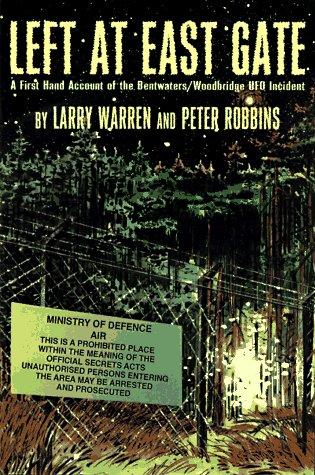
Left at East Gate
A First-Hand Account of the Bentwaters-Woodbridge UFO Incident, Its Cover-Up, and Investigation
Find on Amazon →As an Amazon Associate, OverClassified may earn from qualifying purchases made through this link, at no extra cost to you.
Why This Is Essential Reading
Left at East Gate earns its place on this list not because its central claim has held up — by the account of the case's own senior witnesses, and eventually by the account of its own co-author, it has not — but because it remains the earliest, most widely read, and most instructive example on this site's shelf of how a single contested witness can complicate a case that is otherwise unusually well documented. Larry Warren's account of a third-night entity encounter at Capel Green goes further than anything Halt, Penniston, or Burroughs have ever confirmed, and Peter Robbins's own 2017 public renunciation of the book he spent a decade helping write is about as decisive a credibility verdict as any book on this list has received from within its own authorship. Read against this site's other Rendlesham essential-reading title, Encounter in Rendlesham Forest, this book's real value today is less as evidence about what happened in the forest in December 1980 than as a documented, unusually well-sourced case study in exactly how contested witness testimony can complicate even a case with genuine underlying evidence — a lesson this site's library is well positioned to preserve precisely because it also hosts the more corroborated account the same case eventually produced.
Related Cases & Theories
Essential Viewing
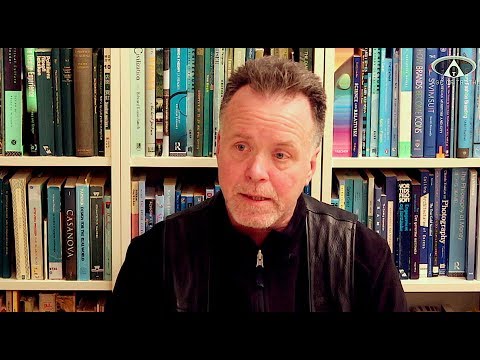
LARRY WARREN ~ "E.T. Aliens & Military Mind Control ~ The Rendlesham UFO Incident"
Age Of Truth TV — A long-form interview with Larry Warren presenting his own account of the Rendlesham Forest incident in his own words. Verified via YouTube oEmbed before inclusion.
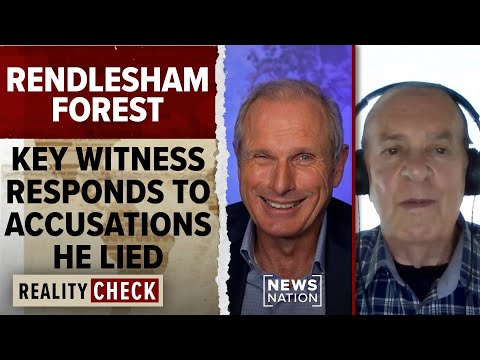
Rendlesham Forest: Lt. Col. Charles Halt responds to Larry Warren's 'lying' claims | Reality Check
NewsNation — A news segment in which Lt. Col. Charles Halt, the case's senior on-the-record military witness, responds directly to Warren's account and the dispute over his credibility. Verified via YouTube oEmbed before inclusion.
Sources Cited
- Warren, Larry, and Peter Robbins. Left at East Gate: A First-Hand Account of the Bentwaters-Woodbridge UFO Incident, Its Cover-Up, and Investigation. Marlowe & Company, 1997 (ISBN 9781569247594 / 1569247595, matching this site's own resources library and UFOs & Nuclear Weapons theory-page citation). amazon.com
- Warren, Larry, and Peter Robbins. Left at East Gate. Revised and Expanded Edition. Cosimo Books, 2005 (ISBN 9781596057531 / 159605753X, a distinct edition from the 1997 printing cited throughout this entry). amazon.com
- "Left at East Gate." Open Library edition record (Marlowe & Co., 1997, ISBN 1569247595 / 9781569247594). openlibrary.org
- Robbins, Peter. "A Statement from Peter..." peterrobbinsny.com, 2017 (Robbins's own account of his decade-long re-investigation and his conclusions about altered supporting documents). peterrobbinsny.com
- Christie, Sacha. "Peter Robbins' Statement Regarding The Larry Warren Deception." Infomaniac Housewife blog, June 2017 (reproduces Robbins's detailed public statement, including the disputed USAF Form 490 medical card and the disputed LaPlume/Longero letters in the 2005 edition). sacha-christie-infomaniachousewife.blogspot.com
- Randle, Kevin. "Peter Robbins Explains His Take on Left at East Gate (Part One)." A Different Perspective blog, August 2017. kevinrandle.blogspot.com
- Randle, Kevin. "Peter Robbins Explains His Take on Left at East Gate (Part Two)." A Different Perspective blog, August 2017. kevinrandle.blogspot.com
- "Rendlesham Forest UFO expert now says co-author deceived him with untrue account." Sott.net, 2017 (news coverage of the Robbins-Warren public split). sott.net
- "Rendlesham Forest: Lt. Col. Charles Halt responds to Larry Warren's 'lying' claims | Reality Check." NewsNation (YouTube, verified via oEmbed before inclusion; Halt's on-record response to Warren's account).
- "Left at East Gate." Goodreads (aggregate reader rating of approximately 4.05/5 across roughly 76 ratings). goodreads.com
- "Capel Green (2025)." IMDb (documentary-drama directed by Dion M. Johnson built around Larry Warren's account of the Rendlesham Forest incident). imdb.com
- "Peter Robbins - Investigative Writer." peterrobbinsny.com, official biography (career history: Scientific Bureau of Investigation 1980–85, UN report research assistance, Intruders Foundation, City of Roswell consultancy 2007–2010, National Press Club testimony). peterrobbinsny.com
- This site's own case file: The Rendlesham Forest Incident (Case File #004), which independently documents the Warren-Halt-Penniston-Burroughs dispute over Warren's presence and cites Robbins's 2017 public withdrawal of support for Warren's claims among its own sources.
- This site's own essential-reading entry: Encounter in Rendlesham Forest, Nick Pope, John Burroughs and Jim Penniston's 2014 account of the same case from a separate and more corroborated set of witnesses.
- This site's own key-figures entries: Larry Warren, Peter Robbins, Charles Halt, Jim Penniston, and John Burroughs, for full biographical detail and further case connections beyond this book.
- This site's own resources library: Full Reading List, where this exact 1997 first edition (ISBN 1569247595) is cited in connection with the UFOs & Nuclear Weapons theory page.
Have corrections, additional research, or peer-reviewed sources? Help improve this entry.
Suggest an Edit