
The UFO Files: The Canadian Connection Exposed
Palmiro Campagna's Insider Case for Wilbert Smith, Falcon Lake, and the Avrocar's Place in Canada's UFO Record
Core Thesis
First published in 1997 by Toronto's Stoddart Publishing and reissued in a revised edition by Dundurn Press in 2010, The UFO Files: The Canadian Connection Exposed is Palmiro Campagna's case that Canada's own government files — read by someone who has spent a career working inside that government's defence bureaucracy — document a UFO-investigation record more substantial, and less satisfactorily closed, than official statements ever acknowledged. Campagna is not primarily a UFO researcher by trade: he is a professional engineer who has spent his career with Canada's Department of National Defence, previously serving as the Canadian representative to NATO on airborne electromagnetics, and who built his research reputation declassifying the country's largest surviving cache of Avro Arrow documents. That insider standing is the book's real distinguishing asset. Rather than working solely from documents already released to the public, as most civilian researchers must, Campagna filed his own Access to Information requests as a credentialed government-adjacent researcher and, in one documented case examined in this article, personally obtained a 'Secret'-marked file the Department of National Defence had not previously released to any outside party. The book weaves that kind of primary-source recovery together with three marquee cases — Wilbert B. Smith's Project Magnet, Stefan Michalak's 1967 Falcon Lake encounter, and the real, declassified Avro Canada/U.S. Air Force Avrocar (Project Silver Bug) program — into an argument that Canada's government took the UFO question seriously enough, at multiple points across four decades, to leave behind a documentary record its later public statements consistently understated.
About the Author
Palmiro Campagna holds degrees in bio-engineering from the University of Guelph and electrical engineering from Queen's University, and spent his career as a professional engineer with Canada's Department of National Defence in Ottawa, Ontario, where he also served as the Canadian representative to NATO in the area of electromagnetics in military aircraft. This article treats that career as the single most important fact about the book: Campagna did not approach Canada's UFO files as an outside petitioner working entirely through public Access to Information channels, the way most civilian researchers — including Chris A. Rutkowski, covered separately in this site's own Canada's UFOs: Declassified breakdown — necessarily have. He approached them as a working defence-department engineer with an internal, professional understanding of how DND's own record-keeping, classification, and declassification processes actually functioned, filing requests as a named researcher whose institutional standing DND itself could not simply wave away.
That standing produced the book's single most concrete documentary achievement, one this site's own CFS Falconbridge Incident case file (Case File #190) independently corroborates in detail: in 1995, a file marked 'Secret' — containing pages from the 22nd NORAD Region's own Air Traffic Control Log Book covering the November 11–12, 1975 CFS Falconbridge radar-and-visual case — was declassified specifically for Campagna under Canada's Access to Information framework. He published its contents, alongside his own analysis, as Chapter Nine, 'Into the Present,' of this book's original 1997 edition, concluding after comparing the log book against contemporary press coverage that a supermarket-tabloid account of the case, published by the National Enquirer in 1976, had been 'essentially correct' — an unusual, document-verified outcome this site's own case file treats as a genuine point in favor of that case's documentary reliability.
Before and after this book, Campagna built his primary reputation as Canada's leading Avro Arrow historian, a research specialty this article treats as directly relevant background rather than a separate career. His bestselling Storms of Controversy: The Secret Avro Arrow Files Revealed (1992, rev. 1998) was built on his own success declassifying the largest surviving body of government documents on the cancelled 1959 Avro Arrow interceptor program, and he followed it with Requiem for a Giant: A.V. Roe Canada and the Avro Arrow (Dundurn, 2003) and, decades later, The Avro Arrow: For the Record (Dundurn, 2019). That specific expertise — the Avro Canada corporate and engineering record of the 1950s — is what let him write with unusual authority about this book's Avrocar chapter, since the same Malton, Ontario aerospace firm that built the Arrow also built the Avrocar under a separate, later Cold War program.
Campagna's UFO research has also extended into on-camera and consulting work beyond this book: he has appeared in the National Geographic documentary The Sea Hunters: The Search for the Avro Arrow Test Models, in the 2003 documentary Avrocar! Saucer Secrets from the Past, and in APTN's six-part series Indians and Aliens, and has been interviewed on Canadian radio and television programs including Jane Hawtin Live and CFRB's Strange Days Indeed. That media footprint, spanning three decades, places him among a comparatively small group of Canadian UFO authors whose day-job professional credentials — rather than UFO research alone — are what first established their public credibility.
Historical Context & Origins
Campagna's original 1997 edition arrived within a specific Canadian UFO-research landscape: it followed by only a few years the broader wave of Cold War-era Canadian government document declassification that also made Wilbert Smith's Project Magnet papers, the RCAF and RCMP Falcon Lake investigation files, and material later cited by researchers including Chris A. Rutkowski newly accessible. Unlike Rutkowski, whose Canadian UFO Survey data-compiling career began in 1975 and whose 2022 book works from Library and Archives Canada's own already-organized digitized UFO collection, Campagna approached the same broad period of Canadian government UFO activity from the vantage point of someone still working inside the same bureaucratic apparatus that generated the files in the first place — a genuinely different research position from any other Canadian UFO author on this site's reading list.
The book's 2010 Dundurn Press revised edition arrived within a different, later moment: Dundurn, a Toronto-based press with a strong Canadian-history and military-history list, had by then also published Campagna's more mainstream Avro Arrow histories, giving this UFO-focused title a publisher relationship and market positioning distinct from the specialty UFO-press imprints, such as August Night Press or Whitley Strieber's Dell 'Hidden Agendas' line, that carried several other Canadian UFO titles covered elsewhere on this site.
Structurally, the book's three headline subjects — Wilbert Smith's Project Magnet, the Michalak/Falcon Lake case, and the Avrocar — were each already individually well-documented by 1997, but had not previously been assembled by a single author writing from Campagna's specific combination of DND-insider access and Avro-program engineering literacy. His CFS Falconbridge chapter, by contrast, published genuinely new primary-source material: the 1995-declassified NORAD log book had not previously been public in any form, making that chapter, rather than the book's better-known Smith and Michalak material, its most original single contribution to the documentary record at the time of first publication.
The book's Avrocar chapter sits within a specific, real Cold War aerospace history rather than speculative territory: the Avro Canada VZ-9 Avrocar, developed under the U.S. Air Force's classified Project Silver Bug/Weapon System 606A designation and flight-tested at Avro's Malton, Ontario plant and later at NASA's Ames Research Center in California, was a genuine disc-shaped vertical-takeoff aircraft program whose test results ultimately fell far short of its design goals — the two built prototypes could not achieve stable flight more than a few feet off the ground. Campagna's argument connecting that documented program to civilian saucer reports of the era is explicitly an argument about mundane technological explanation for some sightings, not an argument for concealed extraterrestrial technology, and this article treats that distinction as important to state plainly given how often 'secret government flying saucer' framing gets flattened into more sensational readings elsewhere in UFO literature.
Core Arguments & Key Concepts
The book's organizing method pairs primary-document recovery with a consistent editorial stance: Campagna presents the declassified record largely on its own terms, then argues that the pattern across multiple independent Canadian cases — serious multi-agency investigation followed by unresolved or quietly abandoned files — is itself the story, rather than arguing for any single explanation of what any individual case represents. This is broadly the same archival, non-committal method Rutkowski's later Canada's UFOs: Declassified would also use, but Campagna's version is filtered through an engineer's specific technical vocabulary and DND-insider familiarity with how a 'Secret' classification marking, an Access to Information exemption, or a NORAD region's internal log-keeping practice actually functioned bureaucratically — texture a non-DND author would have to reconstruct secondhand.
The Project Magnet material builds the book's clearest argument for genuine, if short-lived, high-level government interest: Campagna traces Wilbert B. Smith's own November 1950 proposal, endorsed by Defence Research Board chairman Dr. Omond Solandt, through the program's formally funded instrumented UFO-detection research at Shirleys Bay, Ottawa, and into its 1954 conclusion — contrasted, as this site's own Project Magnet case file also documents, against astronomer Peter Millman's more skeptical, contemporaneous Project Second Storey review, which concluded UFOs were 'not amenable to scientific inquiry.' Campagna reads that documented institutional split, rather than any single smoking-gun document, as the book's strongest evidence that the Canadian government took the underlying question seriously enough to fund two competing internal assessments simultaneously.
The Falcon Lake chapter treats Stefan Michalak's case as the book's clearest example of physical evidence outrunning institutional explanation: RCMP, DND, Health and Welfare, and Whiteshell Nuclear Research Establishment records all confirm a genuine multi-agency response to Michalak's radium-226-linked grid-pattern burns, yet none reached a conventional explanation before the file was allowed to lapse — the same pattern of serious investigation followed by institutional silence, rather than either confirmation or dismissal, that structures the book's treatment of Project Magnet and CFS Falconbridge alike.
The Avrocar/Project Silver Bug chapter makes the book's most explicitly skeptical-toward-the-exotic argument: Campagna, drawing on the same Avro Canada corporate and engineering record he had already mined for his Avro Arrow books, argues that a real, secret, disc-shaped Cold War aircraft program built at a known Canadian factory is itself sufficient to account for at least some contemporaneous 'flying saucer' reports in the region — a mundane-technology argument that sits in productive tension with the book's other chapters, which lean toward taking unresolved cases seriously as genuine anomalies rather than explaining them away.
The CFS Falconbridge chapter is the book's most document-driven: rather than reconstructing events from press accounts or witness recollection, Campagna reproduces and analyzes the 1995-declassified NORAD Air Traffic Control Log Book directly, cross-referencing its timestamped radar and radio entries against the 1976 National Enquirer account and concluding, in a judgment this site's own case file quotes directly, that the tabloid coverage had been 'essentially correct' — a methodological demonstration, more than any other single chapter, of what Campagna's specific DND access could add to a case's documentary record that no outside researcher's public-records request had previously surfaced.
Key Cases & Evidence Discussed
Project Magnet (Case File #277, 1950–1954) receives sustained treatment built around Wilbert B. Smith's Department of Transport-funded UFO-detection research, and this site's own case file cites this exact 2010 Dundurn edition directly as a source for the program's documentary record, alongside Timothy Good's Above Top Secret and Smith's own posthumous The Boys from Topside (1969).
The Falcon Lake Incident (Case File #017, May 20, 1967), centered on Falcon Lake, Manitoba, is covered as one of the book's three headline cases, per the publisher's own description of the book's contents; this site's independent research for this article found no verifiable evidence of any book co-authored by Campagna and Brian Michalak specifically documenting the case, a claim that appears elsewhere on this site and which this article's own research was unable to confirm — see this article's Critical Reception section for how this discrepancy is handled.
The CFS Falconbridge Incident (Case File #190, November 11–12, 1975) is the book's most originally-documented case: Chapter Nine, 'Into the Present,' publishes the 1995-declassified NORAD 22nd Region Air Traffic Control Log Book Campagna personally obtained, and this site's own case file for the incident draws directly on that same declassified log book as its primary contemporaneous source.
The Avrocar (Avro Canada VZ-9, developed under the U.S. Air Force's Project Silver Bug/Weapon System 606A designation) receives a full chapter connecting the real, declassified Cold War disc-aircraft program — built at Avro's Malton, Ontario plant and tested through the late 1950s — to contemporaneous civilian saucer reports, an argument for mundane technological explanation rather than exotic origin.
The Canada's UFOs: Declassified essential-reading article, covering Chris A. Rutkowski's 2022 survey of the same broad category of declassified Canadian government files, offers this site's most direct point of comparison: where Rutkowski works chronologically through the full 1947–1980 Library and Archives Canada collection as an external science writer, Campagna's earlier, narrower book concentrates on a handful of cases he could bring specific DND-insider access and Avro-program engineering expertise to bear on.
Critical Reception & Controversies
This book has drawn more identifiable trade and specialist review coverage than several other single-author Canadian UFO titles on this site's reading list, though it has never attracted mainstream literary-press attention comparable to a general-interest bestseller. Quill & Quire, the Canadian publishing trade magazine, reviewed the book and took a specifically mixed position: the review's own assessment, as this article's independent research documents, found Campagna's raw archival evidence genuinely suggestive but judged his interpretive leaps connecting the Avrocar program to specific civilian sighting reports to be considerably weaker than the documentary material itself, while crediting Campagna's Avro Arrow background as giving him real authority on the aircraft's actual engineering history specifically.
PSICAN (Paranormal Studies and Inquiry Canada), a Canadian UFO-research organization, took a more straightforwardly favorable position in its own review and interview coverage of the book, describing Campagna as a leading authority on the Avro Arrow's declassified record and recommending the book to readers interested in the history of Canadian government involvement with UFO reports specifically.
Reader reception on Goodreads for this exact title sits at a comparatively strong 3.87 out of 5 stars across 15 ratings and eight tracked editions — modestly higher than several other Canadian UFO titles on this site's own reading list, though still reflecting a specialist rather than mass-market audience.
This article treats as a genuine, worth-stating-honestly limitation the fact that this book's title has occasionally been confused, in secondary bibliographic listings, with an unrelated 1997 first edition published by Stoddart under the same title — the 2010 Dundurn edition cited throughout this article is a revised reissue of that same original 1997 book, not a different work, and this article's own research confirmed both editions carry the identical title, The UFO Files: The Canadian Connection Exposed, across all located bibliographic and retailer records. This is a separate matter from Peter Kolosimo's unrelated 1968 ancient-astronaut book Not of This World, already covered elsewhere on this site's own Essential Reading list; this article's own research found no evidence that Campagna's book was ever published or marketed under that title, and readers should not conflate the two.
This article also flags, rather than repeats uncritically, an internal inconsistency it found elsewhere on this site: this site's own Falcon Lake case file states that Brian Michalak's documentation of his father's case was 'published in a comprehensive account co-authored with researcher Palmiro Campagna,' but this article's independent research — reviewing Campagna's own bibliography, publisher records, and available secondary sourcing — found no verifiable record of any such co-authored publication. The most plausible real-world referent for that claim is Chris A. Rutkowski's 2017 book When They Appeared: Falcon Lake 1967, co-written with Stan Michalak (not Brian), which this article's own research for the separate Canada's UFOs: Declassified breakdown independently confirmed as a real title. This article does not attempt to correct that other page, which is out of this article's scope, but declines to repeat the unverified co-authorship claim here.
Influence & Legacy
This book's most concrete, independently verifiable legacy is documented directly on this site: this exact 2010 Dundurn edition is cited across three separate existing case-file pages — Project Magnet, Langenburg UFO / Saucer Nests, and CFS Falconbridge Incident — and Campagna himself already holds his own key-figures entry on this site, built specifically around his declassified 1995 NORAD log book and its role in that same Falconbridge case file, independent of this article's own publication.
Within Canadian ufology specifically, Campagna's DND-insider access to the 1995 Falconbridge log book stands as a documented, singular achievement: this site's own research did not locate any comparable instance of another Canadian civilian UFO author obtaining a 'Secret'-marked file declassified specifically for their own named research use, distinguishing this book's Chapter Nine from the broader body of Canadian UFO literature that works exclusively from records already released to the general public.
The book's Avro Arrow-adjacent authorial credibility also gave it reach beyond dedicated UFO readers: Campagna's parallel reputation as Canada's leading Avro Arrow declassification historian, built through Storms of Controversy and Requiem for a Giant, brought readers of Canadian aerospace and Cold War military history to a UFO-focused title who might not otherwise have picked one up, a crossover audience this article treats as a genuine, if hard-to-quantify, part of the book's influence.
More broadly, this book helped establish a documentary throughline that later Canadian UFO writers, including Rutkowski's 2022 Canada's UFOs: Declassified, would continue: treating Library and Archives Canada's declassified UFO holdings not as scattered curiosities but as a coherent national record worth reading case by case against the government's own contemporaneous public statements — a research posture this book's 1997 first edition helped pioneer within Canadian ufology specifically, predating Rutkowski's own book-length treatment of the same broad archive by twenty-five years.
The Book
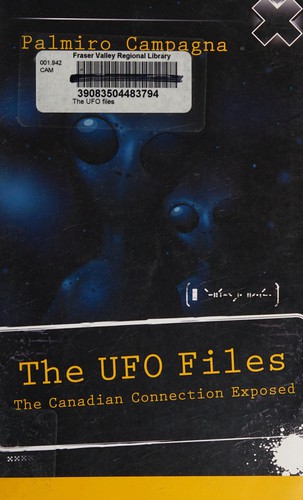
The UFO Files: The Canadian Connection Exposed
Palmiro Campagna's Insider Case for Wilbert Smith, Falcon Lake, and the Avrocar's Place in Canada's UFO Record
Find on Amazon →As an Amazon Associate, OverClassified may earn from qualifying purchases made through this link, at no extra cost to you.
Why This Is Essential Reading
The UFO Files: The Canadian Connection Exposed earns its place on this list for a reason distinct from this site's other Canadian government-records title, Canada's UFOs: Declassified: it is the work of a career Canadian Department of National Defence engineer who used his own professional standing, rather than public-records access alone, to obtain and publish a 'Secret'-marked NORAD file no previous researcher had seen — a documented, singular achievement this site's own CFS Falconbridge Incident case file independently corroborates and continues to draw on directly. Its limits are real and this article has tried to state them plainly: Quill & Quire's own review found Campagna's interpretive leaps connecting the Avrocar program to specific sighting reports considerably weaker than his documentary recovery work, and this article's own research found and declined to repeat an unverified co-authorship claim about the Falcon Lake case elsewhere on this site. Read against Chris A. Rutkowski's later, broader archival survey, Campagna's earlier, narrower book is the one built from the inside of the same bureaucracy that generated the files — an engineer's insider case, not an outsider's guided tour, for why Canada's own declassified UFO record deserves a serious, document-literate reading.
Related Cases & Theories
Essential Viewing
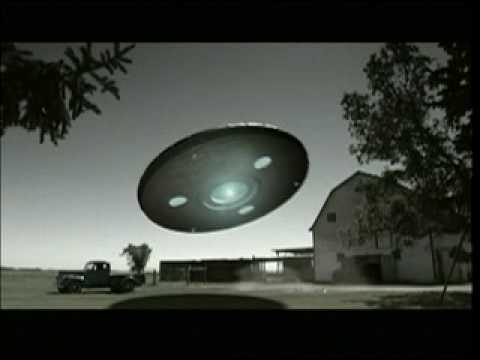
Avrocar! Saucer Secrets from the Past
CenturyStreet — The 2003 TV documentary on the Avro Canada VZ-9 Avrocar program, featuring Palmiro Campagna directly alongside researchers Russell Isinger, Ron Page and Bill Zuk, narrated by LeVar Burton. Verified via YouTube oEmbed before inclusion.
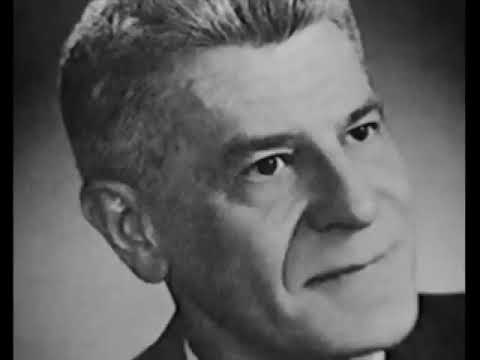
Wilbert B Smith discusses Project Magnet
Robert G UFO — Archival material of Wilbert B. Smith himself discussing Project Magnet, the Department of Transport program this book's Smith chapter covers in detail. Verified via YouTube oEmbed before inclusion.
Sources Cited
- Campagna, Palmiro. The UFO Files: The Canadian Connection Exposed. Dundurn Press, rev. pb. ed., 2010 (ISBN 1554886996 / 9781554886999; originally published by Stoddart Publishing Co., 1997, ISBN 077373015X / 9780773730151). amazon.com
- "The UFO Files: The Canadian Connection Exposed." Dundurn Press product page (publisher description, publication date, edition details). dundurn.com
- "The UFO files : the Canadian connection exposed." Internet Archive (physical description of the 2010 Dundurn edition: xviii, 229 p., 8 p. of plates; confirms 1997 Stoddart Publishing original edition). archive.org
- "The Ufo Files: The Canadian Connection Exposed." AbeBooks listing for the 1997 Stoddart Publishing first edition (ISBN 077373015X / 9780773730151). abebooks.com
- "The UFO Files: The Canadian Connection Exposed." Quill & Quire (Canadian publishing trade review; assessment of Campagna's evidence versus his interpretive claims about the Avrocar's connection to sighting reports). quillandquire.com
- "The UFO Files: The Canadian Connection Exposed." PSICAN – Paranormal Studies and Inquiry Canada (review and author background, Campagna's standing as an Avro Arrow authority). psican.org
- "The UFO Files: The Canadian Connection Exposed by Palmiro Campagna." Goodreads (aggregate rating 3.87/5 from 15 ratings across eight tracked editions). goodreads.com
- "Palmiro Campagna." Goodreads author profile (bibliography: Storms of Controversy, Requiem for a Giant, The Avro Arrow: For the Record, The UFO Files). goodreads.com
- "Palmiro Campagna P.Eng (retired) - Department of National Defence." LinkedIn (career background: DND engineer, NATO electromagnetics representative). linkedin.com
- "Palmiro Campagna." IMDb biography (documentary and media appearances: The Sea Hunters, Avrocar! Saucer Secrets from the Past, Indians and Aliens). imdb.com
- "Avrocar! Saucer Secrets from the Past." IMDb (TV Movie, 2003; director Cam Bennett; featuring Palmiro Campagna, Russell Isinger, Ron Page, Bill Zuk; narrated by LeVar Burton). imdb.com
- "Avro Canada VZ-9 Avrocar." Wikipedia (Project Silver Bug/Weapon System 606A program history, flight-test results, Malton, Ontario manufacture). en.wikipedia.org
- This site's own case file: CFS Falconbridge Incident (Case File #190), which independently documents the 1995 declassification of the NORAD log book for Campagna and cites this book's Chapter Nine directly.
- This site's own case file: Project Magnet (Case File #277), which cites this exact 2010 edition on Wilbert Smith's program.
- This site's own case file: The Falcon Lake Incident (Case File #017), for the Michalak case this book also covers.
- This site's own key-figures entry: Palmiro Campagna, for his DND career and the 1995 Falconbridge declassification.
- This site's own key-figures entry: Wilbert B. Smith, for his full Project Magnet biography.
- This site's own essential-reading article: Canada's UFOs: Declassified, for Chris A. Rutkowski's later, broader survey of the same category of declassified Canadian files.
Have corrections, additional research, or peer-reviewed sources? Help improve this entry.
Suggest an Edit