
The Philadelphia Experiment: Project Invisibility
The 1979 Bestseller That Took One Unreliable Letter-Writer's Hoax and Made It Ufology's Most Famous Fabricated Legend
Core Thesis
The Philadelphia Experiment: Project Invisibility is Charles Berlitz and William L. Moore's 1979 expansion of a story that had circulated in small UFO-research and fringe-physics circles for roughly two decades: that in October 1943, the U.S. Navy secretly rendered the destroyer escort USS Eldridge invisible at the Philadelphia Naval Shipyard using technology derived from Albert Einstein's unfinished Unified Field Theory, teleported the ship to Norfolk, Virginia and back within minutes, and left its crew fused into bulkheads, driven insane, or permanently altered. Published a year before the same author pair's The Roswell Incident, the book presents itself as the product of years of dogged investigative journalism — tracking down elusive witnesses, chasing missing Navy documents, and interviewing the story's original source, a merchant seaman named Carl M. Allen (writing as "Carlos Miguel Allende") — and closes by asserting the experiment "actually took place." It did not. The U.S. Navy has repeatedly and explicitly denied any such experiment ever occurred; USS Eldridge's own documented wartime movements place it nowhere near Philadelphia in October 1943; and Allen himself had already told a UFO research organization, in writing, a full decade before this book appeared, that he had fabricated the entire story. This entry treats the book neither as suppressed truth nor as a harmless curiosity, but as what the documentary record actually shows it to be: the single most consequential text in turning one unreliable letter-writer's invented tale into a permanent fixture of American conspiracy culture.
About the Author
Charles Berlitz was born Charles Frambach Berlitz on November 22, 1914, in New York City, grandson of Maximilian Berlitz, founder of the Berlitz Language Schools, and was raised deliberately multilingual before graduating magna cum laude from Yale University and serving roughly thirteen years in U.S. Army intelligence, including wartime service as a Counterintelligence Corps agent. After leaving the family language-publishing business in the late 1960s, Berlitz turned to paranormal nonfiction full-time, and his 1974 book The Bermuda Triangle — which sold an estimated 20 million copies in 30 languages — made him, by a wide margin, the best-known popular paranormal author in America. According to Berlitz's own introduction to this book, the project began when he encountered "extraordinary public interest" in the Philadelphia Experiment story while lecturing on the Bermuda Triangle circuit, with occasional self-described witnesses approaching him after talks; he credits co-author Bill Moore as the book's "tireless researcher," the one who located documents, revived witness memories, and tracked down the story's key figures, while Berlitz's own contribution was primarily the established, saleable byline, general paranormal-history framing, and the introduction. This book was Berlitz's first collaboration with Moore; the pair would repeat the same division of labor the following year on The Roswell Incident, and Larry Kusche, author of The Bermuda Triangle Mystery — Solved (1975), had already directly accused Berlitz of fabricating evidence in his earlier Bermuda Triangle writing — a pattern of uncritical, sensationalized nonfiction this book continues rather than departs from. Berlitz died December 18, 2003, in Tamarac, Florida, at age 89.
William Leonard Moore was born October 31, 1943, graduated from Thiel College in Greenville, Pennsylvania, in 1965, and taught language and humanities at various high schools before entering organized ufology as Arizona state section director for the Mutual UFO Network. This book, published in 1979, was Moore's first major work and his introduction to national ufology as a byline in his own right, a full year before he and Berlitz would repeat the formula on the far more consequential Roswell Incident. According to the book's own acknowledgments, Moore spent years chasing the Philadelphia Experiment story: tracking down and corresponding with Allen, searching for Navy documentation of the alleged 1943 event, and interviewing scientists he presents as having relevant knowledge. That investigative effort is real in the sense that it happened, but it produced no primary Navy document, no on-the-record named eyewitness beyond Allen's own increasingly contradictory letters, and no evidence capable of surviving the scrutiny the story would receive within a year of publication. Moore's subsequent career is the reason both this book and The Roswell Incident cannot be read today without a significant caveat: on July 1, 1989, at a MUFON symposium in Las Vegas, Moore publicly admitted to having been recruited by U.S. Air Force Office of Special Investigations (AFOSI) counterintelligence and to knowingly feeding fabricated UFO material to Albuquerque researcher Paul Bennewitz as part of a real government disinformation campaign, an episode this site's own Project Beta entry documents in full. That confession does not retroactively prove Moore fabricated material specifically for this book, published a full decade earlier, but it means every uncorroborated claim in Moore's own investigative narrative here should be read with the knowledge that its author later admitted, in his own words, to knowingly passing false UFO material to at least one other researcher for an intelligence agency.
Historical Context & Origins
The story this book expanded did not originate with Berlitz or Moore, and predates their involvement by nearly a quarter-century. In late 1955, a man identifying himself as Carl M. Allen mailed an annotated copy of astronomer-trained author Morris K. Jessup's 1955 book The Case for the UFO to the Office of Naval Research, its margins covered in handwritten notes in three shades of ink discussing gravity, UFO propulsion, and an alleged Navy experiment. Beginning January 13, 1956, Allen — now also signing himself "Carlos Miguel Allende" — sent Jessup a series of increasingly elaborate letters claiming he had personally witnessed a secret October 1943 experiment at the Philadelphia Naval Shipyard from the deck of the SS Andrew Furuseth. ONR officers, reportedly out of internal curiosity, arranged for the Varo Manufacturing Corporation to reproduce the annotated book in roughly 127 mimeographed copies in 1957 — the "Varo Edition" — which then circulated hand-to-hand within a small community of UFO researchers and fringe-physics enthusiasts for nearly two decades, gaining its first mass-market mention only in writer Vincent Gaddis's 1965 book Invisible Horizons, still without attaching any name beyond Allen's own to the tale.
By the time Berlitz and Moore took up the story in the late 1970s, it remained a genuinely obscure piece of UFO-community lore, known mainly to specialists who had encountered the Varo Edition directly. The commercial opening that made a full book-length treatment viable was almost entirely Berlitz's own: his 1974 Bermuda Triangle had already established both a mass readership hungry for exactly this kind of paranormal-history nonfiction and a lecture circuit where, as Berlitz's own introduction describes, audience members began independently raising the Philadelphia Experiment story to him. Moore, already investigating the tale on his own initiative through his MUFON connections, supplied the field research; Berlitz supplied the platform, the introduction, and the marketable byline that had already sold tens of millions of Bermuda Triangle copies.
The book arrived a full year before the same author pair's far more consequential Roswell Incident, and nearly three years before Stanton Friedman's February 1978 interview with Jesse Marcel would revive that separate, dormant case. In 1979, this book had no organized skeptical rebuttal aimed specifically at it and no rival treatment of the same material to compete with — a landscape that let its central claims reach a national audience essentially unchallenged for the better part of a year, until the specific debunking work detailed below began catching up with it.
Core Arguments & Key Concepts
The book is organized across twelve chapters — "A Close Encounter with the Incredible," "Fan Mail for a Scientist," "The Navy Takes Note," "Some Clues and a Few Conjectures," "The Mysterious Senor Allende," "Investigations Can Be Fatal," "The Einstein Connection," "The Elusive Archives," "The Unexpected Key," "The Force Fields of Townsend Brown," "The Reality of the Impossible," and "The Circle Closes" — a structure that moves from Jessup's original annotated book and the Varo Edition, through Moore's own chase for Allen/Allende and for corroborating Navy documents, into an extended argument that Einstein's incomplete, later-retracted Unified Field Theory supplied the theoretical basis for a real 1943 invisibility experiment, and closes by asserting, in the authors' own words, that the event "actually took place" and that its documentation had been suppressed through "official inertia, camouflage, and cover-up."
The book's central factual claim, built almost entirely on Allen's own letters, is that Navy scientists working under a program connected to Einstein's unfinished field theory generated an electromagnetic field around USS Eldridge at the Philadelphia Naval Shipyard in October 1943 that rendered the ship invisible, or nearly so — witnesses reportedly saw a "greenish fog" where the hull had been — and that the ship then vanished from Philadelphia and reappeared, minutes later, alongside a pier in Norfolk, Virginia, over 200 miles away, before returning to Philadelphia. The book presents the alleged aftermath in similarly dramatic terms: crew members supposedly emerged with severe psychological damage, one sailor allegedly fused partway into the ship's steel hull, and others were said to have gone permanently insane or to have experienced repeated, uncontrolled spells of invisibility for years afterward.
A second major argument, developed at length in the chapter "The Force Fields of Townsend Brown," attempts to supply the experiment with a named, credentialed scientist: the book identifies physicist T. Townsend Brown, describing him as "the experimenter and then-U.S. Navy technician," and implies his real electrogravitics research was the technology behind the alleged invisibility field. As this site's own T. Townsend Brown case file documents in exhaustive detail, this chapter is the sole, unsourced origin of that connection: Brown's actual Navy service had already ended in October 1942 — a full year before the alleged experiment — and no primary document, witness statement, or contemporaneous record places him anywhere near the Philadelphia Naval Shipyard in 1943. The book supplies no citation for the claim beyond its own narrative assertion.
Structurally, the book's evidentiary method depends on treating Allen's own testimony, and Berlitz and Moore's inability to definitively disprove it through their own admittedly incomplete archival search, as itself evidence the story might be true — an argument from absence of disproof rather than presence of proof that runs through the book's closing chapters, "The Reality of the Impossible" and "The Circle Closes." Nowhere in the text do the authors produce a named, on-the-record Navy witness independent of Allen's own letters, nor any Navy document confirming the program's existence.
Key Cases & Evidence Discussed
This book's entire subject overlaps directly with this site's own T. Townsend Brown & Electrogravitics case file (Case File #192), which treats the Philadelphia Experiment connection as "debunked fabrication" — the strongest available rating on this site's credibility scale — and identifies this book's Chapter 10 specifically as the unsourced origin point of Brown's false association with the legend, published six years after Brown's genuine, if considerably more modest, Navy career had already ended.
This site's own The Case for the UFO entry (ER-111) covers the book this legend actually begins with: Morris Jessup's 1955 Fortean anomaly catalog, the copy of it Carl Allen annotated and mailed to the Office of Naval Research later that same year, and the 1957 Varo Edition reprint that circulated privately for two decades before this 1979 book carried the same core story to a mass audience for the first time.
The alleged October 1943 event itself — USS Eldridge's claimed invisibility and teleportation between Philadelphia and Norfolk, Virginia — is directly contradicted by the ship's own documented wartime service record: commissioned August 27, 1943, Eldridge remained in New York and Long Island Sound waters until mid-September before departing for Bermuda and then a shakedown cruise to the Bahamas that ran through the relevant October dates, according to the Naval History and Heritage Command's own official Dictionary of American Naval Fighting Ships entry — the vessel was never in Philadelphia at all during the period the book describes.
This site's own The Roswell Incident entry (ER-094) covers Berlitz and Moore's next, far more historically consequential collaboration, published just one year after this book in 1980; reading the two together traces the same author pair's arc from a comparatively minor, quickly discredited fabrication to the far larger, more methodologically mixed case that made Roswell the center of modern UFO culture.
Critical Reception & Controversies
Media scholar Barna William Donovan, in Conspiracy Films: A Tour of Dark Places in the American Conscious (2011), assessed this exact book as "largely dismissed even by the most committed conspiracy and supernatural buffs as nothing more than a shoddy, uncritical repeat of a lingering and completely unsubstantiated urban myth" — a judgment about this specific title, distinct from Donovan's separately documented criticism of the same author pair's later Roswell book, and one that has become the standard scholarly characterization of this work.
A specific and unusually concrete critical charge concerns the book's originality: critics and later researchers have noted that key narrative elements of Berlitz and Moore's supposedly factual account closely parallel Thin Air, a work of invisibility-themed fiction by George E. Simpson and Neal R. Burger published a year earlier, in 1978 — an overlap between a novel and a book marketed as investigative nonfiction that, whatever its ultimate explanation, has done lasting damage to the book's claim to documentary credibility.
The book's central source collapsed under scrutiny within roughly a year of publication. Historian Robert A. Goerman's article "Alias Carlos Allende," published in Fate magazine in October 1980, identified Allen as Carl Meredith Allen of New Kensington, Pennsylvania — a man with a documented history of psychiatric illness whom Goerman, after only a few telephone calls to relatives, learned was in fact a family friend his own relatives described as a "master leg-puller" with "an established history" of sending "bizarre writings and claims" to strangers for entertainment. Historian Mike Dash observed more broadly that many authors who popularized the Philadelphia Experiment story after Jessup's death conducted little or no independent verification of their own — a critique the ease of Goerman's own identification, achieved with a handful of phone calls the book's own years-long investigation apparently never made, underscores directly.
Most damaging of all is a document this book's authors either never located or chose not to address: in 1969, ten years before this book's publication, Allen had already provided Jim Lorenzen of the Aerial Phenomena Research Organization (APRO) a written statement reading, in part, "All words, phrases, and sentences underlined on the following pages in brown ink are false," explaining his stated purpose had been "to encourage ONR Research and to discourage Professor Morris K. Jessup from going further" — while, in the same breath, insisting he still believed a ship had genuinely vanished from Philadelphia and reappeared in Norfolk. This is not a clean, unambiguous recantation — Allen contradicted himself in the very document meant to walk his claims back — but a signed statement from the story's sole original source, admitting to fabricating specific claimed evidence, existed a full decade before Berlitz and Moore built a commercially successful book on the same man's testimony.
The U.S. Navy's own position has been stated with unusual directness for an official historical record. A September 1996 Office of Naval Research information sheet states: "ONR has never conducted investigations on radar invisibility, either in 1943 or at any other time," further noting that ONR itself was not established until 1946 — three years after the event this book describes as having occurred under its authority. The Naval History and Heritage Command has separately stated that its archives have been "repeatedly searched" with no confirming documentation located, and that rendering a ship and crew invisible through force fields "does not conform to known physical laws." A 1999 reunion of USS Eldridge's actual wartime crew independently told a Philadelphia newspaper that their ship had never made port in the city at all.
Influence & Legacy
This book's most significant legacy is definitional: before its 1979 publication, the Philadelphia Experiment was a marginal piece of UFO-community lore known mainly through the privately circulated Varo Edition and a brief 1965 mention in Vincent Gaddis's Invisible Horizons; after it, benefiting directly from Berlitz's existing millions-selling Bermuda Triangle platform, the story became a permanent fixture of American popular culture, reaching an audience the Varo Edition's roughly 127 mimeographed copies never could.
The legend's second major popular-culture leap came in 1984, when director Stewart Raffill's feature film The Philadelphia Experiment — only loosely based on this book and the underlying letters — embedded the story even more deeply in mass audiences who had never read Berlitz and Moore's text at all. The film's cultural reach subsequently generated its own mythology: self-described claimant Alfred Bielek asserted in 1990, six years after the film's release, that Raffill's fictionalized version was "largely consistent with the events he claimed to have witnessed in 1943" — a secondhand elaboration of an elaboration, built on a movie built on this book, that later authors including "Commander X" expanded further in works explicitly connecting Bielek's claims back to Jessup's original 1955 text.
Within this site's own research, the book's most consequential and most thoroughly documented legacy is the false connection it manufactured between the Philadelphia Experiment and physicist T. Townsend Brown, examined in full in this site's own T. Townsend Brown case file (Case File #192). That file's own research concludes the likeliest explanation for why this book's Chapter 10 singled Brown out from among dozens of period Navy scientists is that his genuinely real, independently verifiable patents and Navy service made him an unusually convenient name to graft onto an already-circulating hoax — attaching a real inventor's real credentials lends a fabricated story a texture of plausibility invented names cannot supply, precisely the mechanism by which this book's mythology has continued to attach itself to real historical figures for over four decades since.
The book's authors went on, the following year, to co-write The Roswell Incident (1980), the foundational text of the modern Roswell phenomenon; Moore's subsequent career — his 1987 role circulating the MJ-12 documents and his July 1989 public confession to knowingly participating in a real AFOSI disinformation campaign against researcher Paul Bennewitz, documented in full in this site's own Project Beta entry — means this book, alongside its more famous successor, was co-authored by a man who later admitted, in his own words, to fabricating UFO material on behalf of U.S. intelligence.
The Book
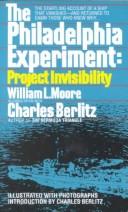
The Philadelphia Experiment: Project Invisibility
The 1979 Bestseller That Took One Unreliable Letter-Writer's Hoax and Made It Ufology's Most Famous Fabricated Legend
Find on Amazon →As an Amazon Associate, OverClassified may earn from qualifying purchases made through this link, at no extra cost to you.
Why This Is Essential Reading
The Philadelphia Experiment: Project Invisibility belongs on this list for a reason that has nothing to do with whether its central claim is credible — it plainly is not — and everything to do with what it demonstrates about how a documented hoax becomes permanent cultural furniture. This is the book that took a single unreliable letter-writer's annotations on a stranger's copy of Morris Jessup's 1955 book, a story so obscure two decades on that it existed mainly as 127 mimeographed pages passed hand to hand, and turned it into a mass-market legend so durable it survives, in popular imagination, alongside Roswell itself. That achievement came at the cost of every standard of verification the book's own framing claims to meet: its sole source had already confessed, in writing, to fabricating the story a decade before publication; its central named scientist, T. Townsend Brown, had no documented connection to the events described and had left the Navy a full year before they allegedly occurred; its narrative closely parallels a work of published fiction; and the U.S. Navy's own archives and the target ship's own documented movements directly and repeatedly contradict the story on its own terms. Read alongside this site's own T. Townsend Brown case file, which the book's Chapter 10 directly produced, and The Case for the UFO, the book whose annotated copy started the entire chain of events a quarter-century earlier, this entry belongs here as essential primary-source reading for understanding not what happened to USS Eldridge in 1943 — nothing did — but how thoroughly, and how profitably, a fabricated story can be built to look otherwise.
Related Cases & Theories
Essential Viewing
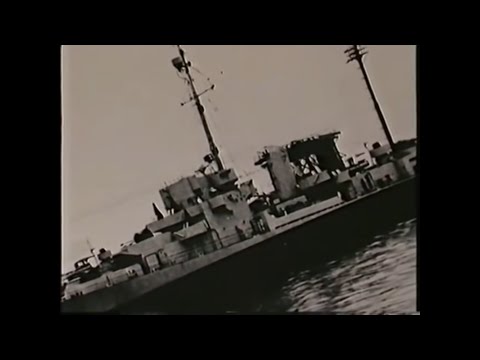
The Philadelphia Experiment History's Mysteries Documentary
That's Weird Man — Archival television documentary coverage of the legend this book carried to a mass audience, including the USS Eldridge claims and the Allen/Allende letters. Verified via YouTube oEmbed before inclusion.
The truth behind the creepy Philadelphia Experiment conspiracy theory
We Are The Mighty — A military-history-focused explainer walking through the real, mundane degaussing research the legend appears to have grown out of, and why the Navy's own records and USS Eldridge's documented movements contradict the story this book popularized. Verified via YouTube oEmbed before inclusion.
Sources Cited
- Berlitz, Charles, and William L. Moore. The Philadelphia Experiment: Project Invisibility. Grosset & Dunlap, 1979 (hardcover first edition, ISBN 9780448157771). Fawcett Crest mass-market paperback reprint (ISBN 9780449242803 / 0449242803, cited here). amazon.com
- "Philadelphia Experiment." Wikipedia (legend origin, Allen/Allende letters, the Varo Edition, this book's role in popularizing the story, Navy denials, USS Eldridge's documented movements, degaussing explanation, Goerman's exposé). en.wikipedia.org
- "Bill Moore (ufologist)." Wikipedia (biography: birth date, education, MUFON role, this book's publication and critical reception, Roswell Incident, MJ-12 documents, 1989 MUFON confession). en.wikipedia.org
- "Charles Berlitz." Wikipedia (biography: birth/death, Berlitz family background, education, military intelligence service, Bermuda Triangle, Larry Kusche's fabrication accusation). en.wikipedia.org
- "Carl Meredith Allen." Wikipedia (biography: birth/death, Merchant Marine service, multiple aliases, the 1969 written admission to APRO's Jim Lorenzen, Goerman's 1980 identification, subsequent contradictory claims). en.wikipedia.org
- Goerman, Robert A. "Alias Carlos Allende." Fate, October 1980 (the original identification of Carl Allen as Carlos Allende, drawing on family interviews and documentation of his history and reputation).
- Carroll, Robert Todd. "The Philadelphia Experiment." The Skeptic's Dictionary (skeptical analysis of the legend's origin, Allen's fabrication, the degaussing explanation, and this book's role and criticized reliance on the novel Thin Air). skepdic.com
- Naval History and Heritage Command. "Philadelphia Experiment: ONR Information Sheet" (September 1996). The Office of Naval Research's formal denial that any radar-invisibility investigation was ever conducted, and confirmation ONR itself was not established until 1946. history.navy.mil
- Naval History and Heritage Command. "Eldridge (DE-173)." Dictionary of American Naval Fighting Ships (official service history documenting the ship's real 1943 movements, confirming it was never in Philadelphia in October 1943). history.navy.mil
- Donovan, Barna William. Conspiracy Films: A Tour of Dark Places in the American Conscious. McFarland, 2011 (critical characterization of this book's methodology and reception).
- "Philadelphia Experiment: Project Invisibility." Open Library edition record (Fawcett paperback, ISBN 9780449242803, 224pp.; cover image source). openlibrary.org
- The Philadelphia Experiment: Project Invisibility. Internet Archive, item philadelphiaexpe00moor (scanned edition; bibliographic and content record). archive.org
- "The Philadelphia Experiment: Project Invisibility." AbeBooks bibliographic listings (Grosset & Dunlap 1979 first-edition hardcover, ISBN 9780448157771; Fawcett Crest paperback reprint collation details). abebooks.com
- This site's own case file: T. Townsend Brown & Electrogravitics (Case File #192), which documents in full this book's fabricated Chapter 10 connection between Brown and the Philadelphia Experiment legend, and rates that connection debunked fabrication.
- This site's own essential-reading entry: The Case for the UFO (ER-111), Morris Jessup's 1955 book whose annotated copy is the documented origin point of the legend this book expanded.
- This site's own essential-reading entry: The Roswell Incident (ER-094), Berlitz and Moore's more consequential 1980 follow-up collaboration.
- This site's own essential-reading entry: Project Beta (ER-064), Greg Bishop's account of the AFOSI disinformation operation co-author William Moore later admitted participating in.
- This site's own key-figures entries: Charles Berlitz, William Moore, and Carl M. Allen ("Carlos Miguel Allende"), for full biographical detail and further case connections.
Have corrections, additional research, or peer-reviewed sources? Help improve this entry.
Suggest an Edit