
Strange Company
Military Encounters with UFOs in World War II
Core Thesis
Strange Company: Military Encounters with UFOs in World War II makes a single, source-driven case: that the modern UAP era did not begin with Kenneth Arnold's 1947 sighting, but nearly three years earlier, when Allied aircrew over Europe and the Pacific began reporting fast, glowing objects that paced their aircraft under apparent intelligent control — and that this earlier wave was taken seriously enough, at the time, to generate a paper trail across two nations' military and intelligence archives. Keith Chester, an artist and filmmaker with no formal historian's credentials, spent eight years (1999–2007) working through the U.S. and UK National Archives and interviewing surviving aircrew to assemble that record largely in the words of the people who generated it at the time: intelligence officers' interrogation reports, squadron war diaries, press coverage, and after-action memos, rather than later ufological retellings. The book does not argue for an extraterrestrial explanation, nor does it claim to have solved the mystery; its central, more modest and more defensible claim is that the phenomenon was real enough, and taken seriously enough by wartime military intelligence on both sides of the Atlantic, to leave behind a genuine documentary record — and that this record includes archival evidence of a joint US–British foo-fighter investigation with a traceable institutional link to the postwar UFO studies programs that followed it.
About the Author
Keith Chester is an artist and filmmaker based in Bel Air, Maryland, not a credentialed historian, and the book is candid about that distinction rather than obscuring it. His interest in the subject traces to a personal experience: after witnessing a daytime UFO in the mid-1960s, he became fascinated with the phenomenon, and by the late 1980s was devoting considerable personal time to UFO research. That research sharpened into a specific, bounded historical project in 1999, when he began investigating aerial phenomena reported by Allied military pilots during the Second World War — an undertaking that would occupy him for the next eight years before Strange Company was published by Anomalist Books in 2007.
Chester's research process, as he has described it in interviews, was archive-first rather than theory-first: repeated visits to the U.S. National Archives in College Park, Maryland — by his own account, well over a hundred separate trips over the life of the project — pulling boxes of official memos, aircrew debriefing accounts, and after-action reports, supplemented by comparable digging in the UK National Archives and by personal interviews with surviving aircrew willing to describe what they had seen decades earlier. That methodology produced a book built largely around primary documents and firsthand testimony rather than secondary ufological literature, a distinction reviewers on both the believer and skeptical sides of the field would go on to single out as the book's defining feature.
Strange Company remains Chester's sole solo book, but not his last word on hidden wartime history: in 2019 he co-authored The Hidden Nazi: The Untold Story of America's Deal with the Devil (Regnery Publishing) with Dean Reuter and Colm Lowery, investigating the disputed postwar fate of SS General Hans Kammler, the engineer of the V-2 rocket program and the Nazi concentration-camp system, who was reported dead in 1945 under circumstances the book argues were never adequately documented. The throughline between the two books — each built on the premise that official wartime and immediate-postwar records contain unresolved, under-examined material worth surfacing through patient archival work rather than speculation — is a consistent one across Chester's full body of published work.
Chester's lack of formal historical or scientific credentials is worth stating plainly, in keeping with this site's own editorial practice of disclosing authors' backgrounds honestly rather than inflating them: he is not an academic, a working journalist, or a credentialed military historian, and Strange Company is, by his own account, the product of a sustained amateur research project rather than institutionally funded scholarship. What the book's reception record shows, discussed in detail below, is that this lack of institutional credential did not prevent the work itself from being judged, by reviewers considerably more skeptical than Chester's own subject matter might suggest, as methodologically disciplined and archivally serious.
Historical Context & Origins
By the time Chester began his research in 1999, the WWII 'foo fighter' wave had long occupied an odd, underdeveloped place in UFO literature: widely known by name, frequently mentioned as the earliest chapter of the modern UAP story, and yet almost never the subject of sustained archival investigation in its own right. Earlier UFO histories — from Edward Ruppelt's 1956 The Report on Unidentified Flying Objects onward — typically devoted a chapter or a few pages to the phenomenon before moving on to the postwar 'flying saucer' era that followed it. No one had yet gone back to the original wartime military records themselves at book length to establish, case by case, exactly what Allied intelligence services had actually documented, investigated, and concluded about the reports in real time, rather than relying on secondhand ufological retellings compiled years or decades after the fact.
That gap existed for an ordinary practical reason: the relevant American and British military and intelligence files were scattered across multiple record groups in two countries' national archives, uncatalogued under any single 'foo fighter' heading, and required exactly the kind of patient, unglamorous box-by-box search Chester describes undertaking over roughly a hundred visits across eight years. The book arrived into a UFO-literature landscape still dominated, at the level of wartime-era coverage, by relatively brief treatments in broader surveys such as Curtis Peebles's Watch the Skies! (1994) and Jerome Clark's own multi-volume The UFO Encyclopedia — both of which discuss the foo fighters, but neither of which had made the wave itself the sole subject of a dedicated, archivally exhaustive book.
Anomalist Books, Chester's publisher, was a small specialty press co-founded by researcher and writer Patrick Huyghe, focused specifically on UFOs, cryptozoology, and other anomalous-phenomena subjects rather than a general trade house or an academic press — a placement that put Strange Company squarely within ufology's own specialist literature rather than aiming, as Curtis Peebles's Smithsonian Institution Press-published book had, at a broader general-history readership. That publishing context makes the book's subsequent citation by credentialed critics such as Fortean Times contributing editor David Clarke and its endorsement by skeptically inclined reviewers, discussed below, more notable rather than less, since specialty-press UFO books rarely cross over into that kind of qualified outside notice.
Core Arguments & Key Concepts
The book's organizing argument is chronological and evidentiary rather than theoretical: Chester traces the phenomenon from its first well-documented cluster of reports in late November and December 1944, when radar-equipped American night-fighter crews of the 415th Night Fighter Squadron flying over the Rhine Valley began reporting fast, glowing balls of light that paced their aircraft through evasive maneuvers, through its spread across the European and Pacific theaters over the following months, to the postwar institutional record he found connecting the wartime investigation to later UFO study programs. Rather than proposing his own explanation for what the objects were, Chester's central move is documentary: laying out, in the words of contemporaneous military records, what witnesses reported, how intelligence officers investigated those reports, and which explanations — secret German weapons, St. Elmo's fire, ball lightning, misidentified flares, combat stress — military investigators themselves considered and, in most individual cases, could not conclusively confirm.
A specific and frequently noted feature of the book's argument is its restraint: multiple reviewers, discussed further below, have observed that Chester introduces intriguing tangential figures — among them physicists Howard P. Robertson and Luis Alvarez, both of whom had wartime roles touching on anomalous aerial phenomena and both of whom would go on, eight years later, to serve on the CIA-convened Robertson Panel of January 1953 — without inflating those connections into a larger conspiratorial argument the documentary record does not support. That panel's resulting internal CIA summary, commonly called the Durant Report after its author, Panel secretary Frederick C. Durant, revisited foo-fighter-era reports among its broader review of UFO reporting and leaned toward electrostatic or electromagnetic explanations resembling St. Elmo's fire, while candidly acknowledging the exact cause of the wartime reports had never been definitively established — a postwar coda Chester's own archival research helped surface.
The book's most consequential specific claim, and the one this site's own Foo Fighters case file and Foo Fighter Continuity Hypothesis theory page both build directly on, is Chester's discovery of archival references to a joint US–British foo-fighter investigation conducted during the war, together with what he characterizes as a documented, traceable institutional link between that wartime inquiry and the U.S. intelligence community's later, formalized UFO study programs — Project Sign, Project Grudge, and Project Blue Book. This is presented as an archival finding rather than a speculative inference: Chester's case rests on the paper trail itself, citing specific record groups and documents rather than asserting the connection without a documentary basis.
Structurally, the book also gives substantial attention to the Pacific theater's own, less frequently discussed foo-fighter reports — several hundred sightings logged by B-29 crews over Japan, alongside reports from the China-Burma-India theater — treating the phenomenon as a genuinely two-theater wartime event rather than a European-only story, a scope broader than most earlier brief treatments of the subject had attempted.
Key Cases & Evidence Discussed
The book's central subject is this site's own The Foo Fighters (WWII Aerial Phenomena) (Case File #160), which lists Strange Company as its own primary book-length source and draws directly on Chester's archival findings, including the joint US–British investigation and the wave's documented spread from the Rhine Valley in Europe to the skies over Tokyo and the wider Pacific theater.
This site's own Foo Fighter Continuity Hypothesis theory page (Classification FFC-001) treats Chester's book as its single most direct piece of documentary evidence, describing his eight years of archival research as having uncovered 'a direct, traceable connection between that wartime inquiry and the intelligence community's postwar UFO studies' — the specific institutional throughline the theory's central continuity claim depends on, extending from the wartime investigation through Project Sign, Project Grudge, and Project Blue Book to AARO today.
This site's own Robertson Panel case file (Case File #226, January 1953) connects to Strange Company through the book's discussion of physicists Howard P. Robertson and Luis Alvarez in their WWII-era context, years before either scientist would sit on the CIA-convened panel that produced the Durant Report's own, ultimately inconclusive, discussion of the earlier wartime reports.
More broadly, the book's Pacific-theater material connects to this site's wider WWII-era case coverage of B-29 crew reports over Japan, and its closing discussion of the postwar institutional record links forward, via this site's own Foo Fighter Continuity Hypothesis file, to the Swedish Ghost Rockets wave of 1946 (Case File #171) and, decades later, to the USS Nimitz Tic Tac Encounter (Case File #003) and the AARO Historical Record Report, Vol. I (Case File #302, 2024) — the modern government document whose own choice to begin its historical review in 1945 that theory file treats as an implicit echo of the continuity Chester's research first documented.
Critical Reception & Controversies
Strange Company carries a foreword by UFO historian Jerome Clark, who wrote that in this 'eye-opening, thoroughly researched book, bristling with surprising revelations, Keith Chester challenges decades of conventional wisdom about the UFO phenomenon.' Fellow UFO author Kevin Randle offered a comparably strong blurb, writing that 'we're going to have to change the history of the UFO phenomenon... the modern era began during the Second World War' — both notable as endorsements from writers whose own work Chester's book was, in effect, arguing should be revised.
Notice from outside ufology's own core literature came from Dr. David Clarke, a Sheffield Hallam University academic and Fortean Times contributing editor with his own record of skeptically-minded UFO history writing, who called the book 'a must-read for ufologists of all persuasions.' Fate magazine reviewer John Zupansic went further, writing that 'Chester has indeed produced a ufological gem' — and the Center for UFO Studies, a research organization not given to indiscriminate praise, independently describes Strange Company on its own reference pages as simply 'the best overview of foo fighter phenomena,' a characterization offered as reference-quality fact rather than promotional blurb.
Reader reception has been positive but modest in volume: as of this article's research, the book holds a 3.76-star average across 21 Goodreads ratings and 3 written reviews — a small enough sample that it should be read as directional rather than statistically robust, consistent with the book's specialty-press circulation rather than any lack of regard within the field. A recurring theme across secondary discussion of the book, echoed by researchers on both the believer and skeptical sides, is praise specifically for the discipline of Chester's method: reviewers have noted that the book introduces genuinely tantalizing figures and connections — including Howard P. Robertson and Luis Alvarez's WWII-era roles — without inflating them into unsupported conspiratorial claims, letting the documentary record speak largely for itself rather than reaching for a grander unifying theory.
That same restraint is also the book's most frequently noted limitation: it does not offer a conclusive explanation for what the phenomenon actually was, and readers hoping for a resolved mystery, or for a theory tying the wave into a larger vasty conspiracy or extraterrestrial framework, are left without one. This is best understood as a deliberate methodological choice rather than an oversight — Chester sticks to what the primary-source record can actually support — but it means the book functions as a documentary history of an unresolved wartime mystery rather than a work that resolves it, a distinction worth stating plainly for readers approaching it expecting answers rather than a rigorously sourced accounting of the question itself. This article's research also turned up no dedicated critical review from a mainstream historical journal or a prominent organized-skepticism venue such as Skeptical Inquirer, a genuine documentation gap worth noting honestly rather than glossing over, and consistent with the book's specialty-press profile relative to some of this site's other Essential Reading entries.
Influence & Legacy
On this site specifically, the book's influence is concretely documented rather than asserted: it is the named primary source for the Foo Fighters case file (#160) and the single most directly cited piece of evidence in the Foo Fighter Continuity Hypothesis theory file, both of which draw their account of the joint US–British wartime investigation and its postwar institutional afterlife directly from Chester's archival findings.
Within ufology's own literature, the book effectively established the 'foo fighters as the true starting point of the modern UAP era' framing that later writers and even government reviewers have continued to build on: the Foo Fighter Continuity Hypothesis file notes that the U.S. Department of Defense's own All-domain Anomaly Resolution Office (AARO) chose to begin its March 2024 Historical Record Report's comprehensive review of government UAP investigation in 1945 — immediately following the wartime wave Chester's book documents — an implicit, if almost certainly coincidental, echo of the same 1944-as-true-origin argument Chester had made seventeen years earlier.
Later, more narrowly focused books on the same subject have followed and, in places, built on Chester's groundwork: Graeme Rendall and Sean Cahill's 2021 UFOs Before Roswell: European Foo-Fighters 1940–1945 covers the same European wartime reports in comparable archival depth, giving the specific European theater material its own dedicated follow-up treatment nearly a decade and a half after Strange Company first established the wave as worthy of book-length archival investigation in its own right.
Chester's own subsequent career bears out the same archival-history instinct that produced Strange Company: his 2019 co-authored book The Hidden Nazi, investigating SS General Hans Kammler's disputed postwar fate, applies the same patient records-based method to a different hidden corner of the WWII documentary record, suggesting Strange Company was the beginning of a sustained research practice rather than a single, isolated project.
The Book
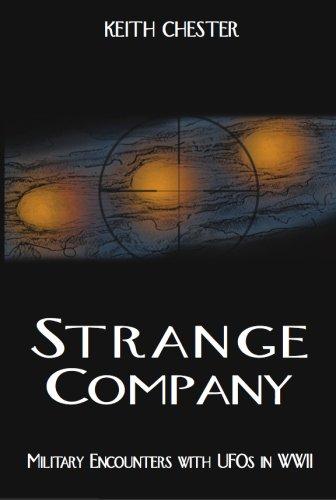
As an Amazon Associate, OverClassified may earn from qualifying purchases made through this link, at no extra cost to you.
Why This Is Essential Reading
Strange Company earns its place on this list as the single most consequential piece of documentary research behind two of this site's own core files — the Foo Fighters case file and the Foo Fighter Continuity Hypothesis — and, on the evidence of its own reception record, as one of the more genuinely disciplined works in the field's specialty literature. Keith Chester's credentials are unusual for this list: not an academic historian, journalist, or scientist, but an artist and filmmaker who spent eight years and, by his own account, well over a hundred trips to two nations' National Archives turning a personal fascination into a sourced documentary record. That discipline is what drew a foreword from Jerome Clark, a blurb from a Fortean Times academic skeptical of easy UFO claims, and an independent characterization from the Center for UFO Studies as simply the best overview of its subject — praise for method as much as for conclusion, since the book reaches no firm conclusion about what the foo fighters actually were. Read as what it is — a patient, primary-source reconstruction of a genuinely under-investigated wartime mystery, not a solved case — it remains the direct evidentiary foundation this site's own foo-fighter coverage still stands on.
Related Cases & Theories
Essential Viewing
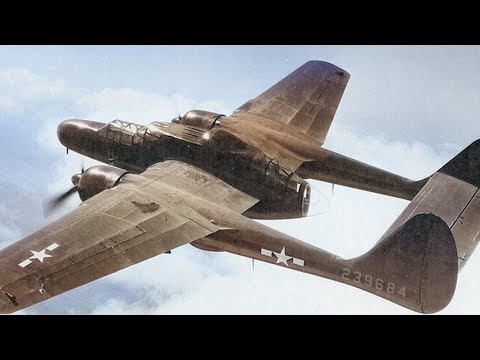
The Mysterious Foo Fighters Of World War II
Grunge — An overview of the WWII foo fighter reports this book chronicles, covering aircrew testimony from both theaters and the competing secret-weapon and natural-phenomenon explanations. Verified via YouTube oEmbed before inclusion.
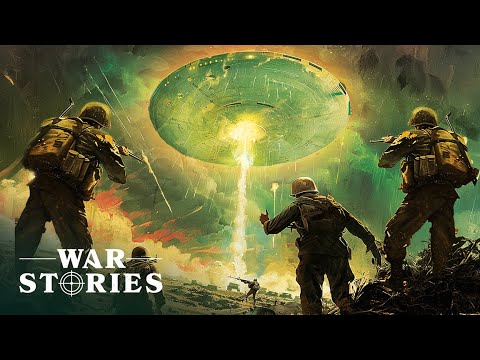
Foo Fighter Phenomena: The Mysterious WW2 UFOs Sighting
War Stories — A dedicated overview of the WWII foo fighter wave that forms this book's subject, covering the wartime reports and the military's investigative response. Verified via YouTube oEmbed before inclusion.
Sources Cited
- Chester, Keith. Strange Company: Military Encounters with UFOs in World War II. Anomalist Books, 2007 (ISBN 9781933665207 / 1933665203). amazon.com
- "Strange Company by Keith Chester." Anomalist Books (publisher's page: description, author bio, page count, price, review blurbs from Jerome Clark, Kevin Randle, David Clarke, and John Zupansic/Fate). anomalistbooks.com
- "Foo Fighters." Center for UFO Studies (CUFOS) (reference page describing Strange Company as "the best overview of foo fighter phenomena"). cufos.org
- "STRANGE COMPANY: Military Encounters with UFOs in World War II by Keith Chester." Goodreads (reader ratings: 3.76-star average, 21 ratings, 3 written reviews). goodreads.com
- "Keith Chester (Author of The Hidden Nazi)." Goodreads (author biography and bibliography). goodreads.com
- "Military Encounters with UFOs & Foo Fighters during WWII." Red Ice Radio (interview with Keith Chester on his research methodology, National Archives visits, and the Robertson/Durant Report connection). redice.tv
- "Military Encounters with UFOs in World War II." Open Minds TV (book announcement and synopsis). openminds.tv
- "UFO Talker" podcast, hosted by Michael Ryan, multi-part interview with Keith Chester on Strange Company and his WWII foo-fighter research. ufotalker.buzzsprout.com
- "The Hidden Nazi: The Untold Story of America's Deal with the Devil." Regnery Publishing (Dean Reuter, Colm Lowery & Keith Chester, 2019, publisher's page). regnery.com
- "Robertson Panel." Wikipedia (overview of the January 1953 CIA-convened panel, the resulting Durant Report, and its members including Howard P. Robertson and Luis Alvarez). en.wikipedia.org
- "The CIA Durant Report, 1953." UFOs at Close Sight (Patrick Gross) (digitized text of the Robertson Panel's resulting internal CIA summary document). ufologie.patrickgross.org
- "What Were the Mysterious 'Foo Fighters' Sighted by WWII Night Flyers?" Smithsonian Magazine (background context on the wartime phenomenon and its historiography). smithsonianmag.com
- "Strange company." Open Library (Anomalist Books, 2007 edition bibliographic record). openlibrary.org
- This site's own case file: The Foo Fighters (WWII Aerial Phenomena) (Case File #160), which cites this exact book as its primary source.
- This site's own theory file: Foo Fighter Continuity Hypothesis, which draws its central archival-continuity claim directly from this book.
- This site's own case file: The Robertson Panel (Case File #226), for the 1953 postwar panel this book's WWII-era material connects forward to.
- This site's own key-figures entry: Keith Chester, for his full biography and case connections.
Have corrections, additional research, or peer-reviewed sources? Help improve this entry.
Suggest an Edit