
Skunk Works
A Personal Memoir of My Years at Lockheed
Core Thesis
Skunk Works: A Personal Memoir of My Years at Lockheed is Ben R. Rich's first-person account, written with journalist and co-author Leo Janos, of the nearly two decades — 1975 to 1991 — he spent as the second director of Lockheed's Advanced Development Projects division, better known as the Skunk Works, after succeeding its legendary founder Kelly Johnson. Structured as an episodic career chronicle rather than an argument, the book traces Rich's own path from a junior thermodynamicist on the U-2 to chief aerodynamicist on the Mach 3+ SR-71 Blackbird, and finally to the program that made him famous: the Have Blue demonstrator and the F-117A Nighthawk, the first operational stealth aircraft, developed and flight-tested in near-total secrecy at Groom Lake, Nevada — the facility publicly known as Area 51. Unlike this site's other black-projects entries, Skunk Works makes no claims about extraterrestrial technology anywhere in its own pages; its relevance to ufology is precisely that absence, paired with the book's own, non-speculative documentation of how genuinely classified stealth test flights generated real Cold War-era UFO reports — a mundane-technology explanation this site treats as a direct counterpoint to the more speculative black-budget literature it otherwise catalogues.
About the Author
Benjamin Robert Rich was born June 18, 1925, in Manila, in the then-Philippine Islands, and earned a BS in mechanical engineering from UC Berkeley in 1949 and an MS in aeronautical engineering from UCLA in 1950 before joining Lockheed as a thermodynamicist. In December 1954 he was transferred into the Skunk Works — Lockheed's secretive Advanced Development Projects unit, run at the time by its founding chief engineer, Kelly Johnson — where he designed the U-2 spy plane's inlet ducts before becoming chief aerodynamicist on the SR-71 Blackbird, responsible for the reconnaissance aircraft's distinctive shock-cone engine inlets and heat-management systems at sustained speeds above Mach 3. When Johnson retired in 1975, Rich succeeded him as the Skunk Works' second director, a post he held until his own retirement in 1991.
Rich's tenure is inseparable from a single technical breakthrough documented at length in this book: in 1975, Skunk Works mathematician and radar specialist Denys Overholser showed Rich a decade-old paper by Soviet physicist Pyotr Ufimtsev, "Method of Edge Waves in the Physical Theory of Diffraction," openly published in the USSR in 1962 because Soviet military reviewers had judged it too abstract to have any weapons application, and translated into English by the US Air Force's Foreign Technology Division in 1971. Overholser used Ufimtsev's equations to build a computer program, nicknamed Echo 1, that could predict an aircraft shape's radar cross-section before it was ever built — the mathematical basis for the faceted, "Hopeless Diamond"-shaped Have Blue demonstrator and, in turn, the F-117A Nighthawk. Rich led that program to a first Have Blue flight on December 1, 1977, at Groom Lake, and the F-117 itself first flew on June 18, 1981 — Rich's own 56th birthday, a coincidence he notes in the book. After the F-117's 1988 public unveiling and its combat debut in the January 1991 Gulf War, Rich retired later that same year regarded, alongside Johnson, as one of the two defining directors in the Skunk Works' history; he was later inducted into the National Aviation Hall of Fame (2005) and had already received the Collier Trophy and the Department of Defense Medal for Distinguished Public Service (1981) during his career.
Co-author Leo Janos (1933–2008) brought his own distinct credentials to the collaboration: a journalist and former speechwriter for President Lyndon B. Johnson from 1966 to 1968, Janos had already ghostwritten Yeager: An Autobiography, test pilot Chuck Yeager's bestselling 1985 memoir, giving him a proven track record turning a famous aviator's oral recollections into a commercially successful first-person narrative before he took on Rich's story. Rich began working with Janos on the book only after his November 1994 diagnosis with the esophageal cancer that would kill him; Skunk Works was published on October 4, 1994, and Rich died on January 5, 1995, at Community Memorial Hospital in Ventura, California — meaning the book's publicity tour and its earliest reviews both arrived while its author was already terminally ill, a fact neither the book's jacket copy nor its contemporary reviews dwelt on but that later retrospectives of Rich's career have folded into how the memoir is now read.
Historical Context & Origins
Rich wrote Skunk Works at a specific hinge point in the Skunk Works' own public visibility. For nearly the entire span of his directorship, the division's signature program — the F-117 — was one of the Pentagon's most tightly held black projects, flight-tested at Groom Lake from 1981 onward and not publicly acknowledged until a November 10, 1988 Pentagon press conference released the first photograph of the aircraft. Its combat debut came just over two years later, when F-117s flew the opening strikes of the January 1991 Gulf War, giving the American public its first look at what Rich's team had spent a decade building in secret and turning the aircraft, almost overnight, from a rumor into a celebrated symbol of American technological dominance.
That same secrecy had already generated a separate, well-documented side effect throughout the 1980s: unpainted, oddly shaped, and highly maneuverable test aircraft flying at odd hours out of Groom Lake fed a genuine wave of Nevada UFO folklore, compounding the earlier reports the U-2 and A-12/OXCART programs had already generated in the 1950s and 1960s. Rich was, by his own account in the book, well aware that his division's own test flights were a real, non-speculative source of some of those reports — a dynamic that the CIA's own declassified 1997 internal history of the U-2 and OXCART programs would later credit with generating roughly half of all UFO reports the Air Force received during the mid-to-late 1950s alone, and one this site's own breakdown of Annie Jacobsen's Area 51 documents in far more narrative detail for the decades that followed.
The book also arrived into a UFO-research landscape that had, by 1994, already spent five years absorbing Bob Lazar's 1989 claims about reverse-engineered alien technology at a facility he called S-4, adjacent to Groom Lake. Rich's memoir supplied no rebuttal to Lazar and does not engage with his claims at all; its relevance to that debate is entirely structural, offering the public, for the first time from an actual Skunk Works director rather than an outside claimant, a detailed, verifiable account of exactly what a real classified aircraft program at that same test range actually looked like from the inside — engineering trade-offs, cost overruns, and a mathematics breakthrough traceable to an openly published Soviet paper, rather than exotic propulsion or extraterrestrial materials.
Core Arguments & Key Concepts
The book's throughline is Rich's own career, used as a lens on nearly forty years of classified aerospace engineering: his work on the U-2's inlet ducts under Kelly Johnson in the mid-1950s, his promotion to chief aerodynamicist on the SR-71 Blackbird, and his eventual succession to the Skunk Works directorship in 1975. Rich devotes substantial space to the SR-71's operational history, including its role photographing Soviet military installations at more than 2,000 miles per hour, and is candid, in a way later reviewers specifically credited, about the programs that failed alongside the ones that succeeded — troubled drone efforts and other Skunk Works "turkeys" he does not omit from the narrative.
The book's most technically detailed chapters reconstruct the origin of the F-117 Nighthawk in granular, first-person detail: Skunk Works mathematician Denys Overholser's 1975 discovery of Pyotr Ufimtsev's decade-old, openly published Soviet radar-diffraction mathematics, and the resulting Echo 1 software that let Lockheed calculate an aircraft's radar cross-section before cutting metal. Rich walks through the resulting Have Blue demonstrator — nicknamed the "Hopeless Diamond" for its faceted, angular shape — its first flight at Groom Lake, Nevada on December 1, 1977, and the eighteen-month flight-test program that convinced the Air Force to fund full-scale development of what became the F-117A, under contract from November 1978.
A parallel argument, less remembered than the stealth material but explicit throughout the book, concerns defense-procurement dysfunction: Rich repeatedly contrasts the Skunk Works' famously lean, compartmentalized, budget-disciplined approach to engineering — a management philosophy he inherited directly from Kelly Johnson's original "14 Rules" — against the cost overruns and bureaucratic bloat he witnessed in the conventional Pentagon acquisition process during his later career, using his own program's efficiency as an implicit argument for procurement reform.
The book closes with the F-117's November 1988 public unveiling and its January 1991 Gulf War combat debut, which Rich frames as the vindication of both the aircraft and the secrecy that had protected it for a decade. Notably absent from the book itself, despite how frequently later secondary sources have implied otherwise, is any claim about extraterrestrial technology, back-engineered alien craft, or antigravity propulsion of the kind found in Nick Cook's The Hunt for Zero Point; Rich's own text stays within the bounds of documented, conventional aerospace engineering throughout, which is precisely what makes the book's later misattributed reputation, discussed below, such a striking case study in how a insider account can be repurposed by claims its own author never put on the page.
Key Cases & Evidence Discussed
The book's own subject — Have Blue and F-117 test flights at Groom Lake, the facility popularly known as Area 51 — sits directly on top of this site's Bob Lazar / S-4 (Area 51) case file (Case File #005): Rich's memoir never engages with Lazar's claims, but it supplies the only first-person, on-the-record account from an actual Skunk Works director of what a real classified aircraft program at that same facility, during an overlapping period, actually involved.
Rich's account of secret test flights generating public UFO reports throughout the 1950s–1980s is the same explanatory mechanism this site's own Foreign Adversary Technology Hypothesis (Theory File FAT-001) catalogues for modern sensor-classification gaps, and the same mechanism Annie Jacobsen's Area 51 documents at much greater length for the U-2 and OXCART programs specifically — this book supplies the Have Blue/F-117 half of that same pattern, from the person who ran the program.
Read alongside Nick Cook's The Hunt for Zero Point, this memoir functions as a useful control case for this site's own Secret Space Program Hypothesis (Theory File SSP-001): both books document real, compartmentalized black-budget secrecy at classified aerospace facilities, but where Cook's book extrapolates from that secrecy toward suppressed antigravity propulsion sourced to a single uncorroborated Nazi-Bell claimant, Rich's insider account of the same broad secrecy culture describes nothing more exotic than radar-absorbing shaping mathematics borrowed from an openly published Soviet physics paper.
The book's epilogue-adjacent public reputation is itself a case worth cataloguing: separate from anything printed in Skunk Works, Rich delivered a recurring joke line at public lectures from as early as 1983 through a widely discussed 1993 UCLA alumni talk — "we already have the means to travel among the stars" and a claim about having "the technology to take ET home" — that has been repeatedly, and incorrectly, cited by UFO-community secondary sources as if it appeared in this memoir, a misattribution discussed at length in Critical Reception below.
Critical Reception & Controversies
Trade reception at publication was strongly positive and largely uncomplicated. Kirkus Reviews called it "an insider's accessible, informative take on what's needed to get futuristic hardware to contemporary flight lines and launching pads," while noting Rich "does not shy from recalling certain of his unit's turkeys" even as he "accentuates the positive." The New York Times Book Review described it as "a gripping technothriller in which the technology is real," the Los Angeles Times called it "thoroughly engrossing," the Seattle Times credited it with finally revealing "the fascinating accomplishments and inner workings of the legendary 'Skunk Works,'" and novelist Tom Clancy's jacket blurb — "Dynamite — the true story of one of America's crown jewels" — helped anchor the book's commercial reception. The book has since been carried on the US Air Force Chief of Staff's professional reading list, a durable institutional endorsement few UFO-adjacent titles on this site's shelf can claim.
The most substantive limitation reviewers noted at the time was structural rather than factual: this is a memoir, dictated by its own subject and shaped with a co-author whose prior credit was ghostwriting Chuck Yeager's autobiography, not an independently reported investigation. Unlike Annie Jacobsen's Area 51, which draws on dozens of separate interview subjects, or Nick Cook's The Hunt for Zero Point, built from Cook's own outside defense-journalism sourcing, Skunk Works offers only Rich's own framing of his own record, with no independent corroboration or countervailing sourcing built into the book's own structure — a limitation inherent to the memoir genre that Kirkus's observation about Rich "accentuating the positive" was already gesturing at in 1994.
The more consequential critical issue, and the one most relevant to this site specifically, is a persistent misattribution controversy that has nothing to do with anything printed in the book. Rich used a recurring joke at public speaking engagements from as early as 1983 — in the wake of the film E.T. the Extra-Terrestrial — closing several talks with some version of "we have the technology to take ET home," and, per multiple secondhand attendee accounts of a 1993 UCLA alumni speech, the more elaborate line "we already have the means to travel among the stars, but these technologies are locked up in black projects... and it would take an act of God to ever get them out." Aviation historian Peter Merlin and other researchers who have traced the quote's actual origin have documented that it does not appear anywhere in Skunk Works itself, that it originated as an audience-tested joke rather than a disclosure, and that no independent recording or transcript of the 1993 remarks has ever surfaced — yet UFO-community sources have repeatedly cited the book directly as the quote's source in the decades since, an error this entry treats as a documented case study rather than a settled fact about what Rich actually believed.
No named historian of American aerospace engineering has publicly disputed the book's core technical narrative — the Ufimtsev/Overholser stealth-mathematics account, the Have Blue and F-117 development chronology, and the SR-71/U-2 material are treated across the aviation-history literature as reliable, and Rich's own role in that history is uncontested. The book's genuine limitations are the ones inherent to any executive's own memoir of his own division's triumphs, not any specific factual dispute a later investigator has substantiated.
Influence & Legacy
Skunk Works has remained continuously in print for three decades, through multiple paperback editions from Back Bay Books, and functions today as the standard popular reference for the Skunk Works' Cold War history, cited across subsequent aerospace journalism, engineering-management literature, and documentary production alike. Its most direct documentary descendant is History Channel's 2019 two-hour special Secrets in the Sky: The Untold Story of Skunk Works, built in part from the same Kelly Johnson- and Rich-era institutional material this book first popularized for a mainstream audience.
Within the aerospace-engineering and defense-management world specifically, the book's account of Kelly Johnson's lean, compartmentalized "Skunk Works model" — small teams, minimal bureaucracy, direct engineer-to-decision-maker communication — has become a recurring case study cited well outside aviation history, in business and innovation-management writing about how to organize small teams for rapid, secretive product development.
Within this site's own catalogue, the book's lasting relevance is narrower and more specific: it is the clearest documented case in this site's library of a real Skunk Works director's own account confirming that genuinely classified test flights — not exotic propulsion, not reverse-engineered alien craft — generated real Cold War-era UFO reports over Nevada, a mundane-technology explanation that sits in direct, useful tension with both the misattributed "ET" quotes wrongly pinned on this book and the more speculative antigravity claims this site catalogues in Nick Cook's The Hunt for Zero Point.
The Book
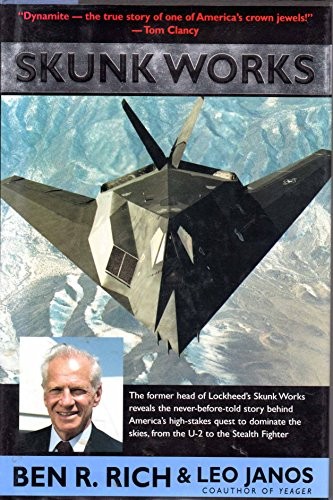
As an Amazon Associate, OverClassified may earn from qualifying purchases made through this link, at no extra cost to you.
Why This Is Essential Reading
Skunk Works earns its place on this list as this site's clearest insider counterweight to its own more speculative black-budget shelf: a genuinely credentialed Skunk Works director's own account of exactly what happened behind Groom Lake's fences during the Cold War — a forgotten Soviet radar-diffraction paper, a faceted demonstrator nicknamed the "Hopeless Diamond," and a decade of secret test flights that really did generate real UFO reports, explained here without a single claim about extraterrestrial technology anywhere in the book's own pages. Read it directly against the "we already have the means to travel among the stars" and "take ET home" lines the UFO community has spent three decades attributing to this memoir specifically; those quotes trace to Rich's own separate public speeches, not to anything printed here, and the gap between what this book actually says and what it is popularly remembered for saying is itself one of the more instructive case studies this site's Essential Reading shelf has to offer.
Related Cases & Theories
Essential Viewing
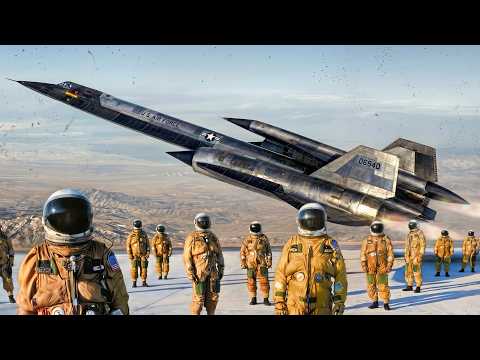
Skunk Works: More Than Just the Blackbird. Lockheed's Secret Company. The Complete Documentary
DroneScapes — A feature-length documentary covering the Skunk Works' history from the U-2 through the SR-71 and F-117, spanning the Kelly Johnson and Ben Rich eras this memoir chronicles firsthand. Verified via YouTube oEmbed before inclusion.
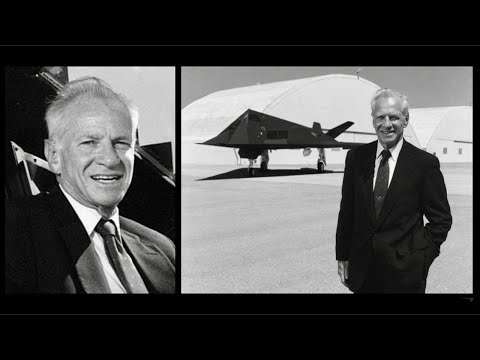
Lockheed Skunk Works director Ben Rich and his remarks on black project "alien" technologies
Eyes On Cinema — Footage of Rich's own 1992-1993 public remarks — the actual source material behind the "take ET home" lines this entry's Critical Reception section documents as absent from the book itself. Verified via YouTube oEmbed before inclusion.
Sources Cited
- Rich, Ben R. and Janos, Leo. Skunk Works: A Personal Memoir of My Years at Lockheed. Little, Brown and Company, 1994 hardcover 1st ed. (ISBN 9780316743303 / 0316743305, cited here). amazon.com
- "Ben Rich (engineer)." Wikipedia (biography; birth/death dates, education, Lockheed career timeline, awards). en.wikipedia.org
- "Leo Janos." Wikipedia (co-author biography; LBJ speechwriting career, Yeager: An Autobiography collaboration with Chuck Yeager). en.wikipedia.org
- "Lockheed Have Blue." Wikipedia (Have Blue demonstrator program, first flight December 1, 1977, DARPA contract history). en.wikipedia.org
- "Lockheed F-117 Nighthawk." Wikipedia (F-117 development, first flight June 18, 1981, 1988 public unveiling, 1991 Gulf War combat debut). en.wikipedia.org
- "Pyotr Ufimtsev." Wikipedia (Soviet physicist's 1962 radar-diffraction paper and its role in stealth-shape mathematics). en.wikipedia.org
- "SKUNK WORKS." Kirkus Reviews (trade review; publication date October 4, 1994). kirkusreviews.com
- "Skunk Works: A Personal Memoir of My Years at Lockheed." US Air Force Chief of Staff Professional Reading List. static.dma.mil
- "Ben Rich: The Invisible Man." Lockheed Martin (official corporate retrospective on Rich's career and the F-117/Gulf War timeline). lockheedmartin.com
- Hayakawa, Norio. "Ben Rich Erroneously Misquoted by the UFO Community." (documents the separate origin of the "travel among the stars"/"take ET home" lines in Rich's own public speeches rather than in this book, citing aviation historian Peter Merlin's research). noriohayakawa.wordpress.com
- "Skunk Works." Open Library (Little, Brown, 1994 hardcover edition record, ISBN 0316743305 / 9780316743303). openlibrary.org
- "Denys Overholser." Wikipedia (Skunk Works mathematician who applied Ufimtsev's equations to build the Echo 1 radar-cross-section software). en.wikipedia.org
- "Secrets in the Sky: The Untold Story of Skunk Works." IMDb (2019 History Channel documentary drawing on the same Skunk Works institutional history this book first popularized). imdb.com
- This site's own essential-reading entry: Area 51 by Annie Jacobsen, for the U-2/OXCART side of the same secret-test-flights-generate-UFO-reports pattern this book documents for Have Blue/F-117.
- This site's own essential-reading entry: The Hunt for Zero Point by Nick Cook, for the more speculative black-budget antigravity literature this book's sober, non-speculative insider account stands in useful contrast to.
- This site's own case file: Bob Lazar / S-4 (Area 51), the claim discussed against the real, documented Skunk Works program history this memoir provides.
- This site's own resources library: Full Reading List.
Have corrections, additional research, or peer-reviewed sources? Help improve this entry.
Suggest an Edit