
Area 51
An Uncensored History of America's Top Secret Military Base
Core Thesis
Built from what Jacobsen describes as dozens of original interviews with former Area 51 pilots, engineers, and security personnel — sources who had never spoken on the record before — Area 51: An Uncensored History of America's Top Secret Military Base argues that the real history of Groom Lake is more consequential, and stranger, than the flying-saucer mythology built up around it: a working chronicle of the U-2, OXCART/A-12, and early drone programs that reshaped Cold War aerial reconnaissance, several of whose genuinely secret test flights are the documented source of real 1950s and 1960s UFO reports. That same interview-driven method, in its uncredited final chapter, also produces the book's most notorious claim: that the 1947 Roswell crash was neither a weather balloon nor an alien craft, but a remotely piloted Soviet aircraft carrying surgically and genetically altered children, built at Josef Stalin's direction by captured Nazi doctor Josef Mengele to stage a Cold War-era War of the Worlds panic — a claim resting on a single anonymous source and near-universally rejected by historians, scientists, and ufologists alike.
About the Author
Annie Jacobsen was born June 28, 1967, in Middletown, Connecticut, attended St. Paul's School in New Hampshire, and graduated from Princeton University, where she served as captain of the varsity women's hockey team. She built her early career as a magazine journalist, serving as a contributing editor at the Los Angeles Times Magazine from 2009 to 2012, and has since become one of the most commercially successful nonfiction chroniclers of American classified programs writing today — a run that includes Operation Paperclip (2014), on the postwar recruitment of Nazi scientists into the American aerospace program; The Pentagon's Brain (2015), a history of DARPA that made her a finalist for the 2016 Pulitzer Prize in History; Phenomena (2017), on classified U.S. government research into ESP and psychokinesis; Surprise, Kill, Vanish (2019), on CIA paramilitary operations; and Nuclear War: A Scenario (2024), a bestseller currently in development as a feature film with Legendary Entertainment and director Denis Villeneuve.
Area 51, published in 2011, was Jacobsen's second book, and it established the interview-driven method that has defined her career since: rather than working primarily from declassified documents, Jacobsen tracked down and interviewed people who had actually worked at the facility — pilots, engineers, security officers, and technicians, several speaking on the record about Groom Lake for the first time — and built her narrative substantially around their firsthand recollections. That method produced real, verifiable value in the book's Cold War aerospace chapters, where multiple named sources corroborate one another's accounts of the U-2 and OXCART/A-12 programs. It is also the method's central vulnerability, one Jacobsen's critics have returned to repeatedly: a single anonymous source, uncorroborated by any other interview or document, is the entire evidentiary basis for the book's Roswell chapter, discussed at length below.
That vulnerability was not new to Area 51. Jacobsen's first book, Terror in the Skies (2005), grew out of her own June 2004 account of what she described as a likely terrorist “dry run” aboard Northwest Airlines Flight 327 — a claim that a subsequent Department of Homeland Security Inspector General review, released in 2007, found no evidence to support; the men she had flagged turned out to be a group of Syrian musicians booked to perform at a California casino two days later. The pattern that recurs across both books — a genuinely credentialed journalist building a sensational, single-source claim that outruns its own evidence — is central to how Area 51's reception, and its place on this list, should be read.
Historical Context & Origins
When Jacobsen began her research, Area 51 occupied a strange position in American public life: universally assumed to exist, endlessly discussed in UFO culture since Bob Lazar's 1989 broadcast claims about a facility he called S-4, and yet never officially acknowledged by the U.S. government by name. That would not change until August 2013, two years after Area 51's publication, when a FOIA request by George Washington University's National Security Archive produced a declassified 1992 CIA history of the U-2 program that used the words “Area 51” in print for the first time in an official document — meaning Jacobsen's book was researched and published entirely inside the era of total official non-acknowledgment it describes.
The book also arrived into a specific gap in the popular literature: decades of UFO-culture speculation about Area 51, running from Lazar's claims through countless documentaries and conspiracy compilations, had produced enormous public interest but very little verified, interview-based reporting on what the base's declassified Cold War programs had actually involved. Jacobsen's access to named former insiders — something even veteran aerospace historians had struggled to obtain given the base's culture of enforced silence — was the book's genuine selling point, and the reason it reached the New York Times bestseller list within weeks of publication.
The book's most historically load-bearing thread — that several genuinely classified 1950s test flights of Lockheed's unpainted, highly reflective U-2 aircraft were mistaken for flying saucers and directly generated a portion of the era's UFO reports — was not new to Jacobsen; the CIA's own declassified 1997 internal history of the U-2 and OXCART programs had already made the same claim, crediting high-altitude U-2 sightings with roughly half of all UFO reports the Air Force received during the mid-to-late 1950s. Jacobsen's contribution was to reconstruct that history in far more narrative, human-scale detail than the CIA's dry official account, using her own interviews with the pilots and engineers who lived it.
Core Arguments & Key Concepts
The book's strongest and most extensively sourced material traces Lockheed's Skunk Works, under legendary engineer Kelly Johnson, developing the U-2 spy plane at Groom Lake beginning in 1955 — a single-seat aircraft capable of photographing Soviet military installations from altitudes of roughly 70,000 feet, flown from a facility built specifically because its remote, dry lakebed geography made it ideal for testing aircraft no one was supposed to see. Jacobsen's interview subjects describe the U-2's role in the 1960 Gary Powers shootdown and the Cuban Missile Crisis reconnaissance flights in granular, firsthand detail unavailable in prior accounts.
A parallel thread follows OXCART, the CIA program that produced the A-12 — the Mach 3.2, 95,000-foot-altitude reconnaissance aircraft that first flew from Groom Lake on April 25, 1962 and became the direct ancestor of the Air Force's better-known SR-71 Blackbird. Jacobsen's reporting on OXCART's test program, including a detailed account of a fatal 1963 test crash reconstructed from a surviving pilot's own recollection, is the section of the book that even its harshest critics have credited as genuinely reported.
The book also documents the human cost of Cold War-era secrecy at the adjacent Nevada Test Site: Jacobsen traces radioactive fallout from 1957's Operation Plumbbob atmospheric nuclear tests contaminating portions of the Area 51 site itself, and follows several Groom Lake workers' later health problems and the government's reluctance to acknowledge a connection — material that situates the base's secrecy culture inside the same broader pattern of Cold War nuclear-testing cover-up documented on this site's own case files and the National Security Archive's declassified test records.
The single most consequential argument in the book, however, arrives in its final chapter and rests on a fundamentally different evidentiary foundation than everything before it: citing one unnamed source Jacobsen would not identify until a 2024 podcast interview named him as former EG&G engineer Alfred O'Donnell, Jacobsen argues the 1947 Roswell crash was a remotely piloted Soviet aircraft — built, she suggests, using design data from captured German aerodynamicists including Reimar and Walter Horten — carrying a crew of surgically and genetically modified adolescents, engineered at Stalin's direction by Auschwitz physician Josef Mengele, intended to crash on American soil and trigger a panic on the scale of Orson Welles's 1938 War of the Worlds broadcast. Unlike the U-2 and OXCART chapters, this claim has no corroborating second source, no supporting document, and no acknowledgment in the book itself of the 1994 and 1997 U.S. Air Force reports that had already attributed the Roswell debris to Project Mogul balloon equipment and the “alien” body reports to anthropomorphic test dummies dropped in later, unrelated high-altitude programs.
Key Cases & Evidence Discussed
The book's treatment of Roswell (Case File #001) is the single most consequential piece of content in this entry: Jacobsen's Soviet-Mengele theory is a direct, if highly controversial, entrant into this site's own catalogued explanations for the case, discussed at length in Critical Reception below, and readers should treat it as a case study in how much narrative weight a single uncorroborated source can carry inside an otherwise well-reported book.
Jacobsen opens the book itself with Bob Lazar / S-4 (Case File #005), using Lazar's 1989 claims about reverse-engineered alien technology as her narrative hook before spending the rest of the book building a skeptical, document-and-interview-based counter-history of what the base actually did. She treats Lazar's claims with open skepticism, noting the absence of verifiable academic credentials behind his stated background — a position consistent with this site's own DISPUTED classification of the Lazar case.
The book's account of Lockheed's U-2 program overlaps directly with this site's own Foreign Adversary Technology Hypothesis (Theory File FAT-001): Jacobsen's central, well-documented claim that classified U.S. and Soviet aircraft testing directly generated a meaningful share of Cold War-era UFO reports is, in effect, the same explanatory logic this site's own theory page applies to modern sensor-classification gaps — and, pointedly, Jacobsen's own Roswell theory asks readers to accept an entirely undocumented Soviet variant of that same argument in her final chapter, without the corroboration her U-2 chapters otherwise insist on.
Groom Lake and the broader Area 51 facility itself is, naturally, the book's central location, and Jacobsen's interview-based reconstruction of its physical layout, its security culture, and its day-to-day operations across five decades remains one of the most detailed nongovernmental accounts of the site's history in print, independent of how its final chapter is assessed.
Critical Reception & Controversies
Trade and mainstream reviews were genuinely divided along almost exactly the line Jacobsen's own book draws between its aerospace history and its Roswell finale. The Los Angeles Times's Scott Martelle called the book “highly readable…deeply researched and documented,” and Kirkus Reviews praised it as “endlessly fascinating — and quite scary,” while cautioning that “it'll be hard to double-check Jacobsen's reporting, so leaps of faith are required.” Writing in the New York Times, Janet Maslin credited Jacobsen's “dogged devotion to her research” on the aerospace material but warned that the Roswell chapter “is only a hasty-sounding addendum to an otherwise straightforward investigative book…Area 51 is liable to become best known for sci-fi provocation” — a prediction that proved accurate.
The Roswell-Mengele claim specifically is the single most discussed, and most criticized, aspect of this book's entire reception, and the criticism has been unusually pointed and specific rather than merely dismissive. Writing in the Washington Post, historian Richard Rhodes — author of the Pulitzer Prize-winning The Making of the Atomic Bomb — called the aerospace reporting “an adequate if error-ridden job,” but concluded that on the Roswell claim specifically, Jacobsen showed herself “at a minimum, extraordinarily gullible or journalistically incompetent.” Space historian Dwayne Day, reviewing the book for The Space Review, called it a “poorly-sourced, error-filled book” whose central Roswell argument “defies common sense.” National security historians Robert S. Norris (a senior fellow at the Federation of American Scientists and author of Racing for the Bomb) and Jeffrey T. Richelson (a senior fellow at the National Security Archive and author of The Wizards of Langley), reviewing the book jointly for the History News Network, went further still, calling the Mengele claim “grotesque,” “risible,” and “obscene,” and noting that Jacobsen's account never engages with the Air Force's own 1994 and 1997 declassified Roswell reports at all — concluding that the book, taken as a whole, was “a case study of how not to research and write about top-secret activities.”
The most striking criticism, however, came from inside Jacobsen's own source base. T.D. Barnes, a former Area 51 radar specialist and president of the veterans' group Roadrunners Internationale — whose members had cooperated extensively with Jacobsen's research — told HuffPost he and other contributors felt blindsided by the final chapter: “It caught us completely by surprise — we were blindsided…the last chapter just destroys what would've been a good book,” adding, “She warped the history to fit her theme,” and telling prospective readers, “I'm just asking people to not read the last chapter.” Jacobsen, for her part, has consistently stood by the reporting, stating she received “overwhelming support” from the men she interviewed and only a handful of objections, and defending her decision not to share the unpublished claim with her other sources before publication as standard journalistic practice.
Ufologists themselves were no more persuaded than the historians. MUFON's Clifford Clift, after reviewing the claim, said he “found little truth in this theory” and called it “a stretch,” and the episode has been widely cited in ufology commentary since as an example of how a single anonymous source can generate headlines regardless of a claim's actual evidentiary weight. Jacobsen did not identify her source publicly until a 2024 appearance on the Lex Fridman Podcast, where she named him as Alfred O'Donnell, a former EG&G engineer — a disclosure that, thirteen years after publication, still left the claim resting on exactly the one uncorroborated witness his critics had objected to from the start.
Influence & Legacy
Despite — or in some readings, partly because of — the Roswell controversy, Area 51 became a New York Times bestseller and remains, more than a decade later, one of the most widely read single-volume popular histories of the facility, regularly cited in subsequent documentaries, news features, and books about Groom Lake regardless of their own position on Jacobsen's final chapter.
The book's central, well-supported claim — that genuinely classified 1950s Cold War aircraft testing directly generated real UFO sighting reports — has become one of the most frequently cited pieces of evidence for explanations along the lines of this site's own Foreign Adversary Technology Hypothesis, independent of how the same book's final chapter is regarded; the two arguments are frequently cited separately by writers who accept one and reject the other.
The Roswell-Mengele claim itself achieved a wider cultural half-life than the book that introduced it: it was dramatized as a central plot device in Season 2 of History Channel's Project Blue Book (2019), introducing the theory to a television audience many times larger than the book's own readership and further entrenching — accurately or not — Jacobsen's name as shorthand in ufology commentary for the risks of single-source sensationalism inside otherwise credentialed journalism.
Within Jacobsen's own subsequent career, Area 51 functions as the clearest documented case study in the pattern this entry's Critical Reception section traces across her bibliography: a genuinely skilled interview-based reporter whose most extraordinary claims — from the 2004 Flight 327 “dry run” to the Roswell chapter here — have repeatedly outrun the single-source evidence supporting them, even as her more conventionally sourced work, including her Pulitzer-finalist history of DARPA, has been received as serious, credible history.
The Book
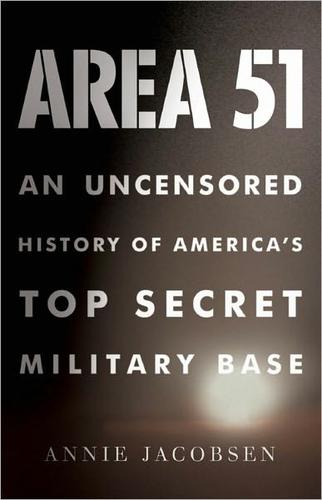
As an Amazon Associate, OverClassified may earn from qualifying purchases made through this link, at no extra cost to you.
Why This Is Essential Reading
Area 51 earns its place on this list less as a settled reference than as this site's clearest working example of a specific, recurring failure mode in popular UAP-adjacent nonfiction: a genuinely accomplished journalist, building real narrative history from dozens of on-the-record insider interviews about the U-2, OXCART, and Groom Lake's Cold War secrecy culture, closes that same book with an extraordinary, single-anonymous-source claim — that Roswell was a Soviet-Mengele hoax involving surgically altered children — that no other historian, space-program veteran, or ufologist has ever independently corroborated, and that several of Jacobsen's own interview subjects have publicly said she should never have published. Read the U-2 and OXCART chapters for what they are: among the best interview-based popular accounts of Area 51's real Cold War role in print. Read the final chapter alongside the named, documented pushback from Richard Rhodes, Dwayne Day, Robert S. Norris, and Jeffrey T. Richelson collected above, and treat it as a cautionary study in exactly how far a credentialed byline can carry an unsubstantiated claim before the reporting underneath it can support the weight.
Related Cases & Theories
Essential Viewing
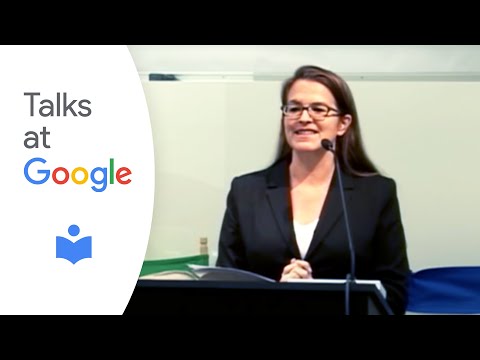
Area 51: Uncensored History of America's Top Secret Military Base | Annie Jacobsen | Talks at Google
Talks at Google — Jacobsen discusses her research process and the book's Cold War aerospace findings at Google's Santa Monica office shortly after publication. Verified via YouTube oEmbed before inclusion.

The Area 51 "Aliens" Were Man-Made, Insider Confessed | Annie Jacobsen
Danny Jones Clips — Jacobsen lays out and defends her book's most controversial claim directly, the Roswell/Mengele theory discussed at length in this entry's Critical Reception section. Verified via YouTube oEmbed before inclusion.
Sources Cited
- Jacobsen, Annie. Area 51: An Uncensored History of America's Top Secret Military Base. Little, Brown and Company, 2011 (ISBN 9780316132947 / 0316132942, matching the edition already cited on this site's own resources library). amazon.com
- "Area 51: An Uncensored History of America's Top Secret Military Base." Wikipedia (synopsis, publication details, and collected critical reception). en.wikipedia.org
- "Annie Jacobsen." Wikipedia (biography, education, career chronology, and full bibliography). en.wikipedia.org
- Norris, Robert S. and Richelson, Jeffrey T. "Review of Annie Jacobsen's 'Area 51: An Uncensored History of America's Top Secret Military Base.'" History News Network. historynewsnetwork.org
- Day, Dwayne A. Review of Area 51 by Annie Jacobsen. The Space Review. en.wikipedia.org (author identification; original review hosted at thespacereview.com)
- Rhodes, Richard. "Annie Jacobsen's 'Area 51,' the U.S. top secret military base." The Washington Post, May 26, 2011. washingtonpost.com
- Maslin, Janet. "Dark Corners of a Desert, Hidden in Plain Sight." The New York Times (review of Area 51). nytimes.com
- Martelle, Scott. Review of Area 51. Los Angeles Times Book Review, May 30, 2011 (as previously excerpted at anniejacobsen.com; the excerpt page has since been taken down and no archived mirror was found).
- "AREA 51." Kirkus Reviews, June 7, 2011. kirkusreviews.com
- "Area 51 Personnel Feel 'Betrayed' By Annie Jacobsen's Soviet-Nazi UFO Connection." HuffPost, updated 2011 (T.D. Barnes and Roadrunners Internationale reaction). huffpost.com
- "Area 51 loses mystique for some after accusations of hoax." The Christian Science Monitor, May 25, 2011. csmonitor.com
- "Annie Jacobsen 'Terror in the Skies.'" Snopes.com (fact-check of Jacobsen's 2005 book and the Northwest Airlines Flight 327 claim). snopes.com
- "Annie Jacobsen: Nuclear War, CIA, KGB, Aliens, Area 51, Roswell & Secrecy." Lex Fridman Podcast #420, transcript (2024 interview in which Jacobsen identifies her Roswell source as former EG&G engineer Alfred O'Donnell). lexfridman.com
- "CIA's Vault Reveals Secrets of Area 51." National Security Archive, George Washington University (2013 FOIA release of the declassified 1992 CIA U-2 program history, the first official document to use the words “Area 51”). nsarchive.gwu.edu
- This site's own case file: Roswell, for this site's full catalogue of competing explanations, including this book's Soviet-Mengele theory.
- This site's own case file: Bob Lazar / S-4 (Area 51), the case this book opens with and treats skeptically.
- This site's own theory page: Foreign Adversary Technology Hypothesis, the explanatory framework this book's U-2 chapters substantiate for Cold War-era sightings.
- This site's own resources library: Full Reading List, where this exact 2011 hardcover edition (ISBN 0316132942) was already cited in connection with the Bob Lazar / S-4 case file prior to this entry.
Have corrections, additional research, or peer-reviewed sources? Help improve this entry.
Suggest an Edit