
Mystery Stalks the Prairie
Unexplained Cattle Killings and UFOs in Montana — The First Book on the Mutilation Phenomenon, Written by the Investigating Officer
Core Thesis
Mystery Stalks the Prairie is the first book-length examination of the American cattle mutilation phenomenon, and it was written by the officer who ran the investigation. Keith Wolverton, a captain with the Cascade County Sheriff's Office, led a five-county inquiry across north-central Montana that logged 67 mutilation cases between August 1974 and December 1977, running in parallel with more than a hundred reports of unidentified helicopters and, on at least one night, a radar contact that Malmstrom Air Force Base and NORAD both agreed was not a conventional aircraft. He wrote the book in 1976 with the Montana journalist Roberta Donovan. This site's case file on the wave is classified Disputed, and this book is the primary source it rests on.
About the Author
Keith Wolverton was a serving law enforcement officer, not a writer or a ufologist. As a captain in the Cascade County Sheriff's Office he was assigned the mutilation investigation when the reports began arriving in 1974, and he ran it for more than three years across five counties, working with the sheriffs of the neighbouring jurisdictions and with local veterinarians and pathologists. He wrote the book because his own investigation could not explain what he had documented.
That professional position is the source of the book's authority and of its limitations, and both should be stated. Wolverton had subpoena power, evidence-handling training, access to fresh carcasses within hours, veterinary cooperation and a sworn duty to consider mundane explanations first. He also had no scientific training, no laboratory, no budget for chemical assay, and no comparison population — and the investigation he ran would not satisfy a forensic pathologist today.
Roberta Donovan was a Montana newspaper journalist, and the collaboration is visible in the book's shape. The reporting discipline, the attribution of statements to named ranchers and officers, and the refusal to editorialise beyond the evidence are hers; the case detail and the investigative chronology are his. It is a considerably better-organised book than a working deputy would have produced alone.
The 2021 Riverbend Publishing edition is the one most readers will encounter and it is materially different from the 1976 original. It adds an introduction by Joan Bird, a new epilogue in which Wolverton describes what he has learned in the decades since, and a 2016 interview with Wolverton and Sheriff Pete Howard, another Montana lawman who investigated mutilations and UFO reports. Readers wanting Wolverton's 1976 position specifically should be aware that the current edition contains his later thinking as well.
Wolverton has never claimed to know what caused the mutilations, and that restraint is the most important thing about him as a source. He has consistently said that the cases he examined did not look like predation to him and that he could not explain them, which is a different and far more defensible statement than the ones the phenomenon's later literature has generally made.
Historical Context & Origins
The mutilation phenomenon as a national story begins with a horse. In September 1967 an Appaloosa mare in Colorado's San Luis Valley — universally misremembered as 'Snippy,' though that was another animal on the same ranch — was found dead with its head and neck stripped of flesh, and the case entered the press as an unexplained mutilation. This site covers it in its own file. What followed in the 1970s was different in scale: hundreds of reports across the western states, sustained over years, involving working ranchers with real economic losses.
Montana's wave began with a single report to the Cascade County Sheriff's Office on August 14, 1974 and escalated sharply through the autumn of 1975. It ran across five north-central counties — Chouteau, Judith Basin, Pondera, Teton and Cascade — and by December 1977 deputies had logged 67 cases.
The reported pattern was consistent and is what made the phenomenon national news: organs removed with what ranchers and some veterinarians described as surgical precision — tongues, genitals, udders, rectums, eyes — an apparent absence of blood, and no predator tracks around the carcass. Several Montana cases were examined immediately after fresh snowfall, which both helped and complicated the track evidence.
The second thread is what distinguishes the Montana investigation from every other. Wolverton's office logged more than a hundred reports of unidentified, often unmarked helicopters in the same counties over the same period. Helicopters are not ambiguous lights; they are large, loud, expensive machines that someone owns and someone flies, and a hundred sightings of them by ranchers who know what aircraft look like is a datum requiring explanation regardless of what caused the mutilations.
The third thread is the aerial one. On at least one night the sheriff's investigation obtained radar corroboration from Malmstrom Air Force Base and NORAD for an object both agreed was not conventional aircraft, described by witnesses as a rectangular object of enormous size. Malmstrom's presence in the story matters twice over: it is a strategic missile installation, and it has its own documented UFO history from March 1967.
The national context in which the wave was interpreted is unflattering to everyone. This was the mid-1970s: Watergate had made government conspiracy a default assumption, cult panic was building, and the press was hungry for both. Sheriff Marvin Adams in Nebraska proposed cult involvement; a Minnesota veterinarian argued that fox teeth could produce the scissor-like cuts. Both explanations were reported nationally before either was tested.
The federal answer came after the book. Kenneth Rommel's Operation Animal Mutilation, funded by a federal law-enforcement grant and reported in 1980, and the FBI's own 1979 assessment, both concluded that predation and normal post-mortem processes accounted for the cases examined. Rommel's report remains the most thorough sceptical investigation and this library treats it separately. Wolverton did not accept it as an explanation for the Montana cases, and no federal agency ever opened a dedicated investigation into them.
Core Arguments & Key Concepts
The cases were investigated as crimes, and that is what makes the book different. Wolverton's implicit argument is procedural rather than theoretical: these were treated as reports of livestock destruction by a sheriff's office with jurisdiction, an obligation to consider ordinary causes, and access to the scene. Almost nothing else in the mutilation literature was produced that way, and the difference in evidential quality is large.
Predation was considered first and was rejected on the ground, not in principle. This is the book's central factual claim and the one everything turns on. Wolverton's position is not that predators cannot produce apparently clean cuts — he is aware that they can — but that in the specific cases he examined, often within hours and sometimes in fresh snow, the absence of tracks, the character of the incisions and the pattern of organ removal did not fit the predation he had seen throughout his career in a ranching county.
The helicopter reports are the strongest and least discussed evidence. More than a hundred reports of unidentified, frequently unmarked helicopters across five counties over three years is not a claim about the paranormal at all. It is a claim about aircraft, and it demands a conventional answer: someone was flying them, they were expensive to operate, and no agency has ever acknowledged them. Whatever caused the mutilations, this element has never been explained and rarely even addressed.
Independent radar corroboration changes the standing of the aerial reports. The night on which Malmstrom and NORAD both tracked an object neither identified as conventional is the investigation's single strongest datum, because it is instrumented, institutional and independent of the ranchers. It does not connect the object to the mutilations — Wolverton is careful about this — but it establishes that something unexplained was in that airspace during the wave.
Correlation was documented and never claimed as causation. The book's most creditable restraint. Mutilations and aerial reports occurred in the same counties in the same period; Wolverton records the overlap, states that his investigation could not prove a connection, and leaves it there. Almost every subsequent writer on the subject has been less careful, and the difference between this book and the literature it spawned is largely a difference in that discipline.
The investigation's own methods were inadequate and the book does not conceal it. Wolverton describes what was tried, including a field experiment involving tranquilliser darts intended to test one hypothesis about how animals were being taken, and the results were inconclusive. There was no funded laboratory programme, no systematic control sampling of ordinary dead cattle, and no toxicology worth the name. A reader should hold that limitation firmly: the book documents an investigation that was serious, thorough by county-sheriff standards, and scientifically underpowered.
The economic and social damage was real regardless of cause. The most underrated argument in the book. Ranching families lost animals, sat up armed through the night, and were subsequently treated as credulous by a national press that had come for a story. Whatever the mutilations were, their effect on those communities is a documented fact, and it is the part of the phenomenon that requires no theory at all.
Key Cases & Evidence Discussed
The first Cascade County report, August 14, 1974. The case that opened the file, and the point from which Wolverton's chronology runs. Covered in this site's case file.
The 1975–77 five-county sequence. The 67 logged cases across Cascade, Judith Basin, Chouteau, Teton and Pondera counties, with the reported pattern of precise organ removal, apparent exsanguination and absent predator sign.
The snowfall cases. Several mutilations examined immediately after fresh snow, which Wolverton treats as the most diagnostic subset because the surrounding ground recorded — or failed to record — whatever approached the animal. The strongest cases in the book and the ones a sceptical reader should test hardest.
The unidentified helicopter reports. More than a hundred sightings across the five counties during the wave, frequently of unmarked aircraft, reported by ranchers familiar with the aviation that normally operates over their land. The most conventional and least explained element of the whole investigation.
The Malmstrom and NORAD radar night. The occasion on which both Malmstrom Air Force Base and NORAD tracked an object neither could identify as conventional aircraft, coincident with ground reports of a very large rectangular object. Institutional, instrumented corroboration of an aerial anomaly during the wave.
The tranquilliser field experiment. The investigation's attempt at an active test rather than passive documentation. Inconclusive, and included in the book anyway, which is more than most authors in this subject manage.
Sheriff Pete Howard's parallel investigation. The neighbouring-county lawman who worked the same phenomenon and appears alongside Wolverton in the 2016 interview added to the current edition — a second serving officer reaching substantially the same conclusion independently.
The national comparison cases. The Colorado wave running concurrently, whose press coverage began to shape how Montana ranchers and some officers interpreted what they were seeing — a contamination effect the book documents without fully reckoning with.
Critical Reception & Controversies
In 1976 the book was a regional publication with no trade distribution and was received as local-interest journalism. Its reputation was built afterwards and from below: it became the document that every subsequent investigator of mutilations started from, because it was the only one written by someone with a badge, a case file and a scene.
That standing has been remarkably durable. The book's own publisher describes it as the first book to seriously examine cattle mutilations and related UFO reports and as the continuing touchstone for such investigations around the world, and the claim is defensible — not because the book solved anything, but because nothing comparable has been produced since.
The decisive scientific criticism arrived in 1979 and 1980. The FBI's assessment concluded that predation accounted for the cases it reviewed, and Kenneth Rommel's federally funded New Mexico investigation reached the same conclusion after examining carcasses with veterinary support and controlled comparison. The known post-mortem sequence — blowfly and small-scavenger removal of soft tissue at the body's openings, blood settling and coagulating internally rather than draining, hide desiccating and splitting along clean-looking lines — accounts for the classic mutilation presentation without requiring anything unexplained.
Wolverton has never accepted that this accounts for the Montana cases, and a fair assessment has to weigh two things against each other. On one side, the pathological explanation is well established, was tested with better resources than a county sheriff had, and predicts exactly the appearance ranchers described. On the other, Wolverton examined dozens of carcasses in a ranching county he had policed for years, frequently within hours and sometimes in snow, and he is not a man who had never seen a coyote-killed cow.
The most serious methodological criticism of the book is the absence of a control series. Wolverton documented 67 animals reported as mutilations; he did not systematically examine a comparable number of cattle that died ordinarily and were found at similar intervals. Without that comparison the central claim — that these carcasses looked different — cannot be tested, and this is the gap Rommel's investigation was designed to close.
There is also the contamination problem, which the book acknowledges only implicitly. Once 'mutilation' entered the local vocabulary and the national press arrived, ordinary livestock deaths began to be reported and interpreted through that frame. Some proportion of the 67 cases is almost certainly ordinary predation newly noticed, and neither Wolverton nor anyone since can say which.
What survives all of this is the helicopter file and the radar night. Those elements are not explained by post-mortem biology, they were not produced by rancher misinterpretation, and no sceptical account has engaged with them seriously. A reader who concludes that the mutilations were conventional still has to say who was flying more than a hundred unmarked helicopters over five Montana counties, and nobody ever has.
Influence & Legacy
The book created the genre. Every later treatment of cattle mutilation — Linda Moulton Howe's An Alien Harvest, the extensive 1990s and 2000s literature, and the sceptical reappraisals in Stalking the Herd — proceeds from the case material Wolverton assembled, either building on it or arguing with it.
Its more specific legacy is the standard of documentation it set and that the field promptly abandoned. Wolverton produced dated case files, named witnesses, veterinary involvement, official radar correlation and an explicit refusal to claim causation. Within a decade the mutilation literature had moved to unsourced photographs, anonymous informants and confident conclusions, and it has never returned to the standard of its founding text.
The helicopter material has had a quieter and more interesting afterlife. It is the strand that most attracts researchers who reject the extraterrestrial reading entirely — because unmarked helicopters over ranchland in the 1970s point toward human agency of some kind, whether that is unacknowledged government activity, private contractors, or something else — and it is the part of the Montana file that remains genuinely open.
Its cautionary legacy concerns the limits of good faith. Wolverton was honest, diligent and professionally competent, and his investigation still could not settle the question, because the tools required were not available to a county sheriff's office and no agency with those tools took the Montana cases up. That failure — not the mutilations themselves — is the durable scandal of the episode.
The Book
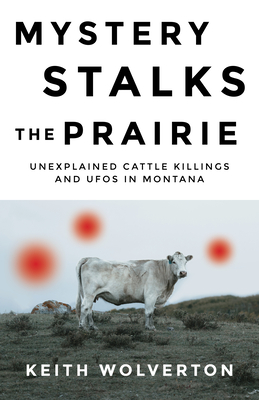
Mystery Stalks the Prairie
Unexplained Cattle Killings and UFOs in Montana — The First Book on the Mutilation Phenomenon, Written by the Investigating Officer
Find on Amazon →As an Amazon Associate, OverClassified may earn from qualifying purchases made through this link, at no extra cost to you.
Why This Is Essential Reading
Read it. Mystery Stalks the Prairie is the founding document of the cattle mutilation literature and the only one written by a serving investigator with a case file, and it is better than almost everything that followed precisely because Wolverton documented a correlation and declined to explain it. Its central claim — that these carcasses did not look like predation to an officer who had seen a great deal of predation — is not scientifically established and has been answered, at least in part, by Rommel's better-resourced federal investigation and the known post-mortem biology. But the two elements nobody has answered are still sitting in it: more than a hundred reports of unmarked helicopters, and a night when Malmstrom and NORAD both tracked something they could not identify. Read it with Stalking the Herd for the sceptical reconstruction and against this site's Montana case file, and get the 2021 edition for Wolverton's own epilogue and the Pete Howard interview.
Related Cases & Theories
Sources Cited
- Donovan, Roberta, and Keith Wolverton. Mystery Stalks the Prairie. T.H.A.R. Institute, Great Falls, Montana, 1976. Updated and expanded edition: Riverbend Publishing, July 26, 2021, 208 pp., with an introduction by Joan Bird, a new epilogue by Wolverton and a 2016 interview with Wolverton and Sheriff Pete Howard. ISBN-10 1606391224 / ISBN-13 9781606391228. amazon.com
- Google Books edition record, Mystery Stalks the Prairie: Unexplained Cattle Killings and UFOs in Montana — publisher, 2021 edition data, 208-page extent, and the publisher's description of Wolverton's Cascade County service and the book's standing as the first serious examination of cattle mutilations. books.google.com
- Open Library edition record, ISBN 1606391224 — bibliographic verification. openlibrary.org
- Goodreads edition record — edition data and cover-art source for the Riverbend 2021 printing. goodreads.com
- Barnes & Noble catalogue record — edition and format verification. barnesandnoble.com
- ThriftBooks catalogue record — independent bibliographic listing and edition history. thriftbooks.com
- MontanaLibrary2Go / OverDrive catalogue record — the book's holding in the Montana public library system. montana.overdrive.com
- Bozeman Daily Chronicle, "Grim smiles: the enduring mystery of cattle mutilations in Montana" — the August 1974 first Cascade County case, the scale of the response by the end of 1977, the reported pattern of organ removal, Sheriff Marvin Adams's cult theory and the Minnesota veterinary fox hypothesis, the FBI's 1979 predation conclusion, and the disagreement of the Montana investigator. bozemandailychronicle.com
- Everand edition record, Mystery Stalks the Prairie: Unexplained Cattle Killings and UFOs in Montana — the current edition's contents and the Joan Bird introduction. everand.com
- Wikipedia, "Cattle mutilation" — the phenomenon's history, the standard post-mortem and scavenger explanation, the FBI's involvement and Kenneth Rommel's Operation Animal Mutilation. en.wikipedia.org
- Wikipedia, "Malmstrom Air Force Base" — the Great Falls strategic missile installation whose radar corroborated an unidentified object during the wave, and which has its own documented 1967 UFO history. en.wikipedia.org
- Wikipedia, "Cascade County, Montana" — the jurisdiction in which Wolverton served and in which the first report was made. en.wikipedia.org
- Wikipedia, "Linda Moulton Howe" — the journalist whose later mutilation work built directly on the case material Wolverton assembled. en.wikipedia.org
Have corrections, additional research, or peer-reviewed sources? Help improve this entry.
Suggest an Edit