
An Alien Harvest
Further Evidence Linking Animal Mutilations and Human Abductions to Alien Life Forms
Core Thesis
An Alien Harvest: Further Evidence Linking Animal Mutilations and Human Abductions to Alien Life Forms is investigative journalist and documentary filmmaker Linda Moulton Howe's 455-page, self-published expansion of the case file she first assembled for her Emmy-winning 1980 television documentary A Strange Harvest. Compiling nearly a decade of additional field interviews with ranchers, sheriffs, veterinarians, and hypnotherapy subjects alongside facsimile reproductions of law-enforcement reports and government correspondence, the book argues that a meaningful subset of the thousands of unexplained cattle and other animal deaths reported across the American West and internationally since the 1960s cannot be accounted for by ordinary predation or decomposition, and that the pattern of precise, bloodless tissue removal instead points toward a form of deliberate biological-material collection by a non-human intelligence — a claim Howe connects directly to separate human abduction testimony, most prominently the hypnotic regression of Texas witness Judy Doraty that Howe had already filmed for A Strange Harvest nearly a decade earlier. With a foreword by computer scientist and long-time UFO researcher Jacques Vallee, the book is presented as evidence-based advocacy journalism rather than a neutral survey, and this site's own treatment of it, consistent with its treatment of the broader mutilation phenomenon on the Mutilation of Snippy the Horse case file, weighs Howe's case record against the federally funded 1979–1980 investigation that reached the opposite conclusion.
About the Author
Linda Moulton Howe (b. 1942) earned a B.A. cum laude in English literature from the University of Colorado in 1965 and an M.A. in communication from Stanford University in 1968, where her master's project involved the Stanford Linear Accelerator. She spent the 1970s and early 1980s as a working broadcast documentarian rather than as a paranormal investigator: at KMGH-TV in Denver from 1978 to 1983 she directed special projects on pollution, uranium contamination, and other environmental subjects, and earlier in her career she was on staff at WCVB-TV in Boston during a period in which that station received an institutional Peabody Award, one of American broadcasting's most prestigious honors, for its medical and science programming. This detail is worth stating precisely rather than loosely, because it is often compressed in secondhand profiles into simply "Howe is a Peabody Award winner": the record indicates the Peabody recognized WCVB-TV's institutional slate of programming during her time on staff there, for medical and science reporting that predates and is unrelated to the cattle-mutilation investigation this book documents, not an award given to her personally for A Strange Harvest or An Alien Harvest. Her documented personal awards for the mutilation work specifically are a Regional Emmy for A Strange Harvest (Denver chapter, 1980, and again from the Phoenix/Scottsdale chapter in 1981) and a national Emmy nomination — genuine broadcast honors in their own right, but a different tier and a different body of work than the Peabody.
Howe's pivot toward the subject this book covers began not as paranormal curiosity but as an environmental-contamination assignment: assigned to investigate a wave of unexplained Colorado cattle deaths in the late 1970s, she has said the story shifted for her only after repeated, independently sourced witness testimony pushed her past a conventional-predation explanation. The result was A Strange Harvest, a 90-minute special that aired on KMGH-TV in Denver on May 25, 1980, to the largest audience the station had drawn for a locally produced documentary, and which included Howe's own filmed hypnotic-regression footage of Texas witness Judy Doraty describing what Doraty said was a mutilation performed aboard a craft — the specific case that gave Howe's work its now-signature bridge between animal mutilation and human abduction testimony, and the connection this 1989 book's own title makes explicit nine years later.
In the decades after this book's 1989 publication, Howe built a full-time career around the beat: she launched the subscription investigative site Earthfiles.com, appeared as a recurring guest on Art Bell's and later George Noory's Coast to Coast AM from the early 1990s through 2019, and became the publicly credited custodian of the "Art's Parts" bismuth-magnesium alloy samples — material a self-described military source known as "Mr. X" mailed to Bell in 1996 — before their materials eventually reached the To The Stars Academy for the metallurgical analysis this site's own Linda Moulton Howe key-figures card and other entries discuss in more detail. This article keeps that later career brief by design, since the key-figures card already covers it; the relevant biographical throughline for this specific book is the twenty-two-year run from a credentialed, award-winning environmental broadcast journalist to the field's most sustained single voice connecting cattle mutilation directly to alien abduction claims.
Historical Context & Origins
The genre this book documents traces to a single, now-thoroughly re-examined founding case this site has already published in detail: the September 1967 death of a horse in Colorado's San Luis Valley, misnamed "Snippy" by the press, whose case file on this site (The Mutilation of Snippy the Horse, Case File #237, rated Debunked, 18/100) concludes that a veterinarian's later discovery of infected bullet wounds and two students' confession to the shooting resolved the case's central claim, even as its more elaborate secondary details went on to define the genre's storytelling conventions for decades. That single 1967 case metastasized through the 1970s into thousands of subsequently reported livestock deaths across the American West, generating enough public alarm that the FBI opened a file — consisting mainly of press clippings and inter-agency correspondence from roughly 1974 to 1978, now released in full at the Bureau's own vault.fbi.gov — while explicitly noting it lacked general jurisdiction to investigate the reports directly outside tribal lands.
The most consequential event this book was written to answer arrived nearly a decade before its publication: in 1979 the Law Enforcement Assistance Administration issued a roughly $44,000 federal grant funding an investigation led by Kenneth Rommel, a former FBI agent, concentrated on reports in New Mexico. Rommel's 1980 findings, delivered in a widely covered press conference and a formal report to the Bureau, concluded there was nothing genuinely mysterious to explain, attributing the reported wound patterns to ordinary predator and scavenger activity and post-mortem bloating — a conclusion a 1979 Washington County, Arkansas sheriff's department field experiment independently corroborated by demonstrating that a bloating, unscavenged carcass alone could produce skin splits resembling the genre's supposedly "surgical" incisions. Howe's own 1980 documentary and this 1989 book were produced and expanded directly against the backdrop of Rommel's already-published, government-funded rebuttal, and the book devotes considerable space to disputing Rommel's methodology and conclusions rather than ignoring them.
The book itself arrived nine years after A Strange Harvest rather than immediately following it, a gap Howe filled with continued independent field investigation — further rancher and law-enforcement interviews, additional hypnotic-regression sessions, and correspondence with government agencies — that the book compiles into a single, heavily documented reference work rather than a narrative retelling of the documentary. Unable or unwilling to place the manuscript with a mainstream trade publisher, Howe issued it herself in June 1989 through her own production company, L.M. Howe Productions, based in Littleton, Colorado; self-publication let her control the book's unusually heavy use of facsimile reproductions of newspaper clippings, sheriff's reports, and government correspondence, a design choice later editions preserved. A second, substantially expanded edition followed in 2014, adding roughly two decades of additional material and photographs and going on to win a 2015 New Mexico-Arizona Southwest Book Award, but this article treats the original 1989 first edition — the one this site's own Snippy case file already cites by ISBN — as its subject.
Core Arguments & Key Concepts
The book's central, organizing claim is that the recurring physical pattern reported across thousands of animal-mutilation cases — precise, seemingly bloodless removal of soft tissue, reproductive organs, eyes, tongues, and rectal tissue, with a reported absence of the blood pooling or insect activity ordinary predation and decomposition would produce — constitutes a signature too consistent, in Howe's account, to be dismissed case by case as isolated instances of ordinary scavenging. Howe frames this pattern as evidence of deliberate biological-material collection, coining and popularizing the "harvest" framing the book's own title puts forward: the idea that some outside intelligence is systematically gathering specific animal tissue for its own purposes, whether research, sustenance, or a process the book does not claim to fully understand.
A second major argument concerns forensic method: the book presents laboratory and microscopic analysis Howe commissioned or cites, describing wound margins as unusually clean, in some cases showing evidence consistent with high-heat cauterization, and argues these findings are inconsistent with the tearing, ragged edges ordinary predator activity and post-mortem bloating produce. This claim sits at the center of this book's dispute with the skeptical, veterinary, and law-enforcement consensus discussed in this article's Critical Reception section below, and this site's own research treats it, consistent with how it treats comparable disputed forensic claims elsewhere in its archive, as a genuinely contested point rather than as settled in either direction absent an independently reproducible modern re-examination.
The book's third argument is structural rather than narrative: rather than building toward a single dramatic case, it functions as a documentary casebook, reproducing sheriff's incident reports, newspaper clippings, and correspondence with federal agencies across dozens of individual incidents, an evidentiary approach closer to a prosecutor's exhibit binder than to a conventional true-crime narrative. Howe explicitly argues this cumulative, cross-referenced approach itself is evidentiary: that the geographic spread, chronological persistence, and independent corroboration by multiple, non-networked local law-enforcement officials across different states amounts to a pattern no single conventional-predation theory adequately explains case by case.
The book's fourth and most distinctive argument, reflected directly in its title, is the explicit bridge it draws between animal mutilation and human abduction testimony — most concretely through the hypnotic-regression account of Texas witness Judy Doraty, whom Howe had already filmed for A Strange Harvest in 1980 describing a mutilation she said she witnessed performed by small beings aboard a craft after her own car was stopped by a light in the sky. Howe treats this and comparable witness accounts as evidence that animal mutilation and human abduction are not separate phenomena but two visible faces of the same underlying non-human activity, a framing that has become one of her most durable and most contested individual contributions to the wider UFO/UAP research field.
Finally, the book argues that multiple layers of government — local sheriffs sympathetic to ranchers' accounts, state agencies, and by implication federal bodies — either failed to adequately investigate or, in the book's more pointed passages, downplayed findings that did not fit a predation narrative, and it directly disputes the specific 1980 Kenneth Rommel LEAA report discussed in Historical Context above as inadequate rather than dispositive. This site's own treatment of that same Rommel report on its Snippy case file finds it independently corroborated by NICAP's earlier, oppositely motivated verdict on that specific case, a cross-check this book's own argument does not have available to it for the broader mutilation wave it covers.
Key Cases & Evidence Discussed
This site's own Mutilation of Snippy the Horse case file (Case File #237, Debunked, 18/100) is the founding case of the entire genre this book documents, and that file's own Historical Precedents section already names this exact book as evidence of the phenomenon's staying power, noting that Howe's 1989 book "continues to cite Snippy as the case that first brought the animal-mutilation genre to national attention" — making this Essential Reading entry and that case file direct, mutually reinforcing cross-references rather than a one-directional citation.
The Judy Doraty case (Houston, Texas, May 1973; hypnotic regression conducted in 1980 by Dr. Leo Sprinkle) is this book's clearest individual bridge between animal mutilation and human abduction testimony, first captured on film for Howe's own 1980 documentary A Strange Harvest and carried forward into this book's expanded case record nine years later as the signature account behind its title's explicit "animal mutilations and human abductions" framing.
The federally funded Kenneth Rommel LEAA investigation (1979–1980, New Mexico) functions in this book less as a case the author endorses than as the specific rival investigation the book is written to rebut; Rommel's own conclusion that "most credible sources have attributed this damage to normal predator and scavenger activity" is the government-backed counter-narrative this book's entire evidentiary structure argues against, case by case, across its 455 pages.
This site's own Hunt for the Skinwalker entry (Essential Reading ER-076), covering Colm Kelleher and George Knapp's 2005 account of the NIDS investigation at Skinwalker Ranch, documents a later chapter of the same reported cattle-mutilation phenomenon this book covers, at a property whose own reported mutilations Bigelow's privately funded research team investigated using the more instrumented, if similarly evidentially inconclusive, methodology that book describes — illustrating that Howe's 1989 casebook was not the end of proponent-side cattle-mutilation research but an early, foundational entry in a lineage this site has already covered from a later vantage point.
Critical Reception & Controversies
The most substantive academic critique came from sociologist Robert E. Bartholomew, whose essay review "Mutilation Mania—The Witch Craze Revisited: An Essay Review of An Alien Harvest" appeared in the peer-reviewed journal Anthropology of Consciousness in 1992. Bartholomew's own title signals his central argument directly: he situates the cattle-mutilation panic Howe's book documents and advocates for within the broader academic literature on mass hysteria and moral panic, drawing an explicit comparison to early modern witch crazes as socially contagious belief phenomena rather than evidence of an external, non-human actor — a genuinely different register of criticism than the specialty-press skepticism the topic more often receives, precisely because it came from a peer-reviewed behavioral-science journal rather than a UFO-community outlet.
The Skeptic's Dictionary, compiled by philosopher Robert Todd Carroll, addresses Howe's specific forensic claims from this book directly, noting her assertion that microscopic analysis showed "pinpoint thin" incisions consistent with "high heat" and disputing that such photographic and laboratory evidence has persuaded the broader scientific or veterinary community; the entry argues Howe's investigative method predetermined an extraterrestrial conclusion before ruling out mundane explanations, and it cites the Rommel Report's 1980 finding that there was, in its own words, "nothing mysterious that needed explaining" as the standing scientific counter-verdict this book was written to answer.
Skeptical investigator Joe Nickell, the longtime Skeptical Inquirer columnist for the Committee for Skeptical Inquiry, has separately characterized Howe as a "credulous journalist" in a 2002 piece addressing photographic evidence she published of purported anomalous light phenomena, arguing the images were ordinary photographic accidents — a camera strap catching a flash, floating dust producing circular artifacts — that Nickell called standard misidentifications rather than evidence of anything unexplained. That specific critique targeted Howe's later photographic-evidence work rather than this 1989 book directly, and this article is careful to note that distinction rather than blur it, but it reflects the same broader skeptical assessment of Howe's evidentiary standards that Bartholomew's academic review and the Skeptic's Dictionary entry apply more directly to this book's own forensic claims.
Reader reception among the book's own believer-leaning audience has been considerably warmer: Goodreads shows the book holding a 4.22-out-of-5 average across dozens of ratings, with reviewers calling it "the definitive book on the bewildering phenomenon of animal mutilations" and praising Howe as an investigative reporter unafraid to follow evidence "wherever it leads." This site's own methodology treats that favorable lay reception as real but distinct from the scientific and academic critical record discussed above: a book can be widely admired within a community already disposed to its conclusions while remaining unpersuasive to the veterinary pathologists, sociologists, and federally funded investigators whose specific findings this article has laid out.
Taken together, the critical record on this book is genuinely two-tiered rather than uniformly hostile or uniformly favorable: peer-reviewed academic and government-funded investigation has directly and specifically rejected its central forensic and causal claims, while its own intended proponent readership has sustained it as a foundational reference for more than three decades. This article treats both facts as real and reports them side by side, consistent with this site's general practice of presenting a book's reception honestly rather than only from one side of that divide.
Influence & Legacy
This book's most concretely documented influence on this site is already on the record independent of this article: it is cited by this exact ISBN (0962057010) in the "Further Reading" book list on this site's own Mutilation of Snippy the Horse case file, described there as "the leading proponent-side treatment of the animal-mutilation phenomenon" and included specifically "for balance against" that file's own skeptical conclusion — meaning this Essential Reading entry formalizes a citation relationship this site had already established before this article was written.
Within the cattle-mutilation research genre specifically, this book stands as the field's most sustained single-author reference work, expanded into a substantially longer second edition in 2014 that went on to win a 2015 New Mexico-Arizona Southwest Book Award for nonfiction, and it remains a standing citation point for later proponent-side surveys of the same phenomenon, including Christopher O'Brien's own later Stalking the Herd: Unraveling the Cattle Mutilation Mystery (2014), which this site's Snippy case file already lists in its own Further Reading section.
Howe's specific argumentative bridge between animal mutilation and human abduction testimony, most concretely built around the Judy Doraty case this book documents, has become one of the more durable individual contributions of her career to the field's broader vocabulary, feeding directly into later proponent-side research at sites like Skinwalker Ranch, where this site's own Hunt for the Skinwalker entry documents a later research team investigating reported cattle mutilations using more instrumented methodology, decades after this book first argued for taking the mutilation-abduction connection seriously as a single phenomenon rather than two unrelated categories of report.
Howe's post-1989 career built directly on this book's foundation into a full-time investigative beat via Earthfiles.com and a multi-decade run on Coast to Coast AM, cementing her position, whatever one concludes about her specific forensic claims, as the field's most continuously active single voice on animal mutilation for more than four decades — a career longevity this site's own Linda Moulton Howe key-figures card already documents, and which this article's own citation now closes the loop on by linking directly back to her original 1989 book-length case for the thesis her entire subsequent career has continued to advance.
The Book
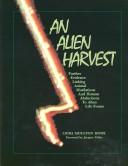
An Alien Harvest
Further Evidence Linking Animal Mutilations and Human Abductions to Alien Life Forms
Find on Amazon →As an Amazon Associate, OverClassified may earn from qualifying purchases made through this link, at no extra cost to you.
Why This Is Essential Reading
An Alien Harvest earns its place on this list not because its central forensic and causal claims have withstood independent scientific scrutiny — they have not, and this site treats the federally funded Kenneth Rommel investigation, the Skeptic's Dictionary's direct rebuttal of Howe's own "pinpoint thin" incision claims, and sociologist Robert Bartholomew's peer-reviewed witch-craze comparison as a genuinely substantial, specific counter-record rather than mere dismissal — but because this book is the single most complete primary-source document of the proponent case for a phenomenon this site's own Mutilation of Snippy the Horse case file already treats as foundational to its archive, and because this exact book, by this exact ISBN, is already cited on that case file as the deliberate counterweight to its own skeptical conclusion. Linda Moulton Howe's credentials as a documented, award-winning broadcast journalist — genuine Regional Emmys for the underlying 1980 documentary, a WCVB-TV institutional Peabody for separate, earlier medical-science programming this article has been careful not to conflate with her mutilation work — make this a case study in exactly the evidentiary distinction this site applies across its archive: a credentialed investigator's sustained, decades-long documentary record is real and worth reading in full, and it is still not the same thing as independent scientific confirmation of the conclusion that record argues for. Read alongside the government's own contrary 1980 findings and this site's own Snippy case file, this book is essential precisely because it lets a reader weigh the strongest available version of the alien-harvesting thesis against the strongest available version of its rebuttal, in the author's own words rather than a secondhand summary of either.
Related Cases & Theories
Essential Viewing
Linda Moulton Howe - Animal Mutilations - On The Record - 1990
Mystery Wire — A 1990 KLAS-TV interview with George Knapp, recorded the year after this book's publication, in which Howe discusses her animal-mutilation investigation directly. Verified via YouTube oEmbed before inclusion.
Linda Moulton Howe - Cattle Mutilations Revealed - 06-21-2016 Part 3
DrJ Radio Live — A long-form interview in which Howe lays out her cattle-mutilation case in her own words, covering the same forensic and case-file arguments this book makes. Verified via YouTube oEmbed before inclusion.
Linda Moulton Howe - Cattle Mutilation & Aliens - Heidi Hollis The Outlander
Inception Radio Network — An extended radio interview focused specifically on the cattle-mutilation-to-alien-contact thesis this book is built around. Verified via YouTube oEmbed before inclusion.
Sources Cited
- "Linda Moulton Howe." Wikipedia (biography, education, career, awards, documentary and book history, and Joe Nickell's critical commentary). en.wikipedia.org
- "Linda Moulton Howe – Bio." Earthfiles.com, official biography (career history, award listing, and 1989 book publication details). earthfiles.com
- "An alien harvest." Open Library, edition record OL2231816M (publisher L.M. Howe Productions, Littleton, Colo., 1989, xviii + 455 pp., ISBN 0962057010, LCCN 89091260, foreword by Jacques Vallee). openlibrary.org
- "An Alien Harvest: Further Evidence Linking Animal Mutilations and Human Abductions to Alien Life Forms." Amazon.com product listing (ISBN 0962057010 / 9780962057014, foreword credit to Jacques Vallee). amazon.com
- "Alien Harvest: Further Evidence Linking Animal Mutilations and Human..." AbeBooks bibliographic listing (ISBN 0962057010, publisher and printing history). abebooks.co.uk
- "An Alien Harvest" by Linda Moulton Howe. Goodreads (reader ratings and reviews). goodreads.com
- Bartholomew, Robert E. "Mutilation Mania—The Witch Craze Revisited: An Essay Review of An Alien Harvest." Anthropology of Consciousness, Vol. 3, No. 1-2 (1992), pp. 23–29 (peer-reviewed academic critical essay review of this book). anthrosource.onlinelibrary.wiley.com
- "Cattle Mutilation." The Skeptic's Dictionary, Robert Todd Carroll (skeptical analysis of Howe's forensic claims in this book, the Rommel Report findings, and the predator/scavenger/bloating explanation). skepdic.com
- "Animal Mutilation." FBI Vault (declassified FBI files on the cattle-mutilation reports, 1974–1978, including jurisdictional limitations). vault.fbi.gov
- "1973, The Doraty Abduction, Houston, Texas." UFOCasebook.com (case summary of the Judy Doraty hypnotic-regression account Howe filmed for A Strange Harvest and later cited in this book). ufocasebook.com
- This site's own case file: The Mutilation of Snippy the Horse (Case File #237), which already cites this exact book by ISBN in its own Further Reading section and documents the Kenneth Rommel LEAA investigation this book disputes.
- This site's own case file: Skinwalker Ranch (Case File #296), for the later, more instrumented chapter of the same reported cattle-mutilation phenomenon.
- This site's own essential-reading entry: Hunt for the Skinwalker (ER-076), for the 2005 account of the NIDS investigation at the same property.
- This site's own key-figures entry: Linda Moulton Howe, for her full career biography and further case connections.
- This site's own key-figures entry: Kenneth Rommel, for the full 1979–1980 LEAA investigation this book directly disputes.
- This site's own key-figures entry: Jacques Vallee, who wrote this book's foreword.
- This site's own resources library: Full Reading List, where this exact edition (ISBN 0962057010) is already cited.
Have corrections, additional research, or peer-reviewed sources? Help improve this entry.
Suggest an Edit