
Interstellar
The Search for Extraterrestrial Life and Our Future in the Stars — Loeb's Sequel, and the Argument About How Science Should Behave
Core Thesis
Interstellar is the sequel to Extraterrestrial and it is a different kind of book. Where the 2021 volume made a bounded argument about one object — that ʻOumuamua's specific anomalies made an artificial origin worth considering — this one is broader and looser: the founding of the Galileo Project at Harvard, the 2023 expedition to dredge the Pacific seabed for fragments of the interstellar meteor CNEOS 2014-01-08, an engagement with the UAP question, and a sustained argument about how science ought to behave when it meets an anomaly. Avi Loeb is the most credentialled person making the case for taking these questions seriously, and the reviews divided along a consistent line: his argument about scientific temperament is stronger than his argument from evidence.
About the Author
Avi Loeb is a theoretical astrophysicist at Harvard, where he chaired the astronomy department from 2011 to 2020, and he has an extensive publication record in mainstream astrophysics entirely separate from anything in this book. That standing is the reason his interventions in this area matter and the reason they have been so contested inside his own field.
His public turn began with ʻOumuamua. The interstellar object that passed through the inner solar system in October 2017 exhibited a set of anomalies — an extreme axis ratio, unusually high reflectivity, non-gravitational acceleration on departure, and no detectable cometary outgassing — and Loeb argued in a peer-reviewed paper and then in Extraterrestrial that artificial origin should be on the table.
The Galileo Project, which he founded at Harvard in 2021, is the institutional expression of that position: a programme to search systematically for interstellar objects and for anomalous phenomena in Earth's atmosphere using purpose-built instrumentation and open data. Whatever one thinks of Loeb's conclusions, an instrumented, publishing, university-based search programme is precisely what this subject has always lacked.
The Pacific expedition is the book's most concrete episode and its most contested. Loeb led a 2023 voyage to dredge the seafloor near Papua New Guinea for material from CNEOS 2014-01-08, a meteor whose high velocity had been argued to indicate interstellar origin, and recovered metallic spherules he has claimed show an anomalous composition.
The criticism from his own discipline should be stated because it is substantial and it comes from colleagues rather than from outsiders. Other scientists have questioned whether the recovered spherules are connected to that meteor at all, whether the meteor's interstellar origin is established, and whether the velocity data underlying the claim are reliable. Loeb's credentials are real; his conclusions here are not the consensus of the people who share them.
Historical Context & Origins
ʻOumuamua is where this begins and its status remains genuinely open. Detected in October 2017, it was the first confirmed interstellar object to pass through the solar system, it displayed a combination of characteristics no known comet or asteroid matches, and no proposed natural explanation — hydrogen iceberg, nitrogen ice fragment, dust aggregate, tidally disrupted body — has achieved consensus. That the object was anomalous is not a fringe position.
The second interstellar object, 2I/Borisov, arrived in 2019 and behaved like an ordinary comet, which sharpened rather than settled the question: one interstellar visitor looked normal and the other did not.
CNEOS 2014-01-08, which Loeb calls IM1, is a fireball recorded over the Pacific near Papua New Guinea in January 2014 whose velocity, as recorded in the US government's near-Earth object catalogue, has been argued to imply an unbound interstellar trajectory. The velocity data derive from classified sensors, which is the root of the dispute: the error bars are not public.
The Galileo Project's founding in 2021 came at a specific political moment. The US intelligence community's preliminary UAP assessment had been delivered that June, the subject had acquired official standing for the first time since 1969, and a Harvard-based instrumented search programme became fundable and defensible in a way it would not have been three years earlier.
The wider institutional context is a genuine change in what is permissible. NASA convened an independent UAP study team, the Department of Defense established a dedicated office, and congressional hearings resumed. Loeb's argument that the subject deserves instrumented investigation rather than dismissal has substantially won at the level of policy, whatever the status of his specific claims.
The publication timing matters for how the book reads. It appeared in August 2023, weeks after the Pacific expedition returned and before the spherule analyses had been through peer review or replication, which means the book's central practical episode is reported without its results.
The scientific dispute around Loeb has also become a dispute about conduct. Colleagues have objected to conclusions announced through press releases and popular books ahead of peer review, and Loeb has responded that the field's reflexive dismissal of anomalies is itself unscientific. Both positions have merit and the book is an extended statement of one of them.
Core Arguments & Key Concepts
Anomalies deserve investigation rather than dismissal, and the default in astronomy is dismissal. Loeb's central argument and the strongest thing in the book. A discipline that treats an unexplained observation as a nuisance to be explained away rather than as an opportunity has a methodological problem, and he is not wrong that this describes a good deal of professional practice around ʻOumuamua.
The search should be instrumented, systematic and open, not testimonial. The Galileo Project's founding principle and the most consequential idea Loeb has contributed to this subject. Purpose-built sensors, published data, defined protocols and pre-registered criteria are what distinguish a search programme from a collection of anecdotes, and no one else with comparable standing has built one.
Physical material is the only decisive evidence and should be sought physically. The Pacific expedition's rationale, and the argument's most admirable feature: rather than analysing imagery or collecting testimony, Loeb went and dredged the seafloor. Whatever the results, going to look is the correct instinct and it is exceedingly rare in this field.
The spherules are anomalous and may be interstellar. The specific empirical claim, and the weakest link. It requires that CNEOS 2014-01-08 was interstellar (disputed, and resting on velocity data with non-public error bars), that the recovered material came from that object (disputed), and that its composition is not explicable by terrestrial or ordinary meteoritic processes (disputed). Three contested links in one chain.
Our expectations about intelligence elsewhere are parochially narrow. The book's philosophical strand, expressed in claims such as that Einstein was very likely not the smartest scientist in the galaxy. As a statement about priors it is unobjectionable; as an argument it does no work, because a statistical intuition about a population we have no members of cannot support conclusions about specific objects.
The book's structure is its most-criticised feature and the criticism is fair. Reviewers described it as disorganised and rambling, leaping between topics and metaphors, and readers looking for a sustained case will not find one. It is a set of positions rather than an argument, and considerably less disciplined than its predecessor.
The evidential base cannot carry the philosophical superstructure. The most substantive criticism, and it was made by a science journalist sympathetic to the project rather than by a debunker: current scientific understanding does not support the base of the pyramid Loeb builds on it, since there is not yet direct evidence even of extraterrestrial biology, let alone technology.
Key Cases & Evidence Discussed
ʻOumuamua, October 2017. The first confirmed interstellar object, its anomalous axis ratio, reflectivity and non-gravitational acceleration without outgassing, and the continuing absence of a consensus natural explanation. The origin of Loeb's whole public argument and the subject of Extraterrestrial.
2I/Borisov, 2019. The second interstellar object, which behaved like an ordinary comet — the comparison that makes ʻOumuamua's peculiarity harder rather than easier to dismiss.
CNEOS 2014-01-08 (IM1). The January 2014 Pacific fireball whose catalogued velocity has been argued to imply interstellar origin, and the dispute over velocity data derived from classified sensors with unpublished error bars.
The 2023 Pacific expedition. Loeb's voyage to dredge the seabed near Papua New Guinea for fragments of IM1, and the metallic spherules recovered — the book's central practical episode, reported before its results had been through peer review.
The Galileo Project. The Harvard-based programme founded in 2021 to search systematically for interstellar objects and atmospheric anomalies with purpose-built instrumentation and open data.
The UAP question. Loeb's engagement with the official material released since 2017 and his argument that it should be addressed with sensors and published protocols rather than with testimony or dismissal.
The scientific-conduct dispute. The objections from colleagues to announcing conclusions through popular books and press releases ahead of peer review, and Loeb's counter-argument that reflexive dismissal of anomalies is itself a departure from scientific method.
The Einstein claim. Loeb's assertion that it is very likely Einstein was not the smartest scientist in the galaxy — representative of the book's philosophical register and singled out by reviewers as extrapolation beyond the available evidence.
Critical Reception & Controversies
The book was widely reviewed, as a Harvard astrophysicist's trade book on this subject would be, and the reception was mixed in a consistent and informative way. Praise focused on the provocation and the optimism; criticism focused on structure and on the gap between evidence and conclusion.
The most substantive review came from Sarah Scoles in Undark, and it is worth taking seriously because it comes from a science journalist who covers this territory sympathetically. She found the book a fairly disorganised, rambling affair whose topics and metaphors leap wildly to and fro, and identified the central flaw as extrapolation beyond the evidence — noting specifically that current scientific understanding does not support the base of Loeb's ideological pyramid, since we lack direct evidence even of extraterrestrial biology.
Her treatment of the Pacific expedition is the most useful part of the review. Other scientists have doubts about the spherules, some question whether the recovered material connects to the meteor at all, and the book's timing meant it went to press before the expedition's results could be assessed. That is not a criticism of Loeb's willingness to go and look; it is a criticism of publishing the voyage before its findings.
Favourable reviews have been genuine and have generally praised the same thing: the book's insistence that the search matters and that scientific culture is too quick to dismiss. Leonard David and others have found the provocations valuable, and the endorsements emphasise reimagining humanity's place rather than any specific finding.
The comparison with Extraterrestrial is where most careful readers land, and it is not favourable to this book. The 2021 volume made one bounded argument about one object with a clear evidential structure; this one covers interstellar objects, seabed spherules, UAP, the Galileo Project and the philosophy of scientific temperament in 256 pages, and the discipline is visibly looser.
The professional criticism of Loeb's conduct is a separate matter from the book's quality and readers should keep them apart. Announcing results through popular publication ahead of peer review is a real methodological objection; it is also true that his colleagues' treatment of ʻOumuamua's anomalies has not always been a model of open inquiry either. Both things can be true.
The fair placement is as the more ambitious and less rigorous of Loeb's two books, valuable primarily for what it documents — the Galileo Project's founding, the expedition, and the state of the argument in 2023 — and for its case about scientific temperament, which is stronger than any specific claim in it.
Influence & Legacy
The Galileo Project is Loeb's real contribution and the book is its manifesto. An instrumented, university-based, open-data search programme for anomalous objects is what this subject has needed since 1947 and has never had, and its existence at Harvard changes what a serious researcher can do without leaving the academy.
The expedition established a precedent that matters independently of its results. Faced with a claim about a physical object, Loeb chartered a vessel and went to look for it — which is, remarkably, close to unprecedented in a field that has spent eighty years analysing photographs and interviewing witnesses. Whatever the spherules turn out to be, the instinct is the right one.
The temperament argument has had more effect than any of the specific claims. Loeb's insistence that anomalies deserve investigation rather than explanation-away has been quoted extensively in the wider debate about how institutions should handle the UAP question, and it has been more persuasive to policymakers than to his colleagues.
The cautionary legacy is about credential transfer and it is the most useful thing in this article. Loeb is a genuinely distinguished astrophysicist, and his distinction establishes that he can do astrophysics — not that a chain of three contested inferences about seabed spherules holds. Readers who accept the conclusions because of the affiliation are making the same error that this library has documented in Clifford Stone's service record, Raymond Szymanski's engineering career and David Sereda's asserted physics training. The credential says where someone is qualified to be trusted, and nowhere else.
There is a final point worth making about what the Galileo Project changes structurally, independent of anything it finds. For seventy-five years the choice available to a researcher in this area was to work outside the academy without instruments or inside it without the subject. A funded, publishing, university-hosted programme with purpose-built sensors and pre-registered protocols removes that dilemma for the first time, and it does so in a way that is testable: the project will either produce data or it will not, and either outcome is informative. That is a substantially better position than the field has ever been in, and it is worth more than any individual claim in this book.
The Book
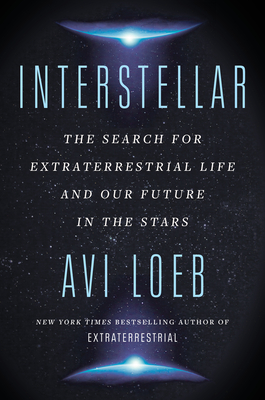
Interstellar
The Search for Extraterrestrial Life and Our Future in the Stars — Loeb's Sequel, and the Argument About How Science Should Behave
Find on Amazon →As an Amazon Associate, OverClassified may earn from qualifying purchases made through this link, at no extra cost to you.
Why This Is Essential Reading
Read it after Extraterrestrial, and read it for the programme rather than the proof. Interstellar is the looser and more ambitious of Avi Loeb's two books — the Galileo Project's founding, the Pacific expedition to dredge for fragments of a possibly interstellar meteor, the UAP question, and a sustained case about how science should behave when it meets something it cannot explain. That last argument is the strongest thing in it and it has largely won: instrumented, open, university-based searching is now a thing that exists, and it exists substantially because Loeb built it. The empirical claims are weaker than the advocacy. The spherule case requires three separately contested links to hold, the book went to press before its own expedition's results could be assessed, and reviewers who are sympathetic to the project have found it disorganised and extrapolated beyond its evidence. Take the method, weigh the conclusions independently, and remember that a Harvard chair in astronomy establishes what its holder is qualified to be trusted about and nothing beyond it.
Related Cases & Theories
Sources Cited
- Loeb, Avi. Interstellar: The Search for Extraterrestrial Life and Our Future in the Stars. Mariner Books, August 29, 2023. 256 pp. ISBN-10 006325087X / ISBN-13 9780063250871. amazon.com
- Wikipedia, "Interstellar: The Search for Extraterrestrial Life and Our Future in the Stars" — the book's publication data, contents and reception. en.wikipedia.org
- Sarah Scoles, "Book Review: One Man's Hunt for Alien Artifacts," Undark, September 1 2023 — the substantive critical review: the assessment of the book as a fairly disorganised, rambling affair whose topics and metaphors leap wildly to and fro; the observation that other scientists doubt the spherules and question whether they connect to the meteor at all; the note that the book's timing prevented it covering the expedition's results; and the central criticism that current scientific understanding does not support the base of Loeb's ideological pyramid. undark.org
- Leonard David, review of Interstellar — a favourable assessment from a veteran space journalist. leonarddavid.com
- Open Library edition record, ISBN 006325087X — bibliographic verification. openlibrary.org
- Goodreads editions record — the Mariner Books August 29 2023 hardcover, its 256-page extent, cover art and reader reception. goodreads.com
- Penguin Bookshop catalogue record, ISBN 9780063250871 — independent bookseller listing and description. penguinbookshop.com
- Wikipedia, "Avi Loeb" — his position at Harvard, his chairmanship of the astronomy department from 2011 to 2020, his publication record and the controversies around his public claims. en.wikipedia.org
- Wikipedia, "ʻOumuamua" — the October 2017 interstellar object, its anomalous characteristics, the competing natural explanations and the absence of consensus among them. en.wikipedia.org
- Wikipedia, "CNEOS 2014-01-08" — the January 2014 Pacific fireball designated IM1 by Loeb, the velocity data and their classified provenance, the interstellar-origin dispute, and the 2023 expedition and its spherules. en.wikipedia.org
- Wikipedia, "Galileo Project" — the Harvard-based programme Loeb founded in 2021 to search for interstellar objects and atmospheric anomalies with purpose-built instrumentation. en.wikipedia.org
- Wikipedia, "2I/Borisov" — the second confirmed interstellar object, which behaved like an ordinary comet and sharpens the comparison with ʻOumuamua. en.wikipedia.org
- Wikipedia, "Unidentified anomalous phenomenon" — the official framework within which Loeb's argument for instrumented investigation has been received. en.wikipedia.org
Have corrections, additional research, or peer-reviewed sources? Help improve this entry.
Suggest an Edit