
The UAP Disclosure Act (Schumer-Rounds)
In July 2023, Senate Majority Leader Chuck Schumer and Sen. Mike Rounds, joined by Sens. Marco Rubio, Kirsten Gillibrand, Todd Young, and Martin Heinrich, introduced the most ambitious piece of UAP legislation in American history — a bill built directly on the mechanics of the 1992 JFK Assassination Records Collection Act, complete with a Senate-confirmed review board, subpoena power, and federal eminent domain over any recovered "technologies of unknown origin" held by private contractors. This is not a case about a sighting. It is a case about what happens to a strong disclosure law when it collides with the House Armed Services and Intelligence committees, and about the much narrower version — Sections 1841–1843 of the FY2024 NDAA — that survived.
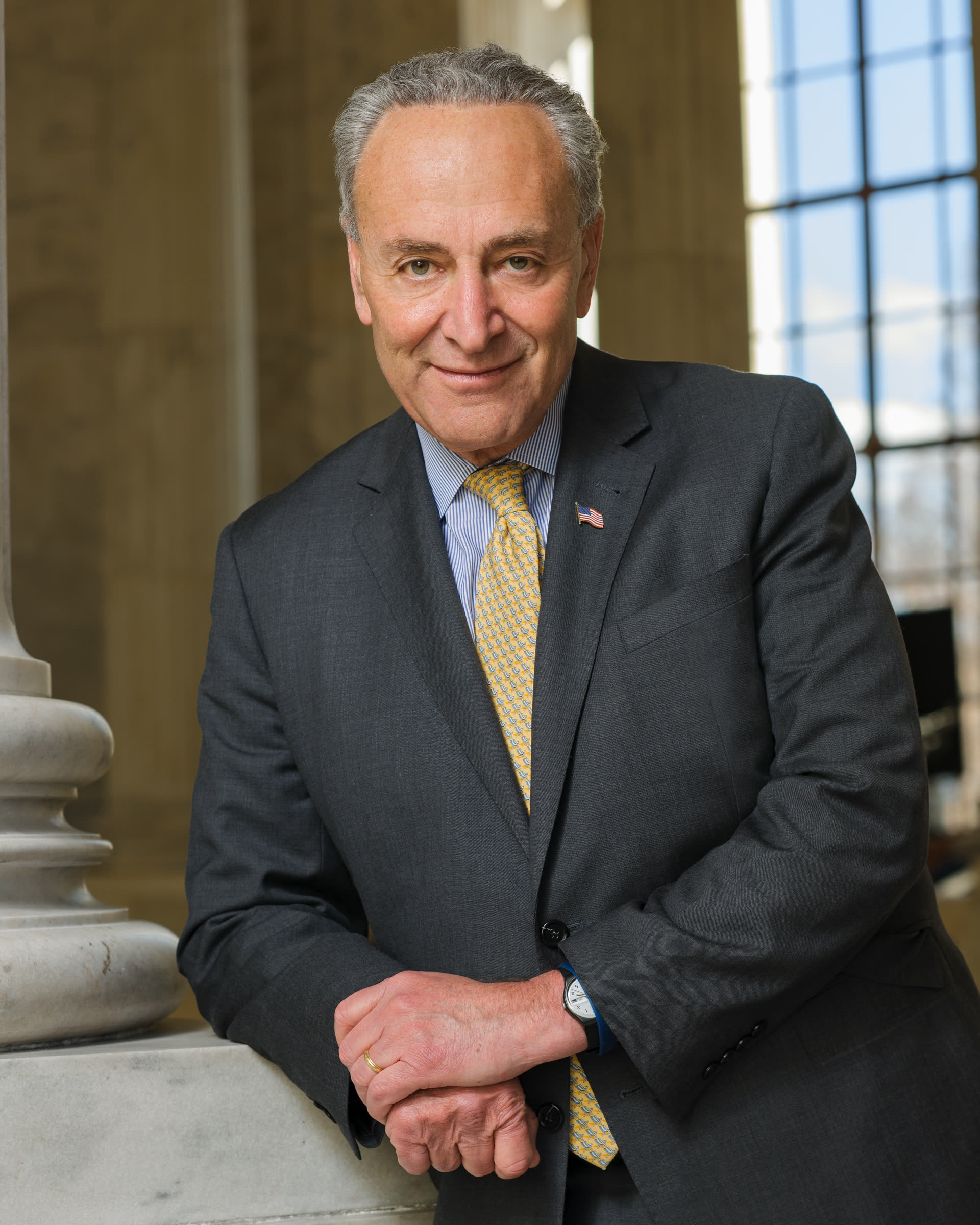
Pictured: Sen. Chuck Schumer's official 2017 U.S. Senate portrait (U.S. Senate Photographic Studio, public domain) — not a photograph of him introducing this specific bill or of any Senate floor session on it, since no rights-clear photograph from the actual July 2023 introduction or December 2023 floor colloquy could be verified. Schumer was the amendment's lead sponsor and, after the House stripped its central provisions, its most vocal public defender, repeatedly raising the fight on the Senate floor and in public statements through 2024.
Theoretical Alignment
This case file does not document a sighting, and it takes no position on the origin of any UAP. It documents a piece of federal legislation and the institutional fight over it. None of the standard origin hypotheses — extraterrestrial, interdimensional, or psycho-social — apply to a records-declassification statute in any meaningful sense, so all three are marked N/A rather than forced into a rating. What the Act's own text does implicitly assume, by defining and legislating around terms like "technologies of unknown origin" and "non-human intelligence," is that Congress itself judged the underlying claims credible enough to warrant a JFK-style records regime — a notable fact about the case's political context, distinct from any judgment about what the records, if fully released, would actually show.
Background
Congressional interest in UAP oversight predates the Schumer-Rounds bill by several years. Sen. Marco Rubio, then acting chairman of the Senate Select Committee on Intelligence, attached a provision to the FY2021 Intelligence Authorization Act that compelled the Office of the Director of National Intelligence to produce a public accounting of UAP incidents — the report that became the June 2021 ODNI Preliminary Assessment on UAP. That report's own limitations (144 of 144 cases left effectively unresolved) fed directly into the creation of the All-domain Anomaly Resolution Office (AARO) in July 2022 under that year's NDAA, and AARO's own halting first eighteen months — described by Kirsten Gillibrand at an April 2023 subcommittee hearing as "irresponsibly anemic and slow" — set the stage for a much more aggressive legislative response.
That response arrived within weeks of the single most consequential UAP event in Congress's modern history: former intelligence officer David Grusch's June 2023 public whistleblower disclosure and his July 26, 2023 sworn testimony before the House Oversight Committee, alleging that the U.S. government has run a decades-long, illegally unacknowledged crash-retrieval and reverse-engineering program (see the full David Grusch Whistleblower Testimony case file for that story in its own right). Grusch's central allegation — that retrieved non-human materials might be sitting with private defense contractors entirely outside congressional oversight — is the specific claim the UAP Disclosure Act's original eminent domain provision was engineered to address. Twelve days before Grusch's public testimony, Schumer and Rounds had already filed the amendment; the timing was not coincidental. Both senators had received classified briefings on UAP matters, and Rounds in particular has said publicly that what he was shown in secure settings influenced his decision to co-lead the bill.
Complete Timeline
| Date | Event |
|---|---|
| June 25, 2021 | ODNI releases its Preliminary Assessment on UAP, mandated by a provision Rubio attached to the FY2021 Intelligence Authorization Act. Its inconclusive findings become a recurring talking point for stronger disclosure legislation. |
| July 2022 | The All-domain Anomaly Resolution Office (AARO) is established under the FY2022 NDAA to synchronize UAP data collection across agencies. |
| April 19, 2023 | Gillibrand chairs a Senate Armed Services subcommittee hearing on AARO's mission and budget, publicly criticizing the pace of federal UAP reporting. |
| June 5, 2023 | David Grusch's whistleblower allegations are published by The Debrief and NewsNation, alleging a hidden, illegally unacknowledged crash-retrieval program — including materials allegedly held by private contractors. |
| July 14, 2023 | Schumer files Senate Amendment 797 to S.2226 (the Senate's FY2024 NDAA), the "Unidentified Anomalous Phenomena Disclosure Act of 2023," cosponsored by Rounds, Rubio, Gillibrand, Young, and Heinrich. A joint press release frames it explicitly on the model of the 1992 JFK Assassination Records Collection Act. |
| July 26, 2023 | David Grusch testifies under oath before the House Oversight Committee, twelve days after the amendment's filing, intensifying public and congressional pressure on the disclosure debate. |
| July 27, 2023 | The Senate adopts S.2226, carrying the UAP Disclosure Act amendment, as part of its version of the FY2024 NDAA; reporting at the time characterized the underlying vote as an overwhelming, near-unanimous show of bipartisan support. |
| Aug.–Nov. 2023 | Defense and aerospace industry representatives and executive branch officials lobby against the amendment's eminent domain and eleven-agency subpoena provisions ahead of the House-Senate conference. |
| Nov. 2023 | House Intelligence Committee Chairman Mike Turner tells reporters no bill sponsor had approached him directly to discuss the amendment's substance, framing the House's resistance in procedural as well as substantive terms. |
| Dec. 6–13, 2023 | House and Senate conferees reconcile H.R. 2670 (the FY2024 NDAA vehicle, authored in the House by Armed Services Chairman Mike Rogers) and S.2226. House conferees, led by Rogers and Turner, strip the UAP Records Review Board, its subpoena power, and the eminent domain provision from the final text. |
| Dec. 13, 2023 | Schumer and Rounds hold a Senate floor colloquy protesting the removal of the review board provision. The Senate passes the final conference report, 87–13. |
| Dec. 14, 2023 | Schumer publicly calls the House's removal of the review board "an outrage," warning that declassification decisions would now rest with "the same entities that have blocked and obfuscated their disclosure for decades." The House passes the conference report, 310–118. |
| Dec. 22, 2023 | President Biden signs H.R. 2670 into law as Public Law 118-31, the FY2024 NDAA, containing the scaled-back UAP provisions as Sections 1841–1843. |
| Feb. 23, 2024 | Statutory deadline for the National Archives and Records Administration (NARA) to formally establish the UAP Records Collection under Section 1841. |
| March 8, 2024 | AARO releases Volume I of its Historical Record Report, a separate but related disclosure product covering the government's own historical UAP investigations (see the AARO Historical Record Report, Volume I case file). |
| Oct. 20, 2024 | Statutory deadline for federal agencies to identify, review, and organize their own UAP records for transmission to NARA under Section 1842. |
| July 11–13, 2024 | Rounds reintroduces the Act as Senate Amendment 2610 to S.4638 (the FY2025 NDAA), restoring the review board, subpoena power, and eminent domain language, with $20 million in proposed FY2025 funding. Gillibrand and Heinrich join as cosponsors that summer. |
| Nov. 13, 2024 | The House holds a joint subcommittee hearing, "Unidentified Anomalous Phenomena: Exposing the Truth," at which journalist Michael Shellenberger testifies about the "Immaculate Constellation" whistleblower report (see that case file) — keeping legislative pressure on the disclosure question alive even as the FY2025 NDAA amendment stalled. |
| April 24, 2025 | NARA formally announces the first public transfer of records into the UAP Records Collection, from the Office of the Director of National Intelligence, the Office of the Secretary of Defense, the FAA, and the Nuclear Regulatory Commission. |
| Sept. 30, 2025 | Statutory deadline for agencies to complete transfer to NARA of all UAP records identified as publicly releasable under Section 1843. |
| 2025 | Rounds and Gillibrand reintroduce the Act again as Senate Amendment 3111 to S.2296 (the FY2026 NDAA), again restoring and again narrowing the eminent domain language, with Rubio, Young, and Heinrich cosponsoring. |
| June 9, 2026 | After the Act is again excluded from the final FY2026 NDAA package, David Grusch, filmmaker James Fox, journalist Leslie Kean, and other whistleblowers rally on the Capitol steps to press for its revival. |
The JFK Records Act Model
Every substantive provision of the original UAP Disclosure Act was deliberately borrowed from the President John F. Kennedy Assassination Records Collection Act of 1992 — itself a response to public anger, sharpened by Oliver Stone's JFK, over decades of piecemeal, agency-by-agency stonewalling of assassination records. The 1992 Act created a single, government-wide presumption: every relevant record would be collected in one place at the National Archives and released in full unless a specific, reviewable justification for continued secrecy could be shown. It empowered an independent five-member Assassination Records Review Board (ARRB), with full subpoena power, to make that case-by-case call, and it set a hard 25-year outer limit — October 2017 — after which everything would be released regardless, unless the sitting President personally certified that release would cause identifiable, continuing harm.
Congress's own account of the ARRB's track record is one of the strongest arguments proponents made for cloning it: the Board reviewed more than four million pages of previously classified material and released the overwhelming majority of it, forcing open records the CIA and FBI had resisted releasing for thirty years through ordinary FOIA channels. Schumer and Rounds argued in their joint July 2023 announcement that UAP records were trapped in exactly the same bureaucratic pattern — individual FOIA requests, agency-by-agency, with no single body empowered to force a government-wide accounting — and that only an ARRB-style mechanism, not another oversight report or another task force, could break it.
The Original Bill: What It Actually Proposed
Senate Amendment 797, filed by Schumer "for himself, Mr. Rounds, Mr. Rubio, Mrs. Gillibrand, Mr. Young, and Mr. Heinrich," was formally titled the "Unidentified Anomalous Phenomena Disclosure Act of 2023." Its provisions went considerably further than what ultimately became law, and the gap between the two versions is the central fact of this case.
The UAP Records Review Board
The bill's structural core was a temporary, independent federal agency — the UAP Records Review Board — modeled directly on the ARRB. Nine members would be nominated by the President and confirmed by the Senate, insulating the Board from control by any single executive agency, including the Department of Defense and the intelligence community whose own records it would be reviewing. The Board's job was narrow but consequential: review every record NARA collected, apply a legal presumption in favor of disclosure, and require any agency seeking to withhold a record to affirmatively justify that decision in writing.
Subpoena Power
To make that review meaningful rather than advisory, the Board was granted subpoena authority reaching every executive agency, every military branch, every intelligence community component, and — critically — every government contractor holding UAP-related information. This is the provision that, combined with eminent domain below, most directly answered Grusch's specific allegation that materials might be held outside government custody entirely.
Federal Eminent Domain Over Private Holdings
The single most controversial provision mandated that the federal government exercise eminent domain over "any and all recovered technologies of unknown origin and biological evidence of non-human intelligence" in the possession of private persons or entities — language squarely aimed at the defense-contractor crash-retrieval allegations Grusch, and witnesses before him, had made for years. Practically, it would have forced any contractor holding such material (assuming any exists) to surrender it to the government for eventual public accounting, with compensation to be determined through the ordinary constitutional Takings Clause process. No other provision in the bill drew more explicit, organized opposition once the amendment reached the House.
The 25-Year Disclosure Timeline and Presidential Postponement
Mirroring the JFK Act's own 25-year backstop, every UAP record placed in the Collection would carry a presumption of full public release within 25 years of the Act's enactment. The President retained a single, narrow override: continued postponement past that point required an affirmative, specific certification that disclosure would cause direct, identifiable harm to national security, foreign relations, intelligence sources and methods, or an active law enforcement investigation — the same high bar Presidents have had to clear on JFK records since 1992, and the same bar every President since has in practice invoked repeatedly to keep a shrinking number of assassination-era pages sealed.
Introduction and the Senate's Bipartisan Vote
The amendment's July 14, 2023 rollout was a genuinely bipartisan production: three Republicans (Rounds, Rubio, Young) and three Democrats (Schumer, Gillibrand, Heinrich), spanning the Senate Armed Services, Intelligence, and Democratic leadership. The accompanying press releases from Schumer's office and Young's office both led with the JFK Records Act comparison and both quoted Rubio's Intelligence Committee credentials and Gillibrand's Armed Services subcommittee chairmanship as evidence the bill had serious institutional backing, not just novelty appeal.
The amendment was folded into the Senate's own version of the FY2024 NDAA, S.2226, which the Senate adopted on July 27, 2023. Because NDAA amendments of this kind are frequently bundled and passed as part of a larger managers' package rather than isolated for a standalone recorded vote, published accounts of the specific margin vary in precision, but contemporaneous reporting consistently describes the UAP language passing as part of an overwhelmingly bipartisan Senate NDAA vote — a genuinely unusual outcome for a bill this structurally aggressive toward executive branch secrecy, and one that gave Schumer and Rounds real political capital heading into conference with the House.
The Conference Committee Fight
The Senate's NDAA (S.2226) and the House's own NDAA (H.R. 2670, introduced in the House on April 18, 2023 by Armed Services Committee Chairman Mike Rogers of Alabama, and passed by the House 219–210 on July 14, 2023) had to be reconciled into a single bill before either chamber could send it to the President. Unlike the Senate version, the House-passed NDAA contained no UAP disclosure language at all — meaning the entire fate of the Schumer-Rounds provisions rested on whether House conferees agreed to adopt them wholesale in conference. They did not.
House Opposition: Rogers and Turner
The two House committee chairmen with direct jurisdiction — Rogers at Armed Services and Mike Turner at the House Permanent Select Committee on Intelligence — led the effort to strip the review board, its subpoena power, and the eminent domain provision during the December 6–13, 2023 conference. Reporting at the time described Senate Minority Leader Mitch McConnell and newly installed House Speaker Mike Johnson as supportive of that position as well, giving the opposition effective control of both the House committee process and, in McConnell, a sympathetic ear on the Senate Republican side. Turner's own public justification was narrower than a wholesale rejection of UAP transparency: he argued the Schumer amendment duplicated authority Congress had already granted AARO the previous year, and told reporters he found it telling that "if this is that important... at least one member" of the bill's sponsors had never come to discuss its substance with him directly before the fight became public. Rep. Jared Moskowitz and Rep. Anna Paulina Luna, both public advocates for stronger disclosure, pushed back publicly in the same period, with Luna stating plainly that Congress should "not want to go forward with fake promises to the American people" by passing a records law with no real enforcement teeth.
The Defense-Industry Money Question
Journalists covering the conference fight noted, without asserting direct causation, that both lead House opponents represent districts and committee assignments deeply tied to the defense industry the eminent domain provision targeted. Campaign finance data compiled by OpenSecrets, drawn from FEC filings, shows Rogers as the single largest House recipient of Lockheed Martin PAC and employee contributions in recent cycles — a fact repeatedly raised by disclosure advocates as circumstantial context for his committee's resistance to a provision that would have forced contractors to surrender any retrieved materials. The same OpenSecrets data shows Defense Aerospace as historically one of Turner's largest industry contributor categories as well. None of this proves the provisions were stripped because of campaign contributions rather than the stated institutional and jurisdictional objections — both explanations are addressed on their own terms in this file's Conventional Explanation Candidate section below — but the financial relationship is a matter of public FEC record, not speculation, and belongs in any complete account of who fought over this bill and why.
What Survived Conference
The final conference report retained only a narrow shell of the original amendment: a mandate that NARA establish a UAP Records Collection, and a requirement that federal agencies identify and transfer their own releasable UAP records to it on a fixed timeline. The independent, Senate-confirmed review board was gone. Subpoena power was gone. Eminent domain over private contractor holdings was gone. No presidential certification requirement for postponement survived either — the individual agencies that already control classification decisions today would, under the enacted text, continue making them, just with a new public repository to eventually receive whatever they chose to release. Schumer's floor remarks that December made his own view of the tradeoff explicit: a records collection with no independent board to force disclosure decisions, he argued, left "the same entities that have blocked and obfuscated their disclosure for decades" in charge of deciding what the public would ever see.
Sections 1841–1843: What Actually Became Law
The surviving language was enacted as Sections 1841 through 1843 of the FY2024 NDAA, Public Law 118-31, signed by President Biden on December 22, 2023, and is now codified as a note to 44 U.S.C. § 2107. In outline, the enacted statute:
- Section 1841 directed NARA to formally establish the "Unidentified Anomalous Phenomena Records Collection" — now designated Record Group 615 — by February 23, 2024, defined to include "copies of all Government, Government-provided, or Government-funded records relating to unidentified anomalous phenomena, technologies of unknown origin, and non-human intelligence," with a specific carve-out excluding ordinary "temporarily non-attributed objects" (i.e., routine unidentified radar or visual contacts later resolved as mundane).
- Section 1842 required every federal agency holding such records to identify, review, and organize them for potential public release by October 20, 2024, with agencies themselves — not an independent board — retaining the authority to decide what could be disclosed and what would be withheld or redacted.
- Section 1843 set a further deadline, September 30, 2025, by which agencies had to complete the actual transfer of digital copies of publicly releasable records to NARA, which then makes them available on a rolling basis through the National Archives Catalog.
Legal analysis published shortly after enactment (see the Sources list) was blunt about what this left out: the statute imposes no direct disclosure obligation on defense contractors themselves, and does not require the government to notify an affected private company before deciding to release "government-funded" records that touch its work, or to give that company a chance to object or seek redactions before release. Every disclosure decision under the enacted law remains an internal executive-branch determination — precisely the arrangement the original review board was designed to take out of agencies' own hands.
Real-World Implementation Since Passage
Despite its reduced scope, the enacted law has produced genuine, verifiable output — the first sustained, cross-agency effort in U.S. history to consolidate UAP-related government records under one legal mandate rather than piecemeal FOIA requests. NARA met its February 2024 deadline to establish the Collection. On April 24, 2025, the Archives formally announced the first substantive public transfer: records from the Office of the Director of National Intelligence, the Office of the Secretary of Defense, the Federal Aviation Administration, and the Nuclear Regulatory Commission, publicly accessible at archives.gov/uap and searchable through the National Archives Catalog under Record Group 615. NARA's own published guidance to agencies (memoranda AC 13.2024 and AC 26.2024) specifies that records must be submitted in digital form, that redacted and unredacted versions may be submitted together, and that additional transfers continue arriving on a rolling basis as agencies work through their September 30, 2025 deadline for completing the process.
What this has not produced, as of this writing, is any confirmed release of the kind of material Grusch's testimony or the eminent domain provision anticipated — no craft, no biological material, no unambiguous "smoking gun" document establishing a hidden crash-retrieval program. What it has produced is a real, ongoing, and unprecedented cross-agency records-transparency mechanism whose ultimate significance depends entirely on what each contributing agency chooses to characterize as "publicly releasable" — the exact discretionary chokepoint the stripped review board was built to remove.
The 2024 and 2025–2026 Reintroductions
Rounds did not let the stripped provisions rest. On July 11, 2024, he reintroduced the Act as Senate Amendment 2610 to S.4638, the FY2025 NDAA, with Schumer again as lead cosponsor and the review board, subpoena power, and eminent domain language restored, alongside a proposed $20 million FY2025 implementation appropriation. Gillibrand rejoined as a cosponsor on July 23, 2024, and Heinrich on August 1, 2024. That version stalled in the face of the same House resistance and never reached a conference outcome different from the year before.
A further version was filed in 2025 as Senate Amendment 3111 to S.2296, the FY2026 NDAA, this time with Rounds and Gillibrand as the lead sponsors listed most prominently in press coverage — a shift in public-facing leadership that tracks Schumer's diminished role as Senate Majority Leader after the chamber's Republican majority took control following the 2024 elections. The 2025 text again restored the Records Review Board, again modified the eminent domain language in an attempt to make it more palatable to House Republicans, and again authorized roughly $20 million in implementation funding. It was, once more, excluded from the final FY2026 NDAA package. On June 9, 2026, Grusch, filmmaker James Fox, journalist Leslie Kean, and a coalition of other whistleblowers and bipartisan lawmakers rallied on the Capitol steps specifically to press for the Act's revival — a visible sign that, three full legislative cycles after the original 2023 fight, the core disagreement over an independent review board with real enforcement teeth remains entirely unresolved.
Key Legislators & Institutional Figures
Sen. Chuck Schumer
Lead sponsor of the original 2023 amendment and its most visible public advocate. Used his position as Majority Leader to secure the bill's inclusion in the Senate's NDAA and, after the House stripped its core provisions, used his floor privileges and public platform to press the issue repeatedly through 2024, including his December 2023 "outrage" statement objecting to the review board's removal.
Sen. Mike Rounds
Republican co-lead whose committee credentials gave the bill bipartisan legitimacy from the start. Rounds has been the single most consistent figure across all three legislative cycles (2023, 2024, 2025), personally reintroducing the Act each time and becoming its de facto lead sponsor once Schumer's Majority Leader platform ended after the 2024 elections.
Sen. Marco Rubio
Original cosponsor whose own prior legislative track record — the FY2021 provision that produced the ODNI Preliminary Assessment — made him the sponsor list's most direct link to earlier congressional UAP oversight efforts. Rubio has continued cosponsoring subsequent reintroductions through the 2025 FY2026 NDAA cycle.
Sen. Kirsten Gillibrand
Original cosponsor whose April 2023 subcommittee hearing criticizing AARO's pace directly set up the case for stronger legislation months later. Rejoined as a cosponsor of the FY2025 reintroduction in July 2024 and was listed as a lead sponsor, alongside Rounds, of the 2025 FY2026 version.
Sen. Martin Heinrich
Original cosponsor and Intelligence Committee member who rejoined the FY2025 reintroduction in August 2024 and the FY2026 version in 2025, providing continuity of Democratic Intelligence Committee support across all three legislative cycles.
Sen. Todd Young
One of the six original cosponsors named on the July 2023 amendment, helping establish the bill's bipartisan composition from its first public rollout, and a continuing cosponsor of the 2025 FY2026 reintroduction.
Rep. Mike D. Rogers
As the House NDAA's own author and Armed Services Chairman, Rogers led the House conferees who removed the review board and eminent domain provisions in December 2023 negotiations, and his committee's position has held across every subsequent reintroduction attempt through 2026.
Rep. Mike Turner
Joined Rogers in opposing the amendment's core provisions, arguing publicly that it duplicated authority already granted to AARO and that its sponsors had not engaged him directly before the fight went public. Turner has separately drawn criticism from disclosure advocates for allegedly restricting David Grusch's access to a classified briefing space for members of Congress.
The Five Observables Assessment
Assessment: The Five Observables framework rates the performance characteristics of an observed craft. This case file documents a piece of legislation, not an encounter, so all five observables are honestly marked N/A rather than forced into a rating that would misrepresent what this case actually is. Readers looking for observable-based analysis of the underlying phenomenon the Act's own sponsors were responding to should see the David Grusch Whistleblower Testimony case file.
Evidence Assessment
Supporting Genuine Disclosure Progress
- The Senate passed the original, strong version of the amendment with overwhelming bipartisan support in July 2023 — a genuinely unusual result for a bill this aggressive toward executive secrecy
- Sections 1841–1843 are real, codified law (44 U.S.C. § 2107 note), not a symbolic resolution, and carry statutory deadlines agencies have been held to
- NARA met its February 2024 deadline to formally establish the Collection (Record Group 615) and began real, verifiable public transfers in April 2025
- Records have been transferred from ODNI, the Office of the Secretary of Defense, the FAA, and the Nuclear Regulatory Commission — the first sustained, cross-agency UAP records-consolidation effort in U.S. history
- Rounds has continued reintroducing the stronger version every legislative cycle since 2023 rather than letting the issue drop, keeping institutional pressure alive
- The bipartisan sponsor list (three Republicans, three Democrats, spanning Armed Services, Intelligence, and Senate leadership) reflects real, sustained cross-party institutional engagement rather than a one-off stunt
Supporting Continued Institutional Obstruction
- The enacted law's single most consequential enforcement mechanism — an independent, subpoena-empowered review board — was stripped in conference and has never been restored in three subsequent legislative attempts (2023, 2024, 2025)
- The eminent domain provision targeting privately held "technologies of unknown origin," the provision most directly responsive to Grusch's contractor allegations, has also never survived to enactment
- Under the enacted text, individual agencies — not an independent board — retain full discretion over what counts as "publicly releasable," the same structural chokepoint that produced decades of piecemeal FOIA stonewalling in the first place
- Campaign finance records show the two House chairmen who led the effort to strip the strongest provisions have received substantial defense-industry contributions, including Rogers ranking as Lockheed Martin's top House recipient
- No confirmed disclosure of the kind of material the Act's strongest provisions targeted — craft, biological material, or documentary proof of an unacknowledged program — has resulted from the Collection as of 2026
- The Act has now been excluded from three consecutive final NDAA packages (FY2024's strong version, FY2025, and FY2026), despite passing the Senate in some form each time
Why "Open"
This case is stamped OPEN rather than verified, disputed, or debunked because none of those labels fit what it actually is. There is no dispute about whether the UAP Disclosure Act exists, who sponsored it, or what its text said in each version — those are all matters of public legislative record, independently confirmed here against congress.gov, govinfo.gov, and NARA's own published guidance. The genuine, unresolved question this case tracks is institutional and ongoing: whether the disclosure process Congress created is actually functioning as its sponsors promised, or whether it has been reduced to a records repository that agencies can quietly starve of anything consequential.
That question remains, as of this writing, literally open. NARA's Collection is real and growing on a rolling basis under a real statutory deadline. The stronger review board, subpoena, and eminent domain provisions have been reintroduced and stripped in three consecutive NDAA cycles with no final resolution either way. A Capitol Hill rally as recent as June 2026 shows the fight for the Act's stronger version is still actively being waged, not settled. An "open" case designation reflects that honestly: real, verifiable progress on one axis, a real and unresolved institutional fight on the other, and no clean endpoint yet in either direction.
Sensor & Instrumentation Detection Profile
Not applicable. This is a legislative-history case with no associated sensor, radar, or instrument data. The "sensors" most relevant to this case are institutional and documentary: the Congressional Record, roll-call and voice votes, committee transcripts, and now NARA's own catalog of transferred agency records under Record Group 615.
Environmental & Geospatial Context
Not applicable in the meteorological sense. Every event in this case's timeline occurred indoors, in Senate and House chambers, committee rooms, and conference negotiations on Capitol Hill, Washington, D.C. The relevant "geospatial context" is institutional rather than physical: which committees held jurisdiction (Senate Armed Services and Intelligence versus House Armed Services and Intelligence), and where in the conference process the amendment's strongest language was removed.
Observer Credibility & Occupational Profile
Every named figure central to this case holds a position of independently verifiable public record, not an anonymous or pseudonymous claim. Schumer and Rounds are sitting U.S. senators with committee assignments (Armed Services, Intelligence) that gave them direct access to the classified UAP briefings referenced in their public statements. Rubio, Gillibrand, and Heinrich are current or former members of the Senate Select Committee on Intelligence, the chamber's most restrictively cleared committee, meaning their engagement with this issue is grounded in classified access rather than public reporting alone. On the opposing side, Rogers and Turner held (respectively) the chairmanships of the House Armed Services and House Permanent Select Committees on Intelligence during the relevant period — the two House committees with actual jurisdiction over defense and intelligence classification policy, giving their objections institutional as well as political weight. This is, in short, a dispute among some of the most highly cleared and institutionally empowered people in the federal government, not a dispute between insiders and outside advocates.
Physical & Material Assays
No physical material has been produced, tested, or publicly assayed in connection with this case. The Act's original eminent domain provision was written specifically to compel the surrender of any "technologies of unknown origin" or "biological evidence of non-human intelligence" that might be held by private entities — but that provision never survived to enactment, so no legal mechanism currently exists to force such a transfer even if such materials exist. This is one of the clearest, most direct ways in which the weakened final law falls short of addressing the specific allegations (see the David Grusch case file) that motivated the bill's strongest provisions in the first place.
Historical Precedents & Archive Matches
The Act's own explicit model, the 1992 JFK Assassination Records Collection Act, is the closest and most direct historical precedent, and Congress's own recent experience with it cuts both ways for this case. On one hand, the ARRB is broadly regarded as a genuine success story in forcing open records multiple administrations had resisted releasing through ordinary FOIA channels for decades, reviewing more than four million pages and releasing the overwhelming majority of them. On the other hand, the JFK Act's own 25-year "hard" deadline — October 26, 2017 — has itself been repeatedly missed, and the specific pattern of how is directly instructive for what UAP disclosure skeptics expect from Sections 1841–1843. On April 26, 2018, President Trump invoked the Act's national-security postponement clause to push the deadline to October 2021. President Biden then postponed it twice more: first to December 15, 2021 (citing pandemic-related review delays), then again with a December 15, 2022 re-review deadline. When NARA finally released the December 2022 tranche, it turned out to be 13,173 previously withheld records — but 515 documents were withheld in full and another 2,545 withheld in part, more than three decades after the assassination and five years past the statute's own supposedly final deadline. In January 2025, incoming President Trump signed an executive order directing full declassification of the remaining JFK, RFK, and MLK files, an action that itself required a new presidential order because the 1992 Act's own postponement mechanism had proven insufficient to force complete release on its own. For a UAP records regime with a 25-year window that would not even begin to close until the late 2040s, this precedent cautions that a hard statutory deadline, even backed by an independent review board, has historically been more of an opening bid than a genuine end point — agencies and Presidents have consistently found lawful ways to keep pushing it.
A second, more direct precedent is Congress's own recent UAP-specific legislative pattern: the FY2021 ODNI reporting mandate and the FY2022 creation of AARO were both, like this Act, initially framed as decisive transparency measures whose actual output fell well short of advocates' expectations — a recurring dynamic of ambitious legislative language followed by narrower-than-promised implementation that this case file's own timeline continues into 2026. The 2023 UAP Disclosure Act fight has since drawn its own academic notice: a 2025 article in the NYU Journal of Legislation and Public Policy examines the Act's congressional-oversight implications as a case study in how executive-branch classification authority interacts with legislative disclosure mandates — a sign the fight over this specific bill has already become a citable precedent in its own right for future declassification legislation, UAP-related or not.
Material Analysis
Although this is a legislative case with no laboratory evidence of its own, "material analysis" in the ordinary case-file sense maps onto a real, specific question here: what happened to the legal mechanism that would have compelled analysis of any physical materials Grusch and others allege exist? The original eminent domain provision would have functioned as a legal on-ramp for exactly the kind of scientific material assay (metallurgical, isotopic, biological) already performed on other alleged crash-retrieval samples elsewhere on this site — for instance the bismuth-magnesium "Art's Parts" metamaterials analyzed by Dr. Garry Nolan and discussed in the Roswell Incident case file. Without a functioning eminent domain clause or an independent board with subpoena power to enforce it, no equivalent legal pathway currently exists to compel a contractor holding such material, if any does, to submit it for government or independent scientific analysis.
What the Enacted Law Requires of Contractors
Legal analysis of the final Sections 1841–1843 published shortly after enactment (see Sources) is explicit on this point: the enacted statute imposes no direct disclosure or surrender obligation on defense contractors at all. The only contractor-relevant exposure comes indirectly, through the law's inclusion of "Government-funded" records in what agencies may choose to transfer to NARA — and the statute does not require the government to notify an affected contractor before making that release decision, nor does it grant contractors a formal right to object or seek redactions beforehand. Practicing government-contracts attorneys advised clients with UAP-adjacent defense work to proactively engage the relevant contracting agency about how their own records might be characterized, since the 25-year presumptive disclosure window and the national-security postponement exception both apply at the agency's discretion, with no contractor input built into that determination.
The eminent domain provision that never survived to enactment would have operated very differently, and understanding why it was so much more consequential than what actually passed illustrates the real stakes of the conference committee fight. Under ordinary U.S. constitutional practice, government seizure of private property under eminent domain triggers the Fifth Amendment's Takings Clause, requiring "just compensation" to the property's owner — a legal mechanism normally used for land, infrastructure, or patents, essentially never for an unspecified category of physical material whose existence the government itself has never officially confirmed. Applying it to "technologies of unknown origin" would have forced an extraordinary legal first: a contractor asserting the compensation right would, in the process, be implicitly required to acknowledge possessing the very kind of material the government has never confirmed exists, while the government itself would have had to build a compensation framework for objects with no established market value, provenance, or even confirmed physical description. This structural oddity is one of the technical reasons some legal analysts, independent of any lobbying or political motive, viewed the provision as unusually difficult to implement even if it had survived — a real complication layered on top of the political and financial explanations discussed in the Conventional Explanation Candidate section below.
Supporting a Genuine (if Incomplete) Disclosure Mechanism
- Record Group 615 is a real, NARA-catalogued, publicly searchable collection with confirmed agency transfers as of April 2025
- Statutory deadlines (Feb. 2024, Oct. 2024, Sept. 2025) have real legal force and have been substantially met
- The mechanism is unprecedented in scope — no prior UAP-related legislation created a cross-agency, NARA-housed, publicly accessible records repository
Supporting a Structurally Toothless Mechanism
- No independent body reviews agency withholding decisions; the same agencies with an institutional interest in continued secrecy make the final call
- No subpoena power exists to compel production of a record an agency simply declines to identify as UAP-related in the first place
- No eminent domain mechanism exists to reach material potentially held outside government custody entirely
- No confirmed release of consequential, previously unknown material has resulted as of 2026
The Conventional Explanation Candidate: Why the Bill Was Weakened
Unlike a sighting case, this case has no single "conventional explanation" for an anomalous event. Its equivalent analytical question is: why did the strongest version of this bill fail to survive conference, three separate times? Four competing (and non-exclusive) explanations have been advanced by participants and journalists covering the fight. None is fabricated; each draws on named, sourced statements and public records described above.
National Security and Classification Concerns
The explanation House opponents themselves gave publicly: that an independent board with subpoena power reaching every classified UAP-related compartment, combined with a hard eminent domain mandate, created a genuine national-security risk by forcing exposure of sources, methods, or foreign-relations-sensitive material outside the normal, executive-branch-controlled classification review process. Turner's stated objection — that the amendment duplicated authority already granted to AARO — falls into this category: a claim that adequate oversight already existed and that a second, independent, more aggressive mechanism was unnecessary and potentially destabilizing to existing classification discipline.
Defense-Contractor Lobbying and Campaign Finance
The explanation favored by disclosure advocates and much of the journalism covering the fight: that the eminent domain provision specifically threatened defense and aerospace contractors' ability to keep any retrieved materials proprietary and beyond congressional reach, and that campaign contributions from that industry to the two House chairmen with direct jurisdiction — independently confirmed via OpenSecrets/FEC data above — created a financial incentive to weaken the bill regardless of its national-security merits. This explanation is circumstantial rather than proven by direct evidence of quid pro quo, but the underlying financial relationships are real and documented, not alleged.
Executive Branch Institutional Resistance
A third explanation holds that the opposition reflects a broader, longstanding executive-branch preference — not unique to UAP policy — against independent, Senate-confirmed review boards empowered to override agency classification decisions, regardless of subject matter. The Department of Defense's own reported "negative posture" toward the UAPDA in both the 2023 and 2024 cycles fits this pattern: agencies with an institutional stake in controlling their own classification decisions generally resist ceding that authority to an outside body, independent of whether the specific records at issue involve UAP, nuclear weapons, or any other classified subject.
Ordinary Legislative Horse-Trading
The most mundane explanation, and the one some political analysts covering the fight favored: that the outcome reflects standard end-of-session NDAA conference dynamics rather than any UAP-specific motive. Complex, novel provisions attached to must-pass legislation are frequently narrowed or dropped in conference simply because they are new, contested, and not worth the political capital required to fight for against committee chairmen with jurisdictional objections — the same fate that regularly befalls unrelated riders on defense authorization bills for reasons having nothing to do with their subject matter.
National Security Concerns
Partially PlausibleA genuine and legitimate category of concern for any bill granting an outside board subpoena power over classified compartments — but Turner's specific "AARO already does this" argument is weakened by AARO's own acknowledged access limitations, documented in the AARO Historical Record Report case file, which suggest AARO could not have fully substituted for an independent review mechanism even if its mandate were adequate on paper.
Defense-Contractor Lobbying
Plausible but CircumstantialThe financial relationships are real and independently documented via FEC/OpenSecrets data, and the eminent domain provision's removal specifically benefits any contractor holding disputed materials. No direct evidence of an explicit quid pro quo exists, but the circumstantial fit between who opposed the bill and who stood to lose from its strongest provision is difficult to dismiss entirely.
Executive Branch Institutional Resistance
Highly PlausibleConsistent with a well-documented, decades-long pattern of executive agencies resisting independent oversight bodies regardless of subject matter, and directly corroborated by reported Pentagon opposition to the bill in both the 2023 and 2024 cycles.
Ordinary Legislative Horse-Trading
Partially PlausiblePlausible as a contributing structural factor — NDAA conference committees do routinely narrow ambitious Senate riders — but insufficient alone to explain why the identical outcome recurred in three consecutive years against the same two committee chairmen, which points toward more specific, sustained institutional and financial motives rather than one-off session dynamics.
Related Cases
Confirmed Documents & Official Records
The official enacted text of the FY2024 National Defense Authorization Act, including Sections 1841–1843 establishing the UAP Records Collection.
UNCLASSIFIED (Public Law)The original, unamended text of the Schumer-Rounds UAP Disclosure Act as filed, including the review board, subpoena, and eminent domain provisions later stripped in conference.
UNCLASSIFIED (Legislative Record)The live, publicly searchable UAP Records Collection created under Sections 1841–1843, with rolling agency transfers from ODNI, OSD, FAA, and NRC.
UNCLASSIFIED (declassified/releasable)Official NARA implementation guidance to federal agencies (memoranda AC 13.2024 and AC 26.2024) on identifying, formatting, and transferring UAP records under the enacted statute.
UNCLASSIFIEDSearch Government Archives Directly
Further Reading — Recommended Literature
UFO: The Inside Story of the US Government's Search for Alien Life Here—and Out There
A comprehensive, archivally sourced history of the U.S. government's UAP secrecy apparatus by a Pulitzer-finalist journalist, published the same year the Disclosure Act was introduced and covering the institutional landscape the bill was written to address.
UFOs: Generals, Pilots, and Government Officials Go on the Record
By the investigative journalist who, with Ralph Blumenthal, broke the David Grusch story in 2023. This earlier book laid the credibility groundwork — ten years of high-level official testimony — that made the later disclosure-legislation push possible.
In Plain Sight: An Investigation into UFOs and Impossible Science
An award-winning journalist's investigation into government UAP secrecy, intelligence sources, and alleged retrieval programs — direct background for the specific contractor-custody allegations the Act's eminent domain provision targeted.
Top Secret America: The Rise of the New American Security State
A Pulitzer-winning investigation into the vast, poorly overseen classification and defense-contracting apparatus this bill's review board and eminent domain provisions were specifically designed to reach into — essential non-UAP context for why such provisions are so hard to enact.
Inside the Assassination Records Review Board, Volume 1
A firsthand memoir by an actual ARRB staff member describing how the 1992 JFK Records Act's review board really functioned in practice — the direct institutional precedent the UAP Disclosure Act's own sponsors cited as their model.
DISCLOSURE: Some links above are affiliate links. If you purchase through them, OverClassified receives a small commission at no additional cost to you. This helps support independent research.
Essential Viewing

'Major Win For Government Transparency': Schumer and Rounds Announce the Act
Forbes Breaking News coverage of the original July 2023 announcement, with Schumer and Rounds explaining the bill's JFK Records Act model directly to reporters.
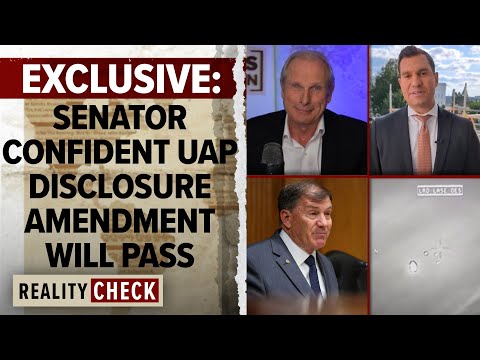
Exclusive: Senator Confident UAP Disclosure Amendment Will Stay in NDAA
NewsNation's Reality Check interviews Sen. Mike Rounds during one of the bill's reintroduction fights, on his continued confidence in the amendment's survival.
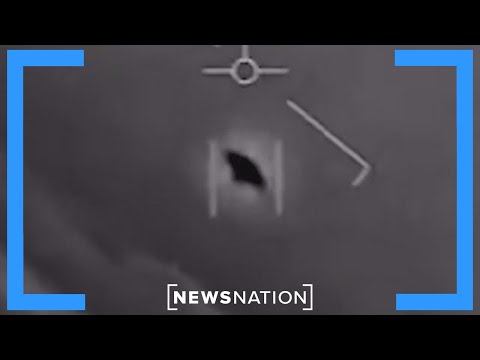
UAP Disclosure Bill: What Is Next After Key Parts Stripped
NewsNation Live analysis published after the December 2023 conference committee removed the review board and eminent domain provisions, examining what remained of the bill and what advocates planned next.
Sources
- Schumer, Chuck & Rounds, Mike (Senate Democratic Leadership). "Schumer, Rounds Introduce New Legislation to Declassify Government Records Related to Unidentified Anomalous Phenomena and UFOs — Modeled After JFK Assassination Records Collection Act." Press release, July 14, 2023. democrats.senate.gov
- U.S. Congress. S.Amdt.797 to S.2226, 118th Congress, "Unidentified Anomalous Phenomena Disclosure Act of 2023," full text. congress.gov
- U.S. Congress. Public Law 118-31, National Defense Authorization Act for Fiscal Year 2024, signed December 22, 2023 (containing §§ 1841–1843). govinfo.gov
- U.S. Congress. H.R. 2670, National Defense Authorization Act for Fiscal Year 2024, legislative actions and vote record. congress.gov
- National Archives and Records Administration. "Unidentified Anomalous Phenomena Records Collection: Frequently Asked Questions." archives.gov
- National Archives and Records Administration. Press release announcing first UAP records transfer, April 24, 2025 (NR25-07). archives.gov
- National Archives and Records Administration. "Guidance to Federal Agencies on Unidentified Anomalous Phenomena Records Collection." archives.gov
- Inside Government Contracts (Crowell & Moring). "Implications of the Unidentified Anomalous Phenomena (UAP) Amendment in the 2024 NDAA." January 2024. insidegovernmentcontracts.com
- The Debrief. "The 'UAP Disclosure Act of 2023': What We Know About Chuck Schumer and the Senate's New Push for UAP Transparency." thedebrief.org
- The Debrief. "The Battle for UAP Disclosure in Washington." thedebrief.org
- The Debrief. "UAP Disclosure Act Receives Pushback From Lawmakers on Capitol Hill, as Bipartisan Fight for Transparency Continues." thedebrief.org
- The Debrief. "A Dramatic Dilution of the Disclosure Process: A Temporary Shore Break Against The Waves of Change?" thedebrief.org
- NewsNation. "UAP disclosure bill revised; two key provisions stripped." newsnationnow.com
- NewsNation. "Sen. Rounds will renew push for UAP disclosure legislation." newsnationnow.com
- Schumer, Chuck (@SenSchumer). Post on X calling the House's removal of the review board "an outrage," December 14, 2023. x.com
- OpenSecrets. "Rep. Mike D Rogers — Alabama District 03: Industries & Top Contributors." opensecrets.org
- OpenSecrets. "Rep. Michael R Turner — Ohio District 10: Industries & Top Contributors." opensecrets.org
- DefenseScoop. "Senators aim to set a mandatory timeline and process for agencies to declassify all UAP records." July 25, 2023. defensescoop.com
- DefenseScoop. "UAP disclosure advocates call for expanded reforms in fiscal 2026 NDAA." July 29, 2025. defensescoop.com
- Young, Todd (U.S. Senate). "Young, Colleagues Introduce New Legislation To Declassify Government Records Related To UFOs & Unidentified Anomalous Phenomena." Press release, July 14, 2023. young.senate.gov
- Infinity Explorers. "Congress Left the UAP Disclosure Act Out of the 2026 Defense Bill. On June 9, Whistleblowers Rallied at the Capitol." infinityexplorers.com
- National Archives and Records Administration. Federal Records Management memo AC-13-2024. archives.gov
- Douglas Johnson (UFO legislative historian). "Senators Rounds and Schumer submit UAP Disclosure Act as possible amendment to NDAA." douglasjohnson.ghost.io
- C-SPAN. "User Clip: Schumer/Rounds – UAP Disclosure Act," Senate floor proceedings, December 13, 2023. c-span.org
- National Archives and Records Administration. "Research by Topic: Unidentified Anomalous Phenomena, Record Group 615." archives.gov
- Wikipedia. "Unidentified Anomalous Phenomena Disclosure Act" (general orientation only; primary claims independently verified against the government and journalistic sources above). en.wikipedia.org
See something inaccurate? Have additional information or sources?
Suggest an Edit →Last Updated: August 2026