
Frontiers of Propulsion Science
The 737-Page AIAA Anthology That Documented NASA's Breakthrough Propulsion Physics Project — Co-Edited by the Physicist Later Revealed as the Pentagon's UAP Program Science Advisor
Core Thesis
Frontiers of Propulsion Science is a 737-page technical anthology — Volume 227 of the American Institute of Aeronautics and Astronautics' respected Progress in Astronautics and Aeronautics series — co-edited by Marc G. Millis and Eric W. Davis to formally document the results of NASA's Breakthrough Propulsion Physics (BPP) Project, the agency's real 1996-2002 research effort into whether propellantless propulsion, gravity control, or faster-than-light travel could ever be reconciled with established physics. It is, by a wide margin, the single highest-institutional-credibility source on this list: a peer-reviewed-adjacent, graduate-level engineering volume from a major professional aerospace society, with a foreword by legendary aerospace engineer Burt Rutan, containing not one chapter about UFOs. Its place here rests entirely on a fact external to its own text — that co-editor Eric W. Davis went on to become science advisor to the Pentagon's AAWSAP and AATIP unidentified anomalous phenomena programs, a connection first reported publicly in The New York Times' December 16, 2017 story that broke the AATIP program to a mass audience. The book itself makes no claims about extraterrestrial craft; understanding precisely where its legitimate, self-skeptical physics ends and its editors' separate, more contested UAP-era claims begin is exactly why it earns a place in this catalogue.
About the Author
Marc G. Millis is an aerospace engineer who spent 31 years at NASA's Lewis Research Center in Cleveland, Ohio (renamed Glenn Research Center in 1999). In 1996 he founded and became program manager of NASA's Breakthrough Propulsion Physics Project, a formally chartered, peer-review-disciplined research effort — not a UFO investigation — that spent roughly $1.2 million across six years of NASA funding examining fourteen distinct topics in speculative-but-scientifically-testable propulsion physics, from gravity-electromagnetism coupling experiments to quantum vacuum energy extraction to the mathematics of the Alcubierre warp-drive metric. NASA canceled the program's funding in 2002 when its Advanced Space Transportation Program was reorganized and all research below Technology Readiness Level 3 was cut, but Millis continued to receive NASA support afterward specifically to document the project's findings — work that became this book, published by AIAA in February 2009. Millis subsequently took early retirement from NASA to co-found the nonprofit Tau Zero Foundation, which continues to coordinate and publicize interstellar-flight research through outlets like the Centauri Dreams website.
Eric W. Davis earned a Ph.D. in astrophysics from the University of Arizona in 1991 and, unlike most of this list's authors, was not a UFO researcher who later touched real physics but the reverse: a career propulsion-and-relativity physicist who was drawn into a UFO-research-adjacent orbit relatively late. He was a staff researcher for the National Institute for Discovery Science (NIDS) from 1996 to 2002 and later worked at the Institute for Advanced Studies at Austin and Hal Puthoff's EarthTech International, contributing two of this book's own chapters (one solo, on faster-than-light approaches in general relativity, and one co-authored with Puthoff, on extracting energy from the quantum vacuum) as a working participant in the BPP-era research the book documents, not merely as its co-editor. Separately from this book, Davis went on to serve as a paid technical consultant to Robert Bigelow's BAASS on the Defense Intelligence Agency's 2008-2010 Advanced Aerospace Weapon System Applications Program (AAWSAP), authoring several of that program's Defense Intelligence Reference Documents, including one titled "Traversable Wormholes, Stargates, and Negative Energy," and later advised the Advanced Aerospace Threat Identification Program (AATIP) and the Pentagon's interagency UAP Task Force. That work became public knowledge only in December 2017, when The New York Times' Helene Cooper, Ralph Blumenthal, and Leslie Kean named him in the article that broke AATIP's existence — eight years after this book's publication.
The book's foreword author, Burt Rutan, is not a propulsion physicist but the aerospace engineer behind Voyager (the first aircraft to circle the globe without refueling) and SpaceShipOne (winner of the 2004 Ansari X-Prize for private crewed spaceflight); his one-line assessment of the volume, that it "offers the seeds for undiscovered breakthroughs," gave the anthology a second layer of mainstream aerospace credibility on top of the AIAA imprint itself and the U.S. government research program it documents.
Historical Context & Origins
NASA's Breakthrough Propulsion Physics Project grew out of a 1990s recognition, inside the agency's own advanced-concepts community, that chemical rockets could never plausibly reach the stars and that any serious long-term interstellar-flight capability would require physics nobody yet understood. Millis structured the program deliberately to avoid the credibility problems that had long dogged "antigravity" and "free energy" research: proposals had to be peer-reviewed, grounded in existing physics literature rather than proprietary claims, and evaluated against a formal, published assessment methodology rather than accepted on an inventor's word. Over its six operational years the program examined topics as varied as the Casimir effect, superconductor-based gravity experiments, the Woodward (Mach) effect, tests of specific patented "electrogravitic" devices, and the theoretical requirements of the Alcubierre warp-drive solution to Einstein's field equations — ruling several claimed effects nonviable in the process, rather than uncritically cataloguing them.
The program's funding ended in 2002 when NASA reorganized its Advanced Space Transportation Program and eliminated support for anything below Technology Readiness Level 3, a bureaucratic threshold most of BPP's necessarily speculative research could never clear. Rather than let the project's findings simply disappear into internal NASA technical memoranda, the agency continued supporting Millis specifically to compile and publish a comprehensive account of what the program had learned. That effort, expanded to include contributions from outside researchers Davis had worked alongside during the BPP years — including Puthoff, superconductor-gravity experimentalist Martin Tajmar, and interstellar-flight theorist Claudio Maccone, among roughly twenty contributors in total — became Frontiers of Propulsion Science, which AIAA published in February 2009, described at the time as the first-ever single-volume compilation of this specific research territory for an aerospace engineering and science audience.
The book's own publication timeline sits entirely before the events that make it relevant to this site. Davis's BAASS/AAWSAP consulting work began in 2008, overlapping the book's final editing, and his continued AATIP advisory role extended for years afterward; none of that later government UAP work appears anywhere in the book's text, which was assembled to document a already-defunded, deliberately non-classified NASA physics program. The book's relevance to UFO research is consequently a matter of authorship history layered on top of the text, not content baked into it — a distinction this site's own catalogue tries to keep explicit rather than blur for the sake of a more dramatic connection.
Core Arguments & Key Concepts
The book is organized into five major parts — foundational physics and methodology, propulsion without expelled propellant, faster-than-light and superluminal concepts, energy generation and storage for such systems, and recommendations for how a research program in this space should be managed — and its individual chapter titles read like a formal literature review of the entire speculative-propulsion field as it stood circa 2008: "Recent History of Breakthrough Propulsion Studies," "Limits of Interstellar Flight Technology," "Prerequisites for Space Drive Science," "Review of Gravity Control Within Newtonian and General Relativistic Physics," and, from the faster-than-light section, Davis's own "Faster-than-Light Approaches in General Relativity" and a companion chapter on the faster-than-light implications of quantum entanglement and nonlocality.
What distinguishes the book most sharply from the wider genre of exotic-propulsion and antigravity literature this site otherwise catalogues is how much of it is devoted to explicitly ruling things out. Chapters titled "Nonviable Mechanical 'Antigravity' Devices," "Null Findings of Yamashita Electrogravitational Patent," and "Null Tests of 'Free-Energy' Claims" report negative experimental results on specific claimed devices and patents that circulate widely in the more credulous corners of alternative-propulsion writing — a level of self-skepticism almost never found in books arguing that exotic propulsion secretly already exists. Alongside those null results sit chapters on genuinely open, still-debated experimental programs: Martin Tajmar's "Gravitational Experiments with Superconductors" (a real, published attempt to detect frame-dragging-like effects near rotating superconductors) and "Experimental Results of the Woodward Effect" (assessing physicist James Woodward's Mach-effect thruster claims, an area the book treats as unresolved rather than proven or dismissed).
The energy-systems section addresses where the power for any of these hypothetical propulsion methods might come from, most notably in Davis and Puthoff's jointly authored "On Extracting Energy from the Quantum Vacuum," which surveys, without endorsing as engineering-ready, the theoretical case that the zero-point quantum vacuum contains extractable energy — the same territory this site's own Zero-Point Energy Extraction Hypothesis theory page covers from a UAP-propulsion-speculation angle rather than this book's peer-reviewed-adjacent one. The book's closing section is unusually candid for the genre, offering explicit recommendations on how funding agencies should structure and evaluate this kind of high-risk, low-technology-readiness research without falling into either uncritical acceptance or reflexive dismissal — effectively a methodological manifesto for how Millis believed BPP itself should have been run, aimed at whichever future institution might try something similar.
Nowhere in any of this does the book address UFOs, alien craft, or the extraterrestrial hypothesis. Its subject is entirely terrestrial theoretical and experimental physics research conducted openly, under a NASA program number, with published methodology — the opposite evidentiary posture from most of what this site otherwise reviews under "Essential Reading," and worth reading specifically as a baseline for what a credentialed aerospace-engineering institution will and will not put its name behind.
Key Cases & Evidence Discussed
The book's own "cases" are specific claimed propulsion devices and effects it tests against real experimental and theoretical physics rather than sighting reports: the Yamashita electrogravitational patent and various "mechanical antigravity" devices are examined and reported as nonviable; the Podkletnov-style gravity-shielding claims that circulate widely in UFO-propulsion literature (echoing the same broader gravity-shielding territory Tajmar's superconductor chapter investigates more rigorously) receive the same skeptical scrutiny; and free-energy claims are subjected to explicit null tests. Woodward's Mach-effect thruster is treated as a genuinely open experimental question rather than either confirmed or debunked — a distinction the book is careful to maintain throughout.
This site's own Alcubierre Warp Drive Model theory page (Theory File AWD-001) and Zero-Point Energy Extraction Hypothesis theory page (Theory File ZPE-001) both cover physics territory this book surveys directly — the warp-drive metric in "Faster-than-Light Approaches in General Relativity" and vacuum-energy extraction in Davis and Puthoff's joint chapter — making Frontiers of Propulsion Science effectively the primary academic-literature source underlying both of this site's own speculative-propulsion theory files.
Davis's own field research is not part of this book but is directly relevant to why this site covers it: his BAASS/AAWSAP consulting work included investigating land around the actual Skinwalker Ranch in Utah, this site's own Skinwalker Ranch case file (Case File #296), and his Air Force Research Laboratory-commissioned 2004 Teleportation Physics Study is cited separately by this site's Retrocausality Hypothesis theory page — both of which document Davis's UAP-adjacent work more directly than anything in the book under review here does.
For a direct evidentiary-standard comparison, this site's own Unconventional Flying Objects entry (Paul R. Hill, 1995) covers the nearest comparable credentialed-engineer propulsion book on this list: Hill's "force field propulsion" hypothesis was built from witness testimony about reported UFO maneuvers and validated only by small-scale, self-funded flying-platform tests, whereas Frontiers of Propulsion Science rests on a formally funded, peer-review-structured NASA research program with explicit null results built into its own chapter list — the difference between an individual engineer's outside-hours hypothesis and an institutionally sanctioned research program's documented findings.
Critical Reception & Controversies
Within aerospace engineering, the book's reception has been straightforwardly respectful of its institutional pedigree: it carries the AIAA imprint inside the society's long-running Progress in Astronautics and Aeronautics series (Volume 227), was formally catalogued and reviewed in the Royal Aeronautical Society's Aeronautical Journal, and was priced and marketed as a $99.95-$129.95 graduate-level reference rather than a popular-audience book — a combination that has kept its actual readership narrow and specialist even as its reputation as "the" reference compilation for this research territory has grown within the small community that studies it.
Within the interstellar-flight research community that grew directly out of the BPP program, reception has been warmer still; Tau Zero Foundation-affiliated writers, including Paul Gilster at Centauri Dreams (itself the Tau Zero Foundation's primary public outlet, and a book contributor), described it on publication as a major, overdue text, while noting even then that its density and price would limit it mostly to specialists and university libraries rather than general readers, and that some commentators worried its heavy emphasis on speculative, low-Technology-Readiness-Level physics risked crowding out attention to nearer-term, more conventional propulsion research.
The book's most important critical feature, for this site's purposes, is what it is not: despite two of its chapters directly overlapping the physics territory (warp drives, zero-point energy) that UFO-propulsion theorists frequently invoke, the book's own "Nonviable Mechanical Antigravity Devices" and "Null Findings of Yamashita Electrogravitational Patent" chapters actively rule out several specific claims that circulate in that literature, rather than lending them institutional cover. Readers arriving at this book expecting validation of exotic-craft folklore because of its editors' later UAP fame will not find it here; the rigor cuts the other way.
That said, a real credibility gap has opened between this book and Davis's separate, later public statements. His 2002 memo describing a meeting with Admiral Thomas Wilson about an alleged crash-retrieval program — the so-called Wilson-Davis memo, which did not surface publicly until 2019 — has been disputed by Wilson himself, who has denied the meeting occurred as described, and the Pentagon's own 2024 All-domain Anomaly Resolution Office (AARO) historical report found no evidence supporting claims of a secret U.S. program engaged in reverse-engineering non-human technology, directly contradicting the substance of claims Davis and others have made publicly in UAP-disclosure contexts since 2017. None of those disputed later claims appear anywhere in Frontiers of Propulsion Science itself, but readers should not let the book's genuine institutional rigor be read as automatic corroboration of everything its co-editor has said in a different, far less rigorously reviewed venue since.
Influence & Legacy
Within the narrow field of institutionally sanctioned interstellar-propulsion research, Frontiers of Propulsion Science functions as something close to a foundational reference text: it remains the most comprehensive single published account of what NASA's Breakthrough Propulsion Physics Project actually concluded across its fourteen studied topics, and the Tau Zero Foundation that Millis co-founded after the program's defunding has continued to treat it as a baseline document for the community's ongoing work, cited and discussed on the foundation's Centauri Dreams outlet in the years since publication.
Its influence on UFO and UAP research specifically is almost entirely a function of timing and biography rather than content. The book was already in print for nearly nine years when The New York Times' December 2017 AATIP story made Eric Davis's name recognizable to a UAP-research audience that had never heard of NASA's Breakthrough Propulsion Physics Project; since then, the book has been retroactively cited within UAP-disclosure circles less for what it argues than for who wrote it, treated as evidence that credentialed, institutionally embedded physicists take advanced-propulsion questions seriously — a framing the book's own text neither invites nor addresses.
Burt Rutan's foreword gave the volume an early crossover audience beyond career propulsion researchers, tying it, if loosely, to the broader private-spaceflight moment Rutan's own SpaceShipOne had helped launch five years earlier; several of the book's individual chapter topics, particularly the Alcubierre warp-drive and quantum-vacuum-energy material, have since been cited independently in both academic interstellar-flight literature and, less rigorously, in popular UAP-propulsion speculation that rarely credits the book directly.
Within this site's own catalogue, the book connects most directly to the Alcubierre Warp Drive Model and Zero-Point Energy Extraction Hypothesis theory pages, whose underlying physics it surveys in far greater technical depth than either theory page attempts; to the Skinwalker Ranch case file and Retrocausality Hypothesis theory page, both tied to Eric Davis's separate AAWSAP-era work; and to this site's own Unconventional Flying Objects entry, the closest comparable credentialed-engineer propulsion book already on this list and the clearest available contrast in evidentiary standard.
The Book
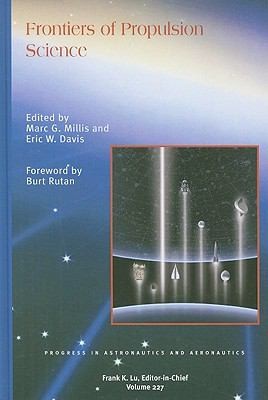
Frontiers of Propulsion Science
The 737-Page AIAA Anthology That Documented NASA's Breakthrough Propulsion Physics Project — Co-Edited by the Physicist Later Revealed as the Pentagon's UAP Program Science Advisor
Find on Amazon →As an Amazon Associate, OverClassified may earn from qualifying purchases made through this link, at no extra cost to you.
Why This Is Essential Reading
Frontiers of Propulsion Science belongs on this list precisely because it is the one book here that most conspicuously does not belong to the UFO genre on its own terms. It is a formally peer-reviewed-adjacent, 737-page AIAA technical anthology, published in a respected professional aerospace society's flagship monograph series, documenting a real, government-funded, six-year NASA research program with a foreword from one of American aerospace engineering's most credentialed living figures — and its own chapters spend as much energy ruling out specific antigravity and free-energy claims as they spend exploring genuinely open questions like the Woodward effect or the Alcubierre metric. Its relevance to this site rests entirely on a fact the book itself never mentions: co-editor Eric W. Davis went on, in work entirely separate from this volume, to become a science advisor to the Pentagon's classified AAWSAP and AATIP UAP programs, a connection the world did not learn until The New York Times' December 2017 reporting, eight years after this book's publication. Read it for what it actually is — the most institutionally rigorous propulsion-physics source this catalogue contains, and a useful corrective baseline for what mainstream aerospace engineering will and will not entertain — and read this entry's Critical Reception section alongside it for where that rigor stops and Davis's separately sourced, more contested later UAP claims begin.
Related Cases & Theories
Essential Viewing
Marc Millis - Breakthrough Propulsion Study: Assessing Interstellar Flight Challenges / Prospects
Interstellar Research Group — Millis discussing the Breakthrough Propulsion Physics Project's methodology and findings, the same research this book documents. Verified via YouTube oEmbed before inclusion.
Dr. Eric W. Davis: UAPs, Wormholes, Negative Energy, Fusion, Matter-Antimatter & ZPE
Generation Zed — Davis discussing the same wormhole and zero-point-energy physics territory covered in his chapters for this book, alongside his separate UAP research. Verified via YouTube oEmbed before inclusion.
Dr. Eric Davis "Space-Time & Species Types" - UAP Hearing, May 1, 2025
Inside the Hall of Mirrors — Davis's later public UAP-research testimony, illustrating the separate, more contested venue his post-book UAP claims occupy relative to this book's own peer-reviewed-adjacent content. Verified via YouTube oEmbed before inclusion.
Sources Cited
- Millis, Marc G., and Eric W. Davis, eds. Frontiers of Propulsion Science. American Institute of Aeronautics and Astronautics, Progress in Astronautics and Aeronautics Vol. 227, Reston, VA, 2009 (ISBN 978-1-56347-956-4 / 1563479567, 737 pp., foreword by Burt Rutan).
- "Frontiers of Propulsion Science." AIAA ARC (publisher's official book listing, Progress in Astronautics and Aeronautics series). arc.aiaa.org
- "Frontiers of Propulsion Science." Amazon.com (hardcover listing, ISBN 9781563479564, editors and foreword credit). amazon.com
- "Frontiers of Propulsion Science. Progress in Astronautics and Aeronautics series Vol. 227." The Aeronautical Journal / Cambridge Core (formal bibliographic review record: 737pp., pricing, ISBN). cambridge.org
- "Breakthrough Propulsion Physics Program." Wikipedia (NASA program history: 1996-2002 dates, $1.2 million funding, fourteen topics studied, 2002 cancellation, connection to this book's 2009 publication). en.wikipedia.org
- Gilster, Paul. "Frontiers of Propulsion Science: A Major New Text." Centauri Dreams, June 10, 2008 (Tau Zero Foundation-affiliated review discussing scope, contributors, and reception). centauri-dreams.org
- "Frontiers of Propulsion Science." NextBigFuture, February 2009 (chapter-title and structure summary, including the book's null-findings chapters). nextbigfuture.com
- "New book from AIAA explores space drives, warp drives." EurekAlert! / AIAA press release, February 2009. eurekalert.org
- Cooper, Helene, Ralph Blumenthal, and Leslie Kean. "Glowing Auras and 'Black Money': The Pentagon's Mysterious U.F.O. Program." The New York Times, December 16, 2017 (the report that first publicly connected Eric W. Davis to AATIP and named him as author of an AAWSAP-funded study). nytimes.com
- "More Light on Black Program to Track UFOs." Federation of American Scientists, 2020 (list of 38 AAWSAP Defense Intelligence Reference Documents, including Davis's "Traversable Wormholes, Stargates, and Negative Energy"). fas.org
- "Dr. Eric W. Davis." Lifeboat Foundation Bios (career biography: University of Arizona astrophysics Ph.D. 1991, NIDS 1996-2002, EarthTech International, BPP program participation). lifeboat.com
- "Annotated Admiral Thomas Wilson & Dr. Eric W. Davis Memo." Internet Archive (2002 memo, its 2019 public surfacing, and disputed provenance). archive.org
- "Frontiers of propulsion science." Library of Congress catalog record (bibliographic listing, ISBN 9781563479564). loc.gov
- "Who We Are." Tau Zero Foundation (Millis's post-NASA career and the foundation's continuation of BPP-era research). tauzero.aero
- This site's own theory page: Alcubierre Warp Drive Model (Theory File AWD-001), covering physics territory this book surveys directly.
- This site's own theory page: Zero-Point Energy Extraction Hypothesis (Theory File ZPE-001), covering the same quantum-vacuum energy question addressed in Davis and Puthoff's joint chapter.
- This site's own case file: Skinwalker Ranch (Case File #296), documenting the BAASS/AAWSAP program Davis consulted for.
- This site's own essential reading entry: Unconventional Flying Objects, the closest comparable credentialed-engineer propulsion book already on this list.
Have corrections, additional research, or peer-reviewed sources? Help improve this entry.
Suggest an Edit