
Firestorm
Dr. James E. McDonald's Fight for UFO Science
Core Thesis
Ann Druffel did not come to this book as an outside biographer piecing together a stranger's life from archives alone: as a Los Angeles NICAP Subcommittee (LANS) investigator, she worked directly alongside James E. McDonald from 1966 until his death in 1971, then spent decades afterward drawing on his private papers, unpublished speeches, and interviews with his surviving colleagues to reconstruct his case. Her argument, built case by documented case rather than asserted in the abstract, is that McDonald's UFO research was never the credibility-destroying eccentricity his critics made it out to be — that a senior atmospheric physicist with genuine mainstream standing applied real scientific method to hundreds of witness interviews, forced a congressional committee and the Condon Committee itself to answer his quantitative objections on the record, and was subjected in return to a coordinated pattern of professional ridicule, a funding-misconduct accusation from skeptic Philip J. Klass, and public humiliation before Congress — pressures that arrived at nearly the same moment as his marriage's collapse and preceded his 1971 death by suicide.
About the Author
Ann Druffel (1926–2020) dated her own interest in the UFO question to 1945, when as a schoolgirl she watched a bright, high-altitude object cross a clear sky over Long Beach, California. She became one of NICAP's original field investigators in April 1957, working Southern California sighting reports for the organization for the next decade and a half, and it was through the Los Angeles NICAP Subcommittee that she became personally acquainted with James E. McDonald, corresponding and working cases with him from 1966 until his death in June 1971 — the same five-year window this book covers as McDonald's public UFO career. When NICAP itself dissolved in the early 1970s, Druffel continued as an investigator with the Mutual UFO Network (MUFON) from 1973 onward, eventually authoring six books and contributing more than 190 articles to UFO publications over a research career that stretched across more than six decades.
Her most sustained piece of individual case research outside this biography concerned Rex Heflin's 1965 UFO photographs, a case McDonald himself investigated for four years starting in 1967. When Heflin's three lost original Polaroids mysteriously reappeared in his mailbox in 1993, it was Druffel who arranged for all four originals to be preserved for renewed scientific study, and in 2000 she co-authored a peer-reviewed reanalysis in the Journal of Scientific Exploration with physicist Robert M. Wood and imaging specialist Eric Kelson that reconfirmed Heflin's account and found no supporting mechanism for a hoax — work this book directly continues, since McDonald's own unresolved doubts about one of the four Heflin frames are themselves part of this biography's record of how carefully, and how skeptically of his own preferred hypothesis, he actually worked.
Druffel wrote Firestorm as an explicitly authorized biography, with a foreword contributed by Jacques Vallee, who credited her with a "marvelous reconstruction of the world of Jim McDonald, his epic fights with the skeptics, his repeated efforts to bring his data before the Air Force, NASA and his complacent colleagues." The book drew on McDonald's own papers, later formally archived in Special Collections at the University of Arizona Libraries — the same institution where he had spent his entire academic career — along with correspondence, unpublished speech drafts, and interviews Druffel conducted with people who had known him personally, giving the book a level of access no outside researcher working from the public record alone could have assembled. Druffel died on June 12, 2020, in Pasadena, California, at age 93.
Historical Context & Origins
McDonald's UFO research had produced no full-length biography in the three decades between his June 1971 death and this book's 2003 publication, even as his 1968 congressional testimony, cataloged on this site as The James E. McDonald Congressional UFO Testimony, and his running public dispute with the Condon Committee remained frequently cited touchstones in later UFO literature. Druffel's personal history with McDonald as a fellow NICAP investigator put her in a unique position to close that gap: she had corresponded with him directly during the years this book covers, and by the time she began serious work on the manuscript, McDonald's own papers had entered the University of Arizona's Special Collections, giving a biographer access to the correspondence, case files, and speech drafts that hadn't existed as an organized archive during the decades immediately following his death.
The book also arrived into a UFO-research landscape considerably more institutionally organized than the one McDonald had worked in. By 2003, the Center for UFO Studies, MUFON, and academic-adjacent efforts including the 1998 Sturrock Panel review of physical evidence had spent decades trying to establish exactly the kind of credentialed, methodical scientific engagement McDonald had personally modeled and paid for; Druffel's biography functioned in part as a origin-story corrective, reminding a field that had grown institutionally more cautious since the 1970s that one of its most rigorously credentialed early advocates had already tried, and failed, to force the mainstream scientific establishment's hand through direct confrontation rather than gradual institution-building.
Structurally, the book follows McDonald from his conventional early career in cloud physics and weather modification through his 1966 public turn toward UFO advocacy and into the specific institutional confrontations — the 1968 House symposium, the Condon Committee dispute, the 1970 SST hearing humiliation — that this site's own case file on his congressional testimony documents from the government-record side. Where that case file works from the published hearing transcript outward, this book works from McDonald's private papers and Druffel's own firsthand knowledge inward, giving the two accounts a genuinely complementary relationship rather than a redundant one.
Core Arguments & Key Concepts
The book's central claim rests on establishing McDonald's mainstream scientific bona fides before it ever turns to UFOs: senior physicist at the University of Arizona's Institute of Atmospheric Physics and professor of meteorology, holding a B.A. in chemistry (1942), an M.S. in meteorology from MIT (1945) under Thomas F. Malone, and a Ph.D. in physics from Iowa State University (1951), with a mainstream research career in cloud physics, weather modification through cloud seeding, and raindrop aerodynamics that included service on a National Academy of Sciences advisory panel — credentials this site's own congressional testimony case file independently corroborates from the hearing record itself.
A second argument concerns method rather than credentials: Druffel documents McDonald's practice of personally interviewing witnesses rather than relying on secondhand case summaries, ultimately totaling several hundred interviews across roughly a decade of research, and his habit of disclosing his own methodological limitations unprompted — most notably that his post-1966 case sample was substantially "presifted, presorted data" already screened by NICAP and APRO before it reached him, a disclosure he made directly to Congress in his own 1968 statement rather than waiting to have it raised against him.
The book's most pointed institutional argument concerns the Condon Report. Druffel reconstructs McDonald's technical dispute with the study's conclusions in detail, centering on his objection that the report's own case-by-case findings left roughly a third of the incidents it examined without an adequate conventional explanation even as its summary and foreword declared the subject unworthy of further study — the same discrepancy this site's own Condon Report case file independently documents, including the leaked 1966 "trick memo" in which the study's own coordinator described a strategy for appearing neutral while expecting a negative result.
A fourth thread traces the specific cost of McDonald's advocacy to his mainstream career: Druffel details skeptic Philip J. Klass's public accusation that McDonald misappropriated Office of Naval Research atmospheric-physics funding to subsidize his UFO interviews, a charge McDonald denied as baseless since his UFO travel and research were separately funded, and the January 1970 House hearing on the supersonic transport program at which Representative Silvio O. Conte dismissed McDonald's ozone-depletion testimony by invoking his UFO research, drawing audible laughter in the chamber — a public humiliation the book treats as a turning point rather than an isolated indignity.
Underlying all four threads is Druffel's overarching argument that these were not separate episodes but a single accumulating pattern: a credentialed scientist's serious, methodologically self-aware research program treated as inherently disqualifying by the institutions — Congress, the Air Force, his own funding agencies — he most needed to persuade, regardless of the specific technical strength of any individual argument he made.
Key Cases & Evidence Discussed
This book's most direct point of overlap with this site's own holdings is The James E. McDonald Congressional UFO Testimony (Case File #285, July 29, 1968), the hearing at which McDonald told the House Committee on Science and Astronautics the scientific community had been "casually ignoring as nonsense a matter of extraordinary scientific importance." Where this site's case file works from the published Government Printing Office hearing transcript, Druffel's book reconstructs the private correspondence and preparation behind it — including McDonald's own hope, drawn from letters written around the hearing, that a deliberately low-key, non-adversarial session focused strictly on data would help "sanitize" the subject enough within Congress to make fuller hearings possible later.
The book gives extended treatment to the July 19, 1952 Washington National Airport radar-and-visual case that McDonald cited to Congress as his strongest single example, in which he told the committee he had personally analyzed the available radiosonde atmospheric data and found the refractive-index gradients required to produce the Air Force's official "ducting" explanation simply were not present that night — a quantitative rebuttal this site's own case file independently confirms was never formally answered by the Air Force on the same technical terms.
Druffel also documents McDonald's four-year personal investigation, beginning in 1967, of Rex Heflin's 1965 UFO photographs — the same case Druffel herself continued researching decades later, co-authoring the 2000 Journal of Scientific Exploration reanalysis referenced throughout her own key-figures entry on this site. The book is candid that McDonald ultimately called the photographs "the outstanding photographic evidence yet submitted concerning UFOs" while privately never fully resolving his own doubts about one of the four frames, a nuance consistent with the site's own treatment of the case.
The book covers McDonald's direct rebuttal of Harvard astronomer Donald Menzel's optical-refraction explanation for the 1952 Nash-Fortenberry Sighting, which McDonald called an "almost entirely ad hoc assumption," and revisits his involvement, alongside NICAP's own astronomical review, in disputing the Air Force's star-refraction explanation for the August 1960 Red Bluff UFO Incident — an explanation this site's own case file notes named two stars that were not actually above the horizon at the time of the sighting.
Beyond individual cases, the book devotes considerable attention to McDonald's central evidentiary category: reports of apparent electromagnetic interference, especially the November 1957 Levelland, Texas vehicle-stall wave he cited to Congress as the closest thing available to objective, non-testimonial physical evidence, and to his broader case files on radar-and-visual encounters including the Haneda Air Base Radar-Visual Sighting and the Ellsworth AFB Sighting, both cases where his competing reading of the underlying Air Force documentation sits in direct tension with the Condon Committee's own later conclusions.
Critical Reception & Controversies
Reader reception, aggregated on Goodreads at a 4.67-star average across 15 ratings, is strongly positive; one reviewer called it a "magnificent book, well researched, well written, full of interesting information, and great understanding of the period," while a second, more measured review praised it as "a good biography" while noting a genuine stylistic criticism — that Druffel's prose leans repeatedly on absolute language ("always," "never," "only," "ever," "every") in ways the reviewer found wearing over 640 pages, a fair critique of a biography that is, by its own admission, an authorized account written by someone who personally knew and admired its subject.
That closeness is this book's clearest and most honestly stated limitation rather than a concealed one: Druffel was not a disinterested outside biographer but a working colleague of McDonald's for the five years this book covers, and the foreword's own framing — Jacques Vallee's description of the book chronicling McDonald's "epic fights with the skeptics" — signals a book written substantially from inside McDonald's own camp rather than from a position of institutional neutrality. Readers looking for a sustained, book-length presentation of the mainstream scientific case against McDonald's conclusions, of the kind Sagan offered in the same 1968 hearing room, will not find it built into this volume's own architecture; the book instead documents McDonald's side of a dispute the wider scientific establishment mostly declined to engage with on his own quantitative terms.
The book did not draw the kind of mainstream science-press review that greeted McDonald's own contemporaneous writing in journals like Astronautics & Aeronautics; its critical reception has instead accumulated mainly within ufology's own specialist press and reader communities, a narrower footprint consistent with how a 640-page biography from a small specialty press — Wild Flower Press, based in Columbus, North Carolina — typically circulates outside its own subject-matter audience, regardless of the underlying research's quality.
Where the book's evidentiary claims can be independently checked against this site's own case files — the Washington National Airport radar case, the Condon Report's internal statistics, the Red Bluff star-position error — those claims hold up, which this site's own separately researched case files corroborate rather than merely repeat from Druffel's account; the book's genuine limitation is not factual accuracy so much as the absence of the countervailing skeptical voice a fully balanced institutional history would need to include.
Influence & Legacy
The book's most concrete, verifiable influence on this site is structural: it functions as the fullest available biographical companion to The James E. McDonald Congressional UFO Testimony case file, which itself already lists this book in its own "Further Reading" section as the authorized biography documenting the professional and political battles surrounding the 1968 hearing and its aftermath — a cross-reference this essential-reading entry now completes in the other direction.
Within Druffel's own body of work, this book stands as her most substantial single research project, distinct from her decades of individual sighting-report field investigation for NICAP and MUFON; it drew directly on the same University of Arizona Special Collections archive of McDonald's papers that remains the primary source base for any subsequent researcher working on his career, meaning the book's own bibliography and interview record continue to function as a research map for that archive.
The book also sits inside a small but significant cluster of biographical and historical UFO literature published in the early 2000s that worked to formally document the field's own institutional history rather than simply re-litigate individual sightings — a period this site's own coverage of related works, including The Hynek UFO Report and the Condon Report's own documented aftermath, situates as part of a broader effort to give ufology's most credentialed mid-century advocates a permanent documentary record before firsthand witnesses to their careers were no longer alive to provide it.
Jacques Vallee's foreword itself has taken on a secondary life as one of the more frequently quoted assessments of McDonald's UFO career from within the field's own scientifically credentialed wing, cited in later discussions of McDonald's legacy as testimony that his fight, however personally costly, was recognized by his contemporaries as a genuine scientific effort rather than a credibility lapse.
The Book
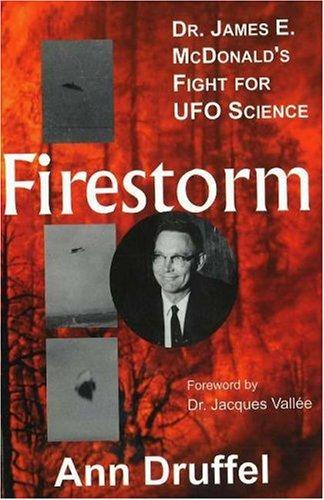
As an Amazon Associate, OverClassified may earn from qualifying purchases made through this link, at no extra cost to you.
Why This Is Essential Reading
Firestorm earns its place on this list for a reason none of this site's other Essential Reading titles quite share: it is the only book-length biography of a figure this site independently documents in its own case-file library, written by someone who worked directly alongside him during the five years both accounts cover. Read against this site's own James E. McDonald Congressional UFO Testimony case file, which reconstructs the 1968 hearing from the government's own published record, Druffel's book supplies what that record cannot: the private correspondence, the archived papers, and a colleague's firsthand account of what McDonald's fight actually cost him — professionally, financially, and ultimately personally. It is not a neutral institutional history, and it does not pretend to be one; it is a credentialed physicist's own colleague, decades later, making the case that his death by suicide in June 1971, three years after the field's most credentialed sympathetic scientist told Congress it was "casually ignoring" the subject, was not an isolated personal tragedy but the endpoint of a documented, years-long pattern of professional ridicule this book traces case by case.
Related Cases & Theories
Essential Viewing
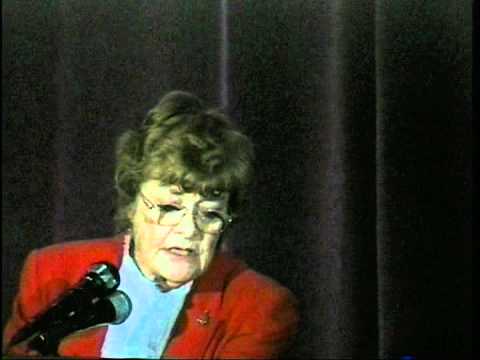
Xcon 2004 - Ann Druffel - The Firestorm: Dr. McDonald's Fight for UFO Science
LostArts media — Ann Druffel presenting this exact book directly to a UFO research conference audience the year after its publication, discussing McDonald's career and the research behind the biography. Verified via YouTube oEmbed before inclusion.
Dr. James E. McDonald: UFOs, A Case Study in Public Mis-information
UFO History — Recorded audio of McDonald's own September 24, 1968 lecture at Kent State University, delivered eight weeks after his congressional testimony and covering the same case material and methodology this book reconstructs from his private papers. Verified via YouTube oEmbed before inclusion.
Sources Cited
- Druffel, Ann. Firestorm: Dr. James E. McDonald's Fight for UFO Science. Wild Flower Press, July 2003 (ISBN 0926524585 / 9780926524583, foreword by Jacques Vallee). amazon.com
- "Firestorm: Dr. James E. McDonald's Fight for UFO Science." Open Library / Internet Archive (bibliographic record: Wild Flower Press, July 2003, 640 pp., 2nd edition). openlibrary.org
- "Firestorm Dr. James E. McDonald's Fight For UFO Science." Internet Archive (full scanned text, community upload). archive.org
- "Firestorm: Dr. James E. McDonald's Fight for UFO Science." AbeBooks (bibliographic record listing Druffel and foreword author Jacques Vallee). abebooks.com
- "Firestorm: Dr. James E. McDonald's Fight for UFO Science by Ann Druffel." Goodreads (reader ratings: 4.67-star average across 15 ratings, review quotes cited in this article's Critical Reception section). goodreads.com
- "James E. McDonald." Wikipedia (biography: birth/death, education, atmospheric-physics career, UFO research 1966–1971, Condon Report criticism, SST hearing, suicide attempt and death). en.wikipedia.org
- "James E. McDonald." National Investigations Committee on Aerial Phenomena (NICAP), biographical file. nicap.org
- "James E. McDonald Papers." University of Arizona Libraries, Special Collections (archival finding aid for the correspondence and case files this book draws on). lib.arizona.edu
- "Ann Druffel." Tribute Archive (obituary: 1926–2020, NICAP investigator from April 1957, MUFON from 1973, acquaintance with McDonald 1966–1971). tributearchive.com
- "Ufologist Ann Druffel Dies." The UFO Chronicles, June 2020 (career summary, six authored books, 190+ articles). theufochronicles.com
- "James E. McDonald, UFOs, and NASA." New English Review (career and death circumstances, including the March 1971 divorce request and the SST hearing incident with Rep. Silvio O. Conte). newenglishreview.org
- "Tales from the Morgue: UFOs Are Real." Arizona Daily Star / Tucson.com (local coverage of McDonald's Tucson death). tucson.com
- This site's own case file: The James E. McDonald Congressional UFO Testimony, for the 1968 hearing this book's central chapters cover from the private-correspondence side.
- This site's own case file: The Condon Report, for the 1968–1969 government study McDonald publicly disputed, corroborating this book's account of the report's internal case-statistics discrepancy.
- This site's own case file: Rex Heflin UFO Photographs, for the case McDonald personally investigated for four years and Druffel herself later co-reanalyzed in 2000.
- This site's own case file: Red Bluff UFO Incident, for the 1960 case in which McDonald's independent astronomical check disputed the Air Force's official star-refraction explanation.
- This site's own key-figures entry: James E. McDonald, for his full biography and further case connections.
- This site's own key-figures entry: Ann Druffel, for her full research career and case connections.
Have corrections, additional research, or peer-reviewed sources? Help improve this entry.
Suggest an Edit