
Evidence: The Case for NASA UFOs
David Sereda's 2002 Analysis of Shuttle Downlink Footage — The Book That Made the Tether Incident Famous
Core Thesis
Evidence: The Case for NASA UFOs is the book that made the shuttle-footage claim famous, and it is the reason this site has a case file on the STS-75 tether incident stamped Debunked. David Sereda spent six years working through NASA's live shuttle downlink footage from the 1990s — principally the archive recorded off-air by the Vancouver cable technician Martyn Stubbs — and argued that the luminous objects visible drifting near the payload bay were structured craft of enormous size. Published by Terra Entertainment in February 2002 with a foreword by the actor Dan Aykroyd, it is the founding document of the orbital-UFO argument. The footage it examines is entirely real and publicly available. The analysis performed on it is where the problem lies.
About the Author
David Sereda is a Canadian-born documentary filmmaker, inventor and self-described independent scientist. This site's own research on him, recorded on his key-figures card, found no independently verifiable academic credential in astrophysics, optics or aerospace engineering — which matters here, because the book's central activity is optical analysis of low-light video.
The promotional description of him as a physicist by training should therefore be read with care. What is documented is that he has described more than a decade of collaboration with the physicist Bogdan Maglich on nuclear fusion research, that he testified before Congress on fusion technology in 1994, and that he later led a detection-technology firm in the defence sector. Those are real activities and none of them is training in image analysis.
His method in this book is frame-by-frame examination of video: measuring apparent motion, inferring size and distance, and arguing from the behaviour of luminous points on a screen to the properties of physical objects in orbit. That inference chain is the whole argument, and every step in it depends on knowledge of the camera, the optics, the lighting geometry and the observing conditions.
He went on to make documentary films on the same material and on related subjects, and it is as a filmmaker that he is best known. The footage he assembled is genuinely striking on screen, and the visual persuasiveness of the material is inseparable from how the argument has been received.
The foreword by Dan Aykroyd is a marketing asset and should be weighed as one. Aykroyd is a well-known enthusiast for the subject with no relevant technical expertise, and his name on the book established its cultural visibility rather than its analytical standing.
Historical Context & Origins
The raw material has an unusual origin. Through the 1990s NASA broadcast live downlink video from shuttle missions on a public satellite feed, and Martyn Stubbs, a Vancouver cable television manager, recorded it systematically for years, accumulating hundreds of hours. Nothing about that archive is secret; it is public broadcast material that almost nobody was watching.
Two mission sequences became the centre of the argument. On STS-48 in September 1991 a camera recorded a point of light that appeared to change direction sharply as another streak crossed the frame, and this site covers it in its own case file.
The second is STS-75, and it is the one this book made famous. On February 25–26, 1996 Space Shuttle Columbia, launched from Kennedy Space Center, deployed the Tethered Satellite System Reflight on a twelve-mile conducting cable; an electrical arc severed the tether and the satellite receded into its own orbit. Low-light television footage recorded around the failure shows numerous small luminous objects apparently moving near the severed cable.
The conventional explanation is specific, testable and has been tested. This site's case file records it: the objects are ice particles from a routine wastewater dump, rendered as apparent discs by a documented defect in the shuttle's low-light television camera — an effect that MUFON's own chief photo analyst replicated on video.
The scale claim is the argument's decisive vulnerability and it is worth spelling out. Sereda's inference that the objects were miles across depends entirely on assuming they were far from the camera. Particles a few metres away that are out of focus produce identical imagery, and nothing in a single monocular video stream distinguishes a small near object from a large far one. Without an independent distance measurement, no size can be derived at all.
The debris environment around a shuttle in low Earth orbit is also well characterised and dense. Ice from water dumps and thruster firings, insulation fragments, paint flecks and general shed material accompany every mission, and this was documented long before the footage became controversial.
The critical work on these sequences was largely done by James Oberg, a former NASA mission control specialist and space journalist, whose analyses of the shuttle footage remain the standard technical treatment. His position — that the imagery is consistent with nearby debris under known lighting and camera conditions — has not been substantively answered.
Core Arguments & Key Concepts
The footage is real, public, and largely unexamined. The book's foundational and entirely correct claim. NASA broadcast this material live, Stubbs recorded hundreds of hours of it, and essentially nobody in either the space community or the UFO community had gone through it systematically. Doing so was a legitimate research act.
The objects behave in ways that appear anomalous on screen. Also true as a description of the imagery. Points of light change apparent direction, brighten and dim, and move at varying apparent speeds. Whether that appearance reflects the objects' behaviour or the observing conditions is the entire question, and the book resolves it in one direction without establishing the alternative can be excluded.
Apparent size and distance can be derived from the video. The book's central technical claim and the one that fails. Deriving physical size from a monocular video stream requires knowing the distance; deriving distance requires knowing the size; and neither is independently available here. The claim that the objects were miles in diameter is an assumption presented as a measurement.
NASA's silence about the imagery is significant. The book's institutional argument and it is weak. NASA broadcast the footage live, has never withdrawn it, and its personnel have discussed the debris environment publicly for decades. An agency that transmits material openly and explains it when asked is not concealing it.
The tether incident is the strongest case in the archive. Sereda is right that it is the most visually impressive sequence, and it is also the one where the conventional explanation is most fully documented — a known wastewater dump, a known camera defect, and a successful replication by an independent photo analyst working within the UFO research community.
The analysis is performed without the competencies it requires. The decisive criticism. Assessing low-light orbital video requires knowledge of the specific camera's optical characteristics and known defects, the lighting geometry, the shuttle's own debris environment and the mission timeline. Sereda has no verifiable training in any of it, and the errors in the resulting analysis are exactly the ones that training prevents.
Visual persuasiveness is not evidence and the book depends on it. The footage is genuinely arresting to watch, and the argument's real force comes from that rather than from the measurements. That is the same mechanism that has driven every photographic and video controversy in this field's history, and it is why replication — which was performed here, and which reproduced the effect — matters more than any amount of frame-by-frame description.
Key Cases & Evidence Discussed
The STS-75 tether incident, February 1996. The book's centrepiece: the Tethered Satellite System Reflight deployment from Columbia, the arc that severed the twelve-mile cable, and the low-light footage of luminous objects near it. This site's case file classifies it Debunked and sets out the ice-particle and camera-defect explanation.
The STS-48 sequence, September 1991. The earlier and more widely circulated clip in which a point of light appears to change direction as a streak crosses the frame, covered in this site's case file and generally attributed to a thruster firing displacing nearby debris.
The Martyn Stubbs archive. The hundreds of hours of NASA live downlink footage recorded off satellite through the 1990s by a Vancouver cable television manager — the raw material for the entire argument and a genuine, if accidental, archival achievement.
The wastewater dump explanation. The routine orbital operation that produces large quantities of ice particles around the vehicle, and the documented low-light camera defect that renders out-of-focus particles as apparent discs.
The MUFON replication. The reproduction of the disc effect on video by MUFON's own chief photo analyst — a successful replication of the anomaly by a researcher inside the UFO community, and the single most decisive item in the case.
The scale inference. Sereda's argument that the objects were miles in diameter, derived from assumed distance, and the reason a monocular video stream cannot support any size determination without an independent range measurement.
The wider shuttle debris environment. Ice, insulation, paint flecks and shed material accompanying every mission — the well-documented population of nearby objects that any analysis of orbital footage has to exclude before reaching for anything else.
James Oberg's technical analyses. The former NASA mission control specialist's treatment of these sequences, which remains the standard reference and which the book does not adequately engage.
Critical Reception & Controversies
The book was published by a small entertainment imprint, received no reviews in any scientific or mainstream venue, and reached its audience through the documentary and conference circuit rather than through print. Its cultural visibility came substantially from the Dan Aykroyd foreword and from the footage's circulation on television and later online.
Within the space community the response was immediate and dismissive, and it came from people with the relevant expertise. James Oberg, a former NASA mission control specialist, had already analysed the shuttle sequences and attributed them to nearby debris under known lighting and camera conditions, and nothing in this book addresses that analysis at the level it requires.
The most consequential criticism came from inside ufology, and it is why this site's case file is stamped Debunked rather than Disputed. MUFON's own chief photo analyst replicated the disc appearance on video, demonstrating that the visual effect at the heart of the claim could be produced by out-of-focus particles and a known camera characteristic. A replicated effect is not an anomaly.
The scale claim has been the most persistently criticised element and the criticism is elementary. Nothing in a single video stream from one camera constrains an object's distance, and without distance there is no size. Announcing that objects were miles across is not an error of technique; it is the assertion of a quantity the data cannot contain.
There is a fair defence of the project's origins that should be stated. Sereda did not fabricate anything, the footage is genuine and public, and going through a large unexamined archive of publicly broadcast material was a reasonable thing to do. The failure is analytical, not ethical, and the book is not dishonest.
The credentials question is nonetheless unavoidable given what the book attempts. Optical analysis of low-light video from a specific camera with documented defects, in a known debris environment, under calculable lighting geometry, is a technical task with a real skill requirement, and this site's own research found no verifiable training behind the analysis presented here.
The fair placement is as the founding document of the orbital-UFO claim and as a well-preserved specimen of how such claims are constructed: real public material, striking imagery, a confident inference from appearance to physical property, and no engagement with the replication that closes the case.
One last note about how this material now circulates, because it is the most consequential thing about the book twenty-four years on. The tether sequence is among the most-watched pieces of claimed UFO video ever recorded, and almost nobody encountering it online encounters the replication alongside it. A settled case with an unsettled audience is the normal condition of this subject, and it is worth understanding that the settling and the circulating happen in entirely separate places.
Influence & Legacy
The book created a subgenre. Orbital UFO footage — shuttle downlinks, later the International Space Station live feed, later still every satellite camera with a public stream — has been a continuous source of claims since 2002, and the analytical template is the one established here: identify a luminous object in official public video, infer that its behaviour is anomalous, infer size from assumed distance, and treat the agency's failure to comment as significant.
It also gave the STS-75 tether footage a cultural life it would never otherwise have had. The sequence is now among the most-viewed pieces of claimed UFO video in existence, it recurs in documentaries and on social media, and essentially all of that circulation traces back to this book and Sereda's subsequent films.
Its unintended contribution is a clean demonstration of why replication matters. The MUFON photo analyst's reproduction of the disc effect settled the case in a way that no amount of argument had, and it did so from inside the research community rather than from a hostile debunker. That is the model for how this field could resolve imagery disputes and almost never does.
The cautionary legacy is about the distance problem, and it generalises far beyond this book. Every claim about the size, speed or acceleration of an object seen in a single camera's footage — orbital, aerial or naval — depends on knowing how far away it was, and a single monocular sensor cannot supply that. Readers who take one thing from this article should take that: no range, no size, no speed, no anomaly.
The Book
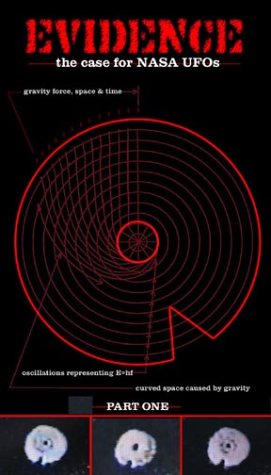
Evidence: The Case for NASA UFOs
David Sereda's 2002 Analysis of Shuttle Downlink Footage — The Book That Made the Tether Incident Famous
Find on Amazon →As an Amazon Associate, OverClassified may earn from qualifying purchases made through this link, at no extra cost to you.
Why This Is Essential Reading
Read it as a specimen, not as evidence. Evidence: The Case for NASA UFOs did something legitimate — it went through hundreds of hours of publicly broadcast NASA shuttle downlink footage that nobody else had systematically examined, assembled from Martyn Stubbs' remarkable off-air archive — and then performed on it a class of optical analysis its author had no verifiable training to perform. The central claim, that the objects near the severed STS-75 tether were craft miles in diameter, is not a measurement but an assumption about distance presented as one, and a single monocular video stream cannot yield a size without an independent range. The conventional explanation is specific and was tested: ice particles from a routine wastewater dump, rendered as apparent discs by a documented low-light camera defect, and replicated on video by MUFON's own chief photo analyst. Read this site's tether case file and STS-48 file alongside it, and take away the rule the book breaks: no range, no size.
Related Cases & Theories
Sources Cited
- Sereda, David. Evidence: The Case for NASA UFOs. Terra Entertainment, February 15, 2002. Foreword by Dan Aykroyd. ISBN-10 1893792838 / ISBN-13 9781893792838. amazon.com
- Open Library edition record, ISBN 1893792838 — bibliographic verification. openlibrary.org
- AbeBooks catalogue record, ISBN 9781893792838 — edition verification, the Terra Entertainment 2002 imprint, the cover-art source, and the publisher description of the six-year investigation into the phenomena broadcast live by NASA during the 1990s shuttle missions, the tether incident, and the Martyn Stubbs recordings. abebooks.com
- Goodreads edition record, Evidence: The Case for NASA UFOs — edition data and reader reception. goodreads.com
- Wikipedia, "STS-75" — the February 1996 Columbia mission, the Tethered Satellite System Reflight, the twelve-mile conducting tether and the electrical arc that severed it. en.wikipedia.org
- Wikipedia, "Tethered Satellite System" — the NASA electrodynamic-tether experiment at the centre of the case and the technical circumstances of its failure. en.wikipedia.org
- Wikipedia, "STS-48" — the September 1991 mission whose downlink footage produced the earlier and more widely circulated shuttle UFO clip. en.wikipedia.org
- Wikipedia, "James Oberg" — the former NASA mission control specialist and space journalist whose technical analyses of the shuttle footage remain the standard treatment. en.wikipedia.org
- Wikipedia, "Space Shuttle Columbia" — the orbiter that flew STS-75 and the vehicle whose debris environment the conventional explanation depends on. en.wikipedia.org
- Wikipedia, "Dan Aykroyd" — the actor whose foreword gave the book much of its cultural visibility. en.wikipedia.org
- Wikipedia, "Space debris" — the orbital debris environment, including the ice, insulation and shed material that accompanies crewed spacecraft. en.wikipedia.org
- Wikipedia, "Depth of field" — the optical principle underlying the out-of-focus disc appearance of near particles that the conventional explanation and the MUFON replication both rely on. en.wikipedia.org
- Wikipedia, "Mutual UFO Network" — the organisation whose chief photo analyst replicated the disc effect on video, the most decisive item in the case. en.wikipedia.org
Have corrections, additional research, or peer-reviewed sources? Help improve this entry.
Suggest an Edit