
Nellis Range S-13/S-30 UFO Video
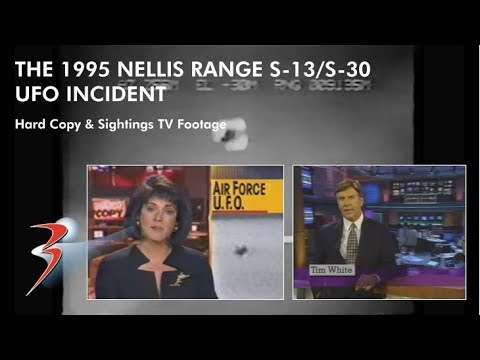
Sometime in 1994, a high-resolution telemetry tracking camera operated by U.S. Air Force range contractors at an undisclosed station inside the vast Nellis Air Force Range in Nevada recorded roughly nine minutes of footage showing an ambiguous, four-lobed aerial object maneuvering near two separate camera stations, designated S-30 and S-13, while range personnel are heard on the audio track debating what they are looking at and simulating a missile-lock on it. Smuggled out and sold to a Hollywood tabloid-TV producer, the footage aired nationally on Hard Copy in February 1995 and Sightings that December, was later shown by researcher Dr. Steven M. Greer at a 1997 Congressional briefing, and remains one of the only pieces of purported UAP footage ever to originate from inside a live U.S. military weapons-test range—while carrying real, unresolved technical problems that keep its interpretation genuinely contested three decades later.
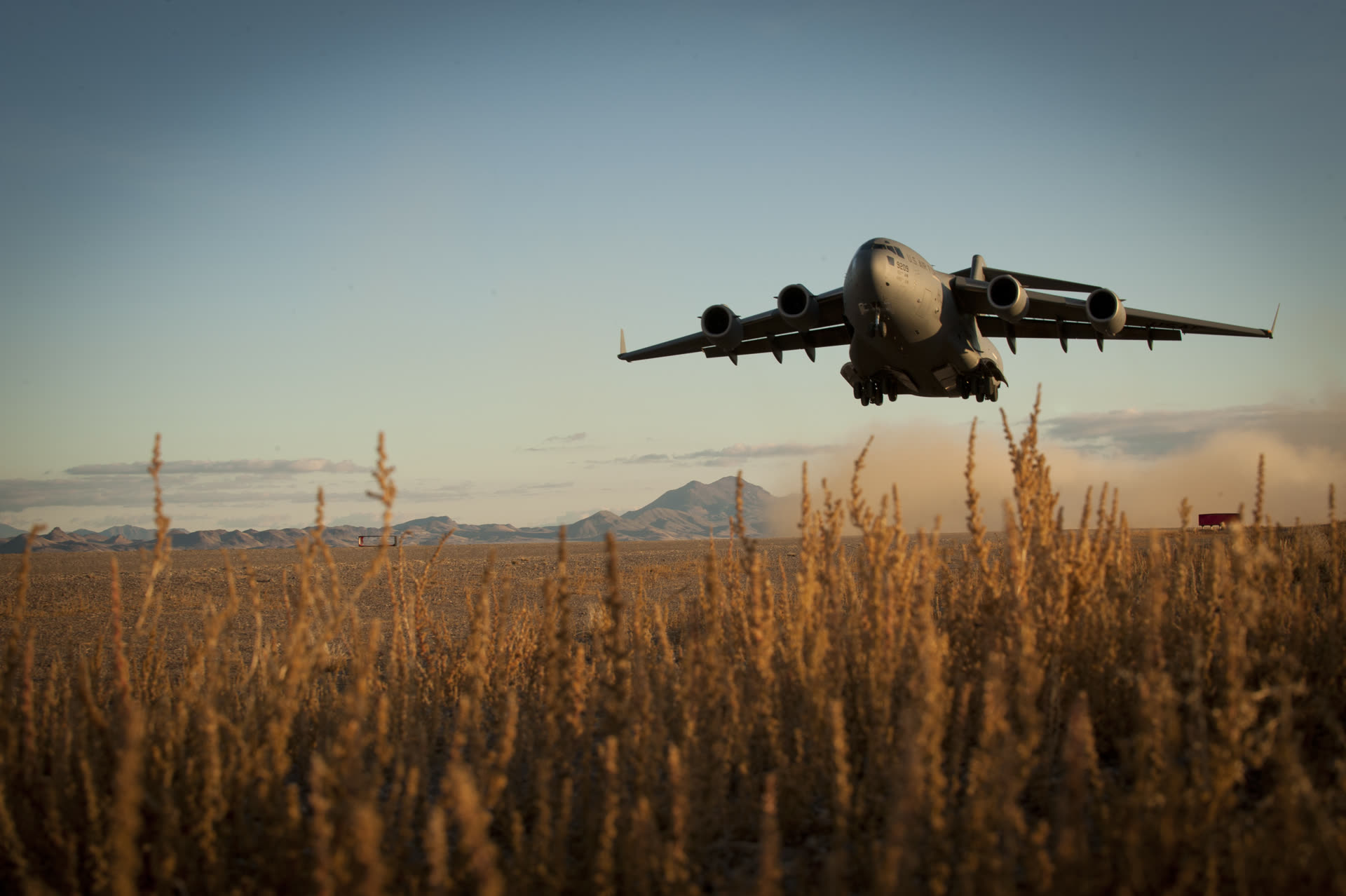
Pictured: a U.S. Air Force C-17 Globemaster III during a 2014 Joint Forcible Entry Exercise on the Nevada Test and Training Range — the same restricted military complex, though a different decade and a different specific site, that contains the still-undisclosed S-30/S-13 camera stations. This is not a frame from the actual 1994 tracking video, which remains the commercial property of its broadcaster and has never been released in a form this site can license; no public-domain photograph of the object, the footage, or the exact camera stations is known to exist.
Theoretical Alignment
The case aligns most strongly with a mundane/psycho-social-adjacent framework in which a genuinely ambiguous, low-resolution telephoto image — recorded by range personnel already primed to treat any unscheduled airborne object as a possible threat — was amplified by tabloid television and later by UFO-disclosure advocacy into something more dramatic than the underlying footage can independently support. It retains only weak alignment with the Extraterrestrial or Interdimensional Hypotheses, since no instrumented data in the footage itself (beyond a demonstrably unreliable range readout) points toward performance characteristics beyond conventional explanation.
Background
The Nellis Air Force Range Complex is the largest contiguous military training and weapons-test airspace in the continental United States, sprawling across more than 12,000 square kilometers of southern Nevada desert north of Las Vegas. Administered by the 99th Range Group out of Nellis Air Force Base, the range has hosted live-ordnance bombing exercises, air-combat training (including the famous Red Flag exercises), and some of the most closely guarded aircraft-development programs in American history since the 1940s. Its northern reaches include the fenced, restricted airspace around Groom Lake — popularly known as Area 51 — where Bob Lazar's later, separately disputed claims about reverse-engineered propulsion technology would help cement the wider region's reputation as ground zero for American UFO secrecy.
Because live weapons testing and classified aircraft trials both require continuous tracking of exactly what is in the sky over the range at any given moment, the Nellis complex operates a network of remote camera and radar tracking stations scattered across the desert, each identified only by a letter-number code (S-4, S-13, S-30, and others) rather than a public place name — a deliberate obscurity that long predates, and has nothing directly to do with, the unrelated "S-4" facility Lazar separately claimed to have worked at near Groom Lake. These stations use cinetheodolite-type optical tracking cameras: large, gyroscopically stabilized, long-focal-length instruments originally developed for missile and rocket testing, capable of following a fast-moving target across the sky while simultaneously recording range, azimuth, and elevation data onto the video frame itself. It is exactly this kind of instrument, and exactly this kind of embedded telemetry overlay, that appears in the footage central to this case.
The cinetheodolite itself has a long and specific American test-range pedigree that predates Nellis's own use of the technology by decades. The instrument — literally a combination of a motion-picture camera ("cine") and a surveyor's angle-measuring theodolite — was pioneered for missile and aircraft testing at White Sands Missile Range in New Mexico beginning with wartime-era U.S. Army units, followed by more capable German-designed Askania systems from the late 1950s and, from January 1973 onward, Swiss-built Contraves units capable of resolving a tracked object's position to within roughly two feet when multiple stations' data was combined. Operating one traditionally required two personnel working in coordination, one controlling elevation and the other azimuth, cranking the instrument to keep a fast-moving target centered in the lens by hand — a demanding, specialized skill directly analogous to what the unnamed camera operator on the Nellis tape can be heard struggling with as the object approaches. By the 1990s, White Sands and other American test ranges, almost certainly including Nellis, had begun retiring older fixed cinetheodolite installations in favor of newer computer-assisted tracking-mount systems, though the basic optical principle — a stabilized, high-magnification camera slaved to a real-time range/azimuth/elevation readout — remained functionally the same across this transition, and is consistent with what appears in the leaked footage regardless of the exact model of camera used.
By the early-to-mid 1990s, the Nellis range and the broader Area 51 mystique had become a magnet for a small but persistent community of civilian UFO researchers who staked out public roads on the range's perimeter hoping to observe classified test flights. This scene was most visibly chronicled by Las Vegas-based researcher Glenn Campbell, who relocated to the tiny town of Rachel, Nevada in 1993 specifically to research the base full-time, setting up a banana-colored trailer marked "Area 51 Research Center" along State Route 375 (later informally dubbed the "Extraterrestrial Highway"). Campbell published a regular newsletter, the Groom Lake Desert Rat, deliberately focused on documentable, factual details of base security procedures, land-boundary disputes, and publicly observable activity rather than on unverified alien-conspiracy claims — an editorial stance that later made him a credible, comparatively skeptical voice when the Nellis tape itself began circulating. A lengthy 1994 profile in The New York Times Magazine helped make Campbell one of the most widely quoted independent authorities on Area 51 and the wider Nellis range during exactly the period this footage first surfaced, and it was against this backdrop of intense public curiosity about what, exactly, the Air Force was doing in this stretch of desert that a videotape said to originate from inside the range itself first began circulating among UFO researchers and tabloid-television producers in late 1994 and early 1995.
The tape's chain of custody, by every account that has ever been published, begins not with a witness but with a transaction: a former civilian contractor who had worked operating tracking stations somewhere on the Nellis range is reported to have sold a copy of the footage to Paramount Studios, then producing both the syndicated newsmagazine Hard Copy and the paranormal-themed Sightings. By every account reviewed for this case file, that seller did not claim to have personally witnessed the object himself — he supplied a recording that, if genuine, had already been made by the tracking cameras' own operators, whose voices are heard, but whose names have never been published, on the tape's soundtrack.
Complete Timeline
| Date | Event |
|---|---|
| 1994 (exact date undisclosed) | Cinetheodolite tracking cameras at Nellis Range stations S-30 and, roughly forty minutes later, S-13, record an unidentified aerial object; range personnel are heard on the audio track debating its identity and simulating a missile-launch lock |
| Late 1994 | A former range contractor sells a copy of the footage to Paramount Studios, producers of Hard Copy and Sightings |
| February 17, 1995 | Hard Copy broadcasts the first, shorter segment of the footage nationally, introducing the "Nellis UFO video" to a mass American audience |
| December 10, 1995 | Sightings broadcasts additional, longer segments of the same footage, including more of the S-13 material |
| Mid-to-late 1990s | Glenn Campbell and other Area 51-focused researchers publish detailed written analyses of the footage's range-security context, including the alternative "threat radar trailer" explanation |
| April 9, 1997 | Physician and UFO-disclosure advocate Dr. Steven M. Greer screens the footage as part of a CSETI-organized briefing for members of Congress and congressional staff in Washington, D.C. (a separate briefing for senior Pentagon officials followed the next morning), describing it as documenting a 1994 unidentified craft incursion onto the range |
| 2000s–2010s | Amateur astronomer Martin J. Powell and other independent researchers publish frame-by-frame technical write-ups of the footage's telemetry readouts and optical characteristics |
| 2020s | The Metabunk analysis community and documentarian James Fox revisit the footage, identifying a likely rangefinder malfunction in the on-screen telemetry and re-popularizing the case for a new generation of online UAP researchers |
The S-30 Footage: First Contact With the Object
The first and better-known segment of the tape was recorded from camera station S-30. It opens with the tracking camera already following a small, indistinct shape low against a distant mountain range — at this range and magnification, essentially a featureless "blob" rather than a resolvable object. As the camera's automated or operator-driven tracking system holds on the target, the object appears to turn and begin closing distance with the camera station itself, growing larger and, in the enhanced frames later circulated by researchers, resolving into a shape most consistently described as four light-colored, rounded lobes clustered around or in front of a darker central mass — an appearance several researchers have compared to a bundle of balloons, a cluster of parachutes, or, more dramatically, a blimp-like craft of unconventional design.
As the object appears to approach and then hold roughly steady, seemingly facing the tracking station, the camera operator can be heard on the audio track struggling to keep it centered in frame, and other range personnel discuss what they are looking at without ever definitively identifying it. After holding position for roughly the better part of a minute, in a sequence several reviewers have described as surveillance-like, the object turns away and recedes back toward the mountains, at which point the S-30 segment of the released footage ends.
Throughout this sequence, the tracking camera's own telemetry overlay — a standard feature of cinetheodolite-type range cameras, displaying real-time range (distance), azimuth, and elevation figures directly on the recorded frame — is visible in the corner of the picture. This detail is central to the case's evidentiary weight: unlike the overwhelming majority of UFO footage ever recorded, which carries no embedded distance data of any kind, the Nellis tape appears, at first glance, to offer an actual quantitative range-to-target figure throughout the encounter, the kind of hard number that could, in principle, convert a subjective visual impression into an objectively calculable size and speed for the object. Whether that figure can be trusted is a separate and, as later technical analysis found, genuinely serious question (see Sensor & Instrumentation Detection Profile and The Conventional Explanation Candidate below).
The S-13 Footage: A Simulated Missile Lock
The second, shorter segment was filmed roughly forty minutes later from a different station, S-13, and shows what is by most interpretations the same object, now reduced to a small, nearly featureless dot on the horizon, apparently departing the area. It is this segment that carries the case's single most quoted and most debated piece of audio: range personnel are heard verbally simulating a missile engagement against the object, calling out a mock launch sequence as though testing an air-defense weapon system's targeting solution against it, without any missile actually being fired.
Proponents of an anomalous interpretation have frequently characterized this sequence as evidence that Nellis range controllers regarded the object as a genuine, unauthorized incursion serious enough to warrant a live-fire threat response, brought up short of an actual launch. A more conservative reading, consistent with how range personnel routinely describe their own work, is that "simulating an engagement" against any unscheduled airborne contact — a stray balloon, a bird, a lost civilian aircraft — is a standard, low-stakes training and tracking-proficiency exercise for personnel operating live weapons-test infrastructure, not by itself proof that anyone believed the object represented a hostile or otherworldly threat. No audio on the released tape includes any range controller explicitly and unambiguously stating the object was confirmed as unidentified in the sense of defying all conventional explanation; the released commentary is consistent with routine operational uncertainty about a small, distant, backlit object under active track, the kind of ambiguous radio chatter that would sound dramatic to an outside listener regardless of whether the underlying target ultimately proved mundane or genuinely anomalous.
From Range Contractor to National Television
The path this footage took from a classified-adjacent government test range to prime-time American television is, in its own right, one of the case's more remarkable features, and a significant part of why it commands more mainstream attention than the great majority of range-adjacent Area 51 lore. Every account traced for this case file agrees on the essential shape of the story: a civilian contractor who had operated Nellis tracking equipment obtained or retained a copy of the tape, left that employment, and subsequently sold the material to Paramount Studios rather than to a UFO research organization — a commercial transaction, not a whistleblower disclosure through any of the channels (congressional testimony, FOIA, an established ufology archive) more typically associated with credible leaks of this kind.
Hard Copy's February 17, 1995 broadcast introduced the footage nationally under the newsmagazine's characteristically sensational house style, presenting it as a genuine, unexplained encounter without independent verification of its provenance from any government source. Sightings, a longer-running and somewhat more research-oriented paranormal program from the same production company, aired additional and longer excerpts of the same material that December, giving audiences a fuller look at both the S-30 and S-13 sequences than the original Hard Copy segment had included.
Neither broadcast, nor any subsequent researcher, has ever been able to independently confirm the tape's chain of custody beyond the seller's own account as relayed through the production companies — a genuine, unresolved evidentiary gap that applies whether or not the footage shows something anomalous. The U.S. Air Force has never publicly confirmed or denied that the footage originated from Nellis range equipment, consistent with its standard non-comment posture on range security matters generally, and no official investigation of the leak or its content is known to have been conducted or released.
This commercial route into public circulation is itself worth weighing carefully against the alternative, more typical paths a genuine military leak might take. A whistleblower motivated primarily by public interest — the pattern associated with, for instance, congressional testimony under legal protection, an established news organization's own investigative unit, or a formal FOIA release — carries different incentives than a former contractor selling footage directly to the same production company behind a tabloid newsmagazine and a paranormal-themed entertainment program. Neither incentive structure proves or disproves the footage's authenticity on its own; contractors with access to unclassified-but-sensitive range material selling it commercially is a documented pattern independent of this specific case, and a genuine anomaly recorded on government equipment would remain genuine regardless of how its existence became public. But the commercial sale does mean that ordinary due-diligence questions — who exactly made the sale, under what specific circumstances he obtained the tape, and whether Paramount's own producers ever attempted to verify his identity or employment history before broadcasting the material — were never publicly answered, and do not appear to have been asked on the record by either Hard Copy or Sightings at the time.
Congressional Attention and the CSETI Connection
The footage's most significant institutional moment came on the evening of April 9, 1997, when physician and UFO-disclosure advocate Dr. Steven M. Greer, founder of the Center for the Study of Extraterrestrial Intelligence (CSETI), included it in a multi-witness briefing organized in Washington, D.C. for members of Congress and congressional staff (a separate, smaller briefing for senior Pentagon officials followed the next morning, April 10), as part of a broader push that would culminate in his 2001 National Press Club event and the wider Disclosure Project. Greer's briefing presented the Nellis tape alongside testimony from more than a dozen self-described military and government witnesses as evidence that the U.S. government was tracking, and declining to publicly acknowledge, genuinely unidentified craft inside its own most secure airspace.
The briefing itself is real and independently documented — congressional and press accounts confirm that such a session took place and that UFO-related testimony and footage, including material described as originating from the Nellis range, were presented to attendees. Greer has described himself as having spent several years prior, beginning around 1993, privately briefing senior figures including then-CIA Director R. James Woolsey and various Pentagon officials as part of a deliberate strategy to build institutional credibility before going more public — a characterization Woolsey later publicly disputed, describing the December 1993 gathering in question instead as a private dinner party rather than a briefing; the April 1997 session was the most visible single milestone of that campaign to date, assembling retired and, in some cases, still-serving military and government personnel willing to describe their own purported UAP-related experiences in a Washington setting rather than through the more typical UFO-convention circuit. The Nellis footage's inclusion alongside this roster of self-described witnesses lent it an institutional prominence that its own murky commercial provenance would not otherwise have earned it.
What the briefing did not produce, and what no subsequent investigation has produced either, is any independent government confirmation of the tape's authenticity, chain of custody, or the specific claims made about it during Greer's presentation. No congressional committee opened a formal inquiry as a direct result of the 1997 session, and no Pentagon office is known to have issued any statement, on or off the record, specifically addressing the Nellis footage afterward. Greer's broader disclosure campaign continued through the rest of the 1990s and culminated in a much larger, formally organized event at the National Press Club in Washington, D.C. on May 9, 2001, at which dozens of additional military, intelligence, and government witnesses spoke on the record; the Nellis tape's own evidentiary status, however, was never meaningfully advanced beyond where it stood after the 1997 briefing. Its inclusion in a high-profile advocacy setting raised the footage's public profile considerably without resolving any of the underlying evidentiary questions about where it came from or what it actually shows.
Key Witnesses
Unidentified Range Tracking-Camera Operators (S-30 & S-13 Stations)
The only individuals heard describing the object in real time are the camera operators and support personnel whose voices appear on the tape's audio track. None has ever been named publicly, come forward under their own identity, or been interviewed on the record by an independent researcher or journalist. Their professional context — trained personnel operating sophisticated, expensive tracking instrumentation as their actual job — lends the raw footage more inherent credibility than an amateur video would carry, but the total absence of any named, on-the-record account also means none of their statements can be independently cross-examined, and their tone on the released audio reads as uncertain and procedural rather than alarmed.
Unnamed Former Range Contractor (Source of the Tape)
By every published account, this individual is not the person heard describing the object on the audio track, and has never claimed to have personally witnessed the object himself. His role in the case is purely as the source who retained and later sold a copy of an existing recording, reportedly for a commercial fee, to Paramount Studios — a detail relevant to assessing motive that does not by itself establish or undermine the footage's authenticity.
Dr. Steven M. Greer
Not a witness to the original 1994 event, Greer is the figure most responsible for elevating this footage from tabloid-television curiosity to a piece of evidence presented directly to sitting members of Congress and Pentagon officials, at his April 1997 Washington briefing. His involvement significantly broadened the case's audience and institutional visibility but did not add any new, independently verifiable evidence about the tape's origin or authenticity.
The Five Observables Assessment
The Five Observables framework is applied to the performance characteristics reported in this case:
Assessment: On the footage as released, the object never displays sudden acceleration, hypersonic movement, or any transition between physical media. Its motion throughout — a slow drift, an apparent turn toward the camera, an extended hold, and a slow departure — is fully consistent with wind-driven or low-powered conventional flight. The only observable with any speculative weight is Low Observability, since the object was tracked visually rather than confirmed on radar, leaving open (but unproven) the possibility that it evaded or was never presented to the range's radar coverage at all.
Evidence Assessment
Supporting Anomalous Origin
- The footage originates, if genuine, from official U.S. Air Force range-tracking instrumentation rather than an amateur civilian camera — a rare and inherently more credible source class for UFO footage generally
- Recorded on a live, actively used weapons-test range where unauthorized airspace incursions would represent a genuine security concern, giving the "simulated missile lock" sequence some operational weight
- The embedded range/azimuth/elevation telemetry overlay is a level of instrumented data almost never present in UFO video, and was initially treated by several researchers as strong quantitative evidence of the object's real size and distance
- Range personnel audible on the tape never offer a confident, conventional identification of the object during the recorded sequence
- The footage has never been definitively debunked by any single, universally accepted conventional identification, more than three decades after it first surfaced
Supporting Conventional Explanation
- Independent frame-by-frame analysis has found the on-screen range telemetry itself to be internally inconsistent — the object's apparent size in frame stays roughly constant even as the displayed range figure changes dramatically, a strong indicator of a rangefinder lock failure rather than a reliable distance measurement
- The object's slow, wind-consistent drift and lack of any sudden directional change or acceleration throughout both segments matches ordinary airborne debris (balloons, a cluster of parachutes) far more closely than a controlled craft
- No named, on-the-record witness has ever attached their identity and professional credentials to a first-hand account of what was seen
- The tape's chain of custody runs through a paid commercial sale to a tabloid-television production company rather than through any government, military, or established scientific channel
- Independently documented Nellis range infrastructure, including remotely maneuverable ground-based radar-threat simulator equipment, provides at least one plausible mundane source for an object that briefly appeared to hold position and face the tracking camera
Why "Disputed"
This case receives a DISPUTED classification, weighted toward the skeptical end of that range, because its central evidentiary asset — the embedded range telemetry that initially made this footage more compelling than typical UFO video — does not survive close technical scrutiny. Once independent analysts identified the size-versus-range inconsistency described above, the tape's strongest objective claim (a real, instrument-confirmed distance and therefore a real, instrument-confirmed size and speed for the object) collapses into the same category as any other ambiguous long-lens video: open to multiple, roughly equally plausible conventional readings.
At the same time, this case file does not rate the footage as fully debunked, for three specific reasons. First, no single conventional candidate (balloon cluster, insect near the lens, aircraft, ground-based decoy) has achieved anything close to universal consensus among the researchers who have examined the footage closely, with credible, technically literate reviewers still disagreeing on which mundane explanation, if any, fits best. Second, the footage's origin on an active government weapons-test range, if the chain of custody as reported is accurate, places it in a genuinely unusual evidentiary category regardless of what the object itself turns out to be. Third, no government agency has ever formally investigated or ruled on the tape, leaving its ultimate status as a matter of independent civilian technical analysis rather than official resolution either way.
It is worth being explicit about what would move this case's rating in either direction. A confirmed, on-the-record statement from one of the actual camera operators heard on the tape — even a mundane one, simply identifying what they believed they were tracking — would resolve most of the case's uncertainty regardless of which way it pointed, since it is the total absence of any named first-hand account, not a lack of technical analysis, that keeps this case open. Conversely, access to the original, unedited source tape (rather than the broadcast-quality dubs every subsequent analysis has had to work from) could plausibly settle the size/range telemetry question definitively, either by confirming the rangefinder malfunction beyond doubt or by revealing enhancement-compression artifacts in the broadcast copies that have themselves been mistaken for a genuine instrument fault. Neither has happened in three decades, and there is no indication either is likely to going forward.
Sensor & Instrumentation Detection Profile
The only sensor of record is the cinetheodolite-type optical tracking camera itself, which recorded standard-definition video with an embedded telemetry overlay reporting real-time range, azimuth, and elevation. Traditional cinetheodolites of the kind pioneered at White Sands compute this range figure geometrically, by triangulating simultaneous elevation and azimuth angle readings from two or more separated stations tracking the same target; a single station operating alone, or a more modern radar-slaved or laser-rangefinding variant, can instead derive range directly from an active signal return, which is faster to compute but considerably more prone to losing lock on a small, low-contrast, or oddly-shaped target than a fixed piece of ground equipment, a known aircraft transponder, or a missile in a predictable trajectory — exactly the conditions the object in this footage does not meet.
Independent frame analysis by the Metabunk research community found that the displayed range value changes substantially over the course of the S-30 sequence while the object's apparent size in frame remains essentially constant — a physical impossibility for a real object at a fixed size unless the range reading itself is unreliable, strongly suggesting the camera's automated rangefinder lost or never achieved a valid lock on the target. This finding matters well beyond a narrow technical footnote: it is the single data point that most directly separates this case from an ordinary, un-instrumented UFO video, and its failure under scrutiny removes the tape's strongest claim to being meaningfully different from any other ambiguous long-lens footage. No radar corroboration, FLIR imagery, or any sensor beyond the single optical tracking camera has ever been associated with this case, and no independent party has ever had access to the original, unedited source tape for a full forensic review — every technical analysis conducted to date, including the rangefinder-mismatch finding itself, has necessarily worked from the same broadcast-quality dubs that first aired on Hard Copy and Sightings, a real limitation on how far any conclusion, skeptical or otherwise, can be pushed with full confidence.
Environmental & Geospatial Context
The Nellis Air Force Range occupies high desert terrain in southern Nevada, characterized by wide sightlines, distant mountain ranges providing a natural visual backdrop for the tracking cameras, and the kind of thermal air currents and seasonal wind patterns that can carry lightweight airborne debris (balloons, loose material, insect swarms) considerable distances across open desert. Southern Nevada's high-desert climate also produces strong daytime thermal updrafts and correspondingly variable surface winds, conditions well-documented to carry both balloon-type debris and windborne insects to considerable altitude and across long distances with little warning — a real, physically grounded regional factor supporting both of the leading conventional-explanation candidates discussed below, independent of which one, if either, actually applies to this specific footage. No specific date, and therefore no specific weather record, has ever been publicly attached to the footage, precluding a retrospective meteorological analysis of the kind possible for cases with a confirmed date.
Observer Credibility & Occupational Profile
The tracking-camera operators heard on the audio track were, if the footage is genuine, trained contractor personnel operating specialized government instrumentation as their professional occupation — a meaningfully higher baseline credibility class than an untrained civilian witness, comparable in kind (though not in public visibility) to the credentialed military radar operators and pilots whose testimony anchors better-known instrumented cases like the 2004 Nimitz encounter. Operating cinetheodolite-class tracking equipment competently requires specific technical training in optical tracking, telemetry systems, and range safety procedures; this is not a role assigned to untrained personnel on an active weapons-test range, where a tracking error carries real safety implications for live-fire exercises.
That advantage, however, is substantially undercut by the total absence of any named individual willing to attach their identity, credentials, or a first-hand written statement to the case; every account of what the operators believed or intended is filtered through the recorded audio and the later interpretations of researchers who were not present, rather than through direct testimony. The unnamed contractor who sold the tape occupies a still weaker position in this analysis: his professional role, if accurately described, gave him access to the recording but not, by his own account as relayed secondhand, any first-hand observation of the object itself, meaning his credibility as a source of authenticity claims and his credibility as a witness to the actual event are two entirely separate questions that neither Hard Copy nor Sightings appears to have distinguished clearly for their audiences at the time of broadcast.
Physical & Material Assays
No physical trace evidence of any kind is associated with this case. The object was never recovered, no debris was collected, and no material sample exists for laboratory analysis — the entirety of the evidentiary record is the videotape itself and its embedded telemetry data. This stands in direct contrast to a small number of other cataloged UAP cases with genuine physical trace assays available for independent testing, and is a real evidentiary limitation rather than a gap this case file can fill through further research; there is simply nothing tangible left to examine beyond the recording itself.
Historical Precedents & Archive Matches
The Nellis tape sits within a broader pattern of Area 51-adjacent UAP claims from the same general period and region, most prominently Bob Lazar's 1989 claims about reverse-engineered propulsion technology at the nearby S-4 facility, documented in this site's own Bob Lazar case file, which had already made the wider Nellis/Groom Lake complex a fixture of American UFO culture by the time this footage surfaced. Both cases share a strikingly similar evidentiary shape despite their very different subject matter: each rests on the account of a single, comparatively low-profile individual with access to a genuinely restricted government facility, each surfaced through channels outside any official government disclosure process, and each has been neither conclusively authenticated nor conclusively debunked in the years since, leaving Nellis/Groom Lake's specific reputation for both government secrecy and unresolved civilian testimony mutually reinforced by two largely independent cases rather than resting on either one alone.
It also belongs to a small, specific sub-category of UAP cases — instrumented military tracking footage leaked or released outside a formal disclosure process — that would later include the 2004 USS Nimitz "Tic Tac" encounter and the 2015 USS Theodore Roosevelt "GOFAST" and "GIMBAL" videos, though those later cases carry official Department of Defense acknowledgment of authenticity, an unbroken chain of military custody, and multiply-corroborated crew testimony that the Nellis tape has never received on any of these three counts. The comparison is instructive precisely because of the gap it reveals: where the 2004 and 2015 Navy cases moved from initial leak to official confirmation over roughly a decade, aided by named, on-the-record aircrew and the Department of Defense's own eventual willingness to authenticate the recordings, the Nellis tape's provenance has remained frozen at essentially the same evidentiary stage since 1995 — a single, uncorroborated commercial transaction with no subsequent institutional validation of any kind, despite three additional decades in which such validation could, in principle, have emerged.
Material Analysis
There is no physical or material evidence associated with this case beyond the videotape recording itself, and that absence is itself informative: unlike cases involving a landing trace, a metallic fragment, or a biological sample, nothing about the Nellis tape can ever be resolved through laboratory testing. Every line of analysis available to researchers is necessarily confined to the recorded image and its embedded telemetry data.
What the Telemetry Overlay Does and Does Not Establish
The cinetheodolite-style range readout burned into the video frame is the case's single most distinctive feature relative to ordinary UFO footage, and initially appeared to offer exactly the kind of quantitative, instrument-derived size-and-distance data that most UAP video entirely lacks. Independent technical review, however, found that the displayed range value increases substantially over the course of the S-30 sequence while the object's size in frame does not shrink to match — the opposite of what should happen if the camera were genuinely tracking a fixed-size object moving away at the reported rate. This mismatch is the strongest single piece of technical evidence in the entire case, and it cuts against, not for, treating the tape's numbers as a reliable measurement of the object's true size, speed, or distance.
Enhancement Artifacts and Competing Readings
Multiple independent researchers have applied contrast enhancement, frame-by-frame stepping, and digital zoom to the released footage, and have reached genuinely different conclusions about what the enhanced detail shows. Some enhancements appear to reveal twin engine-nacelle-like protrusions and an exhaust-like plume consistent with a fixed-wing aircraft such as an OV-10 Bronco carrying external equipment; others appear to reveal jointed, leg-like or antenna-like structures more consistent with an insect passing very close to the camera lens rather than a distant aerial object at all — two readings that cannot both be correct, and which illustrate how heavily video compression artifacts and enhancement-software interpolation can shape what different reviewers believe they are seeing in low-resolution 1990s analog footage.
This same interpretive instability recurs across nearly every independent review of the tape conducted since the mid-1990s, and is itself a diagnostic finding worth stating plainly: a genuinely sharp, high-resolution recording of an anomalous craft would be expected to produce broadly convergent readings among technically competent reviewers working from the same source material, not a scattered range of mutually exclusive identifications spanning balloon, insect, and aircraft. The degree of persistent disagreement here is more consistent with a source image at or near the practical resolution limit of what 1990s analog broadcast video and vintage cinetheodolite optics could deliver, in which case each reviewer's enhancement software is, to some real degree, extrapolating detail the original recording never actually captured.
Supporting Non-Terrestrial or Genuinely Unresolved Origin
- The footage's origin on active U.S. Air Force range-tracking equipment, if the reported chain of custody is accurate, is a meaningfully more credible source class than the overwhelming majority of UFO video ever recorded
- No single conventional explanation has achieved consensus acceptance among the technically literate researchers who have examined the footage closely
- Range personnel audible on the recording never offer a confident conventional identification during the sequence itself
Supporting Terrestrial Origin
- The core telemetry evidence (constant apparent size against a changing range reading) indicates instrument malfunction rather than a genuine, trustworthy distance measurement
- The object's motion profile throughout is fully consistent with wind-driven debris and inconsistent with any of the Five Observables associated with genuinely anomalous UAP performance
- Competing enhancement-based readings (aircraft nacelles versus insect anatomy) both point toward mundane candidates, even though they disagree with each other on which one
The Conventional Explanation Candidate: Balloon or Balloon Cluster
The leading conventional explanation, favored by independent video analysts including the Metabunk research community, holds that the object is a cluster of two or more balloons — potentially with a light payload or connecting cordage — drifting on the desert wind near the tracking station. Metabunk founder and aviation/optical-photo analyst Mick West, reviewing the footage's full motion profile, stated the object's movement "seems very consistent with a balloon, so that's my immediate #1 hypothesis," ranking a helicopter as his distant second choice; other forum participants independently proposed that the four-lobe appearance specifically matches three balloons or parachutes suspending a small payload underneath, which would naturally produce the asymmetric, rotating silhouette visible in the enhanced frames as the cluster twisted in the wind. This candidate deserves serious evaluation because it correctly predicts nearly every visible behavior in the footage without requiring any anomalous performance: the slow, non-powered drift; the apparent "turning" as the cluster's asymmetric shape rotates in the wind; the extended, seemingly deliberate hold near the camera as the wind locally died down or shifted; and the eventual slow departure. Weather balloons, target balloons, or even multiple mylar party-style balloons tied together are all physically capable of producing a multi-lobed silhouette closely matching the four-lobe description researchers have applied to the enhanced frames.
The Insect-Near-Lens Hypothesis
An alternative, and in some enhanced frames visually compelling, explanation holds that some or all of the object's apparent detail is not a distant aerial object at all but an insect passing very close to the tracking camera's own lens or housing, which would appear heavily out of focus, dramatically magnified relative to its true size, and prone to exactly the kind of jointed, leg-like or antenna-like protrusions some researchers report seeing in the most enhanced frames. Metabunk forum member "john.phil" argued specifically for this reading, pointing to what he described as visible "wiggling legs and antennae" once contrast and sharpness enhancement was applied to certain frames, and drew a direct visual comparison to independently documented close-range insect-on-lens footage from unrelated sources exhibiting the same soft-edged, multi-lobed silhouette. This candidate is attractive because it fully explains the size/range telemetry mismatch (an insect at the lens would trigger no meaningful rangefinder response at all, consistent with the readout's erratic behavior) and would also explain why the object's apparent size never meaningfully shrinks even as the displayed range figure increases — because, on this reading, there is no real change in distance at all, only an insect drifting slightly relative to the lens. It struggles, however, to explain the sustained multi-minute tracking sequence and the apparent camera-operator effort to keep the "object" centered in frame across a genuine change in bearing, behavior that reads more naturally as tracking a real distant target than an artifact on the lens itself, and it does not obviously account for the S-13 segment recorded some forty minutes later from an entirely different camera station, unless a second, unrelated insect happened to pass close to that camera's lens as well.
Fixed-Wing Aircraft With Countermeasure Equipment
A third candidate, raised by reviewers who focused on a different set of enhanced frames, holds that the object is a conventional twin-engine aircraft — specifically compared to an OV-10 Bronco, a type historically used at Nellis for target-towing, forward air control, and electronic-warfare training roles — possibly carrying an infrared or radar-jamming pod that could account for the object's unusual thermal or optical signature and its "hovering" appearance if the aircraft were flying a tight, low-speed racetrack pattern typical of range instrumentation calibration flights. Metabunk contributor "getcaughtrandom" specifically proposed this reading, pointing to what he identified as twin engine nacelles and a visible exhaust plume in some of the sharper enhanced frames, features that would not naturally appear on a balloon cluster or an insect but are exactly what would be expected from a slow-flying, propeller-driven aircraft viewed nearly head-on or in a tight banking turn. The OV-10 in particular has a documented history of range-support and adversary-training roles at Nellis during this general period, giving the type at least plausible operational presence in the area. This candidate fits the twin-nacelle detail some researchers report in enhanced frames, but does not, by itself, cleanly explain why trained range personnel who work with exactly this kind of aircraft on a routine basis, and who would recognize its silhouette and running lights immediately, would treat a known, scheduled aircraft type as an object requiring a simulated weapons lock rather than simply identifying it by callsign over the radio.
Ground-Based Threat Radar Trailer
Area 51 researcher Glenn Campbell separately documented that the Nellis range operates mobile, remotely repositionable ground-based radar-threat simulator trailers, used to present pilots in training with realistic, unpredictable enemy radar threats from varying locations across the range — equipment whose very purpose is to appear where it is not expected and behave in a way flight crews must learn to identify. This candidate is a plausible general explanation for why an unscheduled, unidentified "contact" might appear on Nellis range instrumentation and prompt a simulated engagement response, but it describes ground-based equipment and does not, on its own, account for the airborne tracking-camera footage of an object apparently in flight near the horizon; it is best understood as evidence for why range personnel would be primed to treat any ambiguous contact seriously, rather than as a direct explanation of the S-30/S-13 footage's content.
Balloon or Balloon Cluster
PlausiblePLAUSIBLE. Correctly predicts the object's entire observed motion profile — slow drift, apparent rotation, an extended hold, and a slow departure — without requiring any anomalous performance, and is the explanation favored by the most rigorous independent frame-by-frame review available.
Insect Near the Lens
InconclusiveINCONCLUSIVE. Explains the unreliable range telemetry and some enhanced-frame detail well, but sits awkwardly against a multi-minute sequence that otherwise reads as sustained tracking of a genuine, distant, moving target rather than a lens-adjacent artifact.
Fixed-Wing Aircraft (OV-10-type)
InconclusiveINCONCLUSIVE. Fits some enhanced-frame nacelle detail but does not cleanly explain why range personnel familiar with routine range aircraft would respond to a known aircraft type with an unidentified-contact procedure.
Ground-Based Threat Radar Trailer
Implausible as Direct ExplanationIMPLAUSIBLE as a direct account of the airborne footage itself, though genuinely useful as context for why Nellis range personnel are primed to treat ambiguous contacts as potential threats worth a simulated engagement response.
Related Cases
Confirmed Documents & Official Records
No U.S. Air Force, Department of Defense, or other government agency has ever publicly confirmed the tape's origin, authenticated its chain of custody, or released an official investigation file connected to this case — unlike Project Blue Book-era sightings, the Nellis tape has no known government case number or formal record of any kind. The Air Force's standard non-comment posture on range security and classified test activity means an official denial is not expected even if the footage is entirely mundane.
Search Government & Military Archives Directly
Further Reading — Recommended Literature
Disclosure: Military and Government Witnesses Reveal the Greatest Secrets in Modern History
Written by the physician who introduced the Nellis footage to Congress in 1997, this is the primary-source account of the CSETI briefing strategy and how footage like this fit into the broader disclosure advocacy movement.
Area 51: An Uncensored History of America's Top Secret Military Base
The definitive investigative history of the Nellis Range/Groom Lake complex's actual classified aircraft programs, essential context for understanding why unexplained contacts on this specific range carry unusual evidentiary weight.
UFOs: Generals, Pilots, and Government Officials Go on the Record
Kean's rigorous, credential-focused approach to evaluating instrumented and multi-witness UAP cases is a useful methodological model for weighing this case's mix of official-source footage and unverifiable chain of custody.
Skinwalkers at the Pentagon
Knapp's decades of Las Vegas-based reporting on Area 51/Nellis-adjacent phenomena, including instrumented military encounters, situate the Nellis tape within a longer regional pattern of officially-sourced UAP claims.
Top Secret/Majic
A period-contemporary (1996) work examining classified U.S. government UFO document claims, useful for understanding the broader 1990s research and advocacy climate the Nellis tape's public emergence took place within.
DISCLOSURE: Some links above are affiliate links. If you purchase through them, OverClassified receives a small commission at no additional cost to you. This helps support independent research.
Essential Viewing
Sources
- "The Nellis UFO Video, Part One: Range Operations, Tracking Cameras and Location S-30." Aenigmatis. aenigmatis.com
- "The Nellis UFO Video," UFO Casebook Files. ufocasebook.com
- "UFOs at Close Sight: The Nellis Test Range UFO Video," Patrick Gross UFO Archive. ufologie.patrickgross.org
- "1994 Nellis / Tonopah Test Range UFO (Sightings / Hard Copy)," Metabunk forum discussion thread, including frame-by-frame telemetry analysis. metabunk.org
- "The 1994 Nellis UFO Encounter." Conspiracy Data. conspiracydata.com
- "The S30 UFO — Bizarre Aircraft With Unrealistic Maneuverability Filmed Over Nellis AFB Test Range." Anomalien. anomalien.com
- "The 1995 Nellis Range S-13/S-30 UFO Incident (Enhanced Video and Audio)." Mars Anomalies. mars.raptorzone.co.za
- "The 1994 Nellis AFB UFO Video." The Trek BBS forum discussion. trekbbs.com
- "UFO Filmed by US Air Force at Nellis." Military.com. military.com
- "Nevada Test and Training Range," Wikipedia — background on the range's scope and administration. en.wikipedia.org
- "Nellis Air Force Base Complex," Wikipedia. en.wikipedia.org
- "99th Range Group," Wikipedia — the unit responsible for range instrumentation and tracking stations. en.wikipedia.org
- Jacobsen, Annie. Area 51: An Uncensored History of America's Top Secret Military Base. Little, Brown and Company, 2011.
- "Steven M. Greer," Wikipedia — background on the CSETI founder and the April 1997 Congressional briefing. en.wikipedia.org
- "About Us," Dr. Steven Greer official site — CSETI mission and Disclosure Project history. drstevengreer.com
- "Dr. Steven Greer Disclosure Project Talk, Sept. 12, 2001," UFO Evidence archive — background on Greer's broader Congressional/Pentagon briefing campaign of the 1990s. ufoevidence.org
- "Area 51," Military.com base guide — general Nellis Range/Groom Lake geographic and administrative context. military.com
- "Nellis Range Complex," The Center for Land Use Interpretation. clui.org
- "Groom Lake Base," The Center for Land Use Interpretation. clui.org
See something inaccurate? Have additional information or sources?
Suggest an Edit →Last Updated: August 2026