
Metamaterial Cloaking Hypothesis
Proposes that at least some UAP reports of an object visually "blinking out," fading in place, or seeming to melt into the sky could reflect engineered metamaterial-based optical cloaking — bending light around a craft to render it invisible or partially transparent — rather than exotic propulsion, teleportation, or interdimensional travel. Unlike most theories on this site, the underlying physics is not fringe: transformation optics is a real, peer-reviewed field founded in 2006, with a genuine, still-active line of defense-funded research behind it. The open, honestly unresolved question is not whether metamaterial cloaking is real, but whether anything resembling it exists at the scale, bandwidth, and real-time control a macroscopic, freely maneuvering craft would require.
Genuine, Peer-Reviewed Physics — Unconfirmed at UAP ScaleCore Thesis
An engineered metamaterial — a composite structured at a scale finer than the wavelength of the light or radar it interacts with — can be built to guide electromagnetic waves around a hidden volume rather than scattering or reflecting off it, so that an observer or sensor sees only what lies behind the object, as if it were not there. This is not speculative: it was demonstrated in a real laboratory in 2006. What remains genuinely unproven, and is honestly rated far more weakly in this file, is that any device using this principle currently exists at a scale, bandwidth, and real-time responsiveness sufficient to render a macroscopic aircraft-sized object invisible across the full visible spectrum, from every angle, to a moving observer — the specific claim a UAP "disappearance" report would require.
Origin & History
The idea of bending light around an object to hide it is ancient in fiction — H. G. Wells's The Invisible Man, folklore rings of invisibility, and decades of military camouflage all predate any real physics of the kind this file documents. What changed in 2006 was that invisibility stopped being purely a metaphor for absorption, refraction tricks, or paint schemes, and became, for the first time, a rigorously derived consequence of Maxwell's own equations under coordinate transformation — a genuinely new mathematical tool, not an incremental improvement on camouflage. Two independent groups of physicists reached functionally the same conclusion within weeks of each other and published in the same June 23, 2006 issue of Science, a coincidence significant enough that the journal ran both papers back to back.
The first was Sir John Pendry of Imperial College London, working with David Schurig and David R. Smith, then newly arrived at Duke University. Their paper, "Controlling Electromagnetic Fields," laid out what is now called transformation optics: because Maxwell's equations retain their form under any smooth coordinate transformation, a region of curved, distorted coordinate space can be mathematically mapped back onto flat space filled with a specific, calculable distribution of permittivity and permeability — meaning any desired bending of light rays, including routing them smoothly around a hidden volume and back onto their original path, corresponds to some real, physically buildable material. Pendry, Schurig, and Smith did not just describe the mathematics in the abstract; they specified the exact material parameters needed to cloak a cylindrical region of space from electromagnetic fields entirely, effectively handing the metamaterials community a design blueprint rather than a purely theoretical curiosity.
The second, arrived at independently and by a genuinely different mathematical route, was Ulf Leonhardt, then at the University of St Andrews in Scotland. Leonhardt's paper, "Optical Conformal Mapping," approached the same underlying problem — guiding light around a hidden object as if it were not there — using the mathematics of conformal geometry more commonly associated with general relativity's treatment of curved spacetime, rather than Pendry's direct coordinate-transformation of Maxwell's equations. The two derivations are related but were developed separately: Leonhardt has recounted that his own manuscript was submitted first to Nature and rejected, then to Nature Physics, before Science accepted it — landing, by coincidence of editorial timing rather than any coordination between the two teams, in the same issue as Pendry, Schurig, and Smith's paper. Both papers agreed on the central physical claim: a material with the right, spatially varying electromagnetic properties could route light around a hidden region and let it emerge on the far side as though it had traveled through empty space, and both were explicit that building such a material would require the then-young field of engineered metamaterials rather than any naturally occurring substance.
Theory became hardware remarkably fast. By November 2006, a team led by David R. Smith at Duke, working again with Pendry and with Duke electrical engineer Steven Cummer, published "Metamaterial Electromagnetic Cloak at Microwave Frequencies" in Science — the first physical demonstration that the May paper's mathematics actually worked. The device was a set of concentric copper rings etched onto circuit-board material, arranged as ten nested split-ring-resonator layers around a copper cylinder, tuned to operate at a single microwave frequency near 8.5 gigahertz. Placed inside the cloak, the cylinder's radar shadow and scattered signature both measurably shrank, so that the combination of cloak and object began to resemble, to an instrument probing it at that one frequency, simply empty space. It was a modest, carefully hedged result by the team's own account — two-dimensional rather than a full three-dimensional cloak, effective for only one polarization of one narrow microwave band, and unable to hide the object from a broadband or visible-light sensor — but it was real, it was independently reproducible, and it was the first time anyone had built a working device from Pendry's transformation-optics recipe. Smith reportedly told colleagues, on first seeing Pendry's May paper, "we have to build this" — and within roughly six months, they had.
It is this real, well-documented 2006 breakthrough — not any claimed recovered UAP artifact, and not a discredited fringe program of the kind several other theories on this site document — that gives the metamaterial cloaking hypothesis its unusual standing among UAP explanatory frameworks. The extension of this genuine physics to UAP "appearing and disappearing" reports specifically is not something Pendry, Smith, or Leonhardt themselves have proposed or endorsed; it is a later, external inference drawn by UAP researchers and commentators from the real existence of working (if extremely limited) cloaking devices, applied to a category of witness report — instantaneous visual disappearance without an observed high-speed departure — that has appeared in the UAP literature since long before 2006. This file treats that extension honestly, as a separate and much weaker claim layered on top of solid, real science, rather than blurring the two together.
Scientific Foundations
Understanding why this theory is graded so differently from most others on this site requires separating two questions that are easy to conflate: is metamaterial cloaking real, and is it currently capable of doing what a UAP disappearance report would require? The first answer is an unambiguous yes; the second is, honestly, no — not yet, and not obviously soon. Both halves matter, and neither should be softened to make the theory more or less exciting than the actual science supports.
1. What a Metamaterial Actually Is
A metamaterial is not a new chemical element or exotic substance in the way "vibranium" or classified alien alloys are sometimes imagined; it is an ordinary conductor and dielectric — commonly copper and a circuit-board-style substrate, or in visible-light research, gold, silver, or silicon — arranged into repeating unit structures far smaller than the wavelength of the electromagnetic radiation it is designed to manipulate. Because the structures are subwavelength, incoming light or radar cannot resolve the individual repeating elements; instead, it responds to the material's averaged, effective electromagnetic properties, which the engineer can design almost arbitrarily by changing the size, shape, and spacing of the unit structures, in a way no naturally occurring crystal lattice permits. This is the same underlying principle behind David R. Smith's earlier, foundational 2000 experiment (conducted at UC San Diego under physicist Sheldon Schultz, before Smith moved to Duke), which built the first material ever demonstrated to have a negative refractive index at microwave frequencies — confirming a reversed form of Snell's law that Soviet physicist Victor Veselago had predicted purely theoretically in 1968, more than three decades earlier, with no known natural material to test it against. That 2000 result is what made the 2006 cloaking work possible at all: it proved metamaterials could achieve electromagnetic properties (including negative refraction) with no natural counterpart, which is exactly the kind of exotic, spatially varying material transformation optics' mathematics calls for.
2. Transformation Optics: Bending Space Instead of Bending Light Directly
Pendry, Schurig, and Smith's central mathematical insight was that Maxwell's equations are form-invariant under coordinate transformation: if you imagine warping space itself — stretching it open around a hidden region the way a cartographer's projection stretches a globe onto a flat map — and then ask what material, sitting in ordinary flat space, would make light behave as though it were traveling through that warped space instead, the answer is always a specific, calculable, physically realizable set of permittivity and permeability values at every point. For a cloak, the relevant transformation stretches a single point at the center of the hidden region out into an entire excluded volume, which is mathematically why the light rays approaching that volume are smoothly bent around it and reconverge on the far side exactly as if the point (and everything inside the excluded region) were never there. This is a genuinely different design philosophy from older camouflage or radar-absorbent coatings, which try to minimize how much energy reflects or scatters back toward a sensor; transformation optics instead prescribes exactly where every ray of light should go, making "invisibility" a precise geometric-routing problem rather than an energy-absorption one.
3. Optical Conformal Mapping: Leonhardt's Independent Route
Leonhardt's parallel derivation used conformal mapping — transformations that preserve angles locally, familiar from complex analysis and from general relativity's description of light bending around a gravitating mass — to reach a closely related but independently derived recipe for guiding light around a hidden object. Leonhardt has been explicit in later public talks and interviews that the deep connection between his approach and general relativity is not merely a metaphor: in both cases, light rays are treated as following geodesics through a curved effective geometry, whether that curvature is produced by mass-energy (as in gravity) or by an engineered medium's varying refractive index (as in a metamaterial cloak). This is part of why Leonhardt's subsequent research career has moved toward using metamaterials and analogous optical systems as laboratory-scale stand-ins for otherwise inaccessible astrophysical phenomena, including analogue Hawking radiation from optical event horizons — a research direction with no direct UAP relevance, but one that illustrates how seriously the mainstream physics community has taken the mathematical framework this theory borrows from.
4. Why "Broadband, Macroscopic, Real-Time" Is the Entire Unsolved Problem
The single most important honest caveat in this entire file is that every practical demonstration of metamaterial cloaking to date has had to sacrifice at least one, and usually several, of the properties a real UAP-scale cloak would need simultaneously: full coverage of the visible spectrum (broadband), an object large enough to be a crewed or uncrewed aircraft (macroscopic), and the ability to reconfigure the cloaking effect fast enough to track a maneuvering object from a moving observer's shifting viewpoint (real-time, all-angle). A 2021 Journal of Applied Physics review of the field's progress since 2006, "Optical Cloaking and Invisibility: From Fiction Toward a Technological Reality," is direct about why: the same fundamental physics (rooted in causality and the Kramers-Kronig relations linking a material's response at different frequencies) that lets a metamaterial achieve an exotic, spatially varying refractive index at one frequency makes it extremely difficult to hold that same performance across a broad band of frequencies at once, and the difficulty compounds sharply as the target wavelength shortens from microwave toward visible light, where achieving the necessary magnetic response in a real fabricable structure remains a serious open materials-science problem. Reducing unwanted reflection at a cloak's boundary is, per that review, one of the field's biggest remaining challenges in its own right, separate from the bandwidth problem.
5. Why Fabrication Gets Harder as the Wavelength Shrinks
A large part of why the 2006 Duke cloak worked at microwave frequencies and nothing comparable exists yet for visible light comes down to a simple, unglamorous engineering constraint: a metamaterial's individual unit structures must be substantially smaller than the wavelength they are designed to manipulate, and visible light's wavelength (roughly 400–700 nanometers) is tens of thousands of times shorter than an 8.5-gigahertz microwave's roughly 3.5-centimeter wavelength. The Duke cloak's split-ring resonators, etched onto ordinary circuit-board material using standard printed-circuit techniques, could be millimeters across and still function correctly; a visible-light equivalent requires individual features tens of nanometers wide — near the practical limit of electron-beam lithography and other nanofabrication methods, and orders of magnitude more expensive and slower to produce over any macroscopic area. This is a large part of why the 2011 calcite carpet cloak and Boubacar Kanté's 2016–2017 UC San Diego metasurface both represent genuine, celebrated progress while still falling far short of a freestanding, all-angle, macroscopic visible-light cloak: nanofabrication techniques capable of patterning a coin-sized area at optical-wavelength resolution exist, but scaling that same resolution up to aircraft-sized surfaces, across the full visible spectrum, while keeping optical losses low enough that the underlying object beneath the cloak does not simply appear as a dark, absorptive shape instead of a transparent one, remains a compounding set of unsolved engineering problems rather than a single breakthrough away.
Progress since 2006 has been real but narrow. A 2011 macroscopic "carpet cloak" demonstration (Zhang et al., using a calcite crystal) achieved broadband visible-light cloaking at a scale visible to the naked eye — a genuine milestone — but a carpet cloak is a fundamentally easier problem than this theory requires: it hides a bump on an otherwise flat, reflective surface by smoothing out the reflection, rather than concealing a freestanding three-dimensional object floating in open air from every viewing angle simultaneously. A 2016–2017 project at UC San Diego, led by electrical engineer Boubacar Kanté, built an ultrathin dielectric metasurface cloak reported to work across a wider range of visible wavelengths than earlier attempts, and Kanté was reportedly in direct contact with the U.S. Department of Defense about potential applications — but the device's own reported performance was limited to concealment within roughly a six-degree angular window, a sharp reminder of how far current hardware sits from an all-aspect, real-time cloak. As the same coverage noted, quoting independent materials scientists, genuinely universal invisibility "remains far, far beyond material science at the moment." Nothing in the peer-reviewed record since 2006 describes a device that cloaks a macroscopic object across the full visible spectrum, from all angles, in real time — which is precisely the combination a UAP witness's instantaneous, any-angle visual disappearance report would require if metamaterial cloaking were the actual mechanism.
Government & Military Programs
Unlike several theories this site catalogues, the government interest documented here is not a matter of leaked claims or disputed testimony; it is a matter of public, citable funding and defense-research literature going back to the same year the underlying physics was first published. The connection is straightforward and unsurprising: a real technology for controlling how an object reflects or transmits electromagnetic radiation is directly relevant to stealth and low-observability research that predates metamaterials by decades (radar-absorbent coatings on aircraft like the F-117 and B-2 are a distinct, older technology, based on absorption rather than transformation-optics-style routing, but they sit in the same institutional and funding neighborhood, and this site's own Plasma Sheath / MHD Propulsion Hypothesis file documents a parallel, independently funded low-observability research thread).
The clearest single document connecting this specific physics to U.S. Air Force strategic planning is a paper prepared for Air University (the U.S. Air Force's professional military education command) titled "The Cheshire Jet: Harnessing Metamaterials to Achieve..." — catalogued in the Defense Technical Information Center's public archive. The paper traces the "metamaterial" terminology itself to engineer Rodger M. Walser at the University of Texas at Austin, who coined the term in 2001 to describe an artificial composite achieving electromagnetic performance beyond what any natural material could offer, and goes on to assess, specifically, the benefits and real engineering obstacles facing an eventual U.S. Air Force optical-band stealth capability built on this physics — explicitly framing full optical-band cloaking as a multi-decade goal (the paper lays out roughly a twenty-year capability-development timeline) rather than a near-term system, and explicitly recommends continued Department of Defense funding to keep pursuing it. A separate Air Force Office of Scientific Research technical report, filed through its Asian Office of Aerospace Research and Development and archived at the Defense Technical Information Center under the designation AFRL-AFOSR-JP-TR-2019-0056, documents continued, internationally collaborative U.S. Air Force-funded research specifically into metamaterials for optical and microwave applications as recently as 2019 — confirming this is an active, ongoing area of defense research interest rather than a one-off Cold War-style program that rose and fell.
Reporting on Boubacar Kanté's UC San Diego dielectric-metasurface cloak work adds a further, more specific data point: Kanté told reporters he was in direct contact with the Department of Defense about the project and intended to submit a formal funding proposal, and an analyst with the DoD-sponsored Homeland Defense & Security Information Analysis Center was quoted describing the underlying material as close to "basically what the military's looking for," while separately estimating any operational stealth application remained on a five-to-ten-year horizon even for the specific narrow-angle, limited-bandwidth capability already demonstrated in the lab — not the broadband, all-aspect invisibility a UAP-disappearance explanation would require. A Pentagon spokesperson, asked directly about Kanté's account of DoD contact, would neither confirm nor deny it, which is itself unremarkable: routine, unclassified contact between a defense-funding agency and an academic metamaterials lab, of the kind this section otherwise documents through public DTIC filings, is not something the Pentagon customarily comments on either way, and the ambiguous non-answer should not be over-read as confirmation of a larger classified program.
This same underlying physics is also being pursued, publicly and competitively, outside the United States, which matters for how this theory intersects with this site's own Foreign Adversary Technology Hypothesis and plasma-sheath research threads where relevant: Chinese state media and several defense-technology outlets have reported since 2018 on People's Liberation Army-affiliated research into metamaterial radar-cloaking coatings tested on conventional fighter aircraft, aimed specifically at defeating anti-stealth radar detection methods rather than full optical invisibility. As with the U.S. reporting on Kanté's work, these accounts describe narrowband, radar-frequency applications consistent with the real, published state of the science — not a working optical-invisibility system — and should be read with the same caution: defense-technology journalism in this space regularly outruns the underlying peer-reviewed engineering, and a lab result reported as "China's invisibility cloak" in a headline is, on the actual physics described, generally the same kind of narrowband, single-frequency, sub-macroscopic demonstration documented throughout this file. This site's own Foreign Adversary Technology Hypothesis file covers the broader claim that some UAP reports reflect classified non-U.S. aircraft or drone programs in more depth than this file attempts.
British defense research shows the same pattern of real, public, unclassified funding rather than a hidden program. In March 2024, the UK's Engineering and Physical Sciences Research Council awarded a further £2.5 million to extend the University of Exeter-led UK Metamaterials Network into a larger "NetworkPlus" through 2028, explicitly naming the Defence Science and Technology Laboratory (Dstl, the UK Ministry of Defence's own in-house research agency) and the defense contractor QinetiQ among the initiative's leadership-team partners alongside roughly forty industry and academic members. Dstl's own Chief Science and Technology Officer was quoted describing the agency's continued championing of metamaterials research with Exeter as part of the Ministry of Defence's broader interest in the field, spanning energy-efficient information processing and electromagnetic applications generally — a portfolio that is not exclusively about cloaking or stealth, underscoring that most real-world defense interest in metamaterials research is broader than, and not limited to, the visual-invisibility application this theory file is specifically about. Taken together with the American Cheshire Jet and AFRL-AFOSR material above, the documented pattern across at least two NATO allies is the same: real, publicly acknowledged, unclassified funding interest in metamaterials generally, with optical-band cloaking specifically treated in the literature as a distant, multi-decade goal rather than a near-term or already-achieved capability.
Physical Evidence
The physical evidence for this theory splits cleanly into two very different categories, and keeping them separate is essential to grading the theory honestly. The first category is overwhelming and uncontested: real, physically built, independently reproducible metamaterial cloaking devices exist, starting with the November 2006 Duke microwave cloak and continuing through the 2011 calcite carpet cloak, the 2016–2017 UC San Diego dielectric metasurface, and a substantial subsequent peer-reviewed literature on narrowband and carpet-style cloaks at microwave, terahertz, infrared, and (in limited, angle-restricted cases) visible frequencies. None of this requires taking anyone's word for it; the devices, their published specifications, and their measured performance are documented in peer-reviewed journals with full experimental detail, and the underlying transformation-optics and conformal-mapping mathematics has been independently re-derived, extended, and taught in graduate electromagnetics courses worldwide since 2006.
The second category — physical evidence that any device built on this real physics has ever been deployed on, or is responsible for, an actual UAP sighting — does not exist. No recovered UAP debris analyzed by any researcher this site tracks (including the metallurgical and isotopic work performed on other claimed materials, such as the sample discussed on this site's separate Bismuth-Magnesium Waveguides file) has been reported to exhibit the specific, engineered subwavelength periodic microstructure that defines a metamaterial, as opposed to a naturally occurring or conventionally manufactured alloy's crystal structure. No radar or optical sensor log connected to any case file on this site has recorded the specific, diagnostic signature transformation-optics theory predicts a cloaking device would leave — a sharply frequency-dependent, angle-dependent partial transparency, rather than a simple loss of radar or visual contact, which is equally and more parsimoniously explained by an object leaving the area, going dark, or exceeding a sensor's resolution or dynamic range. The theory's physical evidence, in short, is strong for the general phenomenon and entirely absent for the specific UAP application — a pattern this file's Conventional Explanation Candidate section returns to directly.
Supporting Case Files
Because instantaneous, in-place visual disappearance (as opposed to a rapid but still-visible departure) is a comparatively narrow and specific reporting detail, a deliberately narrow search of this site's own case-file archive — rather than the far more common "flew away at high speed" or "shot upward and was gone" pattern, which this theory does not specifically address — turned up two genuine matches whose own witness descriptions independently used language of visual distortion, morphing, or an object seeming to dissolve into its surroundings rather than simply flying out of view.
Neither case file makes a metamaterial-cloaking claim itself, and this theory file does not assert that either object was cloaked — both are included here honestly, as the closest genuine matches this site's archive currently offers to the specific visual signature (apparent distortion of the background, or a shape that seemed to change and fade rather than simply depart) this theory would predict, not as confirmed instances of the mechanism.
Theoretical Alignment
Metamaterial cloaking aligns most strongly with the Secret Human (or Foreign Adversary) Technology framework this site tracks separately from the Extraterrestrial Hypothesis: it is a real, terrestrially invented, defense-funded line of physics with a documented paper trail of U.S. Air Force and Department of Defense-adjacent research interest, not a claimed non-human capability. Its alignment with ETH is genuinely weak but not zero — there is no principled reason a sufficiently advanced non-human technology could not exploit the same transformation-optics mathematics, or something functionally equivalent, but nothing about the human research documented in this file requires or even suggests an extraterrestrial origin, and this site's own Hal Puthoff-adjacent metamaterials speculation elsewhere on this site concerns claimed recovered materials, not this theory's transformation-optics mechanism specifically. Its alignment with straightforward sensor and optical misidentification — the mundane, non-exotic explanation this site's own Sensor & Optical Artifact Hypothesis documents in depth — is rated comparably strong, because the great majority of "the object vanished" reports in the UAP literature involve no metamaterial-cloaking claim at all and are far more economically explained by an object exceeding a camera's dynamic range, moving beyond a witness's field of view, being lost against a bright or textured background, or simply extinguishing its own lights.
Sensor & Instrumentation Detection Profile
A genuine transformation-optics cloak, by design, is meant to defeat exactly the instrument it is tuned against: a microwave cloak is invisible to a radar operating at its design frequency, an infrared metasurface is invisible to a thermal imager in its design band, and so on — but, critically, only within that narrow design band, only within whatever angular window the specific device supports, and not simultaneously across bands. This creates a real, physically grounded, and testable diagnostic signature that current UAP sensor data does not show: a genuinely cloaked object should present as detectable on some sensors and channels while simultaneously undetectable on others tuned to its specific design frequency, rather than uniformly vanishing across every available sensor modality at once, which is what most "disappearance" reports in this site's archive actually describe. No radar, infrared, or multispectral sensor log connected to any case file this site tracks has shown this specific pattern — an object remaining visible on, say, radar while simultaneously vanishing from an optical or infrared channel, or vice versa, in a way consistent with a narrowband cloak rather than a simple loss of contact on every channel at once.
This is precisely the gap between what the real, published science can currently do and what the UAP-disappearance application of it would require: no publicly documented metamaterial device covers the full range of frequencies a modern multisensor military or civilian detection suite (visible-light camera, infrared, and radar simultaneously) would need to be defeated at once. A craft using only a radar-band cloak would remain fully visible to any camera or human eye present; a craft using only a narrow-angle visible-light metasurface, like Kanté's UC San Diego device, would remain detectable from any angle outside its roughly six-degree working window. Any UAP report describing simultaneous, all-channel, any-angle disappearance is, on the current state of the actual published physics, describing a capability significantly beyond what any documented device can do.
This diagnostic gap is precisely why sensor-fusion detection — simultaneously cross-checking radar, infrared, and visible-light channels against each other, which AARO's own public reporting has identified as a priority for improving UAP data quality generally — would be the single most useful tool for actually testing this theory against a real future sighting, rather than relying on any one sensor's uncorroborated loss of contact. A witness report, cockpit video, or FLIR pod recording alone cannot distinguish a genuine narrowband cloaking event from an object simply leaving the frame, powering down its lights, or exceeding that one sensor's resolution; only a multisensor dataset showing detection on some channels persisting while another specific, frequency-matched channel simultaneously loses contact would constitute real evidence for this theory's mechanism specifically, as opposed to a mundane explanation.
Environmental & Geospatial Context
The real research institutions behind this theory are geographically concentrated in a handful of major university and defense-research centers rather than scattered across UAP hotspots: Imperial College London (Pendry's home institution throughout the entire period this file covers), Duke University's Department of Electrical and Computer Engineering and its Center for Metamaterials and Integrated Plasmonics (Smith's base since 2006, and the site of the first physical cloak), the University of St Andrews and later the Weizmann Institute of Science in Rehovot, Israel (Leonhardt's successive academic homes), and University of California, San Diego (David Smith's own earlier negative-index work under Sheldon Schultz, and later Boubacar Kanté's dielectric-cloak research). None of these locations has any documented institutional connection to a UAP sighting, sensor detection, or investigation on this site — the overlap between this theory's real research geography and any UAP case file's own geography is, honestly, nonexistent, which matters for any reader tempted to read undue significance into a sighting's proximity to a research university.
The environmental conditions under which the two genuinely matching case files in this site's archive occurred are worth noting on their own terms, independent of the cloaking hypothesis: the Montluel sighting took place at night over Montluel, Ain, in eastern France, with the object's apparent effect on the surrounding cloud layer forming the case's central, still-disputed detail, while the Choisy-le-Roi sighting occurred at dusk near Choisy-le-Roi, Val-de-Marne, just outside Paris, with the object's reported color and shape both changing before it climbed and entered cloud cover. Neither environmental record includes any anomalous electromagnetic or radar data of the specific kind Section 8 above identifies as what a genuine cloaking event should, in principle, leave behind.
It is also worth noting, for completeness, that neither France's national space agency-affiliated GEIPAN (Groupe d'Etudes et d'Information sur les Phénomènes Aérospatiaux Non identifiés), which investigates civilian UAP reports across France, nor any French military or gendarmerie unit local to either sighting, has published any finding connecting either the Montluel or Choisy-le-Roi report to a known research facility, defense installation, or metamaterials laboratory in the surrounding region — a genuinely important absence given that this section's purpose is to test, not merely assume, any geographic link between this theory's real research institutions and its two closest case-file matches.
Observer Credibility & Occupational Profile
The three researchers whose work founds this theory carry unusually strong, uncontested professional credentials by the standards of any theory catalogued on this site — a sharp contrast with several other fringe-physics theories here, where a proponent's credentials are themselves part of the controversy. Sir John Pendry earned his PhD in physics from Cambridge in 1969, has held his professorship at Imperial College London's Blackett Laboratory since 1981, served as head of the physics department and later principal of the faculty of physical sciences there, was knighted in 2004 for services to science, and has since received the Isaac Newton Medal (2013), the Kavli Prize in Nanoscience (2014), the Kyoto Prize in Advanced Technology (2024), and the Royal Society's Copley Medal (2025) — among the most decorated living condensed-matter physicists, with the metamaterials field itself substantially built on his own earlier theoretical work. David R. Smith earned his PhD in physics from UC San Diego in 1994, built the first experimentally verified negative-index metamaterial there in 2000 under Sheldon Schultz, shared the European Union's Descartes Prize in 2005, and has held the James B. Duke Professorship of Electrical and Computer Engineering at Duke University since leading the 2006 cloak experiment, later also becoming a visiting professor at Imperial College, working alongside Pendry on both sides of the Atlantic. Ulf Leonhardt earned his PhD in theoretical physics from Humboldt University of Berlin in 1993, held the theoretical physics chair at the University of St Andrews from 2000 to 2012, has led his own research group at the Weizmann Institute of Science since 2012, holds a Royal Society Wolfson Research Merit Award, and received a European Research Council Advanced Grant in 2013.
This is, in other words, mainstream, tenured, internationally honored physics — the opposite occupational profile from the state-funded pseudoscience programs several other theories on this site document. That strength is precisely why this theory's Conventional Explanation Candidate section below draws such a sharp line between the credentialed, peer-reviewed physics (rated highly plausible on its own terms) and the specific, external UAP-disappearance application of it (rated far more weakly): the researchers' own genuine authority applies to the real, published, narrowband laboratory results, not to any claim about what is currently happening in the sky, which none of the three founding physicists has made.
Historical Precedents & Archive Matches
The closest historical precedent for this theory's core claim — that a real, demonstrated laboratory capability might be quietly ahead of its public, peer-reviewed state — is the well-documented history of stealth aircraft development itself, a genuinely useful comparison because it shows both how such a gap can occur and how large it typically is. Lockheed's Skunk Works division developed the radar-defeating faceted geometry behind the F-117 Nighthawk in the late 1970s using Soviet physicist Pyotr Ufimtsev's 1962 diffraction-theory work — itself freely published in the open Soviet scientific literature and initially overlooked by Western intelligence analysts — and the resulting aircraft's existence remained formally classified for years after its first flight in 1981, publicly acknowledged only in 1988. That precedent shows a real gap between a classified program's actual state and its public acknowledgment is historically documented and, in that specific case, measured in single-digit years, not decades, and rooted in applying already-published open science rather than a secret physics breakthrough with no public analog at all. Applying the same reasoning honestly to metamaterial cloaking: given that the foundational transformation-optics mathematics has been fully public since 2006, and that Air University's own unclassified "Cheshire Jet" analysis explicitly frames full optical-band capability as a twenty-year-plus engineering challenge even with sustained funding, a classified program plausibly running some years ahead of the published literature's narrowband, small-scale, limited-angle demonstrations is a reasonable inference — but one running decades ahead, to full macroscopic, broadband, real-time invisibility with no trace at all in the unclassified physics literature's steady, incremental pace of progress, would be a far larger and more speculative leap than the F-117 precedent supports.
A second, quite different historical precedent worth noting honestly is how often "invisibility cloak" headlines in the general press have overstated real, more modest laboratory results, which matters directly for how any future UAP-adjacent cloaking claim should be evaluated. The 2011 calcite carpet cloak, the 2016–2017 UC San Diego metasurface, and the various Chinese radar-cloaking coating reports discussed above were all, at the time, covered by mainstream and trade press under headlines implying or directly claiming a working, general-purpose invisibility device, when the underlying peer-reviewed papers themselves described a considerably narrower, carefully hedged result — a specific bandwidth, a specific angular range, a specific object geometry (a bump on a flat surface, not a freestanding shape), or a specific polarization of light. This is not a new problem specific to this field; it recurs across nearly every subsequent metamaterials headline since 2006, and it is exactly the same gap between a real, checkable technical result and its public description that this file's Conventional Explanation Candidate section works to keep separate rather than blur together.
Within this site's own archive, no earlier UAP case file or theory has previously proposed metamaterial cloaking as an explanatory mechanism in the specific transformation-optics sense this file documents; the closest existing entries are conceptually adjacent but materially distinct, and are discussed on their own terms rather than folded into this one. The Bismuth-Magnesium Waveguides file concerns a specific claimed physical sample and a speculative gravity-shielding, terahertz-waveguide mechanism, not visible-light optical cloaking. The Metallic Hydrogen & Exotic Metamaterials Hypothesis concerns claimed UAP hull material's structural strength and electromagnetic behavior, not a light-bending cloaking mechanism specifically. The Sensor & Optical Artifact Hypothesis addresses the far more common, mundane explanation for "the object vanished" reports — camera dynamic-range limits, glare, and misinterpreted footage — and this file's own Conventional Explanation Candidate section rates that mundane explanation as the more likely account for the large majority of disappearance reports generally, with genuine metamaterial cloaking reserved as, at most, a rare and currently technically implausible alternative for the small subset of cases (like the two documented above) that specifically describe visual distortion rather than simple loss of contact.
Material Analysis
Because this theory concerns a claimed engineered device rather than a recovered UAP artifact, its material evidence trail runs through real, purchasable and laboratory-fabricable metamaterial components rather than any physical trace evidence from a sighting. The defining physical signature of any genuine metamaterial, cloaking or otherwise, is a repeating subwavelength unit-cell structure — split-ring resonators, wire arrays, or fishnet-style layered structures at microwave and infrared frequencies; plasmonic nanostructures (commonly gold or silver) at visible frequencies — fabricated using standard printed-circuit, lithographic, or nanofabrication techniques well documented in the open engineering literature. This is a checkable, falsifiable material signature in a way few other theories this site catalogues can claim: an object's surface or hull material can, in principle, be examined under electron microscopy for exactly this kind of engineered periodic subwavelength patterning, which would look categorically different under magnification from a conventional alloy's ordinary crystal grain structure or from the kind of layered natural or synthetic composite claimed for other analyzed UAP materials on this site.
No metallurgical or materials-science report connected to any claimed UAP debris this site tracks — including the isotopic and atomic-probe-tomography work researchers such as Garry Nolan have conducted on other claimed samples — has reported finding this specific, diagnostic engineered subwavelength periodicity. This absence is meaningful precisely because the signature is well defined and actively looked for by materials scientists working in adjacent fields; it is not a case of nobody knowing what to check for.
Material Evidence Against a Currently Operational UAP-Scale Cloak
- No analyzed UAP material has been reported to show the engineered subwavelength periodic structure that defines a genuine metamaterial, as distinct from a conventional alloy or composite
- No publicly documented metamaterial device covers the full visible spectrum, all viewing angles, and real-time reconfiguration simultaneously — the combination a UAP-scale cloak would require
- The most advanced published visible-light cloaking devices (2011 carpet cloak; 2016–2017 UC San Diego metasurface) are explicitly narrowband, small-scale, or angle-restricted by their own authors' published specifications
- No case file's sensor log shows the frequency-selective, angle-dependent partial-transparency signature genuine cloaking theory predicts, as opposed to a simple uniform loss of contact across all channels
Theory Development Timeline
| Date | Development |
|---|---|
| 1968 | Soviet physicist Victor Veselago theoretically predicts materials with a negative refractive index, with no known natural substance to test the prediction against. |
| 2000 | David R. Smith, working with Sheldon Schultz at UC San Diego, builds the first experimentally verified negative-index metamaterial at microwave frequencies, confirming Veselago's prediction. |
| 2001 | Engineer Rodger M. Walser (University of Texas at Austin) coins the term "metamaterial" for artificial composites achieving electromagnetic performance beyond natural materials. |
| 25 May 2006 | John Pendry, David Schurig, and David R. Smith publish "Controlling Electromagnetic Fields" online in Science, founding transformation optics and specifying the material parameters for electromagnetic cloaking. |
| 23 Jun 2006 | Ulf Leonhardt's independently derived "Optical Conformal Mapping" is published in the same Science issue as the Pendry/Schurig/Smith paper. |
| 10 Nov 2006 | Schurig, Mock, Justice, Cummer, Pendry, Starr, and Smith publish "Metamaterial Electromagnetic Cloak at Microwave Frequencies," the first physical demonstration, built at Duke University. |
| 2011 | Zhang et al. demonstrate the first macroscopic, broadband visible-light "carpet cloak" using a calcite crystal — a genuine milestone, though a fundamentally easier problem than freestanding-object cloaking. |
| 2013–2014 | The "Cheshire Jet" Air University paper assesses metamaterial cloaking's prospects and obstacles for future U.S. Air Force optical-band stealth, projecting a multi-decade development timeline. |
| 2016–2017 | Boubacar Kanté's team at UC San Diego demonstrates an ultrathin dielectric metasurface cloak with wider visible-spectrum coverage than earlier devices, though limited to a roughly six-degree angular window; Kanté reports contact with the U.S. Department of Defense. |
| 2019 | The Air Force Office of Scientific Research's Asian Office of Aerospace Research and Development files a technical report (AFRL-AFOSR-JP-TR-2019-0056) on continued metamaterials research for optical and microwave applications. |
| 2018–2020s | Chinese state and defense-technology media report People's Liberation Army-affiliated research into metamaterial radar-cloaking coatings tested on conventional fighter aircraft, aimed at defeating anti-stealth radar detection. |
| 2021 | A Journal of Applied Physics review formally documents that broadband, macroscopic, full-visible-spectrum cloaking remains a largely unsolved engineering challenge, citing causality-linked bandwidth limits as the central obstacle. |
Weighing the Evidence
Metamaterial cloaking presents an unusual evidentiary profile for a theory on this site: the underlying physics is real, mainstream, and repeatedly demonstrated, which is rare, while the specific UAP-disappearance application remains entirely speculative and untested, which is common to nearly every theory here. Both halves need to be weighed honestly and separately.
Supporting Arguments
- Transformation optics is real, peer-reviewed, independently re-derived physics, not a fringe or discredited framework, with a founding paper trail (Pendry/Schurig/Smith; Leonhardt) in one of science's most rigorously reviewed journals
- A working physical cloaking device was built and independently verified within six months of the theory's publication, and the underlying negative-index materials science was independently confirmed six years earlier still
- Real, documented, unclassified U.S. Air Force and allied defense-research funding and strategic interest in eventual optical-band cloaking exists, going back to the same year as the foundational physics itself
- The theory generates a specific, falsifiable, checkable material and sensor signature (engineered subwavelength periodicity; frequency- and angle-selective partial transparency) that most other UAP propulsion or exotic-physics theories on this site cannot offer
Skeptical Arguments
- No published device combines full visible-spectrum bandwidth, macroscopic scale, all-angle coverage, and real-time reconfiguration — the combination a genuine UAP-scale cloak requires
- The field's own leading researchers and 2021 review literature describe broadband, macroscopic cloaking as a largely unsolved, causality-constrained engineering problem, not a near-term capability
- No analyzed UAP material has shown the diagnostic engineered subwavelength periodic structure a real metamaterial would exhibit
- No case file's sensor data shows the frequency-selective, angle-dependent detection pattern real cloaking physics predicts, rather than simple uniform loss of contact
- None of the three founding physicists has proposed or endorsed the UAP-disappearance application; it is an external extrapolation layered onto their work, not a claim originating from the credentialed research itself
Conventional Explanation Candidates (CEC)
This theory is unusual enough that its Conventional Explanation Candidate section has to rate two genuinely distinct sub-claims separately, rather than blending them into one verdict, per this site's own standard for theories whose underlying science and whose specific UAP application carry very different evidentiary weight — and a third, competing conventional explanation deserves its own card as well.
Real Metamaterial Cloaking Technology Existing
Confirmed / Highly PlausibleThis is not really a matter of plausibility but of documented fact: working, independently reproducible metamaterial cloaking devices have existed since November 2006, built on peer-reviewed transformation-optics and conformal-mapping mathematics published earlier the same year by credentialed physicists at Imperial College, Duke, and St Andrews. The genuine science underlying this theory is as solid as any this site catalogues.
This Technology Explaining Large-Scale, Real-Time UAP Disappearance as Observed
Implausible at Current Known CapabilityNo published device achieves broadband visible-spectrum coverage, macroscopic scale, all-angle concealment, and real-time reconfiguration simultaneously; the field's own 2021 review literature and Air Force-commissioned assessments describe this exact combination as a largely unsolved, multi-decade engineering challenge. A classified program running somewhat ahead of the public literature is plausible by historical stealth-program precedent; one already possessing full, all-aspect, real-time optical invisibility with zero trace in three decades of otherwise steadily incremental published physics would be a far larger and currently unsupported leap.
Conventional Sensor/Optical Misidentification of Ordinary Phenomena
Plausible — Leading Explanation for Most ReportsFor the great majority of "the object vanished" reports in the broader UAP literature, this site's own Sensor & Optical Artifact Hypothesis file's mundane explanations — a camera's limited dynamic range, an object moving beyond a witness's field of view, loss of contrast against a bright or textured background, or a light source simply being extinguished — remain far more probable than any cloaking mechanism, exotic or conventional, and should be the default first explanation considered before reaching for either.
Theoretical Assessment Profile
Six-domain evaluation of this hypothesis
Key Proponents
Sir John Pendry
Co-authored the founding 2006 "Controlling Electromagnetic Fields" paper and the first physical microwave cloak later the same year. Knighted in 2004; recipient of the Isaac Newton Medal, Kavli Prize, Kyoto Prize, and Copley Medal. Has never proposed or endorsed any UAP application of his work.
David R. Smith
Built the first negative-index metamaterial in 2000 and led the team that built and tested the first working invisibility cloak in 2006. James B. Duke Professor of Electrical and Computer Engineering; director of Duke's Center for Metamaterials and Integrated Plasmonics.
Ulf Leonhardt
Independently derived optical conformal mapping, publishing alongside Pendry's group in the same June 2006 Science issue. Former chair of theoretical physics at the University of St Andrews; now researches optical analogues of black holes and Hawking radiation.
Related Cases
Further Reading
Invisibility: The History and Science of How Not to Be Seen
A physicist's full history of invisibility science, from nineteenth-century speculation through the real 2006 metamaterials breakthrough this theory file documents.
The Physics of Invisibility: A Story of Light and Deception
Traces the physics of light manipulation from early optics to transformation optics and the first functional invisibility cloak.
Metamaterials: Physics and Engineering Explorations
A technical but accessible field-defining survey of metamaterial design principles, published the same year as the founding cloaking papers.
Invisible: The Dangerous Allure of the Unseen
A cultural and scientific history of invisibility, including wartime camouflage and the modern metamaterials research this theory is built on.
Skunk Works: A Personal Memoir of My Years at Lockheed
The classic insider account of stealth aircraft development, the closest historical precedent this file draws on for how far a classified low-observability program can plausibly run ahead of published science.
DISCLOSURE: Some links above are affiliate links. If you purchase through them, OverClassified receives a small commission at no additional cost to you. This helps support independent research.
Essential Viewing
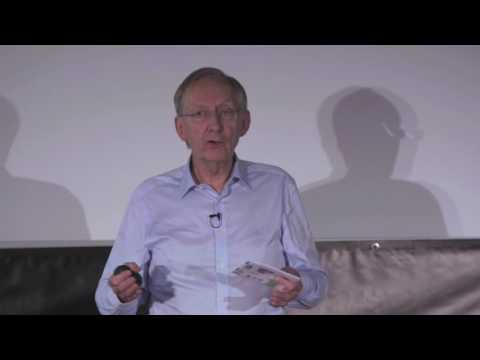
Metamaterials and The Science of Invisibility
John Pendry | TEDxImperialCollege — the theory's co-founder explains transformation optics and metamaterials directly.
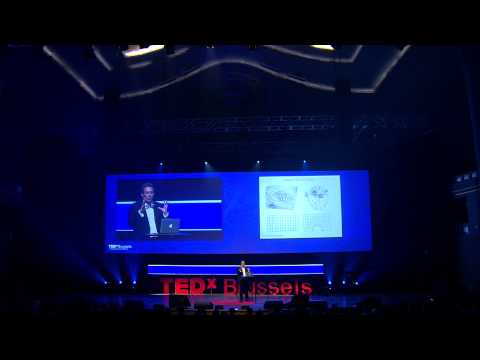
The Science of Invisibility
Ulf Leonhardt | TEDxBrussels — the independent co-discoverer of optical conformal mapping on cloaking's real scientific basis and limits.
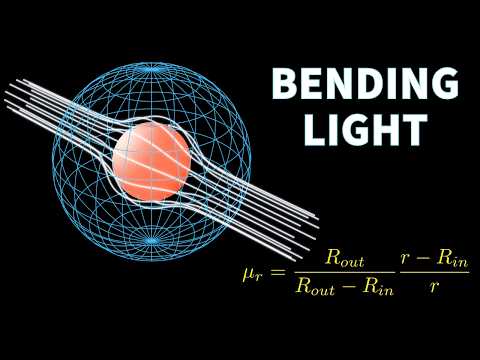
The Physics of Invisibility
Explained by the Inventors of the First Cloak — a walkthrough of the real 2006 Duke cloaking experiment and how it actually works.
Sources Cited
- Pendry, J. B., Schurig, D., & Smith, D. R. "Controlling Electromagnetic Fields." Science 312, 1780–1782 (2006).
- Leonhardt, U. "Optical Conformal Mapping." Science 312, 1777–1780 (2006).
- Schurig, D., Mock, J. J., Justice, B. J., Cummer, S. A., Pendry, J. B., Starr, A. F., & Smith, D. R. "Metamaterial Electromagnetic Cloak at Microwave Frequencies." Science 314, 977–980 (2006).
- PubMed record confirming publication of the Duke microwave cloak paper, 314(5801), 977–980.
- "Optical Cloaking and Invisibility: From Fiction Toward a Technological Reality." Journal of Applied Physics 129, 231101 (2021).
- "Scientists Create First Working Invisibility Cloak." Imperial College London News.
- "The Metamaterial Cloak Experiment." David R. Smith Group, Duke University.
- "The First Cloak." David R. Smith Group, Duke University.
- Duke Today, coverage of continued invisibility-cloak research at Duke University.
- "Beyond Materials: From Invisibility Cloaks to Satellite Communications." Duke Stories.
- "David R. Smith." Duke Centennial profile.
- "A Profile of Professor John Pendry, Pioneer of Metamaterials." Imperial College London News.
- "John Pendry." Kyoto Prize laureate profile, Inamori Foundation.
- "Ulf Leonhardt: Transforming Optics Research." Physics World.
- "The Science of Invisibility & Black Holes." Weizmann Institute of Science.
- "John Pendry," Wikipedia, biographical background (light-use, cross-checked against primary sources above).
- "David R. Smith (physicist)," Wikipedia, biographical background (light-use).
- "Ulf Leonhardt," Wikipedia, biographical background (light-use).
- "The Cheshire Jet: Harnessing Metamaterials to Achieve..." Air University research paper, Defense Technical Information Center.
- AFRL-AFOSR-JP-TR-2019-0056, "Metamaterials for Optical and MW Applications," Air Force Office of Scientific Research / Asian Office of Aerospace Research & Development, Defense Technical Information Center.
- "Invisibility Cloaks Could Change the Face of Military Operations." Newsweek.
- "Invisibility Cloak to Improve Military Operations." Interference Technology.
- "New Metamaterial Yields Invisibility for Aircraft and Drones." Interference Technology.
- "Now You See It, Now You Don't: China Tests Stealth 'Invisibility Cloaks' on Regular Fighter Jets." South China Morning Post.
- Zhang, B. et al. "Macroscopic Invisibility Cloak for Visible Light." MIT Open Access Articles (2011).
- "Macroscopic Invisibility Cloaking of Visible Light." Nature Communications (2011).
- "Broadband Polygonal Invisibility Cloak for Visible Light." Scientific Reports.
- "John Pendry." Imperial College London Faculty of Natural Sciences, Metamaterials outreach page.
- "David Smith." Duke Electrical & Computer Engineering faculty profile.
- "£2.5M Additional Funding for Exeter-led UK Metamaterials Network." University of Exeter News, confirming Dstl and QinetiQ involvement.
Have corrections, additional research, or peer-reviewed sources? Help improve this entry.
Suggest an Edit