
Where Is Everybody?
Fifty Solutions to the Fermi Paradox and the Problem of Extraterrestrial Life
Core Thesis
Where Is Everybody? is not, on its face, a book about UFOs at all. It is physicist Stephen Webb's systematic tour of the Fermi Paradox — the puzzle Enrico Fermi crystallized in a single 1950 lunchtime question at Los Alamos: given the sheer number of stars, the age of the galaxy, and the apparent ease with which life and intelligence arose on Earth, simple statistics suggest the galaxy should already be humming with detectable civilizations, so where is everybody? Webb's method is to take the paradox with total seriousness and then march through fifty distinct proposed resolutions, sorted into three broad families: civilizations exist and have visited or contacted us in ways we haven't recognized; civilizations exist but haven't yet made contact, for reasons ranging from the purely technical to the deliberately chosen; or civilizations essentially don't exist, because one or more of the steps from star formation to broadcasting intelligence is far rarer than optimists assume. Webb evaluates each solution on the actual physics, biology, and probability involved rather than on its entertainment value, and by the book's end declares his own preferred answer plainly: he thinks we are likely alone, or at least effectively alone within any galaxy we could ever detect. For a UFO research site, the book's real value is exactly its outsider status — it is the rigorous, mainstream scientific baseline against which any specific extraterrestrial-visitation claim should be measured, written by an author with no stake in ufology either way.
About the Author
Stephen Webb was born February 25, 1963 in Middlesbrough, North Yorkshire, England. He earned a first-class BSc (Hons) in Physics from the University of Bristol in 1984 and a PhD in Theoretical Particle Physics — specializing in quantum chromodynamics — from the University of Manchester in 1988. Over the following two decades he held academic posts in physics, mathematics, statistics, and information sciences at the University of Cardiff, the University of Sheffield, Loughborough University, Northumbria University, and The Open University, before settling at the University of Portsmouth in 2006, where he has spent the bulk of his later career, including serving as Head of Technology Enhanced Learning.
Webb's scientific writing began with the 1999 undergraduate textbook Measuring the Universe: The Cosmological Distance Ladder, a technical treatment of how astronomers actually determine cosmic distances. Where Is Everybody? followed in 2002 as his first work aimed at a general readership, growing out of a lifelong dual interest in science and science fiction dating back to a chance encounter with the Fermi Paradox in a science-fiction magazine. He has since published several more popular-science titles, including Out of This World: Colliding Universes, Branes, Strings, and Other Wild Ideas of Modern Physics (2004), New Eyes on the Universe: Twelve Cosmic Mysteries and the Tools We Need to Solve Them (2012), and Clash of Symbols, alongside continued academic and public-engagement work; he serves on the international editorial board of Springer's Science & Fiction book series and is a member of the UK SETI Research Network.
Unlike several authors elsewhere on this site's Essential Reading shelf, Webb has no ufological affiliation or claimed insider access of any kind — his authority here is that of a working physicist synthesizing published astrobiology, SETI, and planetary-science literature for a lay audience, not a witness, investigator, or whistleblower. His public profile grew substantially after a 2018 TED talk, "Where are all the aliens?", in which he laid out the steepest barriers a planet must clear to produce a communicative civilization and argued, memorably, that "the silence of the universe is shouting, 'We're the creatures who got lucky.'" That talk has been viewed several million times and remains the most widely seen single distillation of the book's argument.
Webb revisited and substantially expanded the book in a second edition, Where Is Everybody? Seventy-Five Solutions to the Fermi Paradox and the Problem of Extraterrestrial Life, published by Springer in 2015 — adding twenty-five further proposed solutions developed in the scientific literature during the thirteen years between editions, while keeping the same evaluative structure. This site's own resources library and Zoo Hypothesis theory file both cite the original 2002 edition specifically, under its original ISBN, and this entry follows that same citation.
Historical Context & Origins
The paradox the book is named for originates in a specific, well-documented moment: during the summer of 1950, physicist Enrico Fermi was walking to lunch at the Fuller Lodge at the Los Alamos National Laboratory with colleagues Edward Teller, Herbert York, and Emil Konopinski. The group had been discussing a recent rash of flying-saucer reports and a New Yorker cartoon joking about aliens stealing public trash cans, and the conversation drifted to interstellar travel and extraterrestrial civilizations. In the middle of an unrelated exchange, Fermi abruptly asked, "Where is everybody?" — and, according to Teller's later recollection, everyone at the table immediately understood he meant the aliens, producing general laughter at how self-evidently absurd their total absence seemed given how straightforward interstellar colonization looked on paper. The term "Fermi paradox" itself did not appear in print until decades later, and the first formal, published version of the argument came from astronomer Michael Hart's 1975 paper in the Quarterly Journal of the Royal Astronomical Society, "An Explanation for the Absence of Extraterrestrials on Earth."
By the time Webb wrote Where Is Everybody? in the early 2000s, the paradox had accumulated a scattered, decades-long literature of individual proposed solutions — Michael Hart's 1975 argument, Frank Tipler's 1980 self-replicating-probe analysis, the Rare Earth hypothesis Peter Ward and Donald Brownlee had popularized in their 2000 book of the same name, John Ball's 1973 Zoo Hypothesis, and dozens more — published across astrophysics, biology, and philosophy journals with little effort to compare them systematically against one another. Webb's book was conceived explicitly to fill that gap: a single, accessible volume walking through the strongest candidate solutions side by side, evaluating each on its own scientific merits rather than treating the paradox as settled by any one favored answer.
The book also arrived at a moment when the broader search for extraterrestrial life was newly energized by hard data unavailable to earlier writers on the subject: the first confirmed exoplanet orbiting a Sun-like star, 51 Pegasi b, had been detected only in 1995, and by 2002 the growing catalog of confirmed exoplanets was beginning to make terms in the Drake Equation — once pure guesswork — empirically addressable for the first time. Webb's survey sits at exactly that transitional moment: still decades before large-scale exoplanet demographics or biosignature spectroscopy, but already able to treat the paradox as an active, evidence-responsive scientific question rather than pure speculation.
Webb revised and expanded the book substantially for its 2015 second edition, published by Springer as part of its Science and Fiction series, adding twenty-five further solutions proposed in the scientific literature since 2002 — including newer technosignature and Dysonian SETI proposals — while preserving the original edition's three-part organizing structure. This site cites the original 2002 edition specifically, matching its own existing library citation.
Core Arguments & Key Concepts
Webb organizes his fifty solutions into three broad families, a structure that itself constitutes the book's central analytical contribution. The first group, "They are here," takes seriously (while ultimately finding largely unpersuasive) the claim that extraterrestrials have already visited or are currently present, covering proposals from ancient astronaut theories to the idea that UFOs themselves are the evidence — solutions Webb subjects to the same evidentiary standard as every other candidate answer rather than dismissing out of hand or endorsing uncritically.
The second and largest family, "They exist but have not yet communicated," covers solutions in which advanced civilizations are real but contact simply hasn't happened yet, for reasons that are technical (interstellar travel and communication are far harder than science fiction suggests), economic (colonization isn't worth the cost), sociological (civilizations turn inward, toward simulated or virtual experience, rather than expanding outward), or deliberate. This is where the book gives its fullest treatment to the Zoo Hypothesis — John Ball's 1973 proposal that advanced civilizations are aware of Earth but intentionally avoid contact, observing from a careful distance — and its close cousin the Quarantine Hypothesis, both of which this site's own theory file on the subject cites Webb's book as introducing to a much wider popular-science audience than the original journal papers ever reached.
The third family, "They do not exist," walks through the case that intelligent, communicating civilizations are genuinely rare or unique to Earth — the rare-Earth argument that one or more steps between star formation and technological intelligence (the origin of life itself, the jump from simple to complex cells, the evolution of intelligence, the development of technology) is a far higher hurdle than the optimistic Drake Equation assumes. Webb is explicit, both in the book and in his later 2018 TED talk, that this is the family he personally finds most persuasive, closing on the argument that humanity's silence-filled sky is less a mystery to be solved than evidence of just how improbable our own existence actually is.
Running through all three sections is a consistent methodological discipline: Webb evaluates each solution against the actual astrophysics, biochemistry, or social science it depends on, repeatedly showing how superficially appealing answers collapse once specific numbers are attached to them — the book's recurring lesson, and the one most directly transferable to evaluating any individual UFO claim, is that plausible-sounding explanations for humanity's apparent cosmic isolation are cheap, and rigorously defensible ones are rare.
Key Cases & Evidence Discussed
Where Is Everybody? is organized around scientific hypotheses rather than eyewitness incidents, so it has no direct case-file counterpart among this site's sighting reports; its clearest connections to this site's own library run through the theory pages that document the same solutions Webb surveys from the opposite direction — as live hypotheses rather than settled science.
This site's own Zoo Hypothesis theory file cites this book directly, crediting Webb with cataloging the hypothesis "among dozens of competing Fermi Paradox solutions" and "introducing it to a much wider popular-science audience" than John Ball's original 1973 Icarus paper ever reached — the same page that supplies this site's own resources-library citation for this exact 2002 edition and ISBN.
Read alongside this site's own Extraterrestrial entry on Avi Loeb's 2021 book, the pairing is instructive: Loeb argues from a single, specific anomalous object ('Oumuamua) toward the case that a technosignature search deserves funding and institutional seriousness, while Webb surveys the entire solution space in the abstract without ever pointing at a specific data point — two very different scientific temperaments converging on the same underlying question of whether, and how, humanity might ever detect a genuine extraterrestrial signal.
The book's rare-Earth-leaning conclusion also runs directly counter to the assumptions behind this site's own Extraterrestrial Hypothesis theory file, which treats a galaxy plausibly full of technological civilizations as the necessary precondition for any UFO being of genuine non-human origin; Webb's survey is essential background precisely because it lays out, in full, the scientific case that this precondition might not hold at all.
Critical Reception & Controversies
The book was warmly received within the working science-writing and astrobiology community on its 2002 publication. New Scientist's Marcus Chown called it a "highly entertaining and thought-provoking book," writing that Webb "sets out a host of possible solutions to the so called Fermi paradox, famously posed by the nuclear physicist Enrico Fermi" in prose that offers "coherent, understandable, and sometimes humorous coverage of a diverse range of topics." SETI Institute astronomer Jill Tarter, blurbing the book in Science in January 2003, wrote that "everyone who has ever considered the possibility that other intelligent civilizations exist elsewhere within our galaxy will enjoy Where Is Everybody?" — a notable endorsement from one of SETI's most credentialed working scientists, and the same Jill Tarter whose career this site's own They Are Already Here entry connects to author Sarah Scoles's earlier biography of her.
A more technical, mixed review came from astrophysicist Milan M. Ćirković of the Astronomical Observatory Belgrade, published through the SETI League and later expanded in Origins of Life and Evolution of the Biosphere. Ćirković praised the book's "relaxed style which enables easy digesting of occasional portions of complex material" and called it "a neat introduction to astrobiology at the undergraduate level," while also flagging real weaknesses: the book "lacks exact references and original sources at many places," and some of the fifty solutions are redundant, with Ćirković noting that two distinct entries "both reduce to the same simplistic anthropocentric idea." He nonetheless concluded it was "a worthy addition to the rather small library of serious monographs on extraterrestrial life" — notably, Ćirković is himself the author of The Great Silence: Science and Philosophy of Fermi's Paradox (Oxford University Press, 2018), which this site's own Zoo Hypothesis theory file separately cites as a more academically rigorous treatment of the same subject.
The expanded 2015 second edition earned an even stronger notice from the academic library-review journal Choice, which named it an Outstanding Academic Title for 2015. Reviewer T. Barker wrote that with "397 notes and 21 pages of references," the arguments were "engaging, clearly reasoned, and accessible to general readers," concluding flatly that it was "one of the best books ever written on the subject of extraterrestrial intelligence" and recommending it as "highly recommended" reading "at all readership levels."
What the book explicitly does not do is worth stating for readers arriving from this site's own case-file catalogue: Webb makes no claim to have investigated, witnessed, or gathered new evidence about any specific reported UFO sighting, and his own stated conclusion — that humanity is likely alone, or effectively alone — sits in direct tension with any interpretation of UAP reports as evidence of an active, visiting extraterrestrial civilization. Readers should note that tension rather than read the book as tacit support for the extraterrestrial hypothesis; Webb's own TED talk is unambiguous that he finds the rare-Earth family of solutions most persuasive.
Influence & Legacy
Where Is Everybody? became, and remains, one of the standard popular-science entry points to the Fermi Paradox, regularly cited alongside Michael Hart's original 1975 paper and Peter Ward and Donald Brownlee's Rare Earth (2000) as foundational reading on the subject; its influence is visible less in any single follow-on controversy than in its durability as a reference work other writers and researchers continue to cite two decades later.
That durability is documented directly in the 2015 second edition, which Webb substantially expanded from fifty to seventy-five solutions specifically because the scientific literature on the paradox had grown enough in the intervening thirteen years to demand it — itself a form of evidence that the book had become a living reference point the field expected to be kept current, rather than a one-off popular title.
Webb's own public profile extended the book's reach well beyond its original readership through his 2018 TED talk, "Where are all the aliens?", which has been viewed several million times and distills the book's rare-Earth-leaning conclusion into a single accessible argument; he has since discussed the same material on programs including The Jim Rutt Show and at regional astronomical societies, keeping the book's central survey in active public circulation.
On this site specifically, the book already functions as working infrastructure: it is cited in the resources library and in the Zoo Hypothesis theory file's own sources list, under this exact 2002 ISBN, as the popular-science work that carried John Ball's 1973 Zoo Hypothesis and the related Quarantine Hypothesis to a mainstream audience — this new Essential Reading entry and accompanying key-figures card extend that same citation into a full breakdown of the book's own argument and reception.
The Book
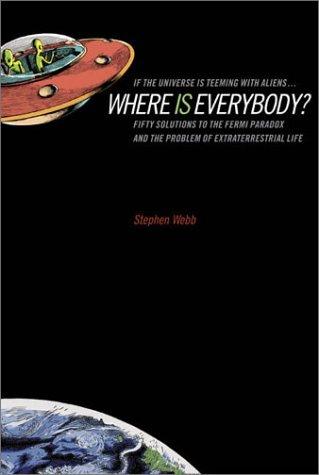
Where Is Everybody?
Fifty Solutions to the Fermi Paradox and the Problem of Extraterrestrial Life
Find on Amazon →As an Amazon Associate, OverClassified may earn from qualifying purchases made through this link, at no extra cost to you.
Why This Is Essential Reading
Where Is Everybody? earns its place on this list precisely because it is not a UFO book. Stephen Webb's systematic, scientifically disciplined survey of fifty (later seventy-five) proposed resolutions to the Fermi Paradox supplies exactly the rational scaffolding a UFO research site's readers need before evaluating any specific extraterrestrial-visitation claim: a clear-eyed sense of how large the gap actually is between "the galaxy plausibly contains other civilizations" and "one of them has sent a craft to hover over a witness's backyard," and a working vocabulary — Zoo Hypothesis, Rare Earth, Great Silence — that recurs across this site's own theory pages. Read against this site's own Extraterrestrial entry, in which a credentialed Harvard astrophysicist stakes real professional capital on a single anomalous object, Webb's book is the sober control condition: dozens of serious scientists' best answers to the same underlying question, weighed dispassionately, with the author's own considered verdict — that we are probably, quietly, alone — standing as a necessary counterweight to every claim this site otherwise investigates.
Related Cases & Theories
Essential Viewing
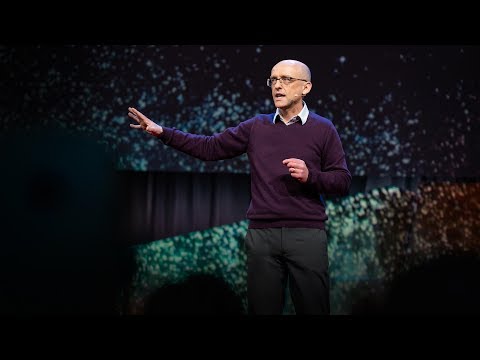
Where are all the aliens? | Stephen Webb
TED — Webb's own 2018 TED talk distilling the book's central argument: the specific barriers a planet must clear to host a communicative civilization, and his case that humanity's cosmic silence points toward its own rarity rather than a hidden crowd. Verified via YouTube oEmbed before inclusion.
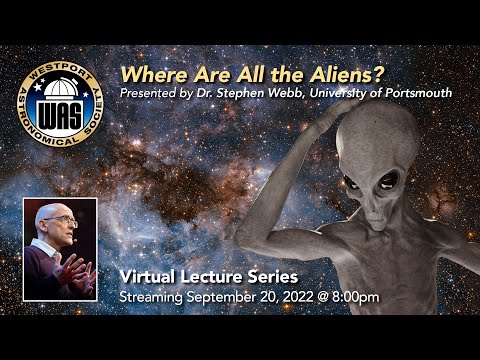
WAS September 2022 - Dr. Stephen Webb - Where Are All the Aliens?
Westport Astronomical Society — A longer-form public lecture in which Webb walks a general audience through the Fermi Paradox and several of the book's fifty (now seventy-five) proposed solutions in more depth than his TED talk allows. Verified via YouTube oEmbed before inclusion.
Sources Cited
- Webb, Stephen. If the Universe Is Teeming with Aliens ... WHERE IS EVERYBODY?: Fifty Solutions to the Fermi Paradox and the Problem of Extraterrestrial Life. Copernicus Books, 2002 (ISBN 9780387955018 / 0387955011, matching this site's own resources-library and Zoo Hypothesis theory-file citations under this exact edition). amazon.com
- "Stephen Webb (scientist)." Wikipedia (biography: education, academic career, bibliography, TED talk). en.wikipedia.org
- Chown, Marcus. Review of Where Is Everybody? New Scientist, 2003 ("highly entertaining and thought-provoking"). amazon.com
- Tarter, Jill. Blurb on Where Is Everybody? Science, Vol. 299, January 2003 ("everyone who has ever considered the possibility... will enjoy Where Is Everybody?"). amazon.com
- Ćirković, Milan M. "Book Review: If The Universe Is Teeming With Aliens... Where Is Everybody?" SETI League, 2003 ("a worthy addition to the rather small library of serious monographs on extraterrestrial life"). setileague.org
- Barker, T. Review of If the Universe Is Teeming with Aliens... Where Is Everybody? (2nd ed.). Choice, Vol. 53, No. 3, November 2015 ("one of the best books ever written on the subject of extraterrestrial intelligence"; Outstanding Academic Title 2015).
- Webb, Stephen. "Where are all the aliens?" TED2018, April 2018 ("The silence of the universe is shouting, 'We're the creatures who got lucky.'"). ted.com
- "If the Universe Is Teeming with Aliens ... WHERE IS EVERYBODY?: Seventy-Five Solutions to the Fermi Paradox and the Problem of Extraterrestrial Life." Springer Nature (2nd edition publication details, ISBN 9783319132358). link.springer.com
- "If the universe is teeming with aliens-- where is everybody?" Open Library (edition record, publication history). openlibrary.org
- "'Where Is Everybody?': An Account of Fermi's Question." University of Nevada, Las Vegas, Department of Physics and Astronomy (historical account of the 1950 Los Alamos lunch conversation). physics.unlv.edu
- Hart, Michael H. "An Explanation for the Absence of Extraterrestrials on Earth." Quarterly Journal of the Royal Astronomical Society, Vol. 16, 1975 (the first formal published statement of the paradox this book surveys). ui.adsabs.harvard.edu
- This site's own theory file: The Zoo Hypothesis, which cites this exact book and edition in its own sources list.
- This site's own essential-reading entry: Extraterrestrial, for a directly comparable scientist-authored survey of the search for extraterrestrial intelligence.
- This site's own key-figures entry: Stephen Webb, for full biographical detail and further case connections beyond this book.
- This site's own resources library: Full Reading List, where this exact 2002 edition (ISBN 0387955011) is cited in connection with the Zoo Hypothesis theory file.
Have corrections, additional research, or peer-reviewed sources? Help improve this entry.
Suggest an Edit