
Vague d'OVNI sur la Belgique
Rapport d'enquête (Un dossier exceptionnel)
Core Thesis
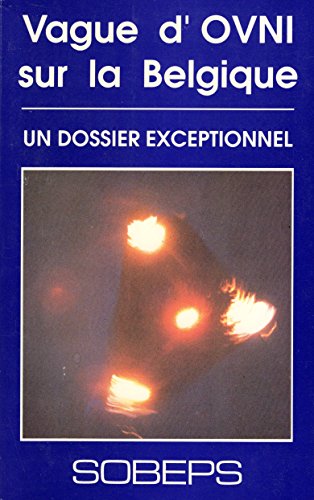
Vague d'OVNI sur la Belgique (also catalogued as Un dossier exceptionnel) is the first of two volumes SOBEPS, the Société Belge d'Étude des Phénomènes Spatiaux, published documenting the 1989–1991 Belgian UFO Wave. Running more than 500 pages, this first volume compiles gendarmerie case files, civilian witness testimony, and SOBEPS's own field-investigation records from the wave's earliest and most intensive phase, beginning with the November 29, 1989 Eupen sighting that first brought the phenomenon to national attention. Its relevance to this site is direct and foundational: this book is the primary documentary source underlying this site's own case file on one of the most institutionally corroborated mass-sighting events in UFO history.
About the Author
SOBEPS was founded in 1971 by Patrick Ferryn and Lucien Clerebaut as a Belgian civilian organization dedicated to studying unexplained aerial phenomena, publishing a regular bulletin, Inforespace, and building a membership that peaked above 1,750 by the mid-1970s before declining through the 1980s. Michel Bougard was elected president in 1976, succeeding founding leadership, and remained a central figure in the organization through the Belgian Wave era this book documents.
SOBEPS's membership and public profile had declined considerably by the time the wave began in late 1989, with active membership down to roughly 500 — a genuinely undersized volunteer organization suddenly confronted with what became one of the largest sustained UFO-report volumes any civilian research group has ever processed, ultimately gathering approximately 20,000 pages of documentation, more than 400 audio cassettes of telephone witness interviews, and roughly 600 detailed field-investigation reports across the full wave.
This book represents the direct product of that volunteer research effort: SOBEPS investigators conducted witness interviews, visited sighting sites, and worked directly with Belgian gendarmerie and, eventually, the Belgian Air Force itself to compile as complete and well-documented an investigative record as the organization's resources allowed, at real personal cost to a small group of researchers processing an unprecedented volume of reports in real time.
The scale of this volunteer effort deserves specific emphasis: a civilian organization with barely 500 active members ultimately processed over 2,000 individual UFO observations between November 1989 and July 1991, formally investigating roughly 650 of them in enough depth to reach a documented conclusion, with just over 500 remaining genuinely unexplained even after that investigation — a research volume and completion rate that would strain the resources of a considerably larger, better-funded institution, let alone a small volunteer association working largely in its own spare time.
Historical Context & Origins
The book was published in 1991, close on the heels of the wave's most dramatic and widely reported episode — the March 30–31, 1990 F-16 intercept, in which Belgian Air Force fighters logged multiple radar locks on a target performing maneuvers this site's own case file documents as exceeding 30G, published with the Belgian military's own unusually direct public cooperation.
SOBEPS's decision to publish so soon after the events it documents reflects the organization's own recognition that it was sitting on genuinely unprecedented documentation: a UFO wave that had drawn public, on-the-record engagement from a NATO member nation's own air force, rather than the more typical pattern of official silence, denial, or years-long declassification delay this site's other case files frequently document.
The book's 1991 publication also predates the wave's own eventual tapering off in mid-1991, meaning this first volume captures the phenomenon's most intensive early phase while the underlying mystery remained fully open, before the more skeptical retrospective analyses (including, notably, some SOBEPS researchers' own later reconsiderations) that would follow in subsequent years and inform the second volume's more contested title, Une énigme non résolue ("An Unresolved Enigma").
The book's publication also occurred within a specific Belgian media and political environment in which the wave had already become genuine national news, with major Belgian newspapers and television broadcasters covering individual sightings as they occurred throughout late 1989 and 1990 — meaning SOBEPS was publishing into an already highly informed and engaged domestic readership, distinct from many other UFO-research publications that must first establish their subject's basic credibility before a skeptical general audience.
Core Arguments & Key Concepts
The book's core structure is documentary compilation rather than a single argued thesis: SOBEPS presents gendarmerie case files, civilian testimony transcripts, and its own field-investigation reports largely in their original or lightly annotated form, allowing the sheer volume and geographic spread of independently gathered reports to make the case for the wave's genuine scale and consistency.
A central analytical thread running through the compiled testimony is witnesses' remarkably consistent physical description of the observed craft: a large, silent, triangular platform with rounded corners, three bright lights at its extremities and a pulsating red light at its center that some witnesses described detaching and descending independently — a specific, repeated visual signature this site's own case file treats as one of the wave's most analytically significant features, given how consistently it recurs across witnesses with no apparent means of coordinating their accounts.
The book documents in detail the specific gendarmerie investigation initiated by the November 29, 1989 Eupen sighting, in which patrol officers Heinrich Nicoll and Hubert von Montigny tracked a silent triangular platform for over an hour, with dispatcher Albert Creutz independently visually confirming the object and a second patrol under Dieter Plumanns providing further corroboration — a genuinely unusual case structure built on multiple independent, professionally trained law-enforcement witnesses rather than a single uncorroborated civilian account.
Beyond this opening case, the book documents dozens of further gendarmerie-involved sightings across the following months, establishing a pattern in which uniformed, professionally trained observers were disproportionately represented among the wave's best-documented reports relative to what a purely civilian-testimony record would typically produce — a pattern this site's own case file treats as directly relevant to assessing the wave's overall witness credibility.
SOBEPS's own collaboration with the Belgian Air Force, culminating in the organization's access to and inclusion of military radar and F-16 intercept documentation, represents a level of official institutional cooperation with a civilian UFO-research organization this site's own broader catalog finds essentially unmatched elsewhere — a genuinely distinguishing feature of the Belgian case this book's own privileged access reflects directly.
The book also documents SOBEPS's own internal methodological standards for evaluating incoming reports: rather than treating every telephone call or letter as an equally weighted data point, investigators applied a structured evaluation process assessing witness reliability, viewing conditions, and corroboration before classifying a given report as usefully documented versus too weak to include in the organization's formal case count — a screening discipline this article notes as directly comparable to the evidentiary standards this site's own case files aim to apply when weighing which claims warrant serious analytical attention.
Key Cases & Evidence Discussed
This site's own Belgian UFO Wave (Case File #8, beginning November 29, 1989) is the case file this book's compiled documentation directly underlies. The case file's own account of the wave's opening Eupen sighting, the geographic spread through the Eupen sighting zone, and the eventual military radar corroboration all draw on precisely the kind of gendarmerie and civilian testimony this book compiles and preserves.
This site's own St. Clair County Triangle Sightings (Case File #242, January 5, 2000) offers a useful American comparative case: both involve consistent multi-witness reports of large, silent, triangular craft, though the Belgian case's specific combination of sustained duration, geographic scale, and direct military radar corroboration remains considerably more extensively documented than most comparable triangle-sighting reports elsewhere in this site's catalog.
Critical Reception & Controversies
As a specialized, French-language, small-press investigative report rather than a mainstream trade publication, this book has not received the kind of major-outlet English-language book review this article can cite for most other Essential Reading entries — a genuine limitation this article notes plainly, consistent with its practice of stating source-availability constraints honestly.
Within the specialist ufological research community, however, the book has been consistently treated as the primary, most authoritative documentary source on the Belgian Wave's opening phase, cited extensively in subsequent French, Belgian, and international UFO-research literature addressing the case.
The book's own credibility within skeptical circles has been mixed: while the underlying witness-report compilation itself is generally treated as a genuine, faithfully transcribed documentary record, some skeptical commentators, including French skeptic organizations, have separately argued the broader wave reflected a media-amplified social panic rather than a genuinely anomalous phenomenon — a critical perspective this article notes as directed at the wave's ultimate interpretation rather than at this book's own documentary accuracy.
This specific skeptical "media panic" framing deserves direct engagement rather than simple mention: proponents of this view point to the wave's own rapid escalation in reported sightings once initial press coverage began, arguing that heightened public attention and expectation plausibly generated increased misidentification of mundane aerial phenomena (aircraft, planets, atmospheric optical effects) rather than reflecting any genuine change in what was actually present in Belgian skies during this period. This book's own compiled documentation, precisely because it preserves the original, largely unedited testimony rather than a later skeptic's own retrospective summary, gives readers the raw material needed to independently evaluate that specific argument's merits case by case, rather than having to accept either the wave's proponents' or its skeptics' overall characterization on faith.
No critical source located in researching this article disputes the specific factual content of the gendarmerie and witness reports this book compiles; critical engagement instead centers on how those reports should ultimately be interpreted, a question this site's own case file addresses directly and at length.
The book's specific reception within the ufological community internationally has been overwhelmingly positive, with the Belgian Wave frequently cited as among the two or three most significant European UFO cases of the twentieth century, a status this book's own comprehensive documentation directly enabled by giving international researchers a genuine, translatable primary-source record rather than relying on secondhand or fragmentary press coverage of the events.
Influence & Legacy
This exact edition is cited in this site's own Belgian UFO Wave case file's Further Reading section as "the definitive investigative report compiling gendarmerie files and civilian cases from the wave's first phase."
The book, alongside its 1994 companion volume, remains the foundational primary-source reference for virtually all subsequent research and writing on the Belgian Wave, a status reflected in how consistently later English-language treatments of the case cite SOBEPS's own compiled documentation rather than attempting independent re-investigation of witnesses decades after the fact. The Belgian Wave's own continued cultural presence in Belgium itself, including periodic anniversary retrospectives in Belgian press and broadcast media, has consistently referenced this book's documentation as the authoritative baseline record, giving the volume a sustained domestic relevance considerably beyond the specialist ufological readership its French-language, small-press original publication might otherwise suggest.
SOBEPS's own 2007 dissolution, following years of declining membership and financial difficulty, has if anything increased this book's documentary importance: much of the organization's original raw case material remains less accessible than this published, organized compilation, making the book itself an increasingly important surviving record of research the organization itself could no longer sustain past 2007.
The Book
As an Amazon Associate, OverClassified may earn from qualifying purchases made through this link, at no extra cost to you.
Why This Is Essential Reading
Vague d'OVNI sur la Belgique earns its place on this list as the foundational primary-source documentation behind one of the most institutionally corroborated UFO cases in this site's entire catalog. Read alongside its own second volume and this site's own Belgian UFO Wave case file, this book supplies the on-the-ground gendarmerie and civilian testimony that gives the wave's later, more famous military radar corroboration its full evidentiary weight — a case built on convergent, independently gathered documentation rather than a single dramatic incident alone.
Related Cases & Theories
Essential Viewing
Sources Cited
- SOBEPS. Vague d'OVNI sur la Belgique: Un dossier exceptionnel. Editions du Ricochet, 1991 (ISBN-13 9782960000702). amazon.com
- "SOBEPS." Wikipedia (organizational history, founding, dissolution). en.wikipedia.org
- "Historique de la Sobeps." COBEPS (successor organization's own history page). cobeps.org
- "La vague belge." COBEPS. cobeps.org
- "Vague belge d'ovnis." Wikipédia (French). fr.wikipedia.org
- "Belgian UFO wave." Wikipedia (English). en.wikipedia.org
- "La vague belge d'OVNI : une panique engendrée par les médias ?" Association française pour l'information scientifique (AFIS). afis.org
- "Vague d'OVNI sur la belgique : un dossier exceptionnel." AbeBooks (bibliographic listing and cover art source). abebooks.com
- "Vague d'ovni sur la belgique : un dossier exceptionnel." Le Bouquin Français (bibliographic listing). lebouquinfrancais.fr
- This site's own case file: Belgian UFO Wave, for the full analysis this book's compiled testimony supports.
- This site's own key-figures entry: SOBEPS, for the organization's full history and further case connections.
- This site's own key-figures entry: Colonel Wilfried De Brouwer, for the Belgian Air Force officer whose public statements confirmed the F-16 intercept.
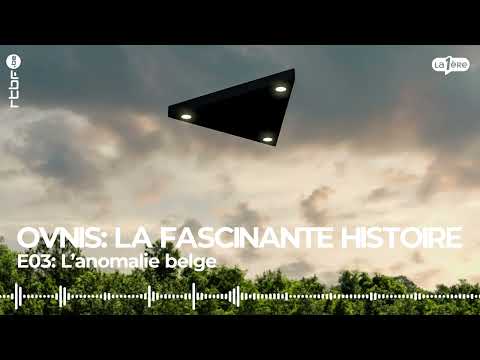
- "L'anomalie belge - OVNIS, la fascinante histoire (3/9)." RTBF (documentary). youtube.com
Have corrections, additional research, or peer-reviewed sources? Help improve this entry.
Suggest an Edit