
UFO's From Behind the Iron Curtain
The First English-Language Survey of Eastern Bloc UFO Reports
Core Thesis
UFO's From Behind the Iron Curtain is Romanian science-fiction critic Ion Hobana and Belgian publisher Julien Weverbergh's 1974 survey of UFO reports from Poland, the USSR, Yugoslavia, Hungary, and other Eastern Bloc states -- an expansion of their earlier 1972 Dutch-language work, adapted into English by translator A.D. Hills at a moment when Western ufology remained almost entirely focused on American and British cases. Its most consequential legacy on this site is a cautionary one: it is the earliest known English-language source for the Gdynia Harbor UFO Incident's humanoid-recovery legend, set in the Polish port of Gdynia, carrying that story into the mainstream Western ufology bibliography without citing any named Polish witness, official document, or original source.
About the Author
Ion Hobana (1931–2011), born Aurelian Manta Roşie in Sânnicolau Mare, was Romania's best internationally known science-fiction critic and historian, publishing extensively on Jules Verne and H.G. Wells alongside his own fiction, before turning his critical eye toward Eastern Bloc UFO reporting with this book.
Julien Weverbergh (1930–2023) was an Antwerp-born literary critic, French teacher, and publishing-house director (running Manteau from 1971 and his own imprint Houtekiet from 1986) who developed a public specialty in UFO writing alongside his mainstream literary career. In a detail this site's own key-figures page already documents in full: a 1977 interview later reprinted by the Belgian literary site Tzum quotes fellow Flemish author Jeroen Brouwers stating that he, not Weverbergh, had actually ghostwritten Weverbergh's UFO books -- a claim that, if accurate, adds a further layer of authorial distance between this book and any actual on-the-ground research behind the Iron Curtain.
The book's jacket copy frames it as filling a specific gap: the first account of Iron Curtain UFO evidence published in English since a tightening of Eastern Bloc information controls the authors date to 1968, compiled, per that same jacket copy, from "historical sources, official and scientific records," and material "sent in from trained and amateur observers" -- though this article was not able to independently verify the existence or vetting process behind that observer network beyond the publisher's own description.
Historical Context & Origins
The book grew out of Hobana and Weverbergh's earlier Dutch-language survey, UFO's in Oost en West, Deel II (Ankh-Hermes, 1972), which reportedly already included a Gdynia entry before the material reached English-language readers in this 1974 edition -- the edition this site's own Gdynia Harbor UFO Incident case file identifies as "the single most consequential publication in this case's history," since it carried the story into the mainstream English-language ufology bibliography for the first time.
A French edition, Les OVNI en URSS et dans les pays de l'Est (Robert Laffont, 1976, part of the "Les Énigmes de l'Univers" collection), followed two years later. This site's own case file notes that edition places the Gdynia case on pages 23–25 with the date given as "February 21" rather than January 21 -- an inconsistency across the book's own printings that is itself a small piece of evidence for how loosely the retelling chain was sourced even at its origin; this article was not able to independently re-verify that specific page citation beyond the case file's own prior research.
A US mass-market edition followed from Bantam Books, independently confirmed via the U*Database ufology bibliographic catalog as "Bantam Books, 1975, 308pp," alongside a UK paperback reprint from Corgi the same year. Some bookseller listings advertise the Bantam edition under an embellished cover blurb referencing "top secret Soviet archives"; this article treats that phrasing as unverified marketing copy rather than the book's actual printed subtitle, since no source consulted could confirm it appears on the physical dust jacket itself.
Core Arguments & Key Concepts
The book's implicit argument is that UFO reporting was not a uniquely American or Western European phenomenon, and that Eastern Bloc sightings, largely invisible to English-language readers before 1974, deserved a place in the same evidentiary record -- an argument advanced through breadth of compiled cases rather than through deep investigation of any single incident.
That breadth-over-depth approach is precisely what makes the book's treatment of individual cases like Gdynia difficult to evaluate on its own terms: this site's own case file found no named Polish witness, official document, or original source cited for the Gdynia humanoid story anywhere in the chain of retellings traced back to this book, a pattern consistent with a survey compiled from secondhand press clippings and correspondent submissions rather than firsthand field investigation.
Key Cases & Evidence Discussed
This site's own Gdynia Harbor UFO Incident case file documents the fullest and most consequential connection to this book: a claimed January 1959 humanoid-recovery incident in a Polish naval harbor that this book's 1974 English edition carried into Western ufology literature, and that every subsequent English-language account -- from Albert Rosales's humanoid-sightings catalog to French humanoid researcher Bronisław Rzepecki -- traces back to this same source rather than to any new Polish investigation.
This site's own Emilcin Abduction case file cites this book more generally, for the Cold War-era Eastern Bloc reporting culture and institutional vacuum that Polish farmer Jan Wolski's 1978 close-encounter claim emerged from just a few years after this book's publication -- context rather than direct case coverage, since Emilcin postdates the book by four years.
Critical Reception & Controversies
As of this article's research (August 2026), reader reception on Goodreads is modest and dated: 3.44/5 from 18 ratings, with casual reviewers describing it as "very VERY '70s and rather unsatisfying" and "very dry," and at least one reader disappointed the book leans toward technical sighting-pattern analysis rather than the more colorful angle of Soviet-era politics and secrecy.
Within ufology's own bibliographic tradition, the book fares somewhat better: Larry Hatch's U*Database, a serious compiled reference of UFO case sources, lists it among its "primary references" without any reliability caveat, treating it as a legitimate secondary source for Eastern Bloc cases generally, even as this site's own Gdynia research illustrates the specific evidentiary thinness underneath at least one of its most widely repeated stories. This article found no dedicated critical or scholarly review (Fortean Times, Magonia, or otherwise) evaluating the book's sourcing methodology directly.
Influence & Legacy
The book's most durable legacy, at least as traced through this site's own research, is not the breadth of its survey but the specific staying power of one story within it: the Gdynia humanoid legend has been re-cited, without new investigation, by sources spanning five decades -- from a 1988 French humanoid-sightings journal entry to a circa-2001 American cataloger's compilation to French case-cataloger Patrick Gross's 2009 flagging of "no primary source available" -- with this book as the common ancestor every one of them ultimately cites.
Set alongside this site's own Gdynia Harbor UFO Incident case file, which traces that exact citation chain in full, this book is best read as a case study in how quickly a secondhand claim can calcify into ufology's received wisdom once it appears in an early, broadly cited English-language survey -- a caution this site's own research applies directly rather than merely describing in the abstract.
The Book
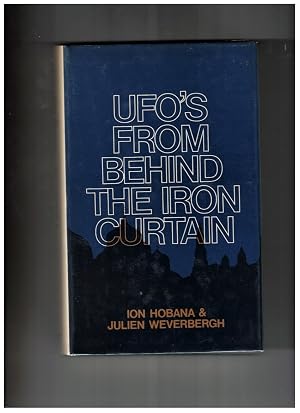
UFO's From Behind the Iron Curtain
The First English-Language Survey of Eastern Bloc UFO Reports
Find on Amazon →As an Amazon Associate, OverClassified may earn from qualifying purchases made through this link, at no extra cost to you.
Why This Is Essential Reading
UFO's From Behind the Iron Curtain earns its place on this reading list less as a reliable evidentiary source than as ufology historiography's own case study in how thin sourcing gets laundered into received wisdom: the single most consequential origin point for a fifty-year humanoid legend that, per this site's own research, never had a named witness to begin with. Read alongside this site's own Gdynia Harbor UFO Incident case file, which traces that full citation chain, and its Emilcin Abduction case file, which cites this book for broader Eastern Bloc context, it remains valuable as a snapshot of what could and couldn't be verified about UFO reports behind the Iron Curtain at the height of the Cold War.
Related Cases & Theories
Sources Cited
- Hobana, Ion & Weverbergh, Julien. UFO's From Behind the Iron Curtain. Souvenir Press, London, 1974. amazon.com
- Open Library, edition record for ISBN 0285621262 / 9780285621268 (pagination, LCCN, and Dewey classification). openlibrary.org
- AbeBooks, dealer listing for the 1974 Souvenir Press first edition (condition, format, and dust-jacket photo used as this article's cover image). abebooks.com
- Lorne Bair Rare Books, dealer collation and description of the 1974 first edition. lornebair.com
- Hatch, Larry. U*: UFO Data-Sources bibliographic database, primary-references listing (Bantam Books, 1975 US edition citation; site no longer live as of Aug 2026, no archived mirror found).
- Goodreads listing for UFO's From Behind the Iron Curtain (aggregate reader rating and reviews). goodreads.com
- Hobana, Ion & Weverbergh, Julien. Les OVNI en URSS et dans les pays de l'Est. Robert Laffont, Paris, 1976.
- Tzum. "Interview: Jeroen Brouwers bevestigde in 1977 dat híj het was die de ufo-boeken van Julien Weverbergh schreef." tzum.info
- Wikipedia. "Ion Hobana." en.wikipedia.org
- Wikipedia (Dutch). "Julien Weverbergh." nl.wikipedia.org
- This site's own Ion Hobana and Julien Weverbergh key-figures entries (their careers and this book's authorship history).
- This site's own Gdynia Harbor UFO Incident case file (the full citation chain this book originates, and the case's own independent research).
- This site's own Emilcin Abduction case file (this book's broader Eastern Bloc context).
Have corrections, additional research, or peer-reviewed sources? Help improve this entry.
Suggest an Edit