
The Mothman Prophecies
A True Story
Core Thesis
The Mothman Prophecies: A True Story is John Keel's own narrative account of the thirteen months, from November 1966 to December 1967, he spent investigating a wave of strange sightings, entity encounters, and personal harassment centered on Point Pleasant, West Virginia — the same field investigation that had already supplied the raw material for his 1970 theoretical study Operation Trojan Horse, but told here for the first time as a first-person, chronological, almost diary-like record rather than a cross-regional argument. Where the earlier book used Point Pleasant as one data point among many in building the "ultraterrestrial" framework, this book stays inside the thirteen months themselves: the large, red-eyed, winged creature witnesses nicknamed "Mothman," the unsettling Men in Black visits Keel says he experienced personally rather than only heard about secondhand, and — in the book's most consequential and most disputed claim — a retrospective sense that the entire strange season had been building toward the December 15, 1967 collapse of the Silver Bridge, which killed 46 people and which Keel frames, controversially and after the fact, as a disaster the phenomenon had somehow been trying to signal.
About the Author
This site's own Operation Trojan Horse entry covers John Keel's early life and full career in detail; this entry stays narrower and covers only the nine years between his two best-known books, since both grew out of the identical fieldwork. Keel's repeated, self-funded trips from New York to Point Pleasant in 1966 and 1967 generated far more material than either book alone could use. The first published version of any of it was a single chapter, "West Virginia's 'Mothman,'" tucked into his 1970 Fawcett Gold Medal paperback Strange Creatures From Time and Space — released the same year as Operation Trojan Horse, whose own Point Pleasant material Keel kept deliberately general, using the case mainly to illustrate the "window area" and electromagnetic concepts rather than to tell what had actually happened there night by night.
Keel spent the years immediately after that, 1968 to 1971, holding two minor federal advisory roles — technical advisor to the Library of Congress and consultant to the Office of Scientific Research and Bureau of Radiology, before moving to the Department of Health, Education and Welfare — while formalizing the ultraterrestrial and Men in Black material further in Our Haunted Planet (1971). Only in 1975, eight years removed from the events themselves and with the theoretical framework already published twice over, did Keel go back to the Point Pleasant notebooks a third time and write the story straight through as his own experience: not a chapter, and not a case study supporting a general theory, but a book-length, chronological account in which Keel himself is a character receiving the phone calls and the visits, not just the researcher collecting other people's.
Historical Context & Origins
The wave the book describes began on the night of November 15, 1966, when two young couples, Roger and Linda Scarberry and Steve and Mary Mallette, reported a large, grey, red-eyed winged figure near the abandoned World War II munitions site locals called the "TNT area" outside Point Pleasant — the same ground Operation Trojan Horse later analyzed as a "window area" and a localized "Zone of Fear." Dozens of further sightings followed over the next thirteen months, drawing Keel into a pattern of repeated weekend drives from Manhattan that this book, unlike its more theoretical predecessor, narrates almost day by day.
By the time Keel sat down to write this account in the early 1970s, the field around him had already absorbed his own theoretical framework twice: Operation Trojan Horse (1970) had introduced ultraterrestrials and window areas to a general ufological audience, and Our Haunted Planet (1971) had expanded the Men in Black material specifically. What remained untold was the human-scale, chronological version of the thirteen months that had generated all of it — and, critically, Keel now had eight years of hindsight standing between the events and the writing, including the one event nobody in Point Pleasant had experienced as anything but an engineering catastrophe when it happened: the December 15, 1967 collapse of the Silver Bridge, which killed 46 people at rush hour during the evening commute.
That gap between event and narration is central to how the book reads and to how it has been assessed since. Keel is explicit within the book itself that no one, including him, predicted the bridge's specific failure in advance; what he constructs instead, writing in the 1970s rather than in real time, is a retrospective sense of accumulated dread — anonymous phone calls, a rumored blackout warning that never materialized, and his own reported unease in the weeks before the collapse — that he arranges into a narrative in which the disaster reads, after the fact, as the season's dark culmination rather than as one more unconnected local tragedy.
Core Arguments & Key Concepts
The book's defining structural choice is narrative rather than argumentative: it reads less like the cross-referenced theoretical case-building of Operation Trojan Horse and more like a first-person field diary building toward a specific date, a quality reviewers have consistently identified as the book's real literary achievement, whatever they make of its evidentiary claims. Keel opens with an almost cinematic hook establishing his own skeptical, world-weary narrator persona before walking readers chronologically through the escalating strangeness of 1966 and 1967, a pacing choice that gives the book a thriller's momentum Operation Trojan Horse's more scattered, multi-region case list never attempted.
The Mothman sightings themselves — witnesses across Mason County reporting a tall, grey, winged figure with glowing red eyes, often near the TNT area, sometimes pacing moving vehicles at high speed — supply the book's recurring visual anchor, but Keel treats them as only the most visible layer of a much larger pattern also including UFO sightings, poltergeist-like disturbances, and precognitive dreams reported by local residents, all of which he weaves together as manifestations of the same underlying ultraterrestrial activity his earlier books had already theorized.
Where the book departs most sharply from Operation Trojan Horse is in making Keel himself a target rather than only an investigator: he describes receiving strange, garbled phone calls and unsettling personal visits consistent with the Men in Black pattern he had coined and analyzed academically in his earlier work, now presented as something that happened to him directly during the Point Pleasant investigation rather than something reported to him by others.
Keel also folds in the parallel case of Woodrow "Woody" Derenberger, a nearby traveling salesman who claimed a November 2, 1966 roadside encounter with a humanoid figure calling himself Indrid Cold, treating Cold's benevolent, oddly formal presence as a variant expression of the same non-human intelligence behind the Mothman sightings and the MIB visits — a linking of separate regional reports into a single interconnected mythology that became one of the book's most influential contributions to Mothman lore, later inherited wholesale (and considerably darkened) by the 2002 film.
The book's climax is its most contested argument: Keel arranges the final chapters around the December 15, 1967 Silver Bridge collapse, presenting the accumulated strangeness of the preceding year — his own sense of foreboding, informants' reports of premonitions, warnings he says he received but could not decode in time — as evidence that the phenomenon had been trying, however cryptically, to signal the coming disaster. Keel does not claim anyone identified the bridge specifically in advance; the argument is retrospective pattern-recognition presented as near-miss prophecy, and it is the single claim critics and skeptics have returned to most often in assessing the book.
Key Cases & Evidence Discussed
The Mothman Prophecies has one flagship case, and this site's own Point Pleasant, West Virginia location entry documents the same November 1966–December 1967 wave this book narrates in full, including the TNT area fieldwork Keel conducted in person and the same Silver Bridge collapse this book treats as its narrative climax.
This book is the direct narrative counterpart to this site's own Operation Trojan Horse entry: both books are built from the identical 1966–67 field investigation, but where that entry covers Keel's cross-regional theoretical argument, this one stays entirely inside the Point Pleasant thirteen months and tells them as Keel's own lived experience, phone calls and all.
The book's Men in Black material connects directly to this site's own Albert Bender & the Three Men in Black case file (Case File #239), the earlier 1953 case that established the MIB pattern Keel says he encountered personally in Point Pleasant, and to Gray Barker, the West Virginia writer whose 1956 book first dramatized Bender's account and who separately corresponded with Keel throughout the Point Pleasant investigation.
This site's own Ultraterrestrial Hypothesis theory file, sourced in significant part from Keel's Point Pleasant fieldwork, treats this book as the framework's fullest narrative application, and its close cousin, this site's Egregore & Collective Thoughtform Hypothesis file, discusses the "window area" concept this book's own TNT-area chapters dramatize at ground level rather than only theorize.
This exact edition is also live infrastructure elsewhere on this site: it is cited on the Flatwoods Monster Incident case file (Case File #034) as connective tissue between that 1952 case and "the subsequent Mothman wave," underscoring how thoroughly West Virginia's mid-century cryptid reports have become linked in the popular imagination largely because of this specific book.
Critical Reception & Controversies
Kirkus Reviews, assessing the book on its original 1975 release, captured a paradox that has followed it since: the reviewer noted Keel has "harsh words for those who hold with extra-terrestrial intervention" and spends much of the book building a case for hallucinatory and psychological explanations, only to reveal underneath that Keel is, in the reviewer's reading, ultimately a believer — proposing "ultra-terrestrial" entities existing "perhaps even part of our minds" and operating "beyond the space-time continuum." The same review pointed out a detail often lost in later retellings: Keel himself never personally witnessed the Mothman.
A 2025 retrospective review by Berthold Gambrel for the blog Ruined Chapel praised Keel's storytelling craft directly, calling him "an entertaining writer" with a genuinely clever opening, while identifying the book's central weakness as evidentiary rather than literary: Keel "never really does manage to establish what exactly we're supposed to make" of the phenomena he reports, and the prophecies themselves — vague references to unrest that Gambrel found unpersuasive as evidence of preternatural knowledge — rest on anecdote "with no supporting hard evidence." Gambrel's verdict: as atmospheric history of late-1960s UFO culture the book succeeds; as scientific evidence for paranormal claims, it is "kind of a failure."
The most specific documented challenge to the book's reliability as reporting, rather than to its theoretical claims, comes from journalist John C. Sherwood's 2002 Skeptical Inquirer article "Gray Barker's Book of Bunk: Mothman, Saucers, and MIB," which examined private 1966–67 correspondence between Keel and Gray Barker — a writer this site's own key-figures entry on him documents as carrying "a separately, extensively documented reputation" for fabricating and embellishing UFO material. Sherwood's comparison of that contemporaneous correspondence against Keel's later, more dramatic 1975 published account is the closest thing the case has to a documentary check on how much of the book's mounting sense of dread was present at the time versus supplied afterward with the benefit of knowing what came next.
Academic Fortean scholarship has treated the book seriously enough to analyze its underlying structure rather than only its factual claims: folklorist David Clarke's essay "A New Demonology: John Keel and The Mothman Prophecies," collected in Damned Facts: Fortean Essays on Religion, Folklore and the Paranormal (2016), reads the book's ultraterrestrial framework as a modern restatement of much older demonological traditions — shape-shifting, deceptive non-human intelligences that predate any UFO vocabulary — situating Keel's most famous book inside a much longer history of similar claims rather than treating it as a novel one.
The disputed Silver Bridge connection specifically has not held up well under structural scrutiny. Official federal investigation, completed by 1971, attributed the collapse to stress corrosion cracking in a single eyebar of the bridge's aging suspension chain — a mechanical failure in a structure built in 1928, unrelated to any of the preceding year's reported sightings. Keel's own text, read carefully by multiple reviewers, concedes as much: nobody, including Keel, identified the bridge itself as the coming disaster in advance. What the book supplies instead is retrospective pattern-recognition, arranged after the fact into something that reads like near-prophecy — a distinction between what was actually predicted and what was later narrated as having been sensed that remains the single most contested claim in Keel's entire body of work.
Influence & Legacy
The book's largest single legacy event is the January 25, 2002 Mark Pellington film adaptation starring Richard Gere as Keel-analogue "John Klein," Laura Linney, Debra Messing, Will Patton, and Alan Bates as "Alexander Leek" — Keel's name spelled backward and split off as a separate UFOlogist character. Reviewers have consistently described the film as a loose adaptation rather than a faithful one, with one estimate holding that only about ten percent of the finished film's material is drawn directly from the book; Pellington deliberately reframed the material as psychological horror centered on grief rather than as investigative narrative, and darkened Indrid Cold from the book's comparatively benign figure into something closer to an antagonist. The film earned $55.2 million worldwide against a $32 million budget, drew mixed reviews (a 52% Rotten Tomatoes score, Roger Ebert's two-star assessment praising Pellington's direction while criticizing the script), and has since built a lasting cult following well beyond its modest theatrical reception.
That film adaptation is directly responsible for reintroducing Keel's work, this book specifically included, to a mainstream audience three decades after original publication, prompting the Tor Books 2013 reissue cited throughout this entry and renewing interest in Keel's earlier, harder-to-find titles as well.
The word "Mothman" itself owes its broad cultural currency to this book far more than to the original 1966 regional news coverage; it is this book's mass-market success, not the initial sightings alone, that fixed the creature's name and mythology in the national imagination.
That cultural currency now runs Point Pleasant's tourism economy directly: the annual Mothman Festival, founded in 2002 by local historian Jeff Wamsley in the same year as the film's release, now draws in the range of 12,000 to 15,000 visitors each September to a town of roughly 4,000 residents, alongside a year-round Mothman Museum and guided tours of the TNT area this book first put on the map for outside readers.
Within this site's own theory infrastructure, the book stands as the fullest ground-level illustration of the Ultraterrestrial Hypothesis its companion volume Operation Trojan Horse first proposed in the abstract — the difference between reading a theory and reading the thirteen months of lived experience that theory was built to explain.
The Book
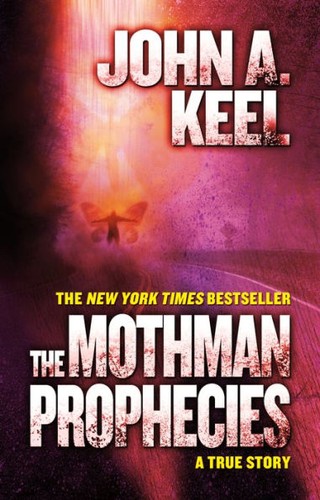
As an Amazon Associate, OverClassified may earn from qualifying purchases made through this link, at no extra cost to you.
Why This Is Essential Reading
The Mothman Prophecies earns its place on this list as the necessary companion piece to Operation Trojan Horse rather than a second, separate argument: it is the same fieldwork, the same thirteen months in Point Pleasant, told a second time by the same author with the theory stripped away and the lived experience put back in its place. That choice is exactly why the book has outlasted its own author's other work in the popular imagination — it gave an entire cryptid its name, supplied the 2002 film that introduced John Keel's ideas to a generation who never read his theoretical books, and turned a small Ohio River town into a permanent tourist destination built around the same TNT-area fieldwork this site's own Point Pleasant location entry documents. None of that popularity resolves the book's central evidentiary problem, and to the book's own credit it does not fully pretend otherwise: Keel is explicit that no one predicted the Silver Bridge's specific collapse in advance, which makes the book's real subject not prophecy fulfilled but the far more human, far more universal experience of retrospective dread arranged into a story after the worst has already happened. Reading it alongside Operation Trojan Horse is reading the same case twice, from two different distances, and the gap between those two tellings is itself the most instructive thing either book has to offer.
Related Cases & Theories
Essential Viewing

Point Pleasant's 13-Month Nightmare: Mothman, UFOs & Men in Black
BingeWorthy Documentaries — A documentary retelling of the same November 1966–December 1967 wave this book narrates, covering the Mothman sightings, UFO reports, and Men in Black encounters, verified via YouTube oEmbed before inclusion.
The Mothman Prophecies by John Keel | Book Review
Crizzybooks — A direct reader's review of Keel's book itself, engaging with its narrative style and its central claims about the Point Pleasant wave and the Silver Bridge collapse, verified via YouTube oEmbed before inclusion.
Sources Cited
- Keel, John A. The Mothman Prophecies: A True Story. Saturday Review Press, 1975; Tor Books pbk., 2013 (ISBN 9780765334985 / 0765334984, cited here, matching this site's own resources library and Flatwoods Monster case-file citation). amazon.com
- "The Mothman Prophecies." Wikipedia (book: publication history, content summary, Silver Bridge connection, Kirkus and Skeptical Inquirer reception). en.wikipedia.org
- "The Mothman Prophecies (film)." Wikipedia (2002 film: director, cast, release date, box office, adaptation choices, critical reception). en.wikipedia.org
- Kirkus Reviews. "The Mothman Prophecies." (original 1975 review assessing Keel's skeptical framing alongside his ultimate ultraterrestrial conclusions). kirkusreviews.com
- Gambrel, Berthold. "'The Mothman Prophecies' by John A. Keel (1975)." Ruined Chapel, October 3, 2025 (2025 retrospective review assessing narrative craft against evidentiary weakness). ruinedchapel.com
- Sherwood, John C. "Gray Barker's Book of Bunk: Mothman, Saucers, and MIB." Skeptical Inquirer, May/June 2002 (comparison of Keel's contemporaneous 1966–67 correspondence with Gray Barker against his later published account). skepticalinquirer.org
- Clarke, David. "A New Demonology: John Keel and The Mothman Prophecies." In Damned Facts: Fortean Essays on Religion, Folklore and the Paranormal, Aporetic Press, 2016, pp. 54–68 (academic Fortean-studies analysis of the book's demonological framework). shura.shu.ac.uk
- "Indrid Cold." Wikipedia (Woodrow Derenberger's November 1966 encounter and its incorporation into this book's narrative). en.wikipedia.org
- "Silver Bridge." Wikipedia (December 15, 1967 collapse: casualty count, 1970–71 federal investigation findings on the eyebar stress-corrosion cracking cause). en.wikipedia.org
- "Mothman Festival." Wikipedia (2002 founding by Jeff Wamsley, annual attendance figures, Mothman Museum). en.wikipedia.org
- "The Mothman Prophecies." Open Library edition record (ISBN 0765334984 / 9780765334985, Tor Books, 2013; original 1975 Saturday Review Press publication data). openlibrary.org
- This site's own key-figures entry: John Keel, for his broader site-wide career and case connections beyond this book.
- This site's own key-figures entry: Gray Barker, Keel's West Virginia correspondent during the Point Pleasant investigation and a documented source of embellishment in the wider MIB literature.
- This site's own essential-reading entry: Operation Trojan Horse, Keel's 1970 theoretical study built from the same field investigation this book narrates directly.
- This site's own location entry: Point Pleasant, West Virginia, the case file this book's narrative is built around.
- This site's own resources library: Full Reading List, where this exact edition (ISBN 0765334984) is cited across the Flatwoods Monster and Ultraterrestrial Hypothesis pages.
Have corrections, additional research, or peer-reviewed sources? Help improve this entry.
Suggest an Edit