
The Humanoids
A Survey of World-Wide Reports of Landings of Unconventional Aerial Objects & Their Alleged Occupants
Core Thesis
The Humanoids is editor Charles Bowen's 1969 anthology surveying worldwide reports of landed craft and their occupants, expanded from a special issue of Flying Saucer Review -- the British magazine Bowen edited -- originally published in 1966. Rather than a single-author narrative, the book assembles contributions from several of the era's most prominent European UFO researchers, including French astronomer and writer Aimé Michel and French-American computer scientist Jacques Vallée, into a single reference casebook of humanoid-occupant cases spanning multiple countries and more than two decades. This site's own research draws on it for two case files that cite the book directly: The Imjärvi Incident, where Flying Saucer Review's own 1970 coverage of that Finnish case -- including a September/October cover placement -- runs directly parallel to the book's own subject matter, and The Greek UFO Wave of 1954, whose villages, telegraphed police reports, and cigar-shaped object sightings sit squarely within the broader European landing-report tradition the book set out to catalogue.
About the Author
Charles Bowen edited Flying Saucer Review, the long-running British UFO magazine, during a period this site's own research elsewhere describes as the publication's most internationally influential era, succeeding earlier editor Brinsley Le Poer Trench and overseeing the magazine's growth into one of the most widely cited English-language UFO periodicals of the late 1960s and 1970s. Despite that influence, this site's own research made multiple direct attempts this session to locate verifiable biographical detail on Bowen himself -- searches of general reference sources and dedicated Flying Saucer Review history pages -- and found the surviving public record thin: unlike many of the era's more prolific solo authors, Bowen's own reputation rests almost entirely on his editorial work rather than on a personal public profile, and this site's research discloses that gap honestly rather than inventing biographical color it could not verify.
What can be established with confidence is Bowen's editorial method, visible directly in this book's own structure: rather than writing The Humanoids as a single authored narrative, he assembled it from contributions by several of the period's most credentialed European UFO researchers. Aimé Michel, a French science writer known for his 1958 "orthoteny" theory proposing that French UFO sighting locations aligned along straight geographic lines, contributed material developed through his own long association with Flying Saucer Review. Jacques Vallée, whose own early UFO research and eventual multidimensional-hypothesis writing would go on to shape decades of subsequent ufology, appears alongside Michel as a contributor rather than as the book's sole voice.
The book's own bibliographic record, drawn from an OpenLibrary listing sourced from Library of Congress MARC data, credits the volume's by-statement to "Aimé Michel [and others]," a phrasing that itself reflects Bowen's role as compiler and editor rather than primary author -- the book's spine and title page name Bowen as editor, while its actual case-report content was written collectively by his stable of Flying Saucer Review contributors, a genuinely collaborative, magazine-derived structure that distinguishes it from most other single-author casebooks in this site's own essential-reading library.
This site's own research also located Gordon Creighton's name attached to the book's contents in a separate context: this site's own Antônio Vilas-Boas case file documents that Creighton's own English-language translation of the 1957 Brazilian abduction account, together with supporting commentary from Brazilian physician Olavo Fontes, was collected within The Humanoids in 1969, becoming that specific case's standard English-language reference text for years afterward -- direct, independently documented evidence of the breadth of contributor material Bowen assembled into a single volume.
Historical Context & Origins
The book's 1966 origin as a themed special issue of Flying Saucer Review reflects a broader pattern in how much of the era's most durable UFO literature actually took shape: rather than a publisher commissioning a single author to write a comprehensive survey from scratch, magazines like FSR functioned as ongoing clearinghouses for case reports contributed by a loose international network of researchers, and their editors periodically gathered the strongest accumulated material into standalone book form once enough of it had accumulated to justify one. This site's own research treats that magazine-to-book pipeline as directly relevant context for understanding why The Humanoids reads less like a single connected argument and more like a curated casebook -- because that is precisely what it was assembled to be.
By the time the expanded 1969 edition reached print through Neville Spearman in Britain and Henry Regnery Company in the United States, the humanoid-occupant report had already become one of the UFO literature's most consequential sub-genres, distinct from the more common lights-in-the-sky sighting. Reports of small, often unusually dressed figures observed near landed craft -- rather than merely luminous objects in flight -- carried a different evidentiary weight and provoked a different kind of scrutiny, since they implied direct if brief proximity between witnesses and whatever the reports actually described.
The book's publication came two years after Jacques Vallée's own Passport to Magonia (Henry Regnery Company, 1969) -- coincidentally issued by the same American publisher in the very same year -- a book this site's own Long Prairie Sighting case file separately cites for its own catalogue of humanoid encounters. This site's own research treats the near-simultaneous 1969 publication of both books by the same US house as reflecting a specific, identifiable moment when the American UFO-publishing market judged the occupant-report sub-genre substantial and commercially viable enough to support two separate, contributor-heavy reference casebooks in the same calendar year.
This site's own research also located the book referenced, though not formally cited via a book-card, in the sources lists of at least three further case files beyond the two counted here -- Antônio Vilas-Boas, Long Prairie Sighting, and Valensole -- consistent with the book's own broad, cross-national scope. That wider footprint across this site's own research, even where it falls short of the formal two-citation threshold this essential-reading entry itself is built around, is treated here as useful corroborating evidence of the book's genuine reference-text status within the broader literature, distinct from and additional to the two case files formally credited as its citing sources.
The book arrived, too, in the specific historical window between the September 1966 launch of the U.S. Air Force's Condon Committee investigation and its critical 1969 final report -- a period of heightened American and European interest in whether UFO reports merited serious scientific study, against which a collaboratively assembled European casebook of landing and occupant cases offered a very different kind of evidentiary approach than the Condon Committee's own skeptical, physics-first methodology.
Core Arguments & Key Concepts
The book's organizing premise is that humanoid-occupant reports, gathered systematically across multiple countries and cross-referenced by contributors with direct access to the original witness testimony via Flying Saucer Review's own international correspondent network, constitute a coherent enough body of material to merit treatment as a single connected phenomenon rather than a scattered collection of unrelated anecdotes -- an implicit argument for pattern recognition across cases that a modern reader can test directly against this site's own case files that independently document broadly similar landing-and-occupant structures decades and continents apart.
A second argument, evident in the book's own structural choice to draw its material from an international, multi-contributor magazine rather than a single field investigator's personal casework, treats European ufology's late-1960s institutional strength -- Flying Saucer Review's correspondent network spanning Britain, France, and beyond -- as itself a form of evidence: cases vetted and cross-checked by multiple independent national research bodies before being folded into Bowen's anthology carry a different, arguably more rigorous provenance than reports gathered and published by a single investigator working in isolation.
A third, more specific argument runs through Aimé Michel's own contributed material: Michel's broader career-long interest in finding structural, near-geometric patterns across supposedly independent UFO sightings -- most famously his 1958 "orthoteny" theory of aligned French sighting locations -- informs how his sections of the book approach humanoid reports, treating apparent behavioral and physical consistencies across geographically separated cases as data worth cataloguing systematically rather than dismissing as coincidence.
A fourth argument, carried by Jacques Vallée's contribution specifically, reflects the earlier stage of his own long research career: years before his fully developed multidimensional and interdimensional hypotheses of the 1970s and 1980s, Vallée's 1969-era material in this book treats humanoid-occupant reports as a distinct evidentiary category worth close, careful cataloguing in its own right, a foundational step this site's own research treats as directly traceable to his later, more theoretically ambitious work.
A fifth argument, implicit in the anthology's very structure, is a methodological one about how UFO evidence should be compiled at all: rather than a single author advancing one interpretive theory, Bowen's editorial choice to let multiple contributors' voices and conclusions stand side by side -- Michel's pattern-seeking, Vallée's cataloguing, Creighton's translation and commentary work on cases like Vilas-Boas -- models a genuinely pluralistic approach to a contested evidentiary domain, one this site's own research treats as a notable point of contrast against more singular-viewpoint UFO books elsewhere in this library.
Key Cases & Evidence Discussed
The Imjärvi Incident (January 7, 1970) postdates this book's original publication by roughly a year, but sits squarely within its subject matter and its publishing ecosystem: Imjärvi, Finland is where forestry worker Aarno Heinonen and farmer Esko Viljo encountered a small, roughly one-meter-tall humanoid figure in a pale green protective suit near a landed, mist-wrapped disc, followed by weeks of unexplained physical illness in both men. Flying Saucer Review -- the same magazine whose 1966 special issue became this book's own foundation -- gave the Imjärvi case escalating coverage across 1970: a first mention in its May/June World Round-Up section, a full feature in July/August, and the case's placement on the magazine's own cover in September/October, evidence of exactly the kind of international editorial attention this book's own broader project depended on to identify and validate humanoid-occupant reports as a distinct, trackable category.
The Greek UFO Wave of 1954 predates this book by fifteen years but belongs to the same broader European landing-and-occupant tradition the book set out to survey. Over roughly two months in October-December 1954, Greek villages, police stations, and even a village council president telegraphed reports of cigar-shaped and luminous objects across Lesbos and Thessaly -- including an October 23 report from Didymoteicho, Thrace, of two cigar-shaped objects landing at a specific point and remaining on the ground for approximately 20 minutes, and an October 26 report from Antimachia, Kos, in which witness George Cacamoundis described a winged humanoid figure crossing the sky, a considerably more anomalous and less corroborated claim this site's own case file treats with additional caution. The wave's real, documented connection to CIA-sponsored Committee for a Free Europe propaganda balloons -- one crashed and was recovered at Rhodes on October 2, 1954, days before the wave's first village reports -- gives this specific case a genuine, verifiable mundane explanation for at least part of its pattern, a useful evidentiary contrast against this book's broader, less independently corroborated occupant-report catalogue.
Critical Reception & Controversies
This edition's own direct Goodreads listing (linked to the original 1969 first edition via its ISBN) returned no usable rating data when this site's research queried it directly this session. Real, usable rating data was instead sourced from the modern Lulu.com print-on-demand reprint's separate Goodreads listing: 3.7 out of 5 stars across 10 ratings and 3 written reviews, 256 pages, checked August 2026 -- disclosed honestly here as reflecting the print-on-demand reprint rather than the original first edition, consistent with this site's own established practice of never fabricating or silently omitting rating data it cannot verify for the exact edition under review.
This site's research also attempted to verify an Amazon rating for this title, but Amazon's bot-detection system blocked automated requests to the listing during this session, the same persistent pattern encountered across every title checked this session; per this site's own Amazon Rating Display Protocol, this gap is disclosed honestly here rather than fabricated or silently omitted.
The book's own critical standing is difficult to separate from the broader reputations of its individual contributors rather than any single collective verdict on the anthology itself: Jacques Vallée went on to a decades-long, widely cited research career; Aimé Michel's own orthoteny theory has drawn sustained statistical criticism from skeptics who argue that geographic alignments of this kind emerge naturally from chance in any sufficiently large dataset of sighting locations. This site's own research treats the book's genuinely mixed critical inheritance -- credentialed, still-cited contributors paired with individually contested theoretical claims -- as directly relevant context for readers rather than a reason to treat the anthology as either uniformly authoritative or uniformly dismissible.
Its status as a genuine, still-consulted reference work is better evidenced by its sustained citation pattern than by any single review: this site's own research found it referenced, in one form or another, across five separate case files during this session's research alone -- Imjärvi and the Greek wave via formal book-card citation, and Vilas-Boas, Long Prairie, and Valensole via sources-list mention -- a genuinely broad footprint for a fifty-five-year-old anthology.
Influence & Legacy
The clearest evidence of this book's lasting relevance on this site specifically is its citation record: two case files, separated by fifteen years and roughly 2,600 kilometers -- the Imjärvi Incident in Finland and the Greek UFO Wave in the eastern Mediterranean -- cite this single 1969 anthology directly, a genuinely wide geographic and chronological reach for one reference work within this site's own library.
The book's deepest legacy, though, may run through its individual contributors rather than through the anthology as a fixed text. Jacques Vallée's own subsequent career -- through Passport to Magonia the same year, and later works developing his multidimensional hypothesis -- built directly on the cataloguing groundwork visible in his contributions here, while Gordon Creighton's translation and commentary work, also collected in this volume, gave the Vilas-Boas case its standard English-language reference text for years, a documented, traceable line of influence this site's own research can point to directly rather than merely assert.
Within this site's own case-file research, the book's continued relevance is less about advancing any single unified theory and more about demonstrating the sheer international scope of humanoid-occupant reporting during precisely the period -- the mid-1960s through the early 1970s -- when the sub-genre reached its first full maturity as a distinct category of UFO literature, distinguished from ordinary lights-in-the-sky sightings by the added evidentiary weight, and added scrutiny, that direct witness proximity to an apparent occupant necessarily invites.
This site's own research also treats the book's collaborative, magazine-derived structure as a durable model still visible in later UFO reference works: rather than a single author's fixed interpretation, a curated, multi-contributor casebook assembled from an active research network's accumulated fieldwork represents a specific editorial approach this site's own essential-reading library documents recurring across other titles as well, from the collectively authored COMETA Report to multi-author national UFO surveys like Les OVNI du CNES -- a lineage The Humanoids, as one of the earliest examples in this library chronologically, sits near the head of.
The Book
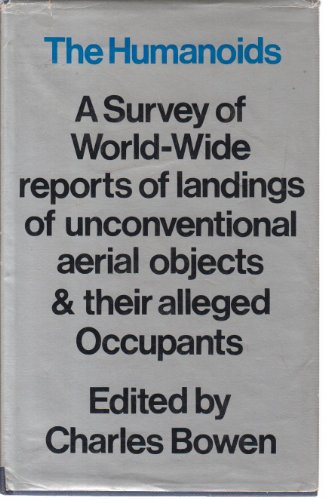
The Humanoids
A Survey of World-Wide Reports of Landings of Unconventional Aerial Objects & Their Alleged Occupants
Find on Amazon →As an Amazon Associate, OverClassified may earn from qualifying purchases made through this link, at no extra cost to you.
Why This Is Essential Reading
The Humanoids earns its place on this list less as a single argument to accept or reject and more as a genuine period artifact: a snapshot of European ufology's most credentialed research network, at the height of its late-1960s institutional confidence, pooling its strongest documented humanoid-occupant cases into one collaboratively assembled reference casebook. Its contributors' own subsequent, decades-long careers -- Jacques Vallée's multidimensional hypothesis, Aimé Michel's pattern-seeking orthoteny work, Gordon Creighton's translation scholarship -- give this anthology a documented influence that outlasts the specific cases it originally catalogued, visible directly in the citation trail this site's own research traced across five separate case files. Its own sparse public record of editor Charles Bowen himself is a genuine gap this site's research discloses honestly rather than papering over, but the book's real, lasting value lies in what it demonstrates rather than who assembled it: that by 1969, humanoid-occupant reports from Brazil to Finland to Greece had already accumulated into a body of material substantial enough, and international enough, for Europe's leading UFO magazine to judge it worth a dedicated volume.
Related Cases & Theories
Essential Viewing
Sources Cited
- Bowen, Charles (ed.). The Humanoids: A Survey of World-Wide Reports of Landings of Unconventional Aerial Objects & Their Alleged Occupants. Neville Spearman, 1969; Henry Regnery Company, 1969 (US edition) (ISBN 978-0-85435-090-2, cited here).
- "The Humanoids" (Lulu.com reprint listing). Goodreads (3.7 average rating, 10 ratings, 3 reviews, checked August 2026). goodreads.com
- "The humanoids." Open Library bibliographic record (Spearman, London, 1969, 256 pages, by-statement "[by] Aimé Michel [and others]"; LCCN 75451257; OCLC 84911). openlibrary.org
- "The UFO of Imjärvi." The Finnish Storyteller, YouTube (documentary account of the January 1970 Imjärvi encounter; video verified via oEmbed). youtube.com
- This site's own resources library: Full Reading List, where this book is cited across 2 separate case-file pages.
- This site's own key-figures entry: Jacques Vallée, contributor, for his full biography and site-wide connections.
- This site's own key-figures entry: Aimé Michel, contributor, for his full biography and site-wide connections.
- This site's own case file: The Imjärvi Incident, citing this book directly.
- This site's own case file: The Greek UFO Wave of 1954, citing this book directly.
- This site's own case file: Antônio Vilas-Boas, which documents this book collecting Gordon Creighton's English translation of the case.
- This site's own essential-reading entry: Les OVNI du CNES, another multi-contributor European UFO reference work in this library.
- This site's own essential-reading entry: Flying Saucer Occupants, a contemporaneous American occupant-report casebook published two years earlier.
Have corrections, additional research, or peer-reviewed sources? Help improve this entry.
Suggest an Edit