
The Aliens and the Scalpel
A Surgeon's Own Account of His Alien-Implant Removal Program
Core Thesis
The Aliens and the Scalpel is podiatric surgeon Dr. Roger Leir's own 1999 first-person account of the implant-removal surgical program he began in 1995 after reviewing X-rays presented at a MUFON conference. Working closely with field investigator Derrel Sims, who screened and referred candidate abductee-patients, Leir led a series of operations he reported recovered sixteen candidate objects across fifteen surgeries, several of which were submitted to the New Mexico Institute of Mining and Technology for elemental analysis. The book's own central, and most heavily disputed, claim is that this laboratory analysis directly supports an extraterrestrial origin for the objects -- a conclusion the laboratory's own report did not itself endorse. This site's own research draws on it for two pages: the Yeni Kent Compound Sighting case file, which cites it as "useful primary-source context for assessing the credibility of [Leir's] 2009 Kumburgaz on-site testimony," and the Implant Hypothesis theory page, which treats it as the claim's single most systematic published statement.
About the Author
Roger K. Leir (1935-2014) was an American podiatric surgeon, qualified in 1964 -- a licensed and practicing surgical professional, but, as this site's own research consistently notes, not a physician and not a materials scientist, a distinction directly relevant to evaluating his own later interpretive claims about laboratory findings outside his medical specialty.
Leir began investigating claimed alien implants in 1995 after reviewing X-rays presented at a MUFON conference, and over the following two decades worked closely with field investigator Derrel Sims, who describes his own prior background, on his own website and in his own published materials, as including U.S. Army military-police service and CIA-linked security work; this site's own research was unable to independently verify those specific claims through any source beyond Sims's own self-published biography, and treats them accordingly as self-reported rather than established fact.
Leir attended the 2009 International UFO Congress in Istanbul, where he reported personally observing and filming a boomerang-shaped object with visible ports and an alleged "grey" alien silhouette near the Kumburgaz coastline alongside seven to eight other attendees -- an episode this site's own Yeni Kent Compound Sighting case file treats as a credibility complication for that case rather than independent corroboration, given the broader rejection of Leir's signature medical claims.
Leir died on March 14, 2014, in Thousand Oaks, California, at age 78. Filmmaker Jeremy Corbell's 2017 documentary Patient Seventeen chronicles Leir's final implant-removal surgery and stands, per this site's own research, as the last widely distributed account of his program.
Beyond his implant-surgery program, Leir also wrote and lectured on related UFO-crash and abduction topics through the same publisher, Book Tree, positioning himself over roughly two decades as one of the field's more prolific author-investigators rather than a single-topic researcher, even though this specific book on the implant program remained his single most widely discussed and most frequently cited work throughout his career.
Historical Context & Origins
Physical-implant claims did not originate with Leir: this site's own research traces the pattern back through 1970s-80s abduction literature, with Budd Hopkins's Intruders (1987) widely credited with elevating implant claims to a central place in American abduction research, building on the same hypnotic-regression methodology this site's own coverage of forensic-hypnosis research addresses elsewhere. Leir's 1995-2014 program is best understood as the claim's most systematic and surgically documented phase, rather than its origin point.
Leir's book followed, by exactly one year, the field's most detailed published skeptical audit of his own program specifically: investigator Joe Nickell's "Alien Implants: The New 'Hard Evidence'" appeared in the September/October 1998 Skeptical Inquirer, meaning Leir's own 1999 book was published into a research environment where his program's central evidentiary claims had already received sustained, credentialed outside scrutiny before he told his own side of the story in book form.
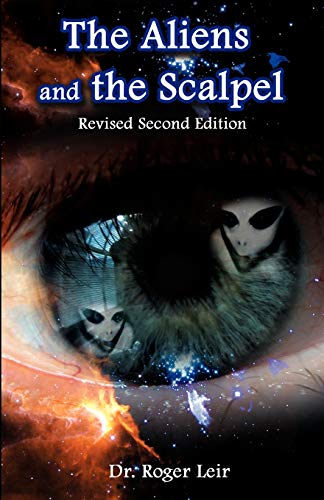
The book's 2005 revised second edition, the edition whose cover this site's own research verified, followed roughly six years of continued field activity and additional surgeries beyond the original 1999 edition's scope, extending the program's own documented case count.
The broader cultural moment surrounding the book's publication also matters: the late 1990s marked a period of intense mainstream media attention to alien-abduction claims, following Harvard psychiatrist John E. Mack's controversial 1994 book Abduction and the 1992 MIT abduction-study conference Mack co-chaired with physicist David Pritchard -- the same conference this site's own Implant Hypothesis theory page credits with giving implant claims their most direct exposure to mainstream academic scrutiny. Leir's book arrived into a research and media environment already primed for exactly this kind of first-person, physical-evidence-driven abduction narrative.
Core Arguments & Key Concepts
The book's central argument is that objects surgically removed from self-described abductees are not ordinary retained foreign bodies but artifacts of extraterrestrial origin, a conclusion Leir bases substantially on a laboratory comparison of certain trace elemental compositions in the recovered specimens to those found in meteorites.
A second, load-bearing claim concerns the New Mexico Institute of Mining and Technology's elemental analysis specifically: Leir's own book describes one specimen as containing eleven distinct elements and repeatedly emphasizes the laboratory's meteorite-composition comparison. This is the specific claim this site's own Implant Hypothesis theory page identifies as "the crux of this specific case's evidentiary dispute": the laboratory's own report described the objects as "composed of commonly found elements" such as iron and aluminum and did not itself conclude an extraterrestrial origin -- that reinterpretation was layered on afterward by Leir himself.
A third argument concerns pre-surgical imaging: the book documents that conventional X-ray and, in some cases, MRI imaging confirmed the physical presence of genuine subdermal objects in several patients prior to surgical removal -- real, standard medical instrumentation that this site's own research treats as the one part of the claim's evidentiary chain that is genuinely well-documented, independent of any dispute over the objects' ultimate origin.
A fourth argument addresses the sheer procedural scale of the program: fifteen separate surgeries recovering sixteen distinct objects, a considerably larger and more directly forensic body of physical-removal cases than most other abduction physical-evidence claims this site's own research has catalogued, a scale Leir's own book treats as itself supporting the pattern's significance.
A fifth argument, made implicitly throughout the book's framing rather than stated as a single discrete claim, is that the medical and surgical rigor of the removal procedures themselves -- performed by a licensed surgeon under proper pre-operative imaging -- should lend the resulting specimens a credibility that purely testimonial or hypnotically-recovered implant claims lack; this site's own research treats that specific argument as the book's most defensible point even while ultimately rejecting its extraterrestrial-origin conclusion, since the surgical procedures themselves are not seriously in dispute -- only their subsequent interpretation is.
A sixth argument concerns the anatomical siting of the recovered objects: across the book's own case series, implants were most often reported and located in the nasal cavity, an ear, or a limb -- precisely the body regions this site's own Implant Hypothesis theory page separately identifies as the anatomical sites where an ordinary retained foreign body, such as a splinter, a shard of glass, or an aspirated fragment, is most likely to lodge, migrate slowly under the skin, and eventually present as a palpable lump years after the original, often entirely forgotten, minor injury that actually introduced it. The book itself does not address this specific mundane-explanation pattern anywhere in its own text, an omission this site's own research treats as a significant gap in the book's overall argumentative structure rather than a neutral, inconsequential silence.
A seventh argument threads through the book's own patient-selection narrative: Leir and Sims describe screening candidate abductees using an ultraviolet-fluorescence field-screening method Sims himself developed, which he claimed located implant sites invisible under ordinary light. This site's own research treats that screening step as a genuinely distinctive methodological addition relative to most abduction-implant claims, even though no independent replication or validation of the fluorescence method's actual diagnostic reliability appears in any source this site's research identified.
Key Cases & Evidence Discussed
The book's own central case record is the fifteen-surgery, sixteen-object program itself, conducted primarily in California between 1995 and the early 2000s, with several specimens submitted to the New Mexico Institute of Mining and Technology for the elemental analysis that forms the book's central evidentiary claim.
This site's own Yeni Kent Compound Sighting case file discusses Leir's role as a secondary witness at the May 2009 International UFO Congress in Istanbul, where he reported observing a boomerang-shaped object with visible ports near the Kumburgaz coastline -- an episode the case file's own Observer Credibility section treats explicitly, noting that "the case's highest-profile secondary 'corroborating' witness, Roger Leir, is independently known for a body of UFO claims widely rejected by mainstream science."
This site's own Implant Hypothesis theory page situates Leir's program within a comparative record of three claimed-implant cases that actually reached credentialed independent analysis: alongside the Leir/New Mexico Tech specimens, the theory page documents the David Pritchard/Thomas Flotte MIT case, in which a dermatopathologist found the submitted object to be a callus of hardened skin tissue formed around embedded cotton fibers, and the Susan Blackmore/James Basil case, in which scanning-electron-microscopy found standard dental amalgam -- in every single instance across all three cases where analysis was actually completed and published, the object proved to be ordinary terrestrial material.
Beyond the three cases that reached genuine independent laboratory analysis, this site's own broader implant-claim catalogue documents a much larger tier of reported cases that were never independently verified at all -- including a nasal implant attributed to Linda Cortile and an excised leg mass attributed to Jim Weiner, both "said to have been sent for analysis" with no independently verifiable finding ever made public. Leir's own program, whatever its interpretive flaws, sits closer to the smaller, more genuinely documented tier than to this larger, unverified one -- a distinction this site's own research treats as meaningful even while rejecting the book's ultimate conclusion.
Critical Reception & Controversies
This book carries a notably strong Goodreads record: 4.11 out of 5 stars averaged across 101 ratings and 10 written reviews, checked August 2026 -- a substantially larger and considerably more positive review base than most niche paranormal-claim titles this site's research has checked this session, indicating a genuinely engaged and sustained readership among UFO-abduction literature enthusiasts specifically, whatever the book's own underlying claims' actual scientific merit turns out to be.
This site's research also attempted to verify an Amazon rating for this title, but Amazon's bot-detection system blocked automated requests to the listing during this session, the same persistent pattern encountered across every title checked this session; per this site's own Amazon Rating Display Protocol, this gap is disclosed honestly here rather than fabricated or silently omitted.
The book's central scientific claim did not withstand outside scrutiny: Joe Nickell's 1998 Skeptical Inquirer investigation, published a year before the book itself, concluded the claimed implants were "most likely ordinary objects such as shards of glass or fragments of metal" that become lodged in skin through ordinary accidental injury -- and separately reported that when a forensic medical institute requested specimens or photographs from the Leir-Sims program for independent review, Sims declined to provide them, a procedural refusal this site's own research treats as directly relevant to assessing how much genuine outside verification the program's claims actually received.
This site's own research treats the book's core evidentiary gap as specific and identifiable rather than a vague dismissal: no isotope-ratio mass spectrometry test -- the specific, standard cosmochemistry technique capable of directly distinguishing terrestrial from extraterrestrial material, and already routinely used to identify genuine meteoritic material far smaller than any of Leir's claimed implants -- appears to have ever been applied to any Leir specimen and published, despite this being the one test capable of directly settling the question the book's own meteorite-composition comparison only gestures toward.
This site's own research also weighs Leir's professional credentials directly rather than treating "surgeon" as a blanket qualification: Leir was a genuinely licensed and practicing podiatric surgeon, qualified to remove a foreign object from a patient's body, but he held no medical degree and no materials-science training, meaning his own surgical competence does not extend to correctly interpreting a metallurgical laboratory report -- precisely the interpretive step where this site's own research concludes his book's central claim actually breaks down.
Influence & Legacy
Within this site's own essential-reading library, this book stands as the primary first-person source for the implant-surgery claim specifically, complementing the more independently-verified, terrestrial-outcome cases (Pritchard/Flotte, Blackmore/Basil) this site's own Implant Hypothesis theory page documents as the claim's actual analytical record.
Jeremy Corbell's 2017 documentary Patient Seventeen, chronicling Leir's final surgery, extended the program's public visibility well beyond the book's own original readership and stands, per this site's own research, as the most recent widely distributed treatment of Leir's work -- giving this book a documented multimedia afterlife unusual among niche self-published paranormal-claim titles, one that has introduced Leir's own claims to a considerably younger audience than the book's original 1999 and 2005 print readership ever reached directly.
Leir's program, and this book's own account of it, gave the broader implant-abduction claim tradition -- traceable to Budd Hopkins's earlier hypnotic-regression-based testimony -- its first sustained attempt at genuine surgical and materials-science documentation, a meaningfully more concrete evidentiary approach than testimony alone even though this site's own research concludes the resulting analysis does not support the extraterrestrial-origin conclusion the book itself draws.
This site's own Yeni Kent Compound Sighting case file's use of the book as "credibility context" rather than corroborating evidence exemplifies a broader pattern in this site's own research method: a witness's involvement in one widely rejected claim is treated as directly relevant to weighing their testimony in an unrelated case, rather than assessed in isolation.
The Book
The Aliens and the Scalpel
A Surgeon's Own Account of His Alien-Implant Removal Program
Find on Amazon →As an Amazon Associate, OverClassified may earn from qualifying purchases made through this link, at no extra cost to you.
Why This Is Essential Reading
The Aliens and the Scalpel earns its place on this list not because its central extraterrestrial-origin claim holds up -- this site's own research, consistent with Joe Nickell's 1998 published audit, concludes it does not -- but because it remains the field's single most detailed first-person account of the implant-abduction claim's most surgically and analytically documented program. Its direct relevance to this site's own Yeni Kent Compound Sighting case file and Implant Hypothesis theory page, combined with its genuinely large Goodreads readership more than two decades after publication, together support this site's own judgment that the book has earned lasting reference status -- not as evidence for extraterrestrial contact, but as the primary source any serious evaluation of the implant-surgery claim must engage with directly, precisely because its own author's interpretive leap beyond his own laboratory's actual findings is what any careful reader must learn to identify and correctly weigh against the more cautious, terrestrial conclusions every comparable independently-analyzed implant case has actually produced.
Related Cases & Theories
Essential Viewing
Sources Cited
- Leir, Roger K. The Aliens and the Scalpel. Book Tree, 1999; revised second edition, 2005 (ISBN 978-1-58509-106-5, cited here).
- "The Aliens and the Scalpel." Goodreads (4.11 average rating, 101 ratings, 10 reviews, checked August 2026). goodreads.com
- "The Aliens and the Scalpel." AbeBooks (ISBN 9781585091065, marketplace listing photograph used for this article's cover image). abebooks.com
- Nickell, Joe. "Alien Implants: The New 'Hard Evidence.'" Skeptical Inquirer, September/October 1998 (the field's most detailed published skeptical audit of the Leir-Sims program).
- "PATIENT SEVENTEEN: Extended Film Teaser." Jeremy Corbell, YouTube (official teaser for the 2017 documentary chronicling Leir's final surgery; video verified via oEmbed). youtube.com
- This site's own resources library: Full Reading List, where this exact edition is cited across 2 separate pages.
- This site's own key-figures entry: Dr. Roger Leir, for his full biography and site-wide connections.
- This site's own key-figures entry: Derrel Sims, Leir's longtime field-investigator collaborator.
- This site's own case file: Yeni Kent Compound Sighting, discussing Leir's 2009 Istanbul testimony.
- This site's own theory page: Implant Hypothesis, the claim's full comparative evidentiary record.
- This site's own location entry: New Mexico Institute of Mining and Technology, the laboratory that analyzed Leir's specimens.
- This site's own essential-reading entry: Hair of the Alien, another physical-evidence abduction claim this site's library documents for comparison.
Have corrections, additional research, or peer-reviewed sources? Help improve this entry.
Suggest an Edit