
Secrets of the Psychics
Investigating Paranormal Claims — Massimo Polidoro's Fifteen Years of Undercover Field Investigation Into Mediums, Miracle Cures, and Psychic Fraud
Core Thesis
Secrets of the Psychics: Investigating Paranormal Claims collects more than fifteen years of field investigations by Massimo Polidoro, the Italian writer, psychologist, and co-founder of CICAP (Comitato Italiano per il Controllo delle Affermazioni sulle Pseudoscienze), Italy's leading skeptical-investigation organization. This article states plainly, at the outset, what this book is and is not: across its twenty chapters and two appendices, it investigates mediums, psychic surgeons, dowsers, mentalists, self-proclaimed miracle-workers, and historical spiritualist frauds — and it contains no chapter, case study, or sustained discussion of unidentified flying objects. Its inclusion on this site's Essential Reading list rests on a narrower and more honest foundation than most of the titles here: this exact edition, cited under ISBN 1591020867, already appears on this site's own resources library, linked specifically to the Florence Stadium Sighting (Case File #108) as a source on Polidoro's own documented investigative methodology, not as a source on UFO evidence itself. The book's real value to a reader of this site is methodological: it is a sustained, first-person demonstration of the same undercover, chain-of-custody, physical-evidence-first approach this site's own Bad UFOs, UFOs Explained, and Escaping the Rabbit Hole entries apply specifically to UFO claims, applied here instead to the broader universe of paranormal and psychic claims Polidoro spent his career investigating alongside his mentor, magician and investigator James Randi.
About the Author
Massimo Polidoro was born March 10, 1969, in Voghera, in Italy's Lombardy region. As a teenager he corresponded with James Randi and, through a book and television series by Italian science journalist Piero Angela, discovered the broader skeptical movement built around the Committee for the Scientific Investigation of Claims of the Paranormal (CSICOP) in the United States. He met Randi in person in Rome in 1988 and, with support from Angela, traveled to the United States and spent roughly a year in Florida as what several sources describe as Randi's only full-time apprentice in the art of paranormal investigation and psychic testing — learning firsthand the undercover, evidence-first fieldwork methodology this book is built around.
Polidoro returned to Italy as a founding member of CICAP, formally established on June 12, 1989 by Piero Angela together with a group of prominent Italian scientists, including three Nobel laureates; sociologist Lorenzo Montali served as the new committee's first secretary, physicist Steno Ferluga as its first president, and Polidoro himself went on to serve for many years as CICAP's national secretary and as director of its magazine, later renamed Scienza & Paranormale, which he edited from 1993 to 2006. He went on to earn a psychology degree from the University of Padua, with a master's thesis specifically on the psychology of eyewitness testimony to anomalous phenomena — academic training this article treats as directly relevant to how this book approaches witness testimony as evidence rather than proof.
Beyond CICAP, Polidoro built a substantial public career as a science journalist and communicator: he has been a longtime contributor to the Italian science magazine Focus, became the European representative for the James Randi Educational Foundation in 1996, and since 2002 has written a regular column for the American magazine Skeptical Inquirer. He is a research fellow of the U.S.-based Committee for Skeptical Inquiry (CSI, the successor to CSICOP), has taught postgraduate science-communication coursework at the University of Padua since 2018, and is a recurring guest on Superquark, Italy's most popular science television program. He is the author of more than fifty books in Italian, of which this one and his earlier Final Séance: The Strange Friendship Between Houdini and Conan Doyle (2001) are among his best-known English-language titles; this article treats his decades of hands-on field investigation, rather than any formal scientific credential in parapsychology, as the actual basis of his authority on the subject matter this book covers.
Historical Context & Origins
This book arrived in December 2003, roughly fifteen years into Polidoro's own career as a field investigator and fourteen years after CICAP's 1989 founding, at a point when the organization had already built a substantial case archive of Italian paranormal claims investigated using the undercover, physical-evidence-based methodology Polidoro had learned directly from James Randi in Florida in the late 1980s. The book functions as a career retrospective of sorts, assembling case investigations Polidoro had conducted and, in many instances, already published in shorter form in CICAP's own journal and in Skeptical Inquirer, into a single English-language volume aimed at an international audience that had, until this point, had little direct access to CICAP's specifically Italian body of casework.
The book's publisher, Prometheus Books, was at the time the leading English-language publishing house for skeptical and secular-humanist nonfiction, and this title sits within a broader wave of investigator memoirs and case-collection books — a genre this site's own library already documents through works like Bad UFOs and UFOs Explained — that collect a working investigator's accumulated case files into a single accessible volume rather than advancing one sustained argument.
Several of the book's chapters revisit investigations with a much older historical core, reaching back to early twentieth-century spiritualism: its treatment of medium Eusapia Palladino and the 1908 Feilding Report, of the friendship and eventual public falling-out between Harry Houdini and Sir Arthur Conan Doyle over spiritualism, and of the "Margery" mediumship case Houdini himself helped expose, place this book in direct conversation with Polidoro's own earlier book Final Séance (2001), which covered the Houdini–Conan Doyle relationship at full length; this later book revisits some of that same historical ground more briefly alongside its contemporary casework.
Unlike this site's core UFO-focused library, this book was never framed by its author or its publisher as a UFO or ufology text; its historical context is the broader twentieth-century skeptical movement descended from CSICOP's 1976 founding, not the Cold War-era UFO research this site's Essential Reading list otherwise documents.
Core Arguments & Key Concepts
The book's organizing argument, stated across its opening chapter "It's all in the mind: on the mechanisms of deception in psychic fraud," is that most paranormal claims collapse under the same handful of explanatory mechanisms — cold reading, sensory leakage, statistical coincidence exploited after the fact, conjuring technique, and outright fraud — regardless of whether the specific claim involves a medium, a psychic surgeon, or a dowser, and that a trained investigator applying magician's-eye scrutiny and undercover fieldwork can usually identify which mechanism is at work in a given case.
Structurally, the book alternates between two registers: chapters revisiting well-documented historical cases from the early twentieth-century spiritualist movement — Eusapia Palladino's séances, the Anna Eva Fay mediumship that once impressed physicist Sir William Crookes, and the Houdini-era investigations of "Margery" (Mina Crandon) — and chapters describing Polidoro's own first-person, present-day undercover investigations, including a chapter in which he poses as a psychic himself for an hour to demonstrate how convincingly ordinary cold-reading technique can be performed, and chapters on a Russian psychic's metal-bending demonstrations, a claimed clairvoyance experiment, and the practices of self-styled Indian godmen.
A recurring methodological argument, distinct from any single case's outcome, is that documented physical evidence and controlled testing conditions — not eyewitness conviction, however sincere — are what actually distinguish a genuine anomaly from a performed or self-deceived one; several chapters, including "The chemistry of 'supernatural' substances" (drawing on laboratory work with University of Pavia chemist Luigi Garlaschelli) and "Investigating spirit moulds," apply direct chemical and physical analysis to claimed paranormal residue in a manner this article notes is structurally similar to how this site's own case files treat physical trace evidence in UFO cases.
The book is explicit that its scope is general paranormal-claims investigation rather than any single phenomenon: chapters on poltergeist claims, table-tipping, human magnetism, and miraculous religious phenomena sit alongside the mediumship and psychic-fraud material, and at no point does the book frame UFOs, alien contact, or extraterrestrial visitation as within its subject matter — a distinction this article treats as central rather than incidental to how the book should be read by a UFO-focused audience.
Key Cases & Evidence Discussed
This book's single most direct, already-documented connection to this site's own case-file library is the Florence Stadium Sighting (Case File #108, Disputed), where this exact edition is cited on this site's resources library as background on Polidoro's own investigative methodology, and where Polidoro's key-figures card on this site credits him with covering the case's chaff-based explanation directly on his own video series. This site's case file itself documents the sighting's central physical-evidence dispute: whether the "bambagia silicea" (silky wadding) that fell over the Florence stadium and Duomo on October 27, 1954 was military chaff, as CICAP researcher Vincenzo Gassi proposed in 2014 based on chemical composition matching, or something less conventional, as CUN founder Roberto Pinotti has argued. This book does not itself discuss the Florence case — its citation on this site documents Polidoro's general investigative approach, not a specific chapter about this sighting.
Because this book itself contains no UFO case material, the more substantive connection for a reader of this site runs through shared investigative philosophy rather than shared subject matter, and this site's own Bad UFOs (ER-029) by Robert Sheaffer and UFOs Explained (ER-032) by Philip J. Klass are its closest thematic siblings on this list: both apply the same undercover, physical-evidence-first, cold-reading-and-conjuring-literate skepticism this book demonstrates on psychic claims, but aimed specifically at UFO sighting reports instead.
This site's Escaping the Rabbit Hole (ER-079) by Mick West shares this book's core investigative stance most directly among this site's UFO-specific titles: both authors argue that rigorous, patient, methodologically transparent investigation — not blanket dismissal or credulous acceptance — is what actually resolves extraordinary claims, whether the claim involves a psychic surgeon's sleight of hand or a Navy pilot's gun-camera video.
Within its own pages, the book's most historically significant case is its treatment of the 1908 Feilding Report on Eusapia Palladino, a genuinely famous episode in the history of psychical research in which a team of trained investigators, including magician Everard Feilding, initially came away persuaded of Palladino's genuine mediumship before later exposing her use of a freed foot to simulate paranormal effects — a cautionary case, distinct from anything in this site's own UFO archive, about how even trained, skeptical investigators can be fooled without sustained, repeated scrutiny.
Critical Reception & Controversies
The book's most notable pre-publication endorsement came from Italian novelist and semiotician Umberto Eco, quoted on the book's promotional materials calling Polidoro "a true sleuth" whose readers "will learn from him many entertaining and instructing tales" — a genuine, named literary endorsement distinct from the skeptical-movement circles the book's other reception is drawn from.
Reviewer Austin Cline, writing for About.com's atheism/agnosticism section, praised the book's readability specifically, writing that "Polidoro is not just a good investigator, he's also a good storyteller — he really makes these investigations sound interesting," a assessment that credits the book's narrative craft as much as its investigative content.
Reader reception on Goodreads has settled at a modestly small but positive 4.07 out of 5 rating from 15 ratings and 3 written reviews as of this article's research; reviewer Kenny Biddle called it "an essential addition to the library of those who investigate or simply wondered about the validity of psychic phenomenon," while reviewer William Hall offered a more qualified reading, noting the book is "slanted towards all paranormal is fake" while still holding that "the cases here are important so investigators can eliminate the fraudulent" — a genuine, published reservation about the book's framing rather than uniform praise.
Because this book sits within the skeptical-movement literature rather than mainstream trade nonfiction, it drew little attention from major outlets like Kirkus Reviews or Publishers Weekly in available records; its most substantive critical engagement instead comes from within the skeptical community itself, where Polidoro's standing as a CICAP co-founder and Randi's own trained apprentice has generally been treated as a credibility asset rather than a source of independent scrutiny — a dynamic this article notes plainly rather than treats as a weakness unique to this book, since it is common to investigator-authored case collections across the skeptical genre.
This site applies the same standard to this book that it applies to every title on its Essential Reading list: the book's own psychic-fraud exposures are Polidoro's documented investigative conclusions, not independently re-verified by this site, and readers should weigh his specific evidentiary claims — the freed-foot explanation for Palladino, the cold-reading mechanics behind the Russian psychic's metal-bending — on their own merits rather than on Polidoro's reputation alone.
Influence & Legacy
This book's most concrete, already-documented legacy on this site is its existing citation on this site's own resources library under ISBN 1591020867, tied to the Florence Stadium Sighting case file — a citation this article converts into a full independent breakdown for the first time, consistent with how this site has previously handled other paranormal-adjacent titles like Remote Viewing Secrets (ER-078).
Within the international skeptical movement, this book represents one of the clearest English-language introductions to CICAP's own body of casework, translating investigative methodology developed largely in Italian for the CICAP journal and Scienza & Paranormale into a form accessible to the broader CSICOP/CSI-affiliated skeptical readership this book's publisher, Prometheus Books, primarily served.
Polidoro's own subsequent career has continued to build directly on the investigative reputation this book helped establish internationally: he remains a research fellow of the Committee for Skeptical Inquiry, continues writing his regular Skeptical Inquirer column, and was entrusted by James Randi himself, together with Randi's partner and Penn Jillette, with writing Randi's authorized biography following years of recorded interviews — a project this article notes was still in progress as of available public reporting, illustrating the degree of trust Polidoro's investigative track record, substantially built on cases like the ones in this book, earned within the skeptical movement's own inner circle.
This book's influence on this site specifically is methodological rather than evidentiary: it stands alongside Bad UFOs, UFOs Explained, and Escaping the Rabbit Hole as a demonstration of what disciplined, undercover, physical-evidence-first skeptical investigation looks like when practiced consistently over a long career, a standard this site applies to its own UFO case files regardless of which specific book first modeled it for a given reader.
The Book
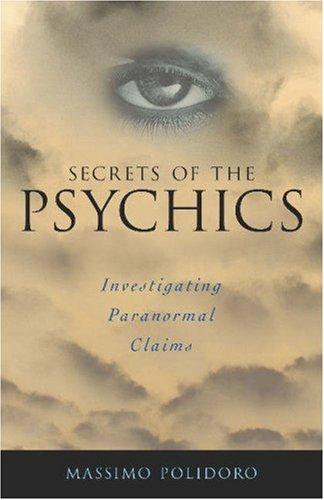
Secrets of the Psychics
Investigating Paranormal Claims — Massimo Polidoro's Fifteen Years of Undercover Field Investigation Into Mediums, Miracle Cures, and Psychic Fraud
Find on Amazon →As an Amazon Associate, OverClassified may earn from qualifying purchases made through this link, at no extra cost to you.
Why This Is Essential Reading
Secrets of the Psychics: Investigating Paranormal Claims earns its place on this list honestly rather than centrally, and this article states that plainly rather than stretching the connection: this is not a UFO book, it contains no chapter or sustained discussion of unidentified flying objects, and a reader coming to it expecting ufological content will not find any. What it offers instead is a genuine methodological complement to this site's core case-file library — more than fifteen years of Massimo Polidoro's own undercover, physical-evidence-first field investigations into mediums, psychic surgeons, and paranormal fraud, conducted by a CICAP co-founder trained directly by James Randi, and already cited on this site's own resources library in connection with the Florence Stadium Sighting. Read alongside this site's own Bad UFOs, UFOs Explained, and Escaping the Rabbit Hole, this book demonstrates the same disciplined investigative standard — chain-of-custody scrutiny, chemical and physical verification, undercover testing, and a documented refusal to accept eyewitness conviction as proof — applied to a different, adjacent universe of extraordinary claims. It belongs on this list as a lesson in method, not as a source of UFO evidence.
Related Cases & Theories
Essential Viewing
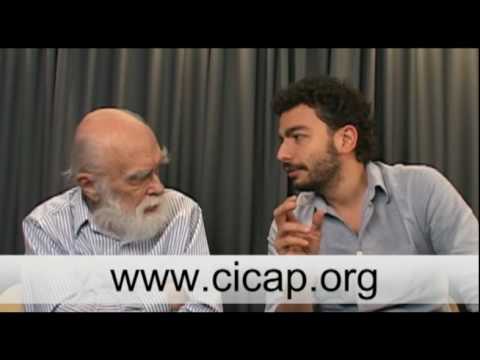
James Randi & Massimo Polidoro
JamesRandiFoundation — A direct conversation between James Randi and his own trained apprentice Massimo Polidoro, discussing the skeptical movement and paranormal investigation methodology this book is built on. Verified via YouTube oEmbed before inclusion.
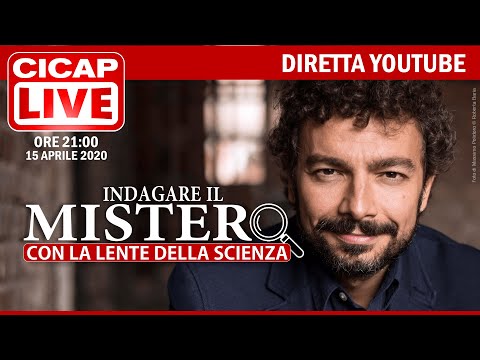
CICAP Live: indagare il mistero con la lente della scienza (con Massimo Polidoro)
CICAP — A CICAP Live event featuring Massimo Polidoro discussing investigating mystery claims through the lens of science, hosted by the organization he co-founded and the same investigative tradition this book documents. Verified via YouTube oEmbed before inclusion.
Sources Cited
- Polidoro, Massimo. Secrets of the Psychics: Investigating Paranormal Claims. Prometheus Books, December 2003, 302 pp. (ISBN 1591020867 / 9781591020868, cited here matching this site's own resources library citation). amazon.com
- "Secrets of the Psychics: Investigating Paranormal Claims." Internet Archive (item secretsofpsychic0000poli), full chapter list, publisher, and page-count confirmation. archive.org
- "Secrets of the Psychics." Massimo Polidoro's official author site (book description, publisher, and reviewer quote from Austin Cline). massimopolidoro.com
- "Secrets of the Psychics: Investigating Paranormal Claims" by Massimo Polidoro. Goodreads (reader ratings: 4.07/5 from 15 ratings; reviewer quotes from Kenny Biddle and William Hall). goodreads.com
- "Massimo Polidoro." Wikipedia (biography: birth date and place, University of Padua psychology degree and thesis topic, CICAP co-founding, James Randi apprenticeship, Skeptical Inquirer column, bibliography). en.wikipedia.org
- "CICAP." Wikipedia (founding history: formal establishment June 12, 1989 under Piero Angela; founding officers Steno Ferluga and Lorenzo Montali; Polidoro's role as national secretary). en.wikipedia.org
- "30 anni dalla fondazione del CICAP." CICAP.org (Italian-language institutional history of CICAP's June 1989 founding and founding members, including Polidoro's year with James Randi in Florida). cicap.org
- "Final Séance: The Strange Friendship Between Houdini and Conan Doyle." Massimo Polidoro's official author site (details on Polidoro's related 2001 book, source of overlapping historical case material). massimopolidoro.com
- "The Amaz!ng Randi Story." Massimo Polidoro's official author site (status of Polidoro's authorized James Randi biography project, commissioned by Randi and Penn Jillette). massimopolidoro.com
- "Anticipating CSICon 2022: An Interview with Massimo Polidoro." Skeptical Inquirer / Center for Inquiry (career overview, CSI research fellow role, Skeptical Inquirer column). skepticalinquirer.org
- "Secrets of the Psychics." Simon & Schuster (Prometheus Books distributor), official publisher book page (ISBN and format confirmation). simonandschuster.com
- "Eusapia Palladino." Wikipedia (background on the medium and the 1908 Feilding Report investigation this book's Chapter 3 revisits). en.wikipedia.org
- This site's own case file: Florence Stadium Sighting (Case File #108), where this exact edition is already cited on this site's resources library.
- This site's own key-figures entry: Massimo Polidoro, for his role investigating the Florence Stadium Sighting and his full CICAP background.
- This site's own essential-reading entry: Bad UFOs (ER-029), for a UFO-specific application of the same undercover skeptical-investigation methodology.
- This site's own essential-reading entry: UFOs Explained (ER-032), for another UFO-specific skeptical case-collection sharing this book's investigative approach.
- This site's own essential-reading entry: Escaping the Rabbit Hole (ER-079), for a contemporary UFO-specific application of the same evidence-first investigative philosophy.
- This site's own essential-reading entry: Remote Viewing Secrets (ER-078), this site's closest prior precedent for a paranormal-adjacent title honestly presented as tangential rather than central to core UFO/UAP research.
- This site's own resources library: Full Reading List, where this exact edition (ISBN 1591020867) is already cited in connection with the Florence Stadium Sighting.
Have corrections, additional research, or peer-reviewed sources? Help improve this entry.
Suggest an Edit