
Project Identification
The First Scientific Field Study of UFO Phenomena
Core Thesis
Project Identification: The First Scientific Field Study of UFO Phenomena is Harley D. Rutledge's own primary-source account of the nearly seven-year, 427-hour instrumented field investigation he organized in April 1973, in direct response to the wave of more than 500 UFO reports that had begun flooding police and newspaper lines around Piedmont, Missouri. As chairman of the physics department at Southeast Missouri State University, Rutledge brought a genuinely unusual combination to the task for civilian ufology: a solid-state-physics Ph.D., a hard admission standard requiring team members to hold college training in the physical sciences, and real instrumentation — Questar and Celestron telescopes, a magnetometer, an RF spectrum analyzer, an oscilloscope, audio detectors, and a privately accessible Cessna — deployed to calculate, rather than merely describe, the azimuth, elevation, distance, speed, and apparent size of what his team observed. The book's thesis is not that Piedmont proves extraterrestrial visitation; Rutledge's own three-tier classification system ("Identified," "Unidentified Class B," "Unidentified Class A") attributed the great majority of both the public flap and his team's own ambiguous sightings to aircraft, astronomical objects, and ordinary misperception. Its thesis is narrower and, on the book's own evidence, more defensible: that after nearly seven years of trying to explain away a residual set of observations — among them a May 11, 1973 calculated ascent implying roughly 7,200 mph and 330 g of acceleration — Rutledge concluded that class of sightings behaved as though "an intelligence equal to or greater than that of man" were involved, a hedged, carefully qualified judgment from a credentialed physicist who spent the rest of the book insisting that most individual reports had conventional explanations.
About the Author
Harley D. Rutledge was born January 10, 1926, in Omaha, Nebraska, and served in the U.S. Army from 1944 to 1946 before earning an A.B. from Tarkio College in 1950, an M.S. from the University of Missouri–Columbia in 1956, and a Ph.D. in solid-state physics from the same institution in 1966. He taught at Central College in Fayette, Missouri from 1957 to 1960 before joining the physics faculty at Southeast Missouri State University (then Southeast Missouri State College) in Cape Girardeau in 1963. He became department chairman the following year, a post he held until 1982, and remained on the faculty until his 1992 retirement, during which time he helped grow the department from four faculty members to nine and served as president of the Missouri Academy of Science, Mathematics and Computing. He married Ruth Lootens in 1954, and the couple raised five children, including a son, Mark, who would later join his father's fieldwork and independently report his own sightings.
By his own account, Rutledge had, before 1973, already read widely across the UFO literature on both sides of the argument — Donald Keyhoe's contactee-adjacent advocacy, Morris K. Jessup's speculative writing, astronomer Donald Menzel's skeptical debunking, Philip J. Klass's skeptical books, NICAP director Richard Hall's advocacy, and the University of Colorado's 1968 Condon Report, which had recommended shuttering the Air Force's Project Blue Book. He described himself, without much self-flattery, as "a bit of an iconoclast." Nothing about his background before 1973 suggests he was searching for a UFO case to attach himself to; what changed was a specific, geographically concentrated wave of reports beginning abruptly in his own region that February, including accounts from his own students, that a single credentialed local scientist chose not to wave off.
Rutledge was, by multiple independent accounts, a reluctant public figure rather than an eager one. His own son later recalled him holding that "scientists are not going to draw conclusions on things data won't support," and Rutledge himself worried the Project's notoriety risked professional ostracism among academic colleagues even as national press coverage made him one of the era's more visible credentialed UFO investigators. He never secured a reputable institution's commitment to a comparable long-term follow-up study, his 1981 book was never reprinted, and correspondence from as late as 1997 shows him declining an invitation to the 34th National UFO Convention to prioritize time with his family. He died June 5, 2006, at the Missouri Veterans Home in Cape Girardeau, at age 80; his papers, along with related newspaper clippings spanning 1973 to 2006, are today held by the Anomaly Archives in Austin, Texas.
Historical Context & Origins
Rutledge founded Project Identification on April 6, 1973, against a specific, recent backdrop: a wave of more than 500 separate UFO reports logged with Piedmont-area police, the Wayne County sheriff, and local newspapers over the preceding weeks, beginning with basketball coach Reggie Bone's February 21, 1973 sighting. That flap had already drawn a visit from Northwestern University astronomer J. Allen Hynek, by then the most prominent trained scientist publicly associated with UFO research, who concluded there was "only very uninteresting stuff" behind most of what he heard and declined to "dignify" Bone's account by taking it seriously. Rutledge's own stated motivation was as much about how Piedmont's residents were being treated as about the phenomena itself: in a 1977 interview with the St. Louis Post-Dispatch, he said plainly, "I didn't like the way the Piedmonters were being treated by the media, and I was disturbed that some of the people there were truly frightened."
The book arrived eight years after the Condon Report's 1968 conclusion that further federally funded UFO research was not scientifically justified, and it was written from entirely outside the university-committee structure that report represented: Rutledge secured no external grant, informed his own college president as a courtesy, and funded much of the Project's equipment through departmental loans and an arrangement with the St. Louis Globe-Democrat, which provided direct financial support in exchange for exclusive first access to his "current" findings ahead of any formal scientific reporting — an arrangement that gave the Project working capital but also tied its early public disclosure to a newspaper's news cycle rather than a peer-reviewed journal's.
Project Identification was published by Prentice-Hall in 1981, roughly a year after the Project's own fieldwork wound down in January 1980, following its final logged sightings near Rutledge's own residence in November 1979. It landed in a UFO-publishing landscape still shaped by the Condon Report's chilling effect on institutional research and by a decade of popular, largely uncredentialed UFO paperbacks; a tenured physics department chairman publishing a from-the-field methodological account with a mainstream academic-adjacent press (rather than a specialty UFO imprint) was, on its own terms, an unusual event, and one this article's research found no comparably instrumented, comparably long-running civilian precedent for.
Core Arguments & Key Concepts
The book's methodological core is Rutledge's insistence on calculation over description. By recording a light's angular altitude and azimuth from one or more known station positions, timing its transit between two points, and, where multiple stations observed simultaneously, triangulating its position, Rutledge's team derived working estimates of altitude, distance, apparent size, and speed for individual sightings — the same basic surveying principle an astronomer uses to fix a star's position, applied to a moving light of unknown origin. This is the book's real methodological advance over eyewitness description alone, and it is the specific feature later researchers, including some skeptical of Rutledge's own conclusions, have repeatedly singled out as worth emulating.
Rutledge built a hard admission standard into the Project from the outset, requiring team members to have "college training or equivalent experience in the physical sciences" and explicitly excluding untrained "lay reports" from the Project's own scientific data set, even when such reports were collected for context. He also developed his own descriptive taxonomy distinct from J. Allen Hynek's close-encounter scale: "strobes" for flashing lights in repetitive patterns, the "flashlight effect" for discrete lights that simply switched on and off, and, most tellingly, "pseudo-stars" for stationary lights indistinguishable from ordinary stars or planets until they suddenly brightened, changed color, or moved — a category that built the possibility of astronomical misidentification directly into the Project's own vocabulary rather than treating it as an embarrassing after-the-fact excuse.
The book documents the Project's own internal skepticism as a feature rather than a bug: astronomy instructor Milton Ueleke, an early team member, initially argued the lights the team was seeing were simply automobile headlamps, and Rutledge answered that specific challenge with his own telescope-based calculation showing that a pair of headlights at the relevant distance would remain distinguishable as two separate points of light out to roughly half a mile — directly contradicting the single, merged light sources the team was recording. In an internal tally of its own ambiguous "Class B" sightings, the team tentatively attributed 40 of 42 to probable conventional aircraft, a self-correcting posture Rutledge foregrounds rather than downplays.
The book's most quoted line is also its most carefully hedged: "Unbiased, disinterested physical scientists usually measure the properties of inanimate matter. Biological, medical, and behavioral scientists, on the other hand, study intelligences less than or equal to their own. In this Project, we dealt with an intelligence equal to or greater than that of man. We interacted with the phenomenon under study." Rutledge pairs that conclusion with explicit epistemic caution elsewhere in the text — writing of his own pivotal April 11, 1973 aerial observation that "we cannot know if the UFO truly reacted to us or if it was just a coincidence" — a self-skeptical posture this article treats as one of the more scientifically credible things about the entire book, precisely because it declines to oversell an ambiguous data point even while building toward its most striking claim.
Key Cases & Evidence Discussed
The book's entire subject is this site's own Piedmont Missouri Wave (Case File #152), which treats Rutledge's own 1981 account as its single most important source and documents the Project's full timeline, equipment list, classification system, and Rutledge's own final conclusions in far greater case-file depth than this book article attempts to duplicate; readers wanting the complete sighting-by-sighting record, including the October 3, 1973 Eddie Webb eyeglasses incident and the family sightings of 1974–1979, should read that case file alongside this one.
The book directly recounts the October 3, 1973 incident involving truck driver Eddie Webb, whose melted eyeglass frames and reported temporary blindness became the Project's only piece of physical-trace evidence — a case Rutledge's own text treats with the same evidentiary caution he applies throughout, noting that period researchers reproduced the frames' damage with an ordinary highway flare without that test resolving Webb's separately reported symptom.
The May 11, 1973 Cessna-based observation session, in which Rutledge's team calculated an object's apparent ascent of roughly one mile in about one second — implying a velocity near 7,200 mph and an acceleration on the order of 330 g, a figure Rutledge himself noted "would have crushed most living creatures" — is the book's single most extreme data point and the one most often cited, by admirers and critics alike, as emblematic of both the Project's instrumented ambition and its unavoidable evidentiary limits: a real, dated, calculated figure with no radar confirmation or independent replication behind it.
This site's own The Invisible College (ER-046) essential-reading article, covering Jacques Vallée's 1975 book, documents the book's treatment of Piedmont as "the clearest example on this site of the book functioning as a critical, rather than credulous, document": Vallée dismissed Rutledge outright as "a confused local scientist," specifically over the Webb eyeglasses incident, without engaging Rutledge's considerably longer, multi-year field record — a specific, documented instance of one serious researcher's public judgment on another that this article and that one both treat honestly rather than take either side of uncritically.
Critical Reception & Controversies
This book's most consequential contemporary critique did not come from a trade reviewer but from a fellow field researcher: Jacques Vallée, writing in the first edition of The Invisible College (1975, predating this book's own 1981 publication but addressing Rutledge's ongoing, already-public Project), dismissed Rutledge as "a confused local scientist," a judgment leaning heavily on media coverage of the flare-reproduction test applied to the Webb eyeglasses. As this site's own Piedmont Missouri Wave case file documents after independently reviewing the record, that specific dismissal does not appear to fully engage Rutledge's considerably more extensive multi-year field investigation, resting instead on a single disputed piece of evidence rather than a comprehensive rebuttal of the Project as a whole — a real, worth-stating asymmetry between the brevity of Vallée's public verdict and the length and instrumented care of the record it was passed on.
No comparably specific, on-the-record critique of the book from Philip J. Klass, the era's most prominent professional UFO skeptic, or from a major trade or scientific review outlet such as Kirkus Reviews, Skeptical Inquirer, or its predecessor The Zetetic, could be located in the sources consulted for this article despite a genuine search effort — a real documentation gap worth stating plainly, and one this site's own research into the 1981 book, as distinct from the ongoing Project's press coverage, was unable to close.
Where the book has drawn sustained, substantive engagement is from researchers evaluating its methodology rather than its conclusions. Writing on the blog ProfessorWHAM in a detailed multi-part review of Rutledge's career and this book, one researcher argued directly against Vallée's dismissal, contending Rutledge's own command of both the national UFO literature and the specific local phenomenon likely exceeded what Vallée had encountered by that point in his career, and characterized Rutledge's own tentative "unknown, possible hoax" verdict on the Webb incident as an example of appropriate scientific caution rather than of confusion. Separately, on the site In The Field, a researcher assessing the book decades later coined the phrase "the Rutledge Blueprint" for the study's disciplined combination of trained observers, calculated (not merely described) data, and multi-station triangulation, arguing contemporary UFO organizations with far better technology than Rutledge's team had access to in the 1970s have largely failed to adopt anything resembling his systematic approach.
Reader reception, where it exists, is thin but positive: the book holds a 3.75-star average on Goodreads across a small number of ratings, consistent with its modest, out-of-print, specialist-audience profile more than four decades after publication. Taken together, this book's critical reception across the decades tells a consistent story distinct from Rutledge's brief media moment in the 1970s: the specific instrumented rigor of the Project draws real, repeated, and specific praise even from researchers who do not share Rutledge's own final "intelligence" conclusion, while the conclusion itself remains exactly what Rutledge presented it as — a hedged, unreplicated, and still genuinely disputed judgment call from a credentialed source.
Influence & Legacy
On this site specifically, the book's influence is concretely documented rather than asserted: it is cited by exact ISBN as the single most important source behind the Piedmont Missouri Wave case file and is also cited on this site's own Earth Lights & Tectonic Strain Hypothesis theory page and Egregore & Collective Thoughtform Hypothesis theory page, where Rutledge's own hedged "intelligence" conclusion is treated as one of that hypothesis's strongest quasi-scientific data points precisely because it comes from a credentialed physicist rather than an uncredentialed contactee.
The book's clearest documented methodological legacy runs through Project Hessdalen, the Norwegian instrumented field study of recurring anomalous lights that began sustained operation in 1984, roughly four years after Rutledge's own fieldwork ended. This site's own Piedmont case file identifies Hessdalen as "the clearest later parallel" to Project Identification and notes that Hessdalen researchers themselves have cited Rutledge's 1981 book as the closest prior methodological precedent to their own approach, even though Hessdalen's now four-decade-plus continuous instrumentation has long since surpassed Piedmont's seven-year run in scope and sophistication.
More recently, Rutledge's work has drawn renewed academic-adjacent attention: a 2025 arXiv preprint by physicist Kevin H. Knuth and co-authors, "The New Science of Unidentified Aerospace-Undersea Phenomena (UAP)," lists "Dr. Harley Rutledge, Southeast Missouri State Univ." among its named entries in an appendix specifically devoted to "Prominent Past Efforts and Individuals" in the field's history — a modern, physicist-authored survey situating Rutledge alongside other researchers it judges to have made a genuine methodological contribution, independent of whether their specific conclusions held up.
Within civilian ufology's own informal memory, the book's afterlife is less about its conclusions than about its discipline: researcher Gregory Little has directly challenged present-day investigators to take modern, technologically superior equipment into the field and attempt to replicate what Rutledge's team achieved with 1970s instrumentation, and later commentators have coined the shorthand "the Rutledge Blueprint" for the specific combination — trained, credentialed observers; calculated rather than merely described data; multi-station triangulation; and an admission standard that explicitly excluded untrained lay reports from the Project's own scientific record — that this book remains cited for more than four decades after most of its specific sighting reports have faded from public memory.
The Book
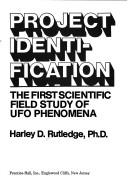
As an Amazon Associate, OverClassified may earn from qualifying purchases made through this link, at no extra cost to you.
Why This Is Essential Reading
Project Identification earns its place on this list not because its central claim has been vindicated — it has not, and Rutledge's own "intelligence equal to or greater than that of man" conclusion remains exactly as unreplicated and disputed today as when Jacques Vallée dismissed its author as "a confused local scientist" — but because the book itself is a genuinely rare artifact: a credentialed physics department chairman's own first-person, methodologically detailed account of trying, for nearly seven years and 427 logged observation-hours, to measure a UFO wave rather than simply believe or debunk it. Read against this site's own Piedmont Missouri Wave case file, which independently found that Vallée's specific critique leaned on a single disputed piece of evidence rather than a full engagement with Rutledge's broader field record, this book is the fuller, fairer hearing that record deserves — not a rebuttal of Vallée's skepticism in general, but a corrective to one specific, brief dismissal of a researcher whose actual seven-year body of work, on the evidence of the book itself, was more self-skeptical and more instrumented than that dismissal credited it with being. What is not in dispute, on this article's own research, is the book's afterlife as a working methodological model: cited by Hessdalen's own Norwegian researchers as their closest prior precedent, listed among the field's "Prominent Past Efforts and Individuals" in a 2025 physicist-authored survey, and still invoked today, under the shorthand "the Rutledge Blueprint," as the standard modern investigators with far better equipment have largely failed to match.
Related Cases & Theories
Essential Viewing
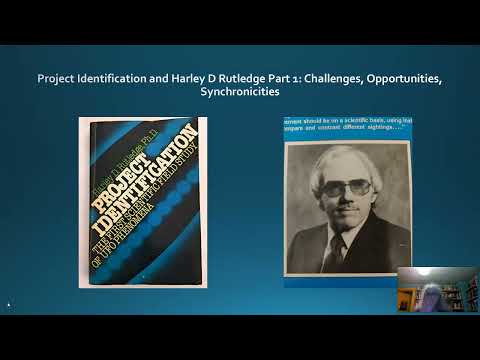
Project Identification and Harley D Rutledge Part 1: Challenges, Opportunities, Synchronicities
ProfessorWHAM — A detailed researcher deep-dive into Rutledge's background, the founding of Project Identification, and its early methodology, drawn from the same blog series cited throughout this article. Verified via YouTube oEmbed before inclusion.

Missouri Mysteries, Chapter Two - Unexplained Lights Near Piedmont, Missouri
State Historical Society of Missouri — The State Historical Society of Missouri's own oral-history documentary segment on the 1973 wave that prompted Rutledge's book, presented by historian Sean Rost. Verified via YouTube oEmbed before inclusion.
Sources Cited
- Rutledge, Harley D. Project Identification: The First Scientific Field Study of UFO Phenomena. Prentice-Hall, 1981 (ISBN 9780137307050 / 0137307055, matching this site's own case-file and theory-page citations under this exact edition). amazon.com
- Project Identification: The First Scientific Field Study of UFO Phenomena, full OCR text. Internet Archive. archive.org
- "Project Identification: the first scientific field study of UFO phenomena," scanned volume. Internet Archive. archive.org
- "Harley Rutledge." Wikipedia (biography: birth/death dates, education, academic career, Project Identification overview, publication details). en.wikipedia.org
- "Biography:Harley Rutledge." HandWiki. handwiki.org
- "Area UFO expert Dr. Harley Rutledge, 80, dies." Southeast Missourian. semissourian.com
- "MO UFOs... and Miracles." Vatican Observatory, Sacred Space Astronomy. vaticanobservatory.org
- "Project Identification." Anomaly Archives (holder of Rutledge's papers and related clippings, 1973–2006). anomalyarchives.org
- "Project Identification and Harley D Rutledge Part 1: Challenges, Opportunities, Synchronicities." ProfessorWHAM (biography, motivation, and founding of the Project, including the 1977 St. Louis Post-Dispatch quotation). professorwham.com
- "Project Identification Part 3: Phases 2 & 3, Ongoing Uncanny, A Family Affair, Vallee Gets It Wrong." ProfessorWHAM (direct engagement with Jacques Vallée's "confused local scientist" dismissal). professorwham.com
- "The First Scientific UFO Field Study." Podcast UFO (overview and legacy assessment). podcastufo.com
- "Dr. Harley Rutledge – A UFO Blueprint to Follow." In The Field (coining "the Rutledge Blueprint"; quotations on Rutledge's own reflections on the phenomenon's apparent "interaction" with observers). inthefield2017.weebly.com
- "Project Identification: The First Scientific Field Study of Ufo Phenomena." Goodreads (reader ratings: 3.75-star average). goodreads.com
- Knuth, Kevin H., et al. "The New Science of Unidentified Aerospace-Undersea Phenomena (UAP)." arXiv preprint 2502.06794, 2025 (Appendix A.14, "Dr. Harley Rutledge, Southeast Missouri State Univ.," among "Prominent Past Efforts and Individuals"). arxiv.org
- This site's own case file: Piedmont Missouri Wave (Case File #152), which lists this exact book as its single most important source and documents the full sighting-by-sighting record this article summarizes.
- This site's own essential-reading article: The Invisible College (ER-046), for Jacques Vallée's 1975 dismissal of Rutledge and this site's own independent assessment of that critique's evidentiary basis.
- This site's own theory file: The Egregore & Collective Thoughtform Hypothesis, which cites this book's "intelligence" conclusion as one of its strongest quasi-scientific data points.
- This site's own key-figures entry: Dr. Harley D. Rutledge, for his broader career background and this Project's place within it.
- This site's own resources library: Full Reading List, where this title is cited on the Piedmont Missouri Wave case file and the Earth Lights & Tectonic Strain Hypothesis theory page.
Have corrections, additional research, or peer-reviewed sources? Help improve this entry.
Suggest an Edit