
Project Delta
A Study of Multiple UFOs
Core Thesis
Project Delta: A Study of Multiple UFOs is Richard F. Haines's methodical 1994 study of UAP reports involving multiple simultaneous objects, written five years before he formally founded the National Aviation Reporting Center on Anomalous Phenomena (NARCAP) but drawing on the same aviation-safety-grounded methodology that would come to define his later work. As a former NASA Ames Research Center scientist with a Ph.D. in experimental psychology, Haines approaches multi-object sightings the way an aviation-safety investigator approaches an incident report: examining witness geometry, relative motion, and the specific difficulty of reconciling reported behavior with fixed celestial or conventional explanations. This site's own research draws on the book directly for two structurally similar pilot-reported cases three decades apart: the JAL 1628 incident (1986), where Haines's own published analysis is cited directly, and the 2018 Irish Airspace UFO Sightings, where the book provides a broader methodological framework for evaluating multi-witness aircrew reports.
About the Author
Richard F. Haines was a NASA Ames Research Center scientist from 1967 to roughly 1986–88, holding a Ph.D. in experimental psychology, before founding NARCAP in 1999–2000 to apply formal aviation-safety methodology to pilot and aircrew UAP reports. This book predates NARCAP's founding by five to six years, situating it within an earlier phase of his career in which he was already applying the same rigorous, psychology-and-perception-grounded analytical approach to individual cases on an independent basis.
This site's own key-figures entry documents Haines's direct involvement in several of its own case files: he led NARCAP's Technical Report #10, the only independent formal investigation of the November 2006 O'Hare International Airport sighting; conducted a December 1996 digital analysis of the sole surviving Norwood Searchlight Incident photograph; and, working independently of NASA in 1988, examined dust samples from the Knowles family's car after their Mundrabilla encounter. That sustained pattern of hands-on physical and photographic analysis, rather than purely theoretical writing, is the same evidentiary approach this earlier book applies to multiple-object sightings.
This site's own essential-reading library already documents Haines's later book Observing UFOs (1980), an earlier work in his published bibliography than this one; together the two titles bracket more than a decade of his sustained, methodologically consistent contribution to the field before NARCAP's formal establishment.
Historical Context & Origins
The book's 1994 publication places it in the mid-1990s period of UFO research in which several NASA-trained or NASA-affiliated scientists, Haines prominent among them, worked to apply formal scientific and aviation-safety methodology to a field still dominated by less rigorous approaches. Haines's own subsequent founding of NARCAP in 1999–2000 represented the institutional formalization of the same analytical framework this earlier book applies on a case-by-case basis.
This site's own JAL 1628 case file documents a November 17, 1986 incident, giving Haines roughly eight years to study and publish his own analysis of the case before this book's 1994 release — enough distance for a considered methodological treatment rather than a rushed contemporaneous reaction.
By contrast, this site's own 2018 Irish Airspace UFO Sightings case file describes events occurring 24 years after this book's publication, meaning the book could not and does not discuss that specific incident directly — its relevance there is methodological, offering a template for evaluating a case involving three separate aircrews independently reporting similar phenomena within minutes of each other, the same multi-witness convergence pattern the book's title subject directly addresses.
Core Arguments & Key Concepts
The book's central methodological contribution, reflected in its citation for the JAL 1628 case, is close geometric analysis of reported object motion relative to a witness's field of view: this site's own case file notes Haines "argued the reported relative motion of the lights across the crew's field of view was difficult to reconcile with a fixed planetary source" — a specific, falsifiable claim about observational geometry rather than a general assertion of anomalousness.
A second theme is that multiple-witness, multiple-object cases carry distinct evidentiary weight from single-witness sightings, since independent observers reporting compatible relative positions and movement patterns are harder to explain through simple misperception than a lone witness's account, even when each individual witness's perception remains imperfect.
A third theme, consistent with Haines's broader career pattern of hands-on case investigation rather than purely theoretical writing, is that aviation professionals — pilots and aircrew specifically — represent an unusually well-positioned witness population for evaluating aerial phenomena, given their trained observational habits and professional stake in accurate incident reporting, a principle that would later become NARCAP's institutional foundation.
A fourth theme is that conventional astronomical explanations, while frequently the correct and best-supported answer for reported aerial lights, require the same rigorous geometric and temporal verification as any other proposed identification — the book's treatment of the JAL 1628 case models testing a specific alternative (a fixed planetary source) against the actual reported motion pattern, rather than either accepting or dismissing the celestial explanation on general plausibility alone.
Key Cases & Evidence Discussed
The JAL 1628 incident (November 17, 1986) involved a Japan Air Lines Boeing 747 cargo flight crewed by Captain Kenji Terauchi, which reported an extended encounter with unidentified objects in the airspace near Fort Yukon, Alaska, en route to Anchorage at 35,000 feet. This site's own case file cites this book directly for Haines's own analysis arguing that the reported relative motion of the lights across the crew's field of view was difficult to reconcile with a fixed planetary source — a specific, geometrically grounded counterpoint to the case's leading skeptical explanation (Jupiter and Mars misidentification), applied by the book's author himself rather than a secondary commentator summarizing his work.
The 2018 Irish Airspace UFO Sightings (November 9, 2018) involved multiple commercial aircrews, including British Airways Speedbird94, independently reporting a very bright, fast-moving object in oceanic airspace off County Kerry, controlled by Shannon Air Traffic Control. This site's own case file cites this book not for direct coverage of the 2018 incident, which the book obviously predates by 24 years, but as "a NASA-trained scientist's methodical study of pilot-reported multiple-object UAP sightings, directly relevant to a case involving three separate aircrews independently reporting similar phenomena within minutes of each other."
Critical Reception & Controversies
This book has an unusually thin public review record: this site's research found only a single rating on Goodreads (5.00 out of 5, checked August 2026), too small a sample to represent any meaningful critical consensus and disclosed here honestly as such rather than presented as a genuine average.
This site's research attempted to verify an Amazon rating for this title but Amazon's bot-detection system repeatedly blocked automated requests to the listing during this session, returning a CAPTCHA challenge across multiple attempts. Per this site's own Amazon Rating Display Protocol, this gap is disclosed honestly here rather than fabricated or silently omitted.
As a specialist small-press title from LDA Press published three decades ago, the book's thin review record reflects the realities of niche self-published-style ufology titles from this period rather than any indication of the underlying scientific analysis's quality — Haines's own subsequent, decades-long career founding and leading NARCAP suggests his analytical methodology in this book held up well enough to become the basis of an entire aviation-safety-focused research organization five years later.
Influence & Legacy
The book's clearest documented legacy on this site specifically is Haines's own direct, cited analysis of the JAL 1628 case — not a secondary researcher summarizing the book's contents, but the book's author's own geometric argument against the leading conventional explanation, applied to one of the most extensively investigated multi-witness pilot sightings in the modern UAP literature.
As a work predating NARCAP's 1999–2000 founding, this book represents an early methodological building block toward Haines's later institutional legacy: the same rigorous, aviation-safety-grounded approach to multi-witness pilot testimony that this book applies case-by-case became NARCAP's formal, ongoing institutional mission five years later.
Within this site's own essential-reading library, this book joins Observing UFOs as the second Haines title documented, together spanning more than a decade of his sustained contribution to rigorous, psychology-and-perception-informed UAP case analysis before his NARCAP-era institutional work.
The Book
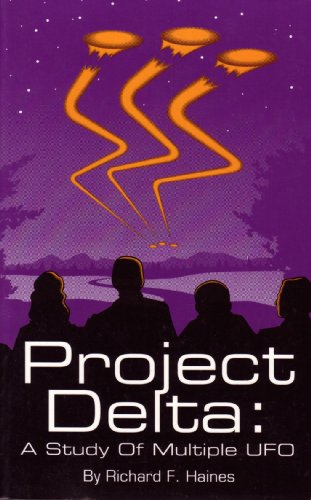
As an Amazon Associate, OverClassified may earn from qualifying purchases made through this link, at no extra cost to you.
Why This Is Essential Reading
Project Delta earns its place on this list as a methodologically rigorous study of multi-witness, multi-object UAP sightings, written by a former NASA scientist whose analytical approach would later become the institutional foundation of NARCAP. Haines's own geometric analysis of the JAL 1628 case — arguing the reported relative motion of the lights was difficult to reconcile with a fixed planetary source — gives this site's own case file a direct, author-sourced counterpoint to the leading skeptical explanation, while the same book's broader multi-witness framework proved methodologically relevant, 24 years later, to the 2018 Irish Airspace UFO Sightings. Its thin public review record reflects the realities of a specialist small-press title rather than any indication of analytical quality, especially given how directly its methodology anticipates Haines's later, more institutionally formal NARCAP work. Read as an early building block in Haines's broader aviation-safety-grounded research career, this book is essential because it applies the same evidentiary rigor to multiple-witness UAP testimony that his later, better-known institutional work would formalize.
Related Cases & Theories
Essential Viewing
Sources Cited
- Haines, Richard F. Project Delta: A Study of Multiple UFOs. LDA Press, 1994 (ISBN 0-9618082-4-1, cited here).
- "Project Delta-A Study of Multiple Ufo." Goodreads (rating 5.00/5 from 1 rating — too small a sample to represent meaningful consensus; checked August 2026). goodreads.com
- "Project Delta-A Study of Multiple Ufo." AbeBooks (ISBN 9780961808242, marketplace listing photograph used for this article's cover image; edition and page-count details). abebooks.com
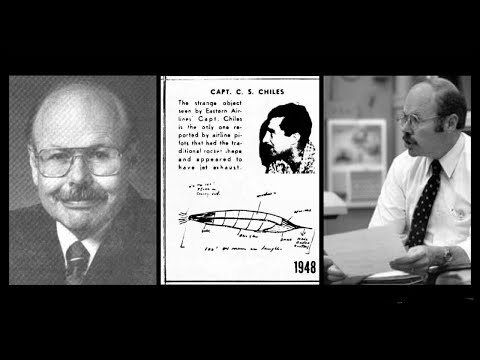
- "3000 pilot UFO reports investigated by scientific researcher Richard F. Haines." Eyes On Cinema, YouTube (video verified via oEmbed). youtube.com
- This site's own resources library: Full Reading List, where this exact 1994 edition is cited across 2 separate case-file pages.
- This site's own key-figures entry: Richard F. Haines, for his full biography and site-wide case connections.
- This site's own case file: JAL 1628, which cites this book for Haines's own relative-motion analysis.
- This site's own case file: 2018 Irish Airspace UFO Sightings, which cites this book for its multi-witness analytical framework.
- This site's own essential-reading entry: Observing UFOs, Richard Haines's earlier 1980 book.
- This site's own locations entry: Fort Yukon, Alaska, the site of the JAL 1628 encounter.
- This site's own locations entry: Shannon, Ireland, the air traffic control zone for the 2018 Irish sightings.
- "Japan Air Lines Cargo Flight 1628." Wikipedia (used lightly, for basic biographical and case cross-checking only; not relied upon for book content, which follows this site's own dedicated sources above). en.wikipedia.org
Have corrections, additional research, or peer-reviewed sources? Help improve this entry.
Suggest an Edit