
Need to Know
Timothy Good's Return to the Military and Intelligence Case File, Two Decades After Above Top Secret
Core Thesis
Need to Know: UFOs, the Military, and Intelligence — published in Britain by Sidgwick & Jackson in 2006 as A Need to Know and issued in the United States the following year by Pegasus Books — is Timothy Good's most direct return to the documentary, government-by-government method that made his 1987 Above Top Secret an international bestseller, applied now to nearly two further decades of material gathered since. Its argument is narrower and more granular than its predecessor's: rather than making the case for a worldwide cover-up in the abstract, the book works chronologically from the 1930s through the mid-2000s, installation by installation and document by document, to show one recurring pattern — unidentified craft repeatedly approaching military airfields, nuclear-missile complexes, and naval vessels, met each time by official reports that Good says were logged, investigated, and then buried. It was Good's seventh UFO book and, by his own literary agency's account, his first full new volume in six years, built to demonstrate that the case he first made in 1987 had not gone stale; it had simply kept accumulating paperwork.
About the Author
By the time Timothy Good published this book, nearly two decades after Above Top Secret first made him, in The Observer's phrase, "Britain's leading UFO researcher," he was no longer a violinist doing UFO research on the side — his full biography, including the London Symphony Orchestra years and the Above Top Secret origin story, is covered at length in this site's own Above Top Secret entry (ER-004). What's specific to this later book is the bibliography that had accumulated in between: Alien Liaison (1991), Beyond Top Secret (1996, an explicit revision and expansion of Above Top Secret), Alien Base (1998), and Unearthly Disclosure (2000, serialized in the Daily Mail) — and the standing that run of books had, by 2006, earned him within the field: a 1998 invitation to lecture at the Pentagon's Defense Airborne Reconnaissance Office and a 2002 lecture at French Air Force headquarters, both cited by his literary agency as evidence of institutional access few UFO authors of any era could claim.
Historical Context & Origins
This book arrived into a field whose landscape had shifted considerably since 1987. The Majestic 12 documents Good had helped introduce to the public in Above Top Secret were, by 2006, widely regarded as fabricated following the FBI's own November 1988 investigation; the U.S. Air Force had twice tried to close the book on Roswell with its 1994 and 1997 reports; and Good's own intervening titles — particularly Alien Base and Unearthly Disclosure — had drifted toward more speculative contact and liaison-program material than the source-driven approach that built his original reputation. Need to Know was explicitly positioned as a course correction back toward that earlier, document-anchored style, applied to material gathered across the six years since his previous book.
The specific sub-genre this book leans into most heavily — military and intelligence reports of unidentified craft over nuclear-weapons installations — was itself gaining a dedicated following in exactly this period. Robert Hastings, who had been compiling missile-site witness testimony since the 1970s, would publish his own single-subject volume, UFOs and Nukes, in July 2008 and stage a National Press Club event on the subject in September 2010. Good's book, arriving in between the underground researcher circuit's growing focus on this material and Hastings's later, more publicized formalization of it, functions as an early general-readership survey of a case file — nuclear-site intrusions specifically — that would soon become its own specialized literature.
Its publishing context also marked a step down from Above Top Secret's original run: where that book had appeared from William Morrow, a major New York trade house, this one was issued in the U.S. by Pegasus Books, a smaller press distributed through Consortium, reflecting UFO literature's more marginalized position in mainstream publishing by the mid-2000s even as cable documentary series on the same subject proliferated on the History Channel and elsewhere.
Core Arguments & Key Concepts
The book's central structure is a chronological survey of official military and intelligence encounters with the subject, opening with wartime "foo fighter" reports and Mussolini-era Italian air force interest in the 1930s, moving through the 1946 Scandinavian "ghost rocket" wave and the 1947 Roswell debris recovery, and continuing forward into the 2000s. Reviewers who examined the book at length noted its heavy reliance on footnoting and on reproduced photocopies or scanned government documents appended to individual chapters — the same documentary apparatus that gave Above Top Secret its original credibility, redeployed here across a far longer timeline.
Where Above Top Secret was organized primarily around land-based sightings and a single explosive documentary claim (Majestic 12), this book gives comparatively more space to naval and undersea material: reports from naval personnel of unidentified submarine objects (USOs), and accounts of unknown craft hovering at low altitude above aircraft carriers and destroyers, treated as part of the same pattern of officially witnessed but unacknowledged incursions.
Nuclear-weapons installations form the book's most sustained single thread, and the one with the clearest connection to this site's own case files: chapters devoted to reports of unidentified objects over American and international missile fields and airfields, including the 1967 Malmstrom AFB Echo and Oscar Flight shutdowns and reports connected to F.E. Warren Air Force Base, framed as part of a governmental pattern of monitoring and containing incidents at exactly the installations where an intrusion would carry the highest possible stakes.
The book's most speculative and most heavily criticized material concerns direct presidential contact: the book repeats claims that President Eisenhower met with extraterrestrial visitors at Edwards Air Force Base, California, in February 1954; that President Kennedy was shown the bodies of non-human occupants at a Florida Air Force medical facility; and that President Nixon arranged for entertainer Jackie Gleason to view alien remains in 1973. Good presents these accounts with the same footnoted, document-supported apparatus used throughout the rest of the book, a juxtaposition that later critics single out as the point where the book's evidentiary standards visibly slip.
The book also updates its case for the present moment with recent pilot testimony, including an account of a triangular craft that reportedly buzzed two commercial airliners approaching Dublin Airport closely enough to damage one aircraft — presented as evidence that the pattern the book traces back to the 1930s was, as of the mid-2000s, still actively unfolding rather than a closed historical question.
Key Cases & Evidence Discussed
The book's treatment of nuclear-installation intrusions draws this site's own Malmstrom AFB Missile Shutdowns entry (Case File #092, March 1967) directly into its narrative, situating the Echo and Oscar Flight shutdowns within a broader pattern of military reports at missile complexes worldwide rather than treating Malmstrom as an isolated American anomaly.
This site's own Warren AFB Nuclear Silo Intrusion entry (Case File #119, August 1965) is cited on this site directly in connection with this book, reflecting the same nuclear-site emphasis: the August 1965 Blue Book memorandum documenting objects over F.E. Warren's Quebec Flight launch complex, preserved today largely because Dr. J. Allen Hynek published it in his own 1972 book.
This site's own UFOs & Nuclear Weapons theory page cites this book directly for its early general-readership compilation of governmental directives and classified communications regarding nuclear-installation intrusions — the same territory Robert Hastings would formalize into a dedicated single-subject book the following year.
The book's opening chapters revisit the 1947 Roswell Incident and the broader Cold War-era wave material Good had already covered in Above Top Secret, now folded into this book's longer chronological sweep rather than presented as new research — a continuity with his first book this article's Critical Reception section treats as a genuine point of contention among reviewers.
Critical Reception & Controversies
Kirkus Reviews, assessing the book on its December 2007 release, called it "an obsessively researched look" at what Good presents as ample international evidence of UFO visitation since the 1930s, concluding that "the author certainly knows his stuff, and to his credit is keenly aware of the importance of documentation, however specious some of it may seem" — a review that, much like Kirkus's own earlier assessment of Above Top Secret, credits the research effort while withholding endorsement of the conclusions.
Publishers Weekly, reviewing the book on September 24, 2007, called it "exhaustive and provocative," noting that Good marshals "hundreds of sightings" and declassified government reports in support of dramatic claims including alleged presidential contact with extraterrestrials. The review's central criticism was direct: Good "fails to provide incontrovertible evidence of UFOs, extraterrestrials or a global conspiracy," and "ignores contradictory testimony, exaggerates rumors and circumstantial evidence, and reprises old charges." It concluded that "UFO enthusiasts will appreciate this comprehensive and spirited UFO defense and the hundreds of supporting documents reproduced within" — praise calibrated specifically for an already-sympathetic readership.
Writing for Blogcritics on April 23, 2009, reviewer Glen Boyd was considerably more favorable, calling the book "basically an update on Above Top Secret, and... no less impressive," and crediting Good with having "once again distinguished himself with another classic that lets the facts speak for themselves, and allows the reader to render their own judgment." Boyd's review leaned heavily on the reputation Above Top Secret had already built, treating this book's research standard as a continuation of that earlier credibility rather than assessing it independently.
A more skeptical retrospective assessment, published on the blog Jumbled Thoughts of a Fake Geek Boy in September 2020, took the opposite view of that same continuity. The reviewer described the book as "a broadly chronological history of military and intelligence agency interest in UFOs from Mussolini's Italy up to the present day," but characterized it substantially as a restatement of Good's own earlier work — useful, in the reviewer's assessment, mainly for readers unable to obtain his out-of-print earlier titles, rather than as a genuinely new investigation. The review identified a recurring temporal-bias problem (most accounts tracing back to the 1950s UFO flap, with corroborating testimony often surfacing decades after the fact), noted that Good continued citing the Majestic 12 documents despite their by-then well-established status as fabrications, and concluded that the book ultimately reflects "a need to believe" rather than a rigorous evidentiary standard.
The book's own promotional blurbs, drawn from within the UFO-research press rather than mainstream review outlets, ran in the opposite direction: UFO Digest called it "one of the best books on this subject," and Eye Spy magazine described it as "clearly the best book to have been published on this phenomenon in two decades" — the kind of publisher-selected praise that, as with the jacket blurbs on Above Top Secret two decades earlier, represents the field's own favorable reception rather than independent critical assessment.
Influence & Legacy
Within organized ufology specifically, the book earned Good a platform at MUFON's own symposium circuit, where he presented its central nuclear-installation and military-intelligence material directly to the organization's membership — a modest but genuine continuation of the standing Above Top Secret had established for him within the field two decades earlier.
The book's reach extended well past its original 2006/2007 hardcover printings: it was later issued in a digital audiobook edition, extending its availability into the 2020s podcast-and-audiobook UFO-media ecosystem that Above Top Secret's own original readership could not have anticipated.
Read against Good's full bibliography, this book occupies a specific transitional position: his last full-length volume built primarily around the documentary, footnoted military-and-intelligence-report method that made his name, before his final book, Earth: An Alien Enterprise (2013), moved further into explicitly exotic contact and alleged human-alien "liaison programme" territory. Read that way, Need to Know is less a sequel to Above Top Secret than its last full echo — the final time Good built an entire book around the specific claim that started his career: that the paperwork, if you looked hard enough, was already there.
Within this site's own coverage, the book's persistent citation in connection with Cold War-era nuclear-missile-site incidents — rather than with any of Good's more speculative later claims — reflects where its material has proven most durably useful to later researchers: not the Eisenhower or Jackie Gleason stories, which found little independent traction, but the Malmstrom- and Warren-adjacent military documentation that anticipated Robert Hastings's own more focused nuclear-site research the following year.
The Book
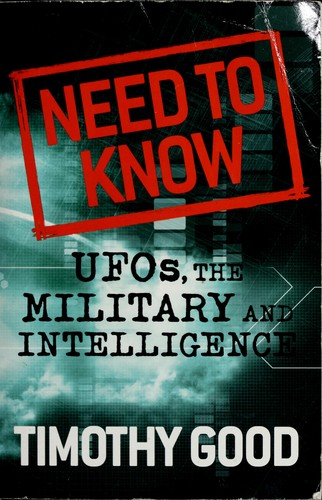
Need to Know
Timothy Good's Return to the Military and Intelligence Case File, Two Decades After Above Top Secret
Find on Amazon →As an Amazon Associate, OverClassified may earn from qualifying purchases made through this link, at no extra cost to you.
Why This Is Essential Reading
Need to Know earns its place on this list not as a match for Above Top Secret's originality or impact — it isn't one, and reviewers from Kirkus to a 2020 retrospective critic said so plainly — but as the clearest available record of where Timothy Good's specific documentary method led when applied to two more decades of nuclear-installation, naval, and pilot testimony after his first book made his name. Its genuine research effort is real: the footnoting, the reproduced government documents, and the specific through-line to this site's own Malmstrom AFB and Warren AFB case files all reflect the same source-gathering persistence that built Good's original reputation. Its flaws are equally real and shouldn't be waved away by that persistence: a continued reliance on the discredited Majestic 12 documents, a genuine recycling of material from Good's own out-of-print earlier books, and a presidential-contact narrative — Eisenhower at Edwards, Kennedy in Florida, Nixon and Jackie Gleason — presented with the same documentary confidence as its more restrained nuclear-site material despite resting on far thinner evidentiary ground. Read it as what a career UFO researcher's case looks like two decades in: not a new argument, but the same argument, considerably more heavily footnoted and considerably harder to fully believe.
Related Cases & Theories
Essential Viewing
Need to Know: UFOs, the Military, and Intelligence — MUFON Symposium
UFO Central — Timothy Good presents the specific nuclear-installation and military-intelligence case material from this book directly to a MUFON symposium audience. Verified via YouTube oEmbed before inclusion.
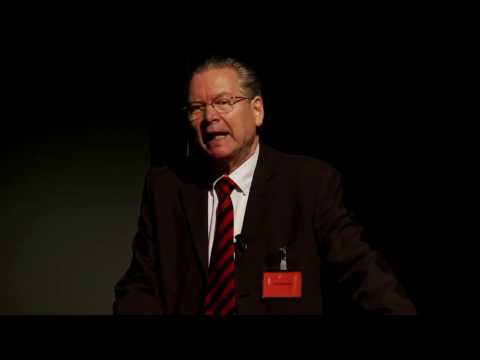
Timothy Good — Need To Know
i_o — A recorded talk by Timothy Good discussing the research behind this book. Verified via YouTube oEmbed before inclusion.
Sources Cited
- Good, Timothy. Need to Know: UFOs, the Military, and Intelligence. Pegasus Books, 2007 (ISBN 9781933648385 / 1933648384, matching this site's own resources library and Malmstrom/Warren AFB case-file citations under this exact edition). amazon.com
- "A Need to Know: UFOs, the Military and Intelligence." AbeBooks (bibliographic listing, Sidgwick & Jackson, 2006 UK first edition, ISBN 0283070374). abebooks.com
- "Need to Know." Andrew Lownie Literary Agency (official author representation; publisher blurbs from UFO Digest and Eye Spy; UK/US/foreign publication details). andrewlownie.co.uk
- "Need to Know." Kirkus Reviews, December 2007. kirkusreviews.com
- "Need to Know: UFOs, the Military and Intelligence." Publishers Weekly, September 24, 2007 (ISBN 978-1-933648-38-5). publishersweekly.com
- Boyd, Glen. "Book Review: Need to Know — UFOs, the Military, and Intelligence by Timothy Good." Blogcritics, April 23, 2009. blogcritics.org
- "Timothy Good's History of Extraneous Knowledge." Jumbled Thoughts of a Fake Geek Boy (blog), September 15, 2020 (retrospective critical assessment of Need to Know and Good's later bibliography). fakegeekboy.wordpress.com
- "Timothy Good." Wikipedia (biography, full bibliography with publication years). en.wikipedia.org
- "Robert Hastings (ufologist)." Wikipedia (publication of UFOs and Nukes, July 2008, and the September 2010 National Press Club press conference, cited here for this book's historical positioning relative to that later, more specialized nuclear-site literature). en.wikipedia.org
- "Earth: An Alien Enterprise: The Shocking Truth Behind the Greatest Cover-Up in Human History." Amazon.com product listing (Pegasus Books, 2013; cited here for this book's contents relative to Need to Know's more restrained documentary method). amazon.com
- This site's own case file: The Malmstrom AFB Missile Shutdowns (Case File #092), which cites this exact book and edition directly.
- This site's own case file: Warren AFB Nuclear Silo Intrusion (Case File #119), which cites this exact book and edition directly.
- This site's own theory page: UFOs & Nuclear Weapons, which cites this book directly in connection with the Malmstrom AFB case.
- This site's own essential-reading entry: Above Top Secret (ER-004), for Timothy Good's full biography and his first book's own critical reception and legacy.
- This site's own key-figures entry: Timothy Good, for his full biography and further case connections.
- This site's own resources library: Full Reading List, where this exact 2007 edition (ISBN 1933648384) is cited in connection with the Warren AFB nuclear-installation case files.
Have corrections, additional research, or peer-reviewed sources? Help improve this entry.
Suggest an Edit