
Hunting Marfa Lights
An Eight-Year Investigation of West Texas's Best-Known Nocturnal Light Phenomenon
Core Thesis
Hunting Marfa Lights is James Bunnell's 2009 account of his eight-year (2001-2009) instrumented field study of the Marfa Lights near Marfa, Texas -- three automated monitoring stations with a total of nine cameras, 34 firsthand witness accounts, and over 120 photographs, concluding that roughly 3% of captured light events remain unexplained by conventional sources such as distant vehicle headlights. This is the first of three Bunnell books this site treats as distinct, non-redundant Essential Reading entries: this one presents his original data and methodology; a 2015 sequel, Strange Lights in West Texas, extends the research to comparable phenomena beyond Marfa; and a 2021 book, In Defense of the Marfa Lights, directly rebuts a Texas State University team's later studies attributing most observed lights to automobile headlights.
About the Author
This site's own James Bunnell key-figures entry already documents him as a Marfa, Texas native with 37 years in the aerospace industry, including service on the launch support team for every crewed Apollo mission from 1968 to 1973. This article's own research adds that he retired in 2000 from BAE Systems as Director of Mission Solutions for Air Force programs, and holds an engineering degree from New Mexico State University with graduate study in aviation systems and psychology -- credentials this article notes with medium confidence, sourced from a single secondary biography page rather than independently cross-confirmed, unlike the Apollo and BAE Systems details, which two independent sources (the book's own publisher description and its trade review) corroborate directly.
This article's own research found that Hunting Marfa Lights was not literally Bunnell's first publication on the subject: he had already self-published two shorter, earlier works, Seeing Marfa Lights and Night Orbs, through the same small press. This does not change this site's framing of Hunting Marfa Lights as the first major, full-data book in his bibliography -- it remains the founding text of the trilogy this site is covering -- but readers researching his full output should be aware these two shorter, earlier titles exist outside the three-book set this site treats as its core Marfa Lights coverage.
Historical Context & Origins
This article's own research confirms Bunnell's instrumentation went well beyond simple photography: the book's own publisher description confirms three automated monitoring stations with nine cameras for continuous nightly video, and a related published field study describes a fuller kit including magnetometers, VLF receivers, radioactivity detectors, a weather station, and, for a documented 20-night sub-study, a Schmidt-Cassegrain telescope fitted with a CCD-array spectrometer for continuous spectroscopy alongside computer-logged azimuth and altitude tracking. This article treats the nine-camera, three-station detail as confirmed directly from the book's own description, but flags the fuller instrument list as medium confidence, since it was not independently confirmed to appear inside this specific book's text rather than in Bunnell's related published research.
This article was not able to independently confirm whether the book directly engages by name with earlier Marfa Lights literature such as Elton Miles's Tales of the Big Bend or the historical Robert Ellison campfire-origin account -- both well-documented as part of the phenomenon's general background, but not confirmed as specifically discussed within this book's own text during this article's research. Readers wanting that level of textual precision should consult the book directly.
Core Arguments & Key Concepts
The book's structure, per its own trade review and multiple reader accounts, moves through Bunnell's investigative process itself -- his early trial-and-error establishing reliable instrumentation, his data and charts, a discussion weighing competing explanatory hypotheses including atmospheric temperature-inversion mirages, and a closing appendix presenting the 34 firsthand witness accounts as source material rather than folding them into the main narrative.
The book's central statistical claim, consistent with this site's own case-file framing, is that the great majority of captured light events -- one reader review cites a 97% figure -- are attributable to mundane sources, primarily distant vehicle headlights on Highway 67, while a small residual percentage resist that explanation under Bunnell's own instrumented review. This article presents that 97%/3% split as Bunnell's own conclusion rather than an independently adjudicated fact, consistent with this site's broader framing of the case as actively disputed.
Key Cases & Evidence Discussed
This site's own Marfa Lights case file documents the phenomenon's full history -- including the later Texas State University spectroscopic and radiometric studies led by Karl D. Stephan, on which Bunnell himself later collaborated as a co-author -- in far greater depth than this single book allows. Readers wanting the complete, contested record, including the case's own "solved by headlights" versus residual-anomaly dispute, should consult that case file directly.
This site's own Brown Mountain Lights case file documents a comparable, long-studied persistent nocturnal light phenomenon in North Carolina, useful direct comparison for readers weighing how similar instrumented and folkloric-origin disputes play out at a different long-running American light-anomaly site.
Critical Reception & Controversies
This article directly retrieved the book's Foreword Reviews (Clarion Reviews) notice, written by Julia Ann Charpentier and dated May 18, 2010. It calls the book "a scholarly evaluation that provides essential and nonessential details of Bunnell's work," states his "research methods are sound, based on an eight-year examination," and concludes it "should be required reading for anyone interested in learning about Marfa lights" and "a worthwhile contribution to the ongoing scientific studies." The same review is not uncritical: it specifically dings the book's production values, asking readers to "overlook the poor production quality of the 120 black and white photographs and illustrations," calling the cover design "unattractive," and noting "greater care could have been taken in editing the manuscript."
As of this article's research (August 2026), the book holds a strong 4.5-out-of-5 rating on Amazon from 14 ratings, with reviewers consistently describing it as methodical and engineering-minded ("very well documented and meticulously researched"), though one two-star review found it too technical and dry relative to an expectation of folkloric storytelling. Goodreads shows a lower, more mixed 3.16-out-of-5 average from a larger base of 19 ratings -- this article reports both figures rather than citing only the more favorable one. This article found no evidence of mainstream press coverage at the book's 2009 launch; its reception appears limited to this one trade review and reader response within the UFO and paranormal research community, well before the Texas State University studies that would later complicate its reception.
Influence & Legacy
The book's most concrete legacy is that it prompted, or at minimum directly preceded, a genuine academic engagement with the Marfa Lights: Bunnell went on to co-author peer-reviewed studies with Texas State University physicist Karl D. Stephan and colleagues, published in the American Journal of Physics (2009) and the Journal of Atmospheric and Solar-Terrestrial Physics (2011) -- a rare instance of an independent instrumented UFO-adjacent study leading directly to mainstream academic-journal collaboration, documented in full on this site's own Marfa Lights case file.
Set alongside this site's own case file and its own two sequel books, this book's legacy is best understood as the opening move in an ongoing, still-unresolved dispute -- the founding data set that both Bunnell's own later rebuttal and the university's own "solved by headlights" conclusion are each, in their own way, responding to.
The Book
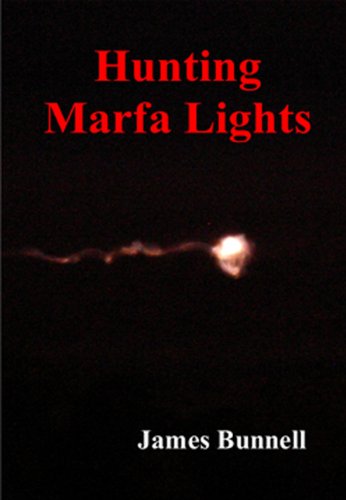
Hunting Marfa Lights
An Eight-Year Investigation of West Texas's Best-Known Nocturnal Light Phenomenon
Find on Amazon →As an Amazon Associate, OverClassified may earn from qualifying purchases made through this link, at no extra cost to you.
Why This Is Essential Reading
Hunting Marfa Lights earns its place on this reading list as the founding text of James Bunnell's three-book Marfa Lights project -- an engineer's eight-year instrumented study that a contemporary trade review called "required reading" despite dinging its production quality, and which directly preceded genuine peer-reviewed academic engagement with the phenomenon. Read alongside this site's own Marfa Lights case file, which documents the full, still-disputed record including the Texas State University studies this book's later sequel would go on to rebut, it remains valuable as the original data set at the center of an argument that continues today.
Related Cases & Theories
Sources Cited
- Bunnell, James. Hunting Marfa Lights. Lacey Publishing Company, 2009 (ISBN 978-0-9709249-4-0, cited here).
- Charpentier, Julia Ann. "Hunting Marfa Lights." Foreword Reviews (Clarion Reviews), May 18, 2010 -- full text directly retrieved for this article. forewordreviews.com
- Amazon product listing for Hunting Marfa Lights (ISBN 0970924941), publisher description, author biography, and rating (4.5/5, 14 ratings, checked August 2026). amazon.com
- Goodreads listing for Hunting Marfa Lights (rating 3.16/5, 19 ratings). goodreads.com
- Internet Archive, digitized copy of Hunting Marfa Lights. archive.org
- This site's own James Bunnell key-figures entry (his Apollo-era aerospace career and full Marfa Lights research history).
- This site's own Karl D. Stephan key-figures entry (the Texas State University physicist Bunnell later co-authored peer-reviewed studies with).
- This site's own Marfa Lights case file, full sourcing on the phenomenon, the university studies, and the ongoing dispute.
- This site's own Marfa, Texas location entry.
- This site's own Brown Mountain Lights case file (Case File #297), a comparable long-running instrumented light-phenomenon dispute.
- Bunnell, James, Karl D. Stephan, Sagar Ghimire, and William A. Stapleton. "Optical spectrum analysis of the Marfa lights." American Journal of Physics 77, no. 8 (2009): 685-691 -- Bunnell's own later peer-reviewed collaboration, cited here for author-background verification.
- This site's own resources library: Full Reading List.
Have corrections, additional research, or peer-reviewed sources? Help improve this entry.
Suggest an Edit