
Forbidden Science 2
California Hermetica, The Journals of Jacques Vallée 1970–1979
Core Thesis
Forbidden Science 2: California Hermetica is the second installment of Jacques Vallée's multi-volume published diary, covering his own contemporaneous day-to-day notes, correspondence, and observations from 1970 through 1979 — a decade in which he was simultaneously building a career in Silicon Valley computer networking and continuing his private UFO research on both sides of the Atlantic. Unlike Vallée's argument-driven books, this volume makes no thesis of its own; its value to this site's own research is as a primary-source record of exactly the period in which France's GEPAN was founded and finding its institutional footing, giving this site's own Fauville-Évreux radar sighting (1978) and Montayral aerodrome object case files a first-person window, respectively, into the agency's earliest working year and its founding context decades before it would investigate a case of its own.
About the Author
Jacques Vallée (b. 1939) is a French-American astronomer, computer scientist, and one of the field's most intellectually rigorous researchers, and a protégé of J. Allen Hynek. He co-developed the "interdimensional hypothesis," analyzed isotopic ratios of anomalous materials at Stanford, served as a consultant to the Advanced Aerospace Threat Identification Program (AATIP), and was the inspiration for the character Lacombe in Close Encounters of the Third Kind.
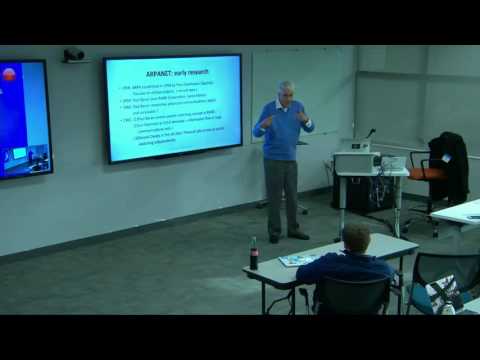
The specific decade this volume covers, 1970–1979, was also the decade of Vallée's deepest immersion in early computer networking: after joining Douglas Engelbart's Augmentation Research Center at SRI International following his 1969 move to Stanford, he went on to serve as a senior research fellow at the Institute for the Future from 1972 to 1976, where he succeeded Paul Baran as principal investigator on an early ARPANET conferencing system, the Planning Network (PLANET) — work he later discussed publicly at a LinkedIn Engineering "SRE Tech Talk" decades afterward. California Hermetica's subtitle reflects that this same period found him moving in Bay Area circles where, as the book's own framing describes it, "the Human Potential Movement emerged, the Internet developed, and parapsychology secretly entered the physics laboratory" — a reference to the Stanford Research Institute remote-viewing research conducted concurrently by physicists Hal Puthoff and Russell Targ, work Vallée's own journals from this period record him observing at close range.
This is the second of six volumes in the Forbidden Science series, following Forbidden Science 1: A Passion for Discovery (covering 1957–1969) and preceding Forbidden Science 3: On the Trail of Hidden Truths (1980–1989) and Forbidden Science 4: The Spring Hill Chronicles (1990–1999). The first three volumes were originally self-published in limited, expensive hardcover editions before Anomalist Books released this more widely accessible paperback edition in 2017, the same year as Volume 3.
Historical Context & Origins
The decade this volume covers opens in the immediate aftermath of Vallée's first two books, Anatomy of a Phenomenon (1965) and Passport to Magonia (1969), and closes just before he would begin the Alien Contact Trilogy that eventually included Dimensions. In between, his own journal entries track a working life split between mainstream Silicon Valley computer science and a private, largely unpublicized continuation of UFO fieldwork — a duality the book's own "forbidden science" title is meant to capture directly: research conducted seriously, but kept apart from a researcher's public professional identity.
In France specifically, this same decade saw the UFO research landscape shift from purely private, amateur investigation toward a formal government mandate: on March 23, 1977, CNES engineer Claude Poher established the Groupe d'études des phénomènes aérospatiaux non identifiés (GEPAN) at the agency's Toulouse headquarters — the world's first permanent state scientific body dedicated to investigating UAP reports. Vallée, as a French-born researcher with an already-international reputation and extensive contacts within both the French scientific establishment and the ufological research community, was well positioned to observe and record GEPAN's founding and early institutional growing pains as they happened, rather than reconstructing them retrospectively.
This site's own Fauville-Évreux radar sighting case file documents an April 1978 report investigated by GEPAN when the agency was barely thirteen months old, under Poher's own direction until his December 30, 1978 resignation — placing that specific investigation squarely within the exact years this journal volume covers. The Montayral aerodrome object case, by contrast, was not investigated until 2015, decades after this book's own coverage ends in 1979; that case file cites this book not for any direct discussion of its own 2015 sighting, which the journal obviously could not anticipate, but for the institutional background it provides on the agency — by then reorganized twice, first as SEPRA and then as GEIPAN — that would eventually investigate it.
Core Arguments & Key Concepts
As a published diary rather than a structured argument, this book does not build toward a single thesis the way Vallée's analytical works do. Its organizing principle is chronological, dated-entry immediacy: observations, meetings, and reflections recorded close to the time they occurred, preserved largely as written rather than smoothed into retrospective narrative. This site's own research treats that structural honesty as the book's chief evidentiary value — a contemporaneous record is harder to unconsciously revise around later knowledge than a memoir written decades after the fact.
A recurring theme across the volume is the parallel between Vallée's mainstream computer-science career and his private UFO research, developed alongside each other rather than in sequence: his own journal entries move between ARPANET conferencing-system work at the Institute for the Future and correspondence with European ufologists and scientists within the same stretches of narrative, without treating either strand as more legitimate than the other.
A second theme is the book's documentation of the Human Potential Movement and Bay Area parapsychology research as a shared cultural and institutional milieu with 1970s ufology — the same period and, in some cases, the same individuals moved between remote-viewing research at SRI, encounter-group and consciousness-research circles, and UFO investigation, a convergence the book's own subtitle, "California Hermetica," is meant to evoke directly.
A third theme, most directly relevant to this site's own French case files, is the book's firsthand documentation of the European — and specifically French — ufological and scientific establishment during precisely the years GEPAN was being founded and finding its footing, giving readers access to Vallée's own contemporaneous impressions of that institutional shift rather than a later official history reconstructed from GEPAN's own published records alone.
Key Cases & Evidence Discussed
The Fauville-Évreux radar sighting (Case File #258, April 1978) at Évreux Air Base, France, involved a duty officer tracking a fading red light for sixteen minutes while the base radar logged a faint, matching echo. GEPAN — barely a year old at the time, still under founding director Claude Poher until his resignation that December — tested and rejected helicopter, balloon, and Venus as explanations, ultimately classifying the case D1 (unexplained, medium consistency) after the second radar station that might have corroborated the echo stayed silent and its own recording was never kept. This site's own case file cites this book for Vallée's "direct correspondence and dealings with the French ufological and scientific establishment as GEPAN was being founded and finding its footing" — contemporaneous, firsthand institutional context published decades before GEIPAN's own later digitization of the case file for public access.
The Montayral aerodrome object (Case File #246, October 23, 2015) at the Fumel–Montayral aerodrome in Montayral, Lot-et-Garonne, involved a sole witness who watched a motionless, silent "black spot in a black fog" with an arc-shaped protrusion hold position for roughly twenty minutes before vanishing. GEIPAN — GEPAN's institutional descendant, by then reorganized twice — tested six candidate explanations, retained none with confidence, and classified the case D1 after referring it to its own college of outside experts. This site's own case file cites this book not for any discussion of the 2015 sighting itself, decades outside the volume's own 1970–1979 coverage, but as useful institutional background on the agency's founding-era origins under Poher, the same institutional lineage this book documents firsthand from its earliest years.
Critical Reception & Controversies
On Goodreads, the book carries a strong 4.42-out-of-5 average from 52 ratings (checked August 2026). One reviewer wrote that "whether your interests lie in the paranormal, the technological, or the political... Vallee seems to have his fingers on the pulse of the decade," while another noted more measuredly that readers "can find some gems hidden away here and there" among the book's "reflections on the UFO and parapsychological establishment."
This site's research attempted to verify an Amazon rating for this title but Amazon's bot-detection system repeatedly blocked automated requests to the listing during this session, returning a CAPTCHA challenge across multiple attempts. Per this site's own Amazon Rating Display Protocol, this gap is disclosed honestly here rather than fabricated or silently omitted.
As a raw, largely unedited personal diary rather than a polished narrative, the book carries an inherent limitation this site's own research treats as worth stating plainly: entries reflect Vallée's own contemporaneous impressions and secondhand accounts as he recorded them at the time, not independently verified fact in every instance, and readers seeking a structured argument or definitive conclusions about any single case will find this volume's diary format offers atmosphere and institutional texture rather than resolution.
Influence & Legacy
The book's clearest documented value on this site specifically is as a primary-source institutional record: two case files fourteen years apart in publication (2018 and 2024 respectively for GEPAN/GEIPAN's public case archive, describing sightings 37 years apart in occurrence, 1978 and 2015) both draw on this same volume's firsthand account of GEPAN's founding period, reflecting its durability as a reference point for understanding the agency's earliest institutional character.
As the second installment of a six-volume series this site's own essential-reading library is gradually documenting — alongside UFO Chronicles of the Soviet Union and Vallée's other major works — this book extends the site's coverage of Vallée's full published output beyond his argument-driven analytical books into his primary-source journal record, a genuinely distinct category of evidence within his bibliography.
The book's broader legacy within ufology rests on its status, alongside its companion volumes, as one of the few extended firsthand documentary records of the field's working culture during a specific historical period, written by a participant with unusually broad access across national research communities, computer science, and parapsychology — a vantage point few other single-author journals in the field can claim.
The Book
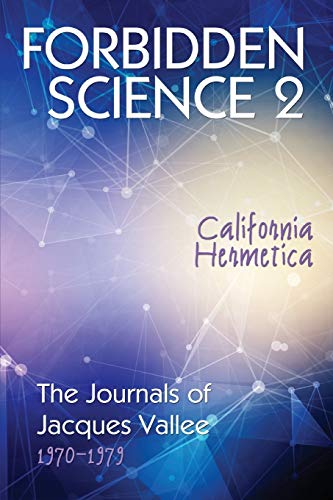
As an Amazon Associate, OverClassified may earn from qualifying purchases made through this link, at no extra cost to you.
Why This Is Essential Reading
Forbidden Science 2: California Hermetica earns its place on this list as a primary-source institutional record of exactly the decade France's GEPAN was founded, offering this site's own research a firsthand, contemporaneous window into the agency's earliest years that no later official history can fully replace. Vallée's own journal entries from this period, moving between his Silicon Valley computer-networking career and his private European UFO research, ground this site's own Fauville-Évreux radar sighting case file directly within GEPAN's first working year, while the same institutional history proved useful, decades later, as background for the Montayral aerodrome object case investigated by GEPAN's institutional descendant. Its strong 4.42/5 Goodreads reception reflects a book readers continue to value for its unfiltered, decade-spanning texture. Read as a primary source rather than an argument, this book is essential because it lets readers observe GEPAN's founding-era French ufological establishment through the eyes of someone who was actually there, recording it as it happened rather than reconstructing it afterward.
Related Cases & Theories
Essential Viewing
Sources Cited
- Vallée, Jacques. Forbidden Science 2: California Hermetica, The Journals of Jacques Vallee 1970–1979. Anomalist Books, 2017 (ISBN 1-938398-77-7, cited here).
- "Forbidden Science 2: California Hermetica." Goodreads (rating 4.42/5, 52 ratings, checked August 2026). goodreads.com
- "Forbidden Science 2: California Hermetica, the Journals of Jacques Vallee 1970-1979." AbeBooks (ISBN 9781938398773, marketplace listing photograph used for this article's cover image; publisher and page-count details). abebooks.com
- "Forbidden Science: Take an Inside Look at the World of Ufology via the Journals of Jacques Vallee." The Daily Grail, 2017 (contemporary review discussing the book's Human Potential Movement, ARPANET, and parapsychology themes). dailygrail.com
- "Forbidden Science — Journals of Jacques Vallee." Anomaly Archives (series overview, self-publication and reissue history for Volumes 1–4). anomalyarchives.org
- "SRE Tech Talk -- Jacques Vallee." LinkedIn Engineering, YouTube (video verified via oEmbed; Vallée's own account of his ARPANET-era SRI and Institute for the Future work). youtube.com
- This site's own resources library: Full Reading List, where this exact 2017 edition is cited across 2 separate case-file pages.
- This site's own key-figures entry: Jacques Vallée, for his full biography and site-wide case connections.
- This site's own case file: Fauville-Évreux Radar Sighting, which cites this book for GEPAN's founding-era institutional context.
- This site's own case file: Montayral Aerodrome Object, which cites this book for GEPAN's founding institutional lineage.
- This site's own key-figures entry: Claude Poher, GEPAN's founding director, whose 1977 establishment of the agency this book documents contemporaneously.
- This site's own locations entry: Toulouse, France (CNES), GEPAN's founding headquarters.
- This site's own essential-reading entry: UFO Chronicles of the Soviet Union, another of Vallée's books in this site's essential-reading library.
- "Jacques Vallee." Wikipedia (used lightly, for basic biographical cross-checking of his SRI and Institute for the Future career only; not relied upon for book content, which follows this site's own dedicated sources above). en.wikipedia.org
- GEIPAN (Groupe d'études et d'informations sur les phénomènes aérospatiaux non identifiés). Official case archive, CNES. cnes-geipan.fr
Have corrections, additional research, or peer-reviewed sources? Help improve this entry.
Suggest an Edit