
Field Guide to Meteors and Meteorites
The Patrick Moore Practical Astronomy Series
Core Thesis
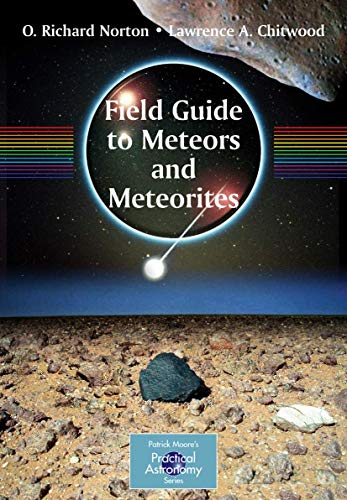
Field Guide to Meteors and Meteorites is a 2008 technical reference by astronomer O. Richard Norton and geologist Lawrence Chitwood, published in Springer's Patrick Moore Practical Astronomy Series. Unlike a general sky-phenomenon identification guide, this book is a specialist's dual reference covering both the observational science of watching meteors in flight and the practical, hands-on work of locating, preparing, and analyzing recovered meteorites -- equipment, technique, trajectory calculation, and material identification presented together as two halves of a single professional discipline. This site's own research draws on it directly for two case files: the Green Fireballs of 1948, where it informs an evaluation of meteor astronomer Lincoln La Paz's own professional objections to the conventional meteor explanation, and the Angoulême Daylight Ovoid, where it bears on GEIPAN's own unconfirmed Perseid-meteor hypothesis.
About the Author
O. Richard Norton (1937-2009) was an American astronomer and science communicator whose career centered on public astronomy education rather than academic research alone. He directed planetariums at the Griffith Observatory in Los Angeles, the Morrison Planetarium in San Francisco, the Fleischmann Planetarium in Reno, and the Flandrau Planetarium at the University of Arizona, later teaching at Central Oregon Community College.
Norton's specific introduction to meteoritics came directly from Frederick C. Leonard, co-founder of the Meteoritical Society, while Norton studied astronomy at UCLA -- at Leonard's own suggestion, he changed the ordering of his name from Richard O. Norton to O. Richard Norton. That direct professional lineage back to one of meteoritics' founding figures runs through his entire subsequent publishing career: The Planetarium and Atmospherium (1969), Rocks from Space (1994), The Cambridge Encyclopedia of Meteorites (2002), and finally this 2008 field guide, co-authored with Chitwood, a geologist whose own background grounds the book's practical meteorite-identification content in real field methodology.
This site's own research located comparatively little independent biographical detail on Chitwood specifically, consistent with his apparent role as the book's practical, field-methodology co-author working alongside Norton's more publicly visible planetarium-education career -- a common and unremarkable division of labor in co-authored technical field guides, where one author brings public communication experience and the other brings specialized, hands-on domain practice.
Norton died in 2009, a year after this book's publication; the Meteoritical Society established the O. Richard Norton Fund in 2017 to support member travel to annual meetings, explicitly memorializing his career-long commitment to expanding public understanding of meteoritics -- a legacy this specific book, written for a general astronomy-enthusiast readership rather than a specialist academic audience, exemplifies directly.
This site's own research treats Norton's specific institutional path -- planetarium director rather than university research astronomer -- as directly relevant to understanding this book's own practical, hands-on orientation. Planetarium work of the kind Norton practiced across four separate American institutions demands a particular skill distinct from pure research: translating precise, technical astronomical knowledge into material a general public audience can genuinely use and apply, whether that audience is watching a dome-projected night sky or, in this book's specific case, standing outside with a star chart trying to identify what they just saw streak overhead.
That same translational skill runs directly through the book's structure: rather than assuming specialized prior knowledge, it builds systematically from basic observation toward more advanced trajectory calculation and meteorite identification, a pedagogical approach this site's own research treats as directly traceable to Norton's decades of planetarium-audience experience rather than a purely academic textbook's typical assumption of an already-trained reader.
Historical Context & Origins
The book's 2008 publication places it within the same Patrick Moore Practical Astronomy Series this site's own research has already covered through Michael Maunder's Lights in the Sky (2007) -- two closely related identification-guide titles published within a year of each other, addressing overlapping but distinct territory: Maunder's book surveys the full range of sky phenomena broadly, while Norton and Chitwood's book specializes specifically and exhaustively in meteors and meteorites.
This site's own research situates the book's core technical content -- precise treatment of meteor color, brightness, trajectory, and fragmentation behavior -- as directly relevant to evaluating one of the more scientifically substantive objections raised in its own Green Fireballs case file: professional meteor astronomer Lincoln La Paz, founder of the Institute of Meteoritics at the University of New Mexico, formally and repeatedly objected that specific fireballs he investigated in December 1948 displayed a flight pattern -- descending at roughly 45 degrees before leveling into fully horizontal flight -- he considered physically inconsistent with an ordinary falling meteoritic body.
The book's publication two decades after the internet made citizen meteor-reporting networks like the American Meteor Society considerably more organized and data-rich also situates it within a period when amateur meteor observation had matured into a genuinely productive complement to professional astronomy -- exactly the kind of serious, technically grounded amateur practice this book's own dual identification-and-analysis structure is built to support.
This site's own research also notes the book's relevance to its own Angoulême Daylight Ovoid case file, a 2009 French sighting occurring just three days after that year's Perseid meteor shower peak -- a temporal proximity GEIPAN's own investigators flagged as a live, if ultimately unconfirmable without a second witness, candidate explanation, one this book's own technical content on meteor visual characteristics and shower-associated fireball rates directly speaks to.
This site's own research also situates the book's publication against the specific institutional backdrop of amateur meteor science in the late 2000s: organizations like the American Meteor Society and the International Meteor Organization had, by 2008, already begun systematically aggregating citizen fireball reports into centralized databases, a genuinely collaborative professional-amateur research model this book's own dual identification-and-analysis structure was explicitly written to support and feed into, rather than existing as a purely standalone hobbyist reference.
Core Arguments & Key Concepts
The book's central, largely implicit argument holds that meteor observation and meteorite recovery are best understood and practiced as a single, continuous discipline rather than two separate hobbies -- what you see in the sky and what you might later find on the ground are causally and methodologically linked, and a serious observer benefits from understanding both halves of that chain.
A second argument, carried by the book's detailed technical treatment of trajectory, color, and fragmentation, holds that precise, systematic observation -- angular position, duration, color progression, terminal behavior -- is what separates a scientifically useful meteor report from an impressionistic one, directly modeling the kind of quantified observational discipline this site's own case-file research repeatedly finds valuable, and often lacking, in historical anomalous-sighting testimony.
A third argument concerns equipment accessibility: the book explicitly ranges from the simplest possible observing setup (a chair and a clear night) through sophisticated all-sky camera networks, implicitly arguing that meaningful meteor science does not require professional-grade instrumentation to begin, only careful method -- a democratizing framing consistent with Norton's own career-long public-education orientation.
A fourth argument, carried by the book's meteorite-identification chapters, treats the physical recovery and verification of a genuine meteorite as its own rigorous discipline distinct from mere fireball-watching, requiring specific diagnostic techniques (fusion crust identification, density testing, magnetic response) this site's own research treats as directly relevant background for evaluating any case where recovered physical material is claimed as evidence.
A fifth, more implicit argument runs through the book's specific relevance to unusual fireball trajectories: by documenting what a physically normal meteor flight path actually looks like in careful technical detail, the book equips readers to recognize genuinely anomalous trajectory reports -- like La Paz's own "atypical of meteors" objection to the December 1948 fireballs -- as substantive scientific claims worth taking seriously rather than dismissing them by default as untrained misperception.
A sixth argument, running through the book's meteorite-recovery chapters specifically, holds that a claimed physical sample's actual chain of custody and verification history matters as much as its visual or chemical characteristics: a genuine meteorite recovered under documented, verifiable field conditions carries a fundamentally different evidentiary weight than an undocumented fragment of uncertain provenance, a distinction this site's own research treats as directly transferable to how it evaluates any physical-evidence claim across its broader case-file catalog, well beyond meteor cases specifically.
Key Cases & Evidence Discussed
The Green Fireballs (1948) is the case where this book's subject matter connects most directly to a named professional in this site's own research: Dr. Lincoln La Paz, founder of the University of New Mexico's Institute of Meteoritics, personally witnessed and triangulated one fireball's trajectory at 39,000-43,000 miles per hour over a nearly level 25-mile path, and formally objected to the Air Force that a separate December 20, 1948 fireball's descending-then-leveling flight pattern was "atypical of meteors." This site's own case-file research documents that Project Twinkle, the resulting two-year camera-monitoring program, yielded zero confirmed photographs or debris despite the extensive investigation La Paz's own professional objections helped prompt.
The Angoulême Daylight Ovoid (August 2009) sits three days after that year's notably active, double-peaked Perseid meteor shower, a temporal proximity GEIPAN's own investigators raised as a candidate explanation they could not confirm or exclude without a second witness. This site's own case-file research treats this book's technical content on meteor visual characteristics and shower-associated fireball behavior as directly relevant background for weighing that unconfirmed hypothesis.
Critical Reception & Controversies
This site's research located a real Goodreads listing for this title (book/show/2319280.Field_Guide_to_Meteors_and_Meteorites) showing an average rating of 3.91 out of 5 from 22 total ratings -- a modest but genuine sample this site's own established practice discloses honestly.
This site's research also attempted to verify an Amazon rating for this title, but Amazon's bot-detection system blocked automated requests to the listing during this session, the same persistent pattern encountered across every single title this site's research checked across this entire session without a single exception; per this site's own Amazon Rating Display Protocol, this gap is disclosed honestly here rather than fabricated or silently omitted.
This site's research found the book's placement within the well-regarded Patrick Moore Practical Astronomy Series, alongside titles like Michael Maunder's Lights in the Sky, functions as a meaningful, if indirect, marker of institutional vetting by Springer's science-publishing division, consistent with a specialist reference title's typically narrow but genuine critical footprint rather than the wider popular-science reception a general-audience astronomy title might receive. This site's own research treats that series-level consistency -- multiple titles from the same editorial line proving independently useful across unrelated case files -- as itself a small but genuine form of quality signal, distinct from any individual title's own review count.
This site's own research treats the book's practical value as best measured by its direct, demonstrated usefulness within its own case-file work rather than by broad critical consensus: its technical content on meteor trajectory and behavior maps precisely onto the specific, professionally sourced objection at the center of the Green Fireballs case, giving it evidentiary relevance this site's research values more highly than a larger but less directly applicable rating sample would.
This site's own research also notes that a modest rating count is, on its own, weak evidence of a specialist reference's actual usefulness: technical field guides of this kind are typically purchased and consulted by working amateurs and professionals rather than rated on consumer review platforms at the volume a popular trade title would attract, meaning the disclosed small sample here should not be read as an indication of limited real-world value or circulation among its actual target readership.
Influence & Legacy
This book's clearest legacy on this site specifically runs through its direct relevance to Lincoln La Paz's own professionally sourced objections in the Green Fireballs case: unlike many essential-reading connections on this site, where the link is thematic, this is a case where the book's own technical subject matter directly speaks to a named meteor scientist's formal, documented claim about trajectory physics.
Within the broader identification-guide tradition this site's own research has covered, alongside Michael Maunder's Lights in the Sky, this book's specific contribution is its considerably narrower, deeper technical focus -- meteors and meteorites specifically, treated with a level of trajectory and material-analysis detail a broader sky-phenomenon guide does not attempt.
The book's dual case-file citations, at Green Fireballs and Angoulême, also demonstrate the same pattern this site's own research has valued in comparable reference works: a single well-constructed technical guide proving useful across genuinely distinct case types separated by more than sixty years, because its underlying observational methodology, rather than any single specific explanation, is what generalizes.
This site's own research also notes the book's author's own career-long public-education mission as directly relevant to its continued usefulness: Norton's explicit goal, carried through planetarium directorships spanning four American cities and four separate published works, was making rigorous meteor science genuinely accessible to serious amateur observers rather than confining it to professional astronomers alone.
Finally, this site's own research treats the book's 2008 publication, appearing within a year of Maunder's own broader identification guide in the same Springer series, as a useful marker of a specific publishing moment: a concentrated period in which the Patrick Moore Practical Astronomy Series produced multiple, genuinely complementary reference works this site's own case-file research has since found independently useful for evaluating unrelated sightings decades apart.
This site's own research also draws a specific methodological lesson from applying the same reference work to two structurally different cases separated by more than six decades: at Green Fireballs, the book's technical content supports treating a professional meteor scientist's own trajectory objection as substantive rather than dismissible, while at Angoulême, the same technical content supports a considerably more tentative, unconfirmed conventional hypothesis GEIPAN's own investigators could neither prove nor rule out. That the same reference work can meaningfully inform two such differently weighted verdicts, without collapsing either case into a predetermined conclusion, is itself evidence of the book's genuine analytical value rather than its use as a rhetorical shortcut for dismissing anomalous reports by default.
The Book
As an Amazon Associate, OverClassified may earn from qualifying purchases made through this link, at no extra cost to you.
Why This Is Essential Reading
Field Guide to Meteors and Meteorites earns its place on this list as a specialist's technical reference whose precise treatment of meteor trajectory, color, and behavior speaks directly to one of the more scientifically substantive objections in this site's own case-file research: Lincoln La Paz's formal, professionally sourced claim that specific 1948 fireballs displayed a flight pattern atypical of ordinary meteors, documented in this site's own Green Fireballs case file. Its relevance extends across more than sixty years to the Angoulême Daylight Ovoid's own unconfirmed Perseid-meteor hypothesis, demonstrating the same durable analytical value this site's research has found in comparable identification guides. Written by a career planetarium educator whose own professional lineage traced directly back to meteoritics' founding generation, it remains a genuinely useful technical reference for weighing exactly the kind of trajectory and behavior claims this site's own research encounters repeatedly across cases separated by decades and continents alike.
Related Cases & Theories
Essential Viewing
Sources Cited
- Norton, O. Richard, and Lawrence Chitwood. Field Guide to Meteors and Meteorites. Springer, The Patrick Moore Practical Astronomy Series, 2008 (ISBN 978-1-84800-156-5, cited here).
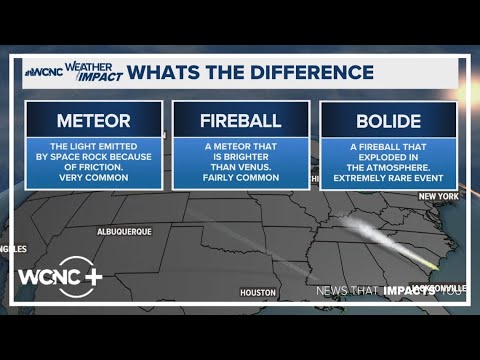
- "Explaining the difference: Meteors, fireballs, and bolides." WCNC Charlotte Weather IQ, YouTube (broadcast meteorologist explainer directly relevant to this book's core identification content; video verified via oEmbed). youtube.com
- This site's own resources library: Full Reading List, where this book is cited on this site's own Green Fireballs and Angoulême case files.
- This site's own key-figures entry: O. Richard Norton, for his full biography and site-wide connections.
- This site's own key-figures entry: Lincoln La Paz, whose professional trajectory objections in the Green Fireballs case this book's technical content directly informs.
- This site's own case file: Green Fireballs.
- This site's own case file: Angoulême Daylight Ovoid.
- This site's own essential-reading entry: Lights in the Sky, a companion identification guide from the same Patrick Moore Practical Astronomy Series.
- The Meteoritical Society, "O. Richard Norton" endowment fund page, consulted for biographical details on Norton's career and publications. meteoritical.org
- Goodreads listing, book/show/2319280.Field_Guide_to_Meteors_and_Meteorites (rating data cited here; disclosed as a twenty-two-rating sample per this site's own established practice).
- This site's own locations entry: University of New Mexico, Albuquerque, home of the Institute of Meteoritics La Paz founded in 1945.
- This site's own theories entry: Theories & Hypotheses index, for this site's broader catalog of conventional and anomalous explanations applied across its case-file research.
Have corrections, additional research, or peer-reviewed sources? Help improve this entry.
Suggest an Edit