
Eyewitness Testimony
A Landmark Study of Memory Distortion and the Reliability of Witness Recall
Core Thesis
Eyewitness Testimony is Elizabeth F. Loftus's foundational 1979 study demonstrating that human memory is not a fixed recording of events but a reconstructive process genuinely vulnerable to distortion by information encountered after the original event, including through the specific wording of questions asked during recall. The book's central experimental finding — that even subtly leading questions can implant false details into a witness's own sincerely held memory — is directly relevant to this site's own Aunay-les-Bois Triple-Witness Sighting case file, where GEIPAN's own field investigators explicitly flagged that some of the three witnesses' matching answers, particularly the object's estimated size, appeared to have been settled only after the witnesses discussed the sighting together.
About the Author
Elizabeth F. Loftus, born in 1944, studied mathematics and psychology as an undergraduate at UCLA before beginning graduate study at Stanford in 1966. She built her early career around a specific, empirically grounded research question: whether and how a witness's memory of an event could be altered by information encountered after the event itself, rather than assuming eyewitness memory functioned like an accurate mental recording.
In 1974, with funding from the U.S. Department of Transportation, Loftus began her landmark series of experiments showing participants films of staged automobile accidents and then asking follow-up questions using deliberately varied wording — replacing a neutral verb like "hit" with a more dramatic one like "smashed" measurably increased the rate at which participants later reported seeing broken glass that was never actually present in the film. This work became the basis for both her influential 1974 Loftus & Palmer study and this book's fuller treatment five years later.
Loftus went on to become a Distinguished Professor at UC Irvine and one of the most cited psychologists of the twentieth century, later extending her research into more dramatic "false memory" demonstrations, including a widely cited study in which researchers successfully implanted a false childhood memory of meeting Bugs Bunny at Disneyland — a scenario impossible in reality, since Bugs Bunny is a Warner Bros. character never licensed for appearance at a Disney park. Her research became central to the 1990s "memory wars" over recovered-memory therapy and has since informed reforms in how police conduct witness interviews and lineups, contributing to numerous wrongful-conviction case reviews and exonerations.
Loftus has also served as an expert witness or consultant in a substantial number of real criminal trials over her career, applying her research directly to specific, high-profile cases where eyewitness identification was contested evidence. This practical, courtroom-facing dimension of her work distinguishes her from many academic psychologists whose research remains primarily theoretical, and it has occasionally made her a controversial figure among victims' advocacy groups even as it has cemented her standing within the forensic and legal-psychology communities specifically.
Historical Context & Origins
The book was published in 1979 by Harvard University Press, arriving at a moment when the American legal system's traditional, largely unquestioned reliance on eyewitness testimony as a gold-standard form of evidence was only beginning to face serious empirical scrutiny from experimental psychology.
Loftus's specific methodological innovation — using controlled, replicable laboratory experiments with staged events and precisely varied post-event questioning, rather than relying on anecdotal case examples or purely theoretical argument — gave her findings an empirical rigor that made them difficult for legal and law-enforcement institutions to dismiss, even when the implications were uncomfortable for existing courtroom practice.
The book's 1996 edition, the specific printing cited in this site's own case-file research, updated and expanded the original 1979 text with nearly two more decades of subsequent research findings, reflecting how thoroughly the book's central "misinformation effect" concept had by then become an established, extensively replicated finding within cognitive psychology rather than a single novel claim.
The book's continued relevance across nearly five decades also reflects a broader, ongoing shift in how legal systems worldwide have come to treat eyewitness testimony: where courts once generally instructed juries to weigh confident eyewitness identification as near-conclusive evidence, contemporary jury instructions in many jurisdictions now explicitly caution that witness confidence does not reliably correlate with accuracy — a direct, traceable outgrowth of the experimental findings this book first assembled into a coherent, book-length scientific case.
Core Arguments & Key Concepts
The book's central argument, since become one of the most influential findings in the history of experimental psychology, is that human memory is not a passive recording device but an active, reconstructive process: each time a memory is recalled, it is potentially reshaped by information encountered in the interim, including information a witness may not consciously recognize as having come from anywhere other than their own original perception.
Loftus systematically documents the specific mechanisms through which eyewitness testimony can be distorted, beginning with basic perceptual limitations — poor viewing conditions, brief exposure time, high stress during the original event — before moving to the subtler and more consequential factor the book is best known for: post-event information, including the specific wording of questions asked during a formal interview, that can become seamlessly incorporated into a witness's own sincere, high-confidence memory of what they originally saw.
A central experimental demonstration involves precisely calibrated variation in question wording: asking whether a car was traveling when it "hit" versus "smashed into" another vehicle produces measurably different subsequent memory reports, including invented details (like broken glass) consistent with the more dramatic verb's implication but never actually present in the witnessed event.
Loftus is explicit that this distortion process does not require deception or bad faith on the part of either the questioner or the witness: the effect operates even when questions are asked in good faith by investigators with no intent to mislead, and witnesses experience the resulting altered memory with the same subjective confidence as an accurate, undistorted one — a finding with direct relevance to any investigative context, UAP-related or otherwise, where multiple witnesses to the same event are interviewed sequentially or discuss the event among themselves before their accounts are formally recorded.
Key Cases & Evidence Discussed
This site's own Aunay-les-Bois Triple-Witness Sighting (Case File #256, June 2–3, 2020), centered on a garden bonfire outside Aunay-les-Bois, Orne, France, is the case file this book's inclusion on this list most directly supports. GEIPAN's own field investigators explicitly documented that while the three witnesses' independently completed technical questionnaires and separately drawn sketches showed "excellent" agreement overall, some of their matching answers — particularly the object's estimated size — appeared to have been settled only after the witnesses discussed the sighting together, precisely the kind of post-event information-sharing this book's central experimental findings identify as a genuine risk to memory accuracy, even among entirely sincere, non-deceptive witnesses.
This site's own Kathie Davis / Copley Woods Case (Case File #324, 1983) connects to this book through Loftus's own broader body of work on hypnotic-regression memory recovery, cited elsewhere on this site as the standard scientific rebuttal to claims that hypnosis reliably recovers accurate suppressed memories of alien contact — a related but methodologically distinct concern from this specific book's focus on ordinary, non-hypnotic post-event suggestion.
Critical Reception & Controversies
The book has been recognized since its 1979 publication as a foundational text in the psychology of memory and eyewitness testimony, cited extensively across subsequent academic research, legal scholarship, and forensic-psychology training materials. Harvard University Press's own continued publication of the book across multiple editions reflects its sustained standing as a primary reference work rather than a superseded early study.
The book's central "misinformation effect" finding has been replicated across hundreds of subsequent studies by researchers beyond Loftus's own laboratory, giving it an unusually robust evidentiary foundation within experimental psychology compared to many single-study findings that fail to replicate under later scrutiny.
Some later commentary, particularly from within the recovered-memory-therapy community during the 1990s "memory wars," pushed back against extending the book's findings about ordinary post-event suggestion to broader claims about the reliability or unreliability of all forms of memory recovery, including therapeutic and hypnotic techniques — a genuine, still partially unresolved scientific and clinical debate this site notes without taking a side beyond the specific, well-established finding this particular book documents.
No critical source located in researching this article disputes the book's core experimental findings about post-event misinformation's effect on ordinary eyewitness memory; the book's reception has remained overwhelmingly positive and its findings essentially unchallenged within mainstream cognitive psychology across more than four decades.
The book's reception among UAP and paranormal researchers specifically has been more mixed than its reception within mainstream psychology: some ufological writers have pushed back against applying Loftus's findings broadly to all multi-witness UAP sightings, arguing that genuinely independent, well-separated witness accounts (with no opportunity for consultation before formal documentation) remain meaningfully different from the specific experimental conditions this book studies. This site's own methodology treats that distinction as valid and important — the concern Loftus's research raises applies specifically where witnesses had contact before their accounts were finalized, exactly the documented circumstance in the Aunay-les-Bois case, not as a blanket dismissal of all multi-witness testimony generally.
Influence & Legacy
This exact 1996 edition is cited in this site's own Aunay-les-Bois Triple-Witness Sighting case file's Further Reading section as "directly relevant to this case's own documented concern about witnesses consulting each other before finalizing key questionnaire answers."
The book's findings have produced concrete, documented reforms in police practice, including changes to how witness lineups are conducted (favoring sequential rather than simultaneous presentation, and blind administration by officers who do not know which lineup member is the suspect) and how initial witness interviews are structured to minimize leading or suggestive questioning — changes now standard practice across many American police departments and codified in some jurisdictions' own procedural guidelines.
Loftus's broader body of research, building directly on this book's foundational findings, has been cited in numerous wrongful-conviction case reviews and exonerations, giving the book's core scientific contribution a documented real-world impact considerably beyond its academic influence alone.
Within this site's own broader methodology, this book's findings support a specific, recurring evaluative practice applied across many case files: distinguishing between witnesses who provided their accounts genuinely independently (a stronger form of corroboration) and witnesses who had any opportunity to discuss the event together before their accounts were formally documented (a weaker, though not worthless, form of corroboration). GEIPAN's own investigative rigor in flagging exactly this distinction in the Aunay-les-Bois case is itself a useful model this site's own research aims to follow.
The Book

Eyewitness Testimony
A Landmark Study of Memory Distortion and the Reliability of Witness Recall
Find on Amazon →As an Amazon Associate, OverClassified may earn from qualifying purchases made through this link, at no extra cost to you.
Why This Is Essential Reading
Eyewitness Testimony earns its place on this list as the single most rigorously established scientific foundation for understanding exactly the kind of witness-consultation concern this site's own Aunay-les-Bois Triple-Witness Sighting case file explicitly documents and takes seriously, rather than glossing over. Read as a general methodological reference for evaluating multi-witness testimony across this site's broader catalog, this book supplies the empirical grounding for treating even sincere, high-confidence, well-corroborated witness accounts with appropriate caution when those witnesses had any opportunity to discuss the event together before their accounts were formally recorded.
Related Cases & Theories
Essential Viewing
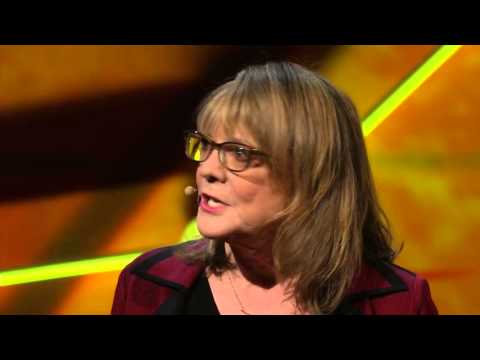
Sources Cited
- Loftus, Elizabeth F. Eyewitness Testimony. Harvard University Press, 1979 (1996 edition, ISBN-13 9780674287754). amazon.com
- "Eyewitness Testimony." Harvard University Press (official publisher page). hup.harvard.edu
- "Elizabeth Loftus." Wikipedia (full biography: career, key studies, memory wars). en.wikipedia.org
- "Profile of Elizabeth F. Loftus." Proceedings of the National Academy of Sciences (PMC/NIH). pmc.ncbi.nlm.nih.gov
- "Interview: The Memory Warrior." The British Psychological Society. bps.org.uk
- "How the Truth Gets Twisted." Stanford Magazine. stanfordmag.org
- "Loftus and Palmer 1974 | Car Crash Experiment." Simply Psychology. simplypsychology.org
- "The history of an idea: The misinformation effect." Loftus, Legal and Criminological Psychology, Wiley Online Library. bpspsychub.onlinelibrary.wiley.com
- "Elizabeth Loftus on Eyewitness Testimony." The Curious Classroom (YouTube). youtube.com
- "Eyewitness Testimony." Open Library (bibliographic record and cover art source). openlibrary.org
- This site's own case file: The Aunay-les-Bois Triple-Witness Sighting, for the full witness-consultation analysis this book's findings support.
- This site's own case file: The Kathie Davis / Copley Woods Case, for the related hypnotic-regression memory concern Loftus's broader work addresses.
- This site's own key-figures entry: Elizabeth Loftus, for her full biography and further case connections.
- This site's own essential reading entry: Missing Time, Budd Hopkins's hypnotic-regression abduction research, for the contrasting perspective Loftus's work critiques.
Have corrections, additional research, or peer-reviewed sources? Help improve this entry.
Suggest an Edit