
Digging Into Skinwalker Ranch
Ryan Skinner and Cheryl Carter's Ownership History of the Uintah Basin Property — The Records Nobody Else Bothered to Pull
Core Thesis
Digging Into Skinwalker Ranch does the one thing nobody covering the property had bothered to do: it goes to the county records. Ryan Skinner, who began researching the Uintah Basin property in 2006, and his co-author Cheryl Carter assembled a chronological history of the ranch — who owned it and when, what the deeds and public documents show, what neighbours say, and what the archival record contains — alongside interviews with people who worked there. This site's case file cites the book as an independently researched chronological history compiled from public records and prior published accounts, and that description is exact. It is not an account of the phenomena, and its author has no access to the ranch. Both facts are what make it useful.
About the Author
Ryan Skinner began researching the Skinwalker Ranch phenomena in 2006 and has returned to the Uintah Basin repeatedly since. He holds a bachelor's degree from Eastern New Mexico University, has appeared as a paranormal investigator on programmes for Tru TV, the Travel Channel and the History Channel, and has written five books on the property: Skinwalker Ranch: Path of the Skinwalker, Skinwalker Ranch: No Trespassing, Tales of the Skinwalker, The UFO Farm, and this one with Cheryl Carter.
The most important fact about his position is that he is outside the fence. Skinwalker Ranch has been private property under successive owners with restricted access, and Skinner is explicit that he does not condone trespassing on or around it. His entire body of work has been produced without entry to the site.
That constraint is the reason this book exists in the form it does. An investigator who cannot get onto the property has two options: stop, or work the surrounding record — county deeds, ownership chains, local newspapers, neighbouring landowners, former employees. Skinner took the second, and it produced something the insiders have never produced.
The counterweight is that this is self-published with no editorial layer, and readers have noticed. The most-cited complaints on reader platforms are spelling and formatting errors, technical material presented without adequate explanation, and substantial repetition across his five books — all fair, and all consequences of publishing five volumes on one property without an editor.
Cheryl Carter's co-authorship is credited on the cover and her specific contribution is not separately described. The book is generally discussed as Skinner's, which is how the site's existing citation treats it.
Historical Context & Origins
The ranch's documented modern history begins with the Sherman family. Terry and Gwen Sherman bought the roughly 500-acre property in the Uintah Basin in 1994 and reported, over the following two years, cattle mutilations, unexplained lights, and animal behaviour they could not account for. Their account reached the press through George Knapp in 1996.
Robert Bigelow purchased the property in 1996 and ran it as a research site through the National Institute for Discovery Science, with Colm Kelleher as its principal scientist. NIDS operated there for roughly eight years and published essentially nothing from it — a fact that shapes everything about the ranch's evidential standing.
Knapp and Kelleher's Hunt for the Skinwalker (2005) is the account of that period and remains the ranch's founding text. It is a narrative of reported events by participants, not a data release, and no instrumented record from the NIDS years has ever been made public.
Brandon Fugal, a Utah commercial real estate figure, acquired the ranch in 2016 and revealed his ownership in 2020 with the launch of a History Channel series that has run for multiple seasons. The property is now a television production as well as a research claim, and that combination governs what leaves it.
The evidential situation is therefore unusual and worth stating plainly. Three successive owners across thirty years have reported extraordinary phenomena on a single property; a well-funded private research institute operated there for the better part of a decade; a television series has filmed there since 2020; and there is no published, peer-reviewed or independently examinable data from any of it.
The name itself is a separate matter with its own literature. The skinwalker — yee naaldlooshii — belongs to Navajo tradition, and the property's popular name attaches an indigenous religious concept to a commercial paranormal venture in a way that Navajo commentators have not universally welcomed. The standard anthropological source, Clyde Kluckhohn's Navaho Witchcraft (1944), is cited on this site's case file.
Public land records are the one category of information about the property that is not controlled by whoever owns it. Deeds, transfers, acreage, water rights, mineral claims and adjacent parcel history are matters of county record in Utah, and they are available to anyone prepared to go and look. Almost nobody covering the ranch has.
Core Arguments & Key Concepts
The public record is available and nobody was using it. The book's foundational move and its real contribution. Ownership chains, deeds, transfers and local documentation exist for any American property, they are not controlled by the current owner, and they establish a verifiable spine of fact about the ranch that no participant account supplies.
A chronological ownership history is a better starting point than a phenomena narrative. The implicit methodological argument. Every other treatment of the ranch begins with what was reported to have happened; this one begins with who was there, when, and what they owned. That order lets a reader see which claims attach to which occupancy and where the gaps in the record fall.
Neighbours and former employees are accessible when the property is not. The practical consequence of being outside the fence. People who worked on the ranch, and people who live near it, are under no obligation to anyone and can be interviewed, and their accounts are the closest thing to independent testimony the site has ever generated.
The pre-Sherman history is longer than the popular account suggests. The book's most genuinely novel material. The ranch's story is usually told as beginning in 1994; the property existed and was occupied long before that, and the earlier record is where a researcher would look to establish whether reports predate the modern owners or were generated by them.
Thirty years of claimed research have produced no public data. The book's strongest critical observation, and it does not depend on Skinner being right about anything. NIDS operated for years and published nothing; the television production films continuously and releases only broadcast content; and no independent investigator has been admitted. That is a fact about the ranch, not an opinion about it.
The weakest feature is that the records cannot be checked from the book. A property history built on public documents earns its authority from citation, and self-published work with no apparatus does not supply it. A reader who wants to verify an ownership claim has to go to the county themselves, which is precisely what the book was supposed to spare them.
The second weakness is that it does not stay in its lane. The volume's distinctive value is documentary, and it also carries phenomena material, technical discussion and the accumulated content of Skinner's other four books. Readers have said so directly, and the repetition and unexplained technical passages are the most common complaints about it.
Key Cases & Evidence Discussed
The pre-1994 ownership record. The property's occupancy history before the Shermans, drawn from public documents — the book's most original contribution and the material available nowhere else.
The Sherman years, 1994–1996. Terry and Gwen Sherman's purchase of the ranch, the cattle mutilations and lights they reported, and their sale to Bigelow after roughly two years.
The NIDS period, 1996–2004. Robert Bigelow's ownership, the National Institute for Discovery Science operation on the site under Colm Kelleher, and the complete absence of any published data from it.
The Fugal acquisition and the television era. Brandon Fugal's 2016 purchase, his 2020 public identification as owner, and the History Channel series that has made the ranch a continuously filmed commercial property.
Employee and neighbour testimony. Interviews with people who worked on the ranch and with adjacent landowners — the only body of testimony about the property not controlled by an owner or a production company.
The archival and photographic material. Documents and images assembled from public sources and local archives, reproduced in the book as the documentary backing for the ownership chronology.
The Navajo context. The yee naaldlooshii tradition the property's name invokes, and the relationship between the Ute and Navajo cultural material and the modern paranormal claim — a subject on which the standard reference remains Kluckhohn's 1944 study.
The Uintah Basin more widely. The regional reporting context around the ranch, which has a sighting history of its own independent of any single property.
Critical Reception & Controversies
The book is self-published and has no reviews in any professional venue. It does, however, have unusually substantial reader reception for a book of its kind — something over a hundred and forty ratings and a dozen-plus written reviews on the main reader platform — and that feedback is specific enough to be useful.
The praise is consistent and identifies the right thing: readers value the historical depth and the detail of the ownership investigation. That is what the book is for and it appears to deliver it.
The criticism is equally consistent and equally specific. Readers report that the book raises more questions than it answers, that technical material is presented without adequate explanation for a general reader, that there is substantial repetition across Skinner's five Skinwalker volumes, and that spelling and formatting errors are frequent enough to distract. All four are the predictable consequences of self-publishing a fifth book on one subject without an editor.
The structural criticism this article adds is about verifiability. A property history's whole value is that its claims can be checked against public records, and a book that reports what the records show without citing them in a followable form has kept the authority and withheld the mechanism. That is more damaging here than the typos.
There is also an unavoidable question about the author's position. Skinner has no access to the ranch, has written five books about it, and is on record as a persistent outside investigator of a property whose owners have not admitted him. A reader is entitled to weigh whether a decade and a half of exclusion has shaped the account, and the book does not address the question.
Against that, the countervailing point is substantial and this site's own case file already makes it: the ownership chronology is independently researched from public records and prior published accounts, and nobody else has done it. The insiders have produced narratives and a television series; the outsider produced a document trail.
The fair placement is as a reference for the property's history rather than for its phenomena. Use it to establish who owned the ranch and when; go to Hunt for the Skinwalker for the NIDS-era narrative and to this site's case file for the assessment; and verify any specific record claim at source if it matters.
Influence & Legacy
The book's contribution is to have established that there is a checkable documentary record about Skinwalker Ranch at all. Everything else written about the property depends on the testimony of people with an interest in it — owners, researchers they employed, a production company — and a chronological ownership history compiled from public documents is a different category of source.
It also demonstrates a method that transfers. Any claimed anomalous location in a country with public land records has an ownership chain, a deed history and a set of neighbours, and none of that is controlled by whoever currently holds the property. Very few investigators in this field use it, and this book is the clearest available demonstration of what it yields.
For the ranch specifically, the book is now the standard external reference and this site's own case file cites it as such. That is a real position for a self-published volume to have reached, and it reflects the absence of competition rather than the book's polish.
Its cautionary legacy is about what thirty years of controlled access produces. A property with three successive owners reporting extraordinary phenomena, a funded research institute on site for eight years, and a television series filming continuously since 2020 has generated no public data of any kind — and the most useful factual contribution about it has come from someone standing outside the fence reading county records. That should tell a reader something about where the evidence is not.
There is a broader point here about who gets to write a case’s history. Access is normally treated as the thing that qualifies a researcher — the person who has been inside is assumed to know more than the person who has not. Skinwalker Ranch inverts it: three decades of privileged access have produced narratives, a television format and no data, while the standing external reference on the property’s history was compiled by someone reading deeds at a county office. Where a site is controlled, the people admitted to it are the people its owner has chosen to admit, and their accounts inherit that selection. The outsider’s disadvantage is real, and it is not always the larger one.
The Book
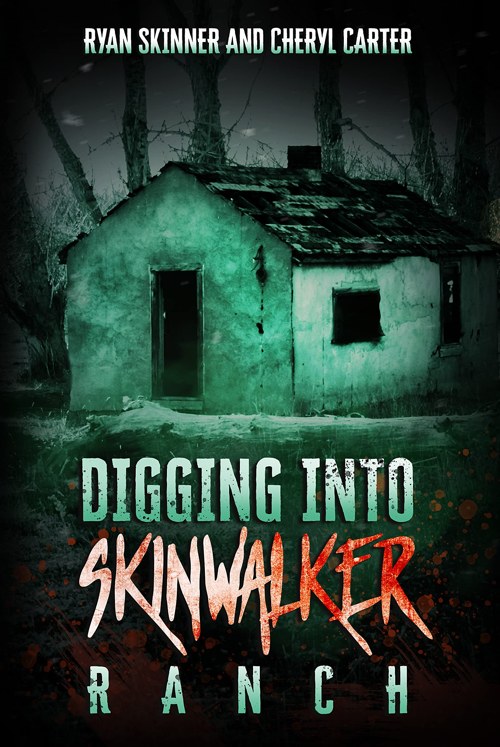
Digging Into Skinwalker Ranch
Ryan Skinner and Cheryl Carter's Ownership History of the Uintah Basin Property — The Records Nobody Else Bothered to Pull
Find on Amazon →As an Amazon Associate, OverClassified may earn from qualifying purchases made through this link, at no extra cost to you.
Why This Is Essential Reading
Use it for the deeds, not for the phenomena. Digging Into Skinwalker Ranch is a self-published, unevenly edited, repetitive book that does one genuinely valuable thing: it treats the most commercially exploited property in this subject as a piece of American real estate with a public record, and it assembles the ownership chronology that thirty years of insider accounts never produced. Ryan Skinner has been researching the Uintah Basin since 2006 and has never been admitted to the ranch, and that exclusion is what pushed him toward the county documents, the neighbours and the former employees — the only sources about the property not controlled by whoever owns it. Its defects are real: no followable citation of the records it relies on, technical material left unexplained, and content recycled across five volumes. Read it against Hunt for the Skinwalker for the NIDS narrative and this site's case file for the assessment, and note the fact the book makes unavoidable: after three owners, an eight-year research institute and six years of television, not one instrumented dataset from that property has ever been published.
Related Cases & Theories
Sources Cited
- Skinner, Ryan T., and Cheryl Lynn Carter. Digging Into Skinwalker Ranch. Self-published, April 2021. 236 pp. ISBN-13 9798743380893. amazon.com
- Goodreads edition record, Digging Into Skinwalker Ranch — the April 2021 publication date, 236-page extent, co-authorship with Cheryl Lynn Carter, the cover-art source, the publisher description of the chronological exploration of the ranch's history and previous owners with employee interviews, archival documents, photographs, neighbour testimony and Native American historical context, and the reader reception data including the specific complaints about unexplained technical material, repetition across the author's books, and spelling and formatting errors. goodreads.com
- Goodreads author record for Ryan Skinner — his full bibliography on the property: Path of the Skinwalker, No Trespassing, Tales of the Skinwalker, The UFO Farm and this volume. goodreads.com
- AbeBooks catalogue record, ISBN 9798743380893 — edition and format verification. abebooks.com
- ThriftBooks catalogue record for Skinwalker Ranch: No Trespassing — independent bibliographic listing establishing Skinner's earlier work on the property. thriftbooks.com
- IMDb profile for Ryan Skinner — his television appearances as a paranormal investigator. imdb.com
- Wikipedia, "Skinwalker Ranch" — the property's location in the Uintah Basin, the Sherman family's 1994 purchase and reports, Robert Bigelow's 1996 acquisition and the NIDS operation, Brandon Fugal's 2016 purchase and 2020 disclosure, and the History Channel series. en.wikipedia.org
- Wikipedia, "Robert Bigelow" — the aerospace entrepreneur who owned the ranch from 1996 and funded the research conducted there. en.wikipedia.org
- Wikipedia, "National Institute for Discovery Science" — the Bigelow-funded organisation that operated on the property for roughly eight years and published essentially nothing from it. en.wikipedia.org
- Wikipedia, "Skin-walker" — the Navajo yee naaldlooshii tradition the property's popular name invokes. en.wikipedia.org
- Wikipedia, "Uinta Basin" — the north-eastern Utah region in which the ranch sits and which has its own wider reporting history. en.wikipedia.org
- Wikipedia, "Cattle mutilation" — the phenomenon the Sherman family reported and the wider literature it belongs to. en.wikipedia.org
- Wikipedia, "George Knapp (journalist)" — the Las Vegas reporter whose 1996 coverage brought the Sherman family's account to public attention and who co-authored the ranch's founding text. en.wikipedia.org
Have corrections, additional research, or peer-reviewed sources? Help improve this entry.
Suggest an Edit