
Charlie Red Star
True Reports of One of North America's Biggest UFO Sightings
Core Thesis
Charlie Red Star: True Reports of One of North America's Biggest UFO Sightings is Grant Cameron's own book-length account of the case that began his career: the 1975–76 wave of recurring red-light sightings around Carman, Manitoba, which this site's own Charlie Redstar case file documents in full and rates DISPUTED rather than debunked — a genuinely unresolved mass-witness event rather than a case with a known hoax behind it. Published by the traditional Canadian press Dundurn in 2017, more than four decades after Cameron's own first sighting of the light in May 1975, the book is built substantially from his original interview notes with hundreds of the wave's other witnesses and is consistently described by reviewers as a faithful, largely unembellished record of what people actually reported seeing, rather than an argument for any single interpretation of what it was.
About the Author
Grant Cameron is a Winnipeg-area native whose entry into ufology began with his own repeated sightings of the light that became known as Charlie Redstar starting in May 1975; over the following eighteen months he photographed the phenomenon and personally interviewed hundreds of the wave's witnesses, for a time leading informal viewing tours out to the Diemert family's airfield. Rather than publishing on the case in the years immediately following, Cameron went on to spend roughly two decades researching Wilbert B. Smith, the Canadian government scientist behind the 1950s official flying-saucer program Project Magnet, before building his best-known specialty: FOIA-driven research into U.S. presidential-level UFO briefings, drawing on more than twenty research trips to the National Archives and presidential libraries and a Clinton White House FOIA request that yielded nearly a thousand pages of documents. He has been named International Researcher of the Year at the Leeds UFO Conference and Researcher of the Year at the International UFO Congress, and his other books include UFOs, MJ-12, and the Government, Managing Magic: The Government's UFO Disclosure Plan, and The Clinton UFO Storybook.
Charlie Red Star stands apart from that broader body of work as Cameron's one deeply personal case study, and by his own account and one contemporary review's telling, he held onto the material for roughly 36 years before finally shaping it into a published book — making it simultaneously his most recently published title and the one rooted furthest back in his own biography. The book's central subjects, Bob and Elaine Diemert, are covered in far greater depth in this site's own case file; Bob Diemert, already a well-known Manitoba aviation figure through his warbird restorations before 1975, continued speaking publicly about the case alongside Cameron at UFO conferences until his death in January 2024.
Historical Context & Origins
The book arrives within what fellow Manitoba researcher Chris Rutkowski has called Canada's “Summer of UFOs”: 1975 alone produced 134 logged Manitoba sightings and more than 2,000 pages of National Research Council case files nationally, a reporting climate Charlie Redstar sits at the center of but by no means accounts for alone. Rutkowski, who began cataloguing Canadian sightings as an undergraduate during the same wave, covered the Carman case independently and decades earlier, in a chapter titled “Charlie Redstar and Friends” in his own 1993 book Unnatural History: True Manitoba Mysteries, and revisited it again in a 2025 Substack piece marking the wave's fiftieth anniversary — notably, without mentioning Cameron's book at all, suggesting the two researchers' bodies of work on the same case developed largely independently of one another rather than in direct conversation.
A markedly different treatment of the same nickname predates Cameron's own book: writer Edward Morris Barker, drawing on his own 1970s fieldwork for the Manitoba Planetarium, published a fictionalized version, The Adventures of Charlie Red Star, narrated from the UFO's own point of view — a curious reminder that by the time Cameron's nonfiction account appeared in 2017, the case had already been reworked once into invented narrative, underscoring how much cultural life the Charlie Redstar name had taken on locally in the decades before Cameron's own witness-driven version reached print.
The book is widely credited, including by this site's own case file, with reviving broader public and media attention to a case that had otherwise remained, in its own words, “strikingly obscure” outside Manitoba — attention that fed directly into Carman's fiftieth-anniversary commemorations of the wave in 2025, eight years after the book's publication and fifty years after Cameron's own first sighting of the light.
Core Arguments & Key Concepts
Structured across roughly eight chapters, the book moves from the Diemerts' original April 10, 1975 sighting through the wave's escalation into nightly crowds and traffic jams by early May, and devotes a specific chapter — titled, per this site's own case file, “Cameras, Photographers, and Charlie Red Star” — to the visiting CKY-TV news crew's 1976 footage and its accompanying handheld radiation-meter reading, a claim Cameron presents without the caveats this site's own case file applies (that no instrument specifications, control readings, or raw data from that survey are known to survive, and that no independent second measurement was ever taken).
Per its publisher's own description, the book explores — without conclusively endorsing — a hypothesis connecting the sightings to nearby U.S. missile-defense radar operations near the Canada-U.S. border, one of several conventional explanations Cameron weighs alongside the witnesses' own accounts rather than a claim the book argues as settled. Its appendices, singled out favorably in the book's most detailed available review, include contemporary polling data on local belief in the sightings and a section of witness-contributed poetry inspired by the case — an unusual structural choice for a UFO case book that underscores how much the wave became a genuine piece of local community life in Carman, not solely a research subject.
The book's stated approach, per its own reviewers, is deliberately unembellished: it presents witness testimony largely as given, without building toward a single interpretive conclusion about what Charlie Redstar was. That restraint is also, by the same reviewers' account, the book's most-cited limitation — a witness-by-witness structure that some readers found repetitive across its middle chapters, precisely because it declines to shape the material into a more conventional argumentative narrative.
Key Cases & Evidence Discussed
This site's own Charlie Redstar case file documents the full wave in far greater depth than a book review needs to repeat: the Diemerts' original sighting at their private airstrip (later named Friendship Field), the escalation into near-nightly sightings and crowds so large that gravel roads reportedly jammed with traffic, the RCMP constable and commercial airline pilot among the witnesses, and the roughly 53 individually logged Carman-area reports within Winnipeg-based Ufology Research's broader Manitoba sighting database.
What is specific to the book, rather than to the case generally, is its first-person vantage: Cameron was not an outside investigator arriving after the fact but a participant in the wave itself, and the book's account of the CKY-TV crew's visit, the informal viewing tours he once led, and the community's own reaction — local merchants running ads urging customers to “shop where Charlie Redstar shops” — reads as a firsthand social history of the flap as much as a catalogue of individual sighting reports.
Among the individual accounts the book draws on, the report of Constable Ian Nicholson of the RCMP's Carman detachment stands out for the same reason this site's own case file singles it out: an on-duty, trained law-enforcement observer, rather than a civilian bystander, described an oval red light ringed by an X-shaped white halo that held stationary for two to three minutes before he attempted to pursue it by car for roughly twelve miles along the area's grid-pattern gravel roads without closing the distance. That a case built so heavily on ordinary residents' testimony also includes an account from someone whose job was routinely to make careful, sober observational reports is a detail the book uses, reasonably, to argue the wave cannot be dismissed purely as small-town rumor.
Critical Reception & Controversies
As of this article's research (August 2026), the book carries roughly a 3.86-to-3.90-out-of-5 average rating on Goodreads across a small base of around 21-22 ratings and 8 written reviews — modest numbers consistent with a regionally focused, traditionally published title from a mid-sized Canadian press rather than a heavily promoted release. Reader reviews aggregated on Goodreads split along the lines already noted above: some praised the book as well-balanced and photo-documented, sticking closely to the facts, while others found its witness-by-witness middle section repetitive.
The most substantial published review located for this article is Richard Vasseur's for First Comics News, which rated the book 4 out of 5 stars, calling it "well written and clear on all the subjects in it" and praising the witness accounts as "real reports not embellished at all" — while noting that the same lack of embellishment "may be a bit boring" at points. Vasseur separately highlighted the book's appendices, including its polling data and poetry sections, as a genuine strength. A second review, run by the Thompson Citizen and Nickel Belt News under the headline "Charlie Red Star an entertaining joyride through mid-70s Manitoba UFO phenomenon," was located only via search-result summary rather than a direct, successful fetch of the live page, so its exact wording beyond that headline is reported here as aggregated coverage rather than independently confirmed first-hand.
Notably absent from this research is any skeptical or scientifically oriented debunking review of the book specifically, of the kind that exists for several other titles on this site's reading list; the closest comparable treatment in Canadian ufology is Chris Rutkowski's own more measured, archival approach to the same case, which neither debunks nor advocates for it as strongly as either direction might suggest, and which — as noted above — does not engage with Cameron's book directly even in Rutkowski's own 2025 anniversary writing.
Influence & Legacy
The book's clearest legacy is its role in reviving public attention to a wave that had, by its own account, remained obscure outside Manitoba for four decades: that renewed attention fed directly into Carman's fiftieth-anniversary commemorations of the sightings in 2025, nearly fifty years to the year after Cameron's own first sighting of the light in May 1975.
Within Cameron's own body of work, the book occupies a distinctive place as his sole return to the case that started his career, bookending a body of research otherwise dominated by U.S. presidential-disclosure FOIA material; reviewers and his own author biography consistently describe it as the origin story of his decades-long research career, published only after that career had already been substantially built elsewhere.
Set alongside Chris Rutkowski's own independent, more archival treatment of the same case — developed separately over the same five decades — the two bodies of work together give Charlie Redstar an unusually well-documented dual record for a Canadian case of its size: one built from a participant's own firsthand memory and interview notes, the other from a career archivist's parallel accumulation of contemporary reports.
The Book
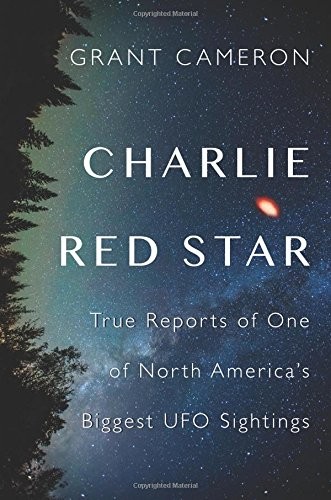
As an Amazon Associate, OverClassified may earn from qualifying purchases made through this link, at no extra cost to you.
Why This Is Essential Reading
Charlie Red Star earns its place on this reading list not by arguing a strong case for any single explanation — this site's own case file rates the underlying wave DISPUTED, with only modest alignment to an extraterrestrial hypothesis, and the book itself explores conventional explanations like nearby missile-defense radar without settling on one — but as a rare thing in this genre: a firsthand participant's own faithful, unembellished record of one of the largest sustained mass-witness UFO waves in Canadian history, written by someone whose entire subsequent research career grew out of standing in a Manitoba field watching the same light everyone else in Carman was watching. It is worth noting, too, what this case is not: unlike this site's own Gulf Breeze Sightings entry, where a recovered physical model and a handwriting match eventually gave a DEBUNKED rating a concrete basis, no comparable piece of disconfirming physical evidence has ever surfaced against Charlie Redstar in the fifty years since — its DISPUTED rating reflects a genuine absence of resolution in either direction, not a quieter version of the same collapse. Read alongside this site's own far more exhaustive Charlie Redstar case file and Chris Rutkowski's independent, decades-spanning archival work on the same wave, it is best approached as one of two honest, differently angled records of a case that neither account claims to have fully solved.
Related Cases & Theories
Sources Cited
- Cameron, Grant. Charlie Red Star: True Reports of One of North America's Biggest UFO Sightings. Dundurn Press, 2017 (ISBN 1459737806 / 9781459737808). amazon.com
- "Charlie Red Star." Dundurn Press, official publisher catalog page (publication date, format, price, publisher description). dundurn.com
- "Grant Cameron." Dundurn Press, official author page. dundurn.com
- "Charlie Red Star." Goodreads (reader rating approx. 3.86-3.90/5, ~21-22 ratings, 8 reviews, as fetched Aug 2026). goodreads.com
- "Charlie Red Star, True Reports of One of North America's Biggest UFO Sightings." AbeBooks (bibliographic record, ISBN, page count). abebooks.com
- "Charlie Red Star." Google Books entry. books.google.com
- Vasseur, Richard. "Rich Reviews: Charlie Red Star." First Comics News (4/5-star review of Cameron's book). firstcomicsnews.com
- "Charlie Red Star an entertaining joyride through mid-70s Manitoba UFO phenomenon." Thompson Citizen and Nickel Belt News (review; page no longer live as of Aug 2026, no archived mirror found).
- Rutkowski, Chris. "50 Years Ago: Canada's 'Summer of UFOs.'" Substack, 2025 (independent researcher's own fiftieth-anniversary account of the same wave). chrisrutkowski.substack.com
- "Memorable Manitobans: Robert Edward 'Bob' Diemert (1938-2024)." Manitoba Historical Society (biography of the case's central witness). mhs.mb.ca
- "Fifty years have passed since Charlie Red Star phenomenon in 1975." Manitoba News 101 / Carman-Dufferin Standard. mbnews101.ca
- "Charlie Redstar: The Canadian UFO." Believing the Bizarre (podcast), Ep. 84. believingthebizarre.com
- "Charlie Redstar: Manitoba's Friendly UFO." Fireside Canada. firesidecanada.ca
- This site's own Charlie Redstar case file, drawing on Ufology Research of Manitoba's sighting database and contemporary regional press coverage (full sourcing documented there).
Have corrections, additional research, or peer-reviewed sources? Help improve this entry.
Suggest an Edit