
CE-5
Close Encounters of the Fifth Kind
Core Thesis
CE-5: Close Encounters of the Fifth Kind is Richard F. Haines's 1999 catalog of 242 individual UFO case files, organized into apparent communication between witnesses and observed objects and apparent communication between witnesses and reported alien beings, carrying forewords from both Steven Greer and CUFOS scientific director Mark Rodeghier. This site's own Ceará Boeing 727 Sighting case file cites Haines not for this book's specific case catalog but for the broader methodological framework his career established, describing him as the founder of NARCAP "whose decades of specialized research into pilot sightings and instrumented aviation encounters provide the methodological framework this case file draws on for assessing a professional pilot's testimony on its own terms."
About the Author
Richard Foster Haines (born May 19, 1937, in Seattle) earned a bachelor's degree from Pacific Lutheran College in 1960, a master's from Michigan State University in 1962, and a Ph.D. in experimental psychology from Michigan State in 1964, following a predoctoral fellowship at the U.S. National Institutes of Health.
Haines spent more than two decades, from 1967 to 1986, as a human-factors research scientist at NASA's Ames Research Center, working across the Gemini, Apollo, Skylab, and Space Station programs and serving as manager of the joint FAA/NASA Head-Up Display Program. In 1986 he was appointed Chief of the Space Human Factors Office at Ames, directing research on the AX-5 hard-shell spacesuit and Space Station Freedom habitability design before retiring from government service in 1988. He authored more than fifty-five peer-reviewed scientific articles across his NASA career, published in journals including the Journal of Applied Psychology and Human Factors, and investigated numerous real aviation accidents and incidents for the FAA and National Transportation Safety Board.
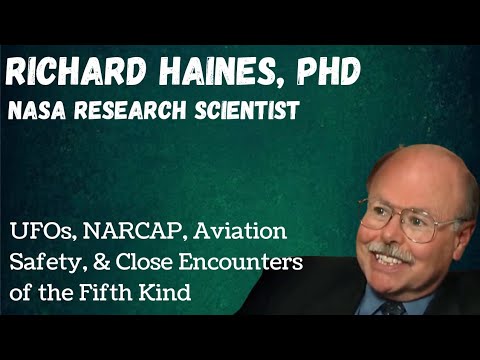
After retirement, Haines taught as an associate professor of psychology at San Jose State University while continuing part-time computer-science research, and in 1999 or 2000 founded the National Aviation Reporting Center on Anomalous Phenomena (NARCAP), applying the same formal aviation-safety investigative methodology he had used throughout his NASA and FAA career specifically to pilot and aircrew UAP reports — the direct professional throughline this site's own case files, including Chicago O'Hare and Norwood Searchlight, draw on repeatedly.
Haines's extensive publication record spans both his mainstream aerospace-safety career and his UFO-focused later work, including this book, his earlier 1980 title Observing UFOs, and 1994's Project Delta, both covered separately in this site's own Essential Reading list. Across that body of work, his consistent methodological signature is treating witness testimony, especially professional aviation testimony, as data worth systematic collection and cross-referencing rather than either uncritical acceptance or reflexive dismissal.
Historical Context & Origins
The book was published in 1999 by Sourcebooks, arriving the same general year Haines founded NARCAP, and carries forewords from two figures representing genuinely different strands of ufology: Steven Greer, founder of CSETI and originator of the "CE-5" contact-protocol concept this book's title directly references, and Mark Rodeghier, scientific director of the Center for UFO Studies (CUFOS), representing the more academically oriented research tradition Haines's own NASA background aligned with more closely.
The book's 435-page, 242-case catalog format positions it within the broader tradition of systematic UFO case compilation Haines's NASA-honed research discipline was well suited to produce — treating individual reports as data points to be organized, cross-referenced, and analyzed collectively rather than presenting a small number of cases in exhaustive individual narrative depth.
The book's specific focus on apparent witness-to-object and witness-to-being communication — cases where a witness's own gesture or signal (a flashed light, a wing waggle) appeared to be followed by a corresponding response from the observed phenomenon — carved out a genuinely distinct research niche within 1990s ufology, one closely tied to Greer's own CE-5 contact-protocol framework even though Haines's own treatment approaches the subject through case documentation rather than through Greer's more overtly ritualized contact methodology.
That distinction between Haines's documentary approach and Greer's more overtly ritualized contact protocol matters for readers approaching this book: while its title directly invokes Greer's CE-5 terminology and carries his foreword, Haines himself brings a NASA-trained scientist's case-cataloging instinct to the underlying material rather than endorsing or promoting any specific contact ritual, a distinction this site's own citation of Haines for his methodological rigor rather than for Greer's separate framework reflects directly.
Core Arguments & Key Concepts
The book's central organizing claim is that a specific, previously under-cataloged category of UFO report exists: cases in which a witness's own deliberate signal appears to be followed by a corresponding, seemingly responsive action from the observed object or entity, suggesting some form of two-way awareness or communication rather than one-directional observation alone.
Haines organizes the book's 242 cases into two major parts — witness-to-UFO communication and witness-to-alien-being communication — applying the same systematic, categorization-driven approach that characterized his decades of NASA human-factors research, in which individual incident reports were treated as data to be organized and cross-analyzed rather than as standalone narratives.
Representative cases documented in the book include a flashlight's flashes apparently answered by matching light flashes from an airborne object, and a pilot's wing-waggle apparently answered by a wavering motion from an observed oval metallic disc — specific, structurally comparable incidents Haines catalogs across the collection to argue for a genuine recurring pattern rather than isolated coincidence.
Beyond this specific book, Haines's broader career-long methodology — applying formal aviation-safety investigative standards to pilot and aircrew reports specifically, distinguishing credible professional testimony from more casual public reports, and searching for corroborating instrumented data wherever available — is what this site's own case files actually draw on, more than this book's specific 242-case catalog, when assessing professional pilot testimony like Captain Gerson Maciel de Britto's account in the Ceará case.
Key Cases & Evidence Discussed
This site's own Ceará Boeing 727 Sighting (Case File #122, February 8, 1982), which began aboard a flight departing Fortaleza, is the case this site cites Haines for, though not through this specific book: VASP Flight 169 captain Gerson Maciel de Britto's calm, in-flight announcement of an object to roughly 150 passengers over ninety minutes exemplifies exactly the kind of professional aviation testimony Haines's NARCAP methodology was built to assess on its own terms — while this site's own research, applying that same rigorous standard, ultimately finds the case's radar "confirmation" was retracted within hours as an equipment defect and that two corroborating pilots identified the light as the planet Venus.
This site's own Chicago O'Hare UFO Sighting (Case File #50, November 7, 2006) represents Haines's most directly hands-on case application of the same methodology this book's broader catalog reflects: his NARCAP Technical Report #10, the only independent formal investigation of that sighting, found the witness pool credible and identified a plausible radar-detection gap without identifying the underlying object — a real-world demonstration of the assess-the-testimony-rigorously-without-forcing-a-conclusion approach this book's own catalog format embodies at scale.
Critical Reception & Controversies
The book's dual forewords from Steven Greer and Mark Rodeghier reflect an unusual bridging position within 1990s ufology, drawing endorsement from both a more overtly advocacy-oriented contact-protocol originator and a more academically cautious research-organization director — a genuinely rare combination for a single title to carry.
Haines's own broader scientific credibility, built on more than two decades of peer-reviewed NASA human-factors research and fifty-five-plus published journal articles, gives this book's case-cataloging approach a methodological seriousness distinct from more purely anecdotal UFO-communication literature, even though the underlying case reports themselves remain unverified witness testimony rather than independently confirmed data.
No source located during this article's research directly disputes the book's good-faith documentation of the 242 cases it catalogs; critical engagement with Haines's broader body of work, including this book, generally concerns the appropriate evidentiary weight to give witness-reported apparent signal-response patterns, rather than a challenge to whether Haines accurately recorded what witnesses told him.
This site's own citation practice treats the book honestly: rather than drawing on its specific 242-case catalog for the Ceará case file, this site cites Haines for the broader NARCAP methodology his career established, a distinction consistent with how this site has cited other authors for general analytical frameworks rather than direct case-specific content elsewhere on this Essential Reading list.
That same honest-citation practice extends to how this article itself is framed: rather than overstating this specific book's direct relevance to the Ceará case, which it does not discuss, this article makes plain that Haines's value to that case file lies in his broader NASA-trained investigative career rather than in any specific finding contained within this particular 242-case catalog.
Influence & Legacy
This exact title is cited in this site's own Ceará Boeing 727 Sighting case file's Further Reading section, credited specifically for the methodological framework Haines's broader NARCAP-founding career established for assessing professional pilot testimony on its own terms.
The book's publication coincided with, and helped establish public visibility for, NARCAP's own 1999–2000 founding, an organization whose formal aviation-safety methodology this site's own case files, including O'Hare and Norwood Searchlight, continue to draw on directly for their own investigative standards.
Haines's broader legacy as a former NASA human-factors scientist who brought genuine institutional research discipline to UFO investigation specifically — rather than approaching the subject purely as an outside enthusiast — distinguishes his career-long body of work, including this book, as a rare case of formal aerospace-safety methodology applied directly and consistently to anomalous aerial phenomena research.
NARCAP's continued operation well beyond Haines's own most active research years, and its Technical Report series' continued citation across this site's own case files, demonstrates that the institutional research infrastructure this book's 1999 publication year helped launch has outlasted any single book or investigation, functioning as an ongoing methodological resource rather than a closed historical chapter.
The Book
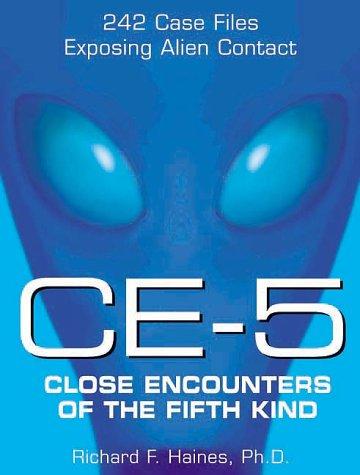
As an Amazon Associate, OverClassified may earn from qualifying purchases made through this link, at no extra cost to you.
Why This Is Essential Reading
CE-5 earns its place on this list less for its specific 242-case catalog than for what it represents within Richard Haines's broader career: a former NASA human-factors scientist applying genuine formal research discipline to UFO communication claims, the same methodological rigor this site's own Ceará Boeing 727 Sighting case file draws on directly when weighing a professional airline captain's testimony against the specific radar and corroboration record that ultimately undermines it.
Related Cases & Theories
Essential Viewing
Sources Cited
- Haines, Richard F. CE-5: Close Encounters of the Fifth Kind. Sourcebooks, 1999 (ISBN-13 9781570714276). amazon.com
- "CE-5: Close Encounters of the Fifth Kind: 242 case files exposing alien contact." Nashville Public Library (bibliographic record, foreword contributors). catalog.library.nashville.org
- "CE-5: Close Encounters of the Fifth Kind." Biblio (bibliographic listing, foreword by Stephen Greer and Mark Rodeghier). biblio.com
- "Biography." NICAP (Richard Haines biography: education, NASA career). nicap.org
- "Richard Haines." Center for UFO Studies (biography, CUFOS board role). cufos.org
- "Richard Foster Haines (born March 19, 1937), American psychologist." World Biographical Encyclopedia / Prabook (biographical record). prabook.com
- This site's own case file: Ceará Boeing 727 Sighting, for the full 1982 case and its detailed Venus-and-radar-defect resolution.
- This site's own case file: Chicago O'Hare UFO Sighting, for Haines's own direct NARCAP Technical Report #10 investigation.
- This site's own key-figures entry: Richard F. Haines, for his full biography and extensive further case connections.
- This site's own essential-reading entry: Observing UFOs, Haines's earlier 1980 book on visual UFO-report methodology.
- This site's own essential-reading entry: Project Delta, Haines's 1994 NARCAP-adjacent aviation-encounter study.
- National Aviation Reporting Center on Anomalous Phenomena (NARCAP), the organization Haines founded around this book's 1999 publication, applying the same aviation-safety methodology this site's own case files draw on.
Have corrections, additional research, or peer-reviewed sources? Help improve this entry.
Suggest an Edit