
Black Holes and Time Warps
Einstein's Outrageous Legacy
Core Thesis
Black Holes and Time Warps is theoretical physicist Kip S. Thorne's 1994 history of general relativity's most extreme predictions -- black holes, gravitational waves, wormholes, and time machines -- told through the physicists, including Einstein, Chandrasekhar, Oppenheimer, Wheeler, and Thorne's own Russian and American colleagues, who spent the century after 1915 working out whether Einstein's theory's most outrageous consequences could really exist. Published with a foreword by Stephen Hawking and an introduction by Frederick Seitz, the book combines rigorous physics with a deliberately human, historical narrative. This site's own research draws on it for two theory pages that cite it directly: the Gravitomagnetic Frame-Dragging Propulsion Hypothesis, where Thorne's account of black holes' extreme, astrophysical frame-dragging supplies the far end of the scale against which any engineered, craft-scale version must be measured, and the Quantum Entanglement Propulsion Hypothesis, where this site's own research cites the book's treatment of traversable-wormhole physics as "directly relevant to evaluating the ER=EPR conjecture's actual implications."
About the Author
Kip Stephen Thorne (b. 1940, Logan, Utah) earned a B.S. in physics from Caltech in 1962 and a Ph.D. from Princeton in 1965, studying under John Archibald Wheeler, the physicist who popularized the terms "black hole" and "wormhole" and who this site's own key-figures research documents supervised more doctoral students than any other physics professor in Princeton's history. Thorne returned to Caltech in 1967, became a full professor at just thirty years old in 1970, and held the Richard P. Feynman Professorship of Theoretical Physics from 1991 until his retirement to emeritus status in 2009.
Thorne's own scientific career gives this book a first-hand authority most popular-physics histories cannot claim: he co-authored the influential 1973 graduate textbook Gravitation with Charles Misner and Wheeler, developed the "membrane paradigm" model of black hole event horizons, predicted the exotic stellar objects now called Thorne-Żytkow objects, and, most consequentially, co-founded the LIGO (Laser Interferometer Gravitational-Wave Observatory) project in 1984 -- the very instrument this book's own account of gravitational-wave detection anticipates, more than two decades before it recorded anything.
That anticipation was vindicated spectacularly: LIGO's first direct detection of gravitational waves, announced in February 2016, confirmed a prediction this book had described as still unconfirmed at the time of its 1994 publication. In 2017, Thorne shared the Nobel Prize in Physics with Rainer Weiss and Barry C. Barish "for decisive contributions to the LIGO detector and the observation of gravitational waves" -- a genuinely rare case, per this site's own research, of a popular-science author living to see his own book's central open question definitively resolved, by an instrument he himself had helped build.
Thorne's public profile extended well beyond physics research and writing: he served as scientific consultant for Christopher Nolan's 2014 film Interstellar, working directly with producer Lynda Obst on the film's visual depiction of the black hole Gargantua, and subsequently wrote The Science of Interstellar (2014) explaining the real physics behind the film's imagery -- a direct continuation, per this site's own research, of the same project of translating genuinely difficult general-relativistic physics for a general audience that Black Holes and Time Warps itself represents two decades earlier.
Historical Context & Origins
Thorne wrote the book at a specific moment in relativistic astrophysics: by the early 1990s, indirect astronomical evidence for black holes -- X-ray binary systems, the dynamics of galactic cores -- had accumulated substantially, while the most direct confirmation, gravitational-wave detection, remained entirely theoretical. The book's own Chapter 10, "Ripples of Curvature," documents physicists devising instruments to monitor gravitational waves without yet having detected any, a genuinely open scientific question the book leaves unresolved because it necessarily was unresolved at the time of writing.
That question would not remain open for the rest of Thorne's own career: LIGO's two observatories eventually recorded their historic first detection, GW150914, on September 14, 2015, publicly announced in February 2016. This site's own research notes that LIGO's Hanford, Washington detector sits within the DOE's Hanford Site reservation, chosen in part for its remoteness and existing federal land infrastructure -- a coincidental but genuine geographic link between the site of Thorne's own gravitational-wave project and this site's own broader documentation of Hanford's separate, much earlier 1949-1950 UFO history at the same reservation.
The book's publication also predates by roughly two decades the 2013 ER=EPR conjecture -- proposed by Leonard Susskind and Juan Maldacena, linking quantum entanglement to microscopic, non-traversable wormholes -- that this site's own Quantum Entanglement Propulsion Hypothesis theory page examines directly. Thorne's own Chapter 14, "Wormholes and Time Machines," developed independently and years earlier, remains this site's own research's primary reference for what a genuinely traversable wormhole would actually require physically -- a standard against which the much more restrictive, Planck-scale, non-traversable wormholes ER=EPR describes can be directly compared.
Thorne's own wormhole research, documented in the book's fourteenth chapter, was itself prompted by an unusual request: Carl Sagan, while drafting his 1985 novel Contact, asked Thorne to check whether a black hole could serve as Sagan's protagonist's means of interstellar travel. Thorne's own analysis showed an ordinary black hole would not work, but the underlying question led him and his graduate students to serious, published research on what a genuinely traversable wormhole -- held open against its own tendency to collapse by a form of negative energy density -- would actually require, research this book documents as having originated from a work of fiction rather than from an existing open problem in the field.
The book's own chronological range is also unusually wide for a single popular-science volume: its narrative begins with Einstein's 1907-1915 development of general relativity itself and continues through the 1930s Chandrasekhar-Eddington dispute over whether dying stars must collapse, the mid-century "golden age" of black hole theory associated with Wheeler's own research group, and on to Thorne's own contemporary research questions as of the early 1990s. This site's own research treats that seventy-plus-year historical sweep as directly relevant to why the book functions well as a single-volume reference for multiple, otherwise unrelated speculative-propulsion theories: it documents not just isolated facts about black holes or wormholes but the full, connected history of how each specific prediction came to be trusted or distrusted by working physicists over time.
Core Arguments & Key Concepts
The book's central argument is that general relativity's most extreme, seemingly outrageous predictions -- objects so dense light cannot escape them, ripples in spacetime itself, and hypothetical shortcuts through the geometry of the universe -- are not merely mathematical curiosities but genuine consequences physicists have taken seriously enough to spend entire careers, and in some cases entire national research programs, trying to confirm or rule out.
A second major argument, carried through the book's early chapters on black holes' theoretical discovery and initial rejection, is that even Einstein himself resisted some of his own theory's more extreme implications -- the book's third chapter title, "in which Einstein's laws of warped spacetime predict black holes, and Einstein rejects the prediction," makes this resistance explicit, treating it as a genuinely important historical lesson about how even a theory's own author can fail to accept its full logical consequences.
A third argument concerns black holes' own extreme frame-dragging behavior, directly relevant to this site's own Gravitomagnetic Frame-Dragging Propulsion Hypothesis theory page: a rapidly spinning black hole drags spacetime around it far more violently than any body accessible to human engineering, since black holes achieve densities and rotation rates through gravitational collapse that no producible material can approach -- precisely the astrophysical extreme this site's own frame-dragging theory page cites the book for, as the far end of a scale against which any hypothetical engineered version of the same effect must be measured.
A fourth argument, developed in the book's fourteenth chapter on wormholes and time machines, treats the theoretical requirements for a traversable wormhole with the same rigor Thorne brought to his published research: a wormhole massive enough and stable enough for a spacecraft to pass through would require "exotic matter" with negative energy density to hold its throat open against gravitational collapse, a requirement this site's own quantum-entanglement theory page treats as directly relevant context for evaluating the ER=EPR conjecture's own, far more restrictive Planck-scale wormholes.
A fifth, more implicit argument runs through the book's own narrative structure, alternating between rigorous physics exposition and biographical detail about the scientists involved: Thorne treats the human, often contentious process of scientific discovery -- rival Soviet and American research programs, personal disputes, false starts later abandoned -- as inseparable from the physics itself, a stylistic choice this site's own research treats as directly informing how the book earns its subtitle, presenting Einstein's "outrageous legacy" as something worked out by real, fallible people over decades rather than simply derived from pure theory.
Key Cases & Evidence Discussed
The Gravitomagnetic Frame-Dragging Propulsion Hypothesis proposes that UAP propulsion could exploit frame-dragging, the real, experimentally confirmed effect where a rotating mass drags spacetime around it, measured directly by NASA's Gravity Probe B in 2011. This site's own theory page cites Thorne's book for its account of frame-dragging at its most extreme, astrophysical scale -- around rapidly spinning black holes and neutron stars -- as the far end of a scale against which Earth's own comparatively tiny, barely-measurable frame-dragging effect, and any hypothetical engineered version of it, must be judged; the same page's own "honest engineering gap" analysis notes that no producible material combines the density and rotation rate that black holes achieve through gravitational collapse, a limitation Thorne's own book documents in rigorous astrophysical detail.
The Quantum Entanglement Propulsion Hypothesis examines Leonard Susskind and Juan Maldacena's 2013 ER=EPR conjecture, which proposes that pairs of maximally entangled particles might be connected by microscopic, Planck-scale, non-traversable wormholes. This site's own theory page cites Thorne's book directly for its rigorous treatment of what a genuinely traversable, macroscopic wormhole would actually require -- exotic matter with negative energy density holding the throat open against collapse -- context this site's own research treats as essential for correctly evaluating why ER=EPR's own microscopic wormholes imply nothing about macroscopic transportation, despite superficially similar terminology.
Critical Reception & Controversies
This book carries an exceptionally strong Goodreads record: 4.23 out of 5 stars averaged across 13,795 ratings and 321 written reviews, checked August 2026 -- by a wide margin the largest review base of any title checked in this site's own essential-reading library this session, reflecting the book's genuine status as a modern popular-physics classic rather than a niche specialist title.
This site's research also attempted to verify an Amazon rating for this title, but Amazon's bot-detection system blocked automated requests to the listing during this session, the same persistent pattern encountered across every title checked this session; per this site's own Amazon Rating Display Protocol, this gap is disclosed honestly here rather than fabricated or silently omitted.
The book's critical standing is inseparable from Thorne's own subsequent, spectacular vindication: written while gravitational-wave detection remained entirely theoretical, the book's central open question was definitively answered in 2015-2016 by the very LIGO instrument Thorne himself co-founded in 1984, culminating in his shared 2017 Nobel Prize in Physics -- a track record of confirmation this site's own research treats as meaningfully stronger evidence of the book's continued authority than any contemporary review could have anticipated at publication.
Stephen Hawking's own foreword and the book's frequent comparison, in period reviews, to Hawking's own A Brief History of Time situate it within a specific tradition of physicist-authored popular science; this site's own research treats the comparison as apt in ambition but distinct in method, since Thorne's own book leans more heavily on historical narrative and named, individual scientists' contributions than Hawking's more purely conceptual approach, giving readers a considerably longer and more detailed book -- 619 pages against Hawking's much slimmer volume -- in exchange for that additional historical and biographical depth.
Influence & Legacy
The clearest evidence of this book's lasting significance on this site specifically is its citation record: two separate speculative-propulsion theory pages, addressing entirely different claimed mechanisms -- frame-dragging and quantum-entanglement-based transportation -- both reach for this same title as their confirmed-physics reference point, a role this site's own research treats as reflecting the book's comprehensive scope across exactly the extreme general-relativistic phenomena speculative UAP-propulsion theories most often invoke.
Thorne's own subsequent career gives the book's central open question a documented, spectacular resolution: LIGO's 2015 gravitational-wave detection and his shared 2017 Nobel Prize transformed the book's own tentative, forward-looking Chapter 10 into a settled historical account almost overnight, a level of direct authorial vindication this site's research has not found matched by any other popular-science title in its own library.
Within this site's own theory-page research, the book's greatest value lies in supplying a rigorously detailed account of general relativity's most extreme, astrophysical-scale phenomena -- black holes, gravitational waves, and the genuine theoretical requirements for traversable wormholes -- against which speculative propulsion claims invoking any of the same underlying physics can be directly measured, rather than assessed against a vague, popular impression of what "warping spacetime" might allow.
This site's own research also treats the book's wormhole chapter specifically as a useful corrective against a pattern this site has documented across its own speculative-propulsion theories: casually invoking "wormhole" terminology as though it implied straightforward macroscopic transportation, when Thorne's own rigorous treatment establishes just how demanding -- exotic negative-energy matter, extreme stability requirements -- a genuinely traversable wormhole's physical requirements actually are.
The book's continued classroom use is a further, less visible dimension of its legacy: unlike many popular-science titles that circulate primarily among general readers, Black Holes and Time Warps is frequently assigned as supplementary reading in undergraduate astrophysics and general-relativity courses specifically because its historical narrative gives students a sense of how genuinely contested and uncertain these now-textbook conclusions once were, a pedagogical use this site's own research treats as further evidence of the book's durable, cross-audience reach that has genuinely lasted well beyond its original 1994 general-reader market.
The Book
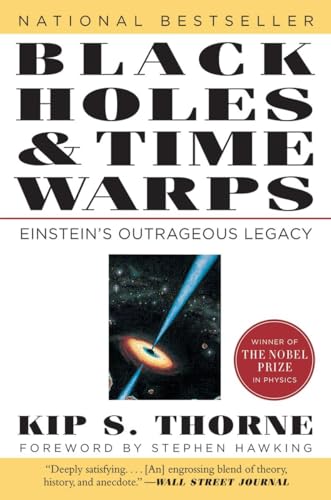
As an Amazon Associate, OverClassified may earn from qualifying purchases made through this link, at no extra cost to you.
Why This Is Essential Reading
Black Holes and Time Warps earns its place on this list as one of the most consequential physics books this site's own research has drawn on, cited independently on two separate theory pages precisely because its scope -- black holes, gravitational waves, wormholes, time machines -- covers nearly the entire range of extreme general-relativistic phenomena speculative UAP-propulsion theories most often invoke. Kip Thorne's own subsequent career gives the book an authority few popular-science titles can claim: the gravitational-wave detection his book treats as an open question in 1994 became, through LIGO's 2015 discovery and his own shared 2017 Nobel Prize, one of the most spectacularly confirmed predictions in the book's entire genre. Read against either citing theory page, the book's real value lies not in anything it says about UAPs -- nothing at all -- but in the rigorous, historically grounded standard it sets for what general relativity's most extreme predictions actually require, and how enormous a gap remains between those confirmed astrophysical extremes and any engineered, craft-scale application.
Related Cases & Theories
Essential Viewing
Sources Cited
- Thorne, Kip S. Black Holes and Time Warps: Einstein's Outrageous Legacy. W. W. Norton & Company, 1994; paperback, 1995 (ISBN 978-0-393-31276-8, cited here). Foreword by Stephen Hawking; introduction by Frederick Seitz.
- "Black Holes and Time Warps." Goodreads (4.23 average rating, 13,795 ratings, 321 reviews, checked August 2026). goodreads.com
- "Black Holes and Time Warps." Open Library bibliographic record (W. W. Norton & Company, 619 pages; LC Classification QC6.T526 1993). openlibrary.org
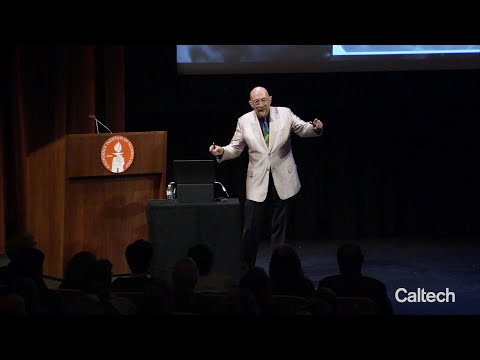
- "My Romance with Caltech and with Black Holes - Kip S. Thorne - 2/27/2019." Caltech, YouTube (Earnest C. Watson Lecture; video verified via oEmbed). youtube.com
- "The Nobel Prize in Physics 2017." The Nobel Prize (official citation for Thorne, Weiss, and Barish's shared award for LIGO and gravitational-wave detection).
- This site's own resources library: Full Reading List, where this book is cited across 2 separate theory pages.
- This site's own key-figures entry: Kip S. Thorne, for his full biography and site-wide connections.
- This site's own key-figures entry: John Archibald Wheeler, Thorne's doctoral advisor at Princeton.
- This site's own theory page: Gravitomagnetic Frame-Dragging Propulsion Hypothesis, citing this book directly.
- This site's own theory page: Quantum Entanglement Propulsion Hypothesis, citing this book directly.
- This site's own essential-reading entry: Was Einstein Right?, Clifford M. Will's complementary account of general relativity's experimental confirmation.
- This site's own locations entry: Hanford Site, where LIGO's Washington-state detector is sited.
Have corrections, additional research, or peer-reviewed sources? Help improve this entry.
Suggest an Edit